
Most people still picture dinosaurs as lumbering, scaly giants straight out of a 1993 summer blockbuster. For a while, that image felt close enough. Then the fossils started talking back. Since 2016, paleontologists have pulled discoveries out of the ground in Montana, Morocco, Patagonia, Thailand, and a chunk of Burmese amber that collectively shredded entire chapters of what we thought we knew. Not tweaked them. Shredded them. The tyrannosaur family tree cracked open. The first real dinosaur colors came into focus. Animals once dismissed as juveniles turned out to be separate species entirely.
What makes this stretch of discoveries so disorienting is that these weren’t obscure footnotes buried in technical journals. They changed the core story – the apex predators, the biggest animals that ever walked on land, the feathers, the armor, the behavior. The 13 finds below are the ones that hit hardest. A few will confirm suspicions you already had. At least two will genuinely surprise you. And the last one reframes the final days of the dinosaurs in a way that textbooks haven’t caught up to yet.
#13 – Nanotyrannus Was No Teenage T. rex
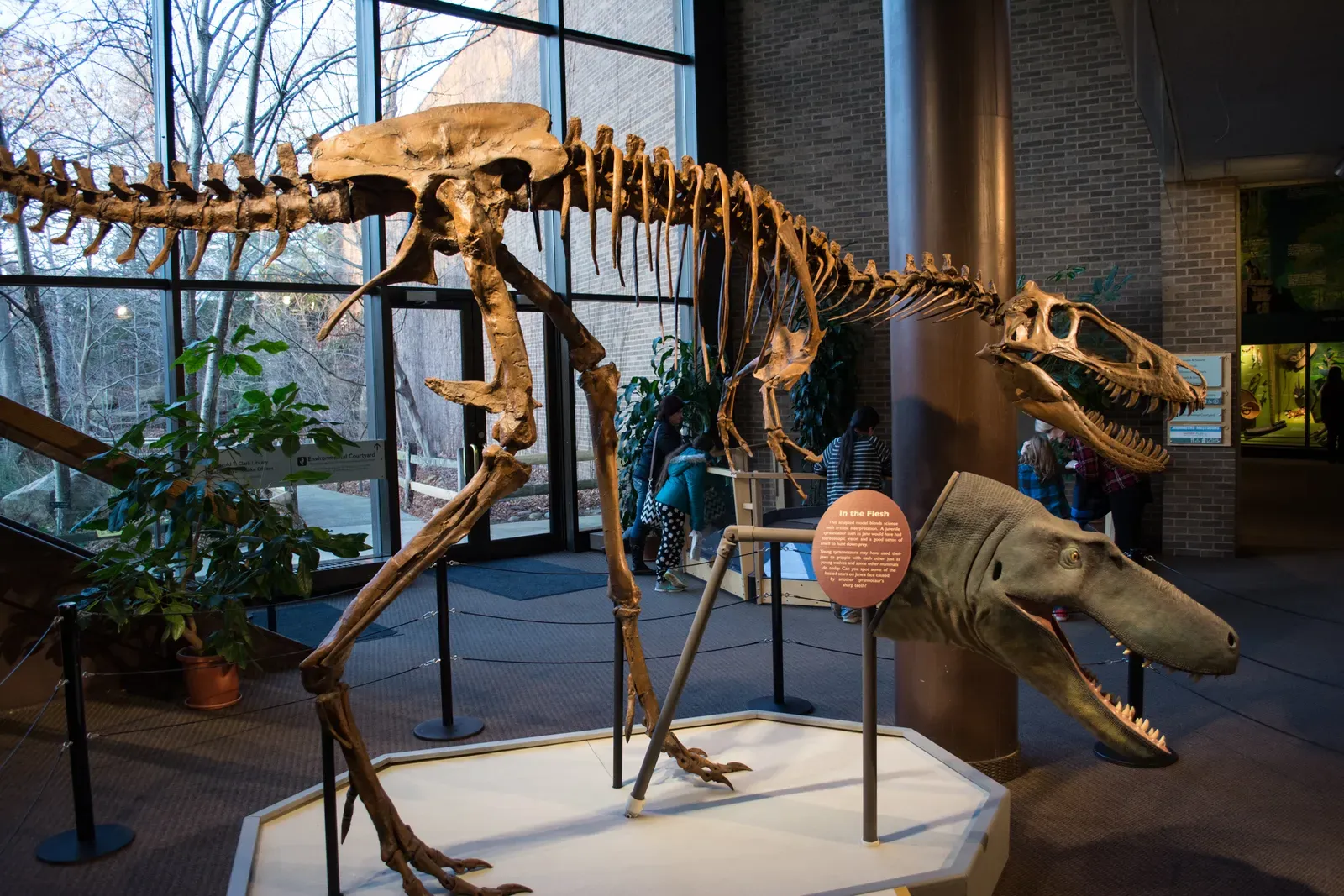
For decades, whenever paleontologists dug up a smaller tyrannosaur skeleton, the default explanation was simple and slightly dismissive: juvenile T. rex, case closed. The idea that something else entirely was sharing that late Cretaceous landscape never really gained traction – until the Dueling Dinosaurs specimen from Montana forced the issue wide open. Detailed studies published in 2025 on this extraordinarily preserved pair revealed that Nanotyrannus lancensis had fewer tail vertebrae, a higher tooth count, and proportionally longer, stronger arms than any growth stage of T. rex could account for. These weren’t features a young tyrannosaur would grow out of. They were the permanent signature of a fully mature, distinct animal.
What this means ecologically is genuinely strange. Two tyrannosaurs – one enormous, one significantly smaller but no less adult – were hunting the same territory at the same time, right up until the asteroid ended everything. That forces a hard rethink of how apex predators partitioned prey in the Hell Creek Formation. Did they compete directly? Avoid each other? Exploit different prey sizes the way lions and leopards do today? The fossils don’t answer that yet, but the question itself is new, and it’s a better question than anything the “juvenile” explanation ever generated.
Fast Facts
- The Nanotyrannus debate ran for over 40 years before the 2025 Nature study settled it
- Researchers analyzed more than 200 tyrannosaur fossils to reach their conclusion
- The Dueling Dinosaurs specimen, nicknamed “Bloody Mary,” is 100% complete – extraordinarily rare in the fossil record
- A second new species, Nanotyrannus lethaeus, was also named in the same study – named after the River Lethe, symbolizing how the species was “forgotten” for decades
- Nanotyrannus was approximately 18 feet long vs. T. rex’s 42 feet – a significant size gap between two fully grown predators sharing the same ecosystem
#12 – Africa’s First Ankylosaur Arrived With Spikes Nobody Had Seen Before
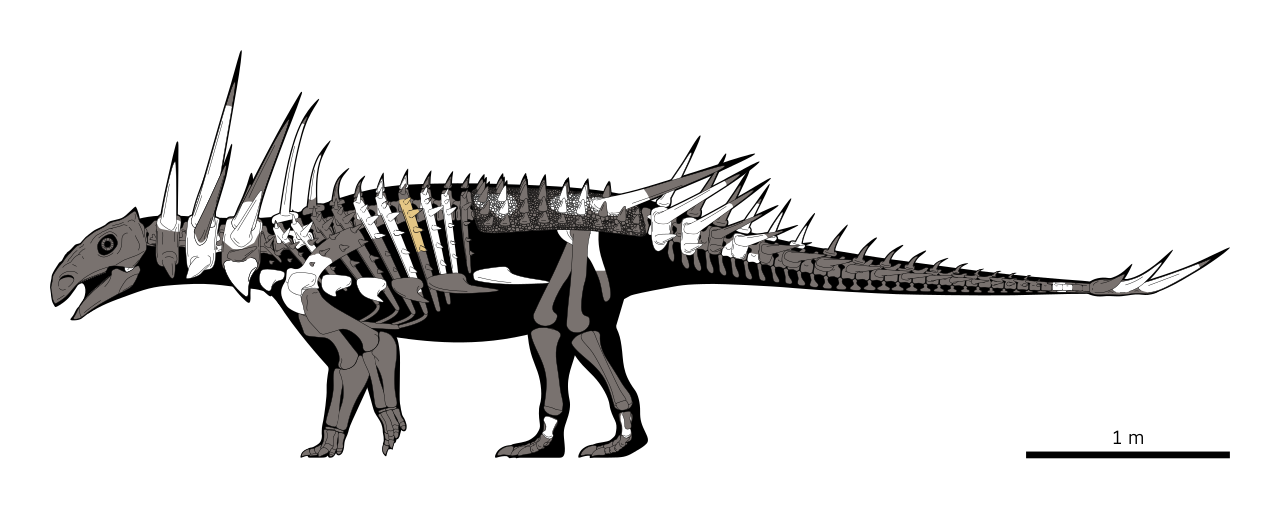
When paleontologists described a more complete Spicomellus afer skeleton from Morocco in 2025, the first thing that stood out was the armor – specifically, fused spikes running along the ribs in a configuration no other armored dinosaur on record possessed. Every ankylosaur lineage had its own defensive signature, but this was something structurally different, a body plan that didn’t map cleanly onto the European or Asian relatives everyone assumed had dominated the group’s early history. It also pushed the timeline of ankylosaurs reaching Africa back considerably further than existing models had allowed, suggesting these animals were moving across landmasses much earlier and more successfully than the fossil record had hinted.
The deeper implication is a familiar and humbling one in paleontology: Africa’s Mesozoic record is still dramatically incomplete. The continent’s fossil-bearing rock exposures are far less systematically explored than those in North America, China, or Argentina, which means every significant African find doesn’t just add a species – it exposes the size of the gap. Spicomellus didn’t arrive in isolation. It arrived as evidence that an entire chapter of ankylosaur evolution played out on a continent we’ve barely started reading.
#11 – A New Sahara Spinosaurus Showed the Family Was Far More Crowded
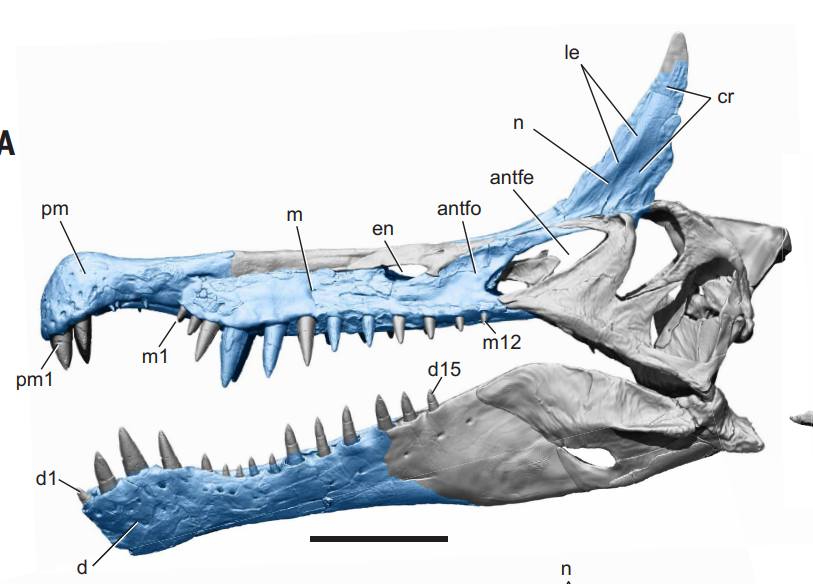
Spinosaurus has always occupied an outsized place in dinosaur mythology – the fish-eating giant with the dramatic sail, the animal that dethroned T. rex in a certain 2001 film to the fury of enthusiasts everywhere. For a long time, the spinosaurid family tree felt relatively sparse, with a handful of distinct members spread across Gondwana. Then expeditions in Niger returned scimitar-shaped crest bones that assembled into a skull unlike anything attributed to Spinosaurus aegyptiacus, belonging to an animal that lived around 95 million years ago and represented a genuinely separate lineage within the family. The description of Spinosaurus mirabilis marked the first new spinosaurid species formally named in over a century.
What the find actually reframes is the evolutionary pattern itself. Spinosaurids didn’t just appear in one wave and spread across the ancient supercontinent. They radiated in multiple pulses, filling ecological niches across different time periods and regions, with each lineage developing its own cranial and body proportions. The idea of a single dominant fish-eater ruling the Cretaceous waterways of North Africa gives way to something messier and more interesting – a family of giants competing, specializing, and diverging across tens of millions of years. The Sahara, it turns out, was hiding more than one of them.
Quick Compare: Spinosaurid Family Members
- Spinosaurus aegyptiacus – North Africa; up to ~46 ft; semi-aquatic, paddle-like feet
- Baryonyx walkeri – Early Cretaceous England; ~30 ft; strong forearms, fish-hook claws
- Irritator challengeri – Brazil; elongated skull, likely river-hunter
- Spinosaurus mirabilis – Niger; ~95 million years ago; distinct skull proportions, separate lineage
#10 – A Korean Dinosaur’s Stomach Stones Suggested Plant-Eaters Weren’t Always Eating Plants
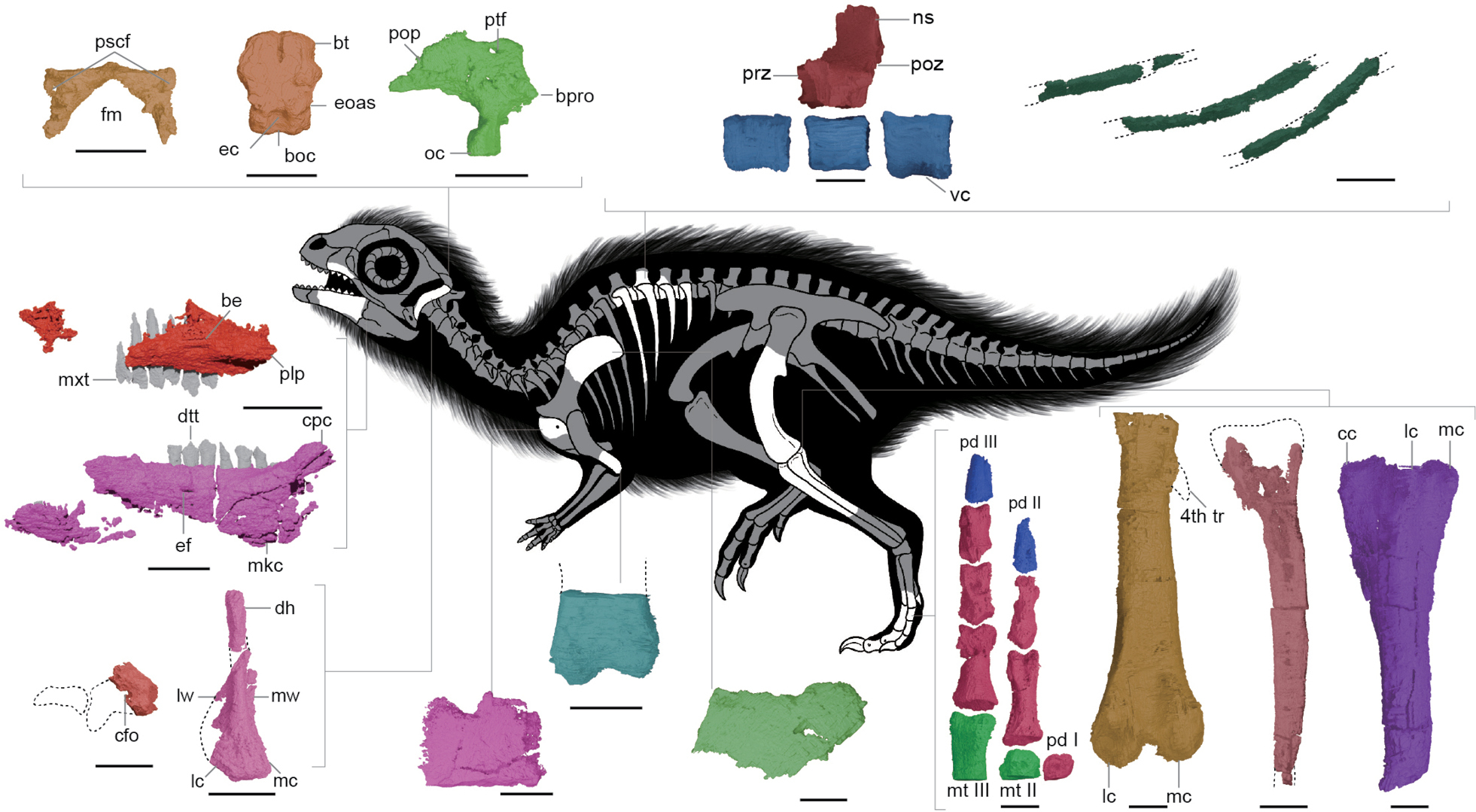
Small ornithischian dinosaurs – the bipedal, relatively unassuming relatives of the famous horned and armored groups – have long been filed under “herbivore” without much debate. They had the teeth and body plan of plant-eaters, and their close relatives fit that profile consistently. So when micro-CT scans of a 2026 Korean fossil block revealed polished gastroliths, the kind of stomach stones used to process harder food items, sitting inside the ribcage of Doolysaurus huhmini, it raised an immediate question: what exactly was this animal eating that required that kind of grinding assistance? The stones didn’t fit a strict leaf-and-fern diet. They pointed toward insects, seeds, or possibly small vertebrates mixed into the menu.
The broader significance is about assumptions baked into paleontological practice. When an animal’s body plan resembles a herbivore and its relatives are herbivores, the herbivore label tends to stick without much scrutiny. Doolysaurus suggests that opportunistic omnivory might have been more common among “primitive” plant-eaters than the record currently reflects, and that stomach contents – when preservation allows a look – can overturn a classification that teeth and skull shape alone never would have challenged. It’s a single specimen, but it’s the kind of single specimen that makes researchers go back and look harder at the ones already on shelves.
#9 – Patagonia Finally Gave Alvarezsaurs a Complete Origin Story
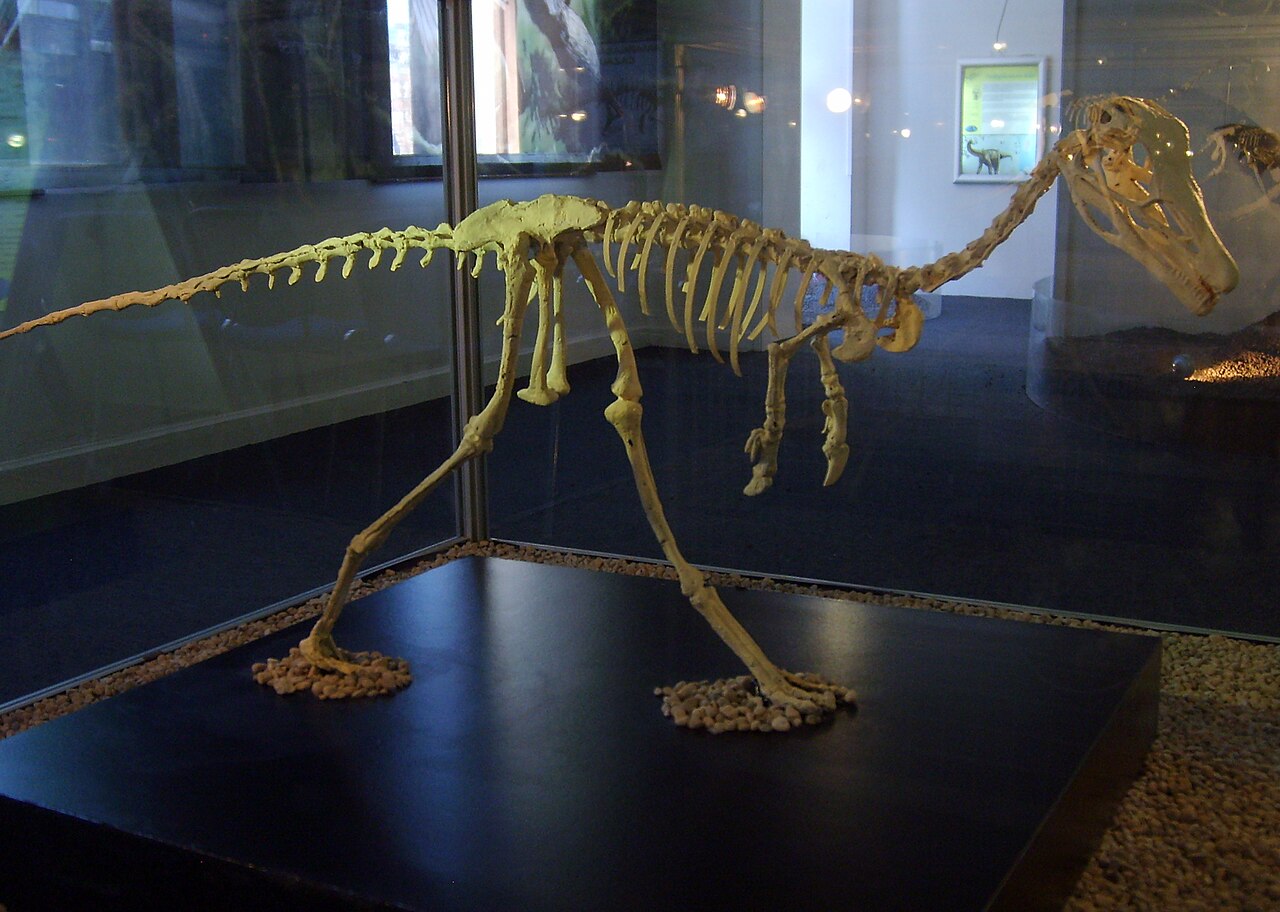
Alvarezsaurs are the kind of dinosaurs that make non-specialists do a double take. They were small, bird-like, and equipped with one massively reinforced claw on each arm – a design so specialized it looked almost like a biological punchline, except that something clearly found it useful for tens of millions of years. The problem was that their South American origins had always been reconstructed from fragmentary material, leaving their evolutionary path from Asia to Gondwana frustratingly vague. A nearly complete 90-million-year-old skeleton recovered from Argentina in 2026 changed that, preserving transitional skeletal features that finally connected early and later members of the group in a continuous anatomical chain.
The specimen functions as a kind of evolutionary timestamp, showing where the body plan was in the middle of its transformation rather than only at its starting or ending points. Paleontologists can now trace a credible sequence: how the arms shortened and reinforced, how the claw specialized, how the overall proportions shifted as the animals adapted to a South American environment after their long journey from Asia. For a group this anatomically bizarre, having that sequence documented in a single well-preserved skeleton is the difference between a compelling hypothesis and a demonstrable narrative.
#8 – Dinosaurs Didn’t Gradually Emerge. They Exploded Onto the Scene.
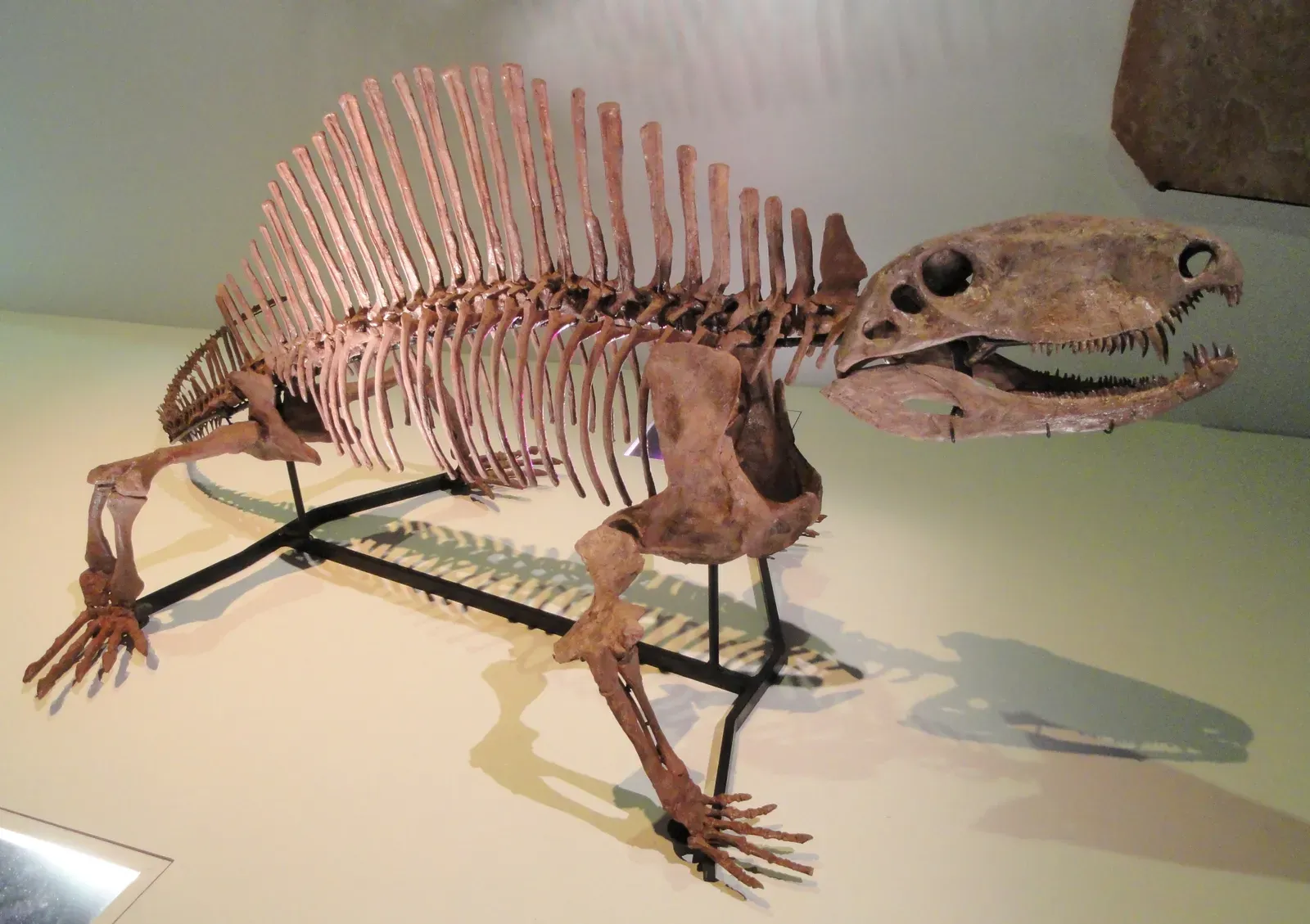
The old model of dinosaur origins was comfortable in its slowness – a long, gradual accumulation of skeletal innovations spread across tens of millions of years, with the major groups assembling piece by piece through the Triassic. The 2026 phylogenetic analyses dismantled that picture. What the data actually show is a concentrated burst of morphological change packed into the window between roughly 251 and 230 million years ago, with ornithischians, sauropodomorphs, and theropods appearing in rapid succession rather than emerging from a slow, patient process. The timeline looks far less like a gradual construction project and far more like a post-extinction land rush.
The pattern makes more sense when placed against what preceded it: the Permian-Triassic extinction event, the most catastrophic mass die-off in Earth’s history, cleared ecological space on a scale that rewarded rapid diversification. Dinosaurs didn’t fill a vacuum slowly. They filled it fast, radiating into available niches with an evolutionary urgency that compressed what might otherwise have taken much longer. That reframing turns dinosaur origins from a quiet backstory into one of the most dramatic opportunistic expansions in the history of vertebrate life – and the fossils are only now starting to fully document it.
At a Glance: The Dinosaur Origin Timeline
- ~252 million years ago – Permian-Triassic extinction wipes out up to 96% of marine and 70% of land species
- ~251–245 Ma – Archosaur survivors begin diversifying into the emptied ecological landscape
- ~245–230 Ma – Rapid burst of dinosaur body plan diversification across all three major lineages
- ~230 Ma – Ornithischians, sauropodomorphs, and theropods all established within a geologically tight window
- 165 million years – How long non-avian dinosaurs then dominated life on Earth before the next great extinction
#7 – Those Dinosaur “Sails” Were About Being Seen, Not Staying Warm
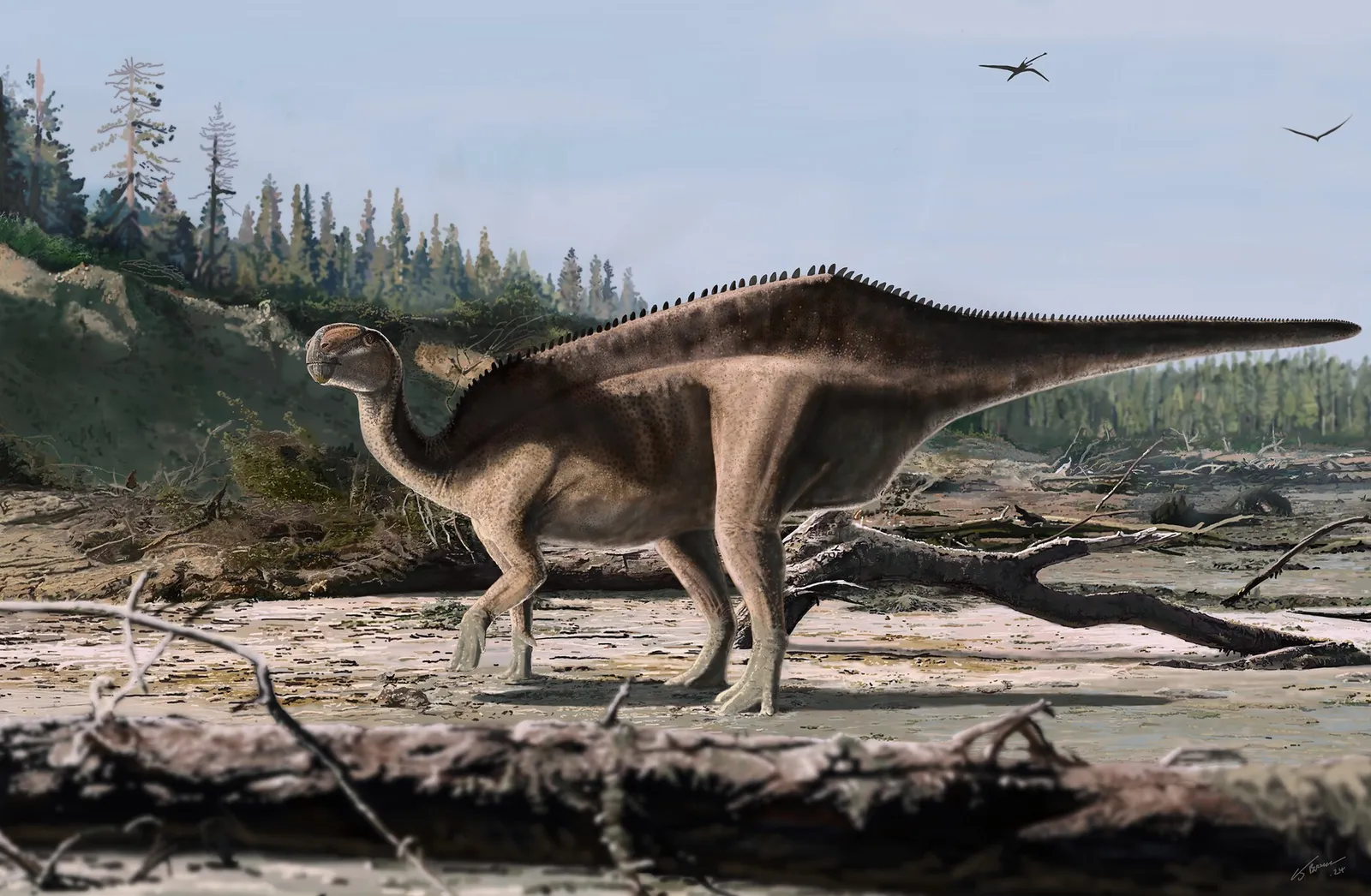
The thermoregulation explanation for sail-backed dinosaurs was always a little convenient. It was functional, it was measurable in theory, and it avoided the messier territory of dinosaur social behavior and display. Then the 2025 Isle of Wight specimen of Istiorachis arrived – a six-meter ornithopod with a striking sail along its back – and comparative anatomical work on the structure pointed clearly toward visual signaling rather than heat exchange. The sail’s placement, proportions, and the comparative context of similar structures across multiple lineages all fit the profile of a display feature used in mating contexts or as a predator deterrence signal far better than they fit a radiator.
This matters beyond Istiorachis because it shifts the interpretive framework for sail-like structures across the dinosaur family tree. Once display becomes the dominant explanation for one well-studied example, the others come under new scrutiny. It implies that these animals had social lives complex enough to select for elaborate visual signals over millions of years – that the Mesozoic landscape was full of creatures actively performing for each other, competing for mates, and communicating threat or fitness through anatomy. The sail wasn’t a climate adaptation. It was a statement.
#6 – A Tiny Mongolian Fossil Cracked Open the History of Head-Butting Dinosaurs
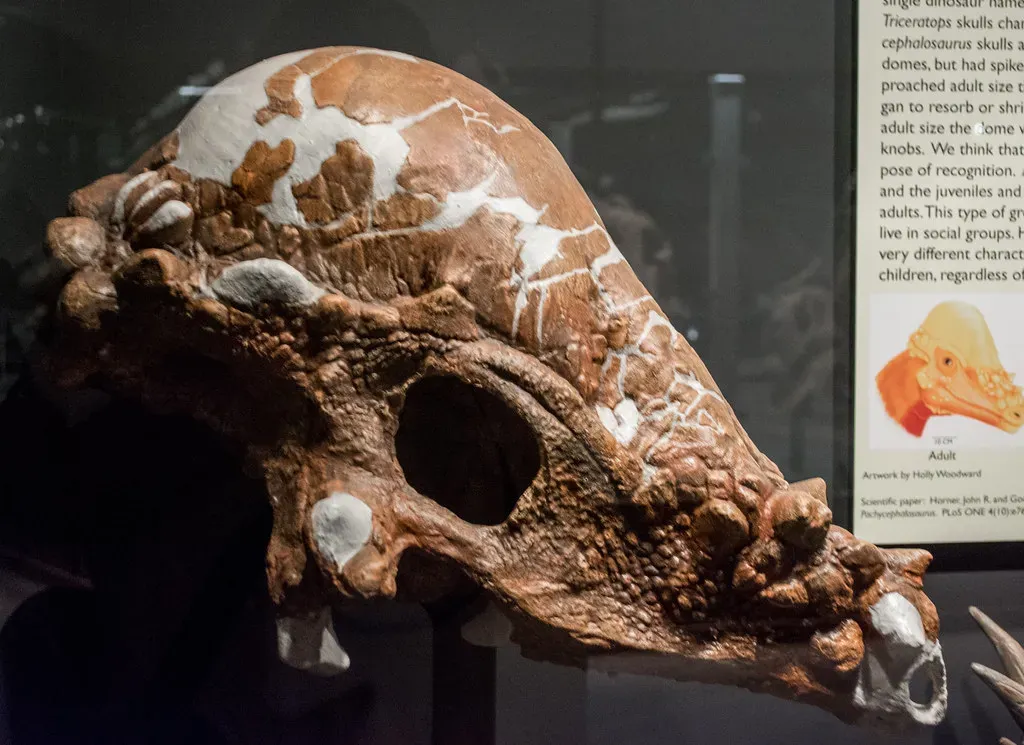
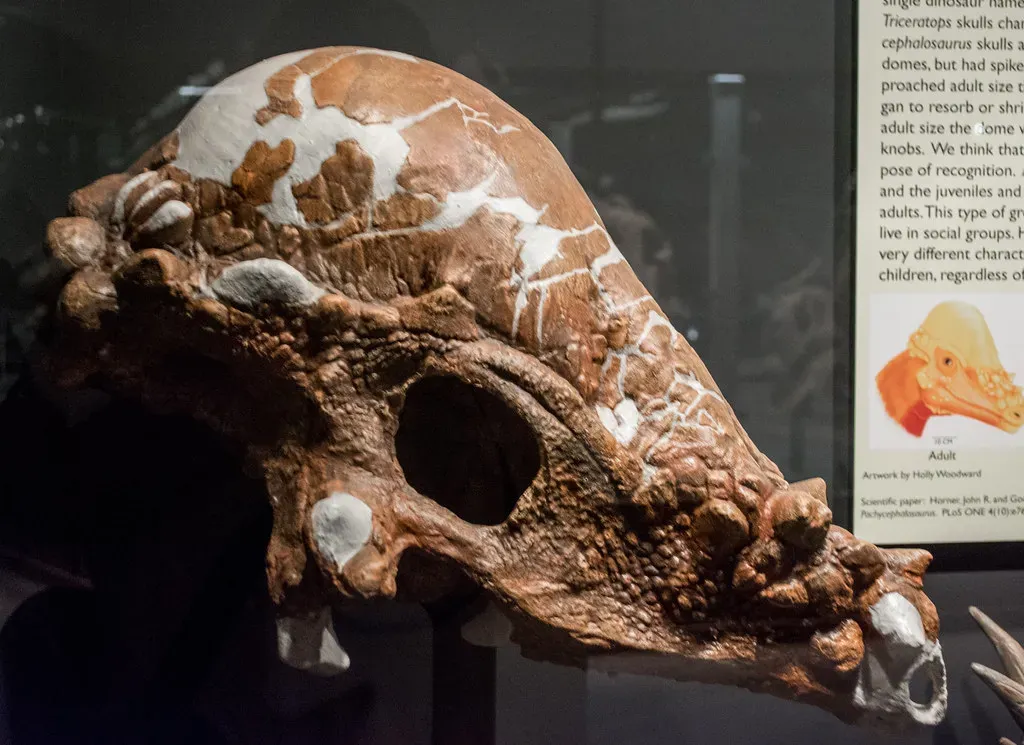
Pachycephalosaurs – the dome-headed herbivores famous for their massively thickened skulls – have always been crowd favorites, partly because the head-butting behavior they presumably engaged in is so easy to visualize. But the group’s Asian evolutionary history was frustratingly patchy, built from fragments that left major gaps in timing and development. Zavacephale, described in 2025 from 110-million-year-old Mongolian rocks, arrived as a nearly complete one-meter-long skeleton that finally showed the early stages of dome development in anatomical context – the skull thickening in its formative phase, before the full dome architecture of later members was fully established.
Having a complete early member of the group rather than isolated skull elements changes what paleontologists can say about when display or combat behaviors emerged. The dome didn’t appear suddenly and fully formed – it developed through intermediate stages that Zavacephale now documents in a way no fragment could. That means the social pressures that drove the dome’s evolution were operating far earlier in the group’s history than the record had previously confirmed, adding another Mesozoic lineage to the growing list of dinosaurs whose behavior was far more sophisticated than their body plans initially suggest.
#5 – A Piece of Amber Preserved Dinosaur Feathers in Three Dimensions for the First Time

Compression fossils had already established that non-avian dinosaurs carried feathers. That argument was won years before 2016. What no compression fossil could deliver was three-dimensional structure – the actual spatial arrangement of feather types, the way barbules branched and interlocked, the physical reality of plumage rather than its flattened shadow. The Burmese amber tail segment found in 2016 delivered exactly that, preserving a small coelurosaur’s tail in extraordinary detail with protofeathers and complex barbules intact in their original geometry. It was the first time anyone had seen dinosaur plumage as the animal itself experienced it, rather than as a pressed imprint in stone.
The find also opened a methodological door that researchers are still walking through. If amber can preserve feather microstructure at this resolution, what else might be locked inside specimens already sitting in collections – or still waiting in the ground in Myanmar, Canada, and elsewhere? Subsequent amber finds have pushed the boundaries further, but the 2016 tail segment was the proof of concept. It transformed feather paleontology from a discipline that read shadows into one that could, in the right conditions, hold the real thing in its hands.
Worth Knowing: The 2016 Burmese Amber Tail
- The specimen is approximately 99 million years old, from Kachin State, Myanmar
- It preserves 8 vertebrae from a juvenile coelurosaur – confirmed as non-avian because the tail vertebrae are unfused (unlike birds)
- Plumage pigments suggest a chestnut-brown upper surface with a lighter underside
- The amber was discovered at a market in Myanmar in 2015, originally mistaken for a plant inclusion
- Published in Current Biology in December 2016 by lead author Lida Xing and international co-authors
#4 – We Finally Know What Color Some Dinosaurs Actually Were
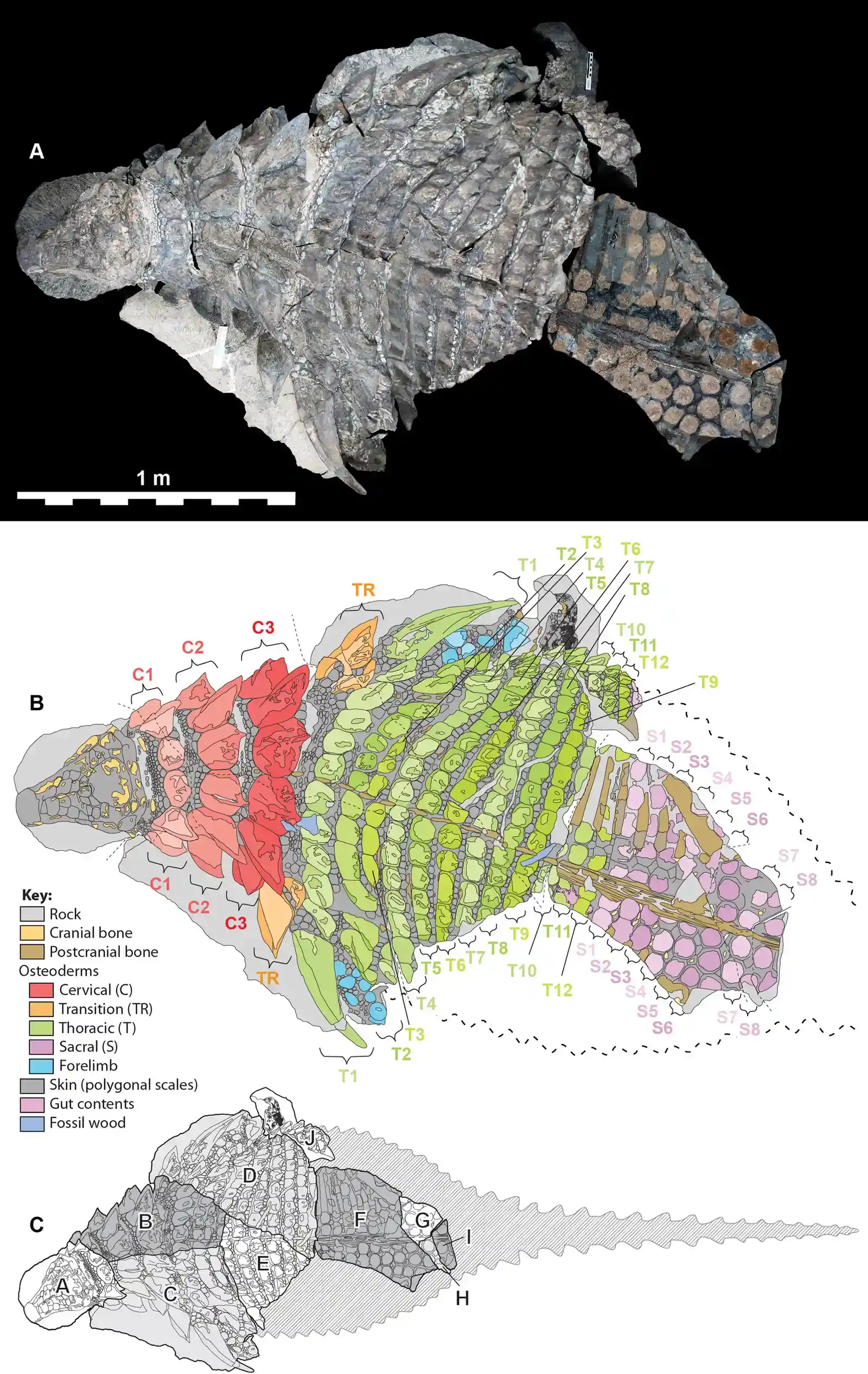
Color in dinosaurs was, for most of paleontology’s history, pure speculation. Artists made educated guesses based on living relatives and ecological logic, and everyone understood that the actual palette was unknowable. Then melanosome research changed the equation. Melanosomes are the microscopic pigment-producing structures found in feathers and skin, and they fossilize. More importantly, their shape corresponds to specific colors in living birds – elongated ones produce blacks and grays, rounder ones produce reds and rusty tones. When researchers applied this to Anchiornis and the armored nodosaur Borealopelta, they got answers: black-and-white patterning with reddish accents on Anchiornis, and a rich reddish-brown countershading on Borealopelta that matched camouflage logic for an animal of its size.
The shift from guesswork to measurable evidence is hard to overstate. Color plays into everything – camouflage, display, species recognition, thermoregulation. Knowing that Borealopelta was countershaded implies it lived under predation pressure significant enough to select for cryptic coloring despite being a heavily armored animal. That’s a behavioral and ecological inference, not just an aesthetic detail. Every melanosome dataset recovered from a new specimen adds another data point to a Mesozoic world that is slowly, irreversibly coming into color after 66 million years of grayscale assumption.
We can now say that this dinosaur was reddish-brown on top and more pale on its underside – countershading, like a deer today.
Caleb Brown, Royal Tyrrell Museum of Palaeontology, on Borealopelta markmitchelli
#3 – Patagotitan Forced Everyone to Recalculate What “Biggest” Even Means
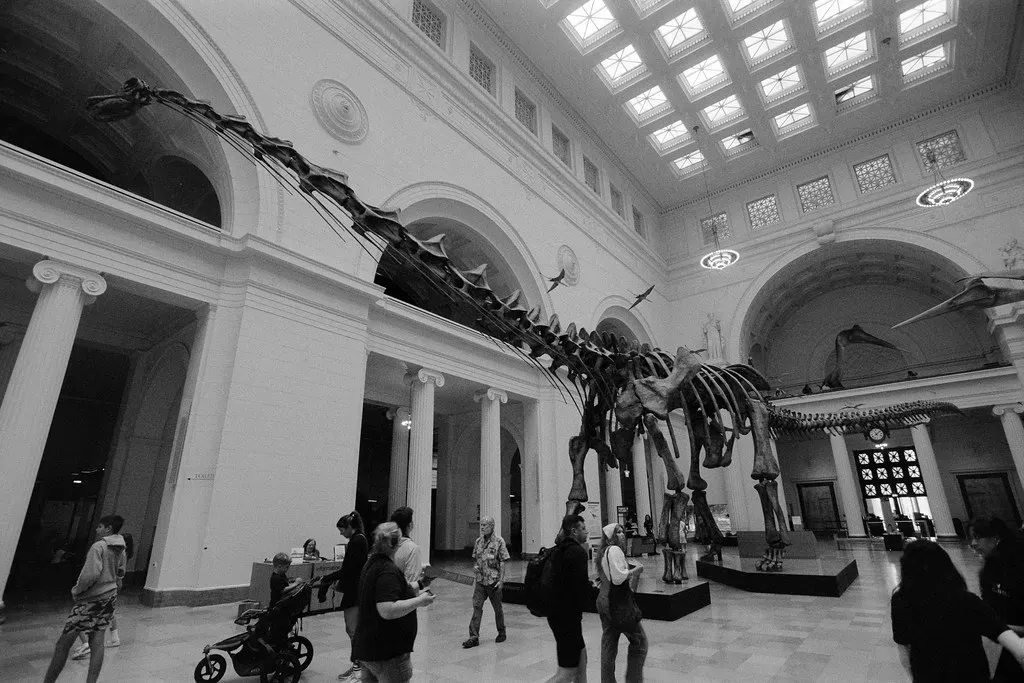
The competition for largest land animal ever lived has always been a crowded and contentious one, with Argentinosaurus, Supersaurus, and a rotating cast of fragmentary contenders trading the title based on whichever estimate was most recent. Patagotitan mayorum, formally named in 2017 from multiple massive individuals recovered in Argentina’s Neuquén Province, brought something that most of those contenders lacked: enough bones to build a real size estimate rather than an extrapolation from a single femur. The animal weighed somewhere around 70 metric tons and stretched approximately 37 meters – numbers that didn’t just compete with previous record holders but recalibrated what growth models for titanosaurs said was biologically possible.
Beyond the record itself, Patagotitan’s significance is ecological. Multiple individuals of the same species recovered from the same site suggests these animals weren’t solitary anomalies. They lived in a Cretaceous South America that could apparently sustain animals of this mass, which means the vegetation, the hydrology, the entire carrying capacity of those ecosystems operated at a scale that modern landscapes have no equivalent for. The fossils don’t just document an extraordinary animal. They document an extraordinary world – one where the upper limit on vertebrate body size was set by conditions that no longer exist anywhere on Earth.
At a Glance: Patagotitan mayorum by the Numbers
- ~70 metric tons – estimated weight, equivalent to roughly 10 African elephants
- ~37 meters (122 ft) – estimated length, longer than a standard Boeing 737
- At least 6 individuals recovered from a single site in Chubut Province, Patagonia
- ~100 million years ago – when it roamed the forests of what is now Argentina
- Formally named in 2017 – the species name honors the Mayo family, on whose ranch the fossils were found
#2 – Thailand Was Hiding a Major Chapter of Sauropod History
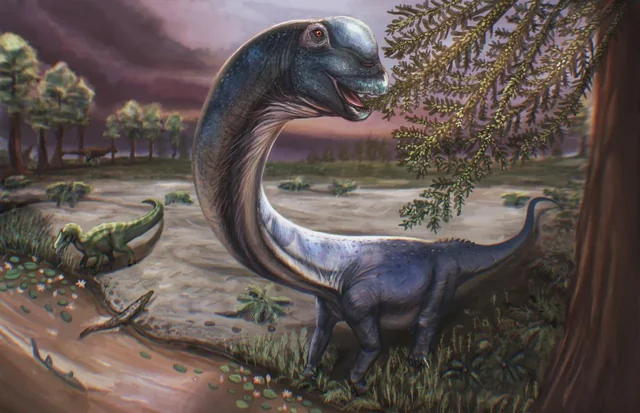
Southeast Asia doesn’t appear on most mental maps of dinosaur paleontology. The famous sites are in Montana, the Gobi, Patagonia, and the Liaoning beds of China. Thailand rarely comes up. Which is exactly why the 2026 titanosauriform from the Khok Kruat Formation hit with quiet force – it filled a documented gap in the Early Cretaceous Asian record with a somphospondylan sauropod from a region that previous distribution maps had essentially left blank. The specimen wasn’t a marginal find. It was a substantial addition to the known diversity of large long-necked dinosaurs in a part of the world that the field had largely written off as unexplored rather than unpopulated.
The deeper lesson is about absence of evidence versus evidence of absence. When fossils don’t appear from a region, it’s tempting to conclude the animals weren’t there. But Southeast Asia’s geological history – with its complex tectonic past and limited systematic exploration – means the absence of sauropod records there was always more likely a reflection of where paleontologists were digging than where dinosaurs were living. The Thai titanosaur doesn’t just add a species. It points to an entire underexplored corridor of Mesozoic Asia that almost certainly holds more of what we’ve been missing.
#1 – The Dueling Dinosaurs Proved Two Adult Tyrannosaurs Ruled the Same Ground at the Same Time
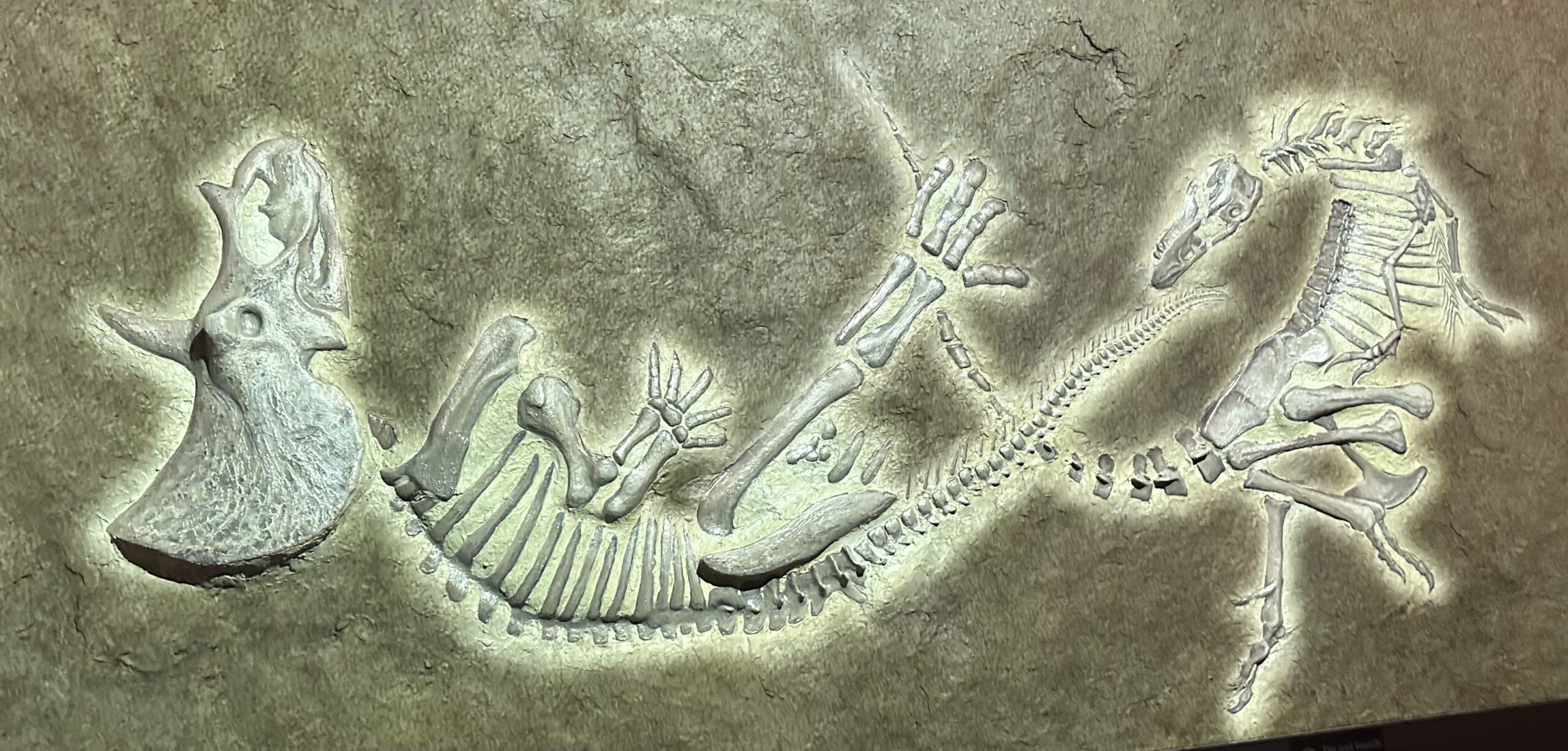
The Dueling Dinosaurs specimen from Montana has been famous for years – two dinosaurs preserved together in what appears to be the aftermath of a fatal encounter, frozen in the rock for 67 million years. When detailed 2025 analyses finally resolved the identity question definitively, the result rewrote the endgame of the dinosaur era. Nanotyrannus lancensis was not a young T. rex. It was a fully grown adult of a separate species, and the specimen showed both animals as mature individuals. That means the Hell Creek Formation – the last major dinosaur ecosystem before the asteroid impact – wasn’t T. rex’s exclusive domain. It was shared hunting ground, with two distinct tyrannosaur species competing or coexisting as fully developed predators.
The ecological implications are still being worked through, but the directional shift is clear. The final chapter of non-avian dinosaur history looks more complex, more crowded, and more dynamically structured than the lone-tyrant narrative that dominated the field for generations. Two apex predators of the same family, different sizes, presumably targeting at least partially different prey, living out the last million years of the Mesozoic alongside each other – that’s not a minor revision. That’s a fundamentally different picture of what the world looked like right before it ended. And the fossil that proved it spent over a century being dismissed as a teenager.
Why It Stands Out: What the Dueling Dinosaurs Settlement Changed
- Dozens of prior T. rex growth studies relied on Nanotyrannus fossils – those conclusions now require re-evaluation
- Predator diversity in the last ~1 million years of the Cretaceous was significantly higher than previously modeled
- The study examined over 200 tyrannosaur fossils and used growth rings, spinal fusion data, and developmental anatomy to confirm full maturity
- The Nanotyrannus specimen is 100% complete – a rarity that made the anatomical case airtight
- The find hints that other small-bodied dinosaur “juveniles” in museum collections may also be victims of mistaken identity
What These 13 Finds Actually Mean Together
The honest takeaway from this decade of discovery isn’t just that paleontology is advancing – it’s that the confident picture from even 15 years ago had deeper cracks in it than most people knew. The tyrannosaur family, the armor lineages, the size records, the colors, the diets, the origins timeline – every one of those “settled” categories absorbed a significant revision the moment better material appeared. That pattern isn’t a failure of the science. It’s exactly how the science is supposed to work. But it does suggest that the next decade’s discoveries, coming from underexplored sites in Africa, Southeast Asia, and South America, are going to keep arriving with the same disruptive force.
The Mesozoic world is not becoming simpler as we learn more about it. It’s becoming stranger, more populated, more behaviorally complex, and more vividly colored than the gray and green world that generations of textbooks described. Dinosaurs weren’t a prologue to real life on Earth. They were the main event for 165 million years, and the fossils are still, quietly, making sure we understand that. And honestly? Good. The version of prehistoric life that’s emerging from these last ten years of discovery is far more interesting than the one it’s replacing. We didn’t just get new species. We got a new picture of how competition, color, behavior, and sheer size operated across deep time – and it turns out that picture was always bigger, stranger, and more alive than the one gathering dust on the textbook shelf.