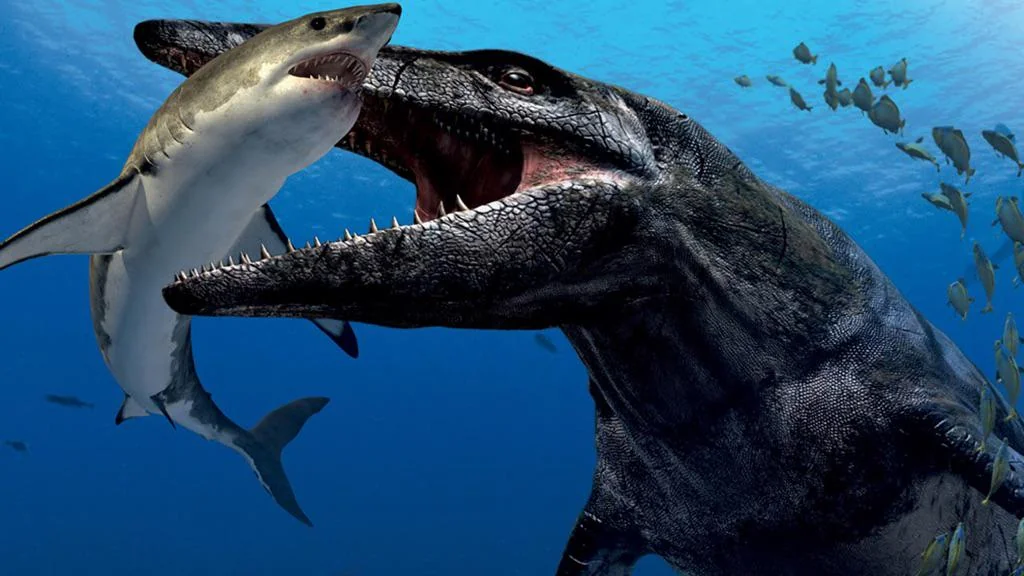
Picture the ocean not as we know it today, but as a prehistoric arena where giant predators cruised through dark blue water, armed with teeth like knives and jaws strong enough to crush bone. Now imagine dropping a modern great white shark into that world and asking a simple, thrilling question: which ancient creature could have actually given it a real fight? That is where one marine reptile keeps surfacing in the conversation, again and again.
This is not about fantasy battles for the sake of it. It is about what happens when you line up real anatomy, real biomechanics, and real fossil evidence against one of the top predators alive today. When you do that, one animal stands out: the massive pliosaur, especially forms like Pliosaurus and Kronosaurus. They were not dinosaurs, not sharks, but something in between in terms of raw killing power – and if any extinct marine reptile could have challenged a great white, it was one of them.
A Predator Built Like a Living Torpedo
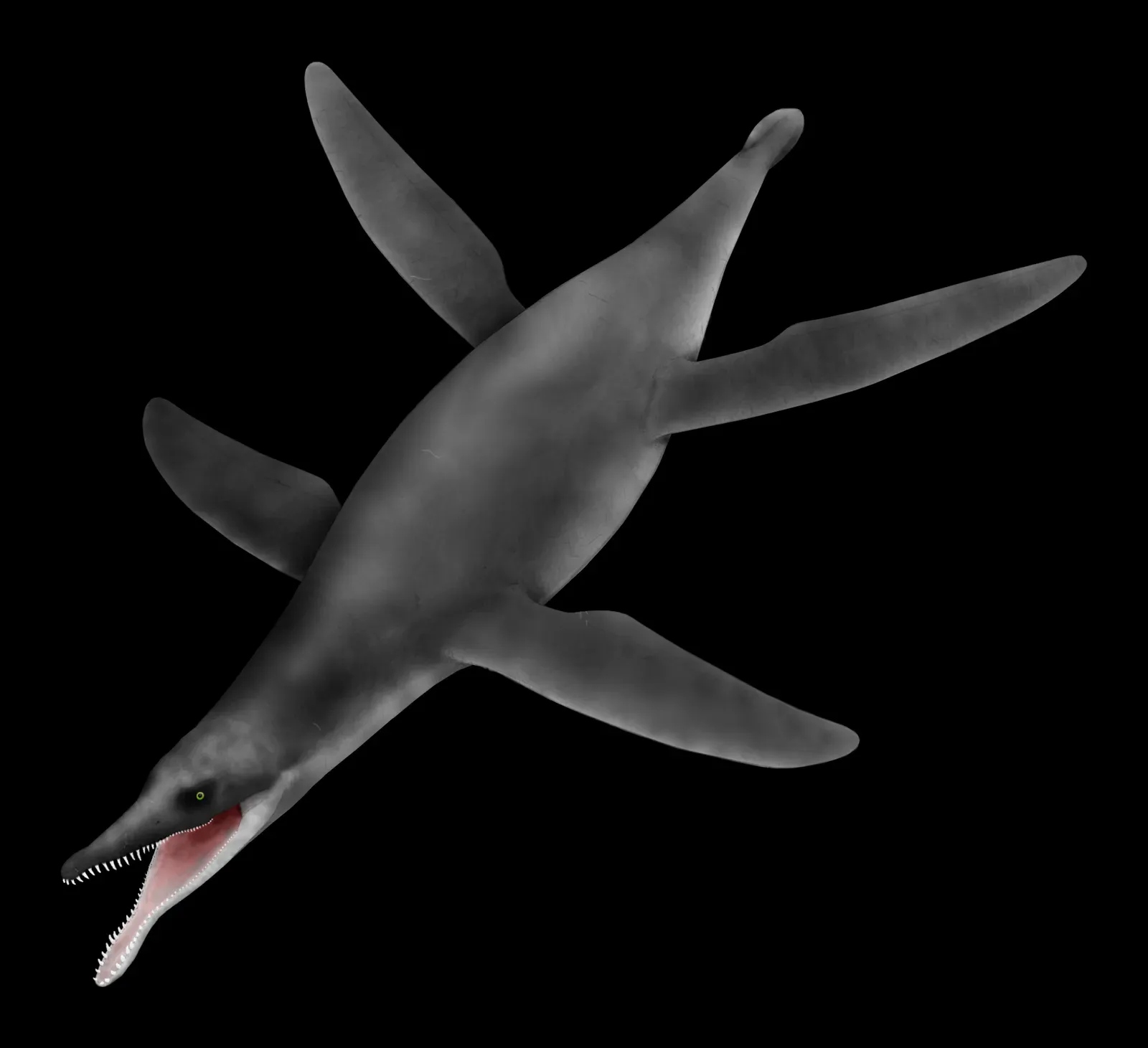
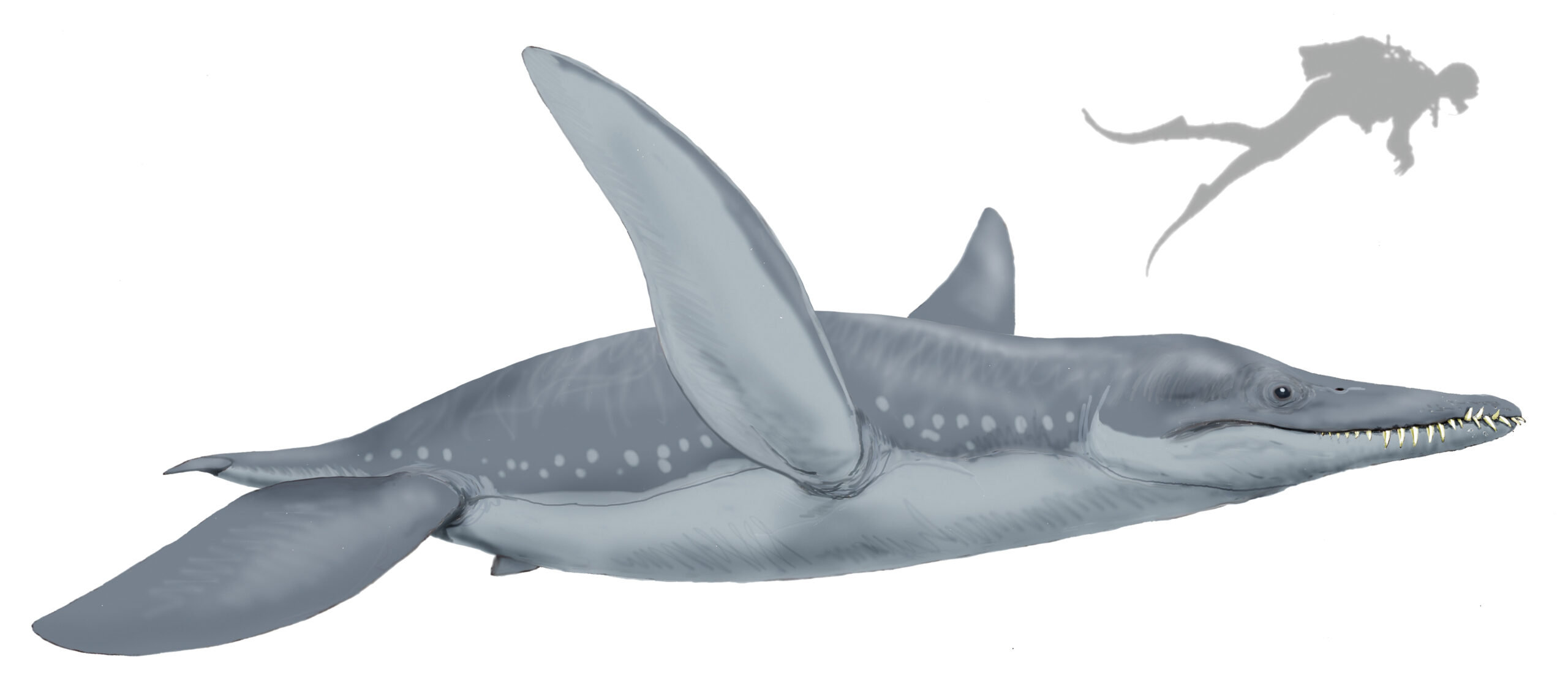
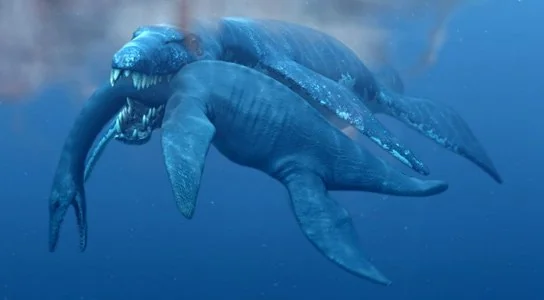
Here is the bold claim: if you wanted to design a prehistoric rival for a great white shark, you would accidentally end up sketching something very close to a giant pliosaur. These marine reptiles, part of the broader plesiosaur family, had huge skulls, barrel-shaped bodies, and powerful flippers that worked like underwater wings. Where a great white is all muscle and smooth efficiency, a big pliosaur was like a missile wrapped in muscle and bone armor.
Some of the largest pliosaurs are estimated to have stretched well over ten meters in length, putting them in the same size league as a big great white, and in some cases even larger. Their heads alone could reach a couple of meters, making a shark’s skull look almost modest by comparison. What makes that especially wild is how much of that skull was devoted entirely to bite – long jaws, heavy bones, and teeth that were thick, conical, and perfectly shaped to grab and hold struggling prey. In simple terms, these animals were purpose-built for close‑quarters destruction.
Bone-Crushing Jaws Versus Flesh-Tearing Teeth
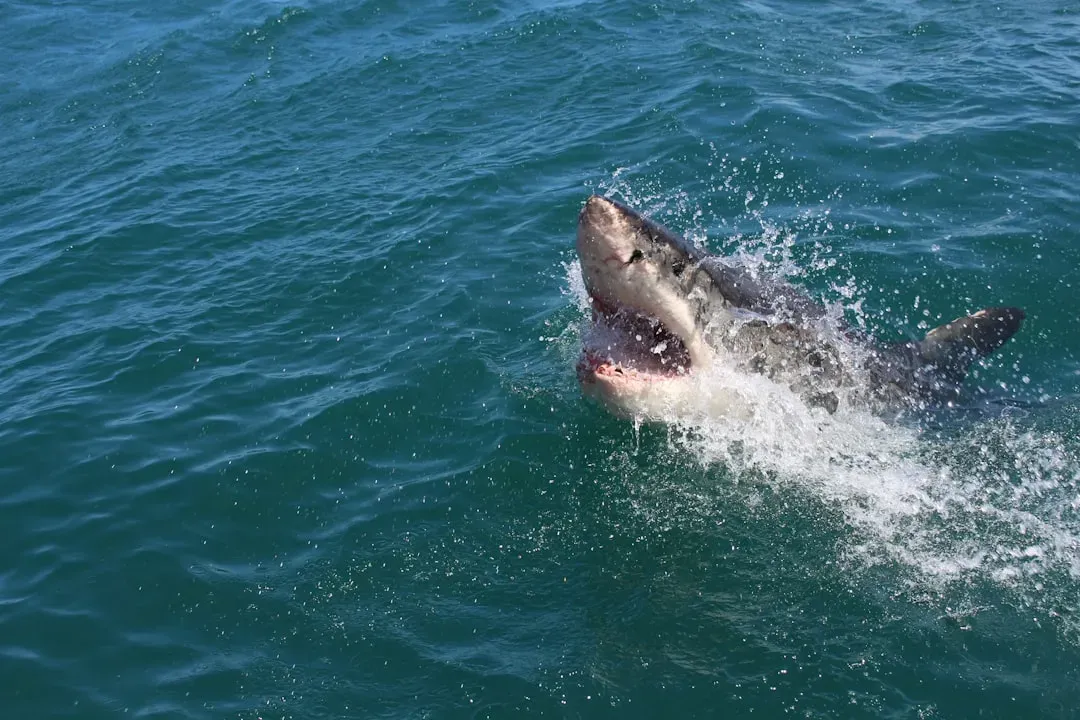
When people talk about great white sharks, the conversation always comes back to their bite. Modern measurements suggest a large great white can deliver a bite strong enough to badly crush bone and tear massive chunks from prey, and its teeth are effectively serrated blades designed to slice through flesh. It is a terrifying system, no question. But a giant pliosaur raises the stakes by shifting from cutting power to crushing power, more like a crocodile turned up to the maximum.
Studies of pliosaur skulls and jaw mechanics suggest that some of these reptiles could have generated enormous bite forces, possibly rivaling or even exceeding those of the largest modern crocodiles. Their teeth were not delicate or razor-thin; they were thick and deeply rooted in robust jaws, better suited for gripping and snapping bones than for just shaving off strips of meat. That combination – thick teeth, strong skull bones, and huge jaw muscles – hints at an animal that could have not only bitten a shark, but potentially crushed it in a way a shark simply is not built to endure.
Eyes, Senses, and Hunting Strategy in a Dark Ocean
Raw power is only part of the story. Predators do not win just by being strong; they win by finding prey, choosing the right moment, and striking in a way the other animal never sees coming. Great whites use keen vision, electroreception, and sudden ambush attacks from below, often targeting seals or other marine mammals at the surface. They are fast sprinters, but their strategy is usually to hit quickly, cause catastrophic damage, and then wait for the victim to weaken.
Pliosaurs likely hunted in a slightly different style, shaped by their anatomy and environment. Their eye sockets suggest relatively good vision, and the positions of their eyes high on the skull hint at a predator that could watch ahead and slightly upwards while swimming. Coupled with powerful flippers that allowed fast, agile maneuvers, they probably relied on rapid pursuit and brutal close-range attacks, crushing large prey such as other marine reptiles, large fish, and possibly primitive whales in later ecosystems. If you imagine a great white as a stealth torpedo, you can think of a pliosaur more like a guided battering ram that could twist, turn, and stay locked onto a struggling animal until it stopped moving.
Armor Versus Vulnerability: Whose Body Wins?
One of the most underappreciated differences between a marine reptile and a shark is what is going on inside their bodies. Sharks have skeletons made of cartilage, which is flexible and light but not as tough as bone. It gives them agility and speed but also means their bodies can be crushed or badly damaged by heavy impacts and strong bites. Their skin, although tough and covered in tiny tooth-like structures, is still relatively soft compared to bone.
Pliosaurs, on the other hand, had full bony skeletons with thick vertebrae, solid ribs, and massive skulls. In some species, parts of the body were reinforced with especially strong bones that could withstand enormous stress. In a hypothetical confrontation, that difference could matter a lot. A great white biting into a pliosaur’s skull or backbone might inflict damage, but it would also risk breaking its own teeth or straining its jaws. Meanwhile, a pliosaur clamping down on the softer, cartilaginous frame of a shark would likely have a much easier time compressing and injuring it. From a purely structural point of view, the reptile’s body looks better suited to survive violent collisions and crushing forces.
Speed, Agility, and the Dance of Predators
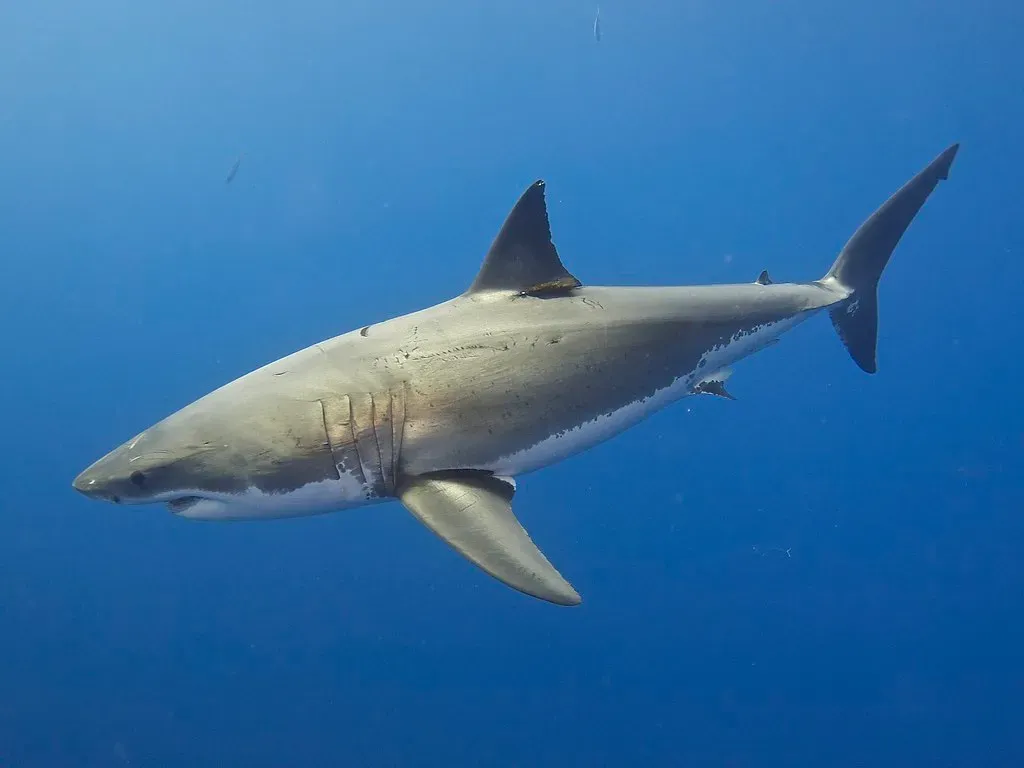
Still, it is not all one-sided. Great white sharks are astonishingly fast for their size, capable of explosive bursts that take them from shadow to impact in a heartbeat. Their entire shape is optimized for cutting through the water: a torpedo body, powerful caudal fin, and streamlined profile that keeps drag low. In a wide‑open chase, that kind of design is hard to beat. A shark’s graceful, sweeping tail strokes give it both speed and sudden bursts of acceleration when it decides to attack.
Pliosaurs moved very differently. With four strong flippers beating in coordinated strokes, they used a kind of underwater flight rather than tail-powered swimming. This likely gave them excellent maneuverability, the ability to turn and roll quickly, and strong control even at lower speeds. In a straight sprint, a shark might have had an advantage. But in a close, twisting struggle or in cluttered environments like coastal shallows or around reefs, those four flippers could have made a pliosaur surprisingly agile. The contest, in that sense, would not just be about who was faster, but who controlled the angles and could force the other into a vulnerable position.
Could a Pliosaur Really Challenge a Great White?
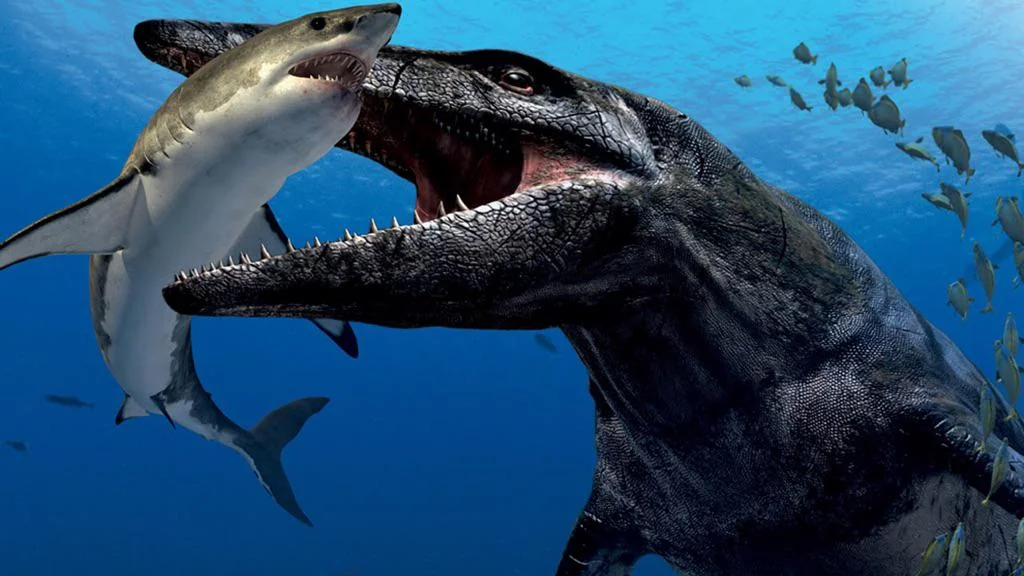
When you stack up the evidence – size, bite force, skeletal strength, hunting style – the idea that a giant pliosaur could challenge, and probably dominate, a great white shark is more than just a fun thought experiment. It starts to look like a reasonable conclusion. The pliosaur’s heavy skull and bone-crushing jaws, combined with a robust body and strong flippers, paint the picture of a predator that was not only deadly to its usual prey, but also well equipped to withstand and overpower something built like a modern shark.
That said, nature is rarely as simple as picking a winner in an imaginary arena. The great white is the product of millions of years of evolution in modern oceans, tuned to the prey and conditions of today, while pliosaurs were shaped by entirely different seas, ecosystems, and rivals. Personally, if I had to bet, I would place my money on the pliosaur in a direct physical clash, especially a large species. But the more interesting takeaway is not who would win in a fight. It is that the oceans have hosted multiple generations of apex predators, each terrifying and impressive in its own right. The real shock is not that a marine reptile could have challenged a great white – it is that, for much of Earth’s history, the shark might not even have been the scariest thing in the water. Did you expect that?