Most people hand the crown to T-Rex without question. It’s the dinosaur that shows up in nightmares, blockbuster films, and every natural history museum lobby on earth. But paleontologists who actually study the fossil record know something the movies never quite tell you: the real monsters weren’t on land at all. They were underwater, and they were so much worse.
Ancient oceans bred predators that made T-Rex look like a territorial house cat. We’re talking creatures that were longer than semi-trucks, armed with jaws that could shear steel, and built to hunt in a three-dimensional environment where nothing could hide, nothing could run, and almost nothing could fight back. Here are the 11 prehistoric sea creatures that prove the ocean has always been the most dangerous place on this planet.
#1 – Megalodon: The Ultimate Shark
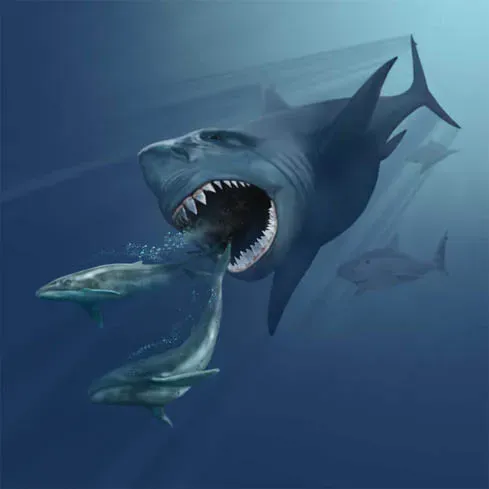
If there’s one creature that ends the T-Rex debate immediately, it’s Megalodon. This shark reached 15 to 20 meters in length and weighed somewhere between 30 and 60 tons — figures that make the largest T-Rex specimens look almost embarrassingly small by comparison. Its teeth were the size of a human hand, serrated like steak knives, and it left them embedded in whale bones across every warm ocean on earth for millions of years.
Its bite force exceeded 100,000 Newtons, which is roughly ten times that of T-Rex. It didn’t chase prey through dense jungle or pick fights with animals its own size — it hunted whales. It targeted some of the largest animals alive during the Miocene and Pliocene, disabled them with a single calculated strike, and fed at leisure. Megalodon didn’t just outlast many dinosaur lineages; it thrived long after they were gone. The ocean had its apex predator, and it was this.
Fast Facts
- Length: Up to 24.3 meters (80 ft) by recent estimates — roughly the size of a blue whale
- Bite force: 108,514 to 182,201 Newtons — more than five times the bite of T-Rex
- Teeth: Up to 7 inches (18 cm) long, arranged across 5 rows and 250+ total teeth
- Reign: Dominated warm oceans for nearly 20 million years (23 to 3.6 million years ago)
- Diet: Whales, dolphins, and other large marine megafauna
#2 – Ichthyotitan: The Triassic Giant That Rewrites the Rules
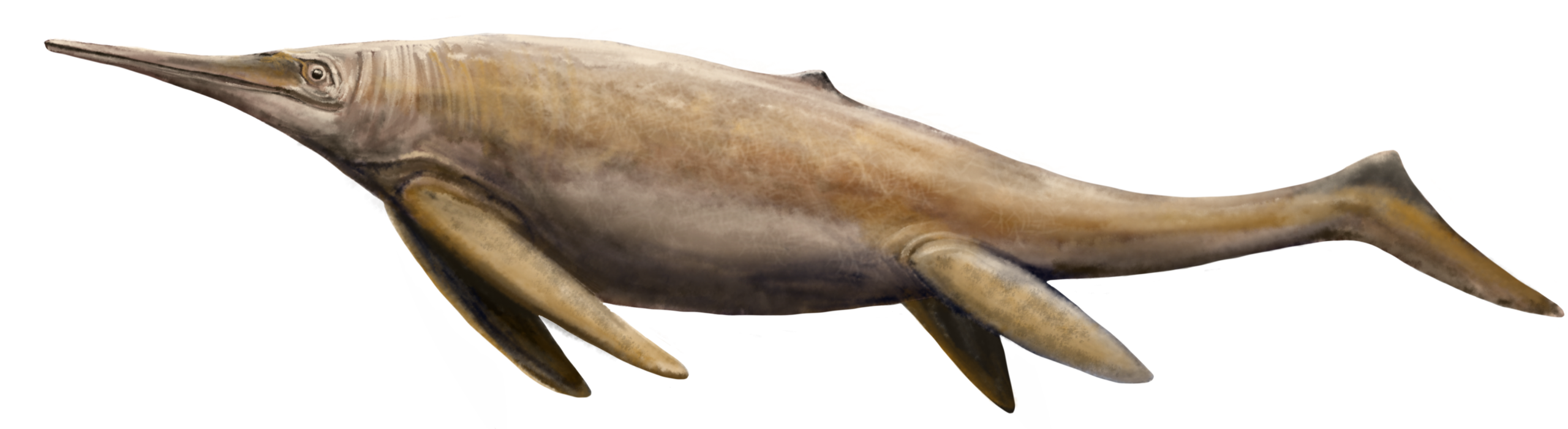
Before T-Rex even existed, the oceans were already producing animals of almost incomprehensible size. Ichthyotitan — a colossal ichthyosaur whose name literally means “fish titan” — approached 25 meters or more in length, with some estimates pushing beyond that. These were dolphin-shaped predators built at whale scale, hunting Triassic seas when the supercontinent Pangaea was still breaking apart beneath their fins.
Recent fossil discoveries in Europe confirmed just how massive these animals grew, and the numbers are staggering. In 2024, researchers formally named the species Ichthyotitan severnensis after jawbone fragments found on a Somerset beach in the UK — one discovered by an 11-year-old girl and her father on a casual fossil walk. Their sheer body weight, likely dozens of tons, was only possible because buoyancy in water removes the skeletal constraints that limit size on land. T-Rex was capped by gravity. Ichthyotitan simply wasn’t. It represents one of the largest animals ever confirmed in the fossil record, and it was doing it roughly 200 million years before the first Megalodon tooth was ever formed.
At a Glance
- Lived: ~202 million years ago, late Triassic Period
- Estimated length: ~25 meters (82 ft) — twice the length of a city bus
- Discovery: Jawbone fragments found in Somerset, UK in 2016 and 2020; formally named in 2024
- Status: Likely the largest marine reptile ever formally described
- Context: Existed ~135 million years before T-Rex first appeared
#3 – Mosasaurus: The Iconic Marine Lizard That Dominated an Entire Ocean
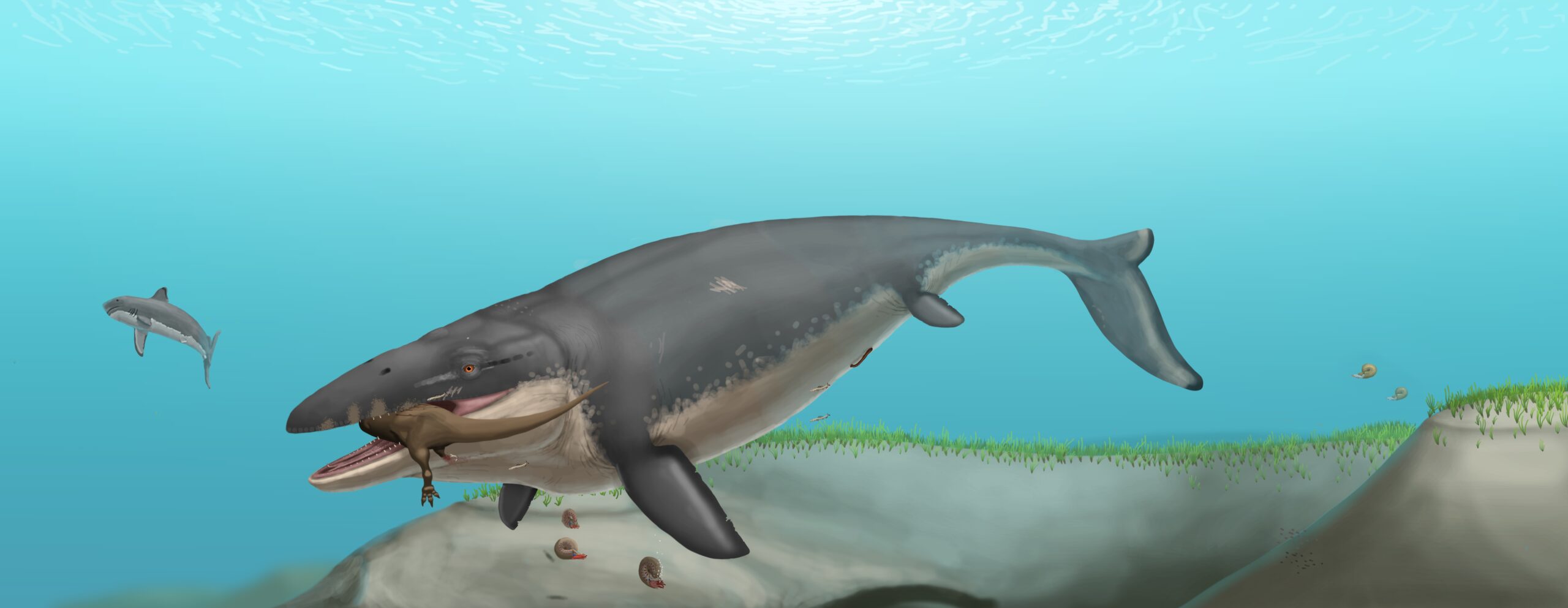
Mosasaurus hoffmannii has a special kind of terrifying origin story: it descended from land-dwelling lizards and, over millions of years, became a streamlined ocean killer stretching 12 to 17 meters long. Its skull was built for crushing and tearing, its double-hinged jaw could accommodate prey of remarkable size, and bite marks left on fossil turtles, fish, and other reptiles tell a story of genuinely versatile, relentless predation.
What made Mosasaurus particularly dominant wasn’t just its size — it was its global reach. Fossils turn up on nearly every continent, meaning this animal colonized ocean after ocean and thrived in conditions that killed off its competitors. It shared the Late Cretaceous world with T-Rex, but while that famous predator ruled a single patch of North American landscape, Mosasaurus owned the seas worldwide. When the asteroid hit 66 million years ago, it took both of them. But in terms of territorial dominance, it wasn’t even close.
#4 – Tylosaurus: The School-Bus-Length Mosasaur With a Name That Says Everything
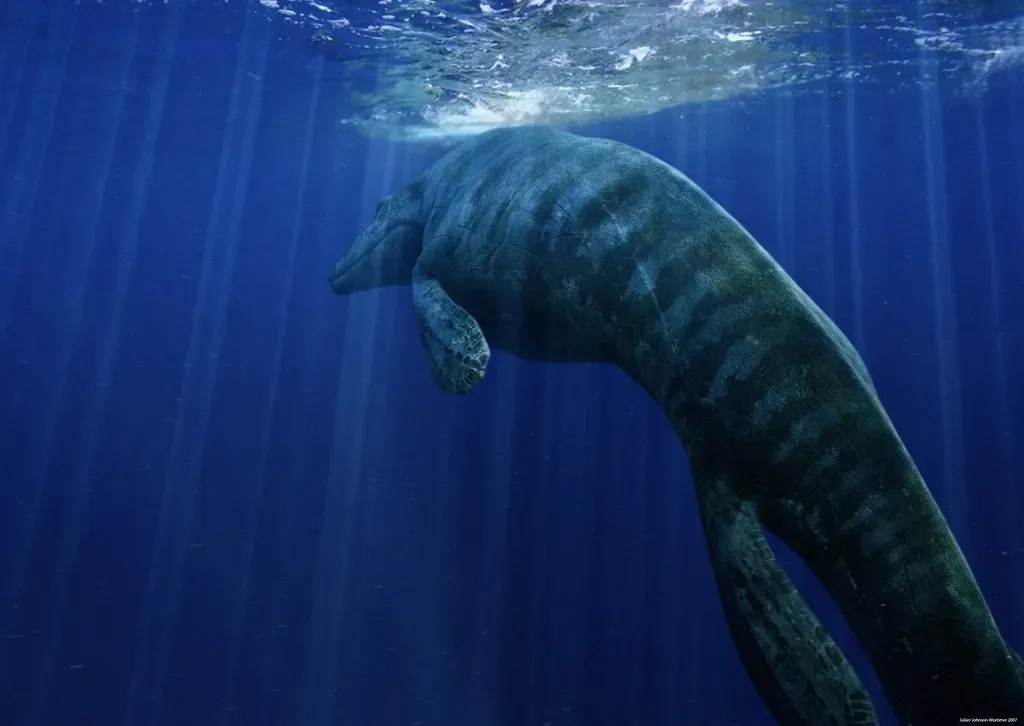
Within the mosasaur family, Tylosaurus rex carved out its own nightmarish niche. Growing to around 13 meters and earning a species name that deliberately echoes the most famous land predator in history, this animal was essentially a school bus with a skull designed for killing. It used powerful tail propulsion and paddle-like limbs to accelerate through the water column with a speed and aggression that left very few escape options for anything it targeted.
North American fossils show Tylosaurus outgrowing earlier relatives of its lineage, steadily occupying the role of apex predator in the Western Interior Seaway — the shallow inland sea that once split North America in two. While T-Rex stalked riverbanks and floodplains on the continent’s surface, Tylosaurus ran the water beneath. Two apex predators, same continent, completely different worlds. And the one in the water was longer.
Quick Compare: T-Rex vs. The Ocean’s Apex Predators
| Creature | Max Length | Bite Force (est.) | Habitat |
|---|---|---|---|
| T-Rex | ~12 m (40 ft) | ~57,000 N | Land |
| Megalodon | ~24 m (80 ft) | 182,000+ N | Open ocean |
| Mosasaurus | ~17 m (56 ft) | Very high (est.) | Global seas |
| Tylosaurus | ~13 m (43 ft) | Very high (est.) | Inland sea |
| Kronosaurus | ~11 m (36 ft) | Rival to T-Rex | Southern ocean |
#5 – Livyatan: The Whale That Hunted Other Whales With 36-Centimeter Teeth
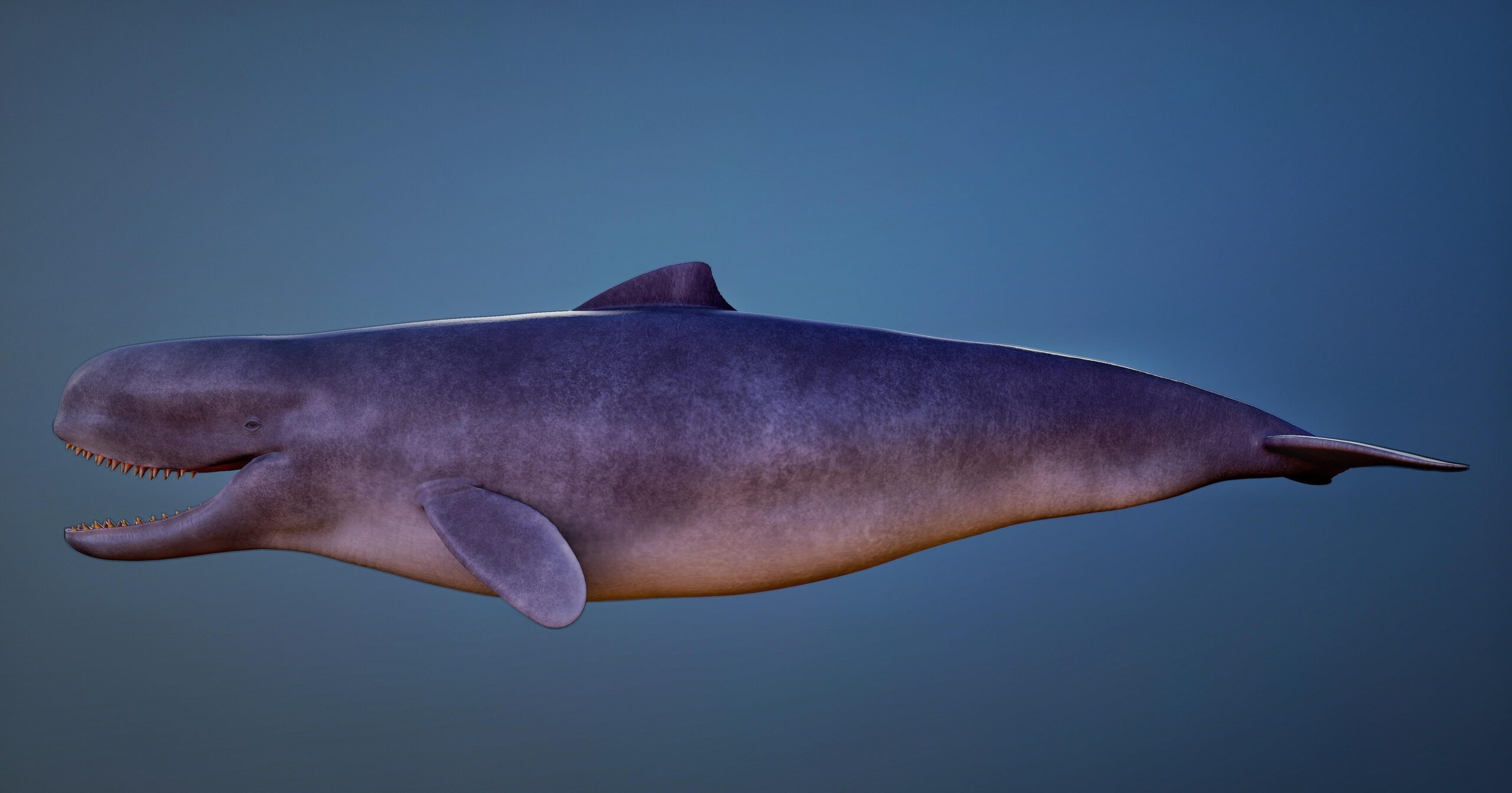
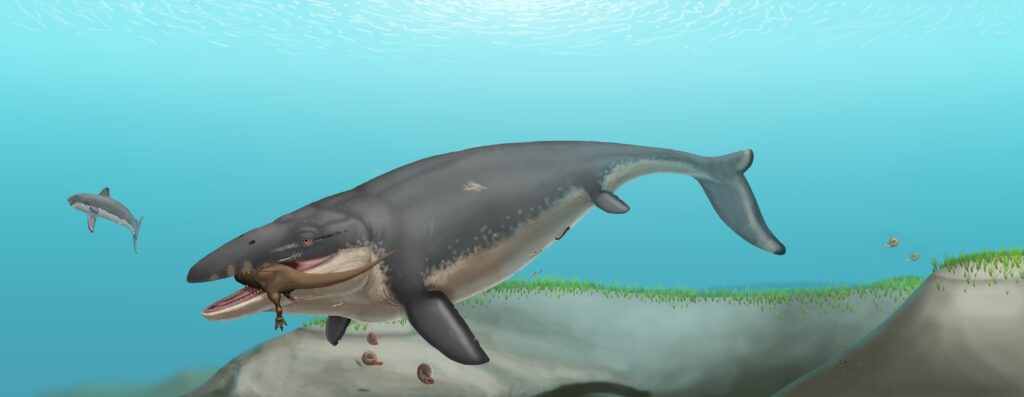
Modern sperm whales are filter-adjacent giants that dive deep for squid. Livyatan melvillei — named after the biblical sea monster and Herman Melville simultaneously — was something altogether different. At 13 to 17 meters, it possessed the largest functional teeth confirmed in any animal ever found: 36 centimeters of bone-crushing, flesh-tearing ivory that it used to hunt other whales. Not fish. Not squid. Whales.
What makes Livyatan so extraordinary is who it competed with. During the Miocene epoch, Megalodon was already patrolling warm ocean waters, and Livyatan was hunting the same prey in the same waters at roughly the same time. Two completely different evolutionary lineages — one a shark, one a whale — arriving at almost identical apex predator strategies simultaneously. Paleontologists believe competition between the two may have shaped both their fates. That’s not prehistory as a footnote. That’s an arms race between monsters.
#6 – Basilosaurus: The Early Whale That Was Nobody’s Gentle Giant
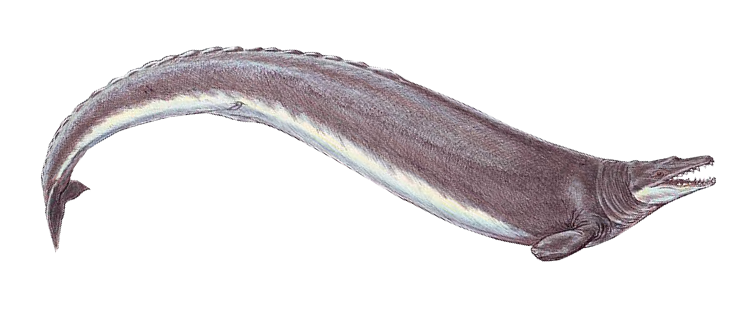
The first time someone found Basilosaurus fossils in the 19th century, they thought they had a sea serpent. The name means “king lizard,” and while it turned out to be an early whale rather than a reptile, the instinct wasn’t entirely wrong. Basilosaurus reached 18 meters, had a long eel-like body with vestigial hind limbs still attached, and patrolled Eocene seas around 40 million years ago with a bite force comparable to T-Rex.
Tooth marks found on the skulls of smaller prehistoric whale species confirm what the anatomy already suggested: Basilosaurus was a hypercarnivore. It wasn’t filtering plankton or eating fish by accident. It was targeting other warm-blooded marine mammals and killing them with precision. It represents one of evolution’s most dramatic pivots — a land mammal lineage that returned to the sea and, within a few million years, became one of the most dangerous things in it. T-Rex never managed a trick like that.
Worth Knowing
- Basilosaurus retained small, vestigial hind limbs — a remnant of its land-dwelling ancestors
- At 18 meters, it was longer than T-Rex by more than 6 meters
- Skull bite marks on Dorudon (a smaller ancient whale) confirm active predation, not scavenging
- It lived approximately 40–34 million years ago, during the Eocene epoch
- Its eel-like body design is unique among whales — no modern whale looks anything like it
#7 – Kronosaurus: The Pliosaur With a Skull Bigger Than Most Dinosaurs
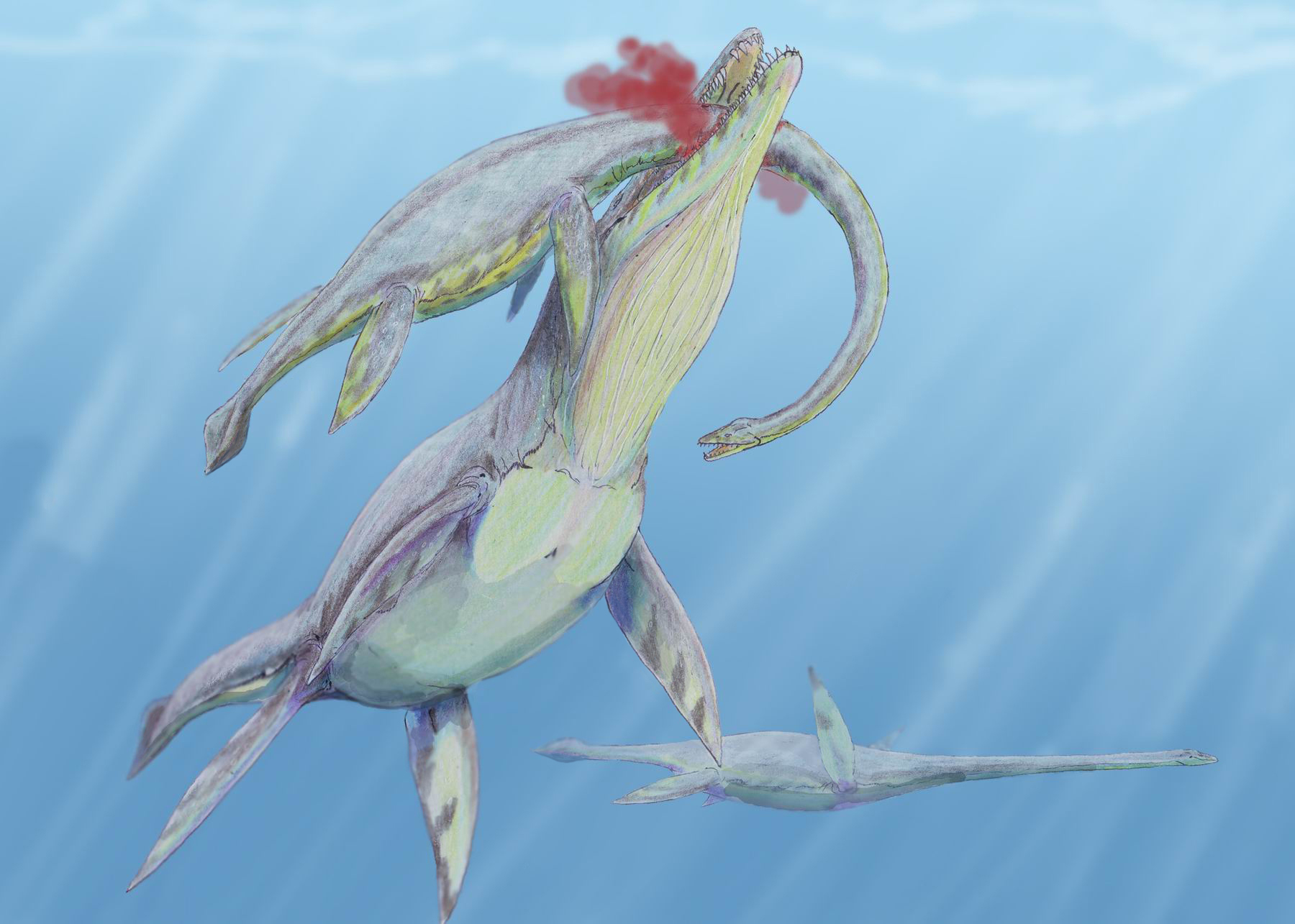
Kronosaurus is the creature that pliosaur enthusiasts bring up when they want to end a conversation about T-Rex. Named after the titan who devoured his own children, this short-necked marine reptile packed a skull nearly three meters long into a body roughly 10 to 11 meters in total length. To put that in perspective, its head alone was bigger than many complete dinosaur skeletons. Its teeth were thick, blunt, and built for crushing rather than slicing — the kind designed to go through bone.
Australian fossils place Kronosaurus as the apex predator of southern Cretaceous oceans, hunting other marine reptiles, large fish, and likely anything it could catch. Its thick flippers weren’t for casual swimming — they powered bursts of acceleration that made it an ambush specialist with real open-water speed. The bite force rivaled or exceeded T-Rex by credible estimates, and unlike T-Rex, it operated in a habitat where prey couldn’t disappear into undergrowth. In open water, Kronosaurus was inescapable.
#8 – Xiphactinus: The Fish That Choked on Its Own Ambition
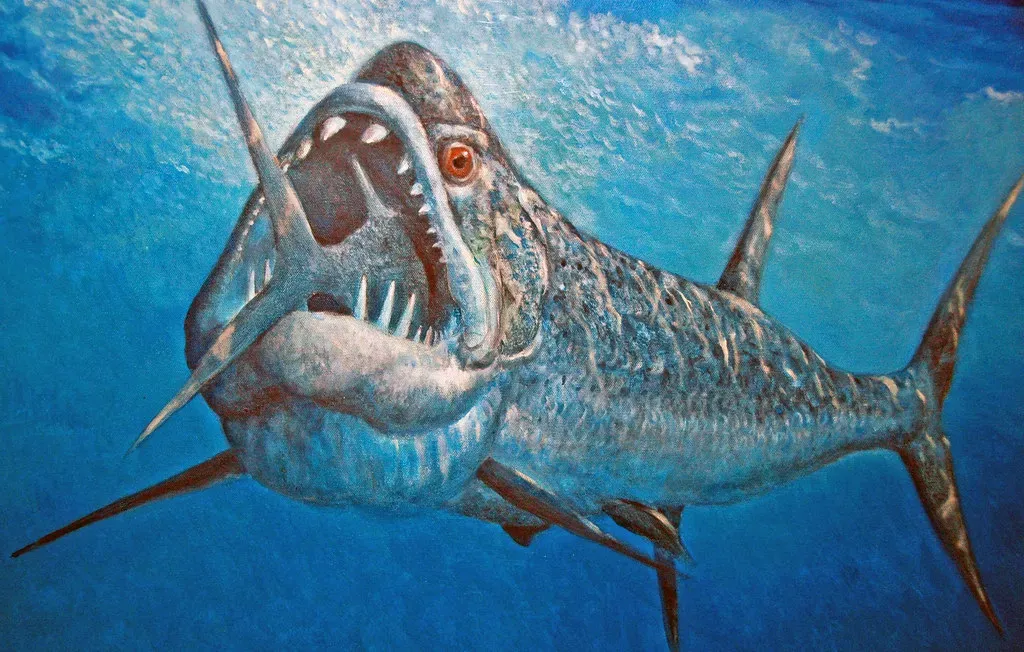
Xiphactinus is six meters of Cretaceous aggression with a gape wide enough to swallow a human being whole and a set of dagger-like teeth that look less like a fish and more like a medieval weapon. It patrolled the same inland seas as mosasaurs and plesiosaurs, hunting in a three-dimensional water column that land predators like T-Rex could never access. Its ambush style was brutal: accelerate, strike, and gulp prey whole before the victim even registered what happened.
The fossil record delivered one of paleontology’s most viscerally memorable images when researchers found a Xiphactinus specimen with an almost perfectly preserved, nearly two-meter fish still inside its stomach. The prey was so large it likely caused fatal internal injury — the predator killed by its own catch. That single fossil tells you more about the extreme feeding strategy of this animal than any description can. T-Rex never swallowed a meal the size of a man whole. Xiphactinus apparently did it regularly enough to occasionally die from it.
Why It Stands Out
- At 6 meters, Xiphactinus was one of the largest bony fish of the Cretaceous
- Famous “fish-within-a-fish” fossil shows a nearly 2-meter Gillicus preserved whole inside its body
- Its upturned jaw and fang-like teeth were built for striking upward at prey from below
- Hunted the Western Interior Seaway alongside mosasaurs and sharks — surviving all of them until the asteroid hit
#9 – Helicoprion: The Buzz-Saw Shark That Took Teeth to Their Logical Extreme
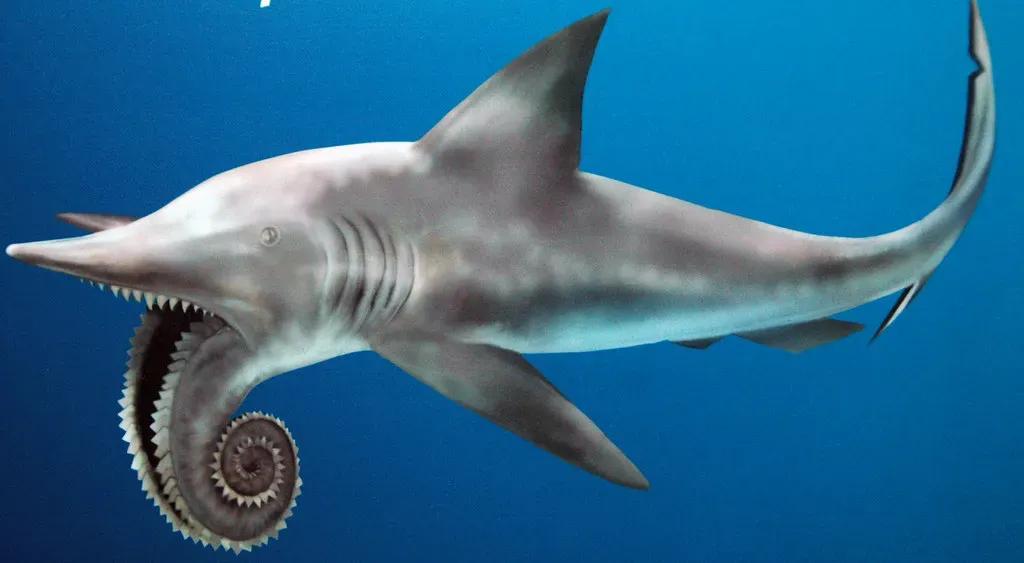
Sharks are famous for their teeth — rows of replaceable, razor-sharp blades cycling through across a lifetime. Helicoprion looked at that system and somehow decided it wasn’t extreme enough. This Permian-era shark, reaching perhaps 12 to 15 feet, evolved a spiral whorl of teeth embedded directly in its lower jaw — a rotating coil of more than a hundred teeth that grew continuously outward as new ones formed at the center. Nothing like it has existed before or since.
For decades, paleontologists genuinely couldn’t figure out where in the body this spiral even went. The tooth whorl was the most common fossil found, but reconstructing it took over a century of debate. Modern analysis placed it in the lower jaw, where it likely worked as a saw-and-scoop mechanism to shred squid and soft-bodied fish. Helicoprion survived through multiple geological periods before disappearing, which means this bizarre feeding weapon wasn’t a fluke — it worked. Extraordinarily well. T-Rex had two small arms and some impressive teeth. Helicoprion had a built-in circular saw in its face.
#10 – Dunkleosteus: Armored, Toothless, and Still the Most Dangerous Thing in the Devonian Sea
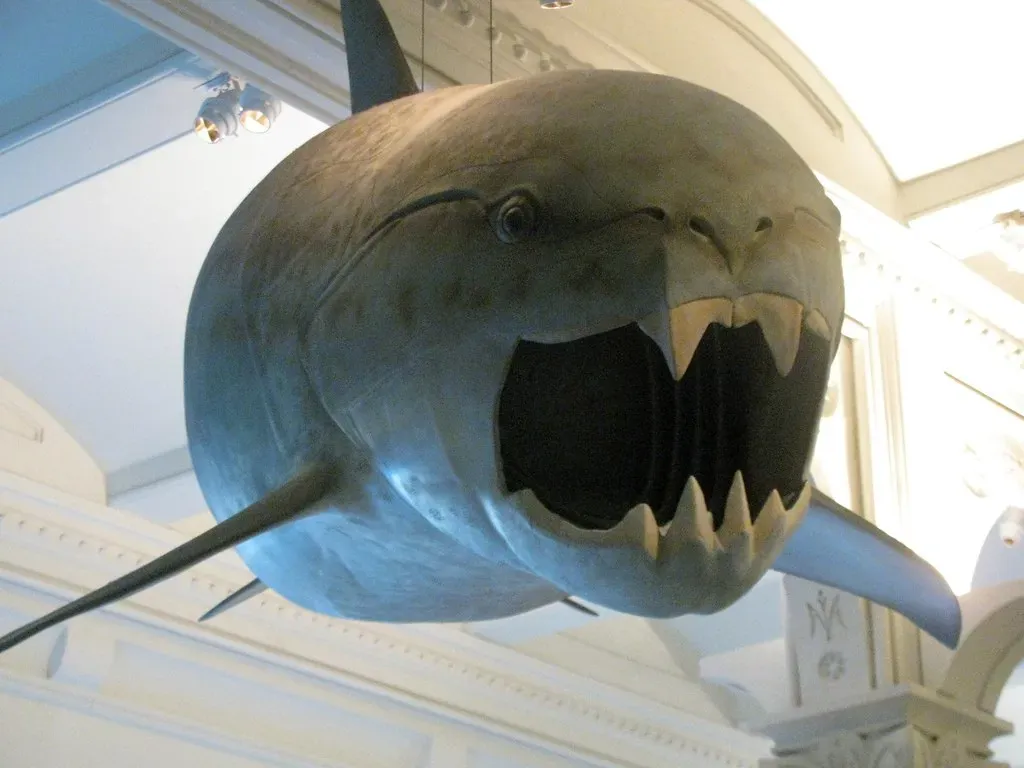
Dunkleosteus lived roughly 360 to 380 million years ago — more than 300 million years before T-Rex first appeared — and it was already doing things with a skull that evolution wouldn’t attempt again. A placoderm fish covered in articulated bony armor, it had no true teeth at all. Instead, it had self-sharpening bony plates that functioned like a guillotine, generating bite forces among the most powerful of any fish in history. It ate armored prey because almost nothing was armored enough to stop it.
What made Dunkleosteus especially terrifying was the speed of its attack. Biomechanical modeling shows its jaw could open completely in just 50 to 60 milliseconds — creating a suction vortex that pulled prey inward before those bony plates snapped shut. Fossils of its stomach contents frequently show partially digested, regurgitated remains of other armored fish — suggesting it ate so heavily and so often that it literally threw up what it couldn’t fully digest. The Devonian oceans were Dunkleosteus’s private hunting ground. Then a mass extinction took it away, and the seas had to start over building something terrible.
Fast Facts
- Era: Late Devonian, ~358–382 million years ago — over 300 million years before T-Rex
- Jaw speed: Full gape achieved in just 50–60 milliseconds, generating prey-sucking vortex
- Weapon: Self-sharpening bony jaw plates instead of teeth — the strongest bite of any known fish
- Diet: Armored sharks, arthropods, ammonoids — it could devour virtually anything in its environment
- Evidence: Regurgitated boluses of half-digested armored fish found alongside its fossils
#11 – Anomalocaris: The 500-Million-Year-Old Proof That the Ocean Was Already Deadly
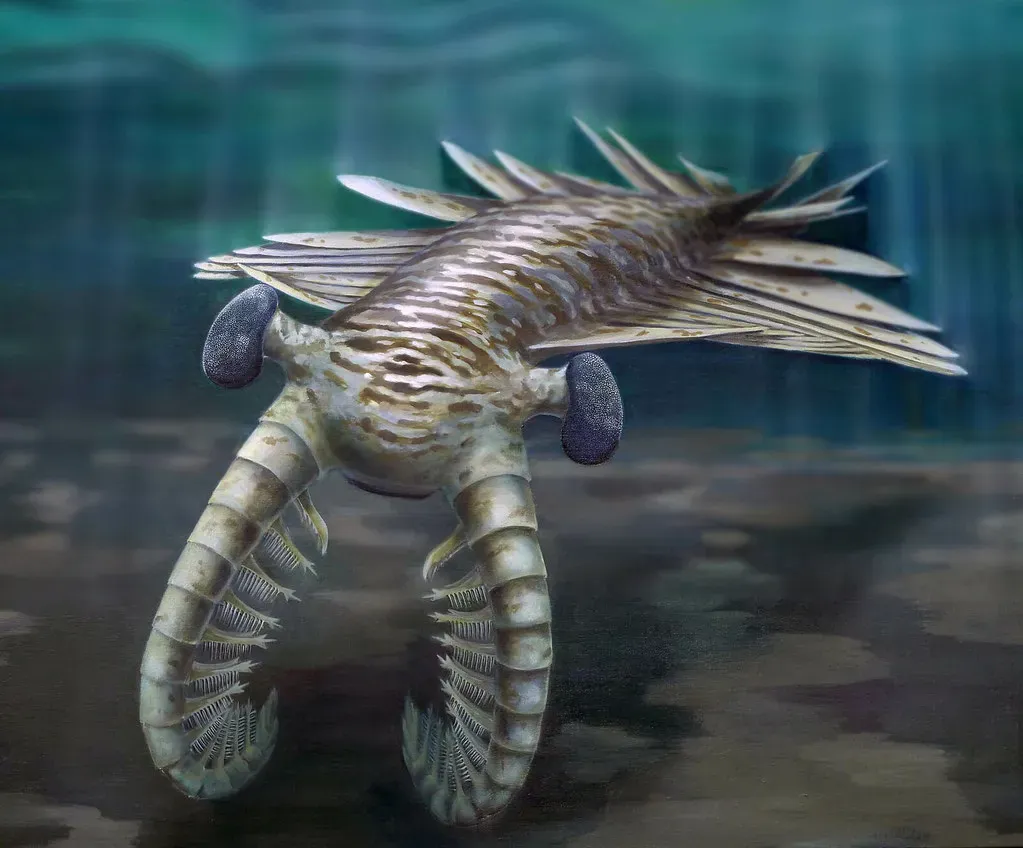
Everything on this list evolved in the shadow of what Anomalocaris already figured out over 500 million years ago. During the Cambrian explosion, when most life was small, soft, and barely complex, this creature appeared with a body plan that scientists still find startling: grasping frontal appendages built for snatching prey, a circular mouth lined with overlapping tooth plates, and compound eyes with up to 16,000 lenses — better visual acuity than most modern arthropods alive today.
At up to three feet long, Anomalocaris sounds modest next to Megalodon or Ichthyotitan. But size is relative. In the Cambrian, most animals were measured in centimeters. Anomalocaris was effectively the T-Rex of its era — except it lived in the sea, and it got there roughly 440 million years earlier. It established the template: apex predator, superior sensory equipment, specialized anatomy for capturing prey. Every creature on this list inherited a world that Anomalocaris helped design. That’s not a footnote. That’s a legacy.
The Ocean Always Won
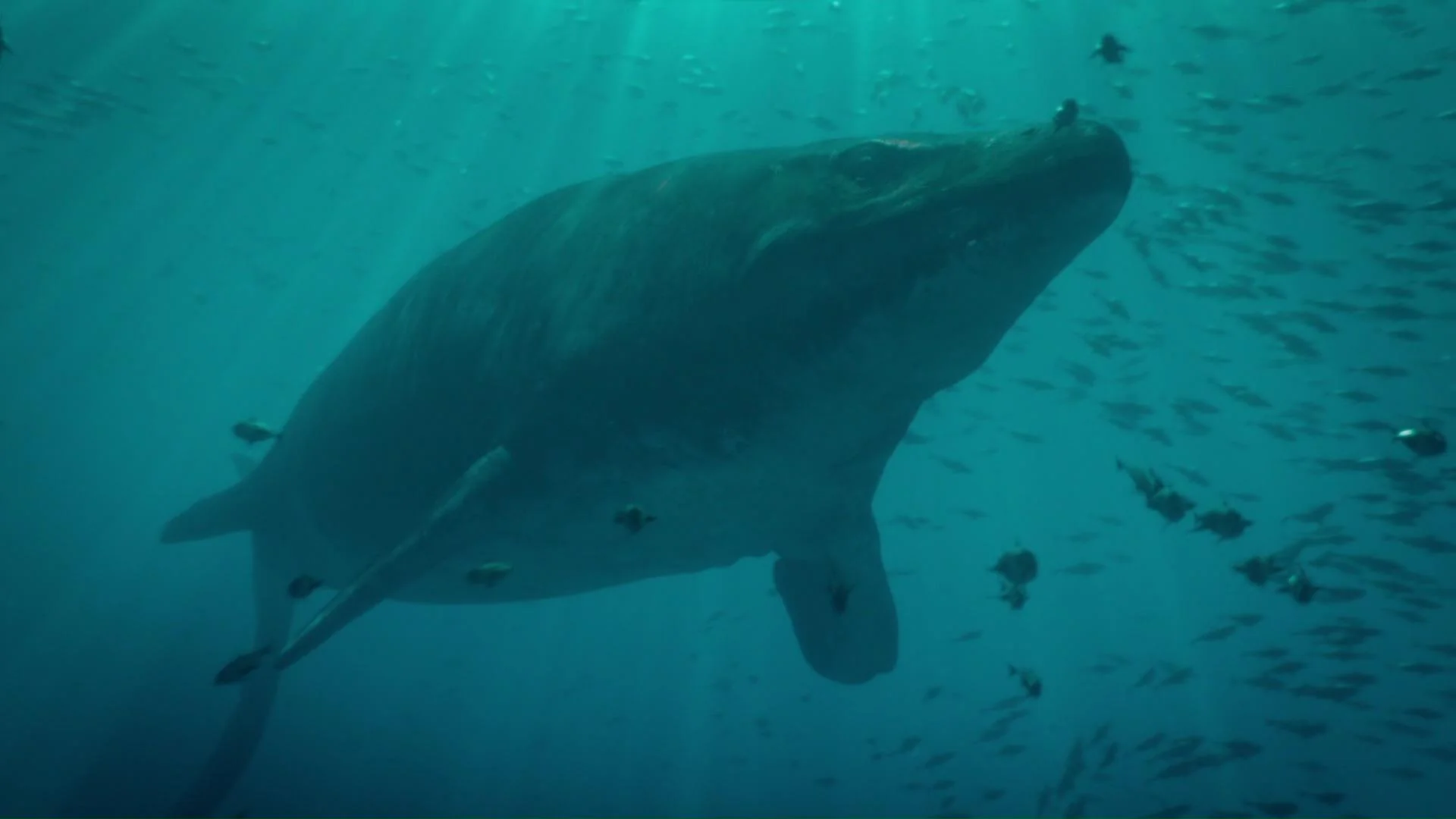
Here’s the honest conclusion the fossil record keeps arriving at: the land was never where the true giants lived. T-Rex was extraordinary for what it was — a land-based killing machine constrained by gravity, terrain, and the biological ceiling that comes with moving on two legs across solid ground. But the ocean had no such ceiling. It produced things that weighed 60 tons, grew 25 meters long, hunted whales for sport, and existed for millions of years before the first dinosaur ever drew breath.
What’s genuinely unsettling isn’t just the scale of these animals. It’s the diversity. Sharks, whales, fish, lizards, ancient arthropods — evolution kept arriving at the same answer across completely unrelated lineages: go into the ocean, and you can become something terrifying. Megalodon and Ichthyotitan sit at the top of this list by sheer measurable size and predatory dominance, but every creature here earned its place. T-Rex gets the movies. These animals got the oceans. And for hundreds of millions of years, the oceans were far more dangerous.