Picture an ocean where nothing with a backbone has ever hunted in open water before. No dolphins, no sharks as we know them today, no whales thundering through the deep. Into that wide, relatively empty blue rolled the first big marine reptiles, and within a few million years they turned into streamlined, sharp‑toothed torpedoes that dominated the food chain. That is the core reason evolutionary theorists keep coming back to the same conclusion: these animals were not just impressive, they were stunningly successful experiments in predation.
What makes this story even more compelling is that marine reptiles did it several times over. Different reptile lineages kept wandering back into the sea, and over and over evolution produced fast swimmers, deep divers, and ambush hunters that rival anything alive today. When you compare them to modern ocean predators, you start to see eerie parallels and clever workarounds, as if evolution kept remixing the same deadly playlist. The result is a chapter of Earth’s history that feels strangely familiar and totally alien at the same time.
The First Wave: How Reptiles Took Over The Ancient Seas
![The First Wave: How Reptiles Took Over The Ancient Seas (By Printed under a CC BY license, with permission from Nadine Bösch and Beat Scheffold, original copyright [2013]., CC BY 2.5)](https://nvmwebsites-budwg5g9avh3epea.z03.azurefd.net/dinoworld/4ddfabcc3a56d82dd95db916ac039746.webp)
It is almost shocking how quickly reptiles seized the oceans once they dipped more than a toe back into the water. After the end‑Permian extinction wiped out a huge portion of marine life, there was ecological space everywhere: open niches, abandoned roles, prey without many efficient hunters. Early in the Triassic Period, some land reptiles started adapting to coastal and shallow‑water lifestyles, and from there evolution pushed them into full marine mode. You see transitional fossils with limbs turning into paddles, bodies becoming more streamlined, and tails starting to do more of the work.
Within a relatively short geologic window, the seas went from being dominated by invertebrates and fish to having new reptilian contenders rising fast up the food chain. These first marine reptiles were not instantly apex predators, but they were flexible, opportunistic feeders that could exploit everything from small fish to shelled animals. Their success illustrates one of evolution’s favorite strategies: when an environment opens up, generalists rush in, then specialization explodes. From that early wave came the foundations of lineages like ichthyosaurs, plesiosaurs, and mosasaurs that would later redefine what “top predator” meant in the ocean.
Ichthyosaurs: Dolphin‑Shaped Missiles With Monster Eyes
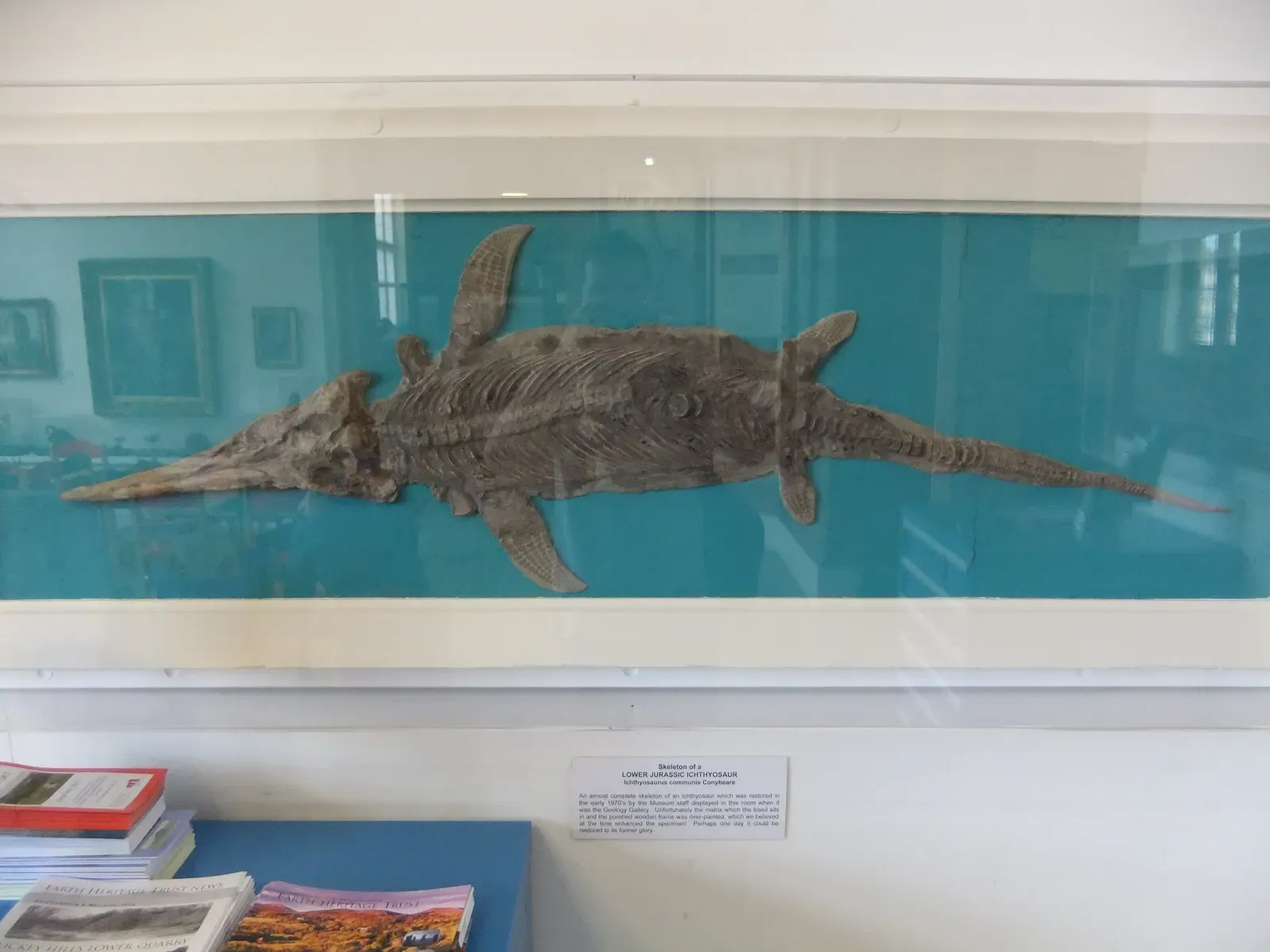
Ichthyosaurs are probably the clearest example of convergent evolution turning reptiles into something shockingly similar to modern dolphins and tunas. Their bodies became cigar‑shaped and hydrodynamic, with crescent tails built for speed and limbs flattened into stiff paddles for steering. Many species had enormous eyes supported by bony rings, which likely helped them hunt in dim light or deeper waters where vision is at a premium. If you mentally swap out the scales and teeth for smooth skin and a blowhole, you can see how similar their basic blueprint is to that of today’s fast pelagic predators.
What really stands out about ichthyosaurs is how well they adapted across time and ecosystems. Early, more lizard‑like forms gave way to high‑speed, fish‑eating specialists that probably chased prey in the open ocean much like modern billfish or orcas. Some species reached gigantic sizes, while others remained mid‑sized hunters, filling multiple tiers of the marine food web. Their long evolutionary run, spanning tens of millions of years, is a strong reason why many paleontologists see them as one of nature’s most consistently successful predator designs. They were not a brief experiment; they were a long‑running franchise.
Plesiosaurs And Pliosaurs: Long Necks, Huge Skulls, And Different Killing Styles
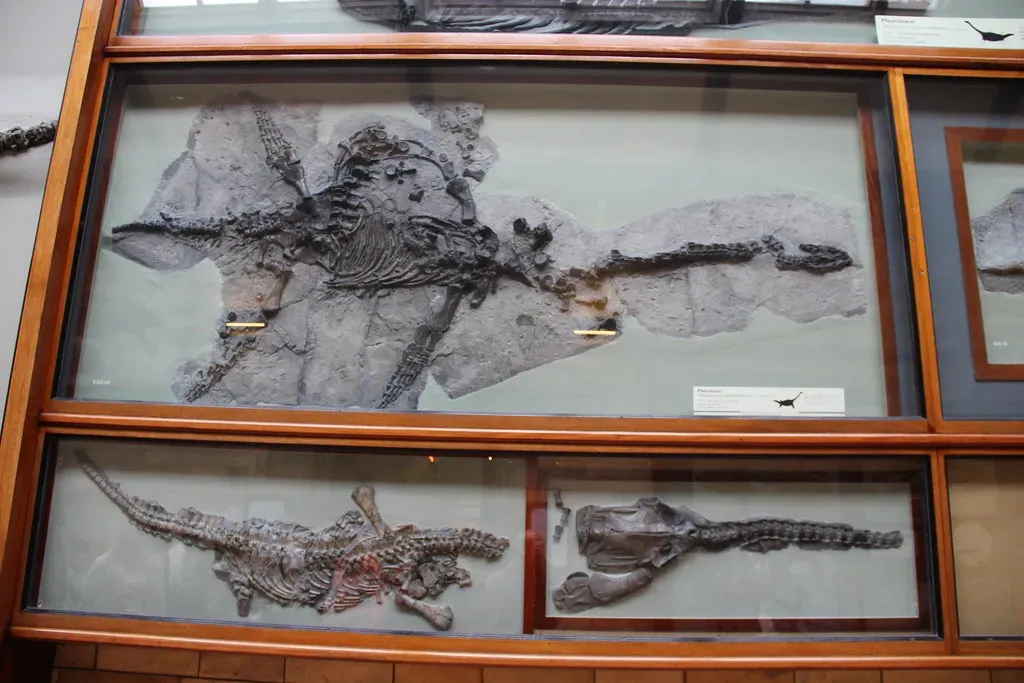
At first glance, plesiosaurs look like something a child might design: four big flippers, a broad body, and either a ridiculously long neck or a massive head. But that odd build turned out to be extremely effective in the water. Long‑necked plesiosaurs, with dozens of vertebrae in their necks, likely used stealth and flexibility to snap up fish and squid with minimal body movement. Their four‑flipper system created powerful yet controlled swimming, almost like underwater flight that allowed fine maneuvering around prey schools or into tight spaces.
Their close relatives, the pliosaurs, leaned into a very different strategy: shorter necks paired with enormous skulls and muscle‑packed jaws. These were the bruisers of the marine reptile world, armed with thick conical teeth ideal for grabbing and shaking large prey, including other marine reptiles. Some species reached sizes comparable to a bus, making them plausible apex predators near the top of their ecosystems. The contrast between long‑necked fish-snatchers and short‑necked giant hunters, all built on the same basic body plan, is a great example of how evolution can stretch one design into very different predatory roles. In modern terms, it is like getting both a heron and a crocodile out of the same chassis.
Mosasaurs: The Late‑Coming Sea Lizards That Ruled The Cretaceous
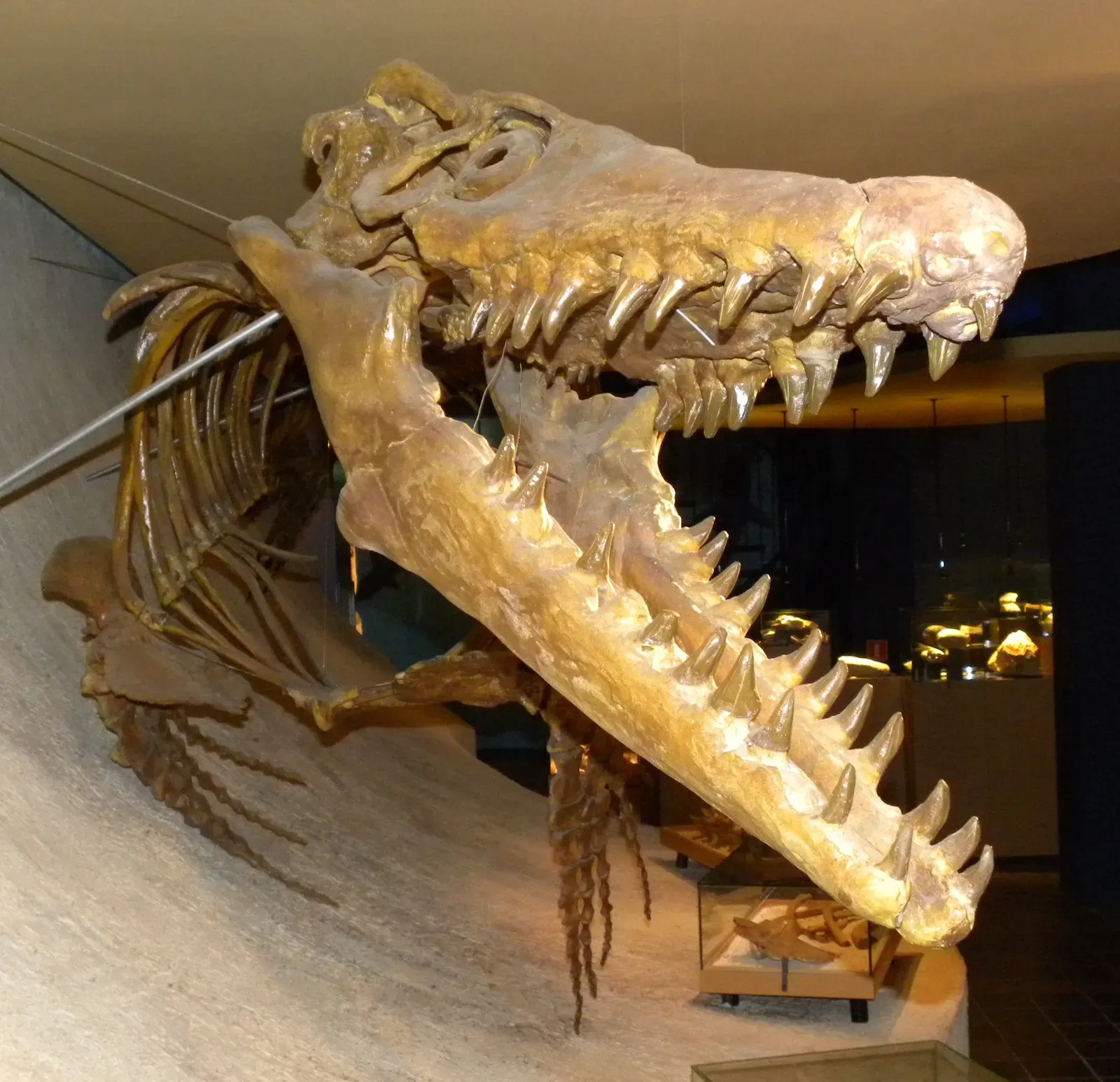
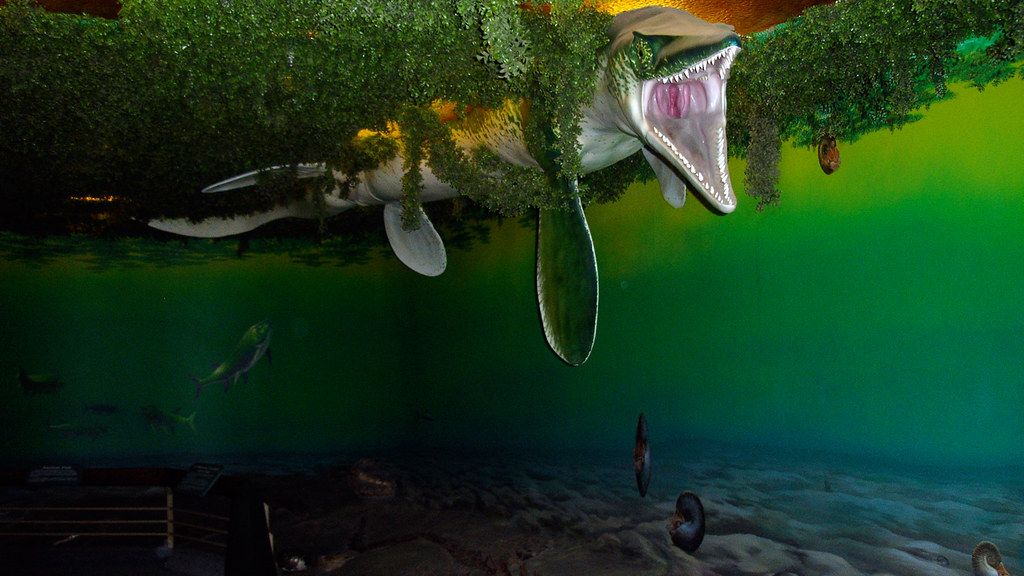
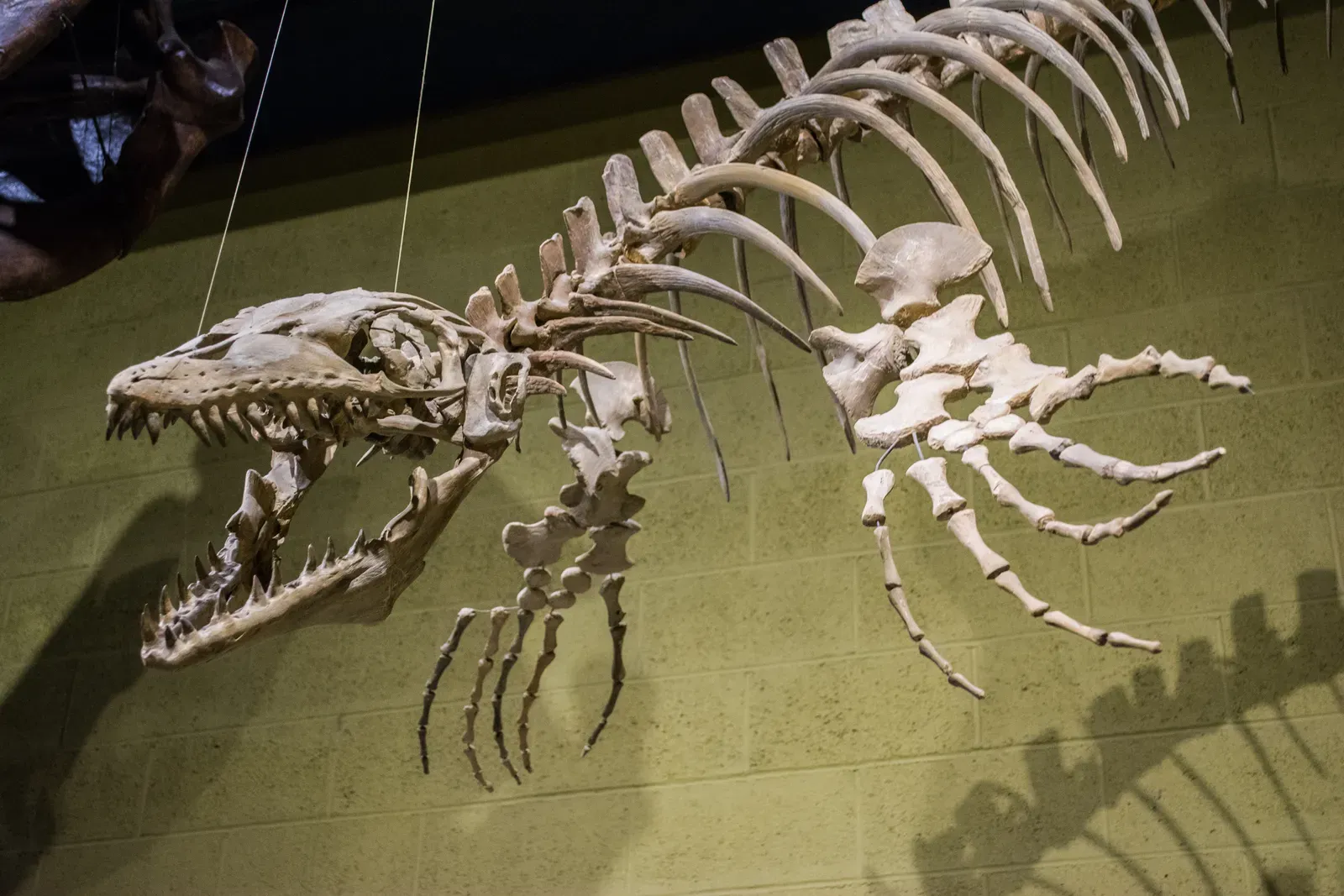
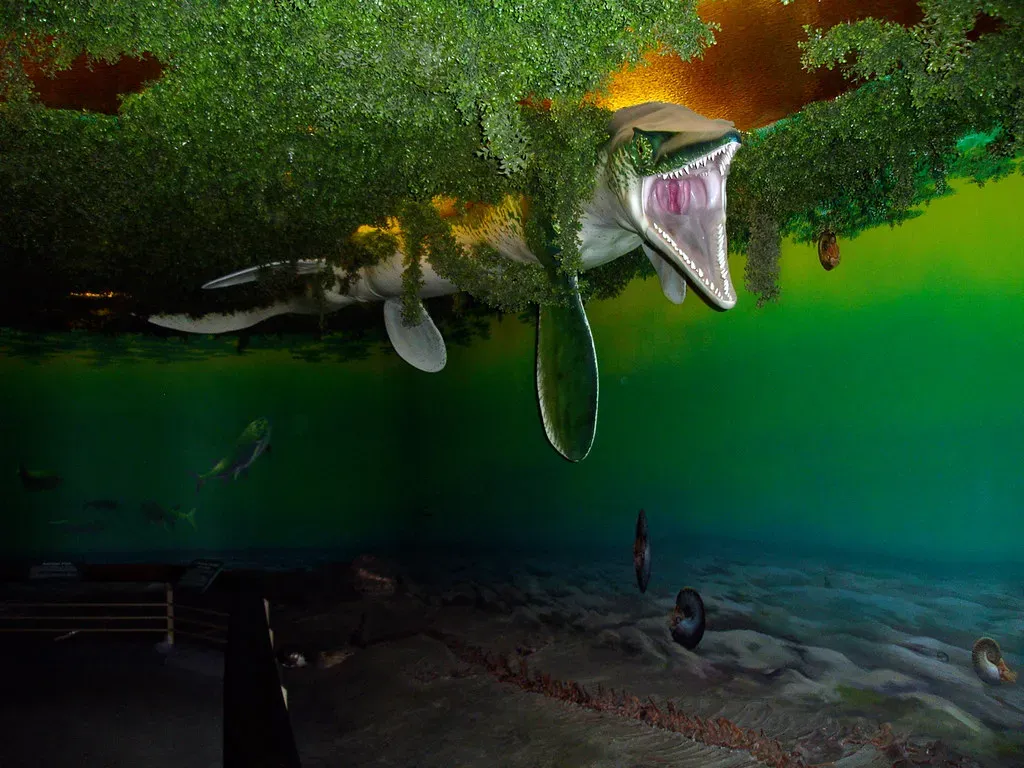
Mosasaurs were late arrivals to the marine reptile party, but they wasted absolutely no time in taking over. Descended from land‑living lizards, they evolved long, muscular bodies, powerful tails, and paddle‑like limbs that turned them into shark‑shaped reptiles with lizard heads full of recurved teeth. By the Late Cretaceous, they were prowling warm shallow seas, continental shelves, and inland waterways, hunting everything from fish and squid to turtles and other reptiles. Some of the largest species grew to lengths that rivaled or exceeded many modern whales in sheer presence, even if not in total mass.
What makes mosasaurs so impressive is how ecologically diverse they became in a short evolutionary span. There were slender, likely fast‑swimming forms targeting smaller prey and bulky, deep‑jawed species capable of crushing shells or tearing apart large animals. Fossil stomach contents show they were not picky, including fish, ammonites, sea birds, and smaller marine reptiles in their diet. This adaptability, combined with their global spread, is a big reason evolutionary theorists consider them among the most spectacular apex predators of their time. If you dropped a mosasaur into many modern marine food webs, it would probably start climbing the ranks almost immediately.
Why Evolutionary Theorists Call Them “Successful” Predators
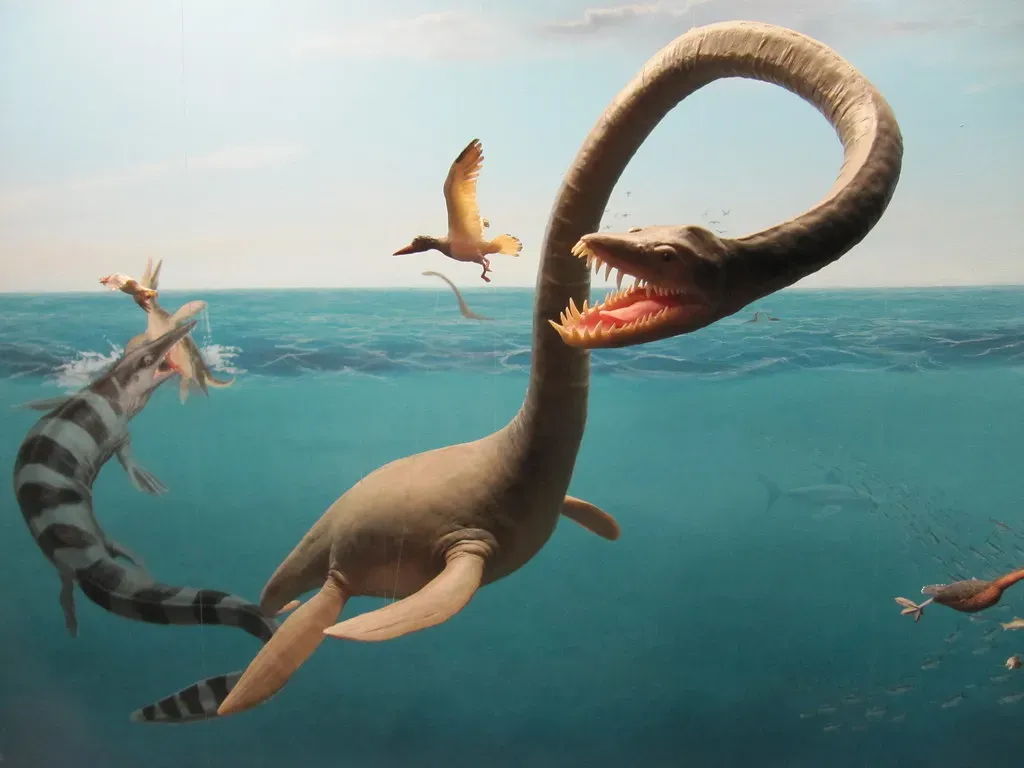
Being terrifying is not enough to count as evolutionary success; what matters is long‑term survival, spread, and the ability to adapt to changing conditions. Marine reptiles, as a group, check those boxes remarkably well. Different lineages occupied top or near‑top predator roles across much of the Mesozoic Era, roughly spanning more than a hundred million years. They invaded multiple ocean basins, diversified into many body sizes and hunting strategies, and repeatedly produced species that dominated local food webs. That kind of staying power is not a fluke; it signals that their basic predatory toolkits worked in a wide range of environments.
From an evolutionary theory standpoint, their success also lies in how often similar solutions emerged from different starting points. Ichthyosaurs, plesiosaurs, pliosaurs, and mosasaurs all came from different land‑based ancestors, yet evolution pushed them toward streamlined bodies, efficient propulsion, and sensory systems tuned to hunting in water. This repeated convergence suggests that certain designs are especially effective in marine predation, almost like attractors in evolutionary “design space.” In my view, that is the most fascinating part: marine reptiles did not just dominate once, they kept re‑inventing dominance using slightly different blueprints but the same underlying rules.
How They Stacked Up Against Sharks, Whales, And Other Ocean Killers
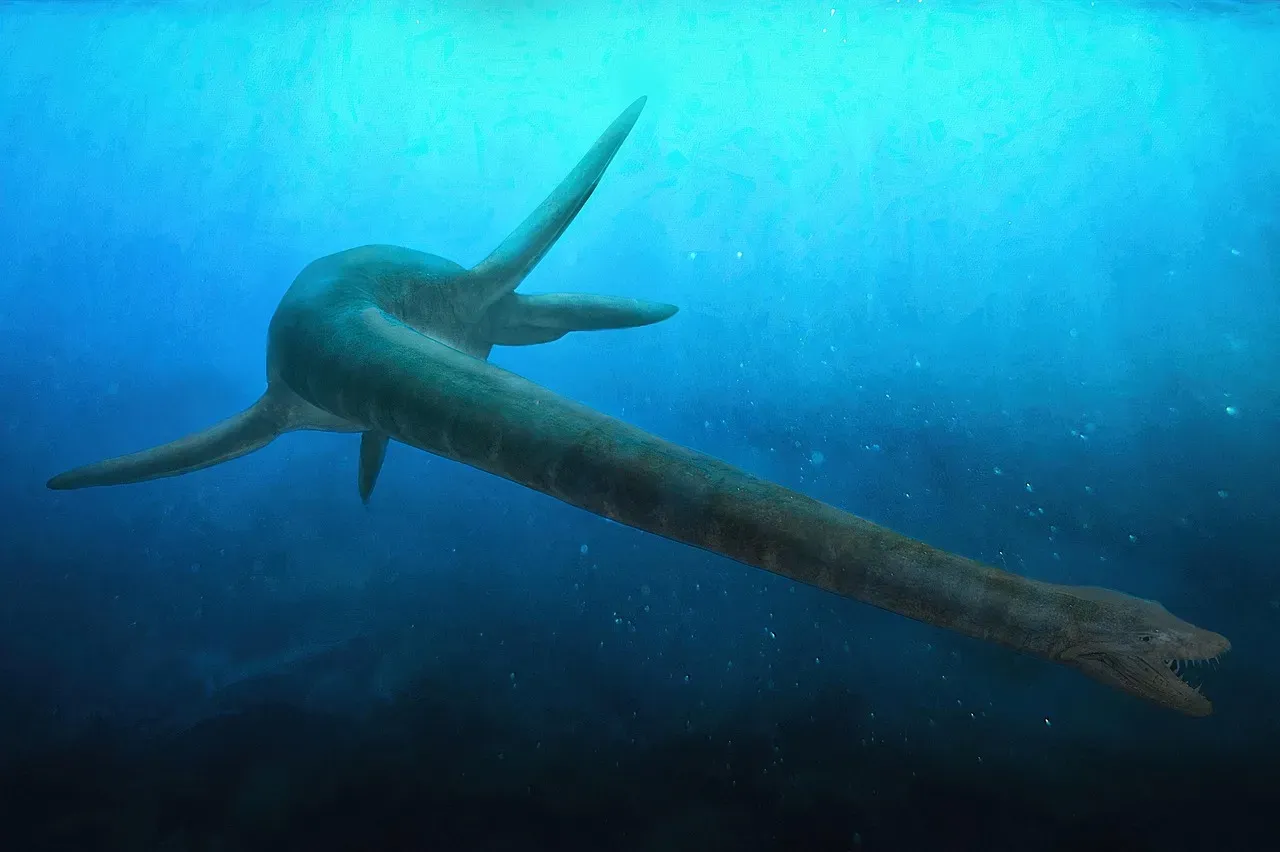
Comparing extinct marine reptiles to modern sharks and whales is a bit like comparing classic race cars to today’s Formula 1 machines. The tracks have changed, the rules are different, but you can still spot shared engineering principles. Ichthyosaurs occupy a similar functional role to fast, pelagic fish and dolphins, while pliosaurs and big mosasaurs feel more like the ecological cousins of orcas or giant sharks. They all emphasize streamlined shapes, powerful tails, and sensory adaptations to track and capture agile prey in three‑dimensional space. The details differ, but the overall predatory logic is surprisingly consistent.
Where marine reptiles really stand out is in how many separate lineages achieved apex status in the same broad era. Modern oceans have sharks and marine mammals sharing high‑level predatory roles, but during the Mesozoic you had multiple reptile groups doing the same, often alongside large predatory fish and early sharks. That created layered, complex food webs where marine reptiles were frequently at or near the top. If you measure success by how often a group reaches that level and how long it stays there, marine reptiles more than earn their reputation. There is a reasonable argument that, as a collective, they were the most consistently dominant vertebrate predators in marine environments for a very long slice of Earth’s history.
Extinction, Replacement, And The Legacy They Left Behind
Of course, even the most successful predators are not immune to bad luck on a planetary scale. The end‑Cretaceous mass extinction that swept away non‑avian dinosaurs also finished off mosasaurs, plesiosaurs, and their kin. Earlier in the Jurassic and Cretaceous, other marine reptile groups had already declined or disappeared, sometimes gradually as environments shifted or competitors rose. On paper, you could look at this and say they ultimately failed, but that is a very narrow, human‑centered way to judge success. Lasting tens of millions of years and reshaping entire ecosystems is an achievement, even if it ends in a catastrophic reset.
Their disappearance opened the door for other groups to claim similar roles, particularly modern sharks and marine mammals. In a way, whales, seals, and large sharks are walking (or swimming) tributes to the same evolutionary possibilities marine reptiles explored earlier. The fact that ocean predators today echo so many of their shapes and strategies is part of their legacy. When you see an orca or a great white slicing through the water, you are looking at a modern answer to the same problem marine reptiles solved long ago: how to turn a vertebrate body into a highly efficient killing machine in the sea. Their story did not end so much as it got handed off to a new cast.
Conclusion: Nature’s Serial Experiment In Apex Predators
When , they are not just being dramatic, and frankly, I think they are underselling it a bit. These animals did not merely show up, get big, and then vanish; they repeatedly climbed to the top of marine food webs, adapted to shifting climates and ecosystems, and spawned multiple lineages of specialized hunters. From torpedo‑shaped ichthyosaurs to skull‑heavy pliosaurs and powerhouse mosasaurs, their variety alone makes today’s oceans feel almost restrained by comparison. If success is measured in time, reach, and ecological impact, marine reptiles are not just contenders – they are in the champion’s league.
My own opinion is that we are still a little biased by living in a world dominated by mammals and modern sharks, so we instinctively treat them as the gold standard for ocean predation. The more we learn about marine reptiles, the more that default view starts to wobble. These animals show that evolution can produce apex predators again and again from very different starting points, and that dominance is always temporary, no matter how perfect a design seems. Maybe the humbling lesson here is that even the mightiest ocean hunters are just one mass extinction away from becoming someone else’s fossil inspiration. If you had to place a bet, would you really be sure our era’s predators are any more “ultimate” than theirs?