For most of the 20th century, paleontologists thought they had T. rex figured out. Big. Scaly. Upright. Slow-brained. A lumbering predator with laughably useless arms that somehow ruled the Cretaceous anyway. Museums built entire wings around that image. Hollywood turned it into a billion-dollar monster. And then, one fossil at a time, the whole picture started cracking apart.
What’s happened since is something rare in science: not a single correction, but eleven separate moments where researchers looked at the evidence and had to say, “We were wrong. Fundamentally, embarrassingly wrong.” Some of these reversals rewrote textbooks. A few are still sending shockwaves through the field right now. The T. rex waiting at the end of this list barely resembles the creature most of us grew up fearing.
#1 – The Posture Overhaul That Made Every Museum Mount Wrong
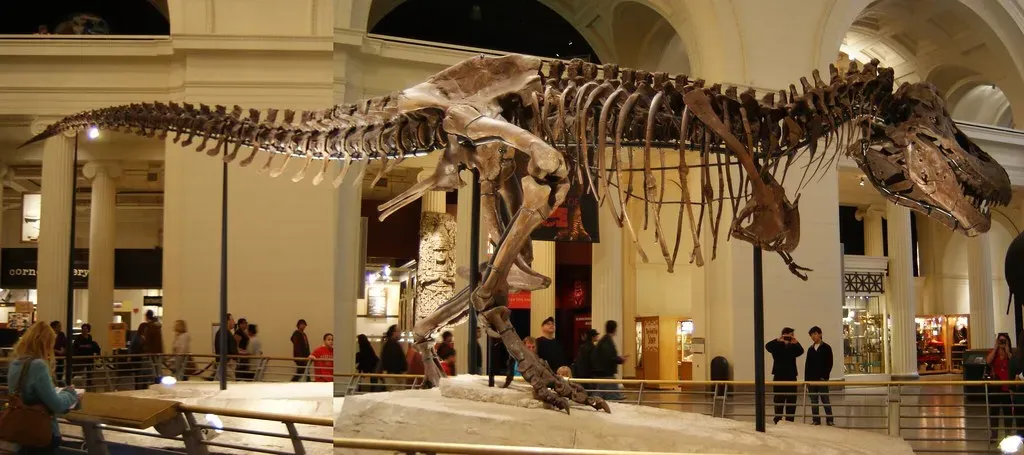
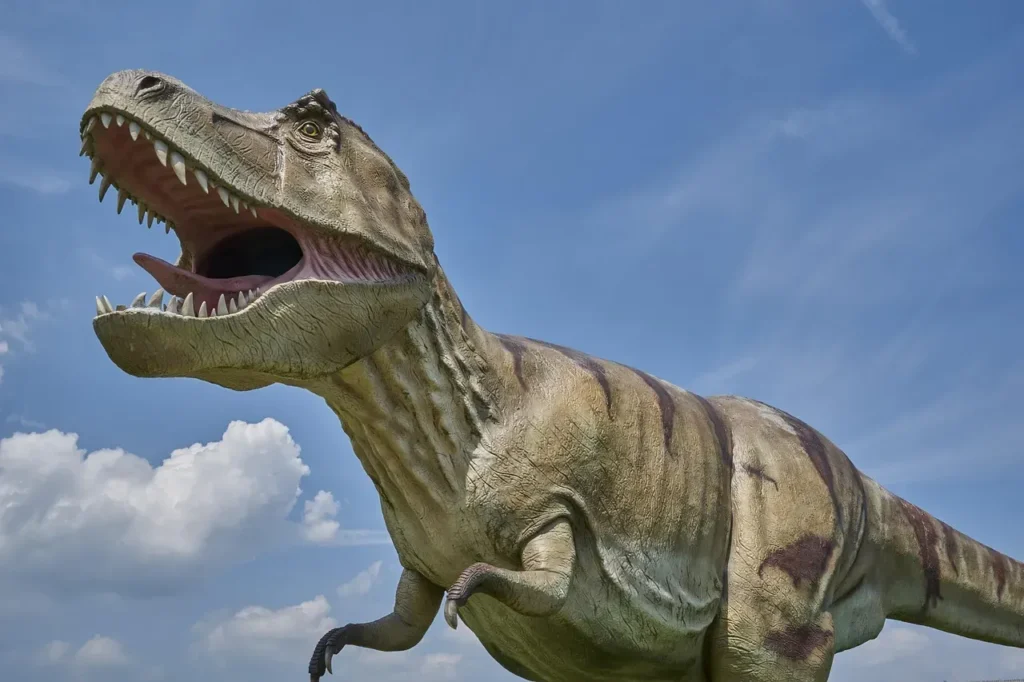
Walk into almost any natural history museum built before the 1970s and you’ll find the same pose: T. rex rearing upright, chest forward, tail dragging behind it like a giant anchor. It looked powerful. It looked terrifying. It was also completely, mechanically impossible. Biomechanical studies eventually showed that holding that kangaroo-style stance would have placed catastrophic stress on the animal’s spine and tail vertebrae. The real posture kept the torso nearly horizontal, with the massive tail extended behind it as a constant counterbalance.
That single correction had a cascade effect that nobody initially anticipated. Every estimate of how T. rex moved, turned its head, charged prey, or even breathed was built on the wrong geometry. Early 20th-century museum mounts had the bones physically arranged incorrectly, and the hunting models built from those mounts were just as wrong. Speed calculations, bite angles, field of vision – all of it had to be recalculated from a body that was shaped nothing like the original reconstruction. It was the equivalent of modeling a sports car’s performance based on a truck’s frame.
Fast Facts
- Pre-1970s mounts placed T. rex nearly upright at roughly 45–70 degrees from horizontal — a posture now known to be biomechanically impossible.
- The corrected posture is nearly horizontal, with the spine roughly parallel to the ground and the tail acting as a permanent counterweight.
- This single fix invalidated early speed calculations, bite-angle models, and field-of-vision estimates that were built on the wrong body geometry.
- Museums worldwide had to physically re-mount skeleton casts — some projects took years to complete.
- T. rex was roughly 40 feet long and weighed up to 9 tons, meaning even small errors in posture geometry produced massive errors in performance modeling.
#2 – Two Fingers, Not Three
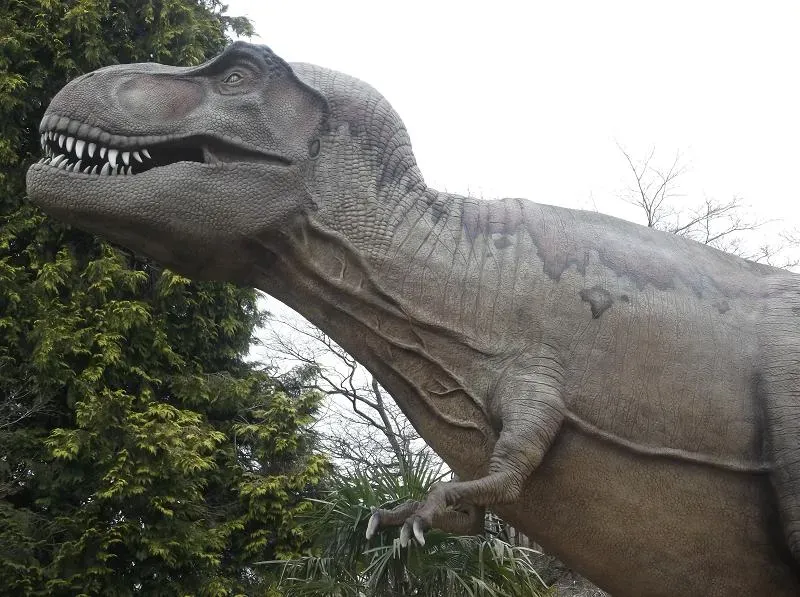
For years, the standard T. rex hand showed three digits, and the debate about what the animal actually did with them was built entirely on that assumption. Then a 1988 Montana specimen with unusually well-preserved forelimbs settled the argument: only two functional fingers existed. The third had already been shed across earlier tyrannosaur evolution, long before T. rex arrived on the scene. It wasn’t a deformity or a one-off fossil quirk – it was the species blueprint.
This matters more than it sounds. Theories about the arms helping to pin down struggling prey, prop the animal up from a resting position, or manipulate food during feeding were all quietly retired once the two-finger reality locked in. With only two short, heavily muscled digits and arms too small to reach the mouth, researchers now treat the forelimbs as secondary tools at best – possibly useful for gripping during mating, or as stabilizers in very specific contexts. The pop-culture obsession with “useless T. rex arms” is almost right, just for the wrong reasons.
#3 – Feathers Enter the Picture
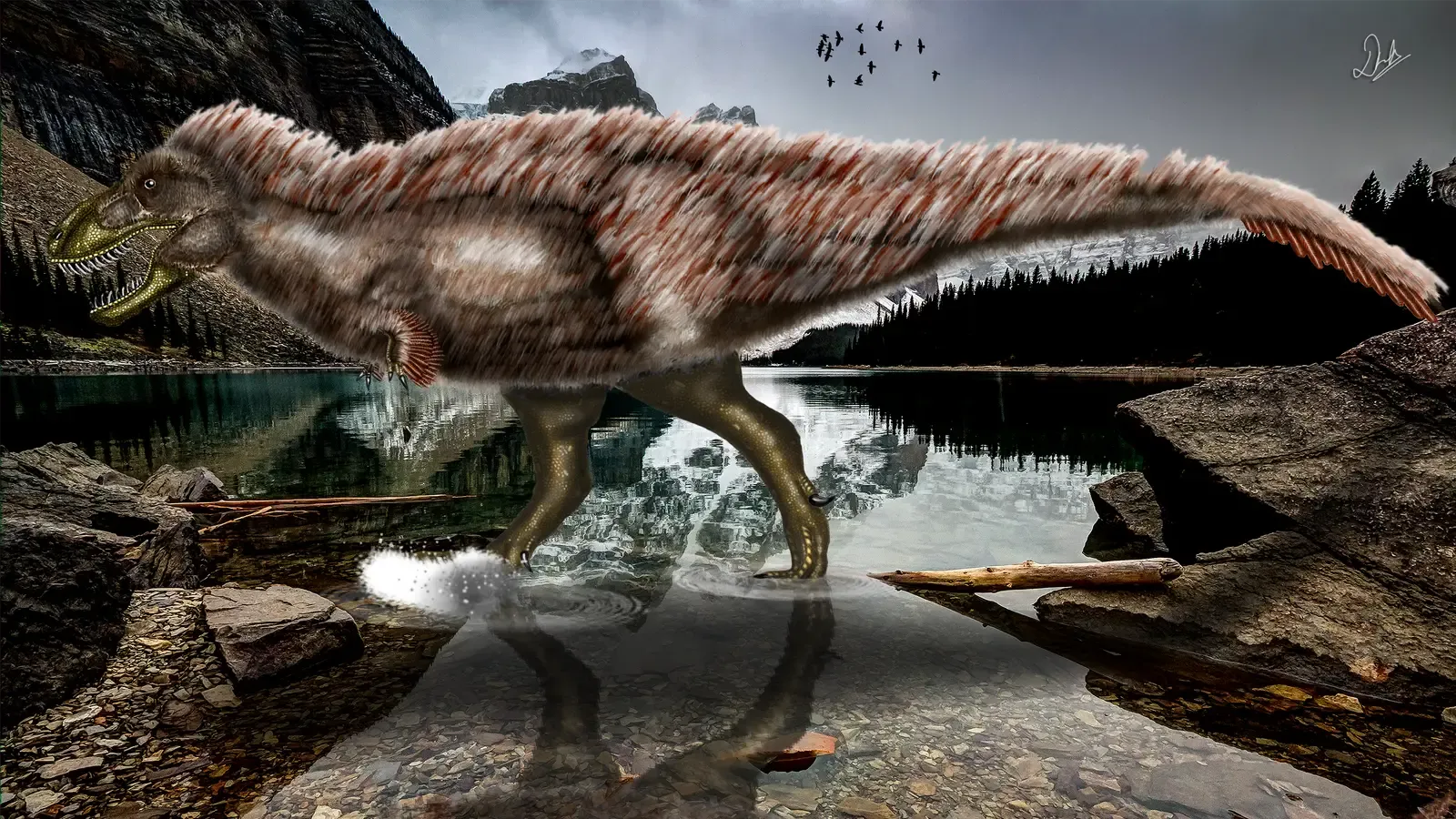
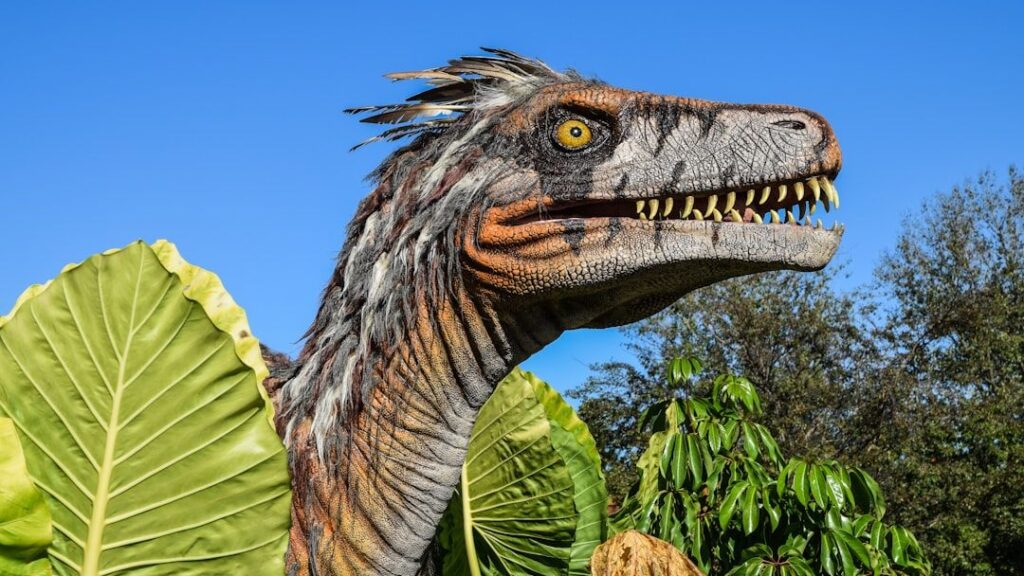
Nothing has unsettled the classic T. rex image quite like feathers. For decades, every reconstruction showed a completely scaly beast – smooth-skinned, reptilian, cold-looking. Then fossil skin impressions from related tyrannosauroids and fragmentary T. rex skin patches began telling a more complicated story. Smaller tyrannosaurs clearly had feather-like filaments covering significant portions of their bodies. The question became whether T. rex retained any of that covering into adulthood or shed it as it grew.
The current evidence suggests a patchwork answer. Adult T. rex likely had scales across much of its body, but may have retained patches of simpler feather structures – particularly along the back or neck – for display or thermoregulation purposes. Younger animals probably had more extensive covering for insulation, similar to how some large mammals are hairier in youth. It’s not the fully feathered T. rex that internet memes love to mock, but it’s also nowhere near the purely scaly monster that starred in every film before 2015. The honest answer is: we’re still figuring it out, and that uncertainty is itself a kind of discovery.
#4 – Bite Force Numbers That Defy Belief
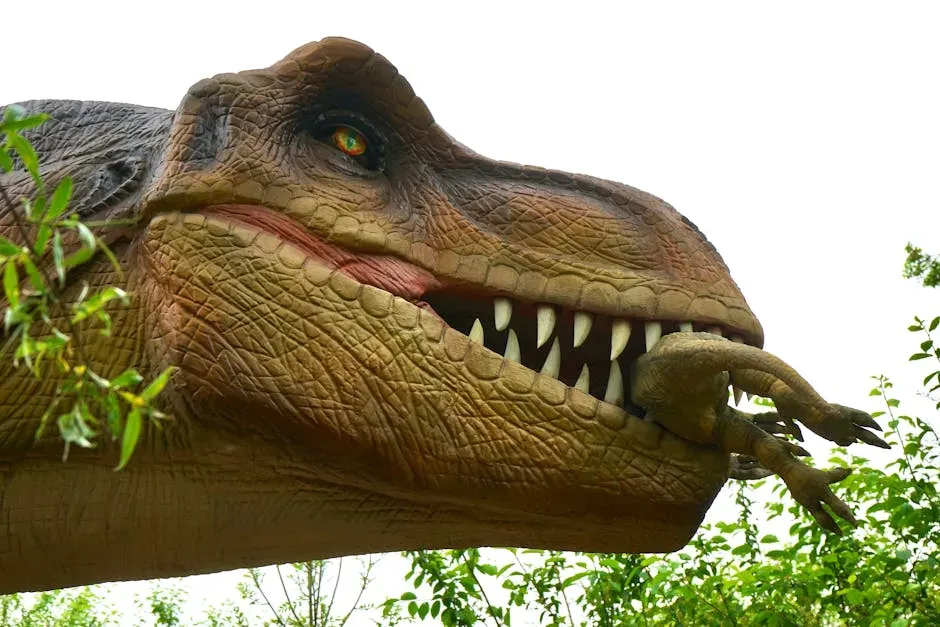
Early bite force estimates for T. rex were already impressive – a few thousand pounds of pressure, enough to crush most bones. Then modern biomechanical modeling arrived. Using detailed muscle reconstruction, skull stress analysis, and comparisons with living animals, researchers pushed the real figure to somewhere between 35,000 and 57,000 newtons. To put that in terms you can actually picture: that’s roughly the equivalent of a medium-sized elephant sitting on a single point. The skull wasn’t just strong – it was functioning as a biological hydraulic press.
The revision that genuinely shocked researchers wasn’t even the adult figure. It was discovering that juvenile T. rex already generated bite forces powerful enough to tackle sizable prey. That finding dismantled a comfortable assumption that youngsters occupied a separate ecological niche – eating smaller animals while waiting to grow into their role as apex predators. Instead, even half-grown T. rex specimens were capable of serious predatory force, which means the species was competing with other large predators across nearly every stage of its life. The food web of the late Cretaceous just got a lot more complicated.
At a Glance: T. Rex Bite Force by the Numbers
- 35,000–57,000 newtons — confirmed adult bite force range (Universities of Liverpool and Manchester study, published in Biology Letters).
- ~8,000–13,400 newtons — what earlier studies estimated before advanced modeling; the new figure is more than four times higher.
- ~3,700 pounds — the measured bite force of the largest living crocodiles, the current world record for any living terrestrial animal. T. rex eclipsed it by a wide margin.
- ~300 newtons — average human bite force. Adult T. rex outbit us by a factor of roughly 100.
- Strongest bite force of any known land animal — living or extinct.
#5 – The Tiny Arms Were Actually a Strategic Trade-Off
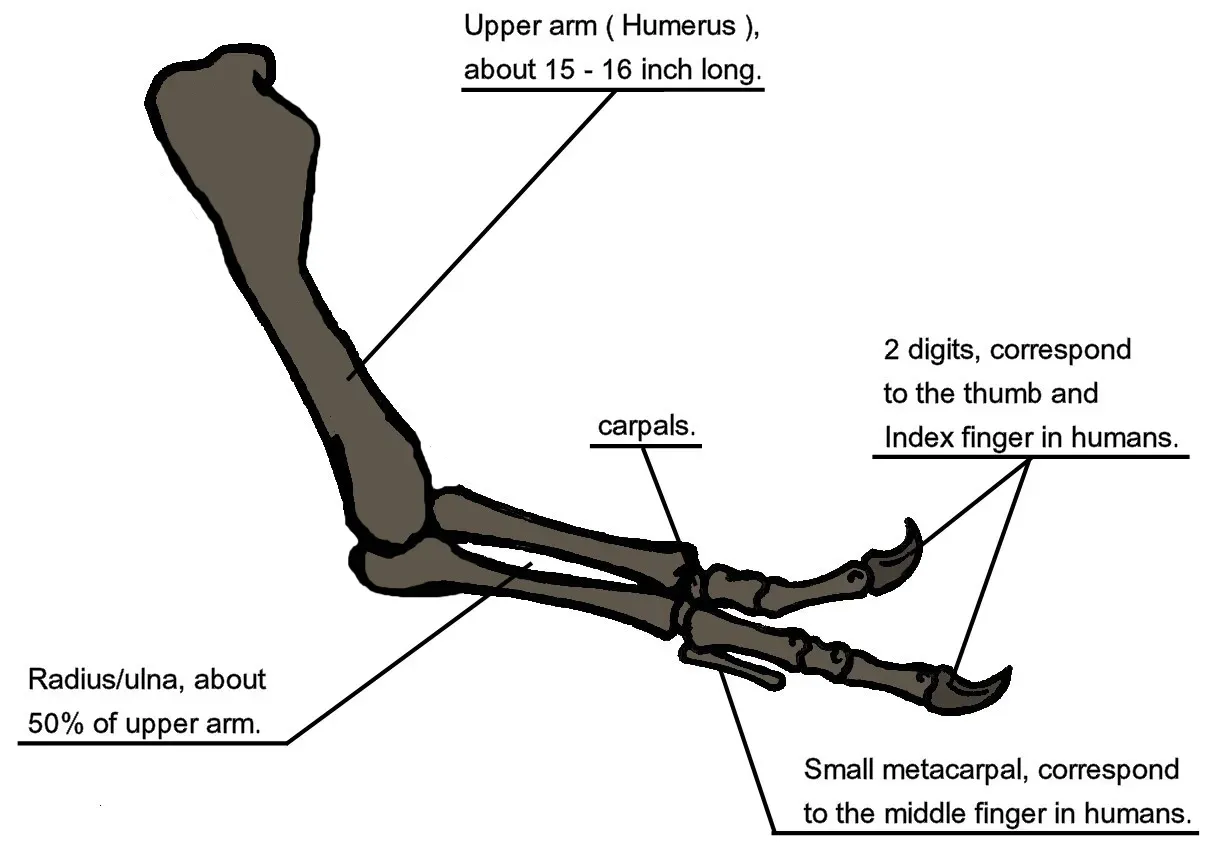
“Vestigial” was the word scientists defaulted to for T. rex arms – leftover structures that evolution hadn’t bothered to eliminate yet. It was a tidy explanation that turned out to be almost certainly wrong. More recent analysis of tyrannosaur evolution across millions of years reveals something more deliberate: as the skull grew larger and the neck musculature expanded to support and weaponize that skull, body resources shifted away from forelimb development. The arms didn’t just stop growing. They shrank in proportion to a skull that was getting more powerful with every evolutionary generation.
The key finding is that arm length reduction and bite performance improvement track each other directly across the tyrannosaur family tree. It wasn’t random drift or evolutionary laziness – it was a trade-off with a clear return on investment. Every bit of metabolic and structural energy that went into building a bigger, more reinforced skull with stronger jaw muscles was energy diverted from the arms. The result was one of the most effective natural killing machines ever to walk the planet, just not one that used its hands to do it. The arms weren’t a mistake. They were the price of the skull.
#6 – It Kept Growing Until Age 40
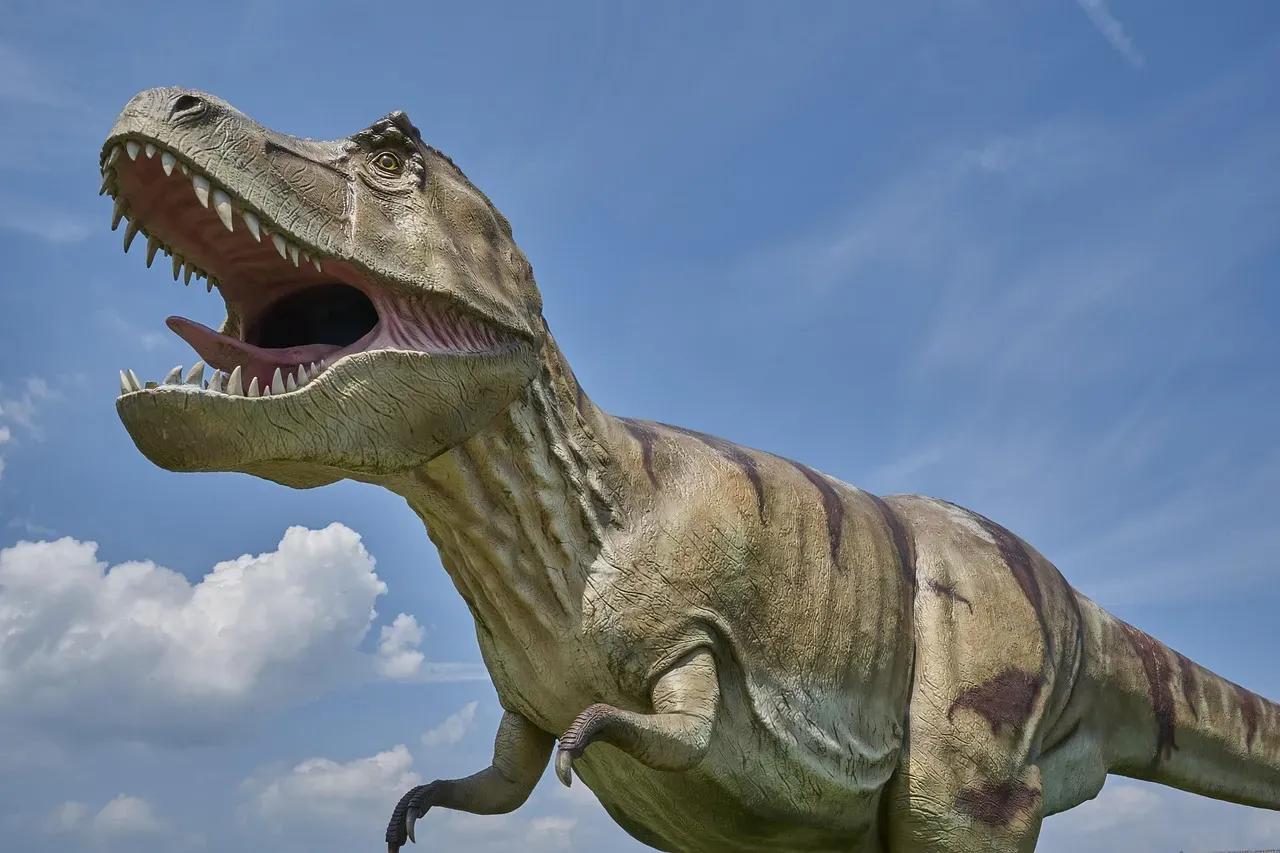
The textbook version of T. rex growth was dramatic and fast: a period of explosive weight gain in adolescence that produced an eight-ton adult by roughly age 25, followed by a plateau. It made the animal feel almost mythological – a creature that reached its terrifying peak size in a geological blink. A 2026 analysis of multiple specimens across different growth stages quietly dismantled that timeline. The growth curve was far more gradual than anyone had modeled, with individuals continuing to add mass well into their late 30s and possibly beyond age 40.
The implications cut deep into how researchers had been interpreting the fossil record. If adults kept growing for longer than assumed, then size variation among adult specimens isn’t just random individual difference – it’s partially a reflection of age. Two T. rex skeletons of “adult” size might represent animals a decade apart in age and hundreds of pounds apart in mass. Prior growth studies had treated adult size as a relatively fixed endpoint. That assumption is now off the table, and datasets built on it are being re-examined to see what else they got wrong.
#7 – Nanotyrannus Was Its Own Species All Along
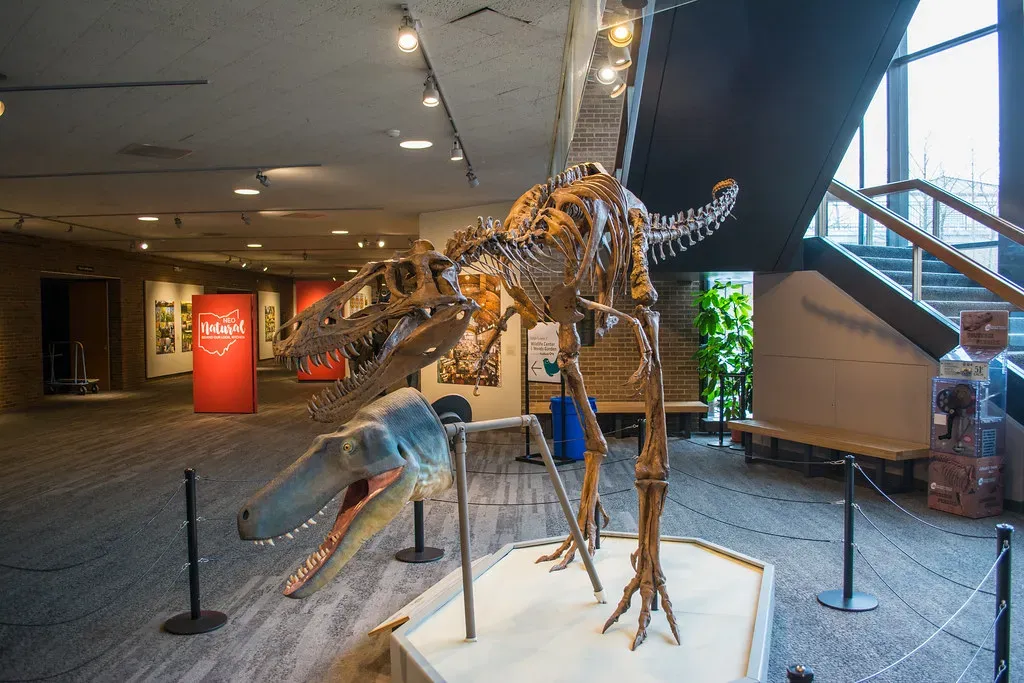
For decades, fossils labeled “Nanotyrannus” were absorbed into the T. rex story as juveniles – smaller skulls, lighter builds, written off as young animals that hadn’t finished growing. It was a convenient explanation that kept the taxonomy simple. Researchers who argued otherwise were largely dismissed. Then a complete skeleton published in Nature in October 2025 changed the conversation entirely: the animal showed growth patterns, proportions, and anatomical features that were simply incompatible with being a young T. rex. Nanotyrannus was its own distinct, smaller tyrannosaur species that shared the same environment.
The fallout from that single paper is still rippling through the field. Every study that used “juvenile T. rex” specimens – now suspected to be Nanotyrannus – to model growth rates, behavioral development, or ecological niche must be revisited. That’s not a handful of papers. That’s years of published research, some of it foundational to how we understand T. rex ontogeny. The confirmation didn’t just add a new species to the list – it potentially invalidated entire datasets. In paleontology, that kind of disruption is almost unheard of, and it happened less than a year ago.
Worth Knowing: The Nanotyrannus Bombshell
- The landmark study, led by Lindsay Zanno (North Carolina State University) and James Napoli (Stony Brook University), was published in Nature on October 30, 2025.
- Researchers analyzed the famous “Dueling Dinosaurs” fossil — a 67-million-year-old specimen from Montana’s Hell Creek Formation — alongside more than 200 tyrannosaur fossils.
- Bone growth rings confirmed the Nanotyrannus specimen was a fully grown adult at approximately 20 years old — ruling out the “juvenile T. rex” interpretation.
- Nanotyrannus had more maxillary tooth positions than any known T. rex and distinctly different internal cranial structures.
- A second new species, Nanotyrannus lethaeus, was also identified — meaning two separate smaller tyrannosaurs may have coexisted alongside T. rex in the final million years before the asteroid impact.
- A separate December 2025 study in Science, drawing on Yale Peabody Museum collections, independently confirmed Nanotyrannus as a distinct species.
#8 – Its Vision Rivaled Modern Birds of Prey
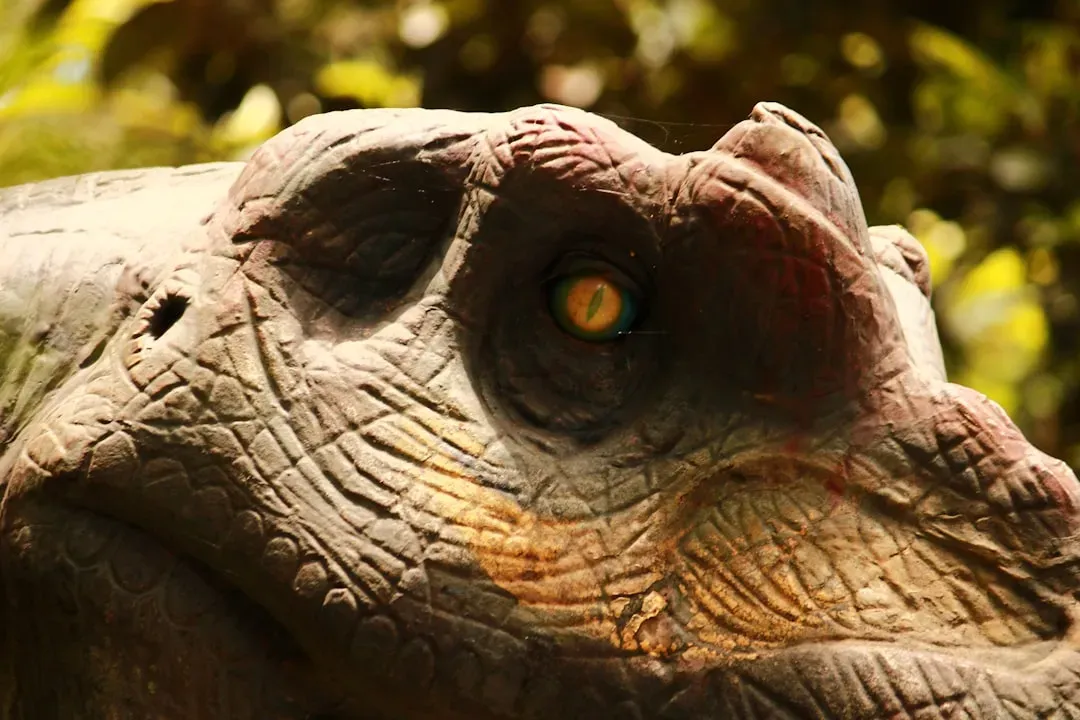
The early assumption about T. rex intelligence and senses was dismissive: small brain relative to body size, limited sensory capability, probably more reactive than calculating. CT scanning of preserved skull cavities told a different story. The optic lobes – the brain regions dedicated to processing vision – were disproportionately large. The eyes faced forward, not to the sides like most prey animals, giving T. rex a binocular overlap zone that enabled genuine depth perception. This wasn’t a passive scavenger scanning the horizon. This was a predator accurately judging distance while closing the gap at speed.
Researchers compared the visual acuity implied by the skull geometry to living animals and found the closest match wasn’t a crocodile or a lizard – it was a large modern raptor. University of Oregon researcher Kent Stevens used a technique called inverse perimetry to map T. rex’s binocular field of view and found it measured approximately 55 degrees – wider than that of modern hawks. The revision matters because vision shapes behavior. A T. rex that could accurately judge distances across open terrain is a fundamentally different predator than one stumbling through the landscape on smell alone. It also suggests the animal was more cognitively active during a hunt than the old “big dumb predator” framing allowed.
The eyes of T. rex suggest a visual system more sophisticated than any living reptile. In terms of binocular vision, it’s closer to a hawk than a crocodile.
Kent Stevens, University of Oregon biologist and T. rex vision researcher
#9 – It Was Slower Than Almost Every Movie Ever Made
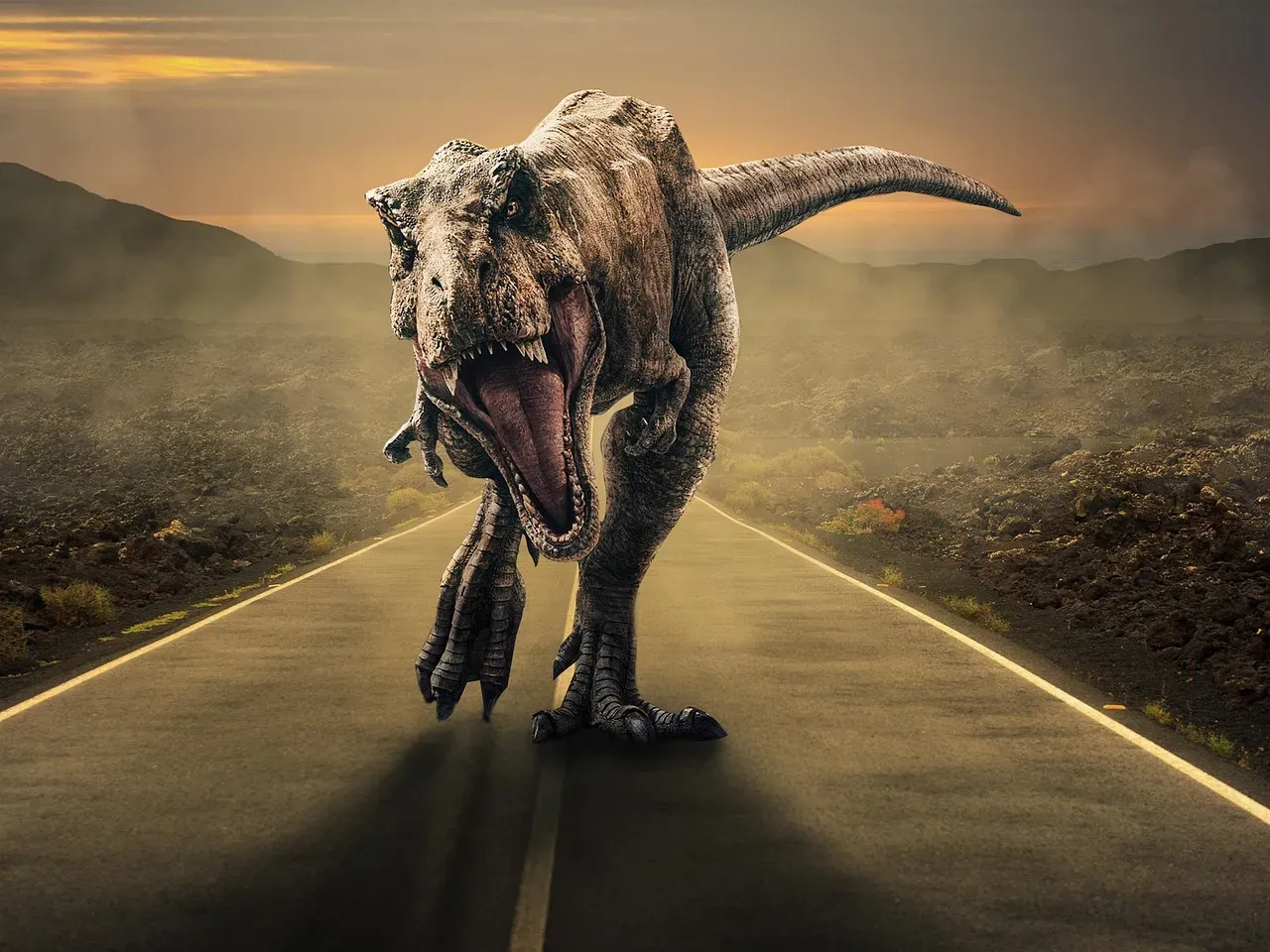
Jurassic Park’s T. rex chasing a Jeep at terrifying speed is one of cinema’s most iconic moments. It’s also physically impossible. Early speed estimates for T. rex reached 40 mph or higher, numbers generated with limited data and a lot of enthusiasm. When researchers began applying rigorous biomechanical models – comparing limb bone proportions, estimated muscle mass, and ground force requirements to those of living large bipeds – the real top speed settled somewhere between 12 and 18 mph. Brisk jogging pace for a fit adult human. A comfortable sprint for most prey animals of the period.
The most uncomfortable implication of that revision is that T. rex could realistically have been outrun by a significant portion of the animals it presumably hunted. That changes the predator-prey dynamic completely. A 12-mph predator doesn’t win through sustained pursuit – it wins through ambush, surprise, landscape knowledge, and the catastrophic force of a single successful strike. The image of T. rex thundering across open ground after fleeing prey doesn’t hold up. The more accurate picture is something more patient, more strategic, and in some ways more unsettling than a simple chase predator.
Quick Compare: T. Rex Speed Then vs. Now
- Early estimates (pre-2000s): Up to 40–45 mph — generated from basic scaling models with limited anatomical data.
- Modern consensus: 10–18 mph maximum; most studies converge on 12–15 mph as the likely top speed for a full-grown adult.
- The hard limit: Bone-stress modeling shows that speeds much above 12 mph would approach the skeletal failure threshold of T. rex’s leg bones — a potentially fatal injury risk.
- Average fit human sprinter: 15–20 mph — meaning a healthy adult human could likely outpace a full-grown T. rex over a short distance.
- Younger T. rex: Likely faster than adults — lower mass meant less bone stress, allowing a quicker, more agile gait before full size was reached.
#10 – It Was Both Hunter and Scavenger
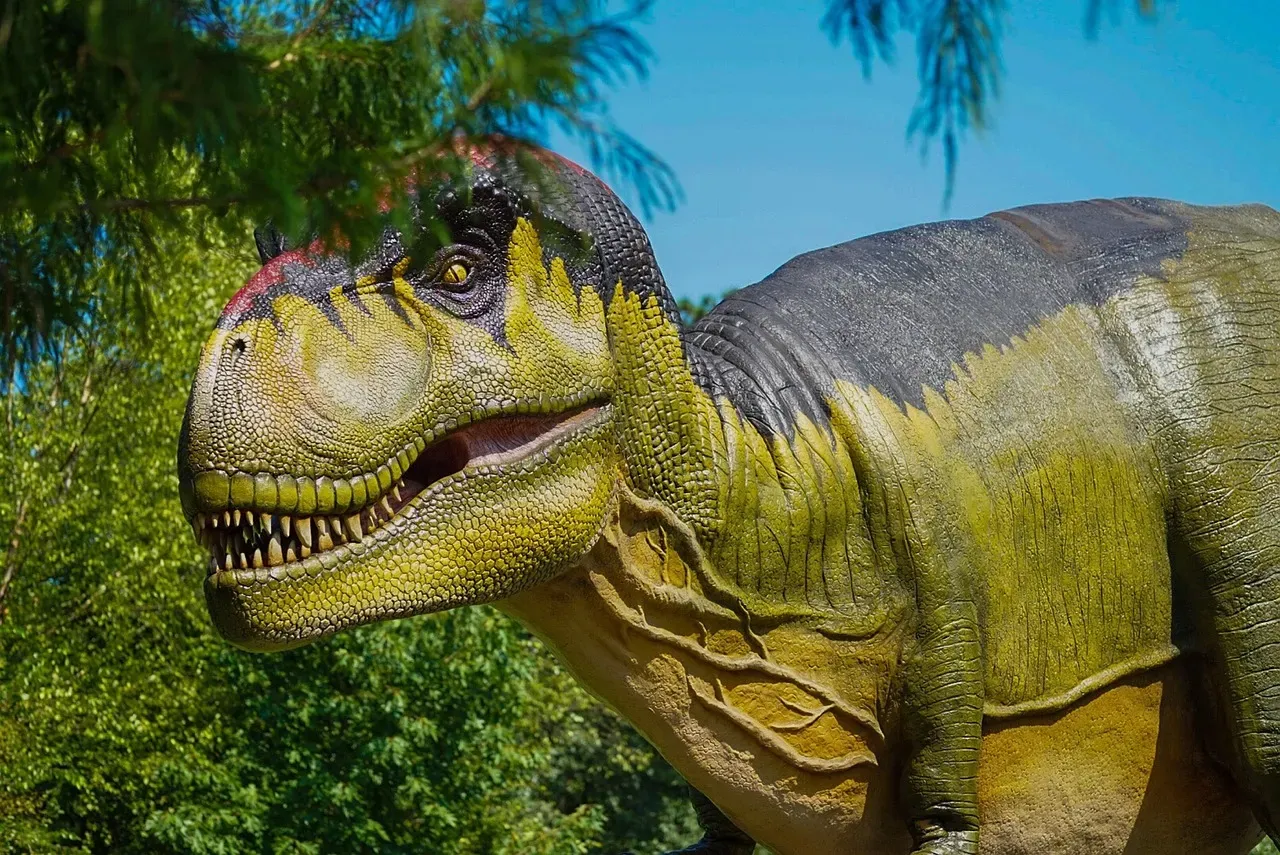
The debate over whether T. rex was primarily a predator or primarily a scavenger dominated paleontology arguments through much of the 1990s and early 2000s. The scavenger hypothesis had real supporters – the logic being that an animal that large, moving that slowly, could sustain itself on carrion in an environment with abundant carcasses. Then the physical evidence started accumulating on the other side. Tooth marks on prey fossils showing classic predatory attack patterns. Healed injuries on potential prey animals that could only result from surviving an attack by a large predator – the kind of healing that takes weeks, proving the prey lived through the strike.
The current scientific consensus isn’t a clean victory for either camp, which is itself the interesting part. T. rex almost certainly did both, shifting strategy based on opportunity, health, age, and local conditions. Younger, faster animals may have been more active hunters. Older, slower individuals may have relied more heavily on scavenging. The key correction that buried the pure-scavenger hypothesis is the recognition that tooth marks alone, without behavioral context from multiple sites, can’t prove exclusive scavenging. What they actually show is a flexible, opportunistic apex predator – which is exactly what the most dangerous animals alive today tend to be.
#11 – It May Not Have Been a Loner
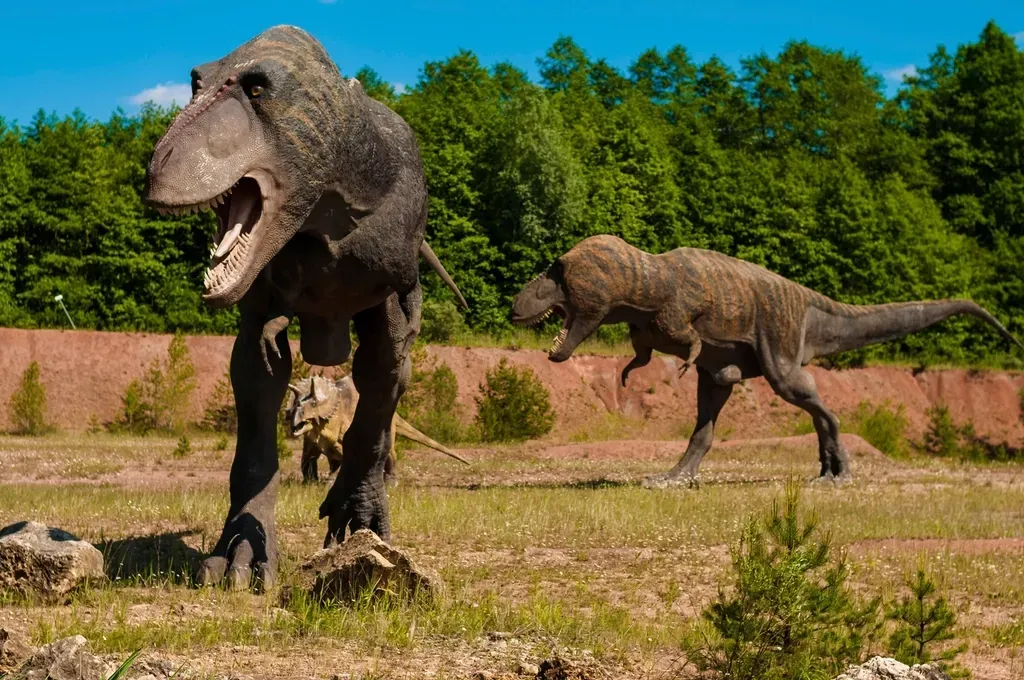
The solitary monster image is deeply embedded in T. rex mythology – one enormous predator ruling its territory alone, tolerating no rivals, needing nothing but its own power. It’s a compelling narrative. It’s also increasingly difficult to defend against the physical evidence. Trackway sites showing multiple large tyrannosaur prints moving in the same direction at roughly the same time have surfaced in North America. Bone beds with multiple T. rex individuals in the same deposit suggest something more than accidental congregation around a shared food source.
None of this means T. rex hunted in coordinated wolf-style packs – the evidence doesn’t support that, and the metabolic demands of multiple apex predators operating as a unit would have been staggering. What it does suggest is a more socially nuanced animal than the total loner narrative allows. Loose associations during certain life stages, tolerance of other individuals at kill sites, or even some form of juvenile group behavior are all possibilities that fit the trackway and bone-bed data better than strict solitary living. It’s the final piece of the T. rex rethink, and it may be the one that’s hardest for people to accept – because the lone monster is just a better story.
Eleven separate lines of evidence. Eleven moments where paleontologists had to sit with a fossil, run the numbers, and admit that the story they’d been telling was wrong. From posture to feathers to social behavior to an entirely separate species hiding in plain sight for decades, T. rex has been rebuilt from the ground up – and the animal that emerges from that rebuilding is stranger, more sophisticated, and more ecologically complex than anything that ever appeared on a museum placard. And here’s the opinion that the evidence now demands: the old T. rex – the dumb, upright, solo bruiser that Hollywood sold us for a century – was always more mythology than science. The real animal was a precision instrument: forward-facing eyes sharper than a hawk’s, a bite that no land animal before or since has matched, a growth curve that stretched into middle age, and possibly a social life that we’re only beginning to decode. We didn’t just get the details wrong. We got the whole character wrong. The truth is that we’re still in the middle of this rethinking. The next fossil pulled from the ground in Montana or South Dakota might rewrite another chapter. That’s not a flaw in the science. That’s exactly what good science looks like when it’s working – and with T. rex, it has never worked harder or faster than it does right now.