If you grew up on dinosaur documentaries and CGI sea monsters, there’s a good chance Liopleurodon already lives in your head as a nightmare with teeth. For years, pop culture painted it as a kind of reptilian submarine the size of a modern whale, lurking in dark Jurassic waters. Then scientists came along and said: actually, it probably wasn’t that huge, calm down. A lot of people heard that and decided Liopleurodon was “overhyped” and quietly moved on.
But if you look at what paleontologists have pieced together over the past couple of decades, the real story is more interesting than the movie version. The monster might not have been quite as long as the screen suggested, but in many ways it was more extreme, more specialized, and more unsettling when you imagine it as a real animal. This wasn’t just a big reptile; it was a hydrodynamic, bone-crunching, high-speed ambush predator that ruled its ecosystem. In some crucial ways, science says Liopleurodon did not need the Hollywood exaggerations to be terrifying. It was already enough.
How Big Was Liopleurodon Really?
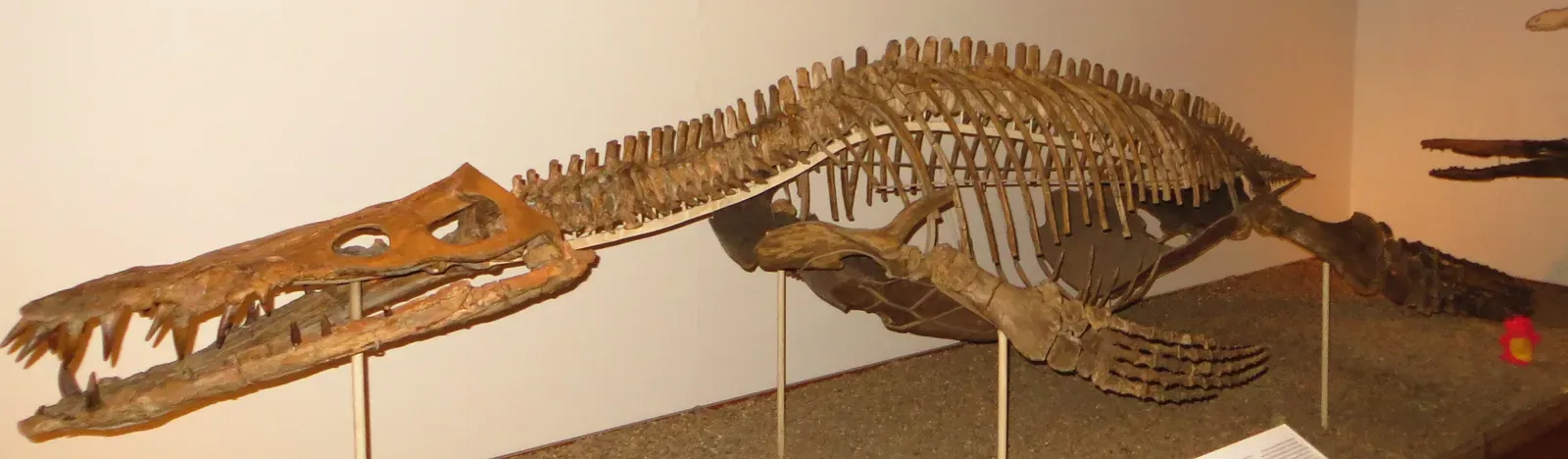
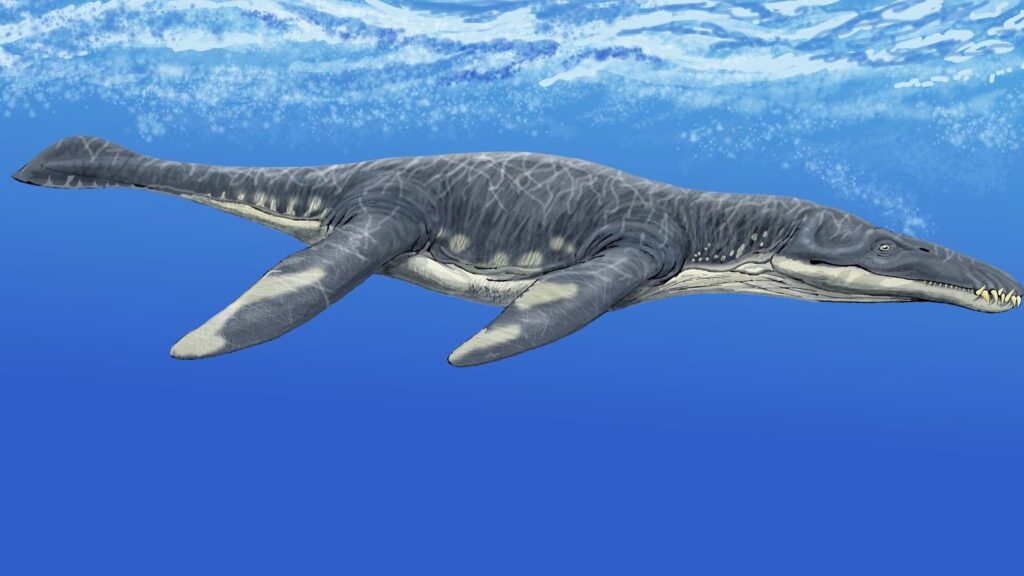
Let’s start with the argument that started all the eye rolling: the size. A famous TV documentary once claimed Liopleurodon could reach around twenty to twenty five meters long, basically putting it in blue whale territory. Later research, based on more careful scaling from known bones and comparisons to better-preserved relatives, pulled those numbers way down. Most paleontologists today land on a range of roughly six to seven meters for typical adults, with very large individuals possibly pushing around ten meters. That’s more or less the length of a bus, not a battleship.
Here’s the twist though: even at those more modest dimensions, Liopleurodon was enormous for its time and lifestyle. Think of a great white shark stretched a bit longer, thicker through the torso, and carrying a much heavier head filled with massive, conical teeth. This was not a downgrade from “movie monster” to “just a big lizard” so much as a correction from mythical to believable. And in the real world, believable top predators are often scarier than fantasy ones, because they actually work.
An Overbuilt Skull and a Bite Built for Butchery
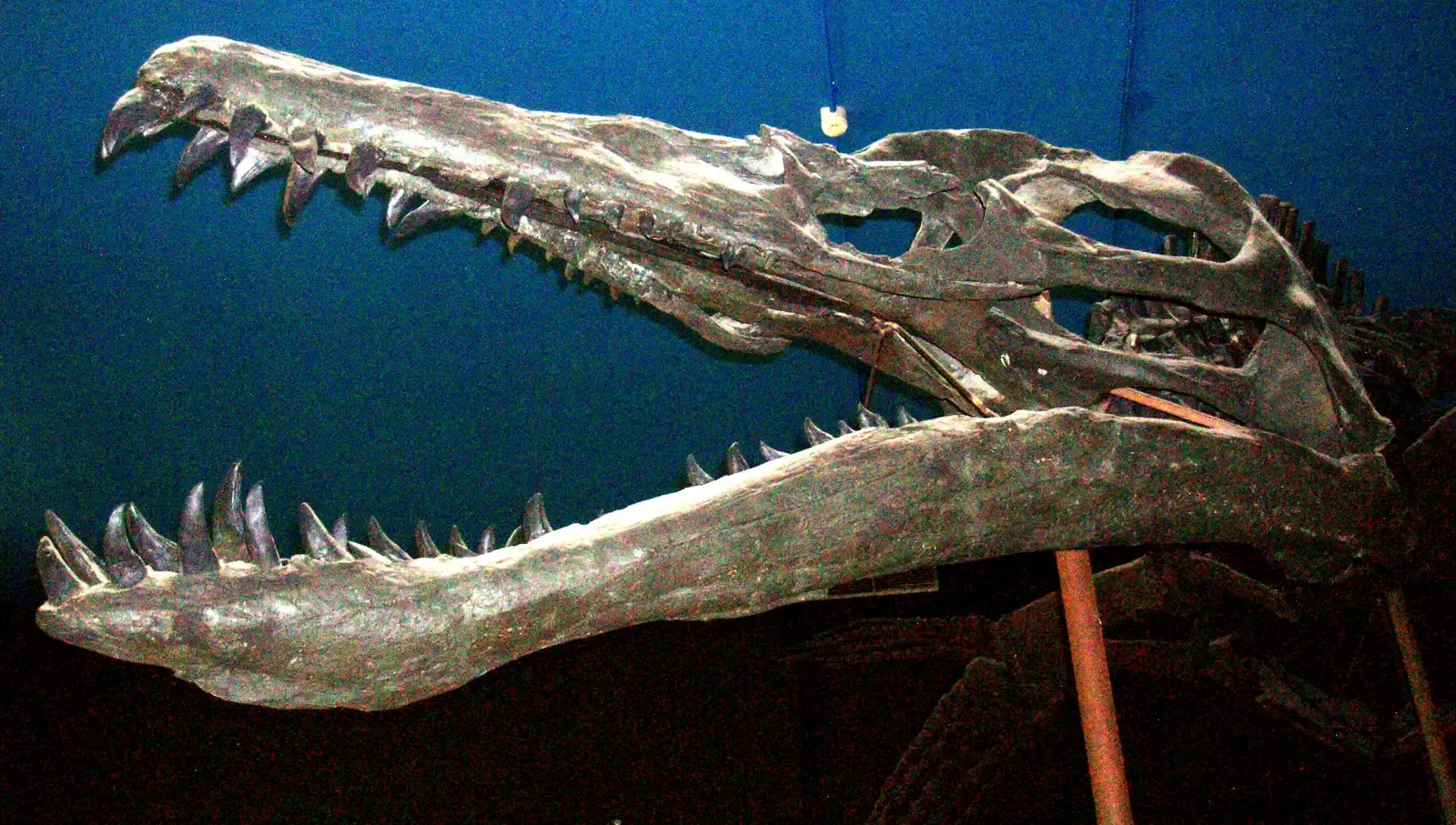
If you want to know what an extinct animal did for a living, look at its skull. In Liopleurodon, the head is absurdly large compared to the body, making up a huge chunk of its total length. The snout is long and deep, the jaws are robust, and the teeth are thick, conical spikes that look designed not just to cut, but to grab and hold struggling prey. The bony architecture around the jaw joint and the attachment sites for muscles suggest a very powerful bite, closer in spirit to crocodiles and big predatory marine reptiles than to anything dainty or delicate.
That oversized skull is a giant red flag for “apex predator.” You don’t evolve a head like that to nibble on squid in peace. It points to a lifestyle built around attacking large, powerful animals: other marine reptiles, big fish, maybe even rivals. When I first saw a Liopleurodon skull reconstruction in person, what struck me was not just the length, but the depth and thickness of the bones. It looks overbuilt, like something designed to withstand enormous stresses. Movies showed it as huge; paleontology reveals it as brutally specialized for killing, which is arguably more impressive.
Hydrodynamic Predator, Not a Slow Ocean Tank
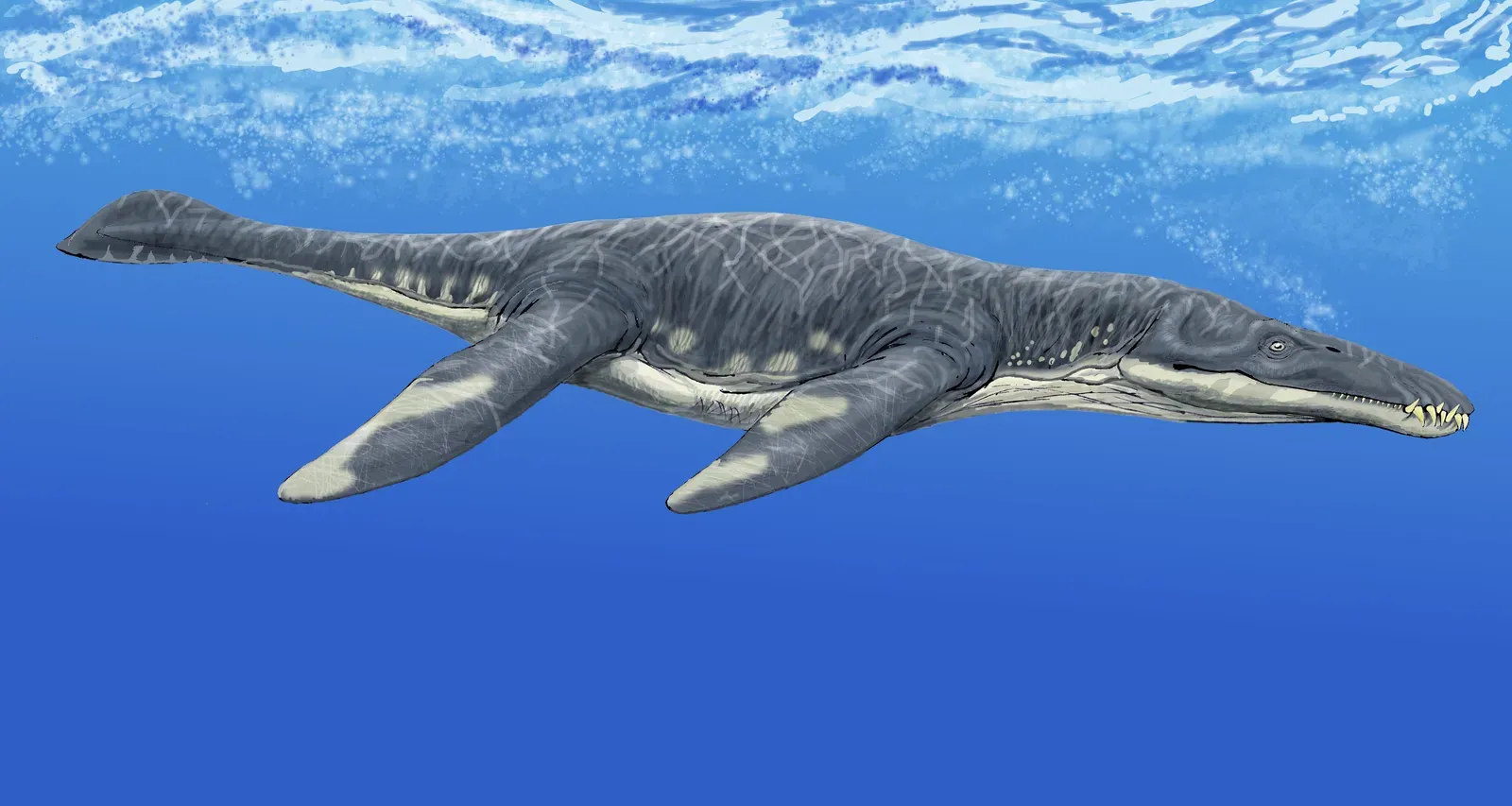
On screen, Liopleurodon is often shown as a cruising fortress, gliding slowly through the gloom like a prehistoric submarine. But its body plan tells a faster, sleeker story. It was a pliosaur, a subgroup of plesiosaurs with relatively short necks, large heads, and powerful, torpedo-shaped bodies driven by four strong flippers. The limbs were transformed into hydrofoils, and the trunk is compact rather than sprawling, suggesting it was built for quick bursts and agile maneuvering in three dimensions.
Modern fluid dynamics studies of plesiosaur and pliosaur shapes have found that these animals were surprisingly efficient swimmers. Instead of lumbering along, they likely used coordinated flipper strokes that gave them both speed and fine control, a bit like a sea turtle crossed with a fighter jet. Put that together with Liopleurodon’s enormous jaws, and you get a mental image that’s arguably more chilling than the slow-rolling movie monster: a fast, precise, hydrodynamic hunter capable of sprinting, banking, and striking with shocking acceleration.
Sensory Superpowers: Hunting in a Three-Dimensional World
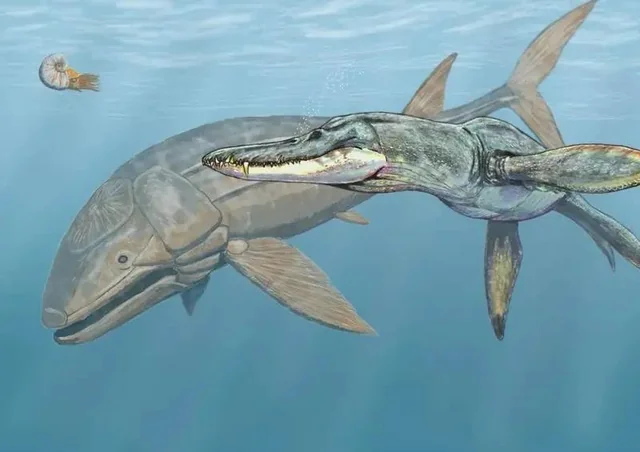
We obviously can’t plug a Liopleurodon into a brain scanner, but its skull and the pattern of openings and canals still hint at serious sensory hardware. The placement of the eyes suggests forward and sideways vision that may have allowed at least some degree of depth perception, important for a predator that has to judge distance accurately while attacking moving prey. The snout bones and the arrangement of certain openings also hint that it could have housed nerves for pressure or vibration detection, something useful when hunting in murky water or low light.
There are also indications, by comparison with related marine reptiles, that Liopleurodon’s inner ear and balance systems would have been adapted to rapid turns and stable tracking of prey in three-dimensional space. Imagine trying to chase and catch dinner in a world where the “ground” is constantly falling away and everything can move up, down, and sideways at once. That requires serious sensory coordination. Movies mostly reduce Liopleurodon to a giant set of teeth; paleontology suggests it was likely an underwater assassin wired with fine-tuned senses to exploit every flicker, splash, and vibration in its environment.
Top Predator of a Jurassic Ocean Food Web
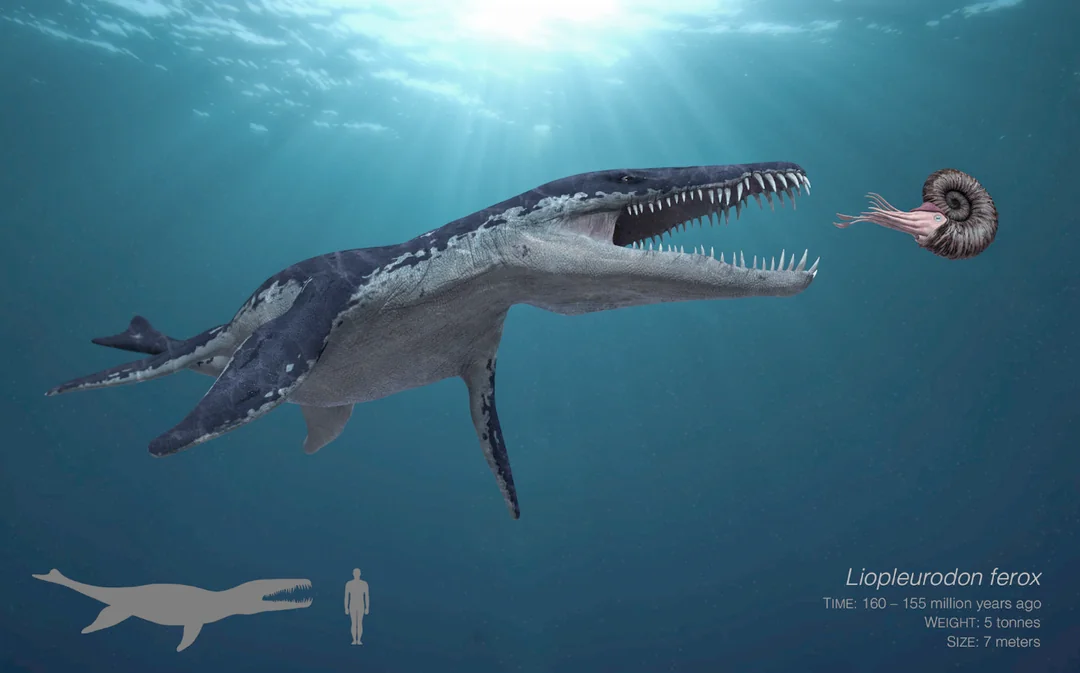
One of the most impressive things about Liopleurodon isn’t just what it looked like, but where it sat in its world. It lived in the Middle to Late Jurassic seas that covered what is now parts of Europe, where the oceans were packed with large fish, squid-like cephalopods, ichthyosaurs, long-necked plesiosaurs, and other pliosaurs. When paleontologists map out these ecosystems, Liopleurodon consistently appears near the top of the food web, the animal most other large vertebrates had to worry about becoming a meal for.
Fossil assemblages from marine deposits of that age show a wide range of potential prey sizes and types, and bite marks on some marine reptile fossils match the kind of damage that large pliosaurs could inflict. While it is always risky to say exactly what ate what, the overall pattern fits an ocean where Liopleurodon and its close relatives filled the role that orcas and great white sharks play today. That’s more than just “big and scary.” It means this animal was a central player in shaping the structure of its ecosystem, influencing where other species lived, how they moved, and maybe even when they bred or migrated.
Why the Reality Is More Impressive Than the Myth
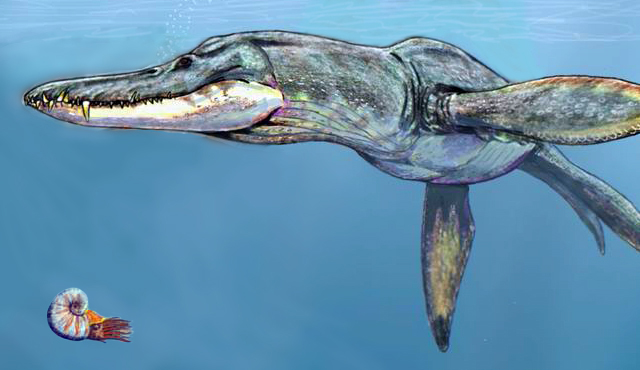
When people hear that the original size estimates from television were exaggerated, they often react like someone just told them their favorite superhero was a marketing trick. But the more I’ve read and thought about Liopleurodon, the more I feel the opposite. The fact that scientists trimmed its length down while simultaneously revealing a more nuanced picture of its anatomy, ecology, and capabilities actually makes it more impressive. It did not need fantasy numbers to be terrifying; it was already a perfectly tuned predator that truly existed and dominated its environment for millions of years.
There’s something quietly thrilling about grounding a monster back in reality and discovering that it still feels monstrous, just in a more believable, almost intimate way. This was not a mythic giant roaming a made-up ocean. It was a living animal, with muscles that burned energy, flippers that tired, and jaws that occasionally missed their target. And even with all those limitations, it rose to the top. To me, that beats any special effect. Next time you see Liopleurodon pop up in a documentary or a game, it’s worth remembering: the science did not make it smaller so much as sharper. Does knowing what it really was make it less scary to you – or more?