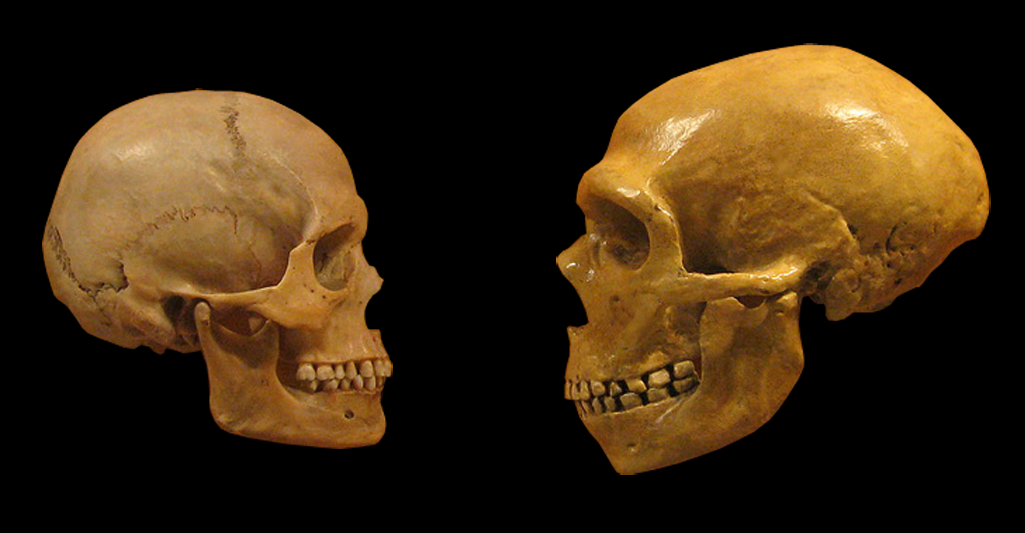
Think about the last time someone whispered that something was standing right behind you. You probably felt that fast, cold shiver run down your spine, even if you knew nothing was actually there. It is such a small, weird reaction that most of us laugh it off, but neuroscience suggests it is anything but trivial. That chill might be a living fossil of ancient survival machinery, older than the modern human brain itself.
In other words, your body may be reacting with circuits that were already doing their job long before humans had language, phones, or even the kind of cortex we rely on today. This is not superstition; it is the nervous system running an old emergency script. Once you see it that way, the shiver stops being a ghost story and starts looking like a window into our deepest evolutionary past.
The spine-tingling shiver: what is actually happening?
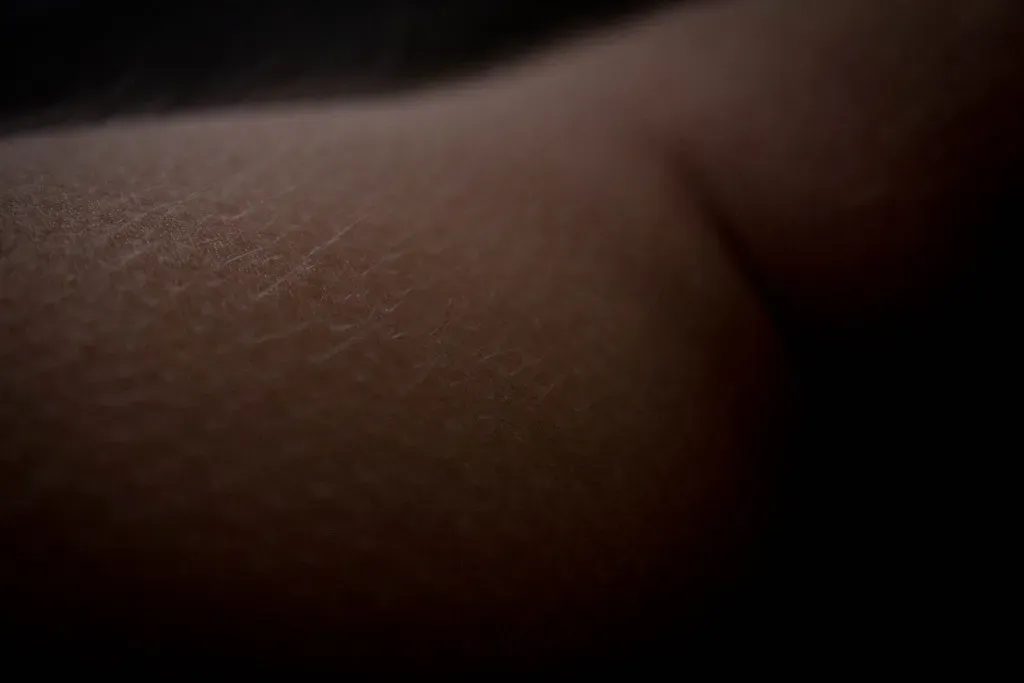
That sudden shudder when you imagine something right behind you is not just “in your head” in a casual sense; it is a rapid, full-body response involving your skin, muscles, heart, and autonomic nervous system. Tiny muscles at the base of your hair follicles can contract, a remnant of the same process that makes fur stand on end in other mammals. Your heart rate can spike slightly, your breathing tightens for a beat, and your muscles subtly prepare for movement, all in a fraction of a second.
Neuroscientifically, this reaction is less about deep thought and more about raw pattern recognition and threat detection. When someone says that something is right behind you, your sensory and emotional systems sketch a quick mental scene, and your brain treats that scene with surprising seriousness. Even without an actual sound or touch from behind, your nervous system leans toward caution, triggering a micro version of the classic fight-or-flight set of responses. It is like your body says, “If I am wrong, I am embarrassed; if I am right and do nothing, I am dead.”
Before big brains: the ancient roots of startle and threat detection

Long before humans had our large, folded cerebral cortex, nervous systems were already very good at one thing: not dying. Primitive organisms with simple neural circuits evolved ways to jerk away from danger, freeze when something approached, or instantly redirect attention to a sudden stimulus behind or beside them. These reflexes did not require self-awareness or language, just a straightforward rule set: if something unexpected appears close by, respond fast.
In modern humans, many of these ancient circuits are still baked into deeper brain structures and spinal pathways. They operate far faster than conscious thought and, in many cases, do not even need a fully detailed picture of what is happening. A hint of threat is enough. That is why the shiver can be triggered by a description or a suggestion; as far as your ancient wiring is concerned, if something might be right behind you, it is safer to react now and ask questions later.
The spinal cord and brainstem: old hardware, fast decisions
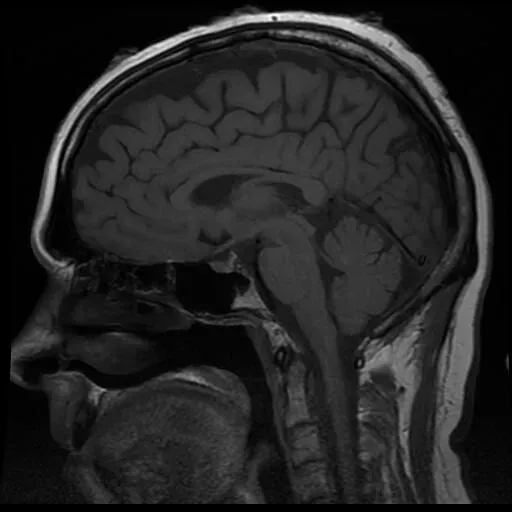
When we talk about the human brain, we often picture the outer wrinkled cortex, but the fastest survival responses rely heavily on older structures like the brainstem and spinal cord. These regions coordinate startle responses, posture adjustments, and autonomic shifts such as changes in heart rate and blood pressure. They form a kind of emergency backbone that predates the evolution of complex conscious processing. In some animals, certain defensive responses can even be triggered at the level of the spinal cord without direct involvement of higher centers.
The shiver you feel when something is imagined just behind you likely rides on this old hardware. Your cortex interprets the words and paints the mental picture, but once a potential threat is implied, subcortical circuits can take over the bodily reaction. The feeling is almost like someone tugged on a buried reflex arc that has been there for hundreds of millions of years. We dress it up with stories about ghosts or stalkers, but underneath those stories is a fast, largely automatic safety routine trying to keep you alive.
The body’s “behind you” map: peripersonal space and vulnerability

Neuroscience has shown that your brain keeps a constantly updated map of the space immediately around your body, known as peripersonal space. This space is not symmetrical; different zones carry different levels of perceived vulnerability. The area behind you is especially tricky because your eyes cannot see it directly, so your brain relies more heavily on hearing, touch, and prediction. When something is described as being right behind you, it pokes at one of the most vulnerable zones in that body-centered map.
That map is managed by networks that integrate sensory signals and prepare movements, and some of these systems are evolutionarily ancient. They are tuned for close-range threats: a predator lunging from behind, a branch brushing your back, an approaching figure you cannot see clearly. The shiver is a way of saying, “Recheck that blind spot.” Even if you are in a safe living room with friends joking around, the underlying logic is the same as it would have been on an open savanna or in a dense forest: the world behind you deserves extra attention.
Why imagination and words can flip the ancient switch

One of the wild things about human brains is how easily language and imagination can hijack systems that originally evolved for basic survival. When someone casually says there is something behind you, your cortex builds a quick, almost cinematic scene. That imagined scene can be vivid enough that older, reflexive circuits treat it as a possible reality rather than just a story. Your body reacts to the possibility, not to legal proof of danger, because evolution did not reward slow skeptics in genuinely dangerous environments.
Think of it like a fire alarm that can be set off by smoke, heat, or even a very strong hint that something might burn. In this case, words and mental images act as that hint. Your conscious mind might know you are hearing a joke or watching a movie, yet the ancient circuitry is happy to overreact instead of underreact. The shiver is the nervous system’s compromise between doing nothing and launching a full panic; it is a quick “wake up” nudge to the rest of your body, just in case your imagination has stumbled onto something real.
Other animals, same logic: shared ancestry of the shiver response

Humans are not the only creatures that display sudden full-body reactions when something approaches from behind or unexpectedly enters their near space. Many mammals show a flinch, fur-raising, or posture change when touched or startled from the rear. Birds twist and freeze, reptiles jerk and reposition, and even fish can perform rapid escape maneuvers when something appears behind them. These reactions rely on basic neural motifs: sensory input from behind, rapid relaying through brainstem or spinal circuits, and a quick shift in muscle tone and orientation.
This shared pattern across species tells us that the logic behind our own shiver is incredibly old. The details differ from creature to creature, but the core rule is the same: when something unknown gets close, especially outside your main visual field, it is worth reacting fast. Our more complex brains layer fear, story, and culture on top of this basic mechanism, but they did not invent the mechanism itself. In a sense, your spine-tingling response when you think something is behind you puts you in the same broad club as countless other animals who rely on ancient neural tricks to avoid becoming someone else’s lunch.
Modern life, ancient wiring: when old reflexes meet new realities

In everyday life, this ancient reflex often gets triggered in situations that are not truly dangerous: a horror movie jump scare, a friend sneaking up as a joke, or even a vivid online story about something lurking just out of sight. Our environments have changed faster than our nervous systems. Instead of predators in the bushes, we have social media feeds and streaming services, yet the same old circuits are still standing by, responding to anything that feels like a sudden, close-range threat.
Personally, I notice this most when I am walking alone at night and hear unexpected footsteps behind me, even if I am downtown in a busy, well-lit area. My rational mind knows the odds are that it is just another person going about their business, but my body does not wait for a full investigation. That familiar chill kicks in, my shoulders tighten, and I instinctively become more alert. It is annoying and oddly reassuring at the same time: proof that my underlying chemistry cares more about survival than social coolness.
The bottom line: an ancient reflex in a hypermodern world

If you zoom out, that shiver when you sense or imagine something right behind you is a powerful reminder that we are walking around with very old software running on newer hardware. I think we underestimate just how much of our day-to-day emotional life is built on reactions that started out as pure survival tools in creatures that looked nothing like us. The reflex itself may well trace back to nervous system strategies that existed long before anything resembling the modern human brain, even if today it is often triggered by words, movies, and pranks instead of predators.
In my view, that makes the shiver strangely beautiful rather than just creepy. It is a tiny flash of evolutionary history humming through your muscles, a moment where your body remembers dangers you have never personally faced. Instead of brushing it off as silly, it might be worth noticing it, almost like nodding to an ancestor. Next time you feel that chill crawl down your back when someone says there is something behind you, will you just laugh it away, or will you hear it as an ancient voice quietly saying, “Stay alive, just in case”?