
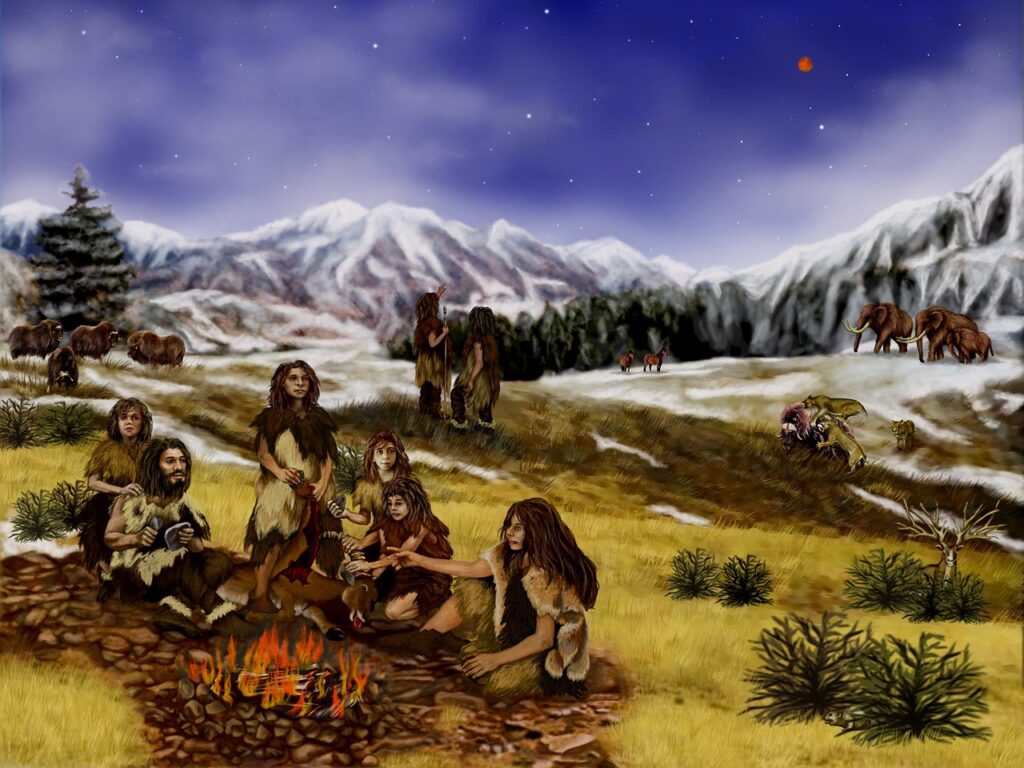
Imagine stepping outside into a world where winter never really ends. No heated homes, no insulated jackets, no food delivery, no GPS, no phones, not even metal tools for much of the time. Yet somehow, our distant ancestors stared down glaciers, roaming predators, and brutal cold and still managed not just to scrape by, but to spread across continents. The fact that you exist to read this is living proof that they were astonishingly good at survival.
What makes their story so wild is how different their definition of “essential” was. Where we see a harsh, empty landscape, they saw opportunity: shelter hidden in cliffs and caves, clothing inside animal hides, fire buried in a spark of stone, and safety wrapped up in other people. Their tech looked nothing like ours, but the underlying skills and strategies were just as sophisticated in their own way. When you dig into how they actually survived the ice ages, you start to realize that what saved them was not stuff, but brains, bodies, and community.
Turning Landscapes of Ice into a Survival Map
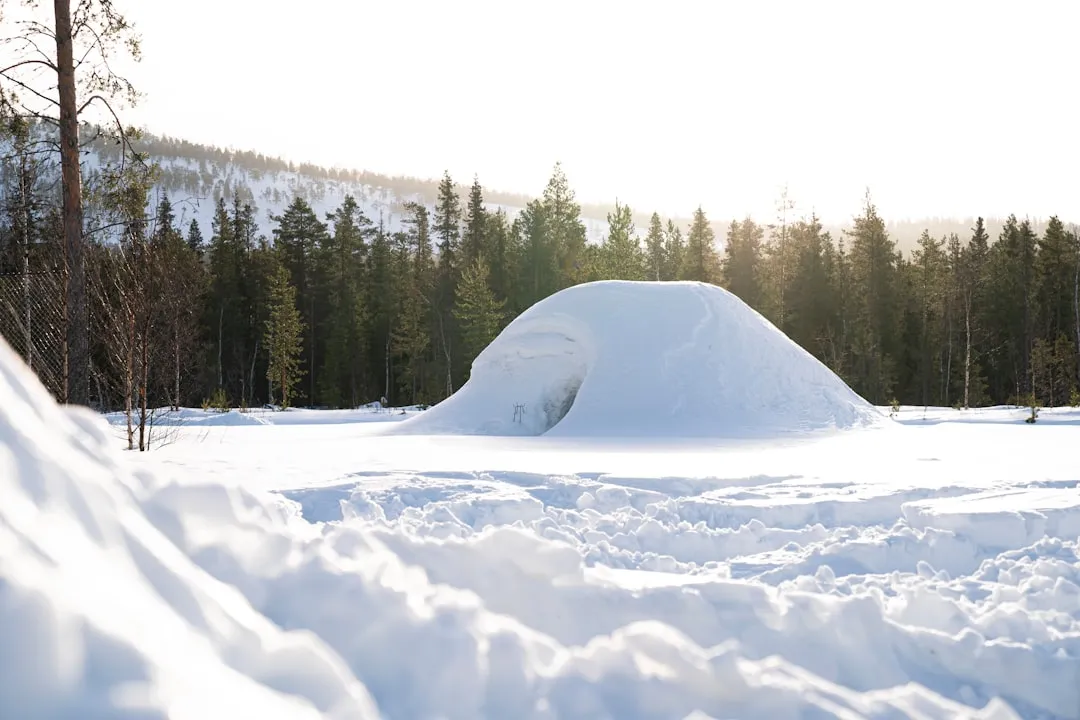
It sounds almost impossible: moving around a frozen world without maps, weather forecasts, or satellites. But Ice Age humans turned their entire environment into a mental atlas, slowly learning which valleys blocked the worst winds, which river corridors stayed open longer, and where animals tended to migrate every year. Over generations, this knowledge became so detailed that it functioned like a living GPS in people’s heads, passed down through stories, teaching, and seasonal routines.
Instead of trying to conquer the environment, they learned to read it. They tracked subtle signs like the angle of the sun, the direction of snowdrifts, patterns in the stars, and shifts in animal behavior. Where we rely on weather apps, they read clouds and bird calls. Where we zoom in on digital maps, they walked those paths again and again until the landscape felt like an extension of their memory. In a world full of ice, they survived by knowing exactly which patches of land were just warm and rich enough to keep life going.
Fire, Fat, and Fur: The Original Cold-Weather Tech Stack
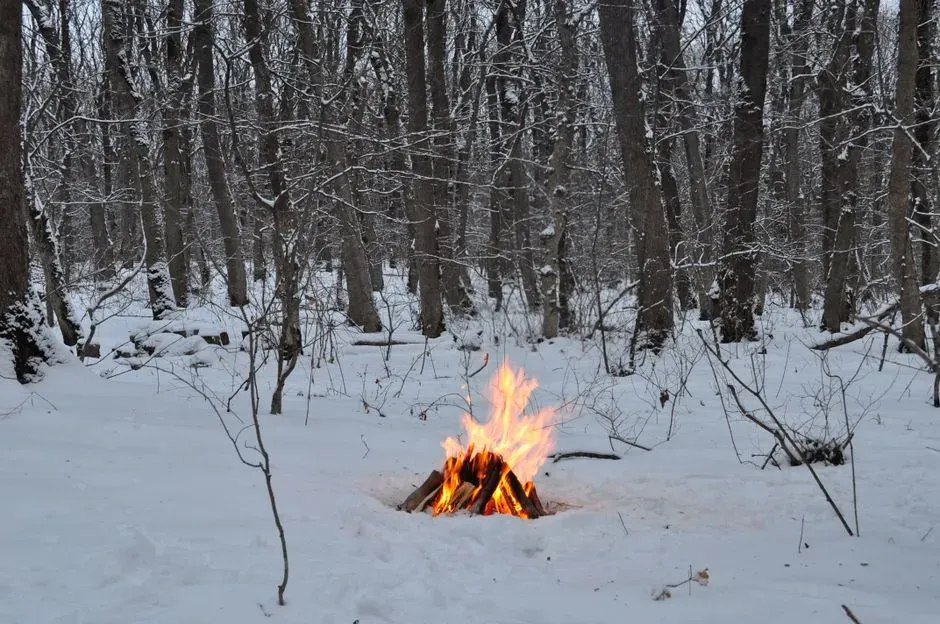
When you strip away the romance, Ice Age survival was brutally physical: staying warm, staying fed, and not freezing to death overnight. Fire was the centerpiece of that system, and making it was anything but trivial. They had to carry embers carefully, guard dry tinder like treasure, and learn the skill of sparking flames from stone, wood, or friction. A good fire meant heat, cooked food, light, safety from some predators, and the chance to work and talk after dark.
Then there was clothing and diet, the overlooked power duo. Animal hides and furs, tailored with bone needles and sinew, became wearable insulation systems surprisingly close in function to modern cold-weather gear. At the same time, fatty meat from animals like mammoths, reindeer, and bison delivered dense calories ideal for cold climates, where your own body becomes a furnace burning fuel to stay alive. Modern people rave about technical jackets and high-calorie snacks; prehistoric humans built a version of both from the bodies of the animals they hunted.
Caves, Huts, and Snow: Reinventing Home in a Frozen World
Housing during the ice ages was not about comfort; it was about not dying. Natural shelters like caves and rock overhangs were prime real estate because they cut wind, buffered temperature swings, and could be defended more easily. But people did not just move in and sit on bare rock. They insulated floors with branches and animal skins, created sleeping areas, and used fire to dry, warm, and sometimes even smoke the interior. In a sense, they turned caves into crude but effective climate-controlled zones.
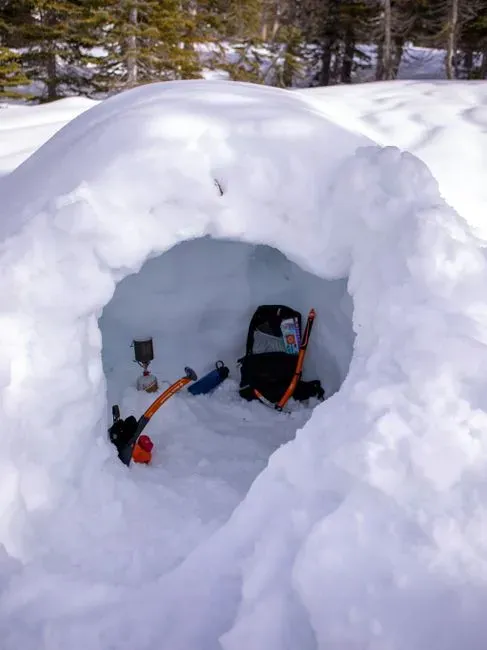
When caves were not available, they improvised. Archaeological sites show evidence of structures made from wood, bones, turf, and snow, sometimes arranged in circular or semi-circular forms like early tents or huts. Think of these as analogs to modern cabins and igloos: quick to build with local materials, efficient at trapping heat, and adaptable to changing conditions. The impressive part is not just the building itself but the flexibility; if resources shifted or the climate worsened, they could tear down, move, and rebuild their homes where chances of survival were better.
Tracking, Trapping, and Team Hunts: Food as a Constant Strategy
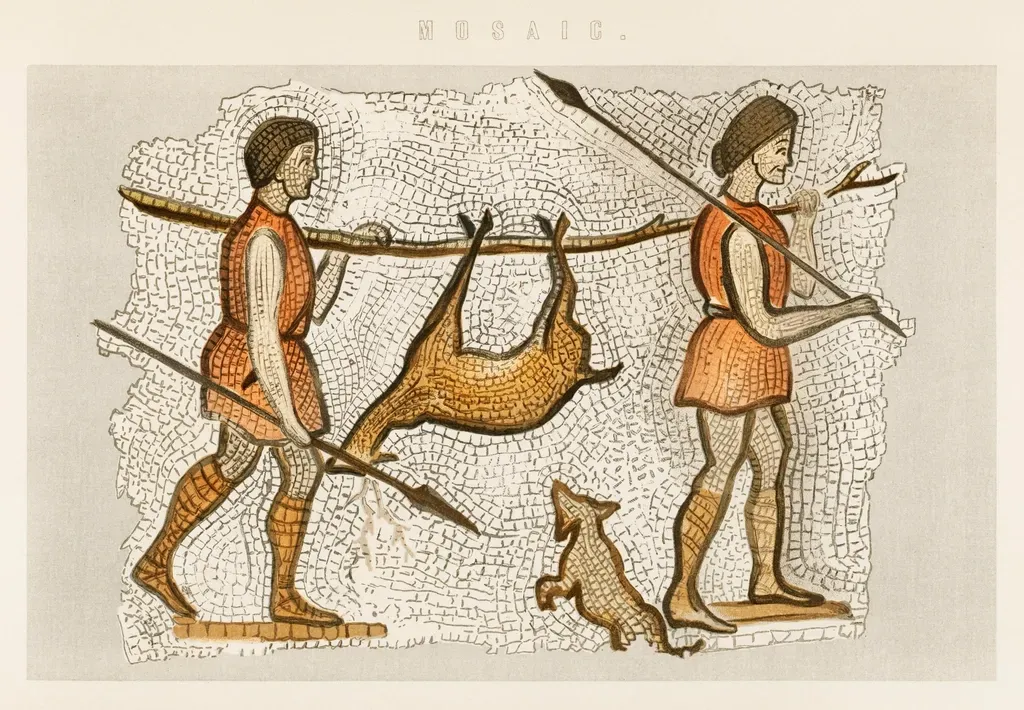
When your fridge is the entire landscape and your next meal might be walking away on four legs, food becomes a never-ending strategic problem. Prehistoric people did not just charge randomly at mammoths; they observed migration routes, calving seasons, and animal habits with a patience and precision modern hunters would respect. Some sites even suggest the use of natural features like cliffs, bogs, or narrow passes to trap animals, turning terrain into a hunting tool.
Crucially, they did not rely only on big game. Even in glacial periods, there were smaller animals, fish, birds, and edible plants, especially in brief summer windows. Gathering, fishing, and trapping added resilience to their diet when hunts failed or herds moved unexpectedly. Food was not guaranteed, and that constant uncertainty shaped everything: group decisions, movement patterns, and how people stored or shared meat and fat. Today we panic when a supermarket closes early; they lived with the possibility of hunger as a background hum every single day.
Bodies Built for Endurance, Brains Built for Adaptation

Ice Age humans survived not only because of tools and tricks, but because their bodies and minds were up to the challenge. Physically, many populations evolved traits that helped conserve heat, like stockier builds in colder areas, while daily life itself was a full-time workout. Walking long distances, carrying loads, butchering animals, and building shelters all demanded strength and stamina most of us never tap into. Their baseline fitness was not a lifestyle choice; it was the minimum requirement for staying alive.
The mental side was arguably even more important. These people constantly adapted to shifting climates and ecosystems: ice sheets advanced or retreated, animals vanished from regions, sea levels rose or fell, and familiar routes changed. Instead of being locked into one way of living, they experimented. New tools appeared, new materials were used, and new strategies for hunting or gathering emerged. In a way, their true superpower was not toughness but flexibility, the ability to rethink how they lived when the world changed around them.
Knowledge, Story, and Community: The Invisible Survival Gear
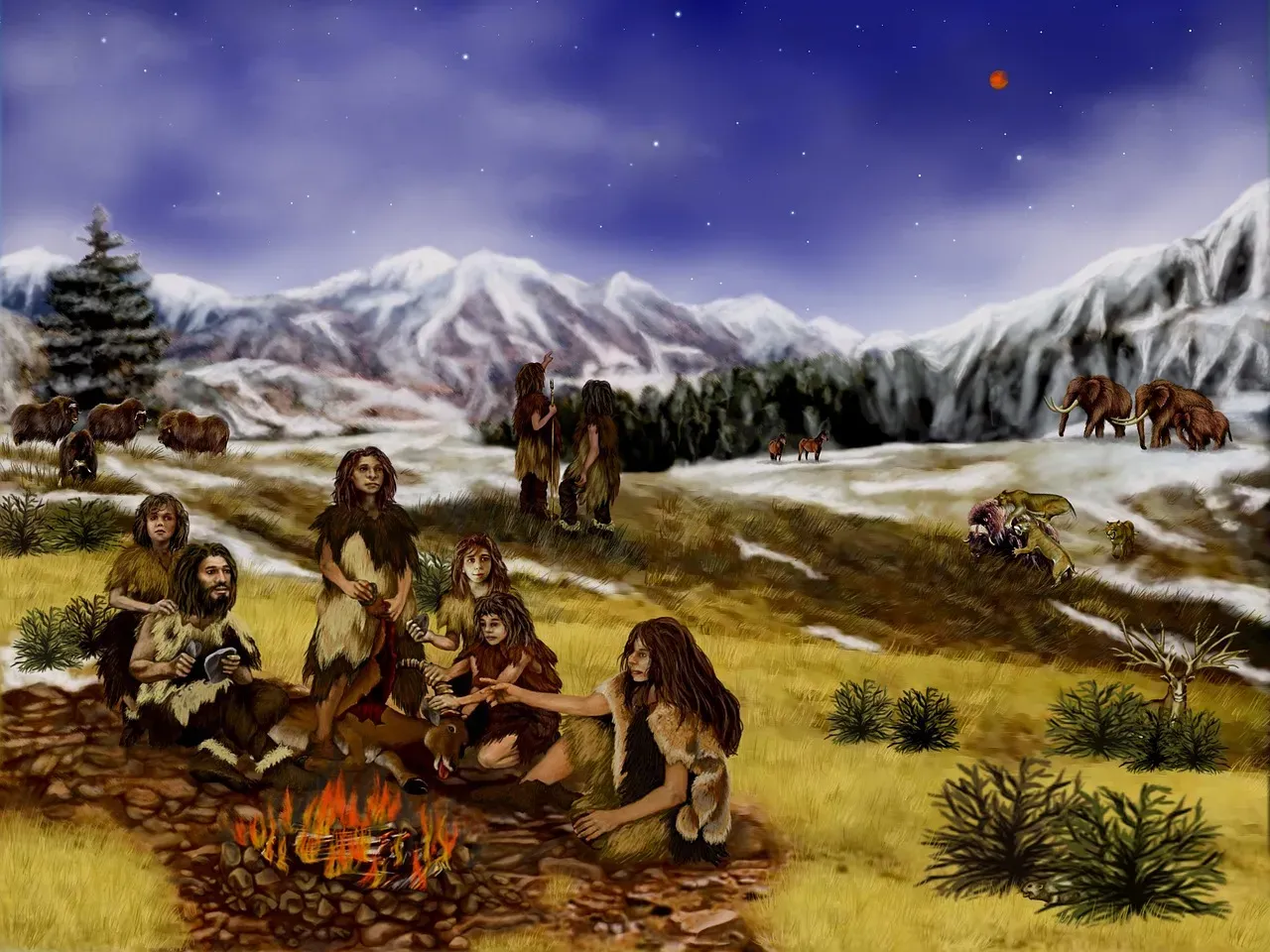
If you drop a single person with no gear into an ice age, they are in serious trouble. Drop a small, well-bonded group with shared knowledge, and suddenly survival becomes at least possible. Community was the ultimate survival technology: people cooperated in hunts, shared food during lean stretches, cared for injured or elderly members, and raised children collectively. A lone genius could not out-think a glacier, but a tight-knit group could outlast hard seasons together.
Just as crucial was how they stored and shared information. Without writing, their “database” lived in memory, ritual, and story. Knowledge about which plants were edible, where herds tended to pass, how to build a reliable shelter, or what to do when someone fell ill was preserved through teaching and tradition. Even art on cave walls may have had a role in reinforcing group identity or mapping important animals and places. We like to think our technology is all metal and code, but for them, the most powerful tool was cultural memory living in human minds and relationships.
Stone, Bone, and Ingenuity: Doing More With Almost Nothing

From our perspective, their toolkits look painfully primitive: stone blades, bone points, wooden shafts, and cords made from plant fibers or animal sinew. But when you examine those tools closely, you see real engineering. Carefully shaped stone edges could cut meat, scrape hides, carve wood, and shape other tools. Bone and antler were turned into needles, harpoons, and spear tips, each design reflecting specific problems like penetrating thick hides or fishing in icy waters.
What impresses me most is how much they squeezed out of so little. Where we respond to a problem by buying a new device, they responded by tweaking shapes, materials, and techniques. A slightly different stone flake pattern could make a tool easier to hold; a change in spear design could switch hunting from up-close thrusting to safer distance throwing. It was iterative design long before anyone coined that term, and it proves that “low tech” does not mean “low intelligence.” Their technology looked simple only because it was so directly tuned to what they needed to survive.
What Their Survival Really Says About Us
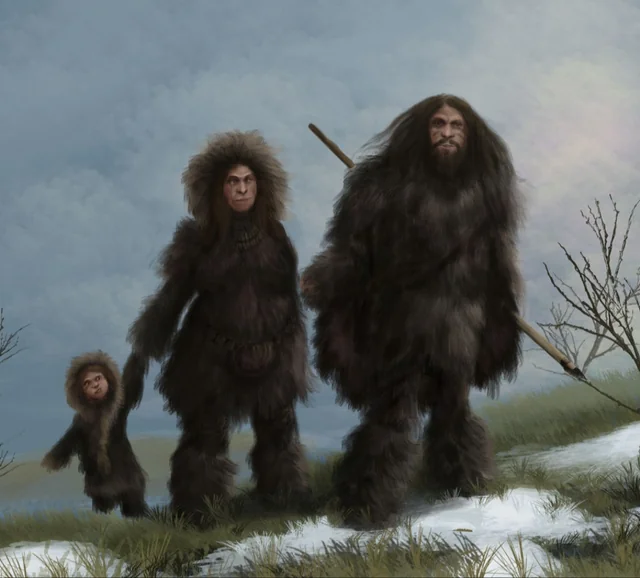
When I think about Ice Age humans outlasting glacial winters without electricity, supermarkets, or even metal, I find it both humbling and a little uncomfortable. It pokes a hole in our belief that modern comforts are the only thing standing between us and disaster. In reality, previous humans weathered far harsher climates with far fewer tools, and they did it using traits we still have: curiosity, cooperation, creativity, and an annoying refusal to give up. The lesson is not that we should throw away our tech, but that our deepest safety net is older and more human than any gadget.
At the same time, I do not romanticize their lives; they dealt with injuries, hunger, grief, and cold on a scale most of us will never know, and many did not make it. But the fact that some did, and did so repeatedly as the ice advanced and retreated, tells us something important: adaptability beats comfort in the long run. Their world forced them to become experts at adjusting, learning, and moving on. Maybe the real question for us, with our heated homes and endless apps, is simple and slightly unsettling: if the climate or our systems suddenly shifted as dramatically as theirs did, are we as ready to adapt as they were, or have we outsourced too much of our survival to the very technology we consider absolutely essential?