
It is wild to imagine that much of what is now the heart of the United States was once covered by a warm, shallow sea filled with monsters. Long before highways and suburbs, enormous marine predators cruised over places like Kansas, Nebraska, and Texas, turning those ancient waters into one of the most dangerous neighborhoods Earth has ever seen. If you could stand on that seafloor and look up, the shadows passing above would have been as terrifying as anything in a modern shark documentary.
What makes these animals so gripping is how familiar and alien they feel at the same time. Some looked like overbuilt sharks, others like steroid‑powered lizards with flippers, and a few were basically sea-going tanks armed with toothy beaks. As a bit of a fossil nerd, I still get a chill thinking that their bones are now locked in the rocks beneath Midwestern cornfields and cattle ranches. Let’s dive into six of the most fearsome giant predators that once swam above what is now America.
Mosasaurus: The Apex Reptile Of The Western Interior Seaway
Mosasaurus is the poster child for the Cretaceous seas, a colossal marine reptile that could stretch roughly longer than a city bus and weigh as much as a small whale. It was not a dinosaur but a lizard relative, closer to modern monitor lizards and snakes, supercharged and redesigned for a life in open water. Its long, muscular body, powerful tail, and paddle‑like limbs turned it into a torpedo built for high‑speed ambushes in the Western Interior Seaway, the enormous inland ocean that once split North America in two.
The skull of Mosasaurus tells you everything you need to know about its lifestyle. It carried massive, conical teeth in a jaw that could open wide enough to swallow large prey, from fish and turtles to other marine reptiles unlucky enough to cross its path. Fossils from states like Kansas and South Dakota show it ruled the top of the food chain, a kind of reptilian orca of its time. If you lived in those waters, your best survival strategy was simple: stay off Mosasaurus’s menu.
Tylosaurus: The Spear-Faced Terror Of The Cretaceous Seas
If Mosasaurus was the bruiser, Tylosaurus was the torpedo with a battering ram up front. This mosasaur, also found in the fossil-rich chalk beds of Kansas and nearby states, grew nearly as long as Mosasaurus but had a distinctive elongated snout. That blunt, reinforced nose likely helped it slam into prey at speed, stunning victims before biting down with rows of sharp, recurved teeth.
Inside some Tylosaurus skeletons, paleontologists have found the remains of fish, seabirds, smaller mosasaurs, and even plesiosaurs. That menu makes it clear this was not a picky eater; it was a relentless generalist, a predator that treated almost anything smaller than itself as fair game. Picture something the size of a school bus using your entire body as a chew toy, and you get why Tylosaurus keeps popping up in museum displays and paleo art. To me, it feels like the closest thing the ancient seaway had to a high‑speed, scaled-up crocodile with zero chill.
Megalodon: The Giant Shark That Haunted Ancient American Coasts
No list of giant predators is complete without the infamous giant shark widely known as Megalodon. Although it lived after the age of mosasaurs and plesiosaurs, this massive shark patrolled the ancient Atlantic and Pacific margins of North America, including waters that covered regions now forming the coastal plains of the eastern and southern United States. Its teeth, larger than a human hand, are scattered through places like the Carolinas, Florida, and parts of the Gulf Coast, silent evidence of a true super‑predator.
There is still debate among scientists about the exact maximum size of this shark, but reconstructions based on tooth and jaw proportions suggest a body many times longer than a great white. Whatever the precise number, the message is clear: anything in those waters, from large fish to whales, had to deal with an enormous, fast‑moving predator capable of delivering bone‑cracking bites. I remember holding a cast of one of its teeth for the first time; it felt less like something from an animal and more like a weapon, the fossil equivalent of a machete forged out of enamel.
Kronosaurus (And Its Kin): Short-Necked Pliosaurs With A Bone-Crushing Bite
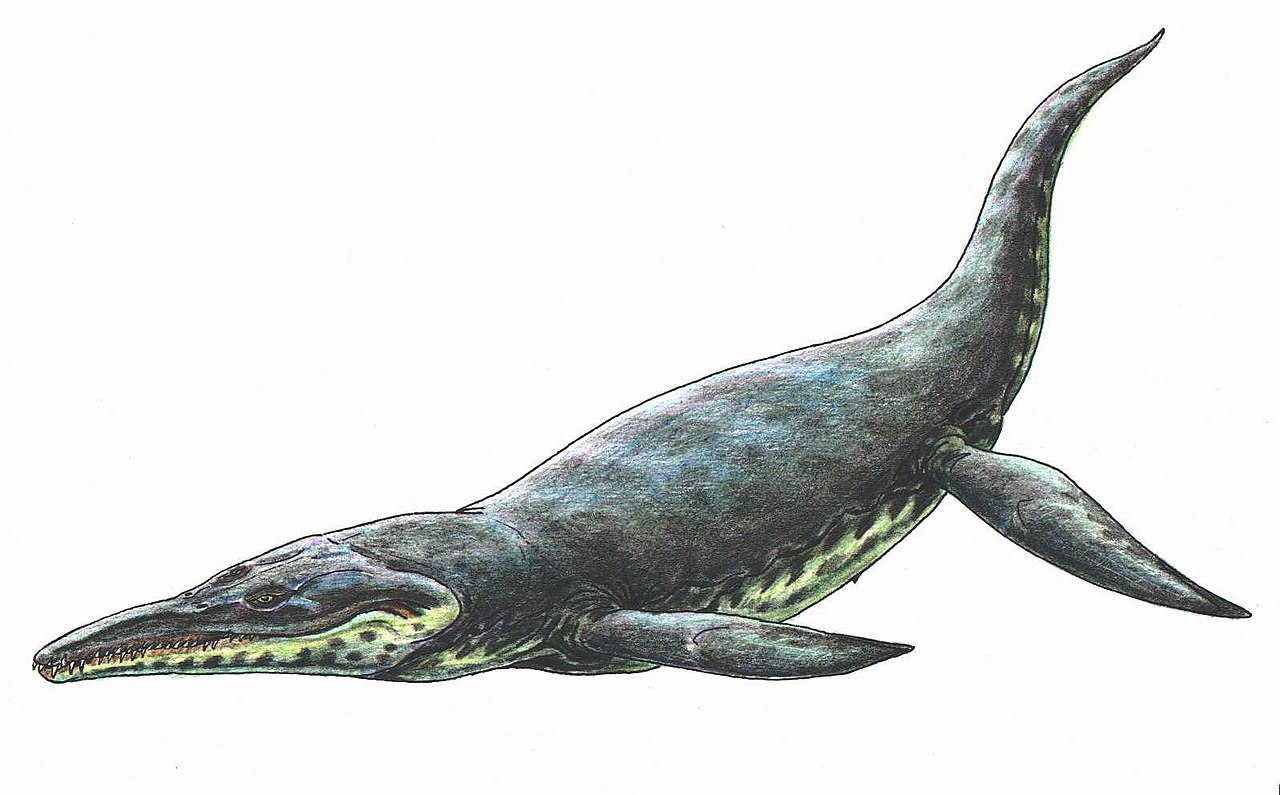
While most of the classic giant predators are mosasaurs and sharks, short‑necked plesiosaurs called pliosaurs also played a major role in ancient oceans. Kronosaurus is one of the best known, a massive marine reptile with a big head, relatively short neck, and huge paddle‑like limbs. Although its most famous fossils come from outside North America, closely related forms and similar short‑necked plesiosaurs swam in the seaways that once covered parts of the continent.
These animals brought something different to the predator lineup: a skull packed with large, interlocking teeth and jaw muscles designed to clamp down with tremendous force. Imagine an overgrown, marine crocodile with flippers instead of legs, locked into a powerful, lunging stroke. Their likely prey included large fish, other marine reptiles, and almost anything they could catch and subdue. In a way, pliosaurs feel like nature’s reminder that if a design works – big head, big jaws, strong body – evolution will try it more than once in different settings.
Xiphactinus: The Nightmarish Fish With A Mouthful Of Knives
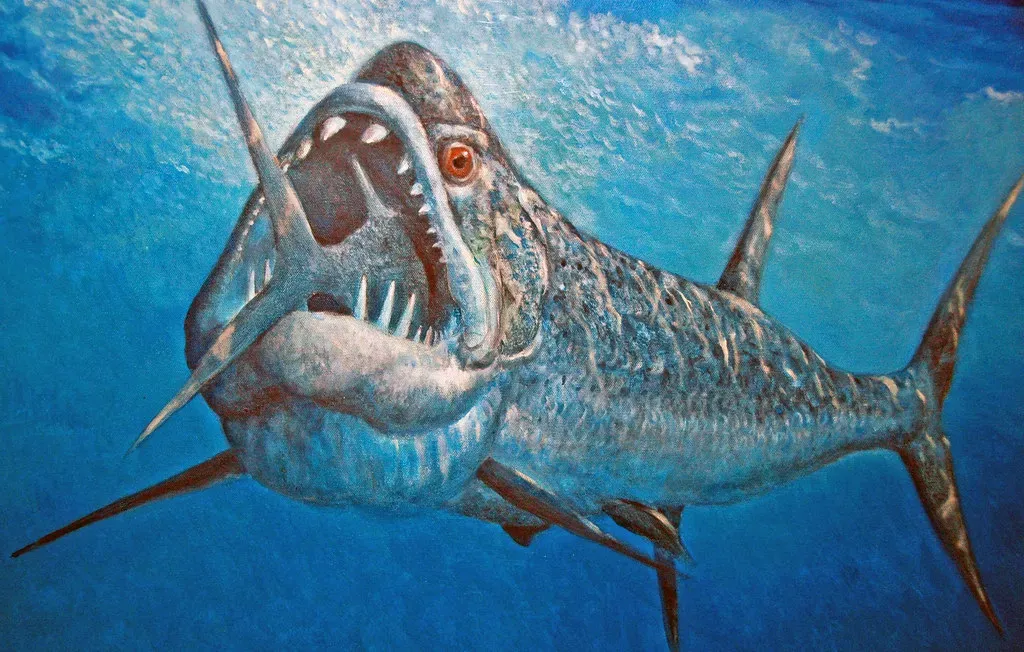
Not every terrifying predator in those ancient American seas was a reptile or shark; some were truly monstrous fish. Xiphactinus was one of the most infamous, a huge bony fish that could reach sizes rivaling or exceeding most modern large predatory fish. Its fossils are famously common in the Cretaceous chalk beds of Kansas, where its remains often appear with an eerie level of completeness, as if the animal died in a single, catastrophic moment.
What makes Xiphactinus so unsettling to look at is its head: a long, toothy snout lined with sharp, blade‑like teeth that angle backward, ideal for grabbing slippery prey and not letting go. In one extraordinary specimen, a nearly full‑grown fish lies preserved inside the rib cage of a larger Xiphactinus, suggesting it choked or suffered internal damage after swallowing a meal that was simply too big. To me, that fossil reads like a cautionary tale about greed written in bone – this was a predator so driven to feed that it literally died from overdoing it.
Cretoxyrhina: The “Ginsu” Shark Of America’s Cretaceous Inland Sea
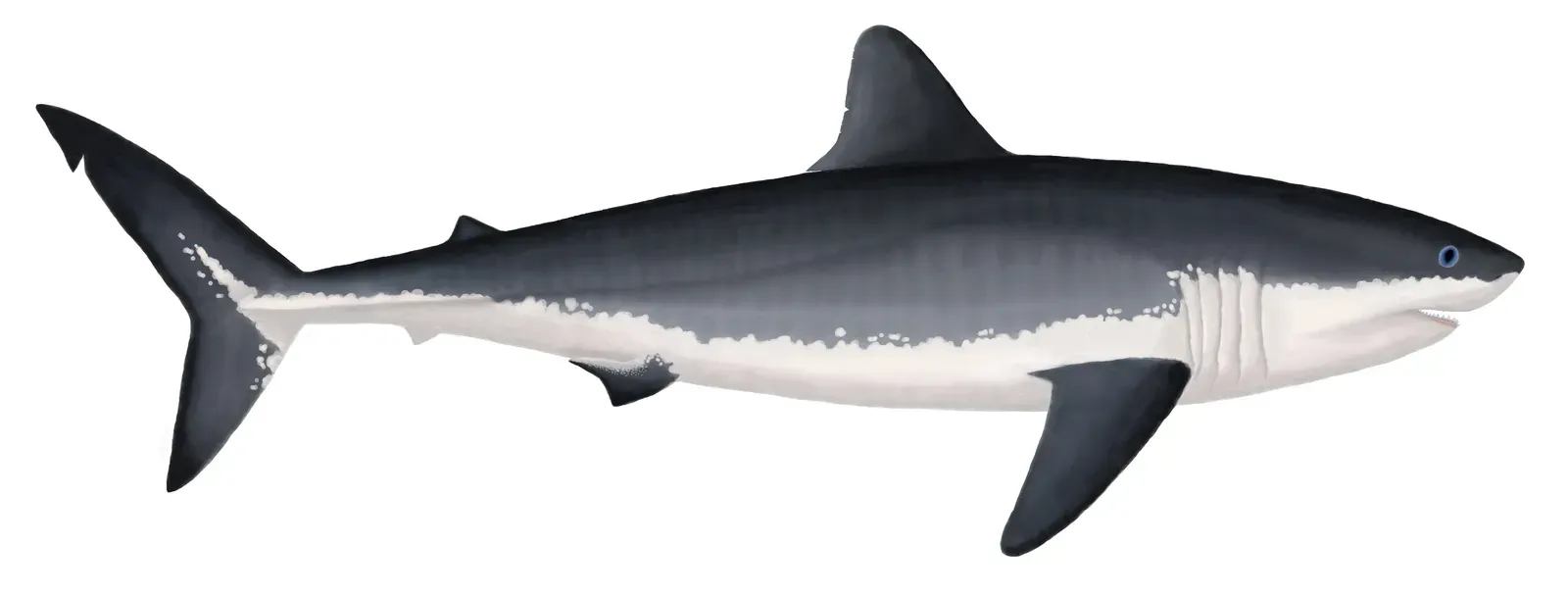
Before giant sharks like Megalodon ruled later oceans, the Western Interior Seaway had its own heavyweight shark champion: Cretoxyrhina. Sometimes nicknamed the “Ginsu” shark for its slicing, blade‑like teeth, this animal reached lengths comparable to a modern great white, possibly more, and occupied one of the top predator roles in the Cretaceous seas over central North America. Its streamlined body and cutting teeth made it a fast, efficient hunter of fish, marine reptiles, and anything else unfortunate enough to cross its path.
Fossils of Cretoxyrhina show up in the same layers as mosasaurs and Xiphactinus, which means the ancient American seaway was not just dangerous – it was crowded with danger. Bite marks on bones suggest it sometimes scavenged large carcasses, but its overall build and tooth wear hint at an active predator that put serious pressure on the ecosystem. I like to think of it as the shark that kept even other giants a little uneasy, a reminder that in those waters there was almost always something bigger, faster, or hungrier than you expected.
Conclusion: A Lost Ocean Of Nightmares Beneath Our Feet
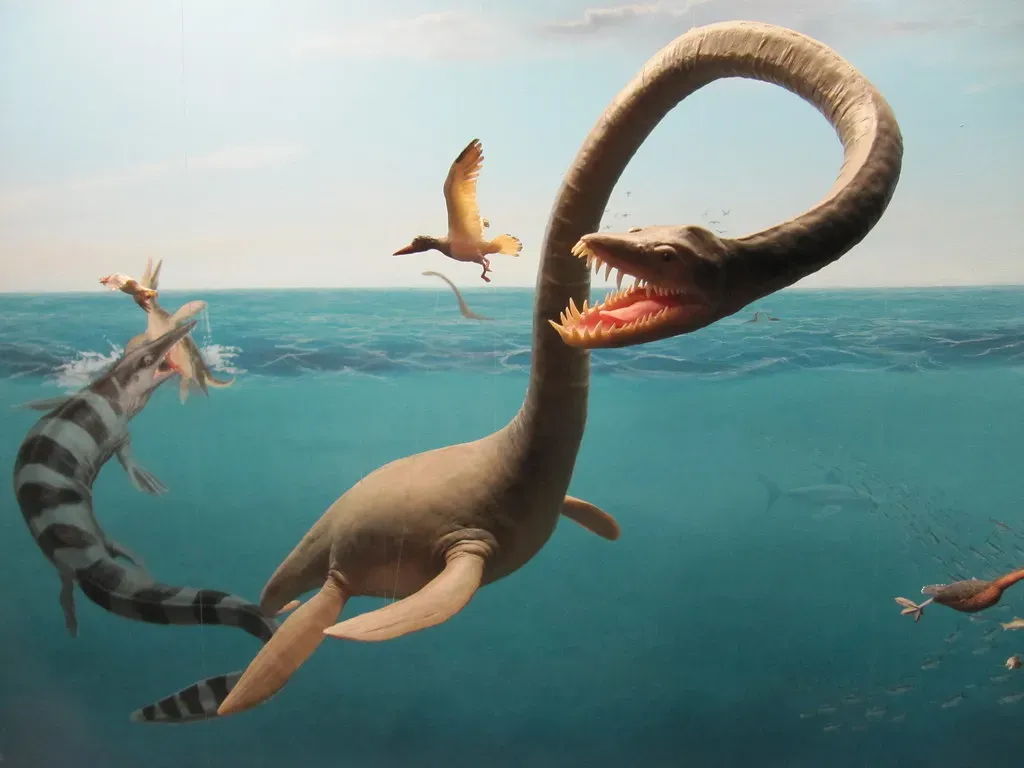
When you zoom out and line up Mosasaurus, Tylosaurus, Megalodon, pliosaurs like Kronosaurus, Xiphactinus, and Cretoxyrhina, a pattern jumps out: the place we now call the United States has spent a surprising amount of its history under the rule of giant killers. Fields of corn, quiet prairies, and beach towns sit on top of rock layers that were once a three‑dimensional battlefield of teeth, tails, and flippers. To me, that makes every fossil display less like a dusty museum case and more like a crime scene snapshot from a world we will never fully see.
There is a temptation to treat these animals purely as monsters, but they were also the engines that kept ancient ecosystems in balance, culling the weak, shaping prey populations, and driving evolution in countless subtle ways. As we keep digging and scanning and arguing over new finds, our picture of those vanished seas gets sharper, and the story only gets stranger and richer. Next time you fly over the Midwest or drive across a flat, quiet plain, it is worth asking yourself: if you could rewind the clock and look up from the seafloor instead, which of these six giants would you hope not to see silhouetted against the light?