
You know that sinking feeling when you lie awake replaying something embarrassing you said three years ago, but you can barely recall last week’s compliment? That’s not your brain being dramatic for no reason. It is, in a very real sense, your inner caveman trying to keep you alive in a world where one bad decision could have been your last. Our minds are wired to spotlight threats, pain and failure more loudly than safety, comfort and success.
Scientists sometimes call this a negativity bias, but that phrase almost sounds like a flaw, as if nature made a mistake. In reality, there is a cold logic behind it: in an environment full of predators, poisons and social dangers, underreacting once could mean game over, while overreacting a hundred times costs only a little energy and stress. Understanding this asymmetry does not just explain why we dwell on the bad; it also opens a door to handling it better without pretending we can simply think our way out of millions of years of evolution.
The brutal math of survival asymmetry

Imagine life tens of thousands of years ago: you hear a rustle in the grass. If you assume it is a predator and you are wrong, you waste a burst of energy and maybe feel silly. If you assume it is nothing and you are wrong, you become lunch. From an evolutionary standpoint, those two mistakes do not carry remotely equal costs. One is mildly inconvenient; the other ends your genetic line forever.
Natural selection tends to favor organisms whose nervous systems are biased toward avoiding the kind of mistake that kills them, even if that means making boatloads of harmless false alarms. Over thousands of generations, nervous systems that treated every possible threat as serious, and encoded those threats in vivid memory, were more likely to pass on their genes. Our lopsided tendency to remember negative experiences is like an inherited insurance policy written by a very paranoid ancestor who had good reason to be.
Why negative experiences burn deeper into memory
When something bad happens, your body does not just react emotionally; it shifts into a full biological emergency mode. Stress hormones like adrenaline and cortisol surge, your heart rate jumps, and your attention narrows to the source of danger. That same hormonal cocktail also interacts with memory systems in the brain, especially regions like the amygdala and hippocampus, helping stamp the event in sharper detail. The brain is essentially tagging it with a sticky note that says: do not forget this, it matters.
Positive experiences usually do not trigger the same high-stakes biological alarm. A delicious meal or a warm hug can be memorable, but they rarely carry the same survival urgency as stepping on a snake or being humiliated in front of your group. The result is an uneven memory landscape: painful, scary or shaming events form sharp peaks that stand out on the horizon, while many happy moments blur together into softer hills. It is not that joy does not matter; it is that, historically, failure to remember danger had more severe consequences than failure to remember pleasure.
From saber-toothed tigers to social rejection
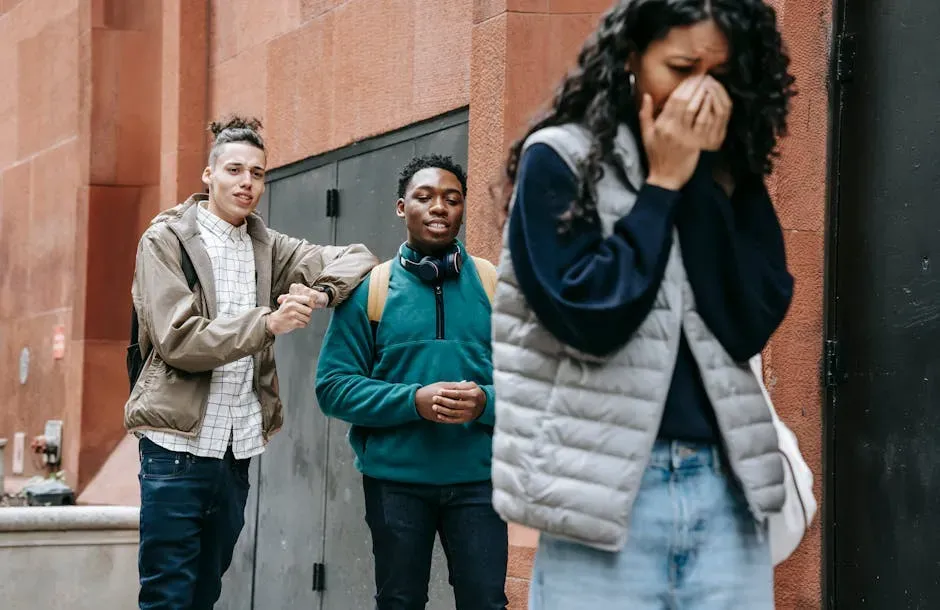
Modern life does not usually involve predators hiding in the bushes, but our brains did not get a full software upgrade when we invented cities and smartphones. Instead, the same circuitry that once tracked poisonous berries and unstable terrain now tracks emails from your boss, likes on social media and the tone of a friend’s text. Social rejection and public embarrassment light up some of the same brain regions that respond to physical pain, which is why a cutting remark can haunt you nearly as much as an actual injury.
Because our survival used to depend heavily on belonging to a group, being excluded or shamed carried enormous risk. Getting kicked out of the tribe could mean less protection, fewer resources and no mating opportunities. So the brain learned to treat signs of disapproval as serious threats worth remembering in high resolution. Today that tendency can make small social missteps feel huge, as if your entire place in the world is at risk, even when logically you know it is just a clumsy comment at a party or an awkward silence on a video call.
Why losses hurt more than gains feel good
Psychologists have repeatedly found that losing something tends to upset us more than gaining the same thing delights us. Losing a small amount of money often stings more than winning that same amount pleases. This imbalance, often called loss aversion, fits neatly with the survival asymmetry idea: in a harsh environment, losing food, status or safety could push you toward the edge of survival, while gaining extra resources beyond “enough” might not improve your odds by nearly as much.
Translated into everyday life, this means the bad review outweighs ten quiet compliments, the one critical email looms larger than a week of smooth work, and a single failed relationship sometimes colors your view of love more than several good ones. It is not just emotional fragility; it is your brain trying, a bit too hard, to protect you from repeating mistakes that once could have been catastrophic. The downside is that this cautious wiring can make the world look harsher and more dangerous than it really is, especially in relatively safe, resource-rich societies.
When ancient instincts crash into modern mental health

The negativity bias may have helped our ancestors make it through ice ages and famines, but in a world of constant information and social comparison, that same bias can pile up into chronic anxiety, rumination and low mood. News feeds amplify threats and tragedies, while your own mind replays worst-case scenarios and embarrassing moments like a glitchy loop. What used to be an occasional lifesaving response to real danger can turn into a default background hum of “something is wrong” even when nothing truly urgent is happening.
Over time, this can shape how you see yourself and others. If your mind gives negative memories extra weight, it becomes easier to build a story where you are less capable, less lovable or less safe than you really are. That does not mean the brain is broken, but it does mean an ancient survival system is operating in an environment it was never designed for. In an era where, for many people, physical threats are rarer than psychological stress, the same circuitry that once guarded your life can slowly chip away at your wellbeing.
Can we outsmart a brain wired for bad news?

The honest answer is that you probably cannot completely erase millions of years of survival bias, and that is not actually the goal. You would not want to forget what a red-hot stove feels like or downplay genuinely dangerous behavior. What you can do is learn to recognize when your internal alarm is screaming louder than the situation deserves. Simply naming the pattern – “my brain is spotlighting the negative again because it thinks it is protecting me” – can create just enough distance to respond more calmly.
Practices that deliberately magnify positive experiences can also nudge the balance, even if they never fully flip it. Slowing down to savor something good for a few extra breaths, writing down small daily wins, or replaying kind interactions in your mind gives your memory systems more raw material to work with. You are, in a sense, feeding your brain extra examples that safety, pleasure and connection also deserve a place in long-term storage. It is not a magic fix, but it is a way of collaborating with your wiring instead of just feeling trapped by it.
Learning to live with a cautious brain

One of the most helpful shifts is to stop seeing this negativity tilt as proof that you are weak, broken or uniquely pessimistic. The same machinery that makes you dwell on past pain also makes you sensitive to danger, able to empathize with others’ suffering and capable of learning from your mistakes. There is a strange dignity in realizing that your restless, worried mind is the legacy of countless ancestors who paid fierce attention to what could go wrong so that you could exist at all.
At the same time, you do not have to accept every anxiety or painful replay as gospel truth. You can treat your thoughts like overprotective messages from a nervous parent: sometimes wise, sometimes exaggerated, always trying to help in their own clumsy way. When you notice yourself spiraling over one bad moment, you can pause and ask: is this my survival asymmetry talking, or is the danger actually as big as it feels? That question alone does not silence the noise, but it can turn a blaring siren into something closer to an advisory tone.
Conclusion: respecting the bias without surrendering to it

In my view, the biggest mistake we make is treating our negativity bias either as an enemy to be crushed with relentless positivity or as a destiny we are doomed to suffer under. It is neither. It is a hard-won survival feature that simply overshoots in a modern world where most rustles in the grass are emails, not predators. Our task is not to become unbothered robots, but to become better interpreters of our own alarms, taking them seriously without letting them dictate the entire story.
If getting eaten once really does end the game while missing a meal does not, then it makes sense that our minds lean toward caution – but a game that never lets you take a risk is not much of a life either. The art is in honoring the part of you that wants to keep you safe while gently insisting on your right to feel joy, pride and peace with equal intensity. The bad may always feel a bit louder than the good, but we still get to choose which memories we revisit, which stories we repeat and which futures we imagine. Knowing that, what kind of inner world do you want your cautious but curious brain to help you build?