Every second, invisible bullets from deep space are ripping through your body. You do not feel them, you cannot see them, and yet over the history of life on Earth they may have quietly nudged DNA in new directions, helping shape everything from ancient microbes to modern humans. It sounds like science fiction, but the story of cosmic rays and evolution sits right on the edge of what we can currently measure and what we are only just beginning to suspect.
To me, this is where science is the most exciting: in the thin, blurry zone between established fact and emerging possibility. We know cosmic rays constantly hit our planet and can damage DNA; we also know mutation fuels evolution. The real question is how much these ghostly particles from the galaxy have mattered in practice. Were they a faint background hum, or did they occasionally slam the evolutionary accelerator? The honest answer is that the jury is still out – but the clues are getting harder to ignore.
What Cosmic Rays Actually Are, Beneath the Buzzword
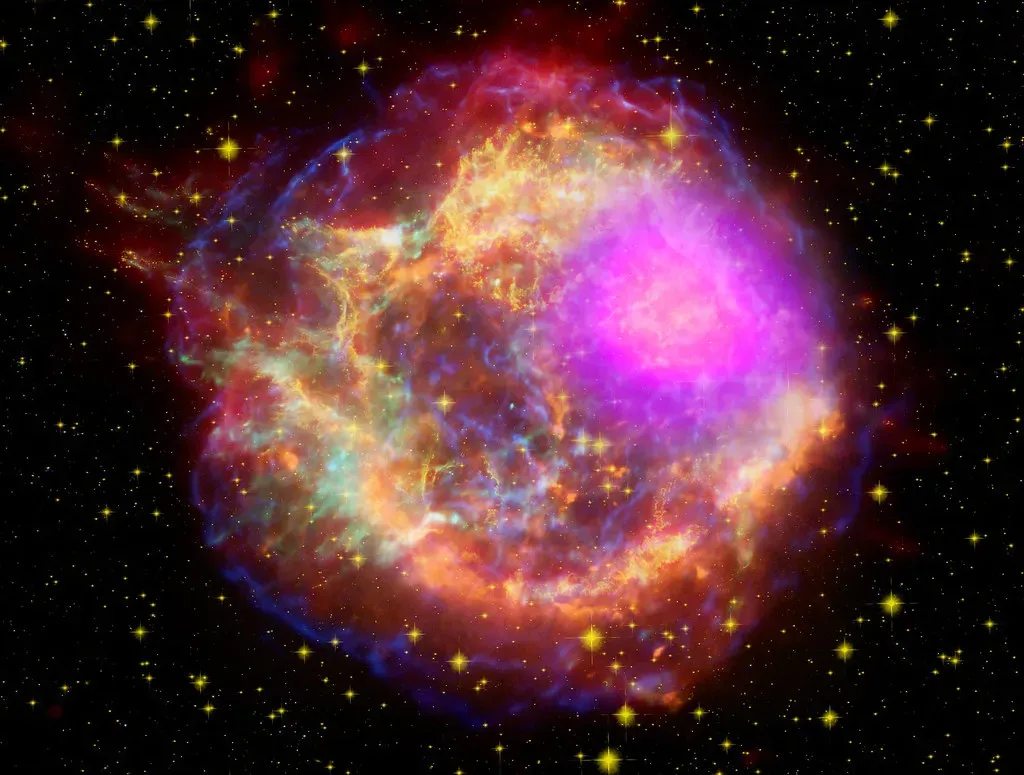
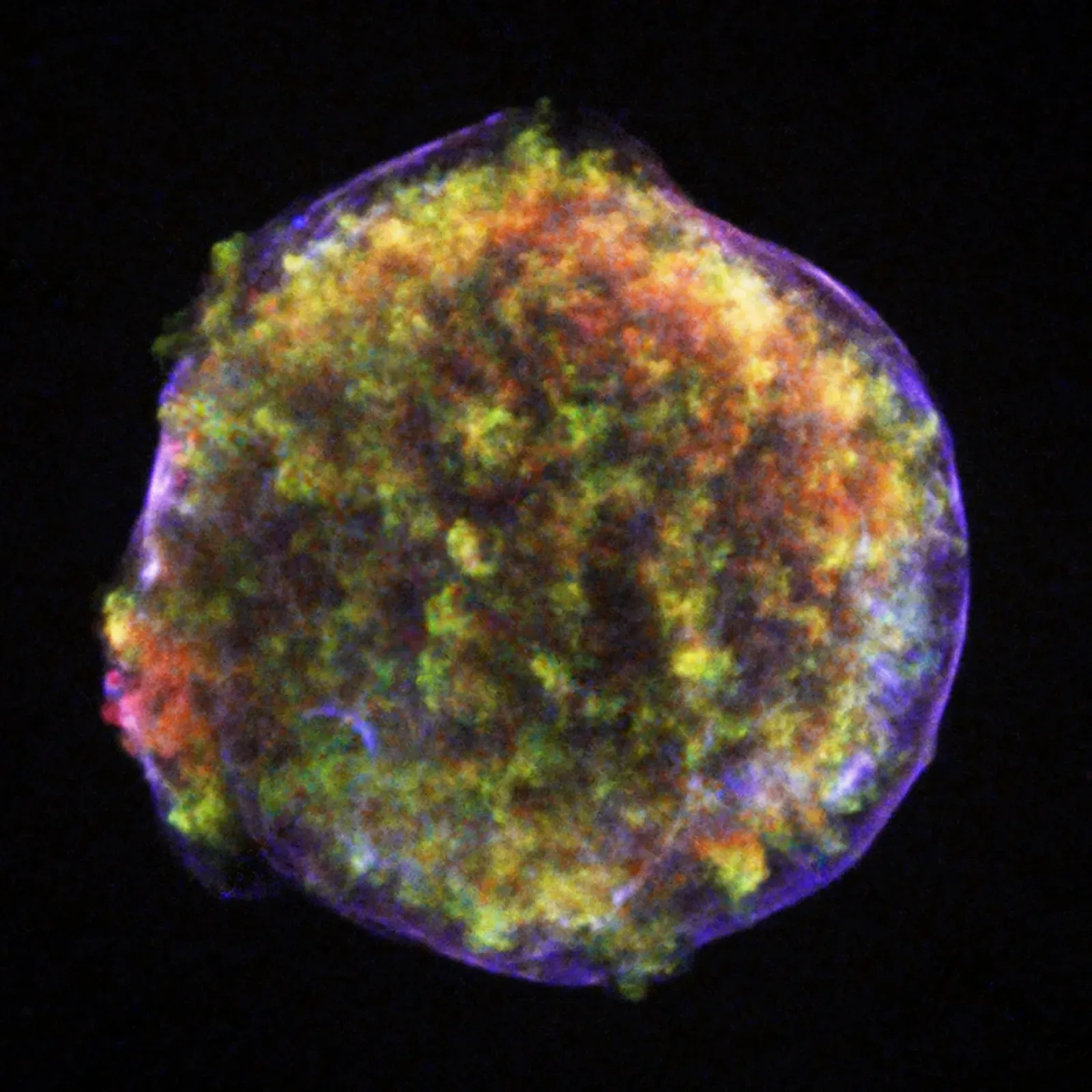
Cosmic rays sound mystical, but at their core they are mostly just high‑energy particles, like protons and atomic nuclei, traveling through space at nearly the speed of light. Many are born in violent astrophysical events: exploding stars, shock waves in supernova remnants, and possibly even jets from supermassive black holes in distant galaxies. Unlike light, which can be blocked or scattered, these charged particles can barrel through huge distances and magnetic fields before finally smashing into something – like Earth’s atmosphere.
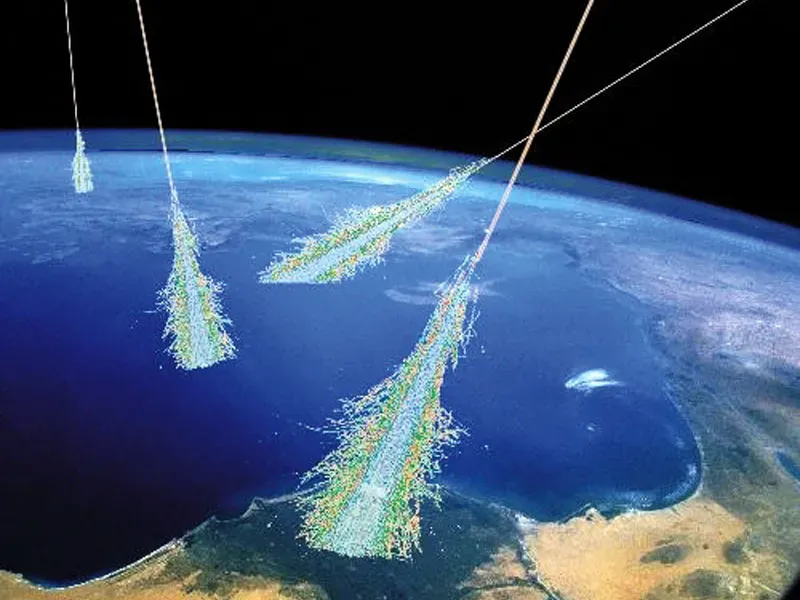
When a primary cosmic ray slams into an air molecule high above us, it creates a cascading shower of secondary particles that fan out toward the ground. By the time this shower reaches the surface, what hits you and me are mostly muons and other fragments that can pass through meters of rock, buildings, and flesh. That is why airline crews at high altitude and astronauts above the atmosphere get noticeably higher radiation doses than people at sea level. Even there, though, every living thing on Earth has always lived under a drizzle of cosmic‑ray‑related radiation.
Billions of Years of Invisible Bombardment
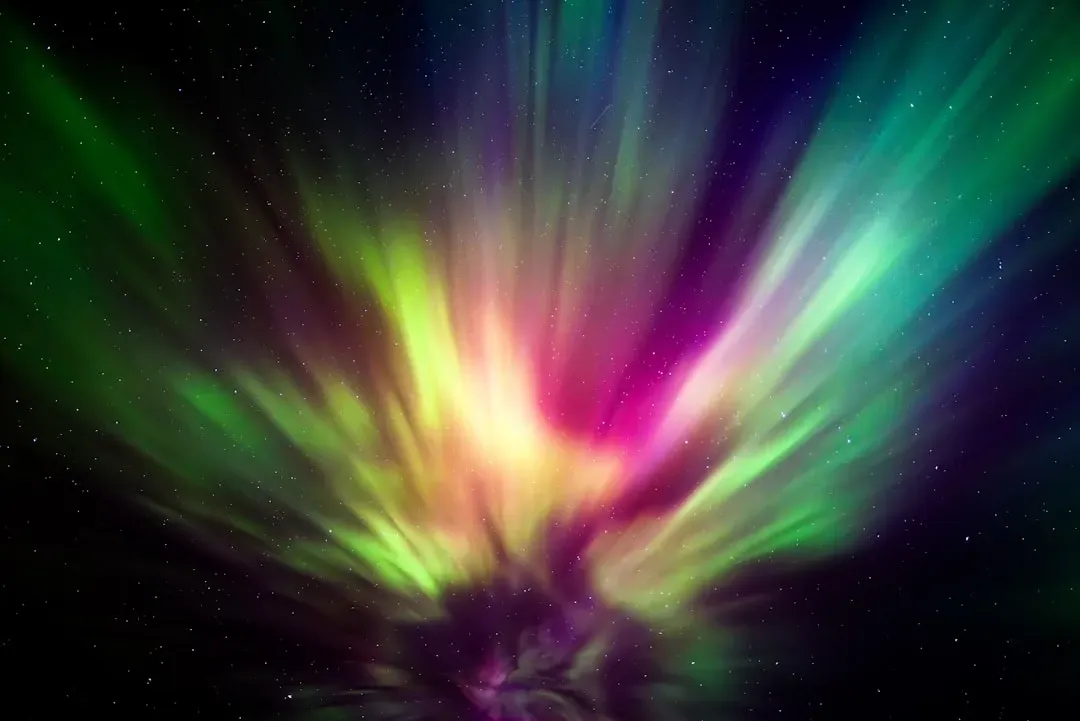
Cosmic rays did not suddenly appear when humans built particle detectors; they have been part of Earth’s environment for essentially as long as the planet has had an atmosphere. From the earliest microbial mats in ancient oceans to the first land plants and strange Cambrian animals, every stage of life’s history unfolded under this continuing shower from space. Unlike rare catastrophic events, this bombardment is more like a persistent background soundtrack that never quite shuts off.
Of course, the intensity has not been perfectly constant. The solar system orbits the Milky Way, passes through regions of different gas and dust density, and sometimes endures relatively nearby supernova explosions. The Sun’s own activity also modulates cosmic‑ray flux, with more active solar periods generally deflecting more incoming particles. Over geologic timescales, that means life on Earth has experienced a slowly shifting radiation environment, even without any human involvement, and those subtle patterns are exactly what some researchers think could have left a fingerprint on evolution.
How Cosmic Rays Can Damage DNA and Spark Mutations
When the secondary particles from cosmic rays pass through living tissue, they can break chemical bonds, ionize molecules, and create reactive radicals that damage DNA. Sometimes that damage is neatly repaired by cellular machinery; other times, tiny errors slip through, becoming permanent changes in the genetic code. These changes are mutations, and while many are neutral or harmful, a small fraction can provide new traits that natural selection might favor. In that sense, cosmic rays are just one more source feeding the mutation pipeline.
What makes high‑energy radiation interesting is the way it can cause clustered or complex DNA damage that is harder for cells to fix cleanly. On the one hand, that raises obvious concerns for health when doses are high, such as in spaceflight or medical exposures. On the other hand, over millions of years, low but steady radiation may have sprinkled just enough randomness into genomes to open new evolutionary paths. It is like a cosmic‑scale version of the “shake the Etch A Sketch” effect, where most shakes blur the picture but a rare one might reveal something unexpectedly useful.
Cosmic Rays Versus Other Mutation Sources
It is tempting to imagine cosmic rays as the main puppeteers behind evolution, but that does not match what we know. Inside cells, many mutations arise simply from copying errors during DNA replication, chemical reactions within the body, and local environmental factors like UV light from the Sun or naturally occurring radioactive elements in rocks. When biologists tally up typical mutation rates and dose levels, cosmic‑ray‑induced mutations at Earth’s surface appear to be a relatively small slice of the overall pie under normal conditions.
That said, “small slice” does not mean “irrelevant.” Over billions of years and countless generations, even a modest additional source of genetic variation can matter, especially during periods when cosmic‑ray intensity may have spiked above its usual background. I tend to think of it like seasoning in a dish: the base flavor comes from ordinary biochemical processes, but a sprinkle of extra cosmic randomness might have tilted particular lineages toward new outcomes they would not otherwise have reached. The challenge is teasing out that subtle contribution from the much louder noise of other mutation sources.
Do We See Evolutionary Clues in the Geological Record?
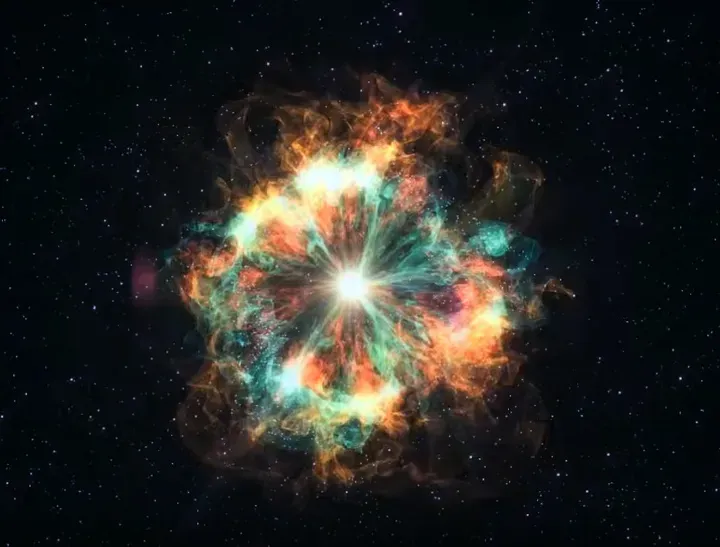
Some scientists have looked for correlations between changes in cosmic‑ray flux and events like diversification bursts or mass extinctions in the fossil record. They use things like isotope signatures in rocks, models of supernova rates near the solar system, and reconstructions of our orbit through the galaxy to guess when Earth might have seen elevated radiation. A few studies have hinted at possible links, for instance between nearby supernovae and changes in climate or marine life, but the evidence is far from ironclad.
The truth is, Earth is a noisy place geologically and biologically. Climate shifts, volcanic eruptions, asteroid impacts, continental drift, and ocean chemistry all tug on ecosystems at the same time, and our records of ancient cosmic‑ray flux are still fairly rough. That makes it incredibly hard to say, with confidence, that a specific evolutionary jump or extinction pulse was significantly driven by radiation from space. Right now, the geological clues are intriguing in places but incomplete, which is why most careful researchers talk about cosmic rays as potential contributors rather than dominant drivers of life’s big turning points.
What We Can Actually Measure Today
Where things get more concrete is in the present day, because we can now measure cosmic rays and their biological impacts with far more precision than even a few decades ago. Particle detectors on the ground, on balloons, and in orbit map the energy and composition of incoming cosmic rays. Dosimeters track how much radiation airline pilots and astronauts accumulate, and biological experiments on the International Space Station probe how cells respond to cosmic‑like radiation environments beyond Earth’s shielding atmosphere.
On the genetics side, laboratory experiments expose microorganisms, plants, and animal cells to controlled doses of high‑energy particles to watch what kinds of DNA damage and mutations occur. While these studies confirm that radiation can induce mutations, turning that knowledge into a precise, population‑level estimate of how much cosmic rays contribute to natural evolution is still a work in progress. We can see the mechanism; we can measure some of the effects; what remains uncertain is the overall share of responsibility in the grand evolutionary story, especially over deep time.
Space Travel, Cosmic Rays, and the Future of Human Evolution
Cosmic rays are not just an ancient curiosity; they are a very real problem for the future of human space travel. Outside Earth’s magnetic field and thick atmosphere, astronauts are much more exposed to galactic cosmic radiation, including high‑energy heavy ions that can wreak havoc in tissues. Space agencies worry about cancer risk, nervous system damage, and other health issues for long journeys to Mars or long stays on lunar bases. That concern has driven intense research into shielding, habitat design, and even biological countermeasures.
There is also a more speculative question: if humans eventually live for generations in space or on other worlds with different radiation environments, could cosmic rays nudge our evolution in new directions? I do not think they would magically turn us into comic‑book superheroes, but they might subtly shift mutation patterns and long‑term health risks. In that sense, our future may echo the distant past, with life once again adapting under a changed cosmic‑ray drizzle – this time because we chose to leave the cradle of Earth.
Controversies and Caution: How Far Can We Really Go?
Not everyone is convinced that cosmic rays have played a large or decisive role in evolution, and the skepticism is healthy. Many biologists argue that, given typical radiation levels at Earth’s surface, cosmic‑ray‑induced mutations are just a minor background factor compared to internal cellular processes and local environmental stresses. They point out that you can fully explain the broad patterns of evolution – common ancestry, natural selection, adaptation – without invoking cosmic rays as anything more than one of several random mutation sources.
I tend to agree that some popular claims go too far, turning a plausible contributor into a grand, cosmic explanation for life’s complexity. The reality is more modest and more interesting: cosmic rays are part of a broader web of physical processes that have quietly shaped the conditions for life and evolution, but they are not puppet masters. The best stance right now is cautious curiosity – acknowledging the evidence for radiation‑induced mutation, exploring the ways cosmic‑ray flux may have varied, but resisting the urge to treat every mystery in the fossil record as evidence of some hidden galactic script.
Conclusion: A Cosmic Nudge, Not a Cosmic Destiny
When I look at the balance of evidence, I see cosmic rays as a subtle but genuine ingredient in the evolutionary recipe, not the secret master key. They have been striking Earth for billions of years, occasionally breaking DNA, sometimes sparking mutations that natural selection could shape, and perhaps, during rare high‑radiation episodes, amplifying the pace of change. But they operate alongside a crowded cast of characters – chemical noise, thermal fluctuations, ecological pressures – and there is little support for the idea that they alone have steered life’s grand trajectory.
At the same time, there is something thrilling about knowing that distant supernovae and galactic shock waves may have left quiet fingerprints in our genomes. It makes evolution feel even more like a collaboration between Earth and the wider universe, with deep‑space events leaving tiny ripples in the history of life. My opinion is that we should resist cosmic overselling while still embracing the wonder of this connection: we are not just shaped by our planet, but also, in small and still‑being‑measured ways, by the restless high‑energy sky. Next time you step outside at night, it is worth asking yourself: how much of who we are today might trace back, however faintly, to particles that began their journey among the stars?