Most people think they know the bald eagle inside and out – it’s on money, murals, and every patriotic bumper sticker in America. But peel back the mythology, and researchers who actually study these birds tell a very different story than the one printed on the seal.
The real bald eagle is stranger, scrappier, and far less “majestic” than its reputation suggests. It screams like a different animal in movies, steals its dinner more often than it catches it, and nearly vanished from an entire continent within one human lifetime. Here’s what wildlife biologists actually say once the cameras stop rolling.
#13 – Bald Eagles Aren’t Actually Bald
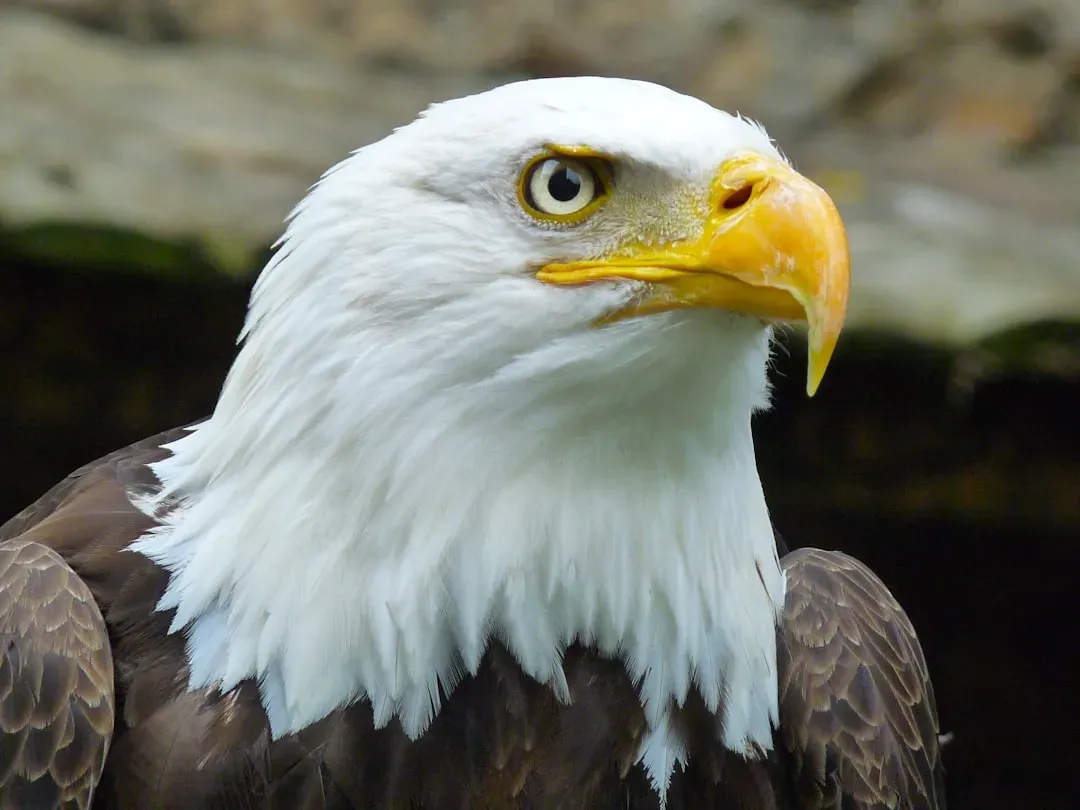
Here’s the twist: the name has nothing to do with feathers, or a lack of them. The bird’s white-feathered head is anything but hairless, which makes the “bald” label look like a naming mistake that stuck for centuries.
One theory traces it to old English. The name was likely first used by early North American British settlers in the late 1500s, borrowed from the Middle English word “balde,” meaning “white-headed.” National Park Service researchers offer a competing origin story, tracing “bald” back to “piebald,” a term for markings that come in two contrasting colors, usually black and white.
Either way, scientists agree on one thing: the eagle was never hairless, and the name is a 400-year-old linguistic accident. Its official scientific name backs this up too – it literally translates to “white-headed sea eagle.” That naming confusion is nothing compared to what researchers found when they finally recorded the bird’s actual voice.
#12 – The Screech You Know Isn’t Really Theirs
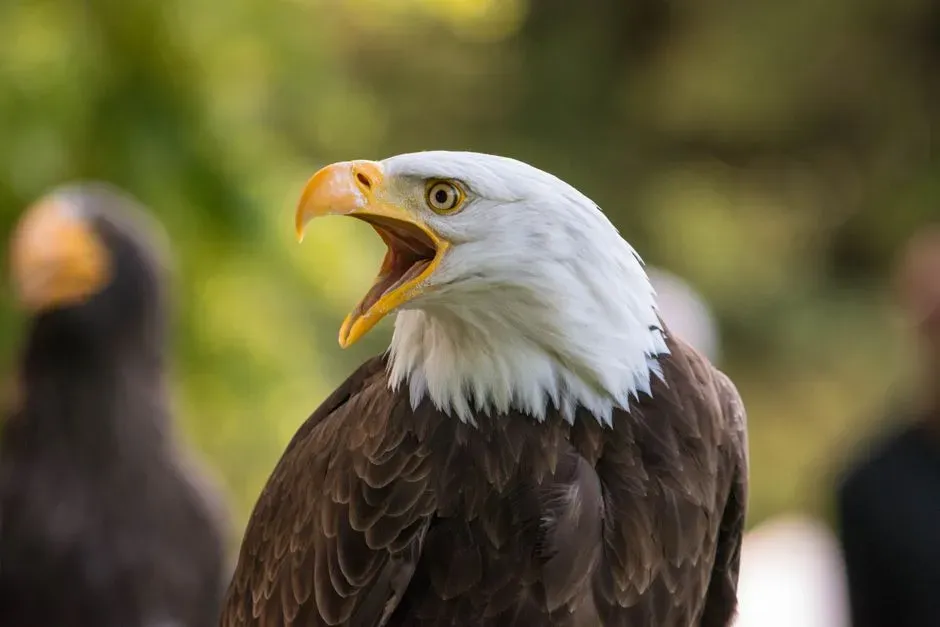
Brace yourself: that iconic eagle scream in every nature documentary is a lie. Acoustic researchers have confirmed what wildlife rehabbers have known for years – the real bald eagle call is surprisingly weak, mostly high-pitched chirps and chatters used for communication, not intimidation.
One wildlife ambassador program director described the real call as sounding “kind of like a seagull with laryngitis.” That thin, almost comical chirping is such a letdown on camera that sound editors quietly swap it out.
Here’s the part that surprises most people: the eagle has been dubbed over, and that classic screech actually belongs to another raptor entirely – the red-tailed hawk. One wildlife director admitted the substitution is “rampant” in TV and film, and once you know it, you’ll never un-hear it. The most “iconic” eagle sound in pop culture doesn’t belong to an eagle at all. But a fake voice is a minor deception compared to what scientists say about the eagle’s actual eating habits.
Quick Compare
- Real bald eagle call: thin, high-pitched chirps and chatters
- Movie eagle call: dramatic scream, actually borrowed from a red-tailed hawk
- Why the swap sticks around: editors want a sound that matches the bird’s tough reputation
#11 – Scientists Now Call It a “Winged Pirate”
Turns out, America’s national bird has a reputation problem that started with one of the Founding Fathers. Long before biologists had a name for it, Benjamin Franklin was already calling out the eagle’s behavior.
He is a bird of bad moral character. He does not get his living honestly.
Benjamin Franklin
Franklin wasn’t exaggerating for effect – he was describing a documented survival strategy, the eagle’s habit of stealing fish from ospreys. He even cited it as a reason not to use the bird as the national symbol. Modern ornithologists have since given the behavior a formal, less judgmental name.
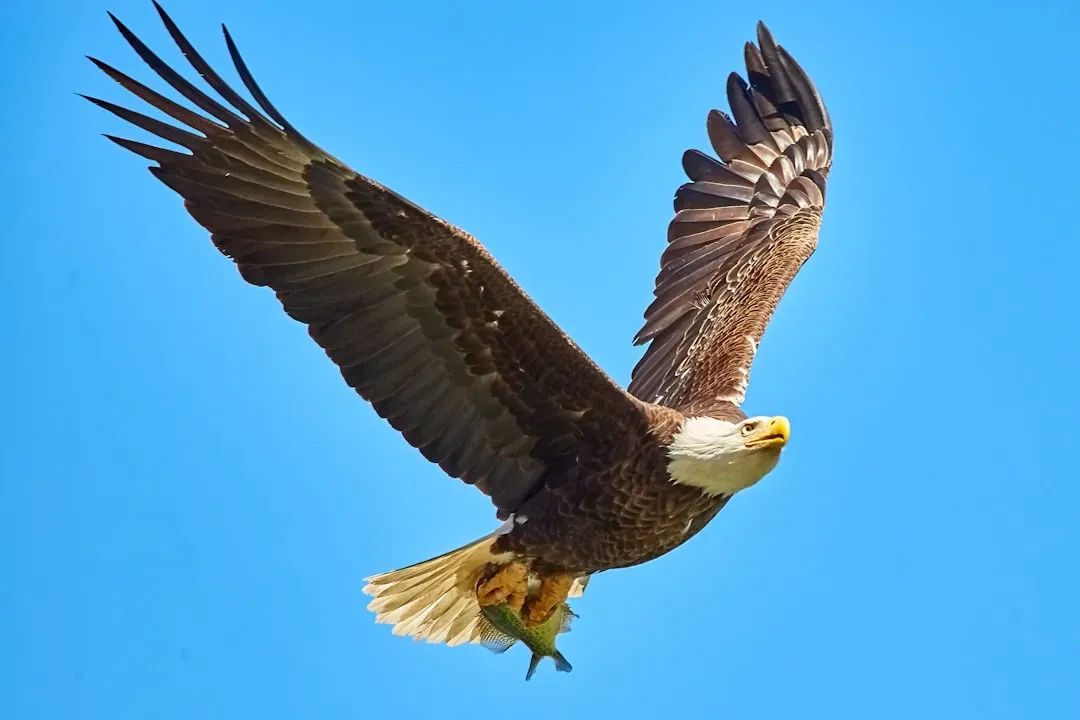
Researchers explain how it actually works: bald eagles dive-bomb ospreys they see carrying fish, forcing them to drop their catch, then swoop in to steal it. Scientists find this genuinely fascinating rather than shameful – kleptoparasitism is a curious, genre-bending behavior, not quite foraging, not quite predation, and not parasitism in the bloodsucking sense, since the thief takes the food before the original hunter even gets a bite. Franklin wasn’t wrong; he just didn’t know he was describing real ecology. That thieving reputation is only half the story, though – the other half is even less flattering.
#10 – They’re Scavengers as Much as They Are Hunters
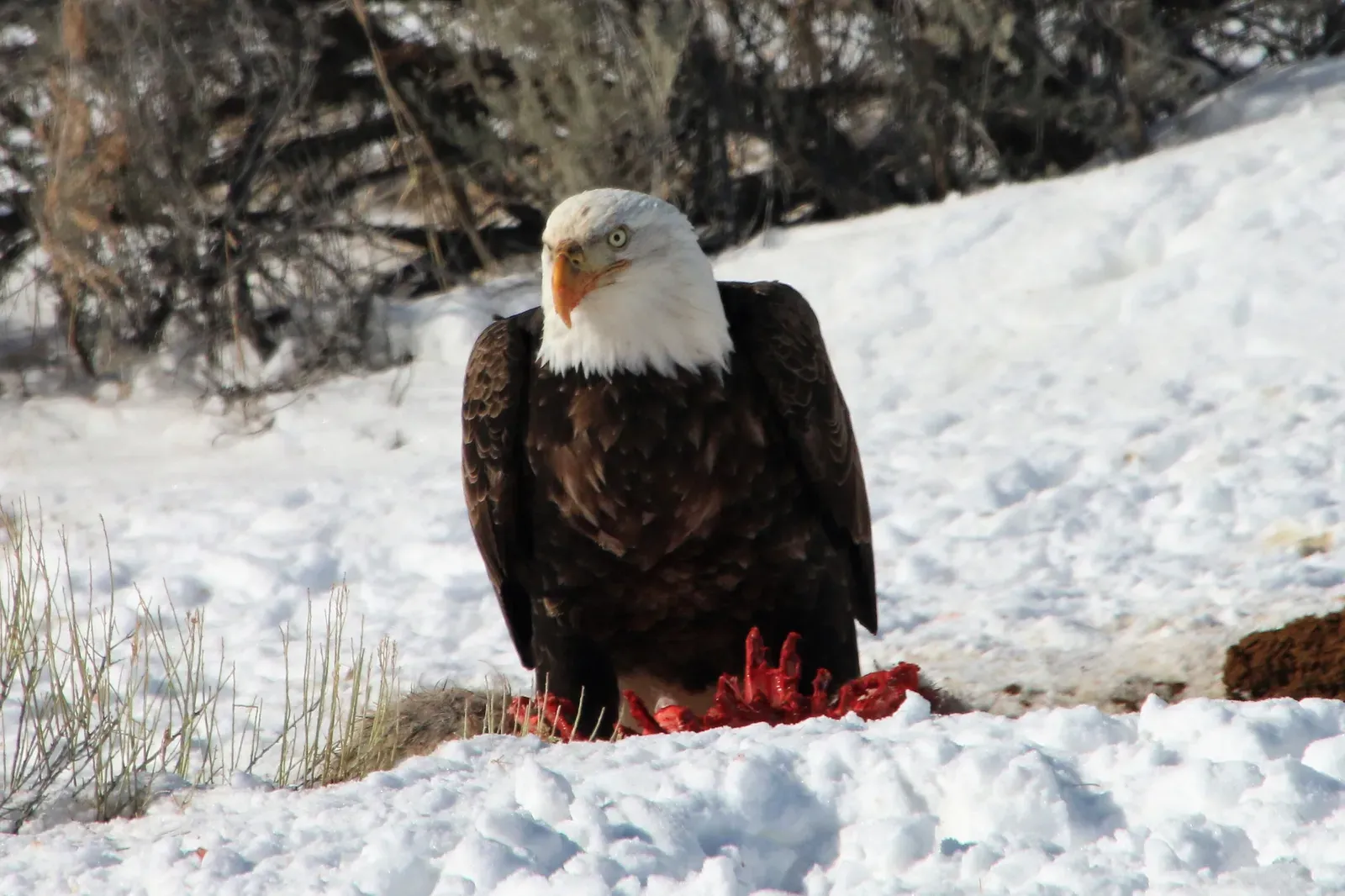
Here’s the uncomfortable truth wildlife biologists rarely put on postcards: the eagle would rather find a free meal than earn one. Franklin griped that the bird was a common scavenger, often found “perched on some dead tree” simply waiting for carrion – and field researchers watching real feeding behavior confirm he was onto something.
Modern field guides confirm this isn’t outdated folklore. Current species profiles describe eagles as opportunistic and bold at food sources, readily scavenging and frequently engaging in kleptoparasitism, with aggressive displacement common at concentrated feeding sites.
It doesn’t stop at wild carrion, either. Regional wildlife accounts note that eagles will collect carrion from anywhere, including road kill and dead livestock, and their opportunism extends straight into human waste streams too. This scavenging habit is so ingrained that some populations now treat landfills as reliable feeding grounds. But hunting behavior aside, the eagle’s body itself hides a detail most people get backwards.
#9 – The Females Are the Bigger, Stronger Sex
Here’s a detail that flips the “powerful male predator” stereotype on its head entirely. Unlike most mammals, where males dominate in size, eagles run the opposite way.
Ornithologists confirm that bald eagles exhibit “reverse sexual size dimorphism,” meaning females are larger than males. Wildlife agency data backs this up: males measure about three feet from head to tail, weigh seven to ten pounds, and have a wingspan of roughly six-and-a-half feet. Females run slightly larger, sometimes reaching 14 pounds with an eight-foot wingspan.
That’s nearly double the body weight in some cases, all stacked on the female half of the pair. Researchers believe this size gap likely helps females handle the physical demands of incubation and territory defense while males take on more aerial hunting duties. In the eagle world, size and power skew female, not male – a detail that contradicts almost every cartoon depiction of the bird. That’s a small twist compared to what young eagles look like before they earn their famous white head.
At a Glance
- Males: about 3 feet long, 7 to 10 lbs, 6.5-foot wingspan
- Females: up to 14 lbs, roughly 8-foot wingspan
- Size gap: nearly double the body weight in some pairs
#8 – Juveniles Look Like an Entirely Different Bird
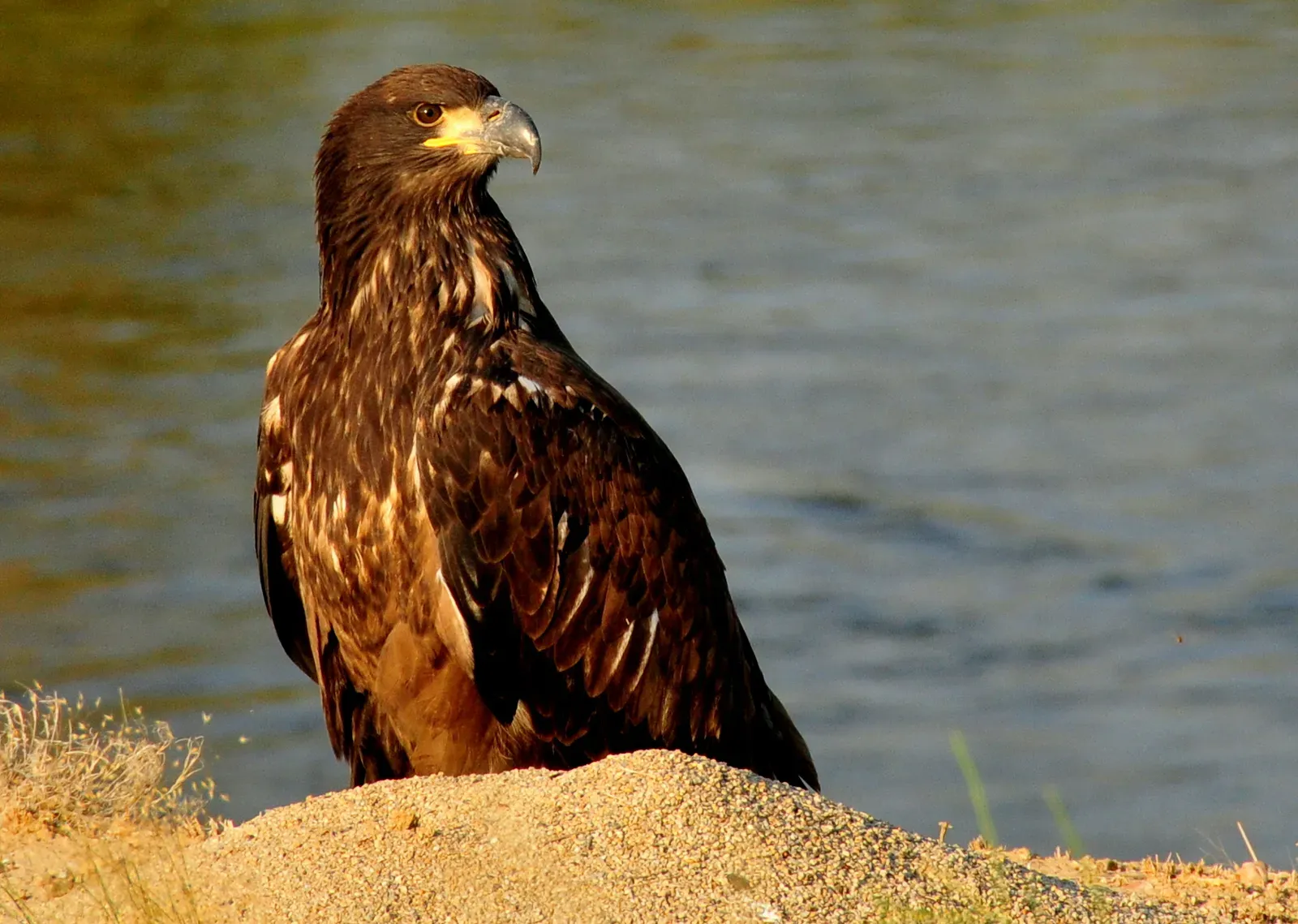
If you spotted a “brown eagle” last year and assumed it was some other species, you weren’t necessarily wrong to be confused. Wildlife agencies frequently field questions about mystery brown raptors that turn out to be young bald eagles in disguise.
Fish and Wildlife Service documentation explains that bald eagles stay mostly dark brown until they’re four to five years old, before finally acquiring their signature coloring. That’s nearly half a decade of looking nothing like the national symbol.
This delayed plumage change trips up even experienced birders in the field. A four-year-old juvenile can look mottled, blotchy, and completely unlike a mature bald eagle – mistaken often enough for a golden eagle that field guides specifically call out the confusion. The bird doesn’t get its trademark white head and tail until it’s roughly the age of a kindergartner. That slow physical transformation is impressive, but it’s nothing compared to what’s happening inside the eagle’s skull.
#7 – Their Eyesight Borders on a Superpower
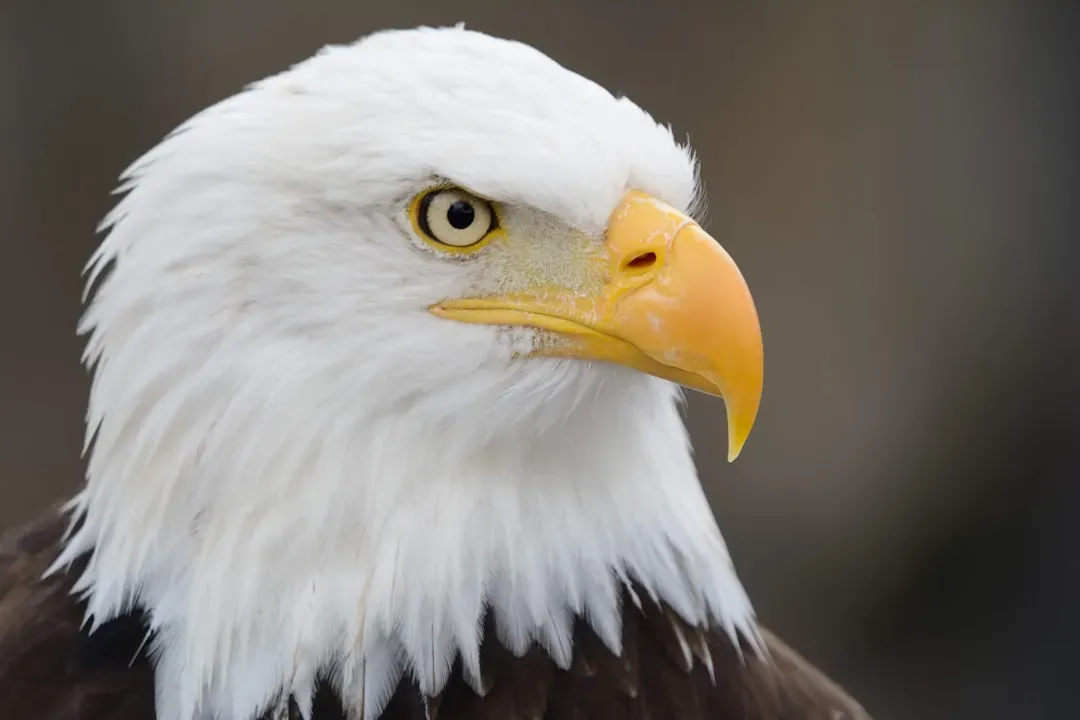
Human vision looks embarrassingly weak next to what an eagle sees every single day. Vision researchers who study raptor eyesight have quantified just how extreme the gap really is.
A human with perfect eyesight has 20/20 vision. Bald eagles can have 20/4 or 20/5 vision, meaning they see four to five times farther than the average person. In practical terms, that means a bald eagle can spot prey the size of a rabbit three miles away – no household optical instrument comes close at that range.
The anatomy behind it is just as extreme. Eagle eyes are so large they fill most of the skull, and the birds have a 340-degree field of view compared to our measly 180 degrees, combining both monocular and binocular vision. That means an eagle can see almost completely around itself without turning its head. Eyesight this extreme is remarkable, but the structures they build with that vision are just as jaw-dropping.
#6 – Some Nests Are Heavy Enough to Crush a Car
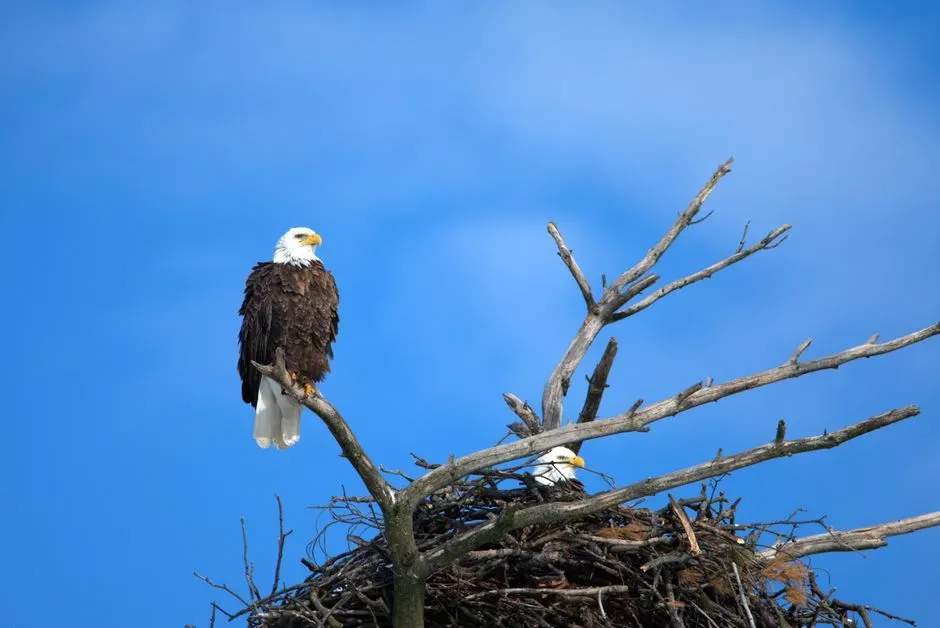
Most people picture a nest as a modest twig bundle. Eagle biologists picture something closer to a small building.
According to field data, an average bald eagle nest runs 5 to 6 feet in diameter and 2 to 4 feet tall – and that’s just typical, not record-breaking. Eagles are notorious repeat tenants too: if the tree holds up, they’ll reuse the same nest year after year, piling on fresh material each season.
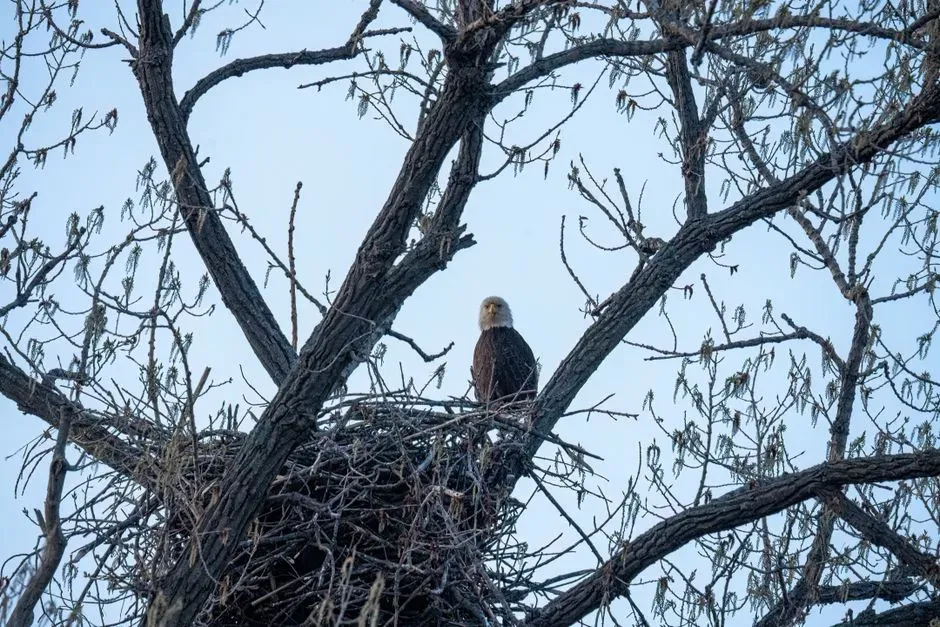
The extremes get almost absurd. The largest known bald eagle nest, in St. Petersburg, Florida, measured 20 feet tall and 9½ feet wide. Some long-term nests reportedly grow so massive through decades of reuse that researchers have documented structures 10 feet across and weighing a full ton. A single nest can weigh more than a small car, built entirely from sticks, one breeding season at a time. Nest-building looks disciplined, but the courtship ritual that precedes it looks anything but calm.
Fast Facts
- Typical nest: 5 to 6 feet wide, 2 to 4 feet tall
- Record nest: 20 feet tall, 9.5 feet wide (St. Petersburg, FL)
- Long-term reused nests: up to 10 feet across, weighing a full ton
#5 – Their Courtship Ritual Looks Like a Suicide Pact
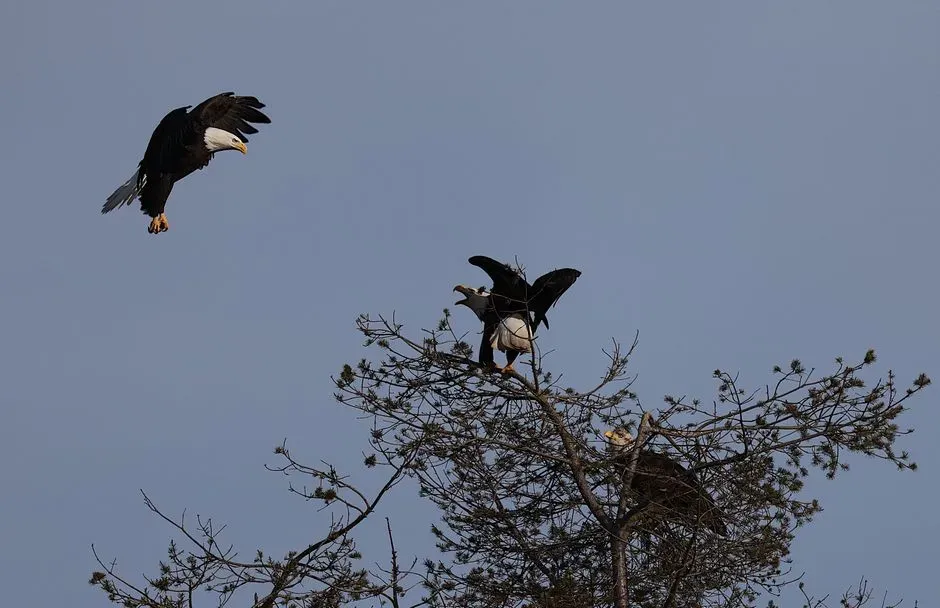
Before eagles ever build that giant nest, they perform a mating display that looks like it’s designed to kill both birds involved. Ornithologists who’ve documented this ritual describe a spectacle that genuinely alarms first-time observers.
The couple soars into the sky, locks talons, and spirals toward the ground, releasing each other just before crashing. It’s a heart-stopping sequence that plays out at real altitude, with real risk, every single breeding season.
Researchers frame this as a serious commitment ritual, not a fluke. Since bald eagles usually mate for life, they don’t hold back on drama when choosing a partner – performing this theatrical “cartwheel display” after attracting each other with calls, then moving straight into nest construction. Two birds free-falling from the sky, talons interlocked, is apparently a completely normal Tuesday for eagles in love. That dramatic pairing behavior is impressive, but it’s slow compared to how fast these birds move once they’re actually hunting.
#4 – They Dive Faster Than Highway Traffic
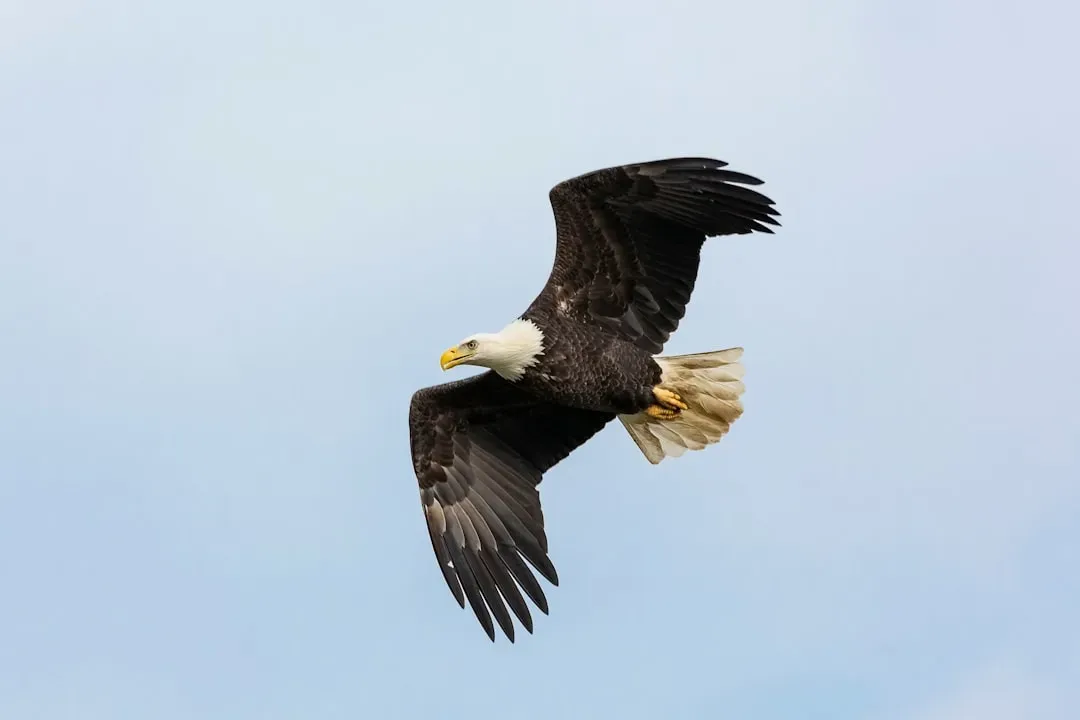
Cruising speed doesn’t even hint at what an eagle can do when it commits to a dive. Raptor researchers tracking hunting behavior have recorded speeds that would earn an eagle a speeding ticket on most interstates.
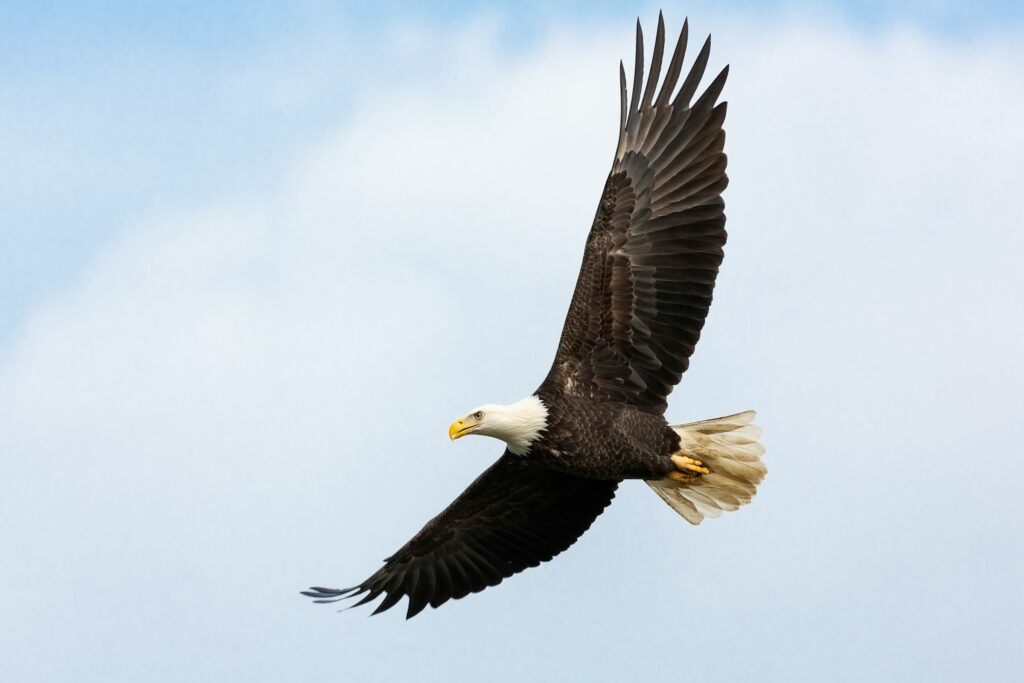
In regular flight, eagles travel about 30 miles per hour. On the hunt, that number can spike to 100 miles per hour – more than triple their normal cruising speed, reached in a matter of seconds during a targeted strike.
Altitude tells a similar story of extremes. Field observers note these birds can soar 10,000 feet above the ground, riding thermal air currents to conserve energy while they glide and scan. That means an eagle can be hunting from nearly two miles up, then hit triple-digit speeds on the way down. Most people assume eagles are simply graceful gliders – but wildlife experts increasingly argue that “graceful” undersells just how violently fast these birds actually are in a real hunt. Speed and drama aside, the eagle’s love life has a detail that quietly contradicts its “forever” reputation.
#3 – “Mate for Life” Isn’t the Whole Story
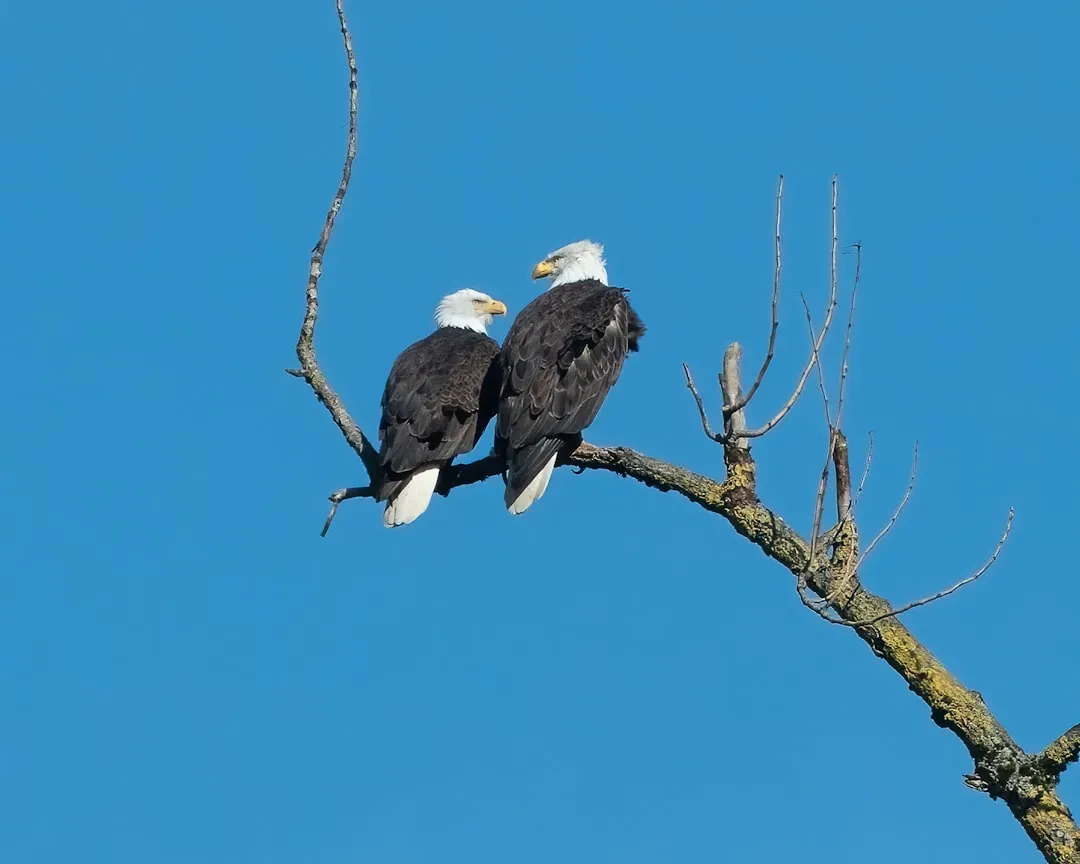
The romantic tagline gets repeated everywhere, but researchers who track individual eagles over decades tell a more complicated version. It’s true that bald eagles usually mate for life, and that loyalty is part of what makes the cartwheel courtship display so meaningful to biologists studying pair bonds.
Interviews with rehabilitation staff reinforce this image. One director put it simply: eagles are “very devoted to their mate and their family.”
But “mate for life” describes a general tendency, not an unbreakable rule, and researchers are careful about the nuance. Eagle pairs generally stay bonded as long as both birds survive and successfully breed together – but if a mate dies, disappears, or repeatedly fails to produce chicks, the surviving bird will find a new partner rather than stay solitary. The loyalty is real, but it’s conditional on survival and success, not some unbreakable romantic vow. That’s a controversial nuance for people who love the “forever couple” narrative, but it’s closer to what long-term nest studies actually show. Loyalty and drama are one thing, but nothing compares to the crisis that nearly erased the species entirely.
#2 – They Nearly Vanished Because of a Chemical, Not a Predator

Here’s the part that should genuinely unsettle you: America’s national bird was almost wiped out by something sprayed on crops, not by any natural threat. The numbers are staggering in hindsight.
At their lowest point, in 1963, only 417 breeding pairs of bald eagles remained in the Lower 48. Environmental researchers traced the cause directly to a single widely used pesticide: DDT caused eggshells to become so thin they would easily crack. Parent eagles were incubating their own extinction, one crushed egg at a time.
The science behind the collapse is now considered settled fact among biologists. Government researchers state plainly that DDT’s role in the decline of bald eagles and other birds of prey is now commonly accepted among scientists. A single chemical, banned decades ago, came within striking distance of erasing the national symbol from the continental United States entirely. That near-extinction makes the eagle’s comeback look almost impossible – until you see the numbers scientists are tracking right now.
#1 – The Comeback Created a New, Quieter Threat
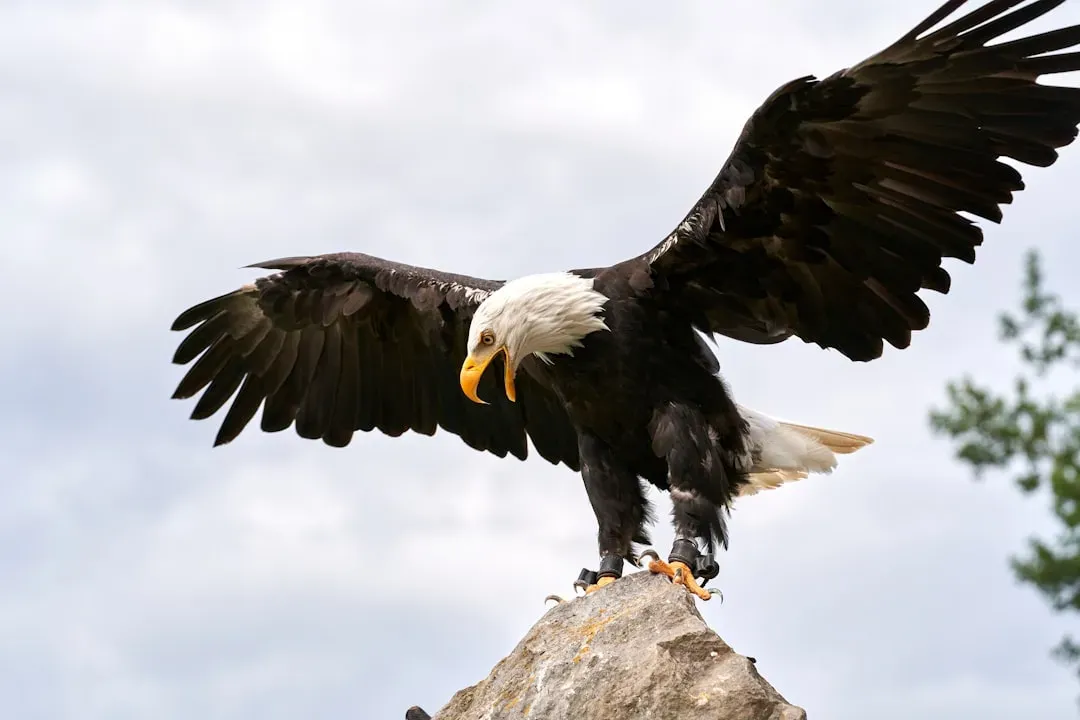
This is the fact researchers seem most reluctant to headline, because it complicates America’s favorite conservation success story. The recovery itself is genuinely stunning.
Population data show eagles climbing from 417 nesting pairs to 71,467 in roughly 60 years – a rebound wildlife biologists describe as one of the few large predator comebacks achieved within living memory. That recovery earned the species its delisting from the Endangered Species list in 2007.
But quietly, researchers monitoring eagle mortality have flagged a new problem hiding behind the good news. Many bald eagles are suffering from lead poisoning caused by ammunition, especially from big-game hunting, since hunters sometimes leave behind carcasses or gut piles laced with fragments – an easy, toxic meal for a scavenging eagle. The scale is larger than most people realize: in a study of 1,210 bald and golden eagles across 38 U.S. states, 47% had chronic lead poisoning. Nearly half the eagles tested were quietly carrying a toxic metal in their bloodstream, decades after the species was declared “saved.”
Worth Knowing
- Population rebound: 417 pairs in 1963 to 71,467 nesting pairs today
- Study scope: 1,210 bald and golden eagles tested across 38 states
- Result: 47% showed chronic lead poisoning
- Main source: lead ammunition fragments in carcasses and gut piles
The Bottom Line
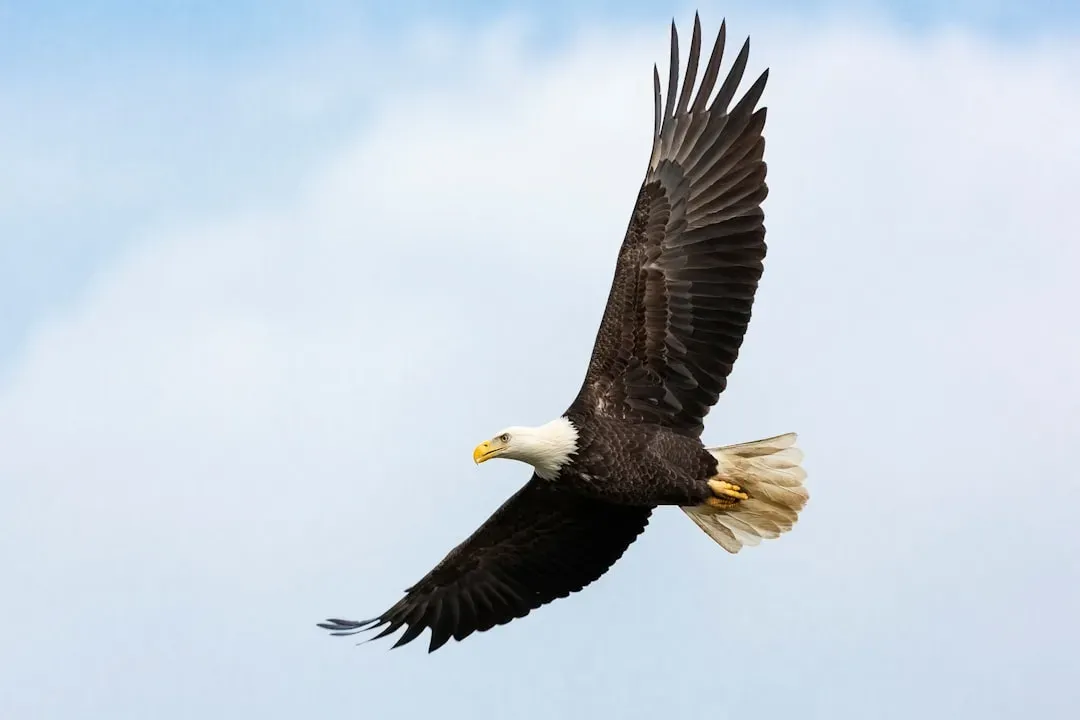
The bald eagle everyone thinks they know – silent, majestic, fiercely independent – barely resembles the bird researchers actually study. It chirps instead of screams, steals instead of hunts, and nearly went extinct from a chemical rather than a predator.
Its comeback from 417 nesting pairs to over 71,000 is real and remarkable, but the quiet resurgence of lead poisoning proves the “success story” narrative is incomplete. Scientists have made their peace with a messier, scrappier bird than the one on the seal – and honestly, it’s a far more interesting animal because of it.
Which of these facts changed how you see America’s national bird? Drop your answer in the comments.