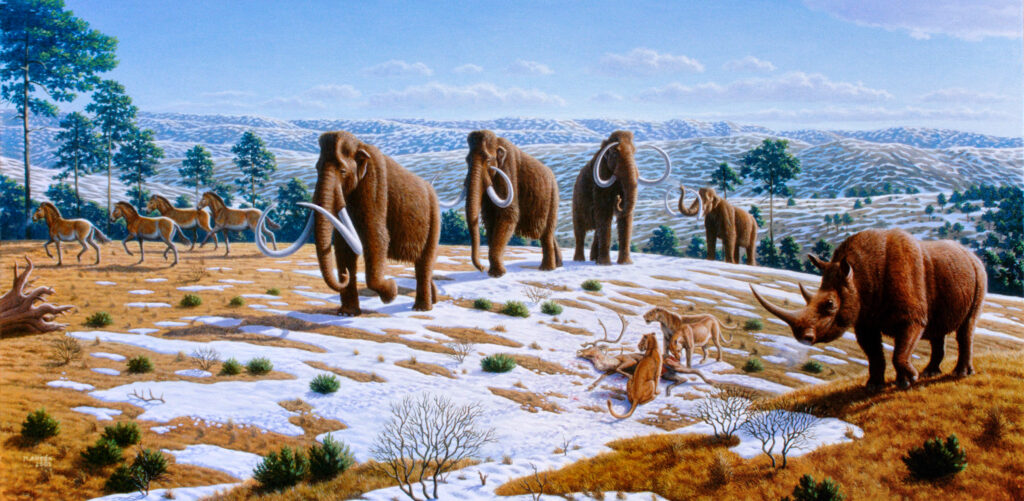
Most people picture the American wilderness as bears, wolves, and bison – impressive, sure, but nothing extraordinary. What almost nobody realizes is that just 11,000 years ago, North America hosted a menagerie stranger and more massive than the African Serengeti is today. Elephant-sized ground sloths. Bears twice the size of a grizzly. Cats bigger than African lions.
This wasn’t some far-off exotic land – this was Ohio, Texas, and California. Then, in a geological blink, almost all of it vanished. Here’s what paleontologists actually say about the 14 giants that once called America home, and why most of what you think you know about them is probably wrong.
#14 – The Giant Tortoise That Outgrew the Galápagos
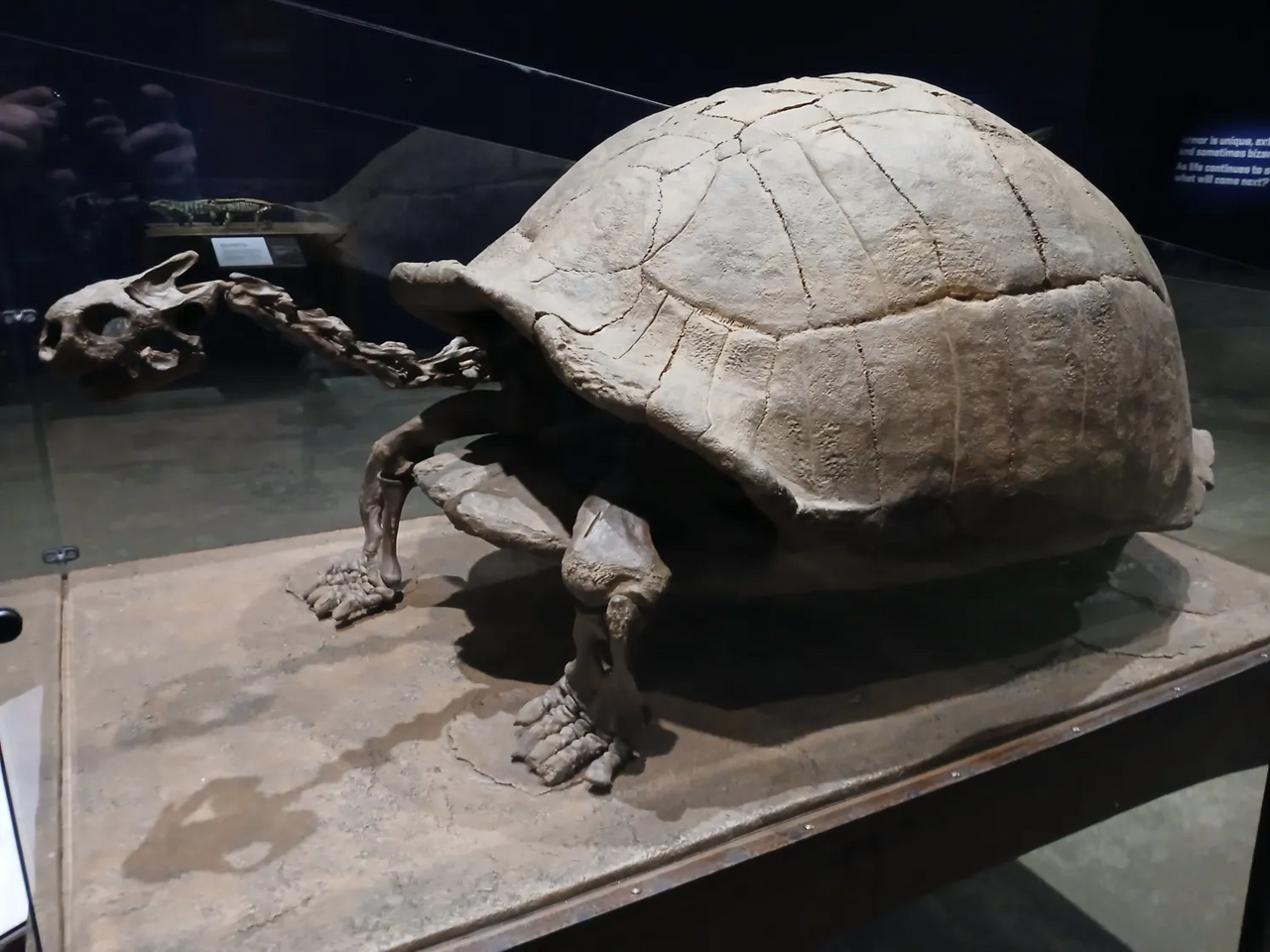
Long before anyone associated giant tortoises with the Galápagos Islands, North America had its own shelled behemoths lumbering through the Southeast.
Hesperotestudo wasn’t a one-size species – it varied wildly across its range, but the largest specimens were staggering. A large undescribed specimen from the Late Pleistocene of El Salvador reached 150 cm (4.9 ft) in carapace length, larger than that of extant giant tortoises. That’s bigger than the famous Galápagos tortoises tourists travel across the world to see today. Most people don’t realize America’s own tortoises once beat the record-holders we celebrate now.
Fast Facts
- Carapace length: up to 150 cm (4.9 ft) in the largest known specimens
- Range: spread as far north as the Great Plains despite a tropical reputation
- Armor: dermal ossicles sheathed in keratin protected exposed skin
- Timeline: still alive during the Late Pleistocene, only thousands of years before humans arrived
These weren’t slow, boring creatures either. The exposed areas of their bodies were covered with large dermal ossicles that, in life, were sheathed in keratin – essentially armor plating bolted onto a tortoise.
Unlike their tropical cousins today, Hesperotestudo species were surprisingly tolerant of cold weather. That single trait let them survive as far north as the Great Plains. But that’s nothing compared to what we found about #13…
#13 – The Armored Tank Related to Armadillos
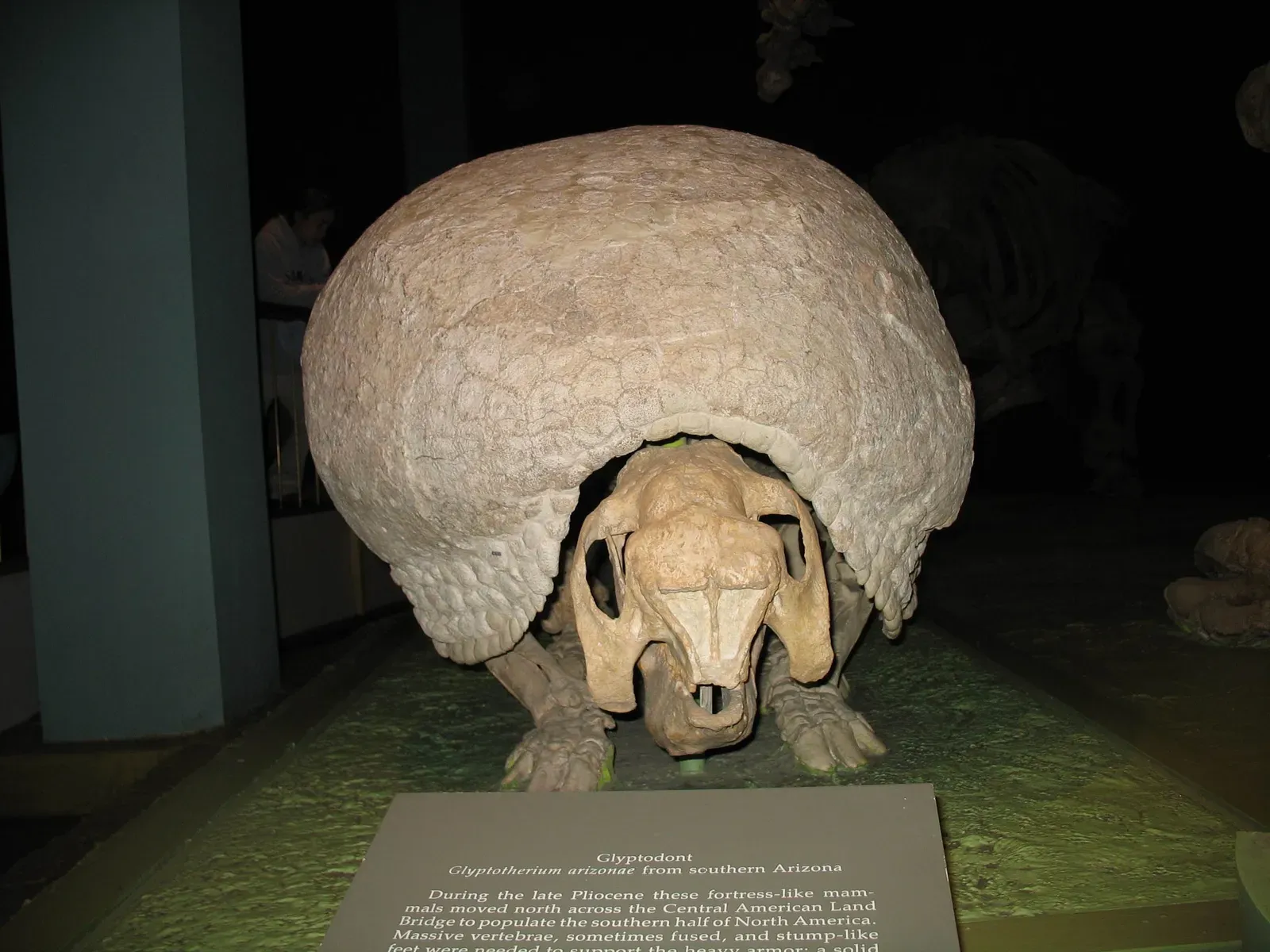
If you think armadillos are already a little prehistoric-looking, wait until you meet their extinct relative that looked like a walking tank.
Glyptotherium belonged to the same lineage as modern armadillos, but scaled up dramatically. Some estimates put full-grown adults at roughly the size of a small car, with a domed, fused bony carapace covering nearly the entire body. This wasn’t flexible armor like a modern armadillo’s bands; it was a rigid, single-piece shell, more like a turtle’s than a mammal’s.
The most surprising fact: this animal’s shell was so structurally rigid that some species even had a bony tail club, similar in concept to an ankylosaur’s. Fossils of Glyptotherium have turned up across Texas, Florida, and the Southwest, evidence that these armored mammals thrived in warm floodplains and river valleys.
While most people assume armor evolved only in reptiles or dinosaurs, mammals reinvented it independently right here in North America. Many paleontologists now argue this convergent evolution is one of the most underrated stories in Ice Age science. But #12 takes “unexpected” to a whole new level.
#12 – The Rodent the Size of a Black Bear
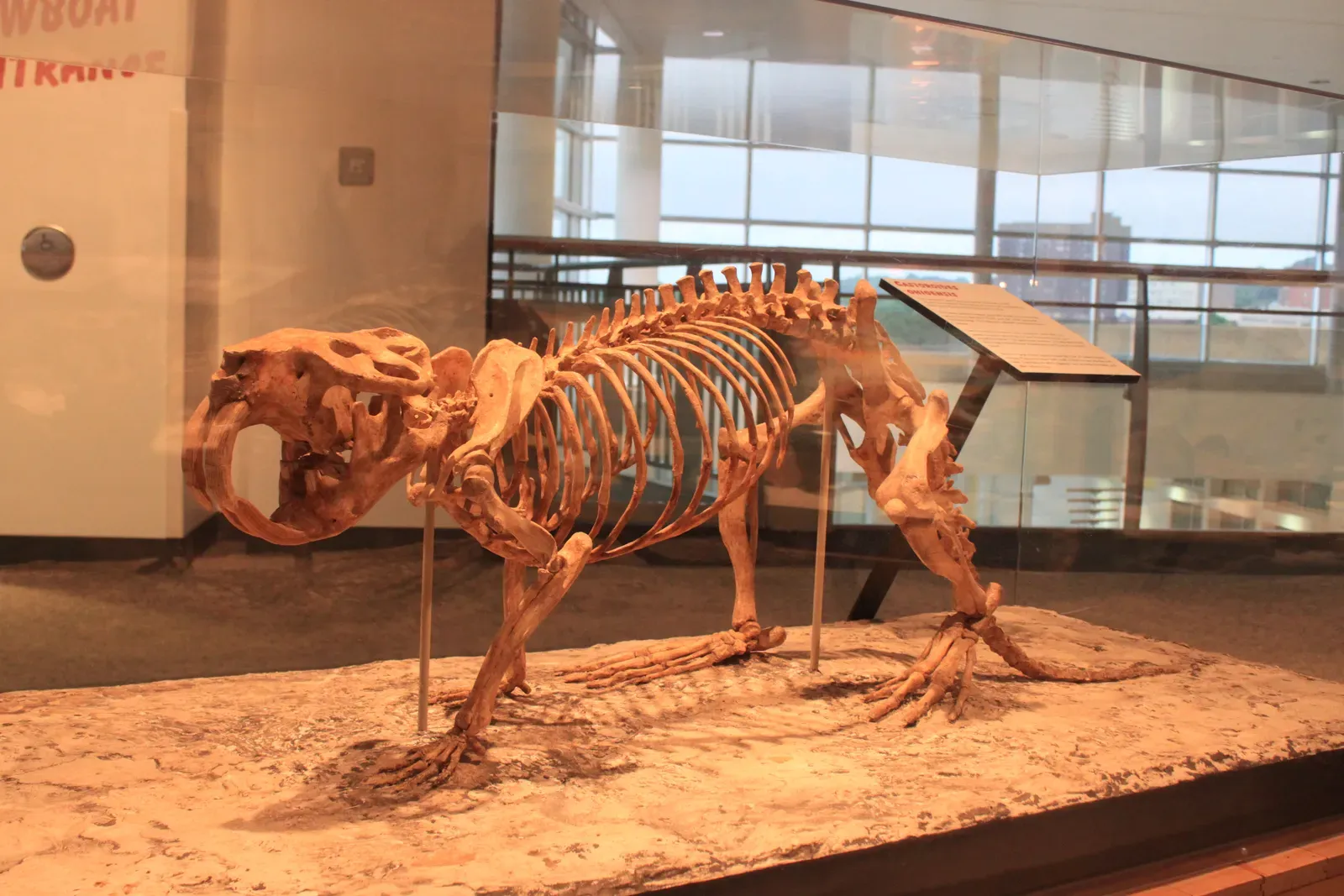
Forget the beaver on your nearest nature-park pond. Ten thousand years ago, the beaver sharing that same pond could have weighed as much as an adult human.
The giant beaver, Castoroides ohioensis, was the largest rodent ever to have lived in North America, growing up to seven feet long and weighing up to 200 pounds. These enormous rodents roamed the wetlands and waterways of Minnesota until about 10,000 years ago. Here’s the twist that surprises everyone: unlike modern beavers, giant beavers probably didn’t build dams at all.
Their front incisors were shaped differently than the incisors of modern beavers, lacking the chisel-like edge that lets modern beavers gnaw woody vegetation. That suggests giant beavers simply weren’t built for construction work.
Instead, the tail was longer and likely wasn’t paddle-shaped like a modern beaver’s. So the animal most people imagine as an oversized dam-builder was actually more of a giant aquatic grazer. But that’s nothing compared to what we found about #11…
#11 – The Condor-Sized Bird That Ruled the Skies
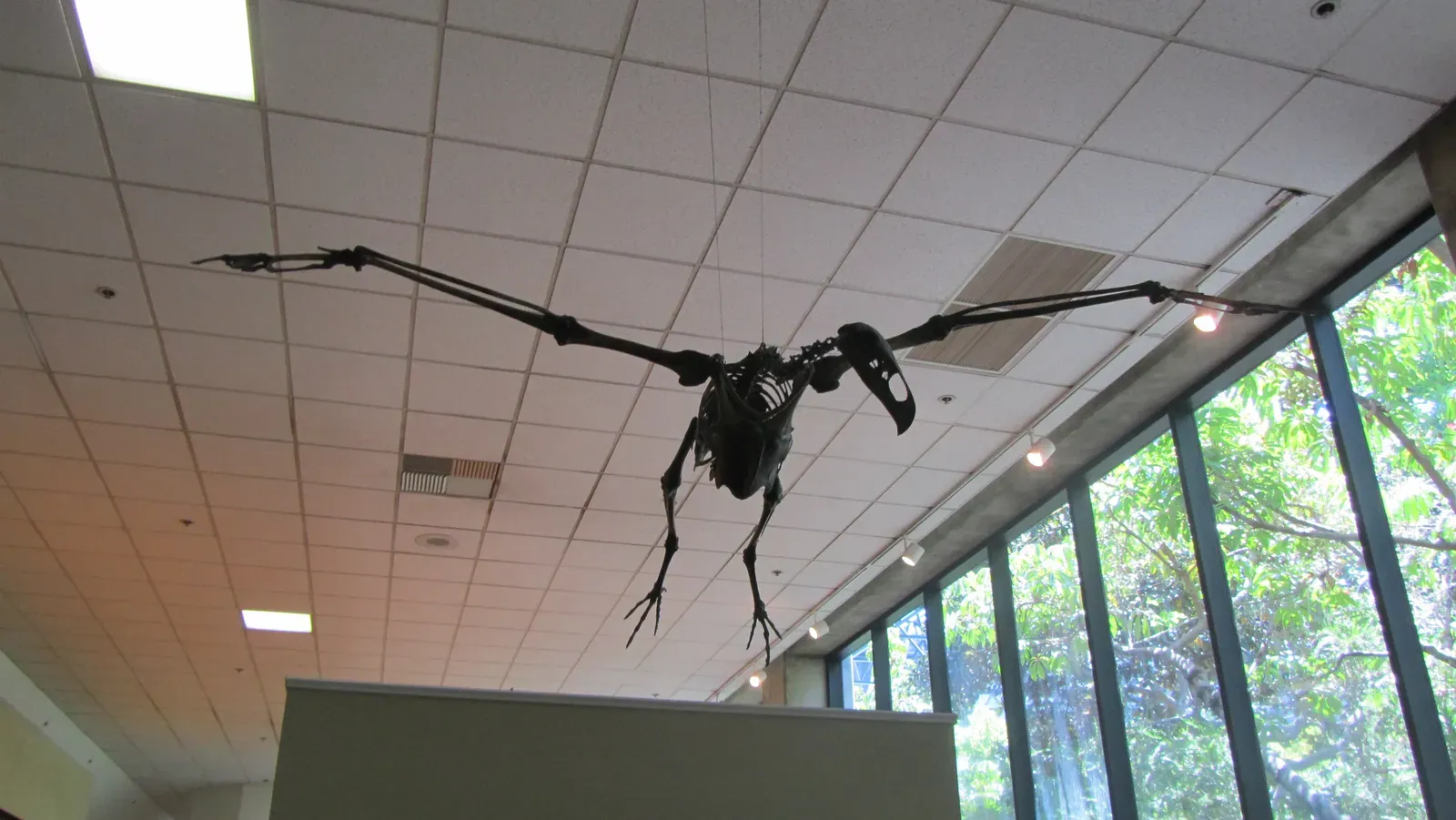
While giant mammals get all the attention, America’s skies once belonged to a bird so large it makes today’s condors look like sparrows by comparison.
Teratornis merriami, the Merriam’s teratorn, soared over the same Ice Age landscapes as saber-tooths and mammoths, with a wingspan easily surpassing that of the California condor – already North America’s largest living bird. Thousands of its fossils have been pulled from the La Brea Tar Pits alone, suggesting it was a common scavenger drawn to the same carcasses that trapped so many other Ice Age predators.
The detail that stuns most readers: teratorns likely hunted small live prey in addition to scavenging, unlike modern condors, which rely almost entirely on carrion. Its skull anatomy hints at a stronger, more hooked beak than a condor’s, built for tearing rather than just picking at soft tissue.
That single skeletal clue changed how scientists view this bird – less “giant vulture,” more “aerial opportunist” willing to grab a rabbit or a fish when scavenging came up short. But #10 swaps wings for humps, and the story gets even stranger.
#10 – The Camel That Never Left America
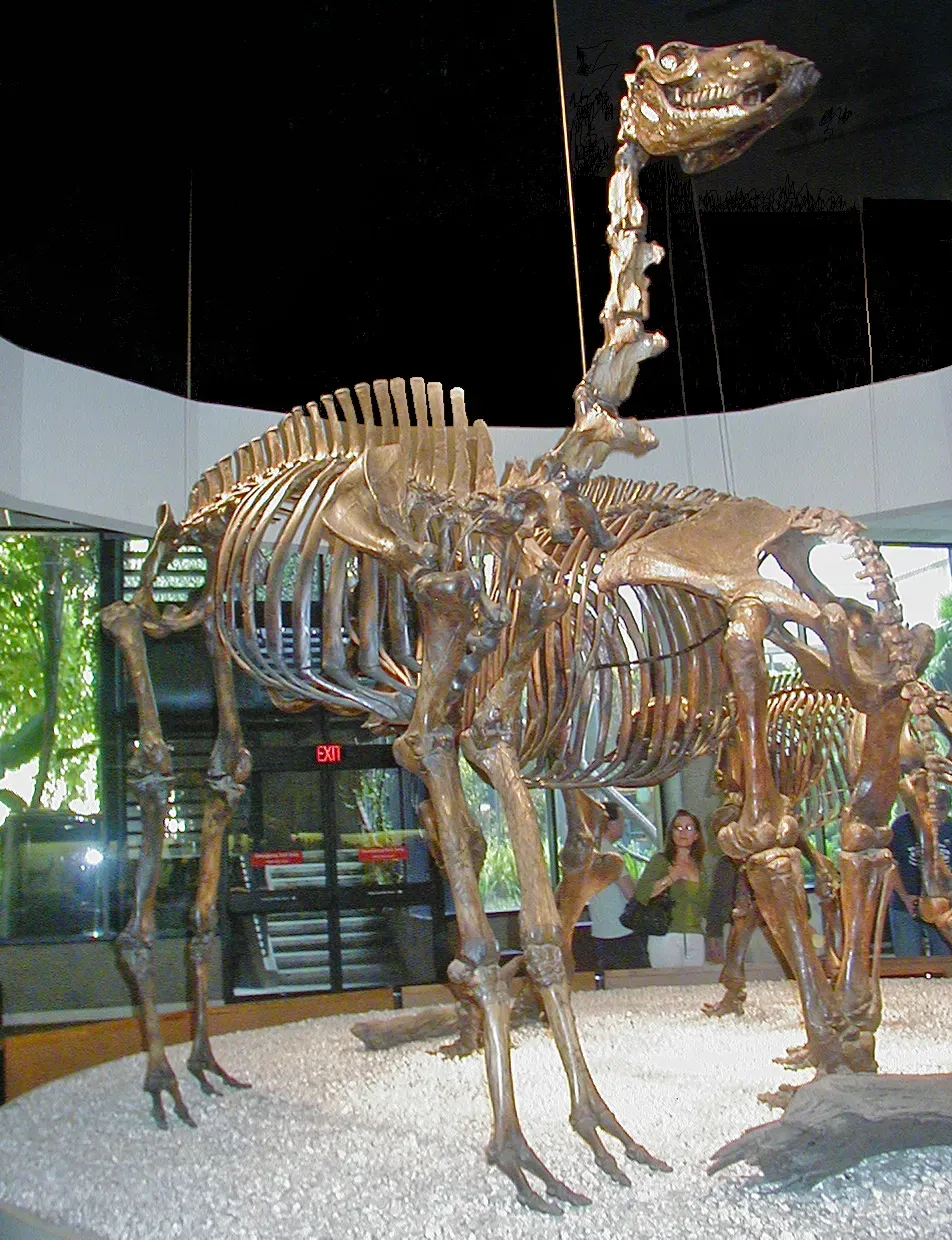
Here’s a sentence that breaks most people’s mental map of natural history: camels are an American invention.
Camelops, the Western camel, roamed the deserts, grasslands, and river valleys of what’s now the western United States for millions of years, standing roughly as tall at the shoulder as a modern dromedary. It looked broadly similar to the camels we associate with the Sahara today, but it never left the continent that produced it – until it went extinct here entirely. Most people assume camels are naturally Asian or African animals; in reality, the camel family originated and diversified in North America long before spreading elsewhere.
Worth Knowing
- The camel family tree originated in North America, not Asia or Africa
- Modern camels and llamas descend from ancestors that migrated out over ancient land bridges
- Camelops itself never left the continent that produced it
- It vanished alongside the rest of America’s megafauna roughly 11,000 years ago
Modern camels and llamas actually descend from ancestors that crossed land bridges out of North America, going the opposite direction most people assume.
Camelops itself, however, stayed behind, and vanished along with the rest of the Ice Age megafauna roughly 11,000 years ago. It’s a genuinely controversial point among casual history fans: the “exotic desert camel” is, geologically speaking, more American than apple pie. But that’s nothing compared to what we found about #9…
#9 – The Moose That Dwarfed Modern Bulls
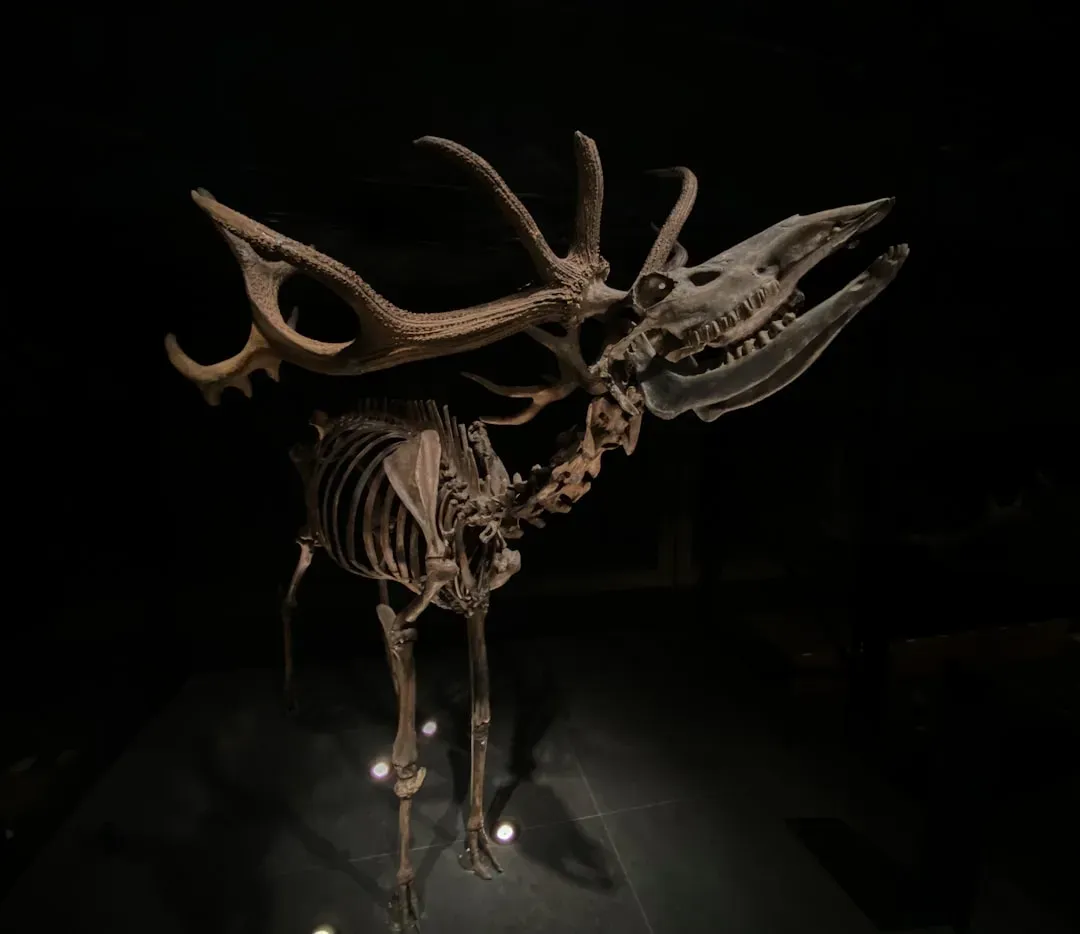
Modern moose already intimidate hikers across the northern United States and Canada. Now imagine one considerably heavier standing in the same forest clearing.
Cervalces scotti, the stag-moose, prowled swampy woodlands across the American Midwest and Northeast during the Ice Age. It reached 2.5 meters (8.2 ft) in length and weighed up to 708.5 kilograms (1,562 lb) – a genuinely massive animal, even if slightly smaller than its European cousin, the giant moose. The detail that catches most readers off guard: its antlers were shaped completely differently from a modern moose’s broad, palmate racks.
Instead of wide paddle-shaped antlers, the stag-moose carried a mix of palm and spike-like tines, an evolutionary in-between that made it look almost like a hybrid of a moose and an elk.
Fossils turn up regularly in old peat bogs and lake sediments, since these swampy habitats were exactly where the animal likely spent most of its life foraging. But #8 stomps into the picture with horns that make even the stag-moose look modest.
#8 – The Bison With an 8-Foot Skull Spread
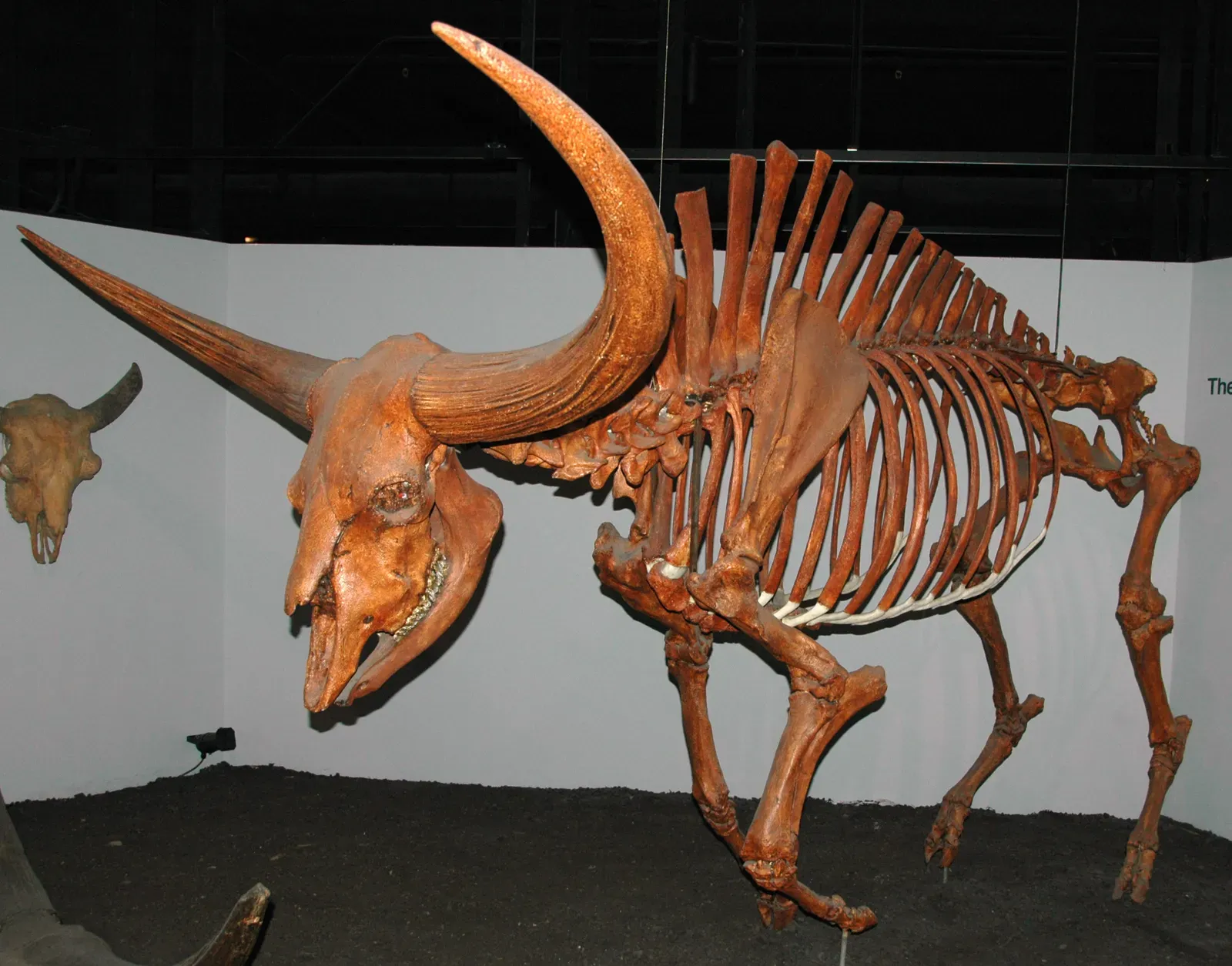
Modern American bison already weigh a literal ton and can flip a car. Their Ice Age ancestor makes them look like a petting-zoo attraction.
Bison latifrons, the giant long-horned bison, roamed North America from roughly 200,000 years ago until its extinction. An adult male had an estimated body weight of 1,024 kg, a shoulder height of 231 cm (8 ft), and a head and body length of 475 cm (15.6 ft) – taller at the shoulder than most NBA players and heavier than a compact car. The single most jaw-dropping fact: its horns alone could span nearly seven feet from tip to tip.
Quick Compare
- Horn span: up to 213 cm (84 in) vs. just 66 cm (26 in) in modern bison
- Shoulder height: 231 cm (8 ft) vs. roughly 180 cm for a large modern bull
- Body weight: around 1,024 kg vs. roughly 900 kg for today’s biggest bulls
- Hunting style: slow, deliberate bulk vs. today’s quick, aggressive charges
The horns of B. latifrons measured as great as 213 centimeters (84 in) from tip to tip, compared with only 66 centimeters (26 in) in modern Bison bison.
Unlike the modern bison’s quick, aggressive charges, Bison latifrons wasn’t built for extended running and quick movement. It was a slow, deliberate tank of an animal – until climate shifts and shrinking grasslands pushed it toward extinction. But that’s nothing compared to what we found about #7…
#7 – The Wolf That Wasn’t Actually a Wolf
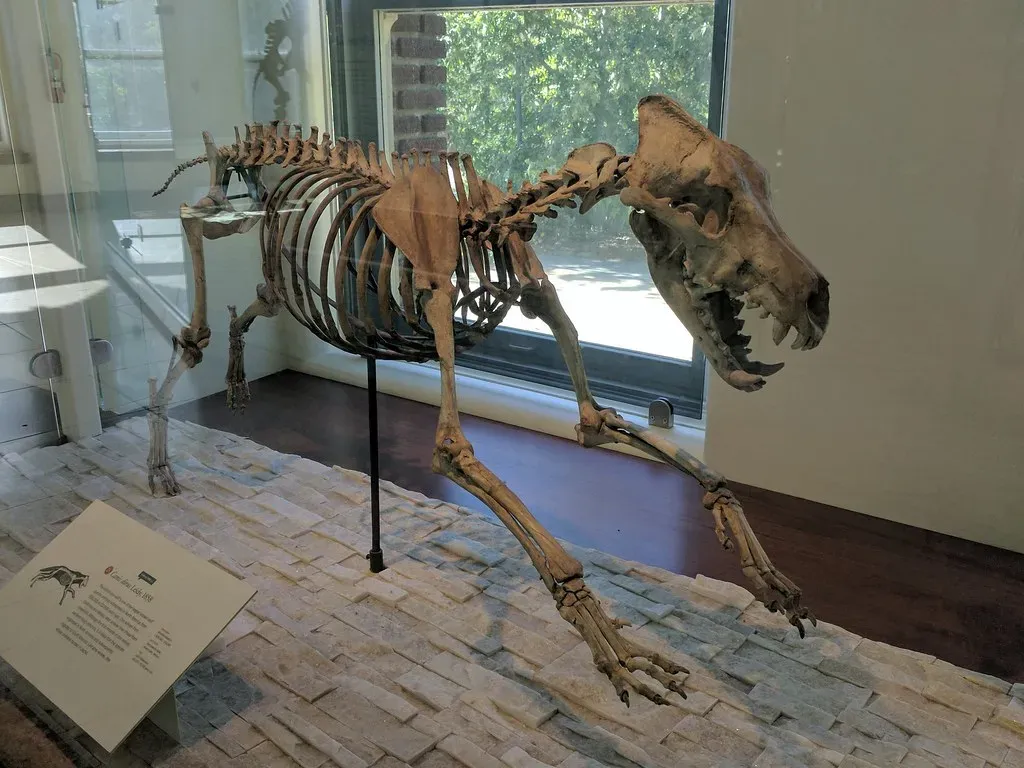
Thanks to a certain fantasy TV show, most people think they already know the dire wolf. What they know is mostly wrong.
The dire wolf, scientifically Aenocyon dirus, was a large social canid and common Rancho La Brea predator – likely a pack-hunting competitor for similar prey and a probable kleptoparasite on big-cat kills. That last detail matters: dire wolves weren’t just apex hunters, they were also opportunistic thieves, stealing meals from saber-tooths and American lions whenever the numbers favored the pack.
Here’s the twist that surprises even wildlife fans: dire wolves weren’t simply larger gray wolves. Genetic research shows they were a distinct lineage that split off millions of years earlier, making them only distant cousins of today’s wolves rather than close relatives.
That reclassification – reflected in the newer scientific name Aenocyon rather than the older Canis dirus – rewrote decades of textbook assumptions. Thousands of dire wolf skulls have been recovered from the La Brea Tar Pits, more than any other predator there, hinting at just how common and successful this pack hunter once was across Ice Age America. But #6 brings a solitary hunter with an even bigger reputation.
#6 – The American Lion That Dwarfed Africa’s Kings
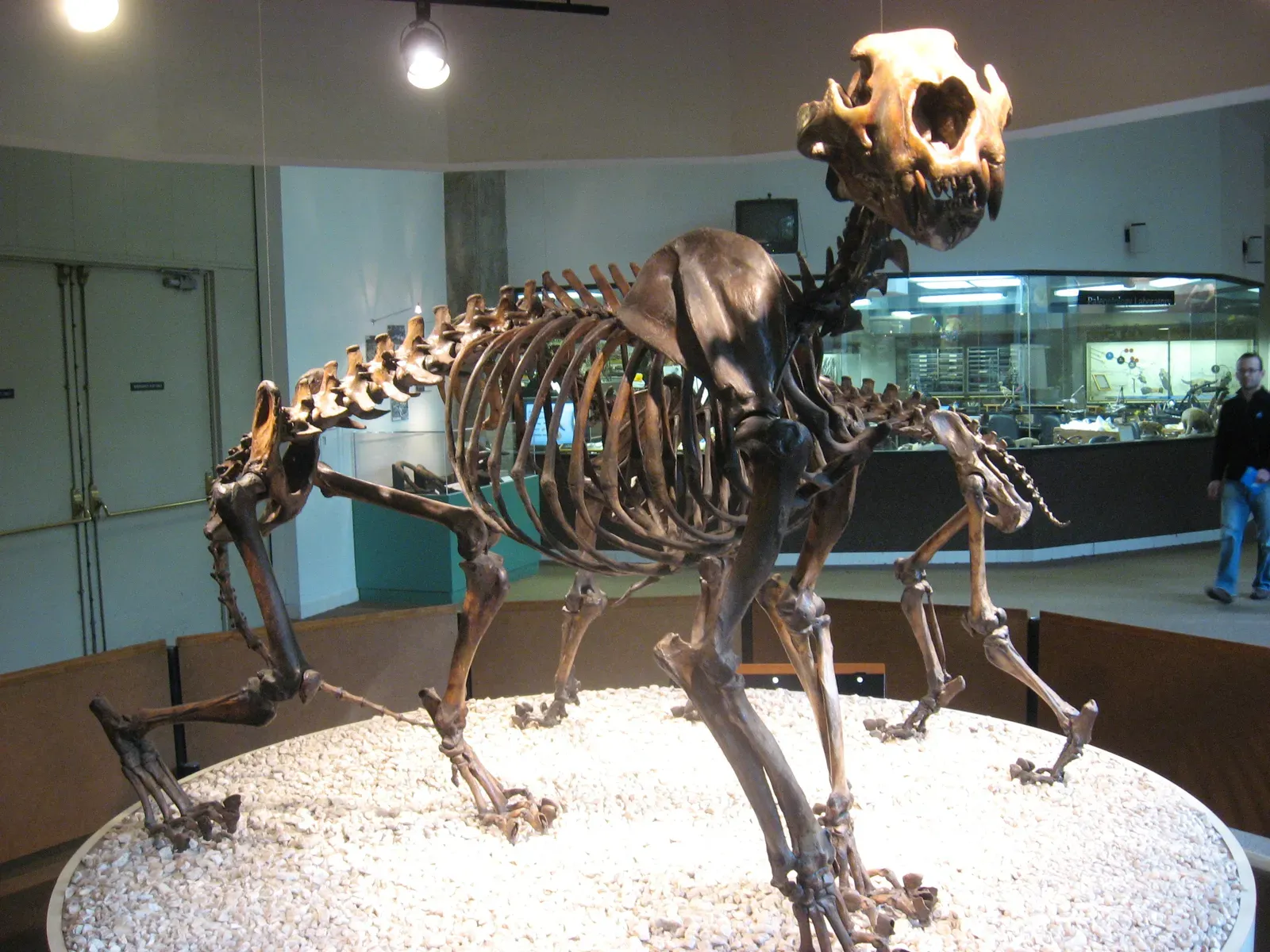
Say “lion” and most people picture the African savanna. Say it 15,000 years ago in North America, and you’d be talking about an even bigger cat.
The American lion (Panthera atrox) was one of the largest known cats, almost 25 percent bigger than the lions we see in Africa and India today, standing 1.2 meters at the shoulder and weighing up to 420 kilograms. That’s a genuinely staggering size difference from the lions in modern zoos and safaris. The fact almost nobody knows: American lions may not have even had manes, based on ancient cave art of similar lions found overseas.
Paleolithic art of similar lions found on cave walls in France and Russia shows the prehistoric cats had a faintly striped coat and no mane, unlike modern lions.
Unlike modern lions, which hunt in prides, the American lion was a large, solitary ambush cat that hunted in wooded and riverine areas, ecologically similar to jaguars, though generally larger than even big male jaguars. That solitary lifestyle is a genuinely debated point among researchers who still argue over whether it truly deserves the “lion” name at all. But that’s nothing compared to what we found about #5…
#5 – The Saber-Tooth That Wasn’t Built for Speed
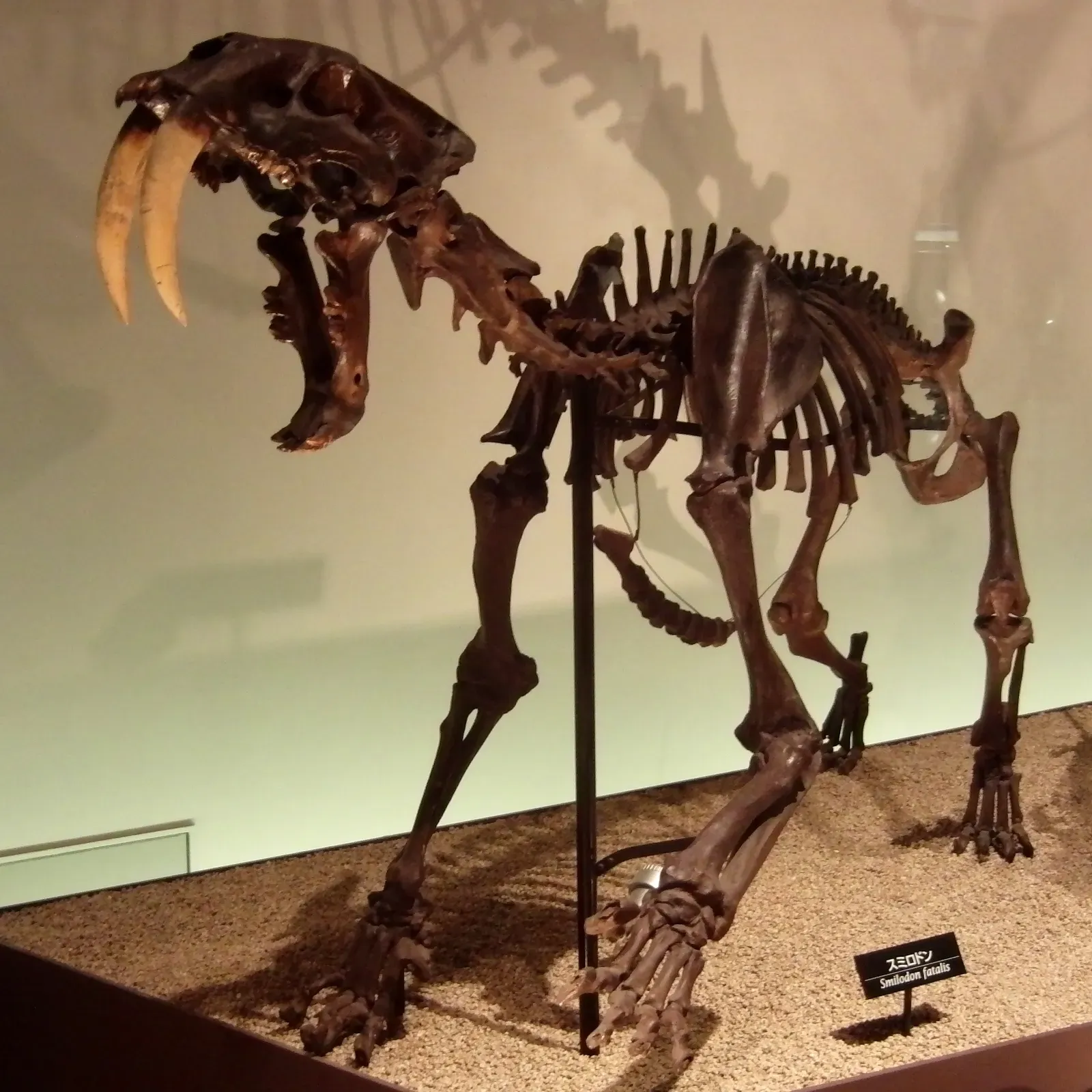
Every kid’s dinosaur book gets one detail about the saber-toothed cat wrong: this was not a lean, fast sprinter chasing prey across open plains.
Saber-toothed cats were a foot shorter than an adult lion, but almost twice as heavy – over 600 pounds in some cases – with relatively short legs and a bobbed tail. That body plan alone tells paleontologists everything about its hunting strategy: crouch, wait, and overpower rather than outrun. The single most surprising detail: those famous canine teeth averaged seven inches long, and the jaw could open to an almost unbelievable degree.
Saber-tooth skeletons pulled from sites like the La Brea tar pits in Los Angeles were armed with upper canines averaging seven inches long and a jaw that could open an astonishing 130 degrees.
That extreme gape let Smilodon fatalis deliver a precision bite to the throat of massive prey without breaking those famously fragile teeth. And despite the nickname, saber-toothed cats aren’t related to modern tigers – or any living felines at all – and their bodies stray significantly from today’s tigers or lions. But #4 is the animal that could scare even the saber-tooth off its own kill.
#4 – The Bear That Outmuscled Every Predator in America
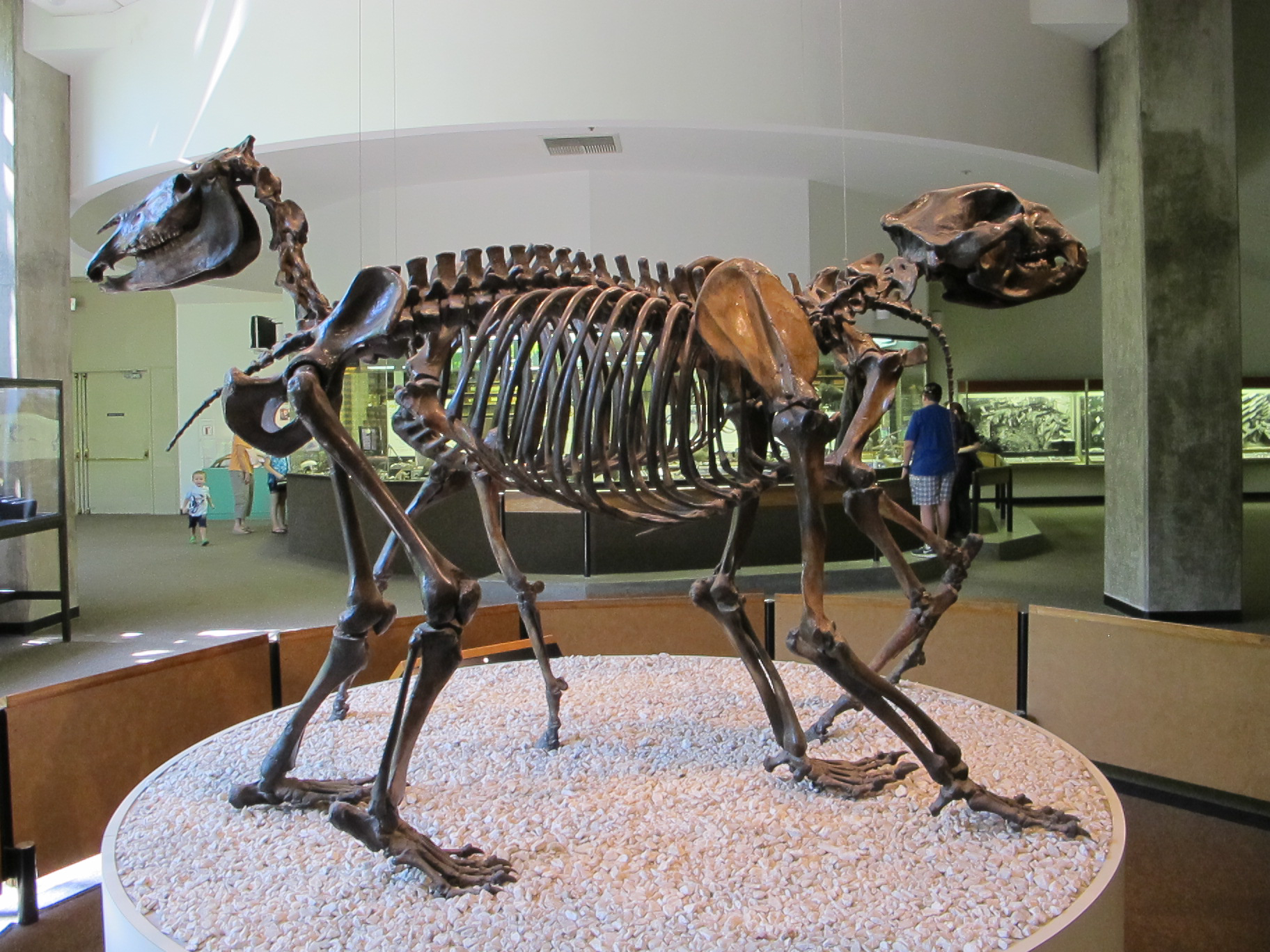
If you had to pick one Ice Age animal you absolutely did not want to run into, most paleontologists would point straight at this one.
The giant short-faced bear (Arctodus simus) was the largest carnivorous mammal to ever roam North America. Standing on its hind legs, an adult had a vertical reach of more than 14 feet. These extremely large bears weighed more than 1 ton (1,000 kg) and stood up to 12 feet (3.7 m) tall. The fact that stuns most people: this bear could reportedly run up to 40 miles per hour, making it possibly the fastest bear to ever exist.
Why It Stands Out
- Vertical reach of more than 14 feet while standing on its hind legs
- Estimated top speed of 40 mph – likely the fastest bear that ever lived
- Weighed more than 1,000 kg (1 ton), dwarfing today’s grizzlies
- Used its sheer size to intimidate rivals like dire wolves rather than chase prey down
By examining skeletal remains, paleontologists calculate that the short-faced bear could reach speeds topping 40 miles per hour, making it the fastest bear to ever live.
But its true power wasn’t hunting – it was intimidation. Research suggests the animal wasn’t built for long-distance pursuits, and instead used its massive size to bully other predators, like the dire wolf, into surrendering their kills. Even a hungry pack of dire wolves or a lone American lion likely backed away rather than challenge this bear over a fresh carcass. But that’s nothing compared to what we found about #3…
#3 – The Ground Sloth as Tall as a Giraffe
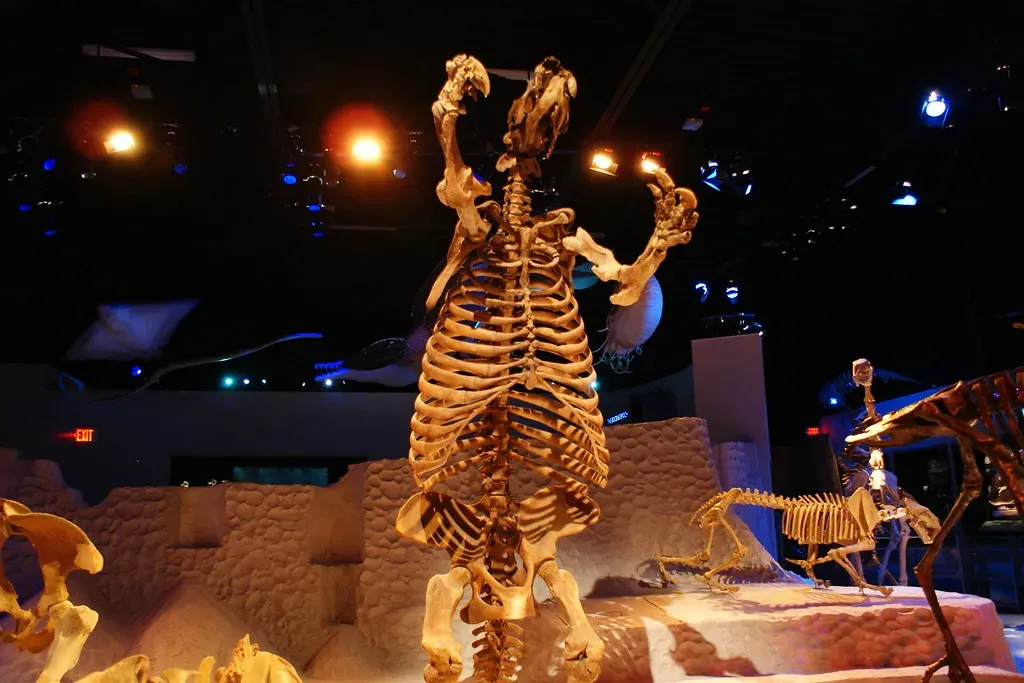
Sloths today are famous for being slow, small, and adorable. Their Ice Age ancestors were none of those things.
Weighing more than five tons and able to reach as high as 17 feet, Eremotherium eomigrans was larger than today’s African bull elephants. Some of the largest ground sloth species stood taller than a giraffe when reared up on their hind legs to browse treetops. The detail almost nobody expects: modern sloths’ closest living relatives are actually armadillos and anteaters, not other primates or bears.
These animals were over 10 times bigger than today’s sloths, with the largest weighing about 8,000 pounds – roughly the size of a modern Asian bull elephant.
They looked like grizzly bears, but five times larger.
Florida Museum of Natural History
These weren’t gentle giants either. The massive claws that modern tree sloths use for climbing were repurposed on ground sloths for stripping vegetation and defending against short-faced bears and saber-tooths. But #2 brings a cousin most people confuse with a mammoth entirely.
#2 – The Forest Giant Everyone Mistakes for a Mammoth
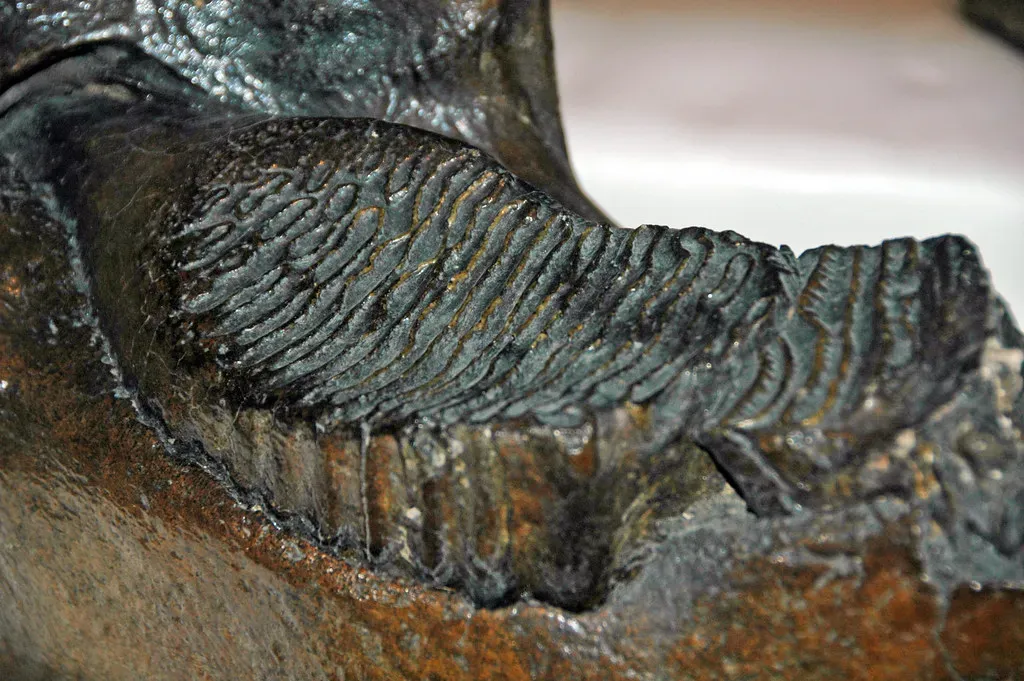
Ask most people to describe a mastodon, and they’ll accidentally describe a mammoth instead. The two animals were actually built for completely different lifestyles.
The American mastodon (Mammut americanum) isn’t technically a mammoth – these forest-dwelling browsers consumed wood branches, pinecones, and shrubs rather than grazing on grasses. That single dietary difference explains why mastodons thrived in dense forests while mammoths preferred open grasslands and tundra. The fact that surprises most readers: mastodon molars had a distinctive bumpy, cone-shaped surface built for crushing woody material, totally unlike a mammoth’s flat grinding teeth.
Mastodons are known for their bumpy, Lego-like molars, shaggy fur, and straight tusks – features that made them look superficially similar to mammoths from a distance but functionally very different up close.
It’s a genuinely controversial museum-tour talking point: many casual visitors leave still calling every Ice Age elephant a “mammoth,” frustrating paleontologists who insist the two animals deserve very different reputations. But nothing on this list compares to the sheer scale of #1.
#1 – The Mammoth That Stood Taller Than a Giraffe
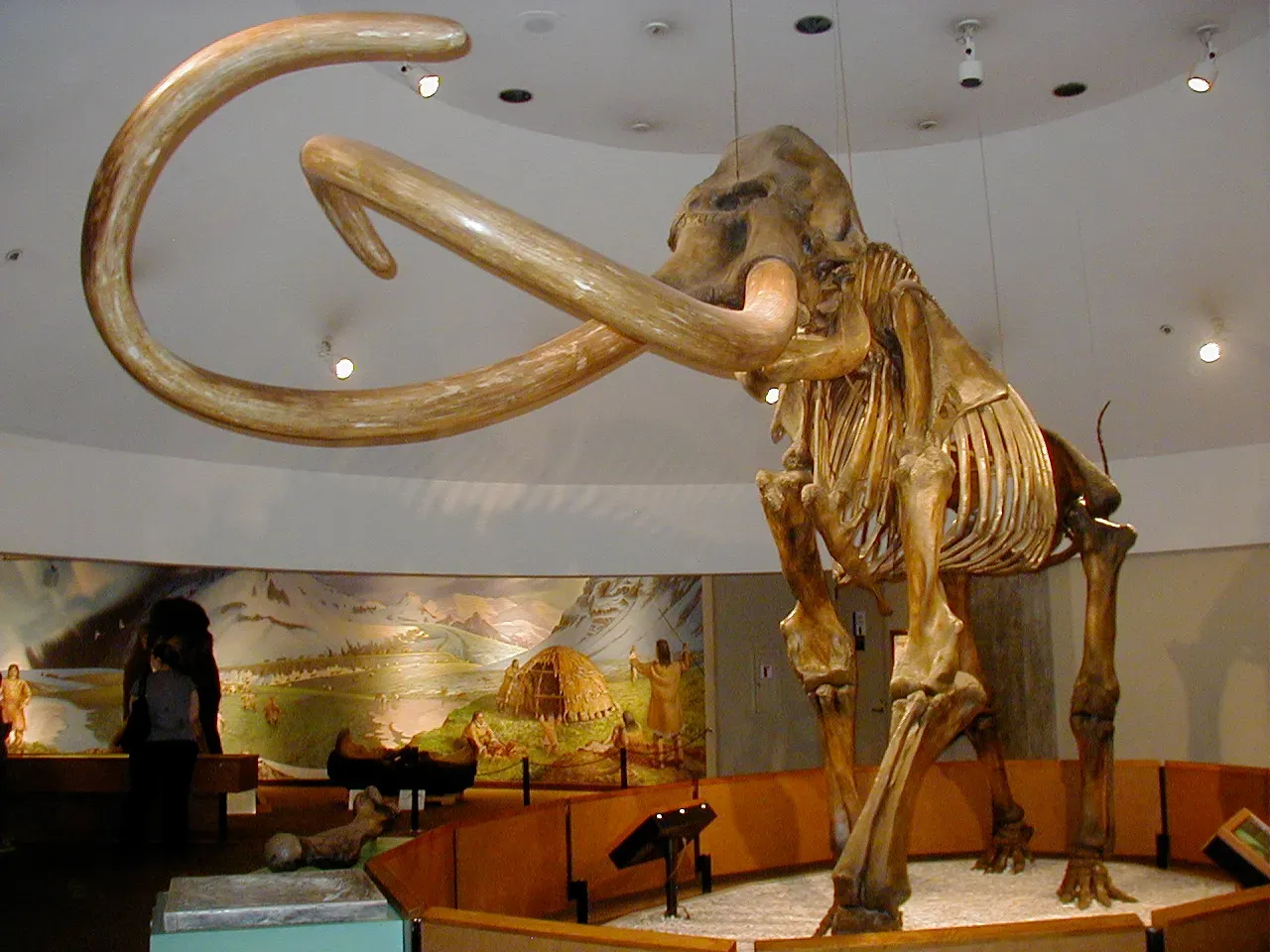
If one single animal defines the phrase “,” it’s this one.
Standing as tall as 14 feet and weighing 20,000 pounds, Columbian mammoths roamed across what is present-day Texas thousands of years ago. They also boasted enormous tusks up to 16 feet (almost five meters) long. The single most staggering fact: some estimates push the Columbian mammoth’s weight as high as 22,000 pounds, making it heavier than most modern school buses.
At a Glance
- Height: up to 14 feet at the shoulder
- Weight: 20,000 to 22,000 pounds – heavier than a modern school bus
- Tusks: up to 16 feet long
- Range: from Canada south to Nicaragua and Honduras
- Diet: sedges, grasses, and other open-parkland plants
Its range was immense too, stretching from Canada all the way down to Nicaragua and Honduras. And unlike the shaggy woolly mammoth of pop culture, the Columbian mammoth preferred open parkland landscapes and fed on sedges, grasses, and other plants.
For a few thousand years before their extinction, Columbian mammoths coexisted in North America with Paleoindians, who hunted them for food and used their bones for tools. That overlap between human hunters and the continent’s largest land animal remains one of the most debated extinction stories in paleontology.
The Bottom Line
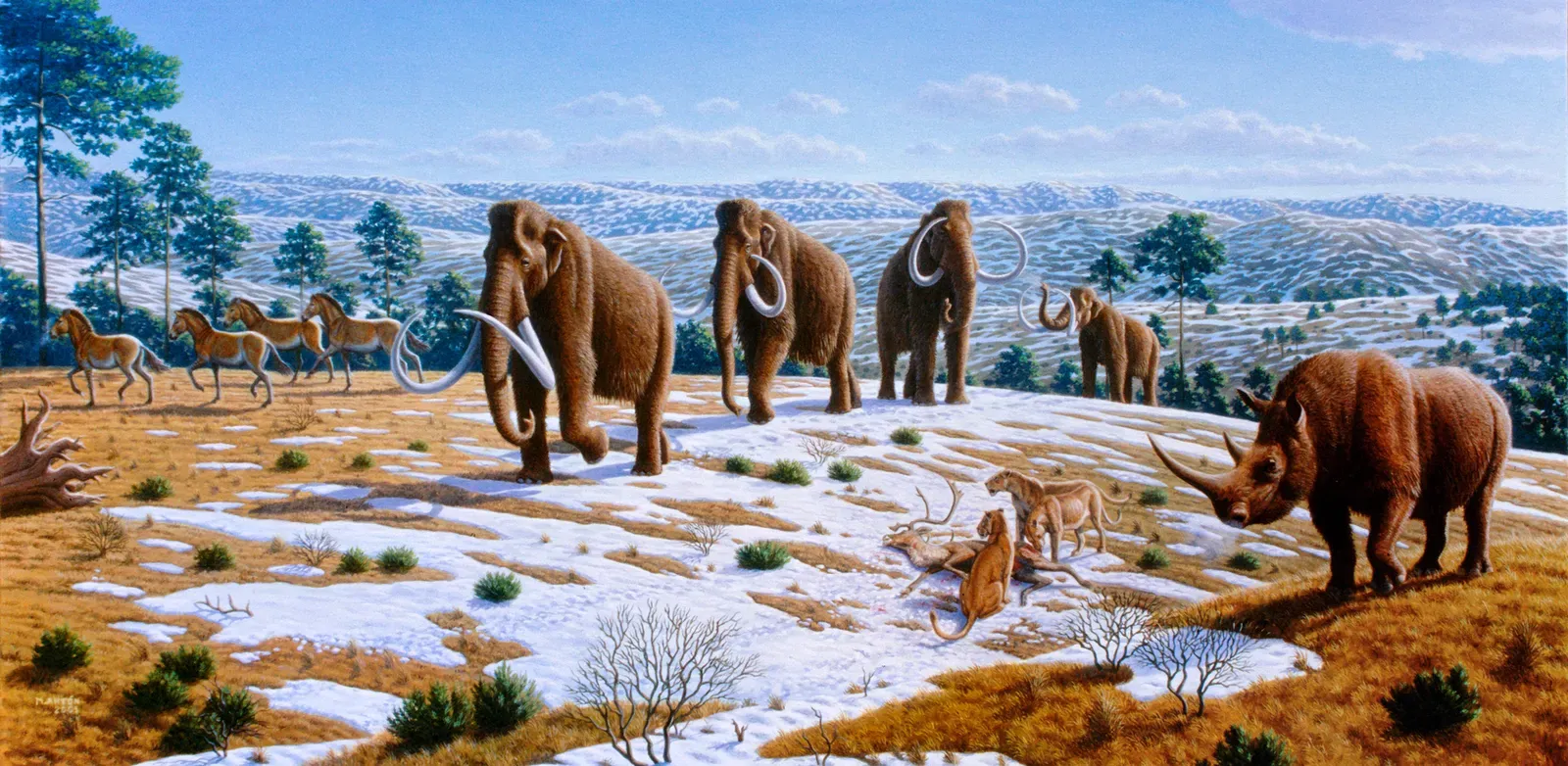
America’s Ice Age wasn’t some tame prelude to modern wildlife – it was a genuine lost world of elephant-sized sloths, bears built for sprinting, and bison with seven-foot horn spans. And here’s the part that should bother us more than it does: climate change alone doesn’t fully explain why nearly all of them vanished within a few thousand years of humans arriving.
Growing fossil evidence increasingly points to a brutal one-two combination of shrinking habitat and relentless human hunting pressure, and frankly, the hunting side of that equation deserves more attention than it usually gets in casual retellings of the Ice Age. Whatever the true cause, one thing is certain: modern North America is a quieter, smaller, and honestly less thrilling version of what it used to be. Which of these 14 giants surprised you the most? Drop your pick in the comments.