You’ve stood in front of these skeletons and stared into these reconstructed faces, trusting that someone spent decades proving every curve, color, and posture correct. Here’s the uncomfortable truth: a huge chunk of what’s bolted into glass cases and painted onto museum walls is an educated guess dressed up as settled fact – and some of it stayed wrong for over a century before anyone dared correct it.
From a spike glued onto the wrong end of a dinosaur’s face to an entire civilization’s art getting recolored by dirt and time, the gap between what museums displayed and what scientists actually knew is bigger and stranger than most visitors ever suspect. Thirteen of the biggest reconstruction admissions are below, counting down to the one that quietly rewrote how the world pictures an entire era of human history.
#13 – The Creature That Had Its Head and Butt Backwards
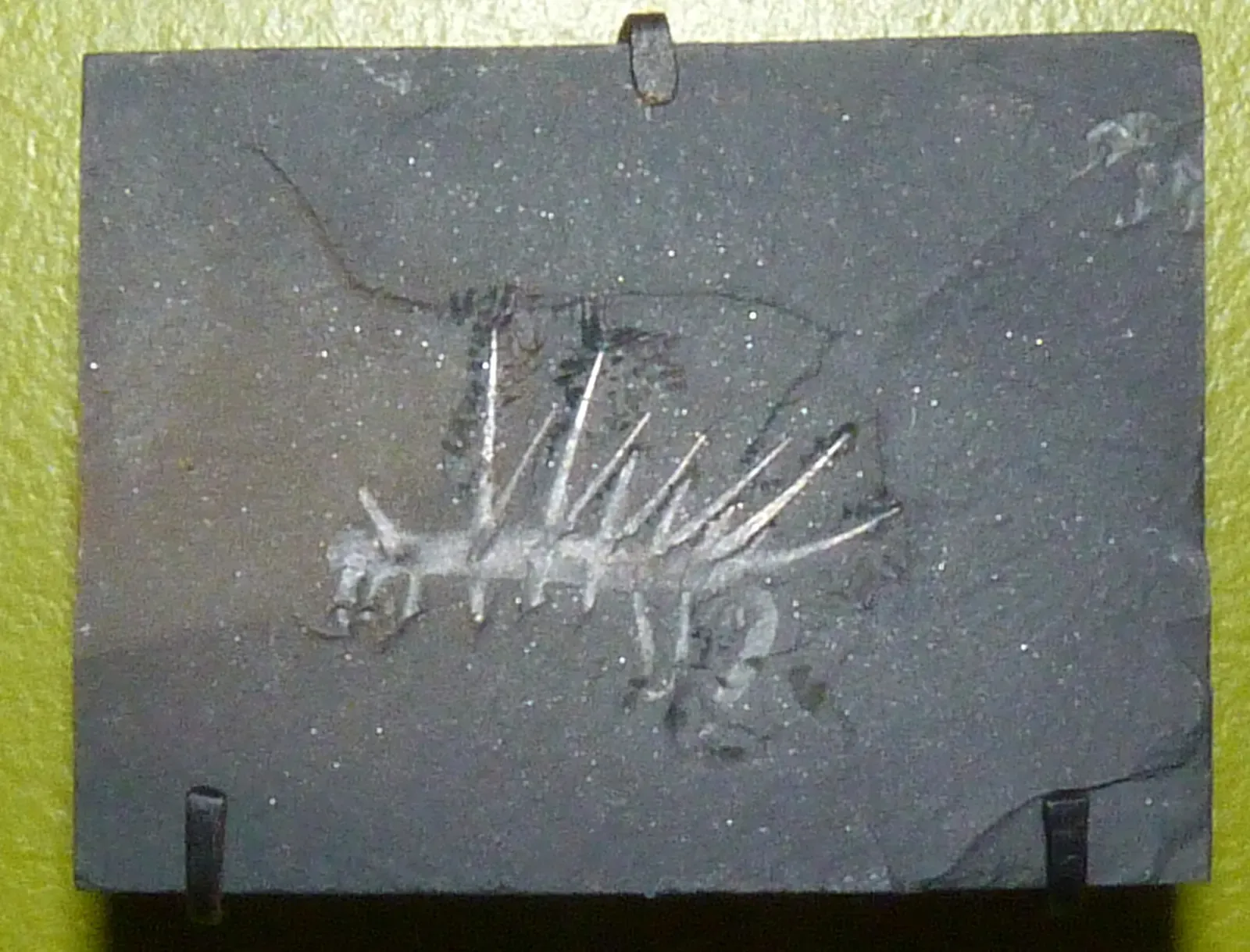
Scientists spent years studying a spiky Cambrian fossil called Hallucigenia without realizing they’d built the entire animal backwards. New specimens kept turning up missing the large, bulbous “head” that had made the original reconstruction famous, which sent researchers back to re-examine what they’d assumed was the tail end.
That’s when things got strange. The supposed tail actually had teeth and eyes, meaning the dramatic “head” mounted in illustrations for years was really the animal’s rear – its guts squeezed out and fossilized flat as sediment crushed the body. An entire body plan sat in textbooks facing the wrong direction for years. Up next: a “missing link” fossil that made global headlines before it even survived peer scrutiny.
#12 – The “Missing Link” Snake That Wasn’t So Certain After All
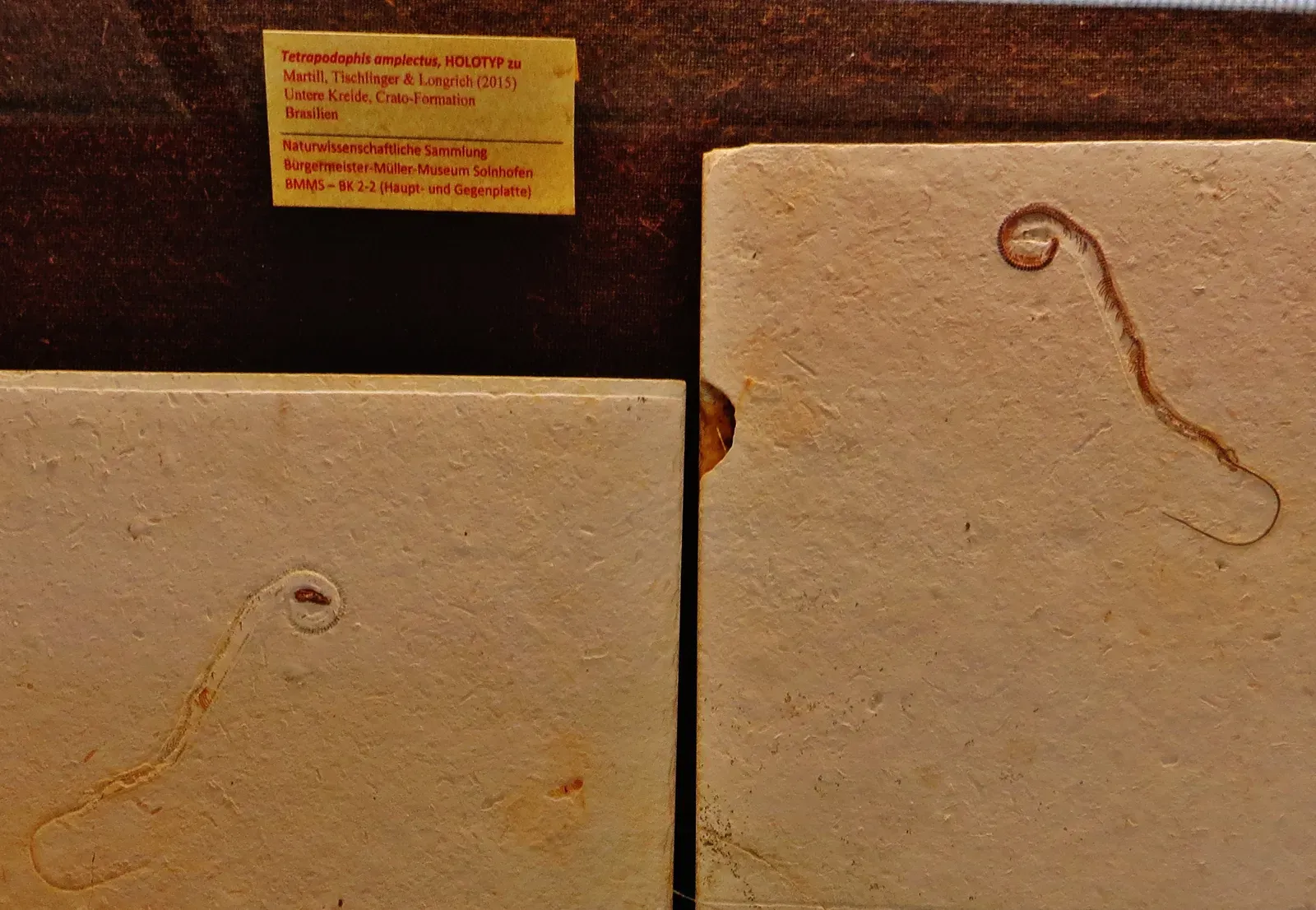
In 2015, a fossil discovery made global headlines as the answer to one of evolution’s biggest gaps. Researchers were convinced they’d found the first missing link between lizards and snakes, naming it Tetrapodophis amplectus. The specimen appeared to have tiny limbs alongside a snake-like body – exactly what evolutionary biologists had been searching for to explain how legless snakes descended from four-legged ancestors.
Museums and science press ran with the “missing link” framing almost instantly, treating one ambiguous specimen as settled proof of a multimillion-year transition. Since then, independent researchers have pushed back hard, arguing the fossil may not even represent a true snake ancestor at all. That’s the uncomfortable pattern with headline fossils: a dramatic name first, then years of quiet walking-back once more scientists get their hands on the scans. Next up, a reconstruction built over 300 years ago from rhino bones.
#11 – The 17th-Century “Dinosaur” Built From Rhino Bones
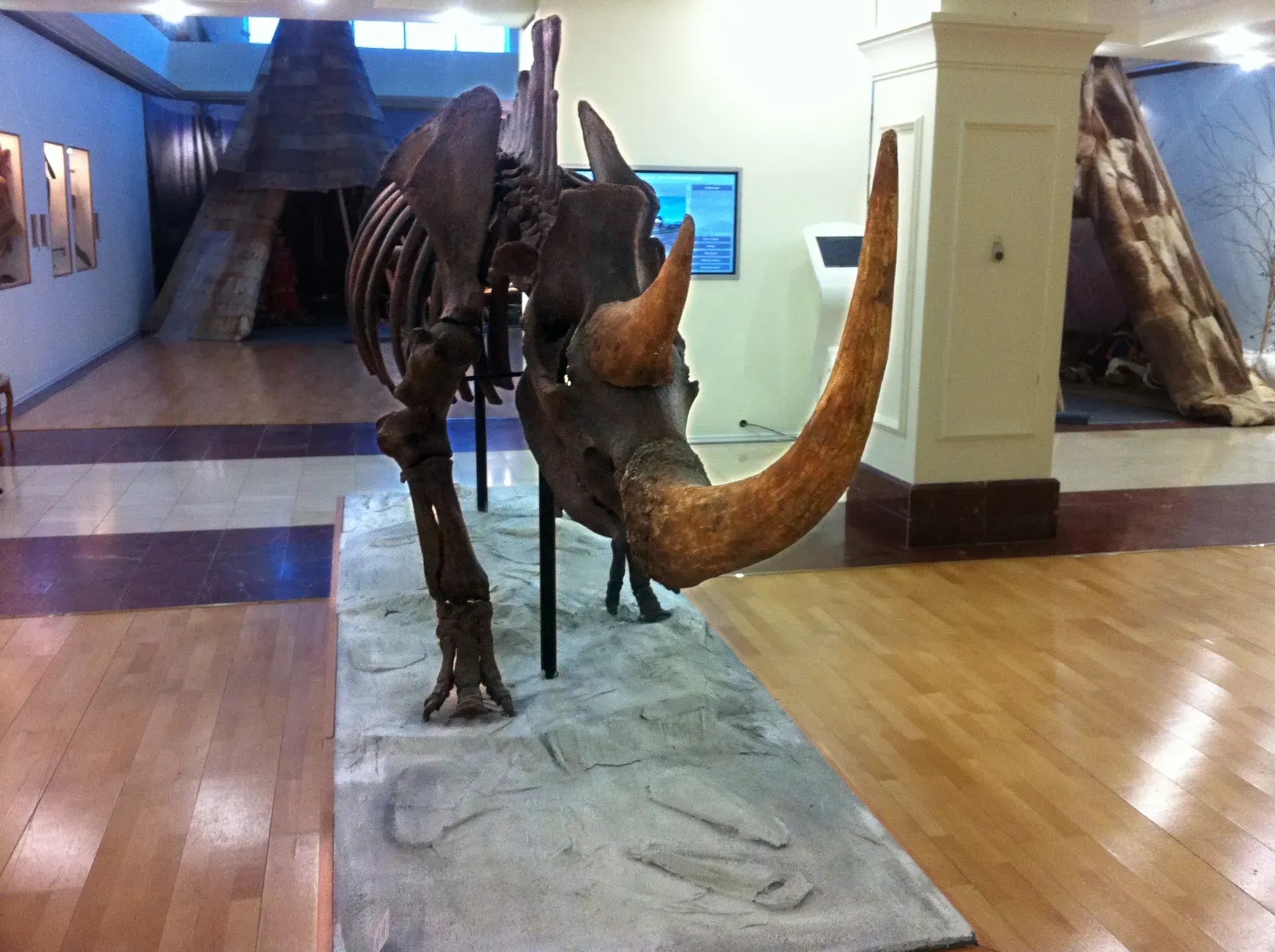
Long before paleontology existed as a real science, a German scholar tried to reconstruct a giant extinct creature – and got almost everything wrong. The Magdeburg Unicorn, widely considered the worst reconstruction of a dinosaur ever attempted, was first assembled by scholar Otto von Guericke in 1663. Working centuries before anyone understood fossils as remains of extinct species, he pieced together a skeleton that towered upright with a single horn jutting from its skull, closer to a mythical beast than any animal that ever lived.
Fast Facts
- Assembled in 1663 by scholar Otto von Guericke, decades before fossils were understood as extinct remains
- Built from real bones – but they belonged to a woolly rhinoceros, not a dragon or unicorn
- Topped with a single spiraled horn to match the mythical unicorn image of the era
- Still on public display today at the Museum für Naturkunde in Magdeburg, Germany
The twist is what the bones actually belonged to: woolly rhinoceros. The skeleton is still on display today at the Museum für Naturkunde in Magdeburg, Germany, a permanent reminder that “reconstruction” has never meant “certainty,” even when the final product ends up bolted together and displayed with total confidence. Some historians treat it as a joke; others think it belongs in every natural history museum as a warning label. Fast forward to a dinosaur discovered in this century – and somehow just as guesswork-driven.
#10 – The Modern Dinosaur Whose Horns Were Basically Guessed
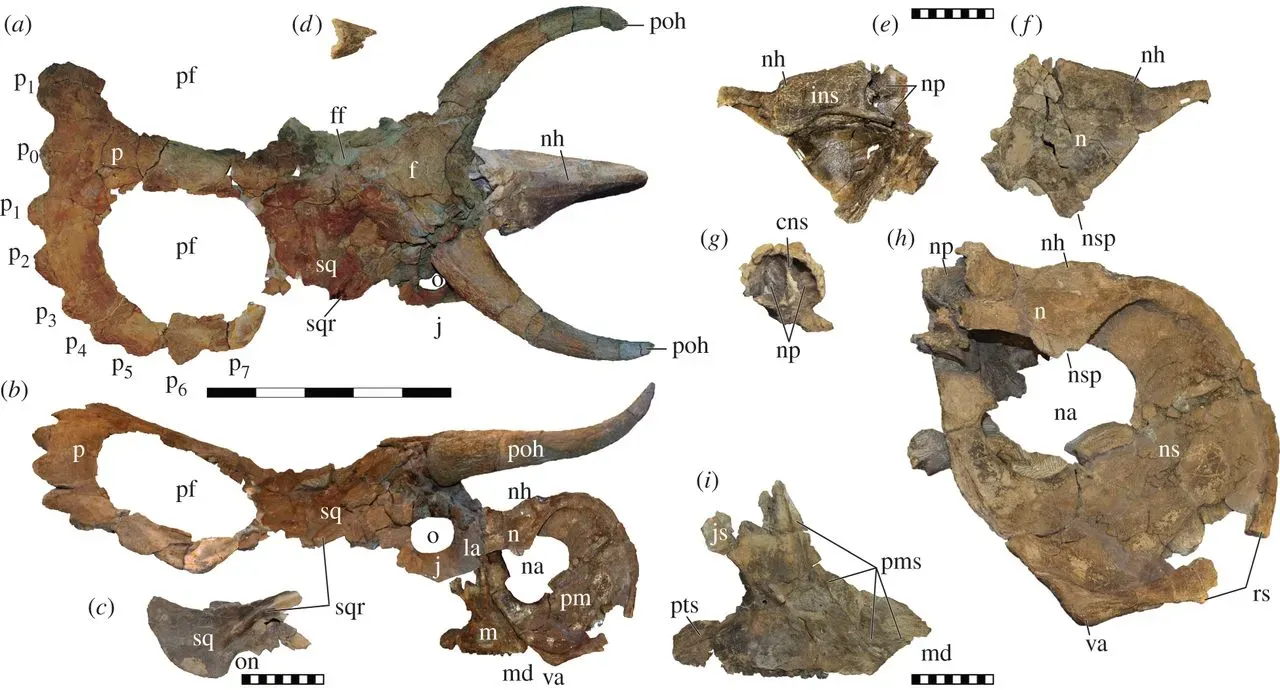
You’d think a dinosaur discovered in the smartphone era would come with zero guesswork attached. You’d be wrong. When paleoartist Gaston worked on Nasutoceratops titusi, a ceratopsian species from Utah, he hit a wall: the skull was crushed and the horns were bent flat, almost like longhorn cattle.
Rather than cut the cast apart and force the horns back into an upright angle, he left them the way the fossil actually preserved them. That single artistic call then got copied and exaggerated across dozens of illustrations, like a game of telephone stretching back millions of years. One physical constraint in a Colorado lab now shapes how an entire species is pictured worldwide – and almost nobody realizes it started as a workaround, not a fact. Even Spinosaurus, one of the most famous predators in pop culture, can’t seem to keep its walking style straight.
#9 – The Dinosaur That Might Not Have Walked the Way We Thought
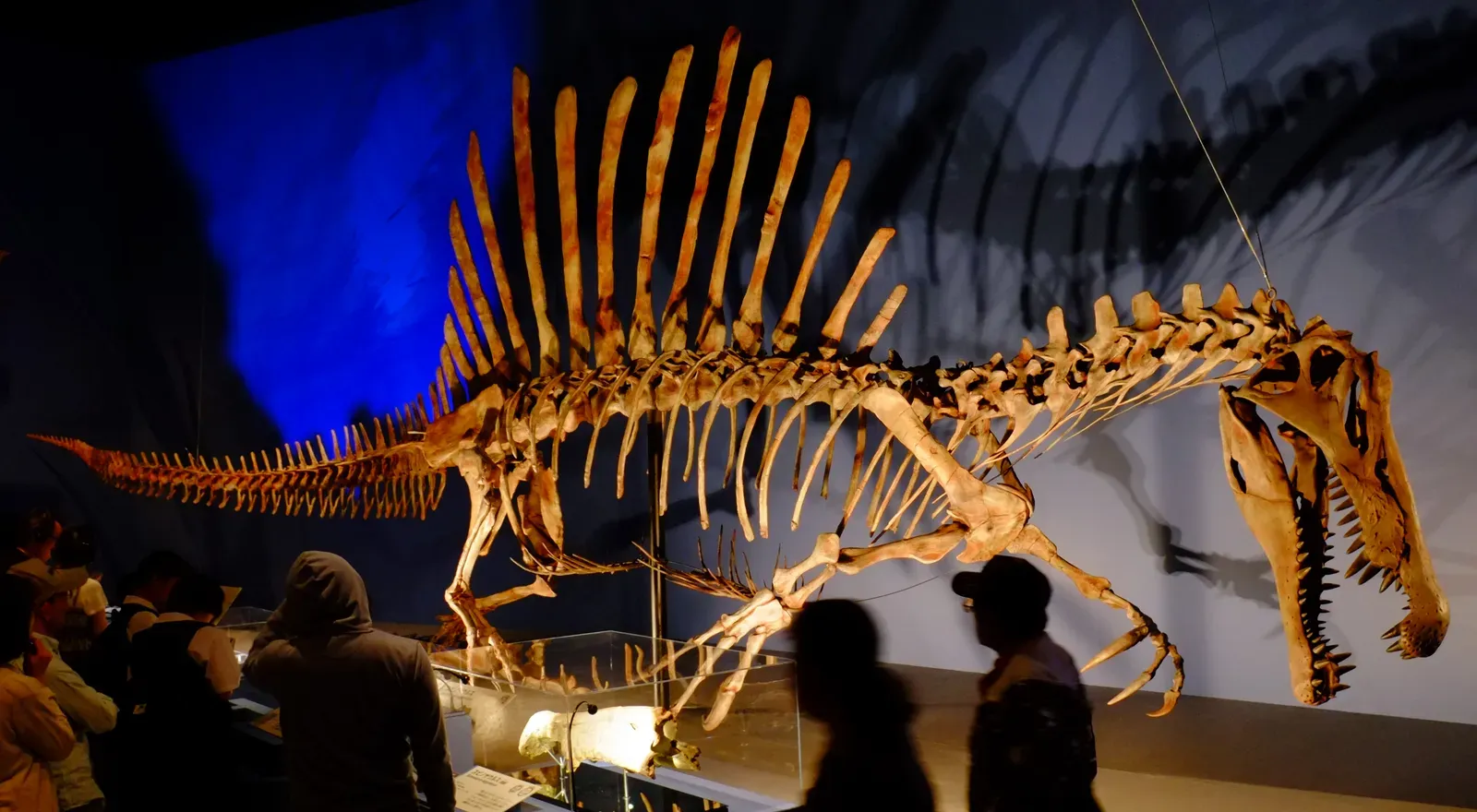
Spinosaurus is one of the most famous predators on Earth, larger than T. rex, and museums have completely rebuilt its posture more than once. For decades it stood upright on two legs in every diorama. Then a 2014 study flipped that assumption entirely, finding that the hind limbs were much shorter than believed and that its center of mass sat at the midpoint of the torso – suggesting it was poorly adapted for bipedal locomotion and may have moved as an obligate quadruped, based on measurements extrapolated across different-sized individuals.
Quick Compare
- Old reconstruction: Upright on two hind legs, center of mass near the hips, hunting like a land predator
- New reconstruction: Shorter hind limbs, center of mass shifted toward the mid-torso, possibly moving on all fours
- Old reconstruction: Built primarily for chasing prey across open ground
- New reconstruction: Better suited to wading or moving through water than sprinting on land
Not everyone bought it. Paleontologist John Hutchinson pushed back publicly, cautioning that mixing bones from different specimens can produce inaccurate chimaeras rather than a real animal. A dinosaur millions of children can draw from memory still doesn’t have an agreed-upon walking style, and that’s not a minor detail – it’s the entire silhouette of the animal still up for debate. And the feather debate? Nobody’s actually settled that one either.
#8 – The Feathers vs. Scales Fight Nobody Settled
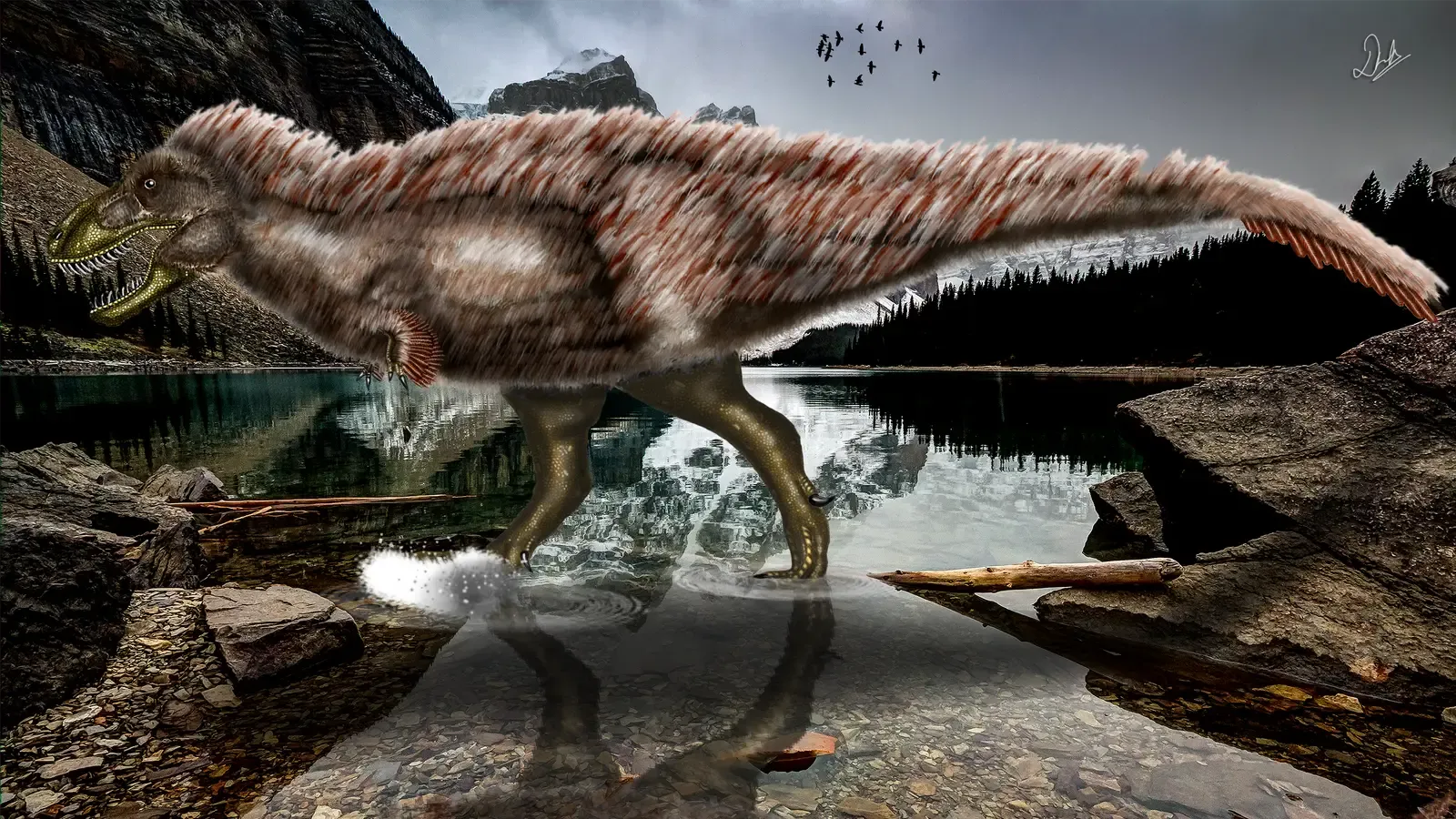
Ask ten paleoartists whether T. rex had feathers and you’ll get ten different answers, and museums have flip-flopped on this more than almost any other detail. For decades, the default assumption was scaly, reptilian skin, largely inherited from older lizard-based dinosaur art. Then feathered relatives of tyrannosaurs turned up in China, and museums scrambled to update full-body mounts with fuzzy coats almost overnight.
It felt like the science had finally caught up. Except it hadn’t – later skin impressions from large tyrannosauroids showed patches of scaly skin, muddying the feathered narrative all over again. What most visitors don’t realize is that no complete skin impression of an adult T. rex has ever been found. Every feathered or scaled model in every hall is a composite guess stitched from relatives, patches, and inference. Rewind two centuries, and one of the very first dinosaurs ever named had its weapon bolted onto exactly the wrong spot.
#7 – The Dinosaur That Wore Its Weapon on the Wrong Body Part for Decades
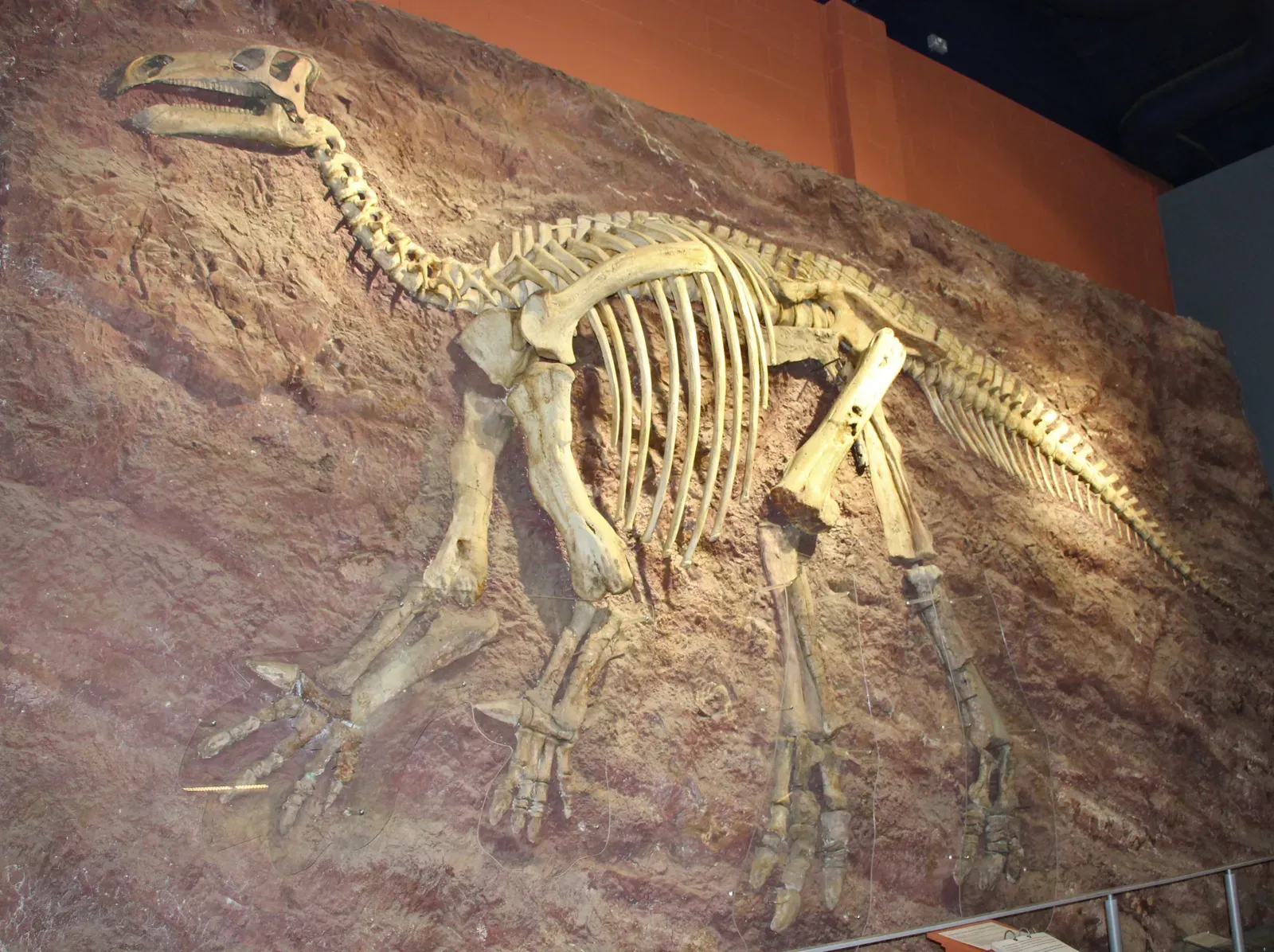
For most of the 1800s, one of the first dinosaurs ever scientifically described was walking around museum illustrations with its weapon jammed onto the wrong part of its face. Early scientists discovered a large spike among Iguanodon’s fossils and assumed it belonged on the animal’s nose, imagining a horn similar to a modern rhinoceros. That single assumption shaped illustrations, museum casts, and public imagination for generations, long before anyone found a specimen complete enough to correct it.
The truth, once more complete skeletons turned up, was almost comical: that “nose horn” was actually a thumb spike. Victorian scientists had built a rhinoceros-like face out of what was really part of the animal’s hand, and the mistake persisted in reconstructions until better specimens set the record straight. A thumb spike spent nearly a century mistaken for a nose horn – that’s an entirely different animal living in the public imagination for multiple generations. That’s nothing compared to how long museums got basic dinosaur posture wrong.
#6 – The Tail-Dragging Posture That Was Just Plain Wrong
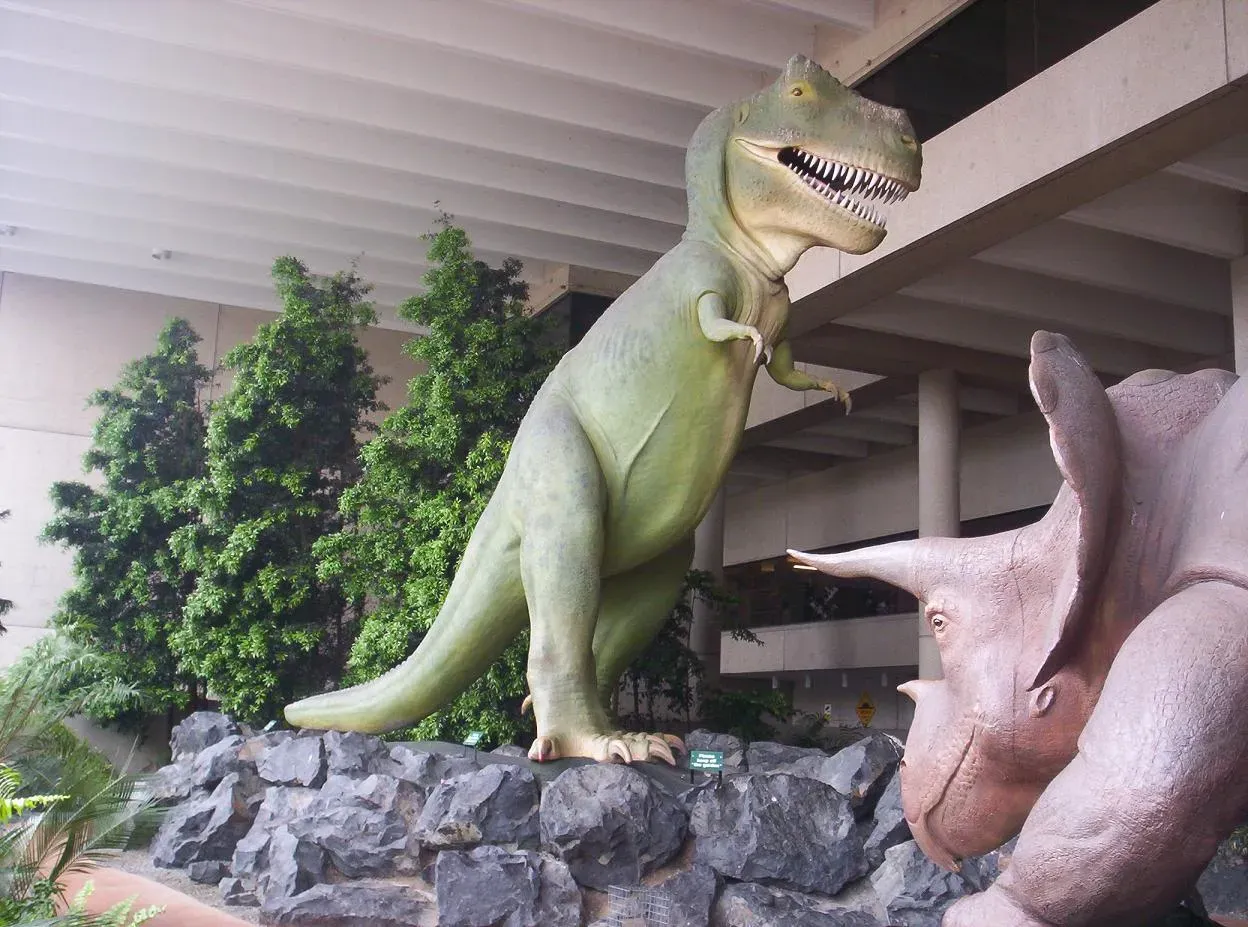
If you grew up before the 1990s, every dinosaur book you owned probably got the basic posture wrong – and museums are the reason why. For decades, dinosaurs were depicted standing upright with their tails dragging along the ground, a posture that appeared in museum displays, books, and artwork throughout the early twentieth century. It defined how millions of people pictured T. rex, Diplodocus, and nearly every other major species for close to a hundred years.
Then biomechanics research quietly demolished the whole picture. Later studies showed that dinosaurs actually balanced their bodies with the tail held straight out behind them, not dragging – a discovery that changed how many theropods and other species are reconstructed today. An entire posture, repeated in thousands of exhibits worldwide, got corrected almost overnight once someone actually ran the physics, and museums rebuilt full skeletal mounts because of it. Speaking of posture problems – meet the most famous dinosaur that technically never existed.
#5 – The Famous Dinosaur That Was Never Actually Real
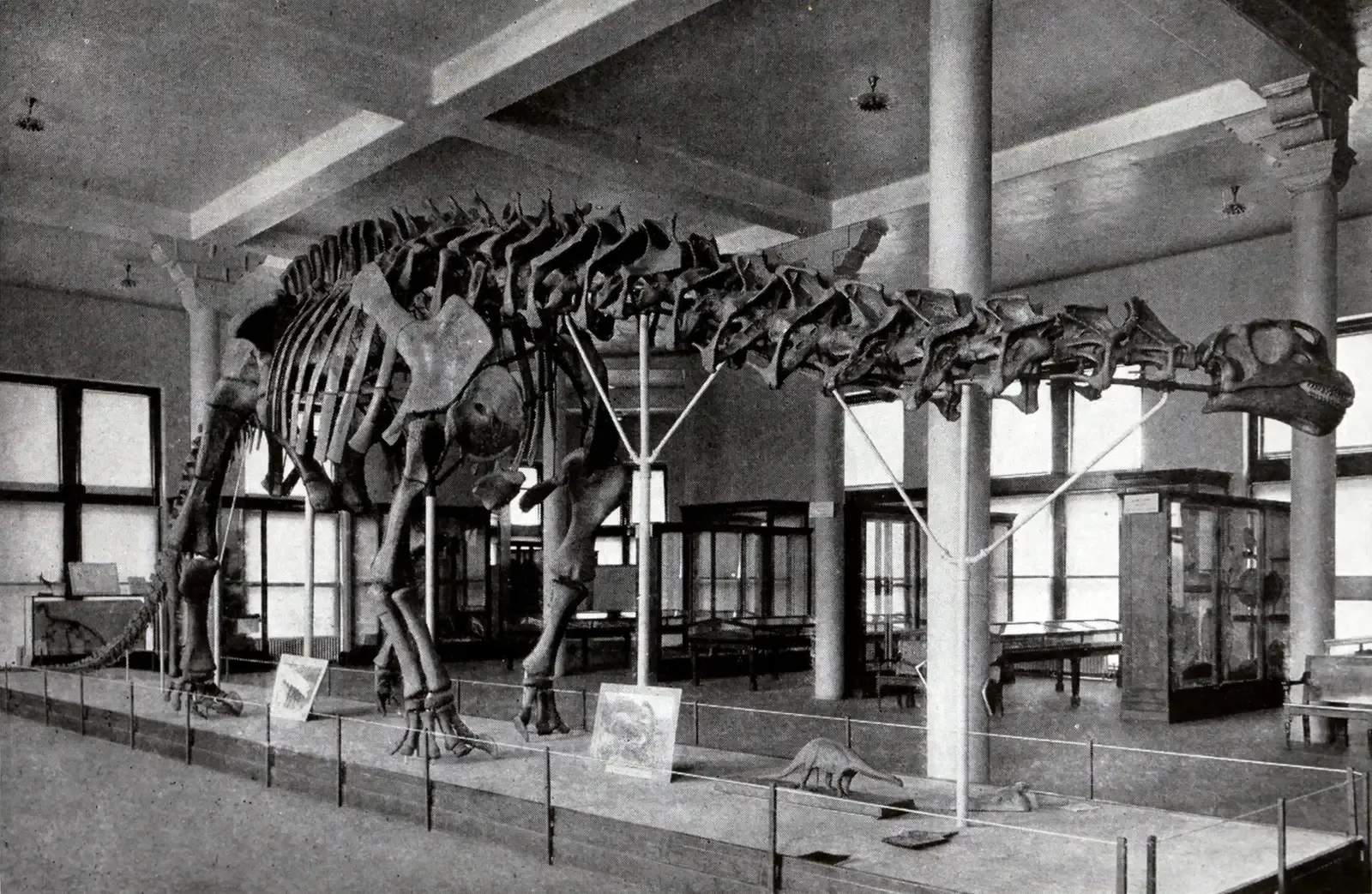
Brontosaurus might be the single most recognizable dinosaur name on Earth, and for nearly a century, museums displayed a creature that was essentially fictional. The story starts in 1877, when paleontologist Othniel Charles Marsh described a long-necked dinosaur he called Apatosaurus from a skeleton that was missing its skull. Two years later, a more complete skeleton turned up, and Marsh decided it was different enough to deserve its own name: Brontosaurus. That skeleton was missing a skull too.
Worth Knowing
- 1877: Marsh names Apatosaurus from a skeleton with no skull attached
- 1879: A second skeleton, also missing its skull, gets its own name – Brontosaurus
- 1883: Marsh mounts a skull from an entirely different species onto the display
- 1903: Scientists fold Brontosaurus back into Apatosaurus, erasing the name for decades
- 2015: A large-scale skeletal study argues Brontosaurus deserves its own genus after all, reviving the name museums had abandoned
Marsh didn’t leave the empty socket blank. In 1883, he mounted a skull from a completely different sauropod species onto the skeleton, creating a chimeric creature that sat in museums and textbooks for nearly a century before scientists took a hard look and admitted the mismatch. A “species” beloved by generations of children was, quite literally, two different dinosaurs glued together. Some reconstructions were honest mistakes. The next one was an outright fraud.
#4 – The Ancestor That Was Simply Invented
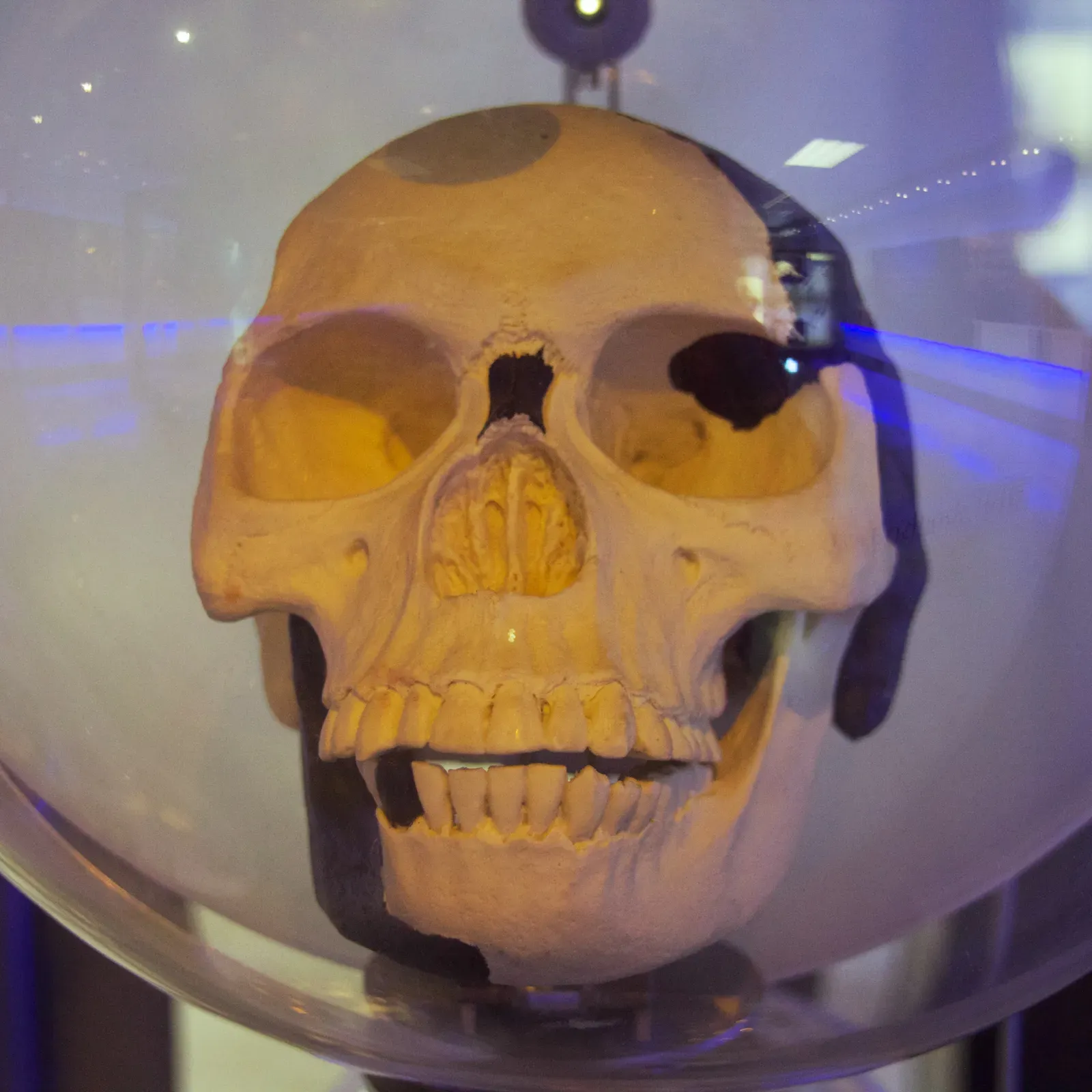
Some museum reconstructions weren’t wrong because of missing data – they were wrong because someone faked the data entirely. For over 40 years, Piltdown Man sat in prestigious collections, got cited in textbooks, and shaped how an entire generation understood the transition between apes and humans. It was presented as a genuine early human ancestor with a skull combining a human-like cranium and an ape-like jaw, exactly what the evolutionary theory of the time predicted should exist.
It was later exposed as an elaborate forgery: a modern human skull deliberately paired with an orangutan jaw, filed down and stained to look ancient. Decades of paleoanthropology textbooks had to be rewritten because a single doctored specimen was accepted without enough scrutiny. It remains one of the starkest reminders that “reconstruction” sometimes means someone built exactly what they expected to find, not what the evidence actually showed. The next case shaped how we picture an entire species of ancient humans – off one unlucky skeleton.
#3 – The Neanderthal Skeleton That Wasn’t Even Representative
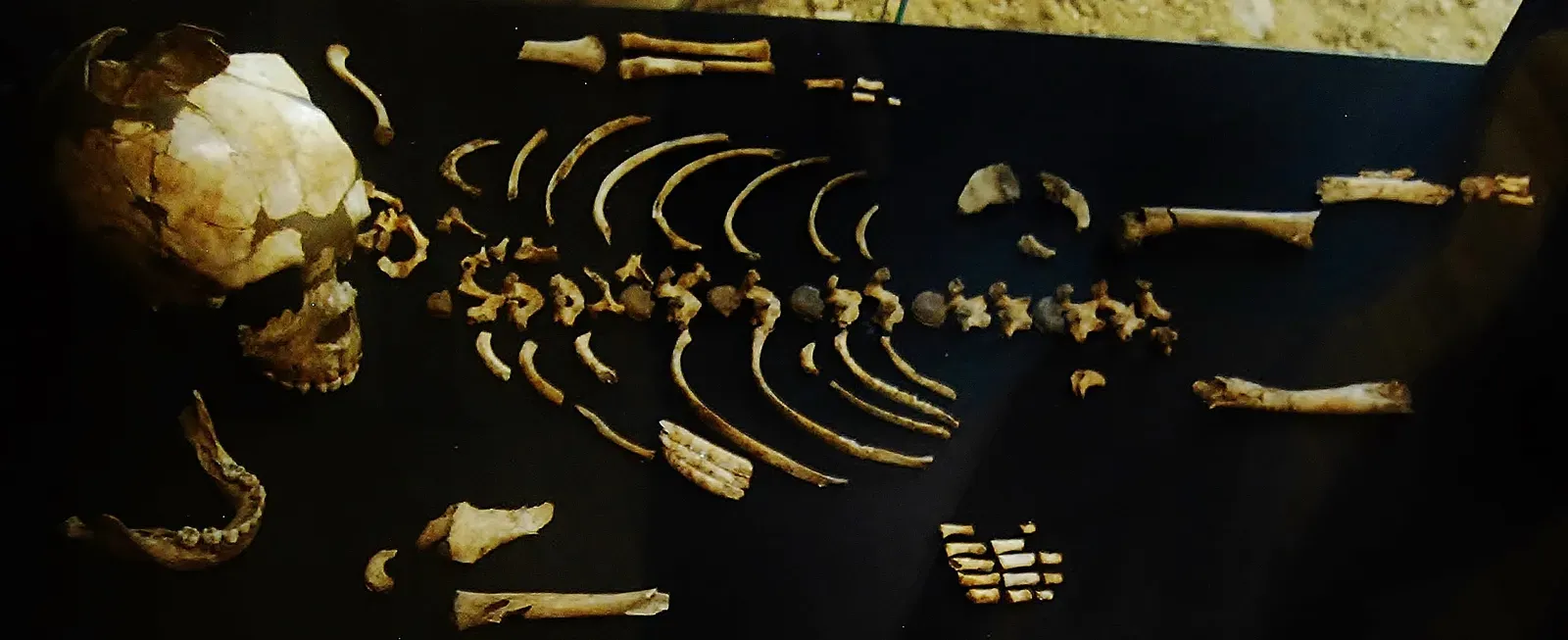
For most of the 20th century, museums built the entire public image of Neanderthals around one arthritic old man, and nobody flagged the problem for decades. Museum dioramas at institutions like the American Museum of Natural History and the Muséum national d’Histoire naturelle depicted Neanderthals as apelike and brutish, with hunched postures, coarse facial features, and excessive body hair. That look became the default cultural shorthand for “caveman” almost instantly, reinforced by illustrated press and museum sculptures for decades afterward.
The problem was the source material itself. The skeleton behind these reconstructions, known as the Old Man of La Chapelle, belonged to an elderly individual with severe arthritis and spinal degeneration – hardly a healthy, typical member of the species. Illustrators and sculptors working with little more than fragmentary fossils leaned on stooped postures and thick body hair as visual shorthand for primitiveness. An entire species got defined by one sick individual’s bones, and that mistaken silhouette shaped popular imagination for over half a century. Even Lucy, the most famous fossil on Earth, isn’t as settled as you’d think.
#2 – Lucy’s Skin, Posture, and Even Her Walk Were Largely Invented
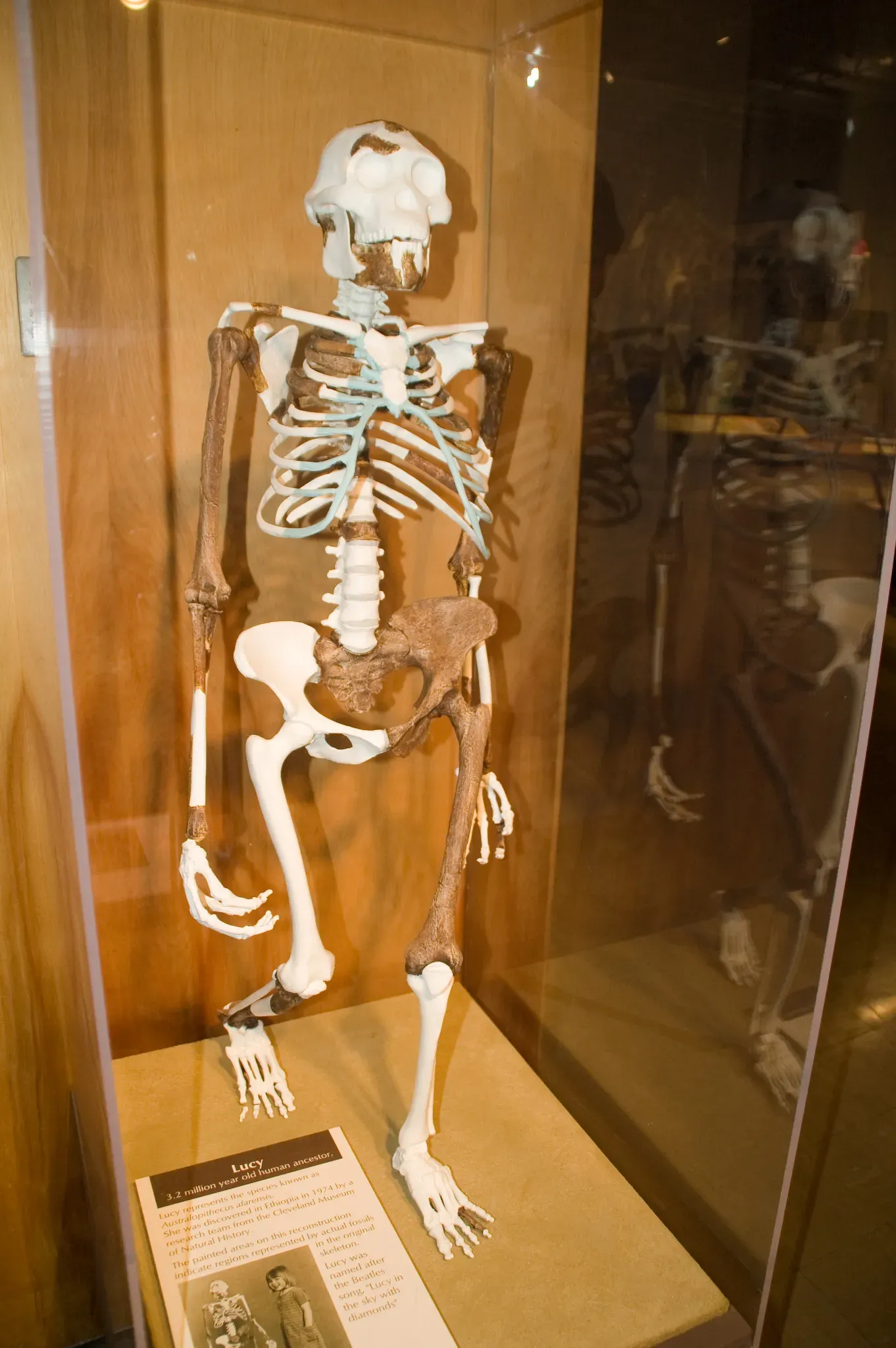
Lucy is arguably the most famous fossil skeleton in the world, and yet huge portions of her museum reconstructions are pure artistic speculation, not hard evidence. Early human reconstructions tend to be more art than science – artists working on Lucy and the Taung child made untestable assumptions about whether these ancient species looked more like apes or modern humans, and how their soft tissue, muscles, and skin thickness appeared. Skin tone, hair density, and facial expression are essentially creative choices dressed up as anthropology.
Even her posture keeps getting rewritten. Contrary to earlier beliefs that Lucy had a more ape-like stance, a 3D muscle reconstruction suggested she walked upright with her head held high, a straight spine, and straight legs – more like a modern human, and capable of prolonged bipedal movement. Not everyone accepts that conclusion; the finding ignited real debate, with some scientists questioning how speculative muscle reconstruction can be and calling for more evidence. A 3.2-million-year-old skeleton is still getting a new walking style decades after her discovery. And the biggest reconstruction myth of all isn’t about a creature at all – it’s about color itself.
#1 – Ancient Statues Were Never Supposed to Be White

This is the reconstruction error that reshaped how an entire civilization is remembered, and museums helped cause it. For centuries, curators, sculptors, and art historians insisted that Greek and Roman statues were meant to be pure, unadorned white marble. That belief ran so deep that influential figures like Johann Joachim Winckelmann openly dismissed proponents of painted Greek sculpture as eccentrics, and that single opinion shaped Western art education for roughly 250 years.
At a Glance
- Johann Joachim Winckelmann (1717-1768) is largely credited with cementing the “pure white marble” ideal in Western art history
- Modern researchers use raking light and UV imaging to detect trace pigment invisible to the naked eye
- Recovered color evidence points to bold reds, blues, and ochre yellows, not soft pastels
- Traveling exhibitions built around the recolored replicas have toured major museums worldwide, challenging the white-marble assumption directly
It was completely backwards. Recent scientific studies have shown Greek and Roman marble antiquities were often painted in bright colors, and the “pure white” look was really an accidental whitewashing of history. When archaeologists began uncovering these statues centuries later, there was often little sign they’d ever been painted, because the pigment had simply worn away underground. The “classical” white aesthetic that inspired Renaissance masters and modern museum design was based on erosion, not intention – and some art historians still resist repainting replicas because the white look has become its own cultural identity, which, frankly, says more about us than it does about the ancient world.
The Bottom Line
Here’s the uncomfortable truth: museums aren’t lying to you, but they’ve been presenting educated guesses as settled fact for a very long time. A wrong skull became a beloved dinosaur species for a century. One sick skeleton became the face of an entire human relative. A forged jawbone reshaped textbooks for 40 years. An entire civilization’s art got recolored by erosion, not artistic intent.
The pattern holds every single time: confidence in a display case rarely matches confidence in the data behind it. Reconstruction is storytelling with bones as props – sometimes brilliant, sometimes flat wrong, and always a little more human than the label admits. The next time a museum plaque sounds absolutely certain, that certainty is exactly what deserves a second look.