Most people assume science moves in a straight line – a study gets published, the finding holds, and textbooks simply add a new fact. Bird migration research doesn’t work that way at all. Some of the field’s most celebrated discoveries, the ones that filled museum placards and got repeated in nature documentaries for decades, quietly stopped being true.
No press conference announced the reversal. No headline read “we were wrong.” Instead, papers got corrected, claims got dropped from later reviews, and “breakthrough” cells turned out to be something else entirely. Here’s what the research record actually shows once you go looking for the walk-backs – starting with a myth that fooled Europe for centuries.
#14 – The Hibernation Theory That Fooled Naturalists for Centuries
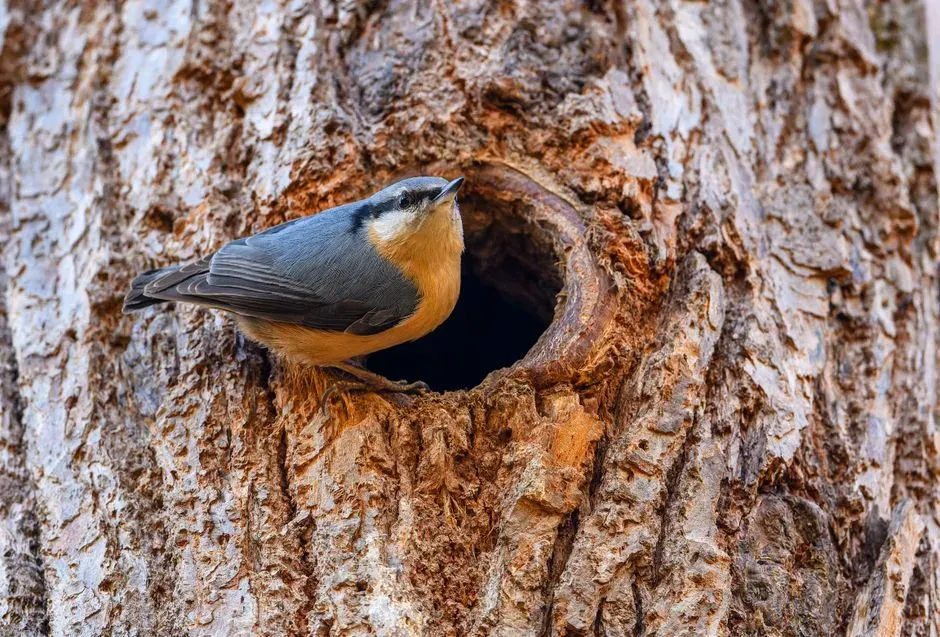
Long before anyone tracked a bird with radar or satellite tags, Europe’s most respected scientific minds were convinced that swallows simply vanished into the mud each winter. It sounds absurd today, but this wasn’t a fringe idea – it was mainstream natural history for generations. Early accounts held that birds hibernated underwater or buried themselves in riverbanks, and serious naturalists repeated it as established fact.
The theory only collapsed once someone actually tested it, disproved by simple experiments on caged birds. Once those cages showed swallows just flying away rather than burrowing anywhere, the hibernation explanation quietly disappeared from serious natural history writing. No retraction notice, no apology – just silence as newer observations replaced it. But that’s nothing compared to what we found about #13.
#13 – Aristotle’s “Transforming Birds” Claim That Stuck for 2,000 Years
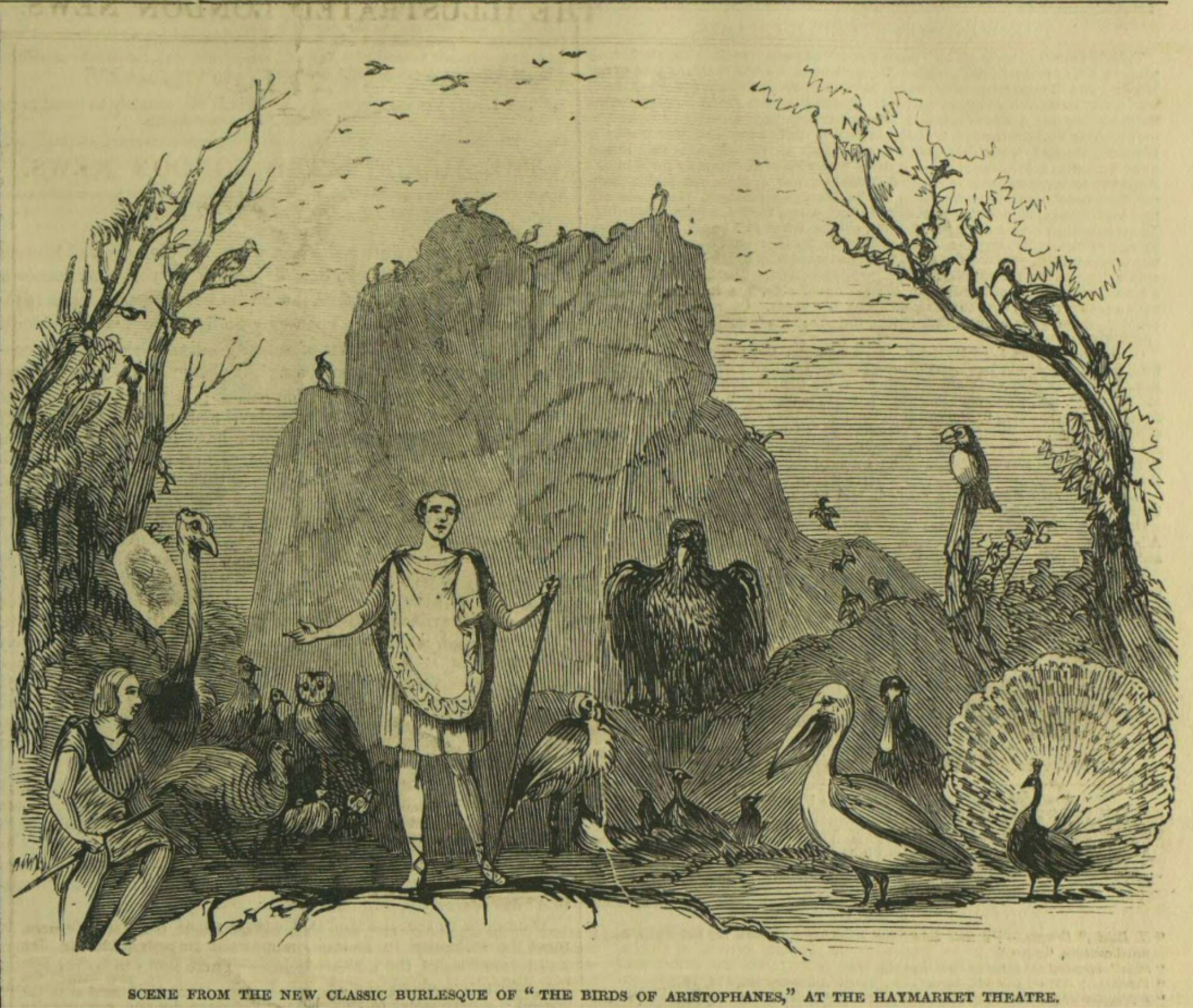
Aristotle wasn’t some amateur guessing at nature – he was the most influential scientific authority in the ancient world, and even he got migration catastrophically wrong. He suggested that redstarts physically transform into robins each season, a theory now known as transmutation. The logic wasn’t unreasonable for its time: one species vanished right around when the other appeared, a textbook case of correlation mistaken for causation.
A nearly identical error was made with a second species pair – observers similarly believed garden warblers transformed into blackcaps. This “finding” survived in natural philosophy for two thousand years before anyone formally challenged it, fading only once ornithologists began tracking individual birds instead of assuming species swapped bodies with the seasons. Wait until you see how weird theory #12 gets.
#12 – The “Birds Migrate to the Moon” Paper Nobody Talks About Anymore
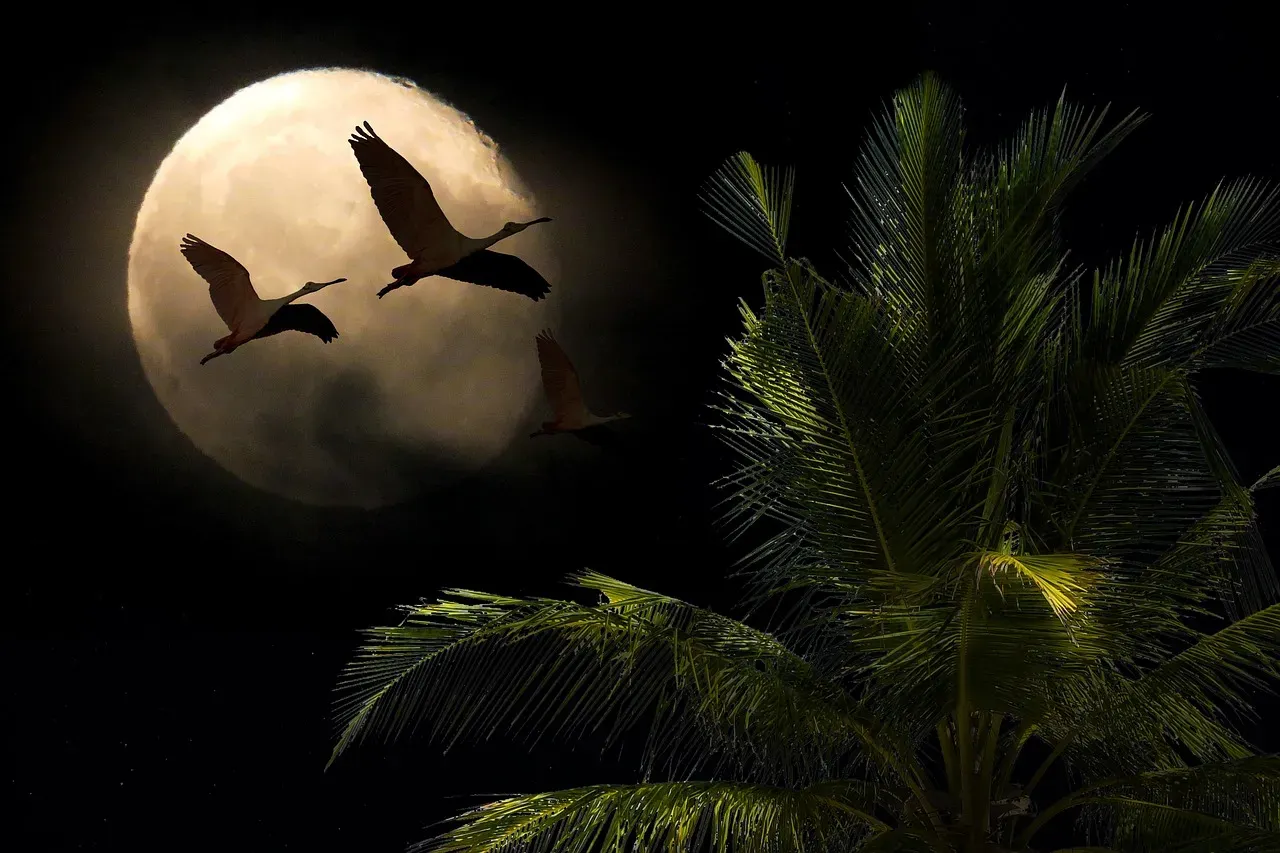
Yes, a serious 17th-century academic argued in writing, with a straight scientific tone, that birds spent their winters on the lunar surface. The claim came from Charles Morton, and it wasn’t a joke pamphlet buried in obscurity. In 1684, published under the title “An Enquiry into the Physical and Literal Sense of that Scripture,” the theory got a genuinely respectful hearing among his peers.
He didn’t stop at birds – he reasoned that if birds could fly to the moon and back, then unwinged humans could theoretically follow the same route someday. The idea gained enough traction to be taken seriously for a stretch of scientific conversation. Once actual physics matured, the theory was simply dropped with zero formal correction. It just stopped being cited.
Fast Facts
- Morton rejected pond hibernation outright, reasoning birds couldn’t breathe underwater – which left the moon as his “logical” alternative
- He estimated the one-way trip at roughly 179,712 miles, flown at about 125 mph over 60 days
- His textbook, Compendium Physicae, was assigned reading at Harvard and Yale for about 40 years
- The theory leaned on a real Bible verse about swallows and storks knowing their “appointed times”
Slide #11 involves a name you definitely know.
#11 – Audubon’s Banding “Discovery” That Didn’t Hold Up
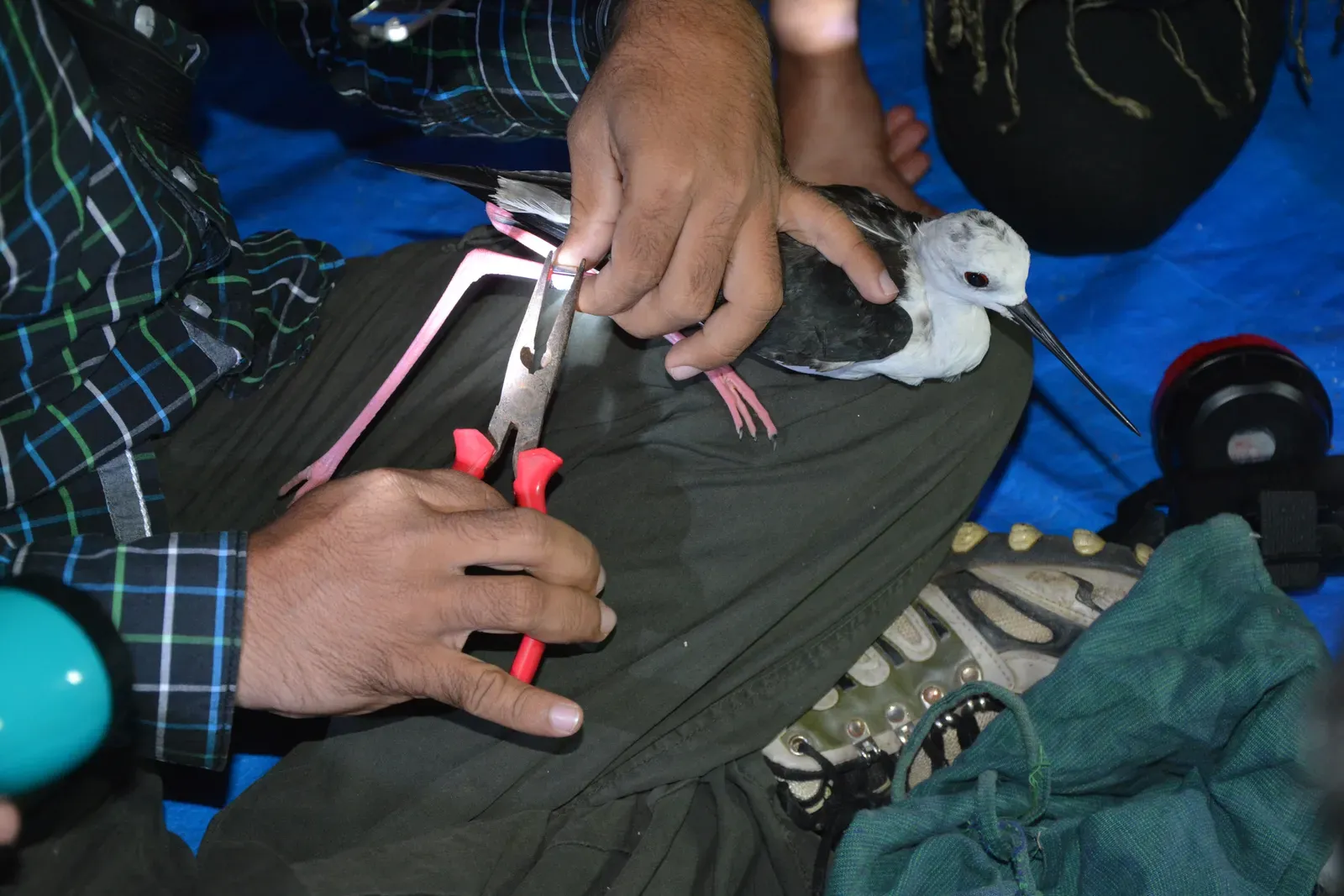
John James Audubon is one of the most celebrated names in American ornithology, and for two centuries, one of his claimed discoveries was treated as gospel. The story went that Audubon tied silver thread to Eastern Phoebe nestlings and proved they returned to the same nesting site the following spring – a foundational moment in site-fidelity research, retold in field guides and lectures for generations.
The most-cited banding story in American ornithology quietly fell apart under basic date-checking. In 2018, historian and biologist Matthew Halley actually checked the dates and found Audubon was in France that spring – nowhere near the phoebes he supposedly identified returning home. It took two centuries for anyone to run the math. Slide #10 hits even closer to modern textbooks.
#10 – The “Migration Is Just Genetics and Daylight” Explanation

For much of the 20th century, one scientist’s tidy explanation for why birds migrate was treated as essentially settled science. Credit for solving the “riddle of migration” went to William Rowan, who in 1931 published a book by that name. His framework proposed that a bird’s seasonal behavior is controlled by day length, which directly triggers the growth and shrinkage of the sex organs.
It was clean, mechanistic, and satisfying – genes and daylight explaining an entire global phenomenon. But later researchers quietly stopped treating it as the full story. Modern work shows migration timing responds to weather, food supply, and individual body condition far more than a single hormonal trigger ever could. Rowan’s model wasn’t retracted; it was simply absorbed into a messier, multi-factor picture. Next up is a technique that shaped bird counts for a generation.
#9 – The Moon-Watching Method That Quietly Got Replaced
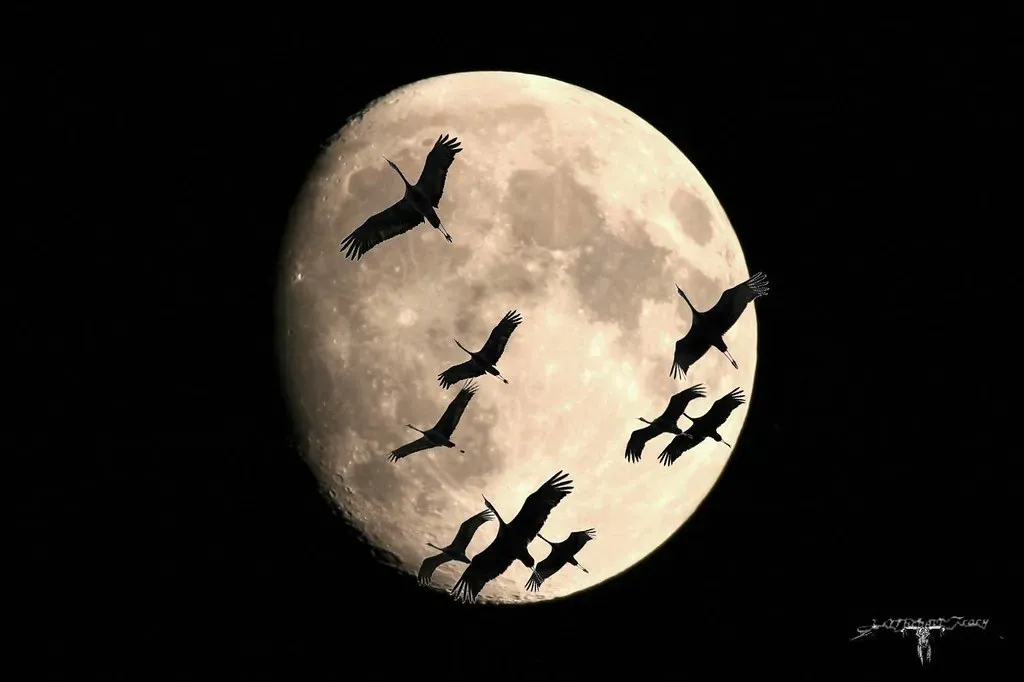
Before radar, before satellite tags, scientists actually counted migrating birds by staring at the moon through telescopes and tallying silhouettes crossing its face. This large-scale, cooperative moon-watching study was organized by George H. Lowery Jr. of Louisiana State University in the 1940s and ’60s, and his observations from the Yucatan provided genuine evidence that some birds cross the Gulf of Mexico instead of hugging a land route.
The method sounds almost quaint now, because it only captured a narrow sliver of sky and missed enormous numbers of birds flying outside the telescope’s tiny viewing cone. Once weather radar could scan entire regions continuously, moon-watching tallies quietly disappeared from serious migration-volume estimates. Nobody announced the method had failed – it just stopped appearing in papers.
Quick Compare
- Moon-watching: a telescope pointed at the moon’s disc, limited to whatever birds happened to cross that narrow visual window on a given night
- Weather radar: continuous regional coverage that began along the northern Gulf coast in the mid-1960s and could tell migration echoes apart from ordinary rain
- Net result: one method captured a sliver of the sky; the other captured whole flyways at once, which is why the older tallies quietly stopped being trusted as complete counts
Slide #8 is about scientists who got the opposite thing wrong.
#8 – When Radar Blips Were Blamed on “Ions,” Not Birds
When radar operators first noticed strange, moving blobs on their screens at night, the official explanation for years was almost comically wrong. Scientists assumed these mysterious “angels” were some kind of atmospheric or electrical phenomenon rather than living animals. At one meeting, physicists gravely explained that clouds of ions must be responsible.
Provided that the ions were wrapped in feathers.
Meeting attendee’s dry rebuttal, as later retold in radar ornithology histories
The line was meant as a joke, but it captured a real scientific error that took years to correct. Once ornithologists proved these radar signatures were flocks of migrating birds, the ionization explanation never got a formal retraction – it simply vanished from radar meteorology literature as an embarrassing footnote nobody wanted to revisit. Slide #7 is about a compass that isn’t as reliable as textbooks suggest.
#7 – The Star-Compass Certainty That Got Quietly Complicated
For decades, textbooks presented a young bird’s first migration as guided primarily by an innate, unchanging star compass – a fixed internal map calibrated at birth. Classic orientation-cage experiments from the mid-20th century onward showed hand-raised birds could orient using star patterns alone, and this became the dominant explanation for how first-time migrants find their way without ever making the trip before.
But later calibration studies complicated that clean picture. Follow-up research revealed the magnetic field actually helps set or recalibrate the star compass early in a bird’s life, rather than the stars operating as a fully independent system. The “stars alone” story didn’t get retracted outright – it just quietly stopped being the whole explanation offered in review papers, replaced by a more tangled, multi-sensory account. Slide #6 involves a bias that skewed years of tracking data.
#6 – The Tracking Bias That Silently Distorted Migration Maps
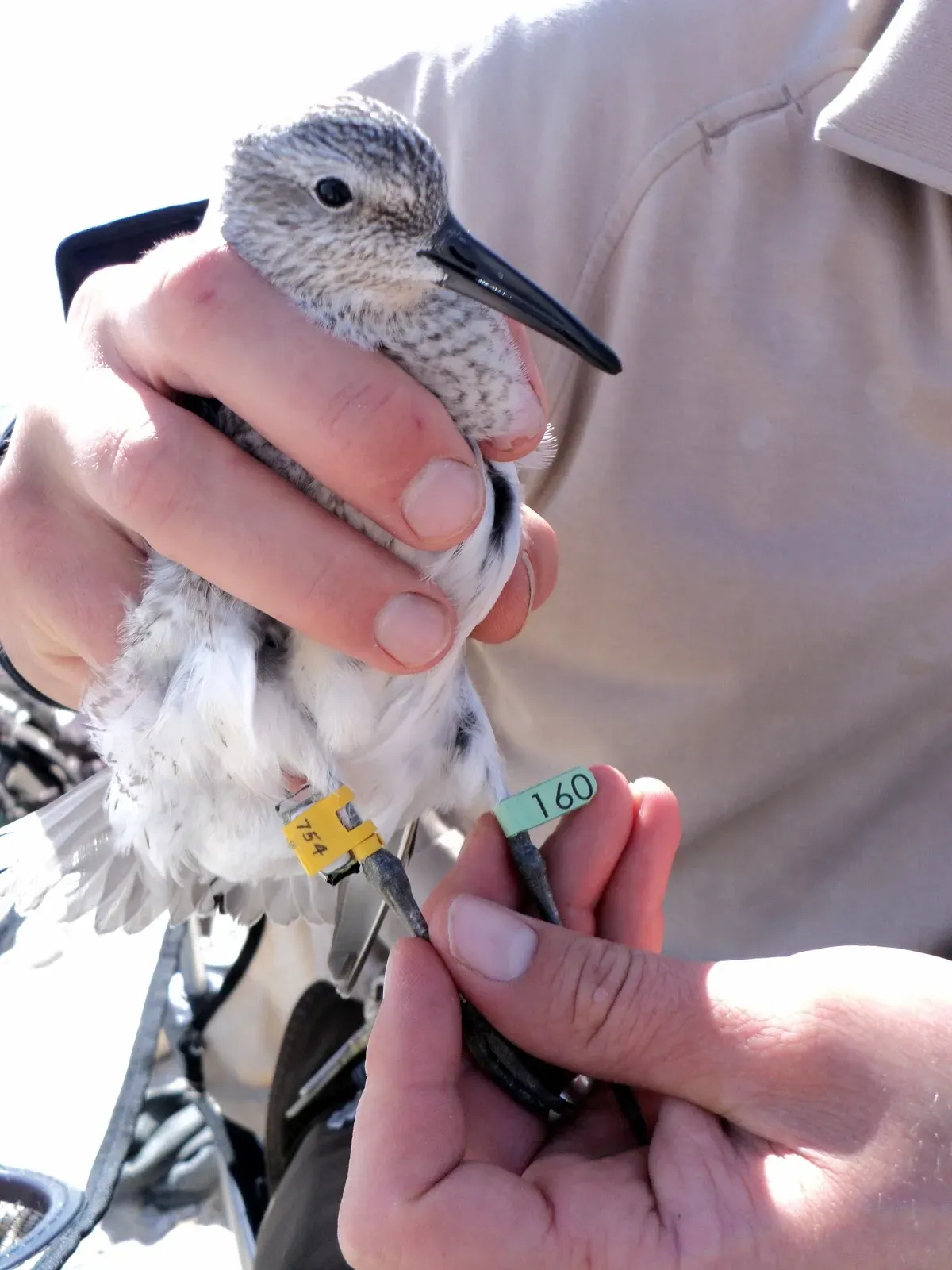
Tiny geolocator tags revolutionized bird migration science by revealing exactly where individual songbirds spent their winters – but the method carried a hidden flaw that went unaddressed for years. Researchers eventually realized that birds fitted with these tags don’t all survive to be recaptured, and that fact quietly warped the data behind the scenes.
Migratory connectivity maps built purely from recovered tags may have been systematically skewed toward whichever routes happened to be survivable, without researchers realizing it at the time. The fix wasn’t a retraction – it was a quiet methodological patch added to newer studies, while older connectivity estimates simply stopped being cited without much explanation.
Worth Knowing
- A geolocator only tells researchers anything if the bird is recaptured alive – dead ends never make it into the dataset
- That means riskier routes were quietly underrepresented in early connectivity maps, not because birds avoided them, but because fewer taggers lived to report them
- Newer studies now build survival assumptions directly into the modeling instead of treating every recovered tag as equally representative
Slide #5 goes back to a staining technique that misled multiple labs.
#5 – The Staining Method That Misled an Entire Subfield

For years, researchers hunting for magnetic sensor cells in bird tissue relied on one specific staining technique to find candidate structures, and it turned out to be far less trustworthy than anyone assumed. Perls’s Prussian blue staining was used to screen tissue for iron-rich structures as proxies for possible magnetoreceptor cells.
The problem only surfaced later: promising structural candidates in the upper beak detected with this stain turned out to be either irreproducible or sitting in ordinary non-neuronal cells. Multiple labs built published findings on a staining method that couldn’t reliably tell a sensory neuron from an ordinary cell. No single paper announced the method was flawed – it just quietly stopped being trusted as definitive evidence in newer publications. Slide #4 is about a molecule that was crowned “the answer” a little too fast.
#4 – The Molecule Crowned “The Magnetic Sense” a Bit Too Soon

A specific protein found in the eyes of migratory songbirds was hailed in major headlines as the long-sought physical basis of the avian magnetic compass – case closed, mystery solved. The excitement was understandable: the molecule showed magnetically sensitive behavior in lab conditions that matched decades of theoretical prediction about light-dependent compass mechanisms.
But “solved” turned out to be premature. Independent researchers have since pushed back on how definitively this single molecule explains real-world orientation behavior, noting that lab sensitivity doesn’t automatically prove it’s the mechanism operating inside a living, migrating bird. The framing shifted from “the magnetoreceptor has been found” in early coverage to a far more hedged “a strong candidate” in later reviews.
At a Glance
- Early coverage: “mystery solved” – the molecule presented as the magnetic sense itself
- Later reviews: quietly downgraded to “a strong candidate,” not a confirmed mechanism
- What changed: lab sensitivity to magnetic fields was never the same thing as proof it drives real-world flight behavior
- No retraction filed – just softer language, section by section, review by review
A walk-back that happened gradually, through cautious language, rather than any dramatic correction notice. Slide #3 is a straightforward editorial fix, but it hides a bigger pattern.
#3 – The Extreme-Flight Physiology Paper That Needed a Quiet Fix

A widely cited paper describing the astonishing physiological extremes of long-distance shorebird flight – organs shrinking, bodies remodeling themselves for nonstop ocean crossings – required an official correction after publication. The issue wasn’t the underlying science; it was something stranger.
In the originally published version, five lines of text unconnected to the paper had accidentally been inserted at the end of the acknowledgements section. A landmark paper on birds pushing biology to its extreme limits needed cleanup work that most readers never noticed. The correction ran quietly, without press coverage, even though the underlying study had generated enormous public attention when it first came out. Slide #2 shows the same pattern at an even larger scale.
#2 – The 50,000-Year Migration Map That Had to Be Rewritten

A landmark study reconstructing how global bird migration patterns evolved across 50,000 years of climate history made major waves in the scientific community – and then quietly needed its core visual evidence corrected. The paper, published in Nature Communications in February 2020, had errors in the legend of a key figure and several supplementary figures.
The maps readers were interpreting had their comparison direction flipped in the description – meaning areas shown as having gained species may have actually been read as having lost them, or vice versa, until the fix went through. The correction ran as a brief technical notice, easy to miss unless you were actively citing the original figures. Slide #1 is the biggest reversal on this entire list.
#1 – The Beak “Magnetic Sense Organ” That Turned Out to Be Immune Cells

For over a decade, one of the most confidently reported discoveries in bird navigation research was that migratory birds carried microscopic magnetite-based sensors embedded in their upper beaks – a physical compass built right into their face. It shaped textbook diagrams, popular science coverage, and years of follow-up research chasing the same structures.
A comprehensive anatomical follow-up in pigeons delivered the reversal: the iron-rich cells in the beak are in fact macrophages, not magnetosensitive neurons. The cells that supposedly gave birds a built-in compass were just ordinary immune cells that happened to contain iron – and iron-rich macrophages aren’t even unique to a bird’s beak in the first place.
Why It Stands Out
- It ran unchallenged in textbooks and documentaries for more than ten years before the reversal
- The “sensor cells” turned out to be macrophages – immune system cells, not neurons of any kind
- Iron-rich macrophages exist all over the body, not just the beak, undercutting the idea they were a specialized organ
- No press release marked the collapse – the field simply redirected research funding and attention toward new candidates
A finding that shaped a decade of textbook diagrams collapsed under a more careful look, and the field simply moved on to new candidates without ceremony.
The Bottom Line

Bird migration science doesn’t fail loudly. It fails quietly, through erratum notices, corrected figure legends, and papers that simply stop getting cited until nobody remembers why. The beak-compass collapse is the starkest example on this list – a decade-long consensus dismantled by discovering the “sensor cells” were just immune cells with iron in them.
Ancient theories like hibernating swallows or moon-bound birds got the same treatment centuries earlier: no formal retraction, just silence as better evidence slowly buried the old story. If there’s a lesson here, it’s not that science is broken – it’s that certainty in this field has an expiration date nobody bothers to print on the label. The textbook version you learned in school is probably already a little bit out of date, and that’s exactly how it should be.