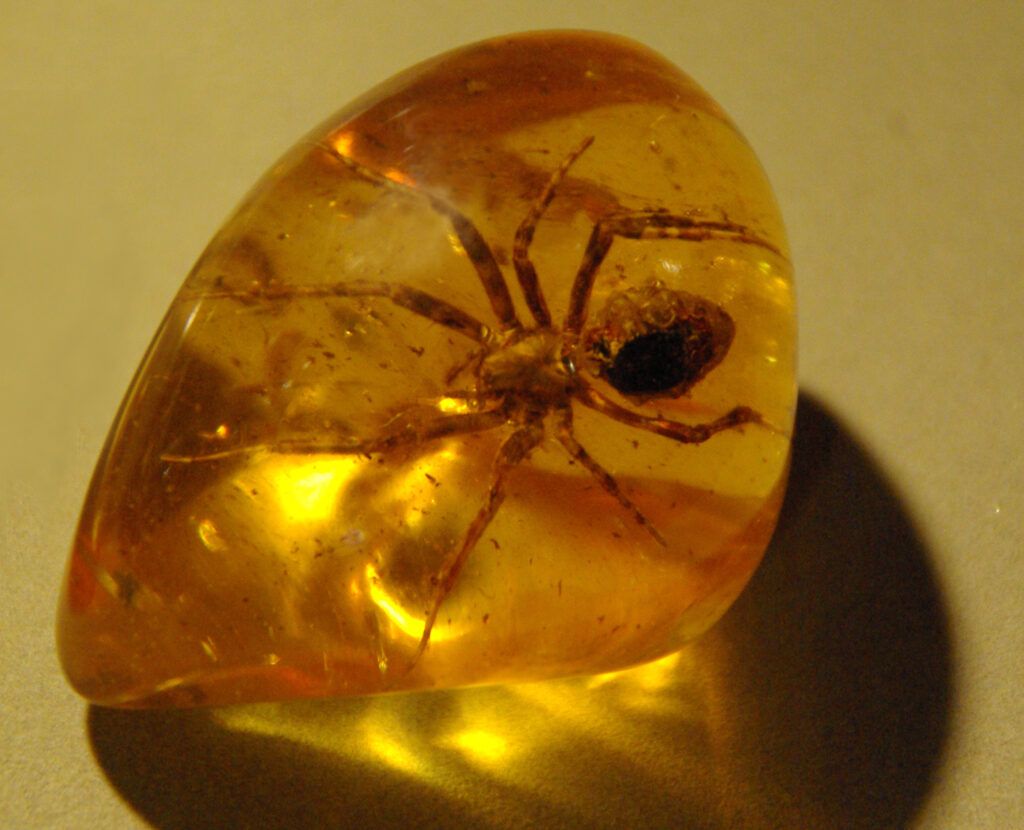
Ukraine and the Baltic region – Paleontologists recently identified a striking fossil harvestman preserved in Eocene amber, providing the first evidence of an extinct arachnid subfamily in Europe. This tiny creature, trapped in tree resin around 35 million years ago, belonged to the Ortholasmatinae, a group now absent from the continent. The discovery highlights how amber continues to reveal lost chapters of prehistoric life, reshaping understandings of ancient distributions.
First Fossil Record Shocks Researchers
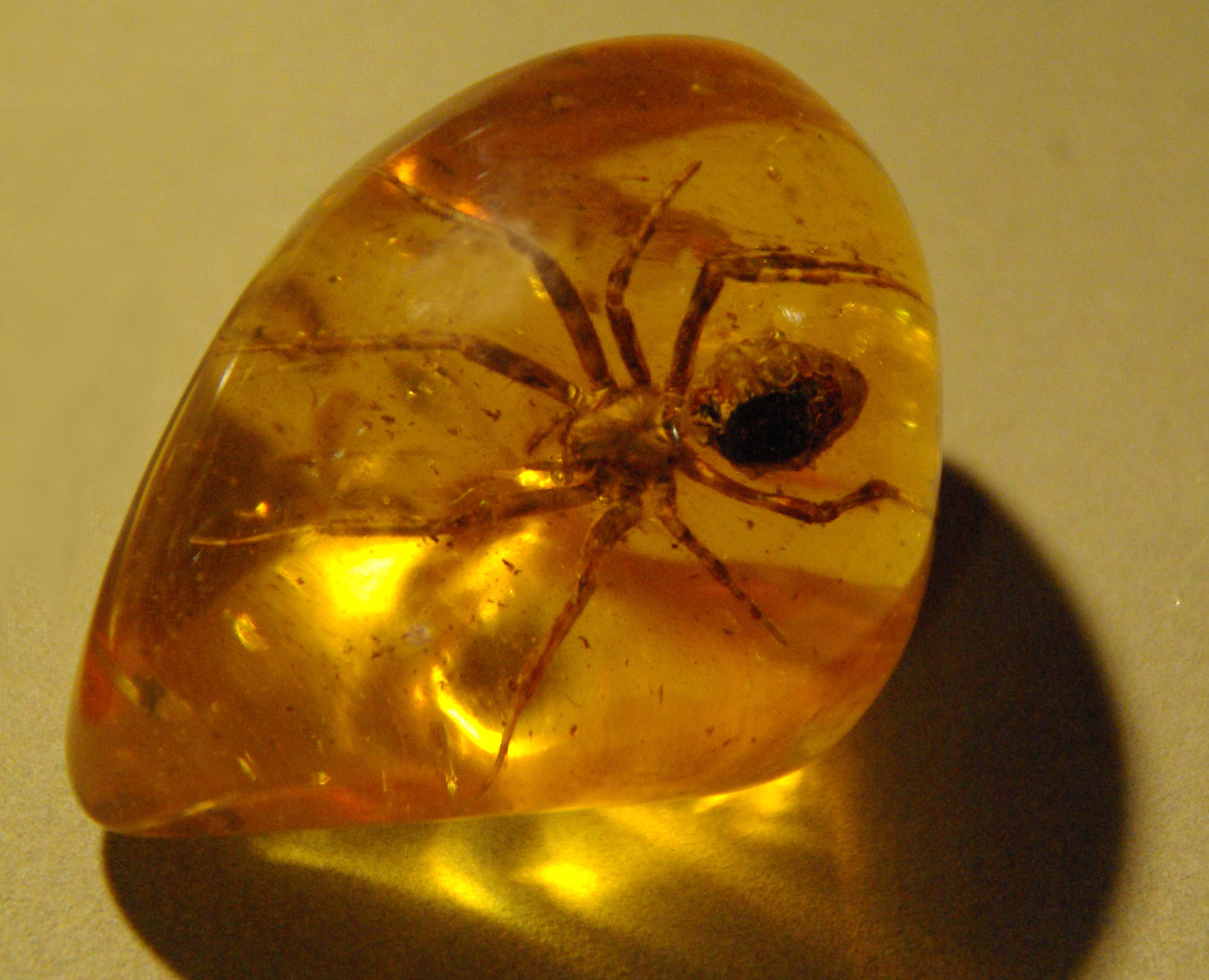
First Fossil Record Shocks Researchers (Image Credits: Upload.wikimedia.org)
Researchers uncovered the unexpected remains of Balticolasma wunderlichi, a new species within the Nemastomatidae family. A male specimen came from Baltic amber, while a likely female originated from Rovno amber in northwestern Ukraine. Both pieces, once in private collections, now reside at the Museum für Naturkunde in Berlin. This marked the initial fossil documentation of Ortholasmatinae, known today for their elaborate, sculpted forms.
The team, led by Christian Bartel of the Bavarian State Collections of Natural History and Plamen Mitov of Sofia University, published their findings in Acta Palaeontologica Polonica. Co-authors Jason Dunlop from the Museum für Naturkunde Berlin and Jörg U. Hammel contributed expertise in imaging and arachnology. The Priabonian-stage amber, dated to roughly 34-38 million years old, captured these arachnids during a warmer Eocene climate.
Synchrotron Scans Unlock 3D Anatomy
Advanced synchrotron radiation microtomography at the Helmholtz-Zentrum Hereon in Hamburg provided unprecedented views of the fossils. Scans at PETRA III used 18 keV energy to produce high-resolution images with 2.55 μm voxel sizes. Software like VGSTUDIO MAX enabled detailed 3D renderings of surface structures. These techniques revealed features obscured in traditional light microscopy.
The process exposed a network of fine ridges and filamentous weaves across the body. Mouthparts appeared intricate, with multiple appendages suited for a specialized diet. Such precision confirmed the specimens’ ortholasmatine traits and distinguished them from relatives.
Ornate Features Define the Ancient Species
Balticolasma wunderlichi measured under 3 mm in body length, with a flattened oval form. Its dorsal surface featured seven rows of tubercles that increased in size distally, overlaid by an irregular mesh of filaments. A prominent hood-like ocular tubercle projected forward, bearing digitiform processes and eye lenses.
Males displayed chelicerae with three apophyses and short pedipalps ending in thorn-like structures. Legs, especially the second pair, reached nearly 10 mm, granulated and subdivided at the tarsi. Females showed subtle differences, including wart-like ventral tubercles and a larger prosoma.
- Body ornamentation: Tubercles and filamentous mesh, lacking typical keel cells.
- Ocular hood: Arched, tuberculated, with paired processes per side.
- Leg tarsi: Formula 4-5:6:5:5-6 (male); subdivided claws.
- Ventral side: Rounded or wart-like tubercles.
- Size: Male body 2.16 mm long; female 2.40 mm.
Biogeography Rewritten by Eocene Survivor
Ortholasmatinae vanished from Europe post-Eocene, surviving only in East Asia, North, and Central America. The fossil suggested a once-broad Northern Hemisphere range, fragmented by cooling climates and habitat loss. Traits aligned closer to Asian genera like Asiolasma, hinting at an Old World origin.
“The discovery of an ortholasmatine harvestman in European amber deposits surprised us,” stated lead author Christian Bartel. “Evidently, 35 million years ago… these harvestmen were much more widely distributed across the Northern Hemisphere.” Jason Dunlop added that Baltic amber now holds 19 harvestman species, Rovno seven, with six shared – indicating similar faunas.
This find elevates amber’s role in calibrating harvestman phylogenies and underscores Eocene Europe’s rich, now-lost biodiversity. As forests yielded to steppes, hygrophilous species like this one faded, while adaptable kin endured elsewhere.
Key Takeaways
- First Ortholasmatinae fossils confirm Europe’s Eocene role in arachnid history.
- Synchrotron CT reveals micro-details, boosting paleontological precision.
- Expands known Eocene harvestmen: 19 in Baltic amber, 7 in Rovno.
These amber windows into the past remind us how dramatically distributions shift over millennia. What surprises might the next fossil hold? Tell us in the comments.