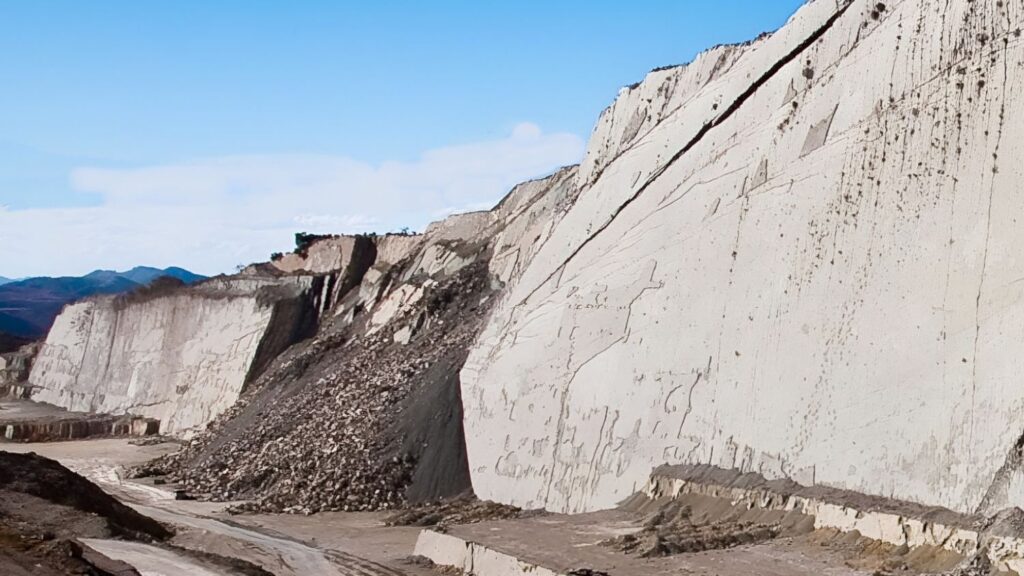
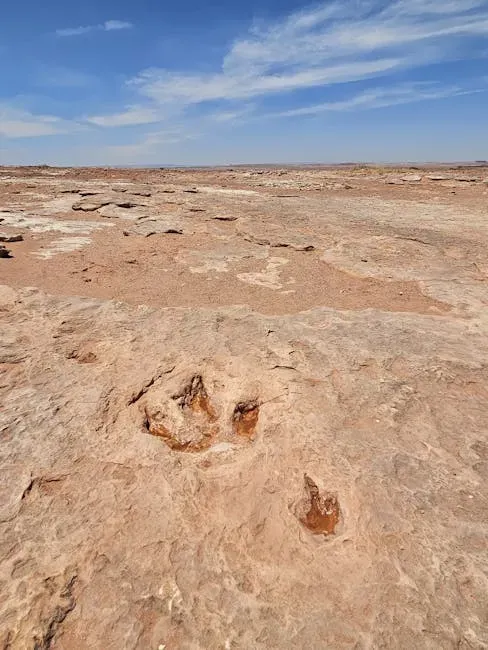
You are standing on a rock surface, and at first it just looks cracked and ordinary. Then your eyes adjust, and you suddenly realize you are literally standing inside the footprint of a dinosaur that walked there more than one hundred million years ago. That shock, that strange mix of awe and vertigo, is the doorway into one of the most intimate kinds of fossils you can ever encounter: dinosaur tracks. Unlike skeletons, which show you how an animal was built, footprints show you what it was doing, where it was going, and sometimes even who it was walking with.
Once you start to see footprints as frozen moments of movement, you stop thinking of dinosaurs as distant monsters and start seeing them as real animals with routines, habits, and problems to solve every single day. Trackways let you picture them trudging through mud after a storm, ambling along a riverbank to drink, or sprinting for their lives. You are not just staring at ancient rock; you are reading the echoes of actual journeys, step by step, preserved by pure luck and deep time.
How Dinosaur Tracks Form and Survive for Millions of Years
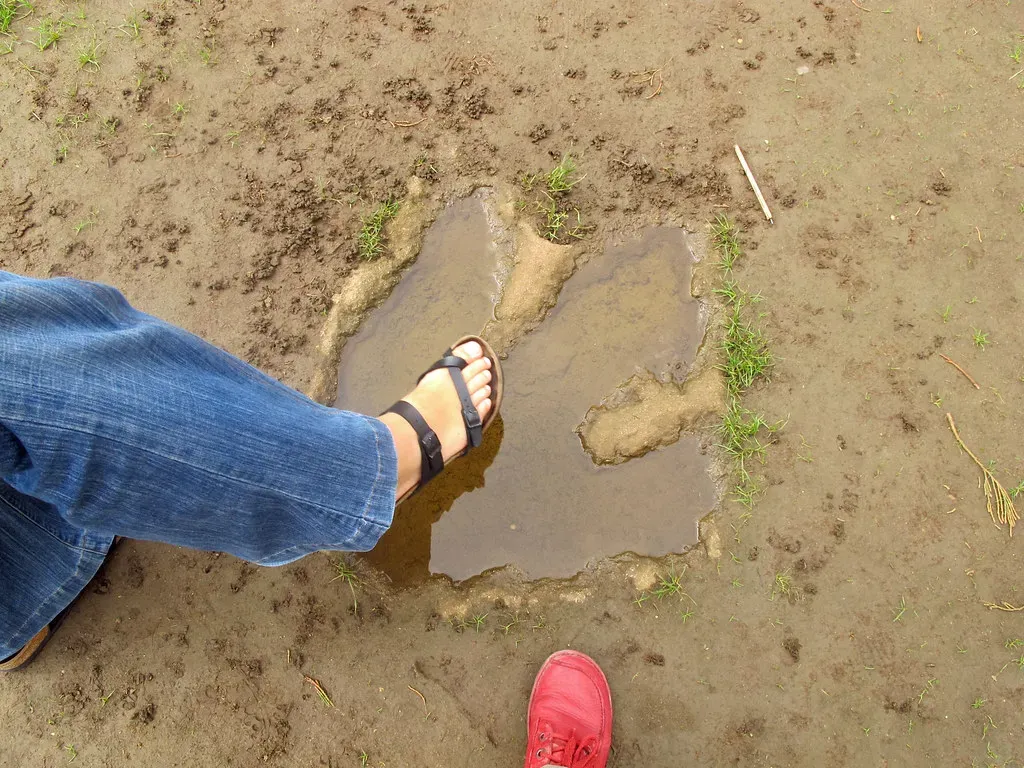
When you see a perfect dinosaur footprint, you are really looking at an accident that went spectacularly right. For a track to form, a dinosaur had to step into just the right kind of surface: often soft, wet sediment like mud, fine sand, or volcanic ash that could mold around the foot without collapsing. Then that print needed to dry or firm up enough to hold its shape before the next wave, flood, or gust of wind erased it. Finally, new layers of sediment had to bury it quickly, sealing it off from weather and scavengers and turning it into stone over millions of years.
What you actually see today can be the original footprint or a natural cast formed when sediment filled the track and hardened. That means you are sometimes looking at the “negative” or “positive” of the original step, like a three-dimensional photograph in reverse. You also rarely see just a single print; whole trackways can be preserved across broad rock surfaces, giving you a strip of ancient ground to walk along. Every track you see has survived erosion, earthquakes, and shifting continents, so by the time you stand in it, you are dealing with the stubborn survivors of an unimaginably long geological lottery.
Reading Speed, Size, and Stride from Ancient Steps
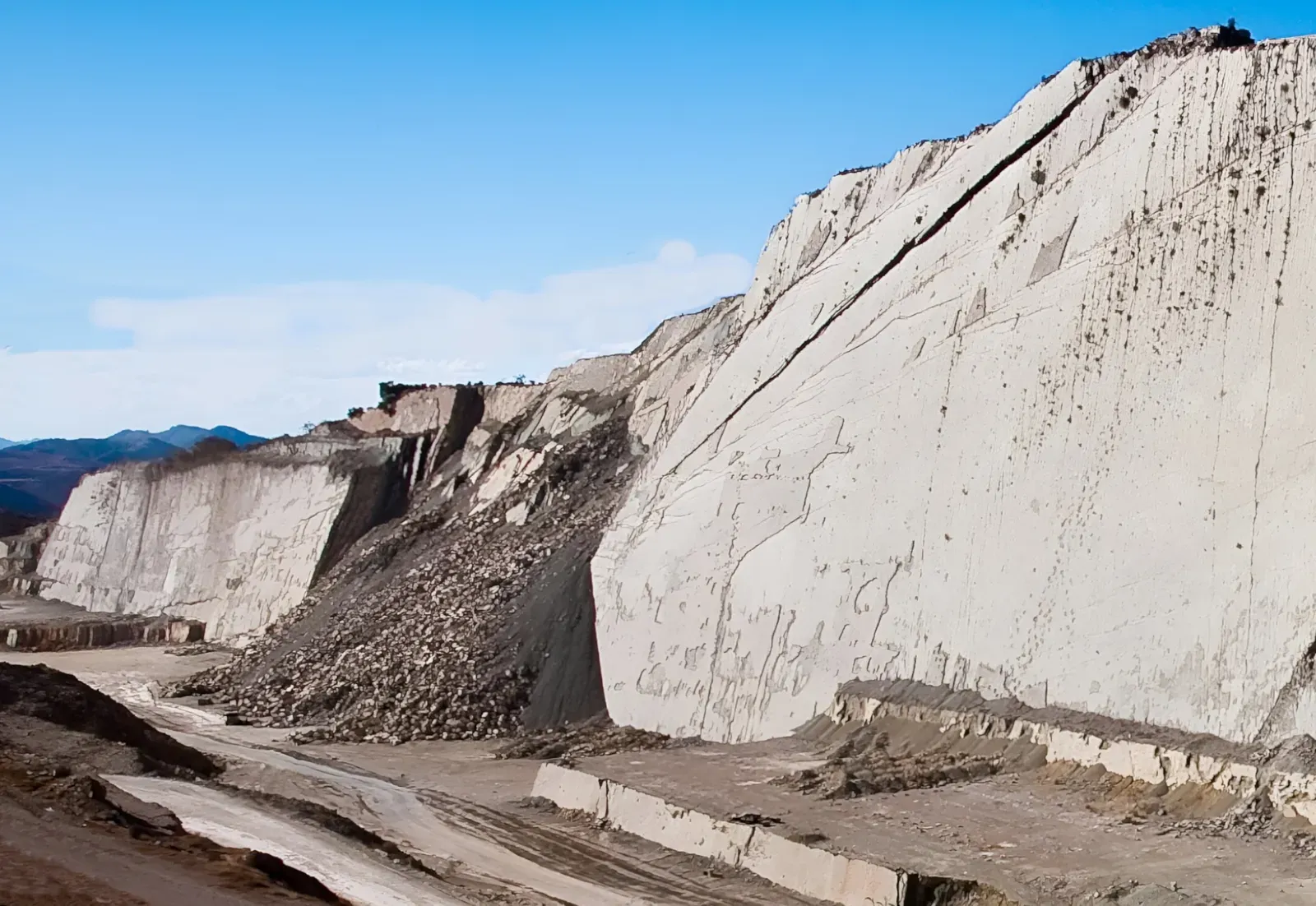
Once you know what to look for, you can start treating a dinosaur trackway like a crime scene you are calmly reconstructing. You can estimate the hip height from the footprint size, then use the distance between each step to get a rough idea of walking or running speed. Longer strides with deeper impressions can hint at a faster pace, while short, evenly spaced prints usually suggest an animal that was just strolling along. If the toes are splayed or the heels dug deep, you might be seeing a moment when the animal turned sharply or pushed off in a hurry.
What makes this powerful is that you are not guessing in a void; you are comparing these tracks to living animals. You already know that if a bird or a dog speeds up, its steps lengthen and its impressions change, so you use those patterns to interpret dinosaur motion too. Of course, you have to stay honest about what you can and cannot know: the rock will not tell you exactly how many kilometers per hour a specific dinosaur reached, but it can clearly show you if it was walking calmly, trotting with purpose, or sprinting hard enough to leave a trail that still looks tense and energetic millions of years later.
Herds, Families, and Social Lives Written in Stone
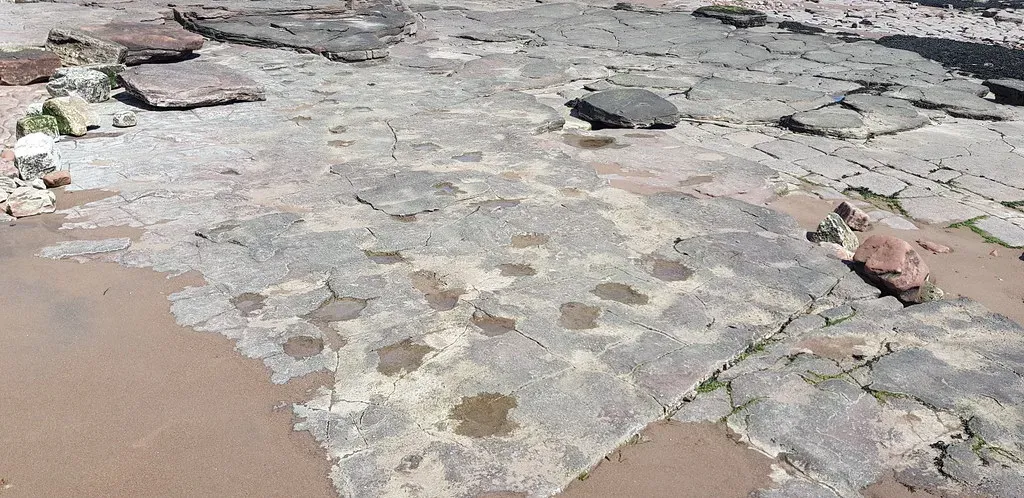
If you only ever saw isolated dinosaur bones, you might imagine them as mostly solitary, looming figures wandering alone. Footprints break that picture wide open. In some tracksites, you see multiple animals moving together in the same direction, at similar speeds, creating parallel lines of prints that look uncannily like group travel. You might find smaller tracks aligned with larger ones, hinting that juveniles walked alongside adults, matching their pace as best they could across the ancient landscape.
Now and then, you can even see interactions frozen in place: a predator’s trackway crossing those of herbivores, or parallel carnivore prints that suggest a pair or small group moving side by side. You are not watching a scripted movie; you are catching scattered frames of real behavior that happened once and never again. But even those fragments are enough to show you that many dinosaurs did not just drift through their world alone. They formed herds, followed leaders, watched over young, and adjusted their paths according to each other’s steps – just as animals do today.
Daily Routines: Feeding, Drinking, and Wandering the Ancient Landscape
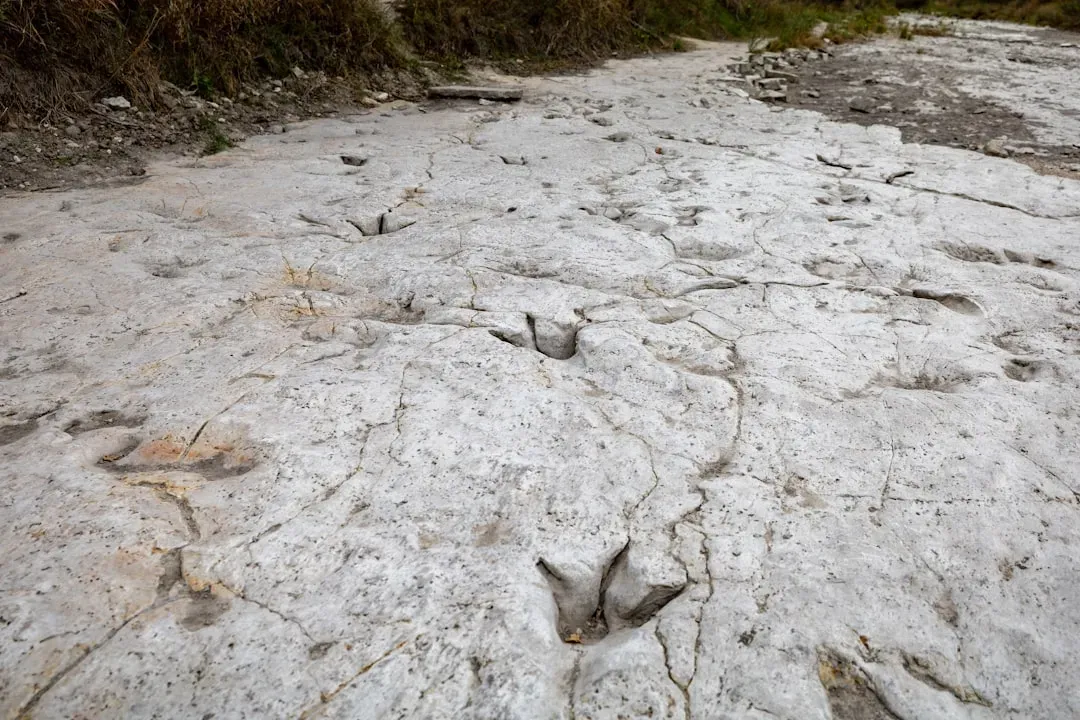
When you follow a trackway across exposed rock, you are really shadowing a dinosaur’s day for a few seconds of its life. Long, meandering paths near lakes, rivers, or ancient shorelines suggest animals moving between feeding and drinking areas, much like modern wildebeest, elephants, or waterfowl. You might see repeated traffic along the same general route, worn into the sediment by countless feet, implying a sort of dinosaur “path” that got reused day after day, season after season. These are not just random footsteps; they are recurring habits stamped into the ground.
On some surfaces, different species’ tracks overlap and weave around each other, painting a busy scene you can almost hear if you let your imagination stretch a bit: splashing in shallow water, mud sucking at heavy feet, smaller animals darting around larger ones. You see signs of hesitation or change of direction, as if the animal discovered something unexpected and veered off. In that way, tracks pull you out of the abstract idea of “prehistoric time” and drop you into actual moments when a creature paused, turned, or trudged home across a landscape it knew very well.
Epic Migrations and Long-Distance Journeys Across Ancient Worlds
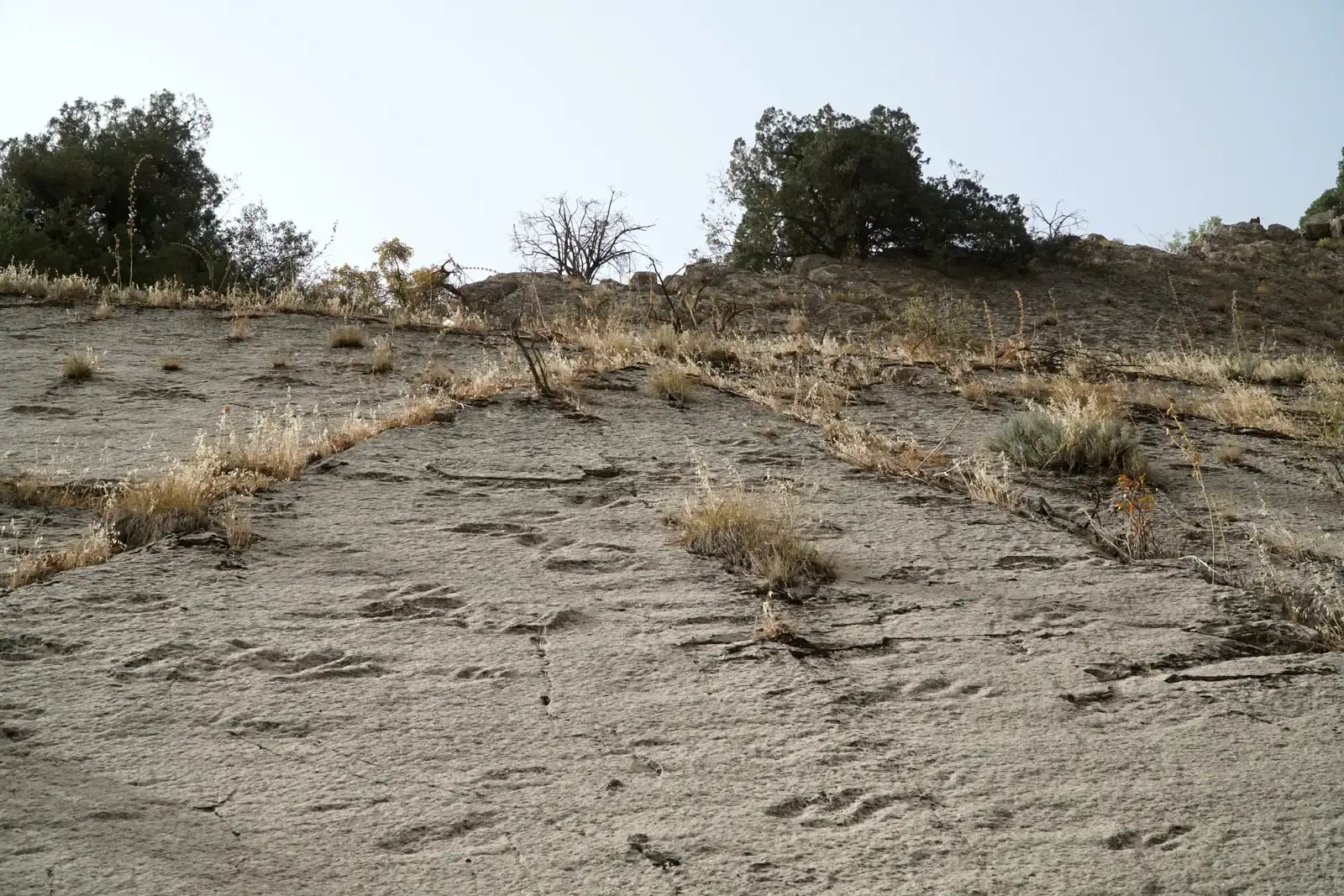
Sometimes, you do not just find a few meters of trackway; you find surfaces that preserve step after step stretching in the same direction for staggering distances. When many such surfaces line up in the rock record, you start to suspect that you are not just seeing casual wandering but genuine long-distance movement. You already know that many large animals today, from caribou to cranes, migrate seasonally to follow food and climate, and it is reasonable to see similar patterns hidden in dinosaur footprints that repeat across vast areas and old shorelines.
To stay careful, you recognize that the rock record is patchy and incomplete; you almost never get a full uninterrupted migration route mapped out like a road. But you can see hints of regular long-distance travel when you find large herbivore tracks trending in similar directions along what used to be coastal plains, river corridors, or desert margins. Those consistent orientations and groupings suggest that some dinosaurs may have trekked across entire regions following floods, vegetation, or breeding grounds, turning parts of the ancient world into busy, living highways of bone, muscle, and mud-caked feet.
Predator–Prey Encounters Frozen in Footprints
Every once in a while, you stumble across trackways that feel almost uncomfortably dramatic. You might see the broad, three-toed prints of a large plant-eater with regular spacing suddenly changing pattern – steps get shorter, angles shift, impressions deepen. Nearby, you find the clawed tracks of a predator converging on the same spot. It is tempting to imagine a cinematic chase, and you have to resist the urge to over-interpret, but those shifting patterns still tell you something real: an animal changed its movement in response to something in its environment, and that response was forceful enough to imprint in the mud.
You can also see subtler forms of tension. Prey tracks might cluster around former waterholes, with predator tracks lingering on the outskirts, mirroring modern lions near watering spots used by antelope and zebras. Overlapping trails can reveal where animals crossed the same area at different times, building a kind of layered history of risk and opportunity. Even if you cannot always say for sure that a specific chase took place, the juxtapositions of predator and prey footprints give you a strong, visceral glimpse of a world where every drink, every crossing, and every open stretch of floodplain carried both promise and danger.
What You Can and Cannot Know from Ancient Tracks
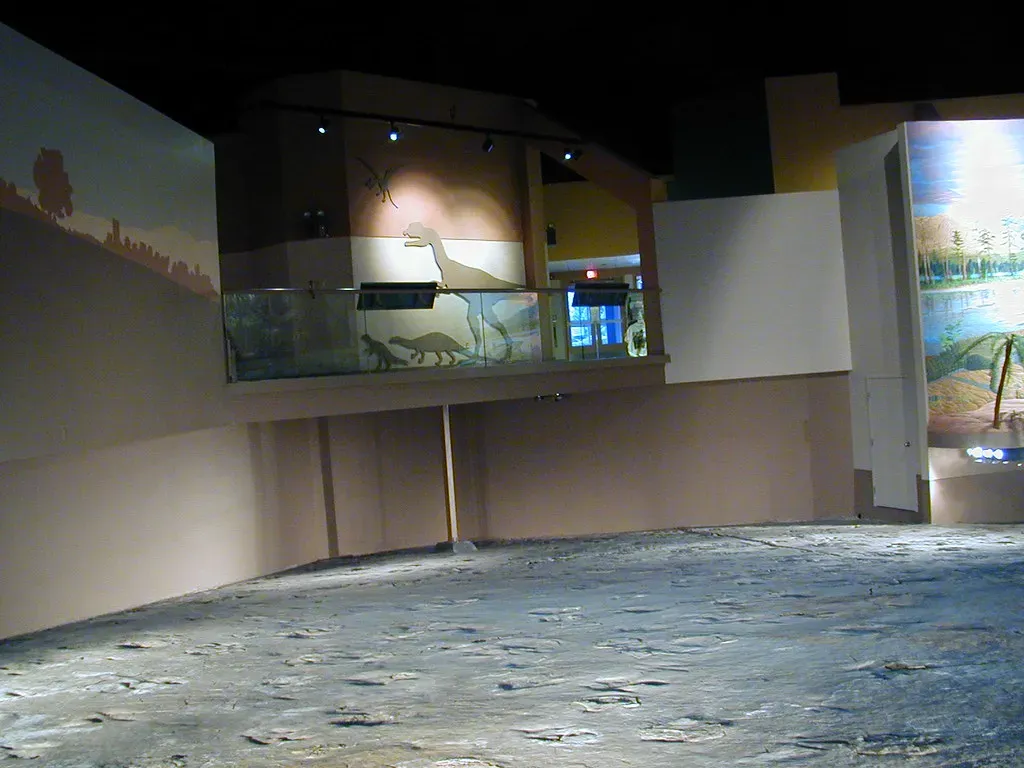
It is easy to get carried away when you look at dinosaur footprints, because they feel so personal and immediate. That is exactly why you have to walk a careful line between imagination and evidence. Tracks tell you about motion, size, group patterns, and sometimes even the condition of the ground at the time, but they do not give you every detail. You cannot reliably name the exact species from most footprints alone, because different animals with similar feet can leave nearly identical prints. You also cannot see color, vocalizations, or complex social rituals directly; those remain in the realm where you compare dinosaurs with living relatives like birds and crocodiles and then speak in cautious, conditional terms.
Still, that does not make tracks any less valuable; it just forces you to treat them honestly. Instead of declaring that a certain dinosaur was definitely migrating or absolutely hunting in packs, you talk about patterns and likelihoods. You combine tracks with bones, ancient climate data, and modern animal behavior to build the most reasonable picture you can without crossing the line into invention. In a way, that humility makes the story richer. You are piecing together a vast, half-erased mural from the places where actual feet pressed into actual mud, letting what is preserved guide you instead of bending it to fit a tidy narrative.
When you step back, dinosaur footprints change how you think about deep time. They drag the age of dinosaurs out of the realm of static museum skeletons and into a moving, noisy, messy world full of routines and surprises. You see not just creatures, but commuters, parents, hunters, and wanderers, all leaving trails across landscapes that have long since vanished. Their bones tell you what they were made of. Their footprints tell you where they went, how they lived, and sometimes how they died. And once you have followed a trackway with your own eyes, you cannot help but feel that the ground beneath your feet is still storing untold journeys, just waiting for the right erosion and the right pair of curious eyes – maybe yours – to reveal them. Did you expect so much life to be hiding in a single step?