If you could stand on the Great Plains twelve or fifteen thousand years ago, you would not recognize the place. Instead of highways and ranches, you would be staring at herds of mammoths, mastodons, ancient bison, camels, and horses moving across icy grasslands. For a long time, you were told a simple story: early people in the Americas were mostly small‑game foragers who only occasionally tackled these giants. Now, as new sites and new techniques pile up, that story is cracking wide open.
Across North America, archaeologists are pulling mammoth ribs from the ground with weapon tips still lodged in them, scraping blood residues off ancient spear points, and even reading diets from the bones of Ice Age children. When you put all of this together, a picture emerges that is both more dangerous and more sophisticated than what you might expect. Ancient Americans were not just surviving around megafauna; in many places, they were actively hunting them, sometimes with a focus and intensity that will probably surprise you.
You Are Looking at Kill Sites, Not Just Fossil Graveyards
When you hear about woolly mammoth bones being found, it is easy to imagine random carcasses that just happened to fossilize. But once you start looking closely, you notice patterns that do not fit simple natural deaths, and this is where you, as a critical observer, begin to see deliberate hunting. At several famous sites in the American West – places like Dent in Colorado or mammoth kill localities in Arizona and New Mexico – you see clusters of mammoth remains lying in association with distinctive stone spear points from the Clovis culture. Those fluted spear points do not just happen to be nearby; they are mixed in with bones that often show signs of butchery, such as cut marks where tendons were sliced or long bones deliberately broken to reach the marrow inside. ([en.wikipedia.org](https://en.wikipedia.org/wiki/Dent_site?utm_source=openai))
When you step back and map out where those bones lie, you are not looking at some scattered, random mess. You are looking at repeated patterns of disarticulation, heaps of ribs and limb bones in ways that line up with how modern hunters butcher large animals. In some cases, the bones of camel, bison, or tapir lie right alongside mammoth parts, with the same Clovis tools lying in the same sediment layers, showing you that these people were not stumbling into carcasses – they were systematically processing kills. The crucial point for you is that archaeologists now treat these sites as hunting stations and meat‑processing grounds, not as accidental bone beds. ([en.wikipedia.org](https://en.wikipedia.org/wiki/Lehner_Mammoth-Kill_Site?utm_source=openai))
You See Weapon Tips Still Stuck in the Bones of Giants
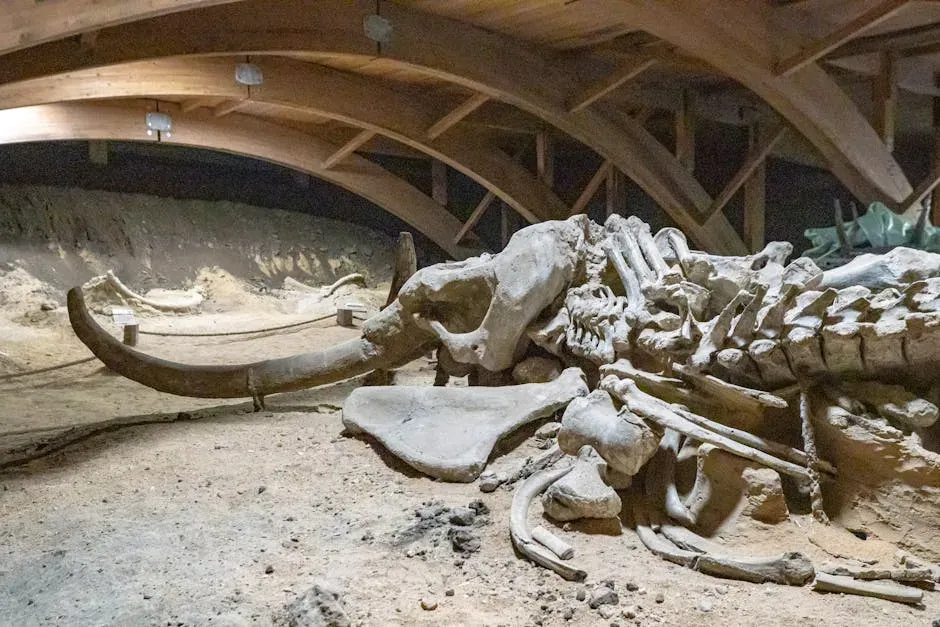
Every hunter knows that the cleanest proof of a kill is a weapon still lodged in the animal, and you can literally see that in the archaeological record. At the Manis Mastodon site in Washington State, excavators uncovered a mastodon rib with a fragment of a sharpened bone weapon embedded right in it. When researchers analyzed that fragment decades later with modern techniques, they confirmed it was made from the bone of another mastodon and shaped as a projectile point. For you, that is smoking‑gun evidence that humans were not just scavenging; they were actively driving weapons into living megafauna around thirteen thousand eight hundred years ago, before the classic Clovis stone tool culture even appears. ([en.wikipedia.org](https://en.wikipedia.org/wiki/Manis_Mastodon_site?utm_source=openai))
That one pierced rib is not alone. At underwater and river‑valley sites, such as Page‑Ladson in Florida, tusks and bones from mastodons show clear human modifications – flaking, scraping, or chopping marks – that you only get when people are cutting or prying on fresh tissue. When you combine that with radiocarbon dates, you land in a time window a thousand years or more before traditional Clovis hunters spread across the continent. So as you follow the evidence, you watch the old idea – humans arrive late and only briefly overlap with big game – getting replaced by a longer, earlier history of people hunting mastodons and mammoths in multiple regions. ([nationalgeographic.com](https://www.nationalgeographic.com/history/article/160513-first-americans-clovis-mastodon-florida-page-ladson?utm_source=openai))
You Can Now Read Ancient Diets and See Mammoth on the Menu
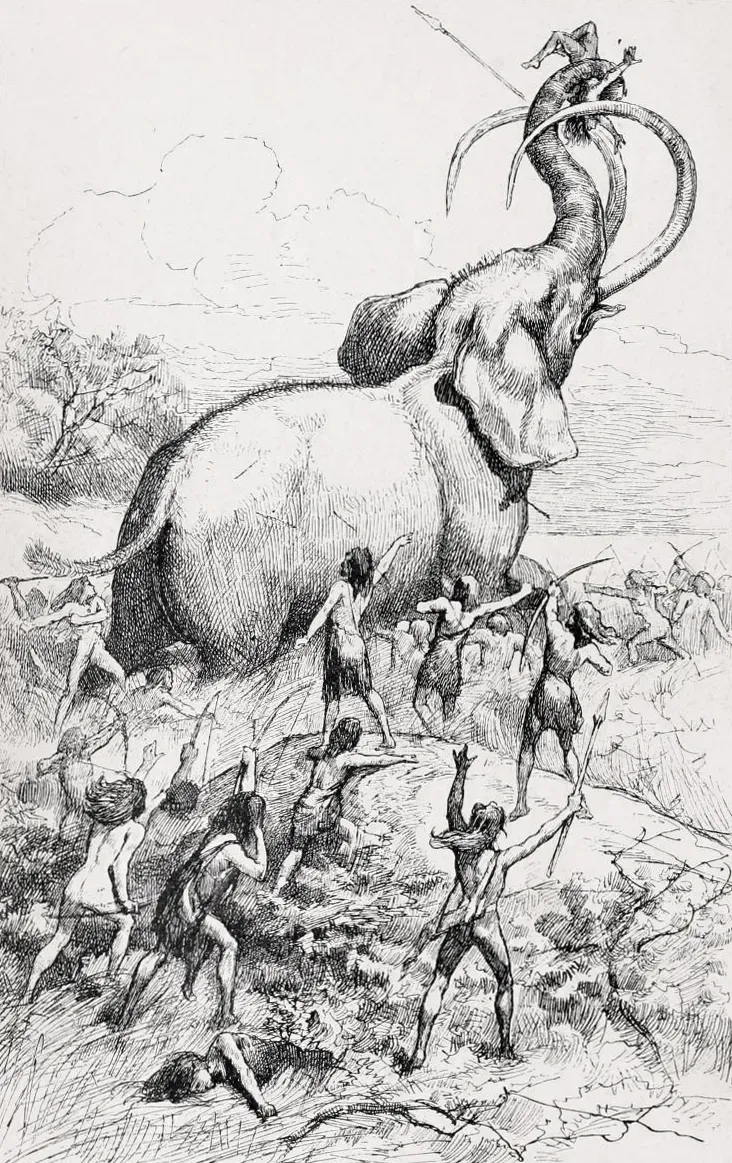
The evidence is no longer just about where bones and tools lie in the dirt; it is also literally locked inside the bones and teeth of the people themselves. Using isotope analysis – the subtle chemical signatures preserved in ancient skeletons – researchers have reconstructed what Ice Age Americans were actually eating. One striking example comes from the remains of a Clovis‑era infant in the Western United States. When you follow the chemistry of that child’s bones, you see that the mother’s diet, which supplied all the baby’s nutrients, was dominated by large grazers, especially Columbian mammoth, with smaller but still significant contributions from elk and bison or extinct camels. In other words, if you were part of that community, mammoth was not an occasional treat; it was a staple meat source. ([sciencedaily.com](https://www.sciencedaily.com/releases/2024/12/241204145021.htm?utm_source=openai))
That result hits directly at older arguments you might have heard that Clovis people were generalized foragers who mainly survived on smaller animals and plants. Instead, in at least some Western Clovis groups, you are looking at highly focused megafauna specialists whose daily lives, social organization, and risk calculations revolved around hunting immense animals. This does not mean every early American group behaved that way – regional variation clearly existed – but it does mean you can no longer comfortably picture early Americans as mostly rabbit‑and‑berry gatherers who only occasionally poked at a mammoth. The chemistry in their bones flatly contradicts that easy image.
You Watch Blood and Microwear Turn Stone Tools into Crime‑Scene Evidence
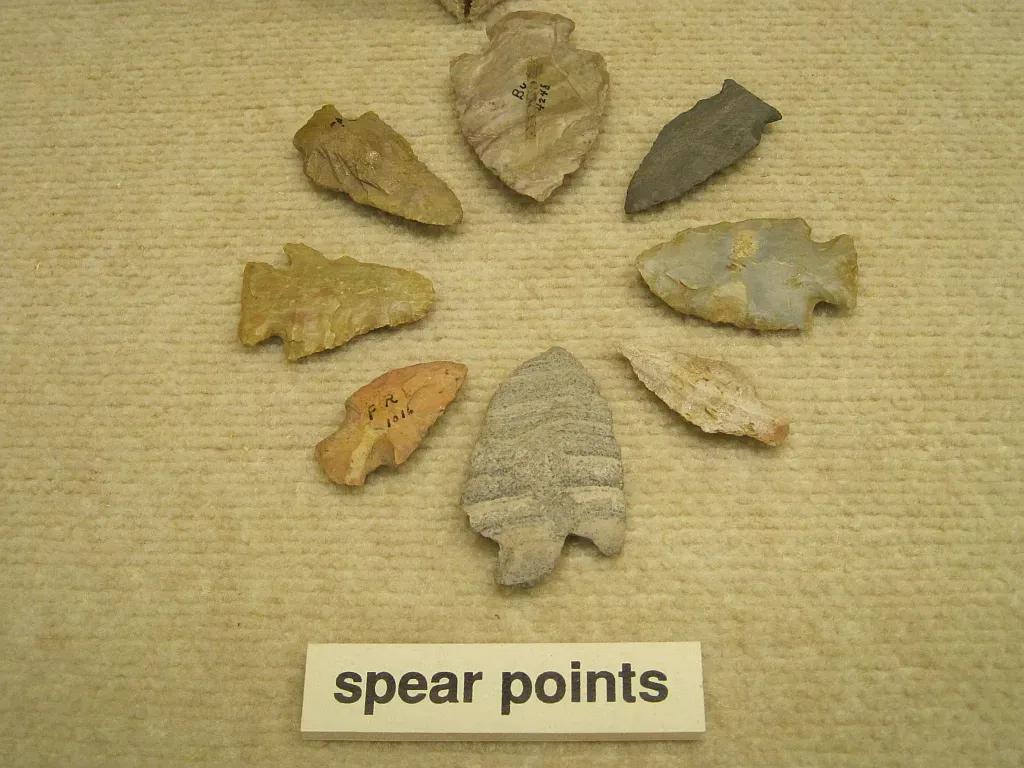
One of the quietly revolutionary changes you get to see in modern archaeology is the move from “this looks like a hunting point” to “this tool once pierced a very specific animal.” Researchers now use immunological tests and microscopic wear analysis to identify species‑specific blood residues and patterns of use on stone points. In the Carolinas, for example, scientists tested Paleoamerican spear points and found traces of proteins from extinct megafauna, including elephant‑like proboscideans, alongside evidence from deer, canids, and other animals. That means when you hold one of these spear points in your mind, you are not just guessing what it might have been used for – you have laboratory‑backed confirmation that it once carried the blood of mammoth or mastodon. ([nature.com](https://www.nature.com/articles/s41598-023-36617-z?utm_source=openai))
Under the microscope, edges and tips tell you stories too. Repetitive thrusting into thick hides leaves different microscopic scars than cutting plant fibers or scraping hides. When archaeologists match those wear patterns to experimental tools used on large carcasses, you get another layer of evidence that people were repeatedly driving these weapons into heavy, dangerous animals. For you, the cumulative effect is powerful: multiple independent methods – blood residue, microwear, protein analysis – are all converging on the same conclusion that early Americans were not shy about taking on giants.
You See Hunting Tactics Evolving Beyond the Stereotype of Thrown Spears
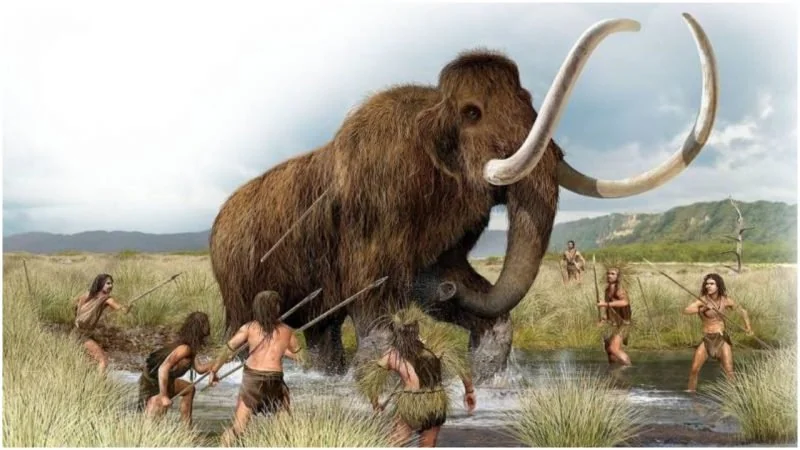
Popular illustrations love to show hunters hurling spears at charging mammoths, but the more you look at the technology and experimental reconstructions, the more varied and inventive those strategies appear. Recent work on Clovis spear points argues that some of these weapons were probably planted in the ground like pikes, with hunters bracing the butt end while a massive animal was driven toward the tip. In that setup, body weight and momentum of the animal itself multiply the force you could ever generate with a throw. When you picture yourself on that landscape, you are now imagining prepared kill zones, not just panicked last‑minute spear throws. ([news.berkeley.edu](https://news.berkeley.edu/2024/08/21/to-kill-mammoths-in-the-ice-age-people-used-planted-pikes-not-throwing-spears-researchers-say/?utm_source=openai))
Those planted pikes, combined with large, fluted points designed to detach and cause devastating internal damage, start to look to you like early engineering solutions to a brutal problem: how do you reliably bring down something that dwarfs you in size and power? Archaeologists have also proposed drives toward bogs, ravines, or soft ground where heavy animals might bog down, making them more vulnerable. You can think of these hunts more like coordinated military ambushes than simple one‑on‑one clashes – requiring planning, cooperation, and nerves of steel from everyone involved, including those who had to finish off a wounded, thrashing animal at close range.
You Trace the Story Back Before Clovis, into an Even Deeper Past
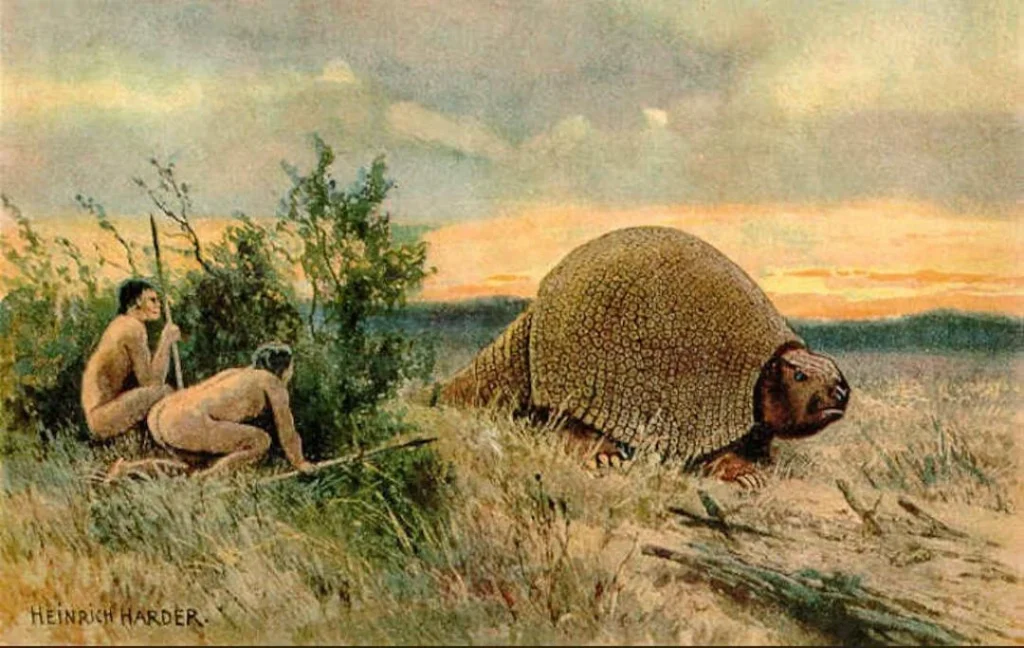
For most of the twentieth century, you were taught that the story of big game hunting in the Americas basically starts with Clovis people around thirteen thousand years ago. That timeline is now crumbling. Sites like Manis in Washington, Page‑Ladson in Florida, and other pre‑Clovis locations in Alaska and the interior West are pushing human presence, and likely megafauna hunting, back thousands of years earlier. At some Alaskan sites, you find ivory tools, mammoth tusk working areas, and evidence of people making both stone and bone weapons around fourteen thousand years ago, hinting that the skills needed to tackle big animals may have been brought over from northeast Asia rather than invented from scratch in the Americas. ([livescience.com](https://www.livescience.com/archaeology/americas/14-000-year-old-ivory-tools-found-in-alaska-hint-at-how-clovis-ancestors-first-arrived-in-the-new-world?utm_source=openai))
More controversially, you now see research arguing for even older pre‑Clovis mammoth sites, some perhaps dating well beyond twenty thousand years ago, where fractured and flaked bones might represent very early attempts to butcher or use megafauna remains. Not all of these claims will survive scrutiny – some will turn out to be natural breakage or misinterpretations – but you are watching a live debate unfold. As you follow the literature, you can see a clear trend: the further back you look, the more plausible it becomes that people were interacting with, and in some cases hunting, American megafauna far longer than the old, neat Clovis‑first model ever allowed. ([tandfonline.com](https://www.tandfonline.com/doi/abs/10.1080/20555563.2025.2572916?utm_source=openai))
You Stand in the Middle of the Extinction Debate – and Feel Its Complexity
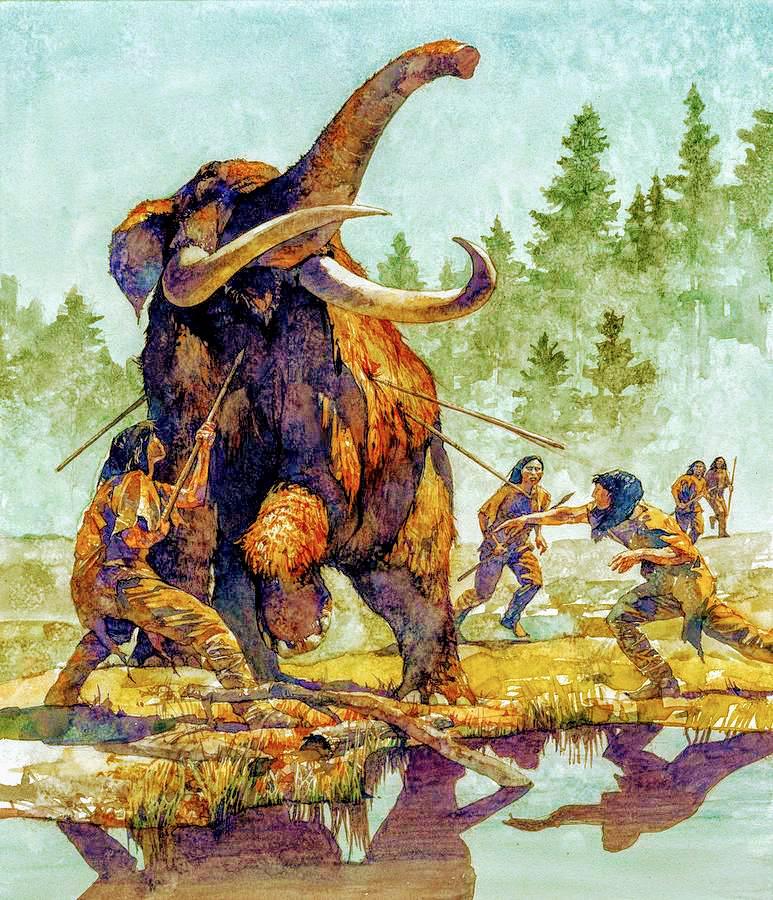
Once you accept that ancient Americans hunted megafauna, the next question you naturally ask is uncomfortable: did those hunts help drive mammoths, mastodons, and other giants to extinction? Some researchers argue that highly skilled hunters, armed with advanced weapons and coordinated tactics, arrived in environments where large animals were already stressed by climate swings at the end of the last Ice Age. In that view, if you had been part of a mammoth‑hunting group, your repeated targeting of big, slow‑reproducing animals could have pushed already vulnerable populations over the edge. Isotope evidence showing mammoth as a major food source for some groups adds weight to that concern. ([sciencedaily.com](https://www.sciencedaily.com/releases/2024/12/241204145021.htm?utm_source=openai))
On the other hand, when you look closely at the fossil record, you see that clear, indisputable kill sites are still relatively rare compared to the vast number of megafaunal bones with no human association at all. Some scientists emphasize climate change, habitat shifts, and genetic problems in small, isolated populations as major drivers of extinction, with hunting acting more as an added pressure than a single cause. When you stand in the middle of this debate, the honest position you are left with is cautious: humans clearly hunted megafauna, and in some regions relied heavily on them, but the exact degree to which your distant predecessors contributed to their extinction remains an open, active question rather than a solved mystery.
What all of this leaves you with is a far richer, messier, and more human picture of early life in the Americas. Instead of faceless figures trudging across a blank Ice Age landscape, you can now imagine families planning hunts, crafting weapons out of tusk and stone, and taking enormous risks for the meat and materials that kept them alive. As new sites emerge and new techniques sharpen what you can see in old bones, you are likely to watch this story become even more detailed – and more unsettling. When you think about those vanished herds and the people who walked among them, which surprises you more: that the giants are gone, or that your species managed to hunt them at all?