Southern China – Fossils unearthed from Paleocene basins in this region offer fresh clues to mammalian recovery after the Cretaceous-Paleogene mass extinction 66 million years ago. Researchers examined teeth from 37 endemic species across three key sites, revealing that these early placentals prioritized body size increases before honing their dental tools for efficient feeding. The study underscores a global pattern amid Asia’s isolation, positioning the continent as a vital cradle for modern mammal lineages.
A Knowledge Gap in Asia’s Mammal Story
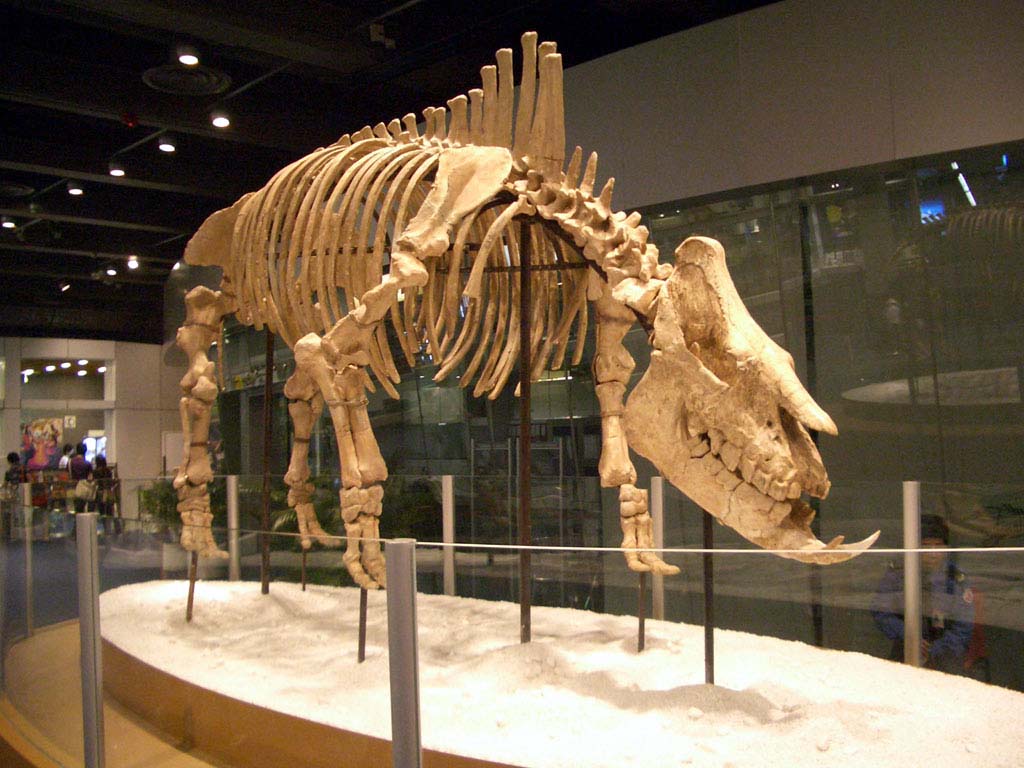
A Knowledge Gap in Asia’s Mammal Story (Image Credits: Upload.wikimedia.org)
North America accounts for about 80 percent of terrestrial fossil sections documenting post-extinction mammal recovery, leaving Asia severely underrepresented with just 3 percent of sites. Most Asian finds featured species unique to the region, complicating comparisons. Scientists turned to well-preserved assemblages from the Nanxiong, Qianshan, and Chijiang Basins in south China, which span the early, middle, and late Paleocene.
These locales captured tropical conditions with fluctuating humidity and temperature. Paleoclimate data from pollen and isotopes showed early fern-dominated forests giving way to drought-tolerant plants later on. The analysis covered 200 teeth from 48 specimens, focusing on archaic groups like Pantodonta, Arctostylopida, and Anagalida, which dominated the fauna.
Size Took the Lead in Early Recovery
Tooth size, a reliable proxy for body size, displayed high mean values and disparity right from the early Paleocene. Specimens included dog-sized pantodonts that dwarfed their Cretaceous predecessors, which resembled shrews or gophers. Statistical tests confirmed this disparity saturated quickly, with significant drops in variance from early to middle Paleocene stages.
This initial “brawn” phase allowed survivors to fill vacant niches amid greenhouse warmth and ecological upheaval. Unlike North America, where recovery emphasized rapid taxonomic turnover, Asian mammals showed prolonged stability in size metrics before further specialization.
Dental Traits Mirrored Environmental Swings
Dental topography metrics revealed shifts aligned with climate. In the middle Paleocene, spikes in tooth height and sharpness coincided with global temperature rises. Late Paleocene saw expansions in complexity and curvature, particularly among pantodonts, as aridity increased and flora adapted to drier conditions.
Researchers measured four key traits:
- OPCR (Orientation Patch Count Rotated): Crown complexity, rising in larger taxa.
- DNE (Dietary Niche Breadth Estimate): Occlusal sharpness, peaking mid-Paleocene.
- RFI (Relief Index): Tooth height, variable across clades.
- Slope: Overall tilt, tracking wear resistance needs.
Finite element simulations estimated bite performance under compression and shear, showing integration strengthened toward the Paleocene’s end.
The ‘Brawn Before Bite’ Pattern Unfolds
The sequence proved telling: body size disparity peaked early, while dental shape-performance covariation maximized near the 10-million-year mark post-extinction. This lag indicated mammals first bulked up for broad resource access, then refined teeth for specialized diets amid floral recovery.
Prolonged variability in traits suggested phenotypic plasticity, where “all-purpose” dentitions thrived in volatile climates. Pairwise tests and principal component analyses confirmed late-Paleocene niche expansion, with morphospace doubling in some partitions.
| Paleocene Stage | Body Size Disparity | Dental Integration | Climate Link |
|---|---|---|---|
| Early | High (saturated) | Low | Humid forests |
| Middle | Declining | Increasing | Temperature spike |
| Late | Low | Maximum | Aridity rise |
Bayesian analyses of faunas pointed to a zoogeographic barrier separating the Arabian Peninsula from mainland Asia until the late Oligocene, reinforcing isolation.
South China as the Mammal Cradle
Endemism and tectonic barriers, including the India-Asia collision aftermath, fostered unique evolution in south China. The region emerged as a potential “Garden of Eden” for placental orders like primates and rodents, their plastic ancestors poised for later dispersal.
Climate forcing proved universal, overriding regional differences. Dentition’s flexibility buffered against resource scarcity, setting the stage for Paleocene-Eocene turnover.
These insights, detailed in an eLife reviewed preprint, affirm Asia’s pivotal role long overshadowed by western records.
The ‘brawn before bite’ strategy highlights how mammals navigated extinction’s aftermath through sequential adaptations. It challenges views of uniform global recovery and elevates Asia’s tropical heartland. What do you think shaped mammalian dominance – size, teeth, or climate? Tell us in the comments.
Key Takeaways
- Early Paleocene Asian mammals achieved high body size disparity before dental refinements.
- Dental traits tracked humidity drops and warming, enabling niche expansion.
- Prolonged plasticity in south China birthed ancestors of today’s placental orders.