Central Mongolia’s rugged landscapes hold secrets of prehistoric giants, where fossilized footprints have resurfaced after decades of obscurity. Researchers confirmed tracks dating to the Lower Cretaceous Period, about 120 million years old, marking the earliest evidence of large carnivorous theropods in the region. These discoveries at Saijrakh Mountain fill a longstanding gap in the local dinosaur record, dominated by later Upper Cretaceous fossils. The findings offer fresh insights into an ancient ecosystem teeming with massive creatures.
A Forgotten Discovery Comes Alive
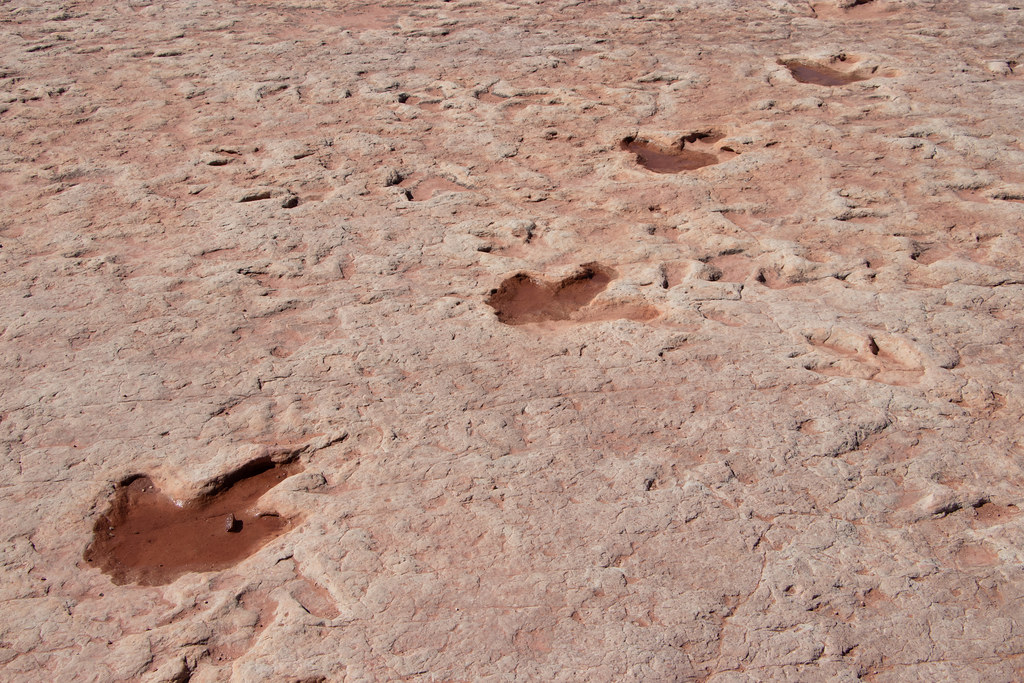
A Forgotten Discovery Comes Alive (Image Credits: Flickr)
In the 1950s, a Mongolian geographer spotted enormous footprints at Saijrakh Mountain and documented them in a research paper. Skepticism arose due to imprecise details on the site’s location, and the tracks faded into obscurity for nearly 70 years. A recent effort by Mongolian researchers pinpointed the approximate area, paving the way for excavation.
The international team launched fieldwork in 2024, unearthing 31 well-preserved tracks across a 5-by-7-meter slab, plus remnants of 15 more nearby. Evidence pointed to 5 or 6 dinosaur species traversing the same spot, suggesting a bustling prehistoric pathway. Overprinting among tracks indicated repeated use, much like modern animal trails.
Giants on the Move: Sauropods and Theropods
Large sauropod trackways dominated the site, with two paths comprising 19 footprints from herbivores estimated at 15 meters long. These wide-gauge impressions featured manus prints with a distinct pollex claw and posterior pads, alongside straight-toed pes prints – traits linking to basal titanosauriforms. Parallel paths hinted at energy-efficient travel, akin to elephant herds today.
Theropod tracks stole the spotlight: five trackways with 12 footprints from carnivores around 8 meters in length. Broad, tridactyl prints with wide interdigital angles confirmed powerful predators prowling the landscape. This marked the first solid proof of such large meat-eaters in Mongolia during the Early Cretaceous.
International Collaboration Unearths the Past
The expedition united experts from Mongolia’s Institute of Paleontology and National University of Mongolia with scientists from Japan’s Okayama University of Science. Lead researcher B. Mainbayar coordinated efforts, supported by figures like Shinobu Ishigaki, honorary director of the OUS Dinosaur Research Museum. Their work appeared in the March 2026 issue of the journal Ichnos.
“These fossils fill a geographical gap in reports on large dinosaurs,” Ishigaki stated after the digs. The team eyed future summers for bone-hunting in nearby bone-rich layers. Such partnerships have long fueled Mongolia’s paleontological legacy.
Reshaping Early Cretaceous Narratives
Mongolia boasts world-famous Upper Cretaceous sites like Shar Tsav, with thousands of tracks from 90 million years ago. Lower Cretaceous evidence remained scarce until Saijrakh. The tracks illuminated a vibrant ecosystem in the Shinekhudag Formation (Barremian-Aptian stages).
High track density revealed a “high-traffic corridor,” where herbivores and predators overlapped. This challenges views of sparse Early Cretaceous life in the region and underscores theropod adaptability.
| Track Type | Number of Trackways/Footprints | Dinosaur Size | Key Features |
|---|---|---|---|
| Sauropod (Herbivore) | 2 trackways / 19 footprints | Up to 15m | Wide-gauge, pollex impression, straight digits |
| Theropod (Carnivore) | 5 trackways / 12 footprints | Around 8m | Broad tridactyl, wide angles (>60°) |
Key Takeaways
- Earliest confirmed theropod presence in Mongolia’s Lower Cretaceous, extending the timeline for large carnivores.
- Tracks indicate a dynamic site with multiple species interacting in a shared corridor.
- Promises more revelations, including potential bones from future excavations.
This Saijrakh breakthrough not only rewrites regional dinosaur timelines but also highlights Mongolia’s untapped Early Cretaceous potential. As digs continue, the footprints stand as enduring testaments to ancient wanderers. What do you think about these prehistoric highways? Tell us in the comments.