Long before massive sauropods roamed in vast groups, early dinosaurs formed complex social structures that mirrored those of today’s large herbivores. Fossil discoveries from sites across the globe reveal herding behaviors, age-based groupings, and communal nesting that likely fueled their evolutionary rise. These findings challenge earlier views of dinosaurs as mostly solitary creatures and highlight socialization as a key survival strategy.
Patagonia’s Mussaurus Site Rewrites Early Dinosaur History
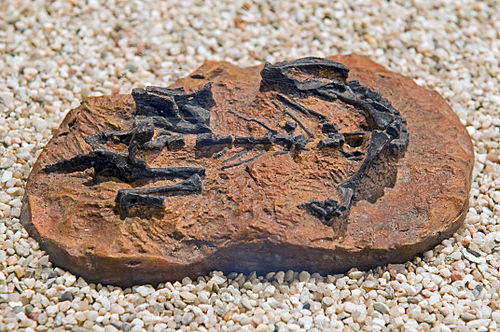
Patagonia’s Mussaurus Site Rewrites Early Dinosaur History (Image Credits: Wikimedia)
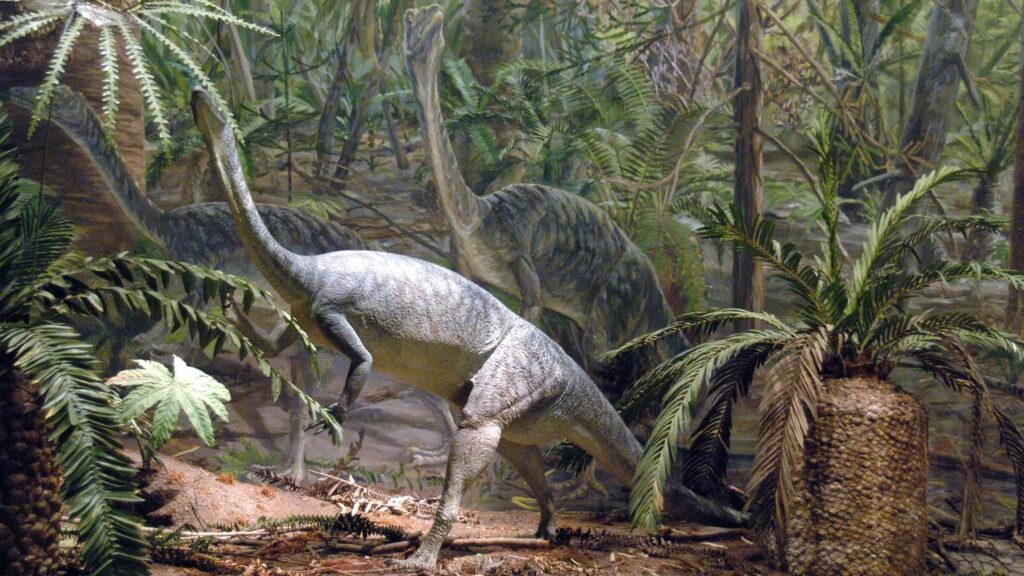
Researchers unearthed the oldest confirmed evidence of dinosaur herding at a Patagonia fossil site in Argentina’s Laguna Colorada Formation. Dated to about 193 million years ago, the discovery included over 100 eggs and skeletons from 80 Mussaurus patagonicus individuals spanning embryos to adults. Clusters showed clear age segregation: neonates grouped together, juveniles in broods of eleven intertwined skeletons, and adults paired or solitary nearby.
Cortical bone histology confirmed these age differences through growth lines and vascular patterns, revealing rapid early growth without interruptions. The site’s restricted 1-square-kilometer area and thin stratigraphic layer ruled out random accumulation, pointing to a shared breeding ground used seasonally. “Now we know herding was going on 193 million years ago,” geochronologist Jahandar Ramezani noted. This structured gregariousness predates prior records by 40 million years.
Bonebeds Offer Windows into Group Living
Mass death assemblages preserved multiple individuals of the same species across age classes, suggesting herds perished together during floods or droughts. The Bernissart pit in Belgium yielded dozens of Iguanodon from at least three groups, while New Mexico’s Coelophysis quarry held skeletons of all ages. Thousands of ceratopsians and hadrosaurs appeared in similar sites, alongside Allosaurus clusters possibly drawn to scavenging.
These bonebeds indicated social cohesion beyond mere coincidence. Histological analysis of bones further supported complex habits akin to modern mammals, with rapid growth rates enabling quick maturation in group settings. Nesting colonies like those of Maiasaura in Montana showed repeated use over generations, with juveniles safer in upland areas.
Trackways Capture Movement in Motion
Fossilized footprints provided dynamic proof of coordinated travel. Along Texas’s Paluxy River, parallel sauropod tracks from the Early Cretaceous suggested a single herd passing through. Similar sites spanned continents – from the U.S. and Canada to Australia and China – recording hundreds or thousands of animals migrating in unison.
These trackways spanned from the Late Triassic to the end of the Cretaceous, implying herding persisted across dinosaur diversity. Ornithopods, sauropods, and others left evidence of synchronized strides, likely for foraging vast areas or evading predators. Such patterns echoed mass migrations seen in contemporary herbivores.
- Sauropod trackways: Parallel paths indicating group progression.
- Ornithopod sites: Hundreds of prints showing density.
- Global distribution: Evidence from multiple eras and regions.
- Migration hints: Large-scale movements for food resources.
Mixed Herds and Evolutionary Edges
A 2025 find in Alberta’s Dinosaur Provincial Park captured footprints from 76 million years ago, blending ceratopsians, ankylosaurs, and nearby Tyrannosaurus rex tracks. At least five ceratopsians walked together, with an ankylosaurid print nearby, marking the first multispecies herding evidence. “Dinosaur trackways are important as they give us a direct window into dinosaur behaviour,” researcher Jack Lovegrove stated.
Social structures offered clear advantages. Herds provided predator defense through numbers, shared vigilance, and collective foraging amid seasonal shifts. Early sauropodomorphs like Mussaurus thrived post-Triassic extinction partly due to these bonds, accommodating huge size differences – from hatchling mice to ton-sized adults. Age segregation allowed juveniles to school safely while adults ranged widely.
| Dinosaur Example | Evidence Type | Key Feature |
|---|---|---|
| Mussaurus | Bonebed & Eggs | Age segregation |
| Iguanodon | Bonebed | Multiple groups |
| Ceratopsians (Alberta) | Trackways | Mixed species |
| Maiasaura | Nesting | Site fidelity |
Key Takeaways
- Herding emerged early, aiding dinosaur dominance.
- Age groups structured communities like modern elephants.
- Trackways and bonebeds confirm widespread socialization.
Dinosaur sociality transformed solitary survivors into ecosystem giants, with herding fostering resilience against environmental pressures. These ancient behaviors underscore how cooperation propelled prehistoric success. What do you think drove dinosaurs to form such bonds? Tell us in the comments.