You usually think of dinosaurs as towering, territorial giants, rooted to one place like living mountains. But when you look closer at the rocks and bones they left behind, you start to see something far more dynamic: long-distance travelers, crossing ancient rivers, deserts, and even entire continents in search of food and safety. You are not just looking at fossils; you are looking at footprints of journeys that could stretch for hundreds, maybe even thousands of miles.
When you follow this trail of evidence, it changes the way you picture the prehistoric world. Suddenly, ancient Earth feels less like a static museum diorama and more like a constantly shifting stage, with herds on the move, predators tracking them, climates changing, and landscapes opening and closing like doors. As you trace these migrations, you start to realize that the story of dinosaurs is not just about extinction and bones, but about movement, adaptation, and survival on a restless planet.
How On Earth Can You Track Dinosaurs That Are Long Gone?
You might wonder how you can talk about dinosaur migration at all when everyone involved is long dead and buried under millions of years of rock. The truth is, you are not guessing blindly; you are following physical clues that still sit in the ground today. When you compare identical or very similar dinosaur species found in rock layers of the same age but thousands of miles apart, you start to see a pattern that screams movement rather than coincidence.
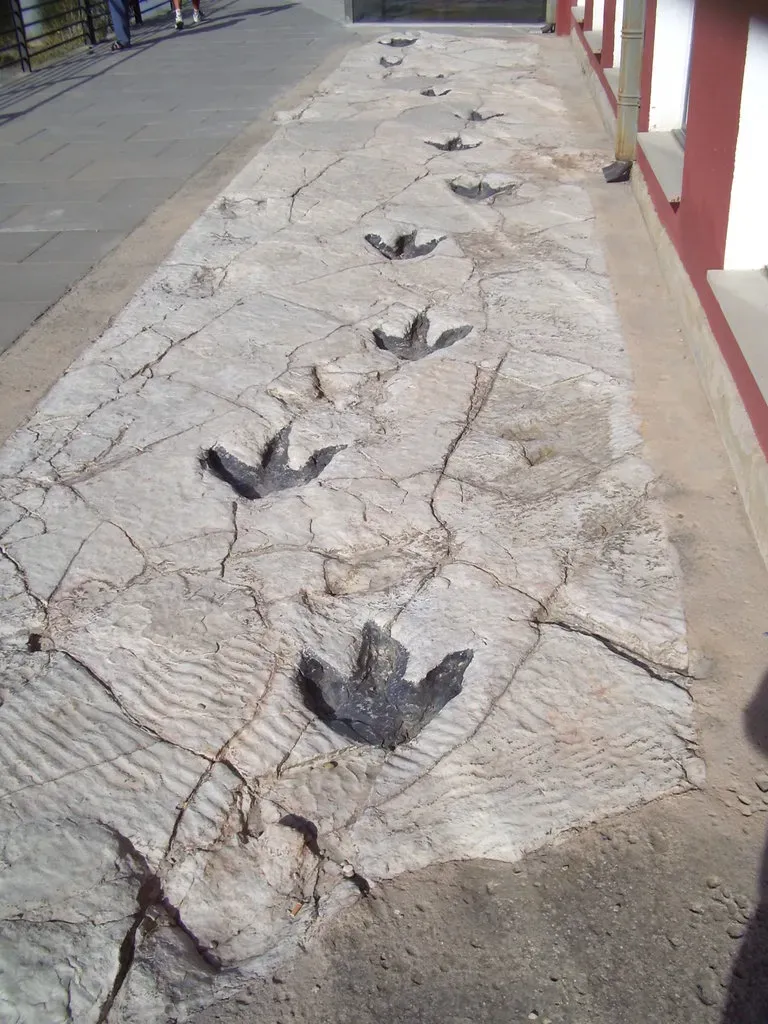
You also get an extra layer of confirmation from ancient trackways, those fossilized footprints preserved in mud that hardened into stone. Long lines of tracks all heading in roughly the same direction, laid down at about the same time, point toward coordinated, repeated movement, not just random wandering. When you combine bones, footprints, and the chemistry of the rocks and fossilized teeth, you are suddenly looking at something like an old travel log, written in stone instead of ink.
Supercontinents and Open Highways: Why Pangaea Made Migration Easier
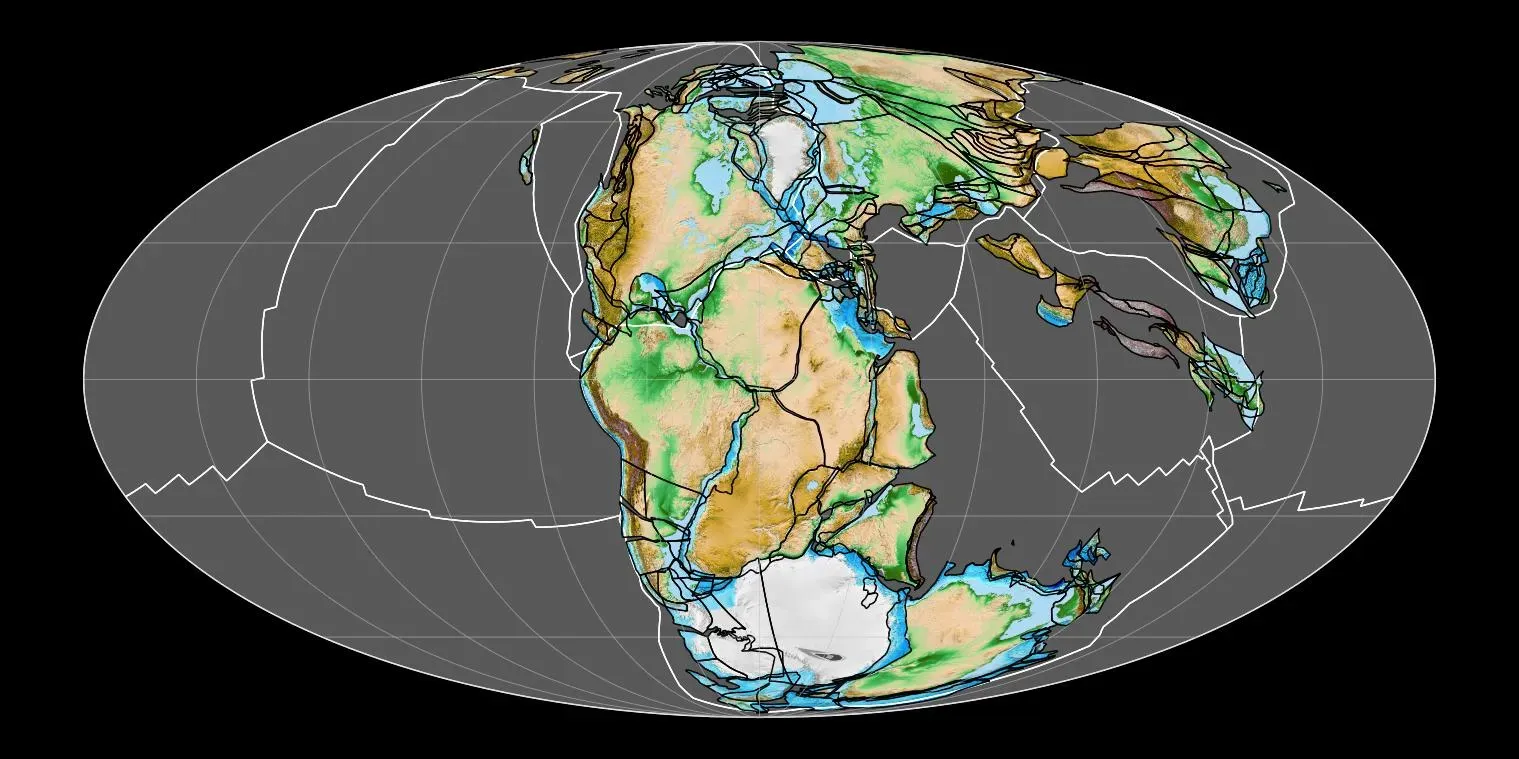
If you imagine trying to walk from Africa to North America today, you immediately picture oceans blocking your path. But during much of the age of dinosaurs, you would have had a very different experience. For a huge part of that time, the continents you know were fused into supercontinents like Pangaea, which turned the planet into one massive connected landmass. For dinosaurs, that meant fewer ocean barriers and more overland routes stretching from pole to pole.
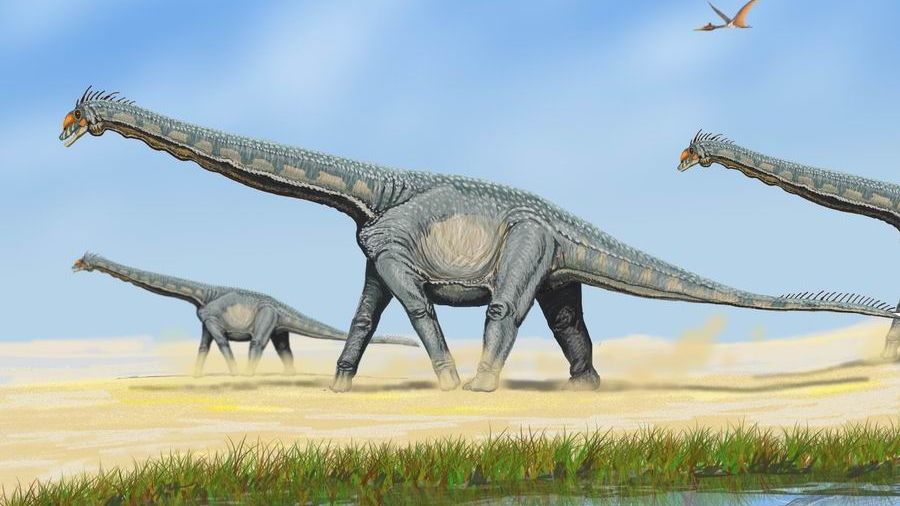
You can think of Pangaea as an open highway network for giant animals. Large herbivores could follow seasonal plant growth across regions that are now separate continents, while predators shadowed them along the same paths. As the supercontinent eventually fractured and the pieces drifted apart, those ancient routes were cut, and what used to be a long walk became an impossible ocean crossing. When you see the same kinds of dinosaurs scattered across what are now distant continents, you are really seeing the last echoes of those ancient land connections.
Following the Food: Why Plant-Eaters Led the Way
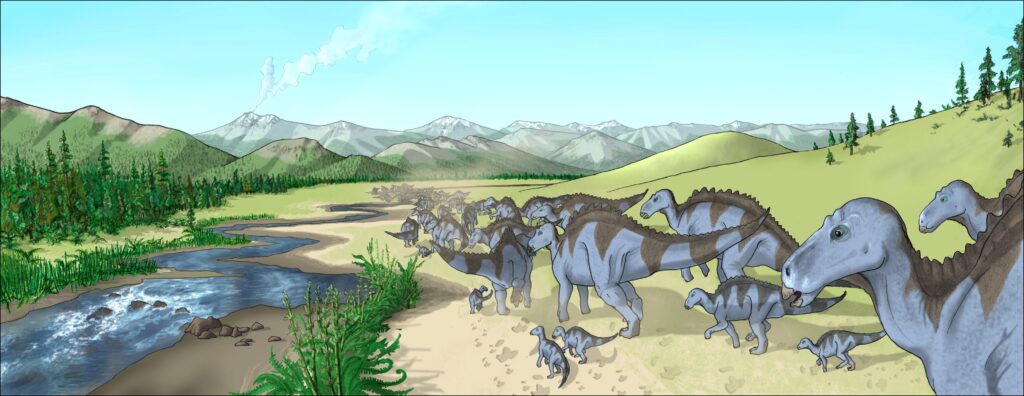
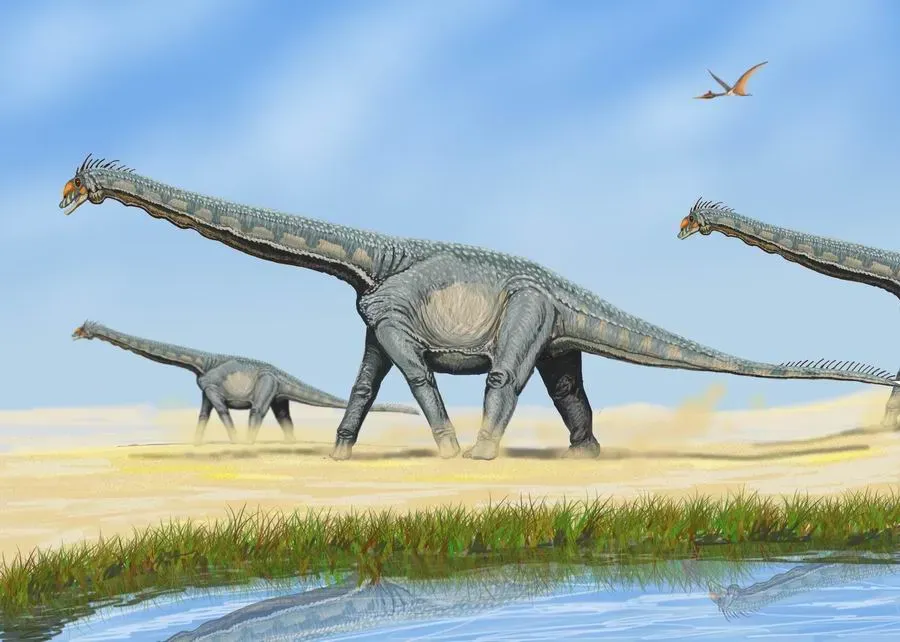
If you want to guess where dinosaurs went, you start the same way you would track modern wildebeest or caribou: you follow the plants. Many herbivorous dinosaurs lived in environments where wet and dry seasons were intense, and the best vegetation shifted across the landscape over the course of the year. That meant that if you were a giant sauropod or a beaked plant-eater, staying in one place could be a terrible idea once your local food vanished.
By studying fossilized plants, pollen, and the types of soils preserved in old rock layers, you can map out where lush floodplains or fern-filled lowlands would have appeared during different times. When you then find herds of similar plant-eating dinosaurs turning up repeatedly along those ancient green corridors, it suggests that they were tracking food sources just like modern grazing animals do today. In that sense, you are not just looking at dinosaur behavior; you are watching a very old version of the same survival strategies you still see in big mammals on Earth now.
Predators on the Move: Why Carnivores Could Not Stay Behind
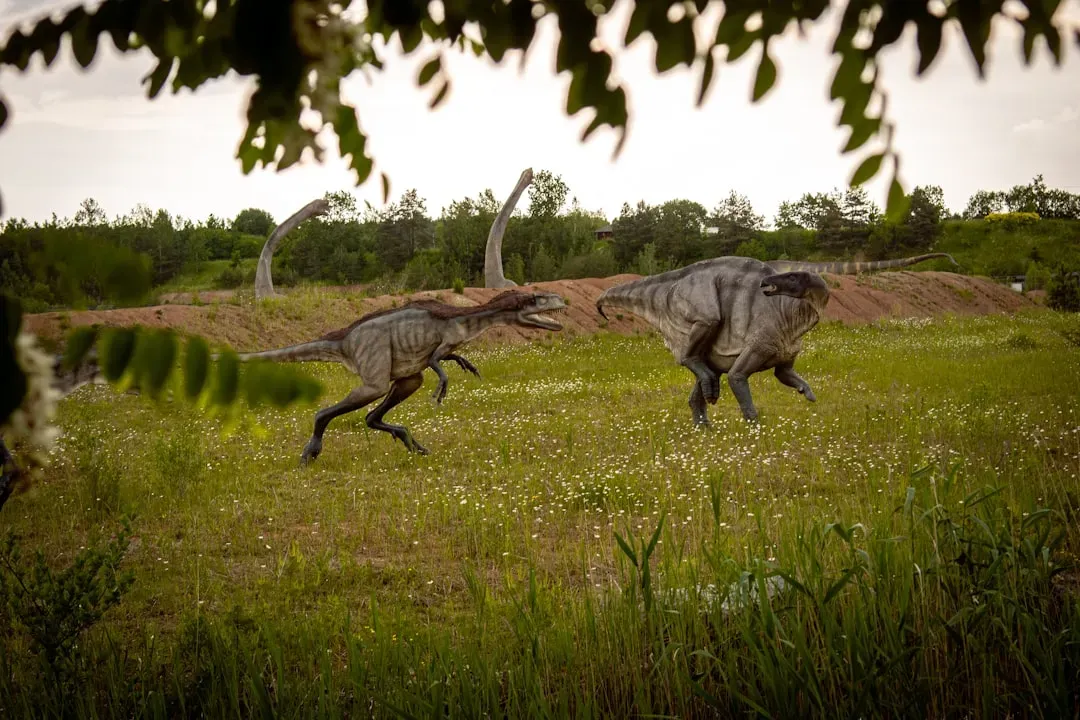
You cannot move vast herds of plant-eaters around the landscape without dragging their predators along for the ride. If herbivores migrated seasonally, big carnivores had a simple choice: follow the herds or go hungry. When you find similar types of predatory dinosaurs in rock layers that track the same regions as their prey, it hints that these hunters were not tied to one small territory but were part of a much larger, moving system.
You can also look at bite marks on bones, fossilized trackways, and even rare bonebeds where multiple individuals from different species died together, perhaps at water sources or along migration bottlenecks. These mixed death sites give you a snapshot of crowded, high-stress places where predators, prey, and maybe even scavengers all converged. When you put all of this together, you can almost picture the scene: not lonely monsters pacing a single valley, but entire predator guilds shadowing the movements of the great herbivore caravans.
Climate, Seasons, and the Challenge of Long-Distance Travel
To really make sense of dinosaur migration, you have to step back and look at climate and seasons on ancient Earth. The planet during the age of dinosaurs was often warmer than today, but that did not mean it was uniform or gentle. Many regions likely experienced strong wet and dry cycles, monsoon-like weather patterns, and big swings in water availability, all of which would push animals to move. You can read those climate shifts in the rocks: changes in sediment types, signs of ancient rivers turning on and off, and chemical signatures tied to temperature and rainfall.
For you, this means that migration was not just a convenience for dinosaurs; it was sometimes a life-or-death necessity. In some areas, lakes and rivers may have shrunk or vanished seasonally, forcing animals to head for more reliable water each year. In other places, temperatures and daylight varied enough to reshape where plants could grow, tugging herbivores toward better grazing grounds. When you see this interplay between climate, plants, and animals, you are watching a deep-time version of the same seasonal pressures that drive migrations of birds, whales, and antelopes today.
What Modern Animals Can Teach You About Ancient Dinosaur Journeys
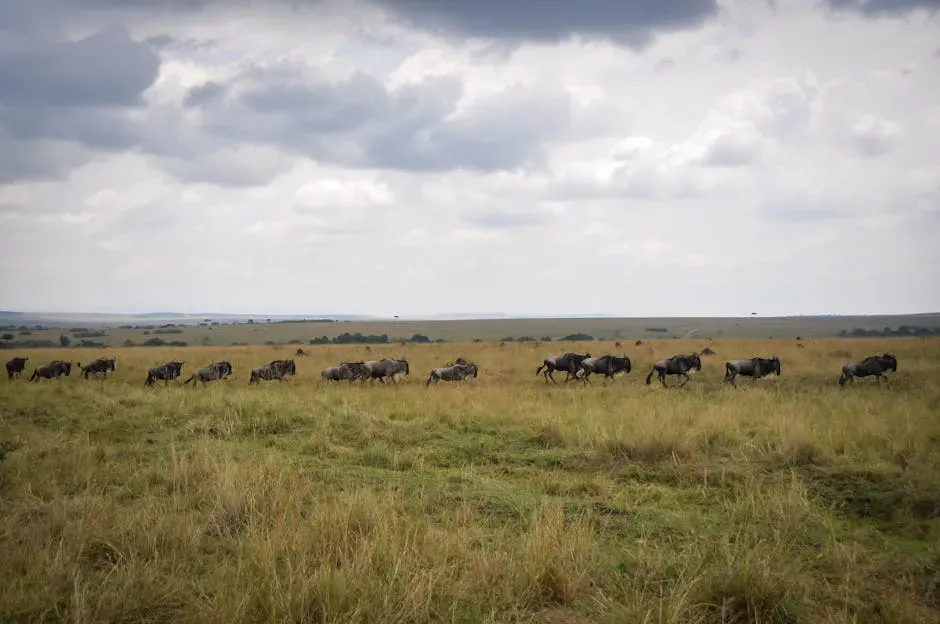
Even though you cannot watch a live dinosaur cross a floodplain, you are not totally in the dark about how large animals handle migration. You can look at animals alive today that face similar challenges: massive bodies, big appetites, and landscapes that change over the year. When you study elephants, wildebeest, caribou, or certain bird species, you see familiar patterns: following food and water, returning to reliable breeding grounds, and moving along established pathways that pass down through generations.
You can use those modern examples as analogies, not as perfect copies but as guides. When you see repeated fossil trackways pointing in one direction or particular regions that keep turning up the same species in the same age layers, you can borrow ideas from living migrations to make sense of those patterns. In doing so, you start to view dinosaur movement not as a rare exception, but as something that probably played a regular role in their lives. You stop seeing them as static, oversized reptiles and start seeing them as active, strategic travelers navigating a complex, changing world.
When you pull all of this together, you get a far richer picture of dinosaur life than the still images you grew up with. Instead of imagining a single T. rex frozen in a clearing or a lone sauropod beside a river, you start to imagine entire populations on the move, threading across continents and adjusting to shifting climates and disappearing rivers. You are suddenly watching an Earth that feels familiar in its patterns, even if the creatures walking across it look utterly alien to you.
In the end, dinosaur migration is really a story about resilience and adaptation on a planet that never stopped changing. The same forces that push birds across oceans and caribou across tundra today were already at work in the age of dinosaurs, shaping where they lived, how they fed, and how they survived for tens of millions of years. When you look at their journeys, you are not just studying the past; you are seeing a deep-time version of a problem every animal, including you, still faces: how do you keep moving with a world that refuses to sit still?