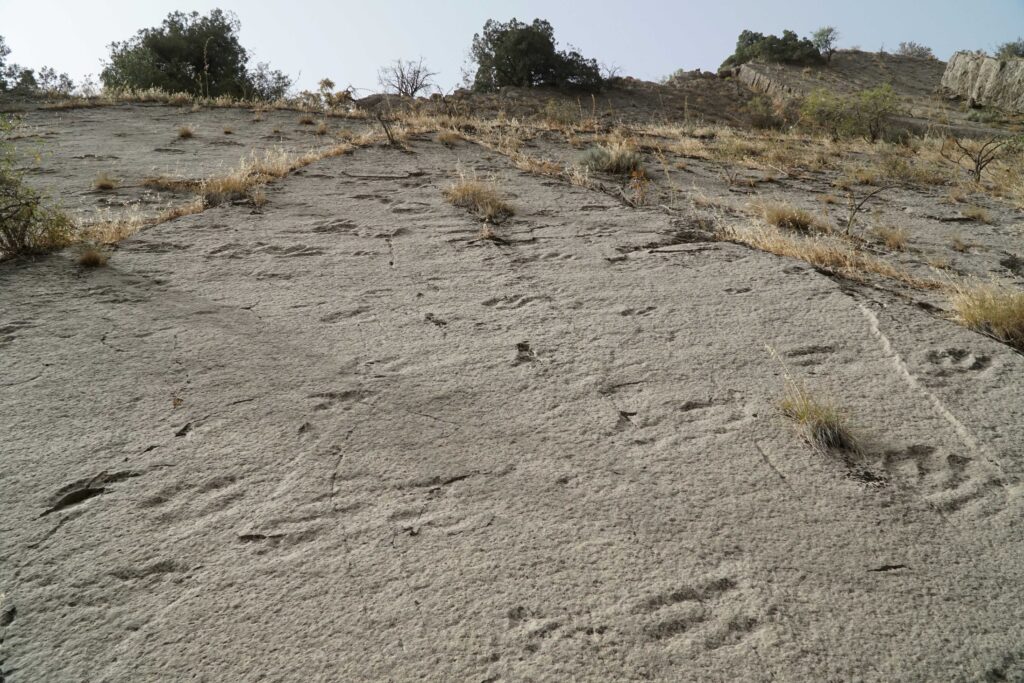
Dinosaur Provincial Park, Alberta – Paleontologists uncovered a trove of fossil footprints in July 2024 that offer the earliest proof of dinosaurs from multiple species traveling together. These 76-million-year-old tracks, preserved in the park’s badlands, capture ceratopsians and an ankylosaur moving in close proximity, with signs of predators nearby. The site, known as the Skyline Tracksite, spans about 29 square meters and marks the first multitaxic assemblage in this renowned fossil hotspot.
A Dramatic Encounter Frozen in Mud
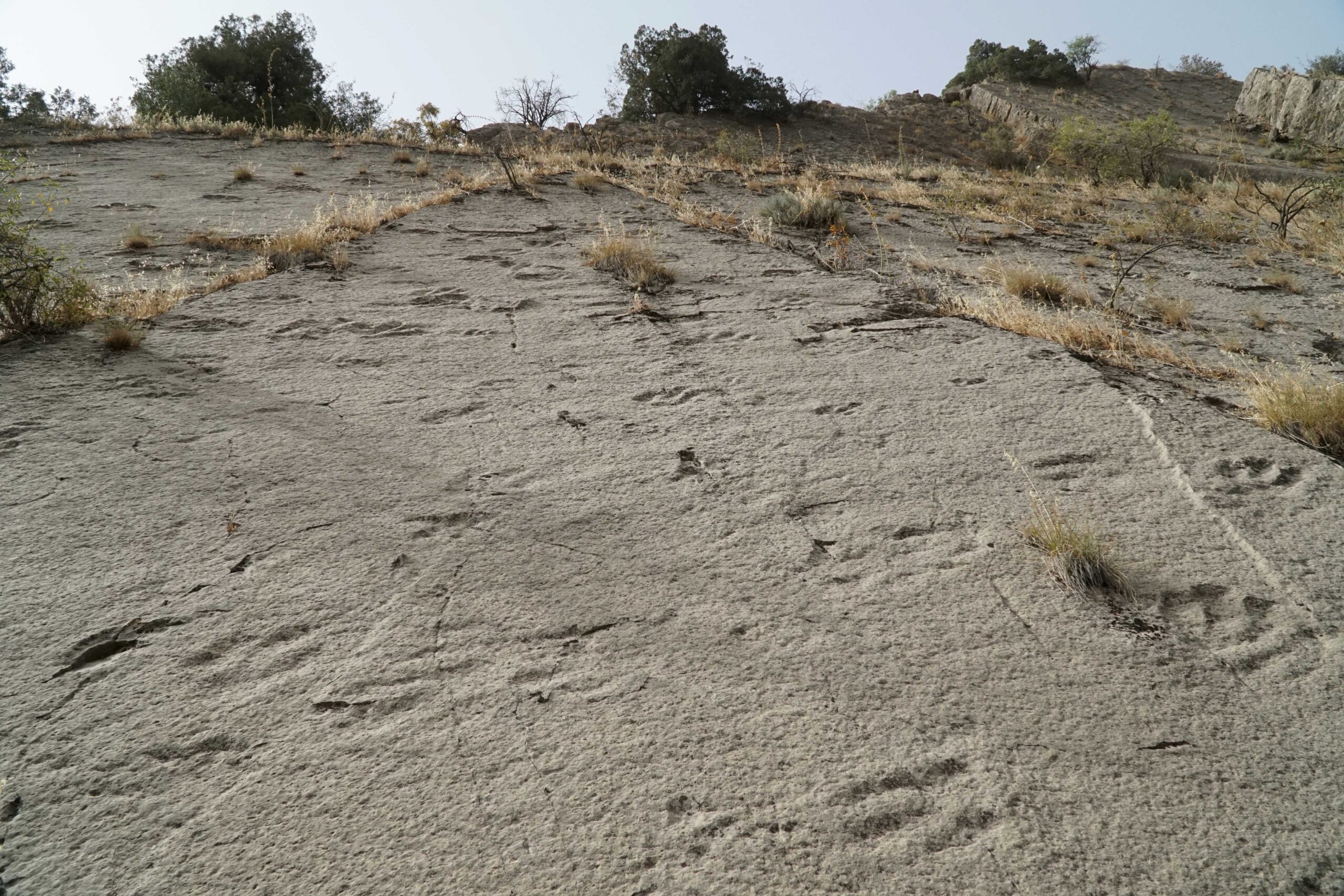
A Dramatic Encounter Frozen in Mud (Image Credits: Upload.wikimedia.org)
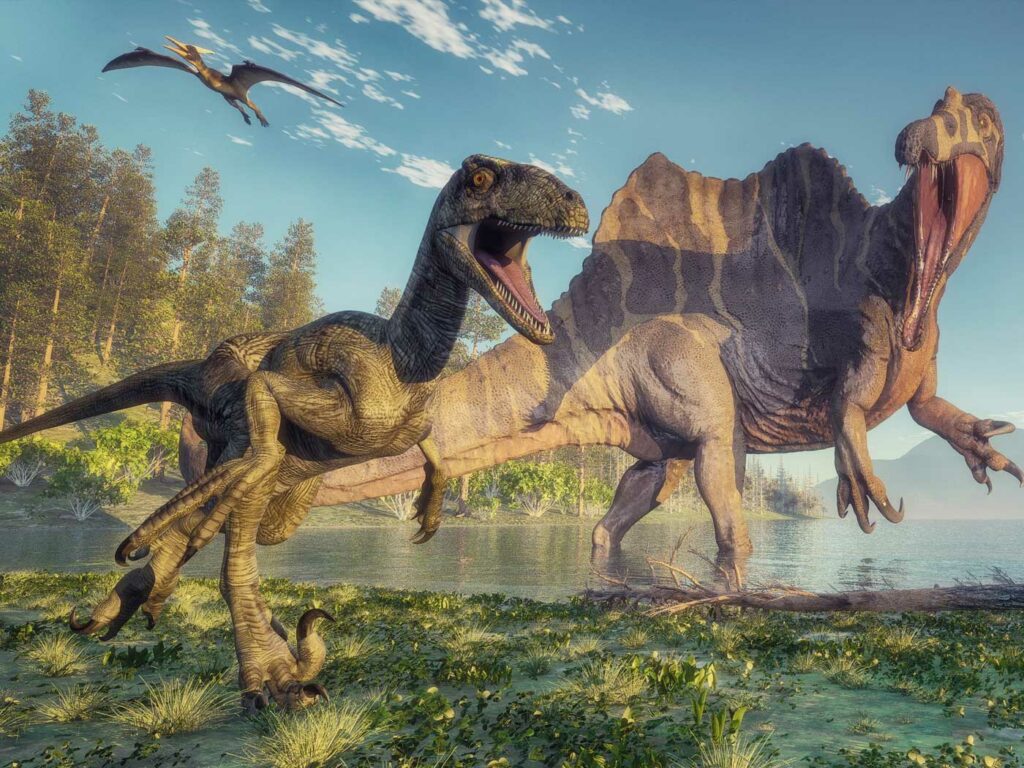
Two large tyrannosaur tracks ran parallel to each other, cutting perpendicular to the herbivore paths, hinting at a tense pursuit. Researchers described the scene as chilling, evoking images of apex predators sizing up potential prey. Dr. Phil Bell, who spotted the initial clue – a distinctive sediment rim – recalled how the rock resembled mud squelched between toes. This unexpected find transformed a routine field survey into a window on Cretaceous drama.
The tracks formed natural molds in soft mudstone, a rarity in the park due to rapid erosion and steep terrain. Excavation revealed over 20 impressions, all bearing telltale displacement rims from the dinosaurs’ weight. Such preservation captured a moment when the animals traversed a low-energy lakeshore in an ancient river channel.
Deciphering the Footprints
Ceratopsid tracks dominated the site, with nine clear impressions from at least five individuals forming parallel trackways. These horned dinosaurs, likely Styracosaurus or Chasmosaurus relatives, left broad, rounded prints measuring around 25 centimeters long. Ankylosaur tracks nearby showed three symmetrical digits and a large pad, matching species like Euoplocephalus.
The assemblage included a single small theropod-like print and three tyrannosaurid impressions from two animals. Scientists used photogrammetry and precise measurements to map the layout, confirming consistent orientations toward ancient waterlines.
| Trackmaker | Tracks Counted | Minimum Individuals |
|---|---|---|
| Ceratopsid | 9 | 5 |
| Ankylosaurian | 2 | 1 |
| Tyrannosaurid | 3 | 2 |
| Small theropod-like | 1 | 1 |
Signs of Collective Movement
Uniform spacing and aligned directions among the ceratopsian and ankylosaur tracks pointed to coordinated travel. This pattern echoed bonebeds from the same formation, where multiple ceratopsians accumulated together. The ankylosaur’s position amid the group suggested intentional association rather than coincidence.
Dr. Brian Pickles noted the thrill of tracing these ancient steps: “It was incredibly exciting to be walking in the footsteps of dinosaurs 76 million years after they laid them down.” The team’s new detection methods, focusing on sediment rims, have since yielded additional sites.
Insights into Ancient Societies
Mixed-species groups likely boosted survival, much like zebras and wildebeest on African plains share vigilance against lions. Herbivores gained from diluted predation risk and enhanced lookout capabilities. Tyrannosaur paths fueled speculation of active hunting, though timelines remain uncertain.
Dr. Caleb Brown emphasized the park’s untapped potential: “This discovery shows just how much there is still to uncover in dinosaur paleontology.” Findings appeared in PLOS ONE.
Key Takeaways
- First multitaxic tracksite in Dinosaur Provincial Park demonstrates ceratopsid gregariousness.
- Possible mixed herding between horned and armored dinosaurs for mutual defense.
- Tyrannosaur tracks suggest predator-prey dynamics, urging further study.
This breakthrough redefines dinosaur interactions, proving they formed alliances across species lines long before extinction. As erosion claims more sites, urgent surveys promise richer tales from the Cretaceous. What do you think prompted these unlikely companions? Tell us in the comments.