

If you have ever sat in your car, heard a song swell at just the right moment, and suddenly felt your arms prickle with goosebumps, you already know this bizarre little body trick. What you might not know is that the exact same reflex once helped your distant ancestors stay alive on cold nights and in the face of predators. The tiny muscles around each hair follicle did not start out as a tool for appreciating orchestral crescendos or cinematic soundtracks; they were part of a survival kit.
Somewhere along the way, though, your brain seems to have decided that this old hardware could be used for something new: signaling deep emotional impact. When music is overwhelming, a speech is moving, or a view from a mountain ridge feels almost unreal, that same ancient reflex can kick in. That is not just a quirky fun fact; it hints that our emotional lives are built on recycled parts. Once you see goosebumps as an echo of your evolutionary past and a mirror of what moves you now, it is hard not to feel a little awe about awe itself.
The Hairy Origins of a Very Weird Reflex
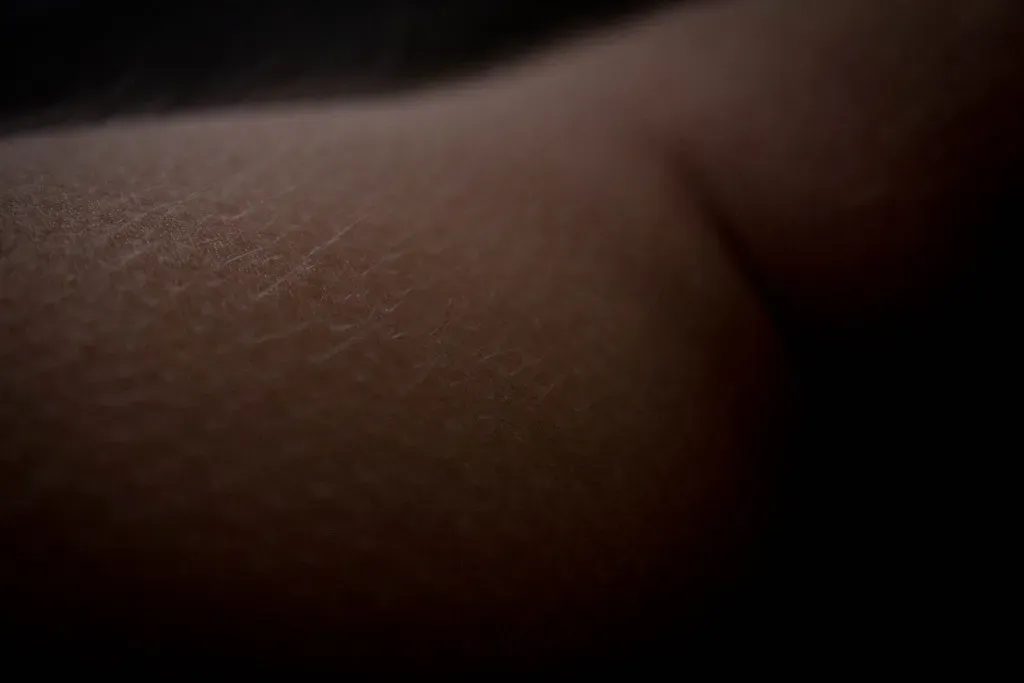
Think about a scared cat: the fur puffs out, the tail becomes a bottlebrush, and suddenly the animal looks much bigger than it really is. That is piloerection, the technical term for hairs standing on end, and it is the same basic reflex that underlies human goosebumps. In mammals with a thick coat, the tiny muscles at the base of each hair lift them up, trapping more air for insulation and making the body appear larger and more intimidating when threatened. For our hairier ancestors, this was like deploying a built‑in winter coat and inflatable scarecrow at the same time.
Humans still have those little muscles and the neural circuitry that triggers them, but we lost the dense fur that made the effect visually dramatic and functionally powerful. On a modern, mostly hairless arm, all that is left is a dot of raised skin and a faint sense of prickling. In that sense, goosebumps in humans are a classic evolutionary leftover, a bit like the appendix or wisdom teeth: originally useful, now mostly vestigial. Yet unlike a useless organ, this reflex did not just quietly fade into irrelevance. The brain found new things to do with it.
From Freezing Nights to Emotional Chills

In the distant past, that same piloerection reflex was tightly wired into our stress and temperature regulation systems. A sudden cold wind or a lurking predator would kick the sympathetic nervous system into high gear, releasing hormones that changed heart rate, breathing, and blood flow while those tiny muscles yanked body hair upright. It was an all‑in survival mode designed for fast, automatic responses rather than careful analysis. You did not need to think about raising your body hair any more than you need to think about making your pupils adjust to the dark.
As humans moved into warmer environments, built shelters, discovered clothing, and dramatically changed how we survived, the direct thermal and defensive functions of piloerection became less critical. Yet the reflex remained tightly linked to arousal, threat, and urgency in the brain. Instead of being deleted from the system, it became a sort of generic output channel that the nervous system could still activate during intense experiences. Cold, fear, and later on, emotionally charged moments all tapped into the same ancient wiring. It is as if evolution gradually turned a survival siren into an all‑purpose signal for “this really matters.”
How the Brain Recycles Old Hardware for New Feelings

One of the most fascinating themes in brain science is how often evolution reuses existing circuits for new purposes instead of starting from scratch. The structures involved in basic survival – monitoring danger, regulating energy, scanning the environment – often get recruited into more abstract jobs like social bonding or art appreciation. Goosebumps are a clean example of this: the same autonomic system that once cranked up your ancestors’ fur now helps underline emotionally powerful scenes, stories, and sounds. The brain seems to have treated that old output as a kind of high‑intensity marker that could be plugged into new contexts.
When you feel goosebumps during a song, the brain areas involved in emotion, reward, and autonomic control are talking to each other. Signals that something is unexpectedly meaningful or beautiful ripple through networks that originally evolved for handling urgent threats and important opportunities. Instead of just telling your body to look bigger or stay warm, those circuits now help tag experiences as deeply significant. That repurposing is not random; it reflects an evolutionary style that prefers clever re‑engineering over throwing things away. Our feelings today are literally layered on top of the same neural architecture that once kept us from freezing or becoming someone else’s lunch.
Why Music, Voices, and Stories Give Us Chills

People often report goosebumps during very specific kinds of moments: when a choir suddenly swells, when a singer holds a note longer than expected, when a beat drops after a long build‑up, or when a movie scene brings a story to an emotional peak. These are not just “nice” experiences; they are usually surprising, intense, and loaded with meaning. The brain is particularly sensitive to expectation and violation, so when music or storytelling carefully sets you up and then delivers something bigger, higher, or more beautiful than expected, your emotional systems light up. Goosebumps become a bodily punctuation mark on that spike of significance.
It is not only music. A heartfelt speech, the first cry of a newborn, or even a sudden silence during a live performance can send the same chill down your spine. Voices and stories carry social importance: they can signal belonging, danger, love, or loss. Our ancestors depended on interpreting tone, rhythm, and group sound – for example, shared chanting or synchronized movement – to navigate social life. The fact that a stadium crowd singing together can raise your arm hair today sits right on top of that older need to track and respond to the emotional climate of your group. Goosebumps here are like the body’s way of saying, “This moment is bigger than just you.”
Awe, Beauty, and the Sense of Something Larger

Goosebumps do not show up only with sound; they also appear in moments of awe – standing at the edge of a canyon, watching a meteor shower, or even seeing a stranger do an unexpectedly kind thing. Awe usually combines a feeling of vastness with a sense that your mental picture of the world has to stretch to fit what you are seeing. That stretching can be a bit destabilizing, even when it is positive. The same systems that respond to threat or opportunity kick in, because your brain is being told, in effect, that something important and maybe life‑relevant is happening.
In those situations, goosebumps often ride along with a weird mix of humility, wonder, and subtle fear. You might feel tiny and yet completely connected, overwhelmed but strangely calm. From an evolutionary angle, that state could encourage you to pay attention, update your mental models, and maybe seek social connection or guidance. Instead of just freezing in fear, you pause in reverence. The prickling of your skin, the lump in your throat, and the widening of your eyes all form a coordinated pattern: they show that your ancient survival machinery is being hijacked for a more reflective purpose – taking in beauty and mystery rather than just danger.
Why Not Everyone Gets Goosebumps the Same Way

Not everyone experiences goosebumps from music or awe with the same intensity, and some people rarely notice them at all. Individual differences in personality, attention, and sensitivity to reward and emotion can all play a role. People who are more moved by art, more attuned to their internal states, or more open to emotional experiences tend to report chills more often. It is like some brains keep that old wiring extra ready to fire, while others keep it quieter unless there is a very strong trigger such as cold or outright fear.
There is also a cultural and learning component: what gives you chills is often tied to what you have learned to care about deeply. A national anthem, a certain style of music, a specific kind of religious or spiritual ritual – these may have little impact on someone outside that context, but for you they might be loaded with memories and identity. The underlying reflex is ancient and shared, yet the triggers are personal and shaped by your life. That mix of universal physiology and individual meaning is part of what makes goosebumps such a revealing window into who we are.
What Goosebumps Reveal About Being Human

When I first learned that my reaction to a favorite guitar solo shares a mechanism with a cat puffing up in fear, I remember laughing and then feeling oddly moved. It is strange and a bit humbling to realize that our most “elevated” experiences – art, beauty, awe – ride on top of the same circuits that once just kept us warm and scary‑looking. But that is exactly the point: being human is not about escaping our animal past; it is about reusing it in clever, layered ways. Goosebumps are a tiny, visible reminder that our biology and our meaning‑making are inseparable.
In my view, we should treat those moments of chills as more than background noise. When your skin prickles at a song, a view, or a sentence in a book, it is your nervous system quietly telling you, “This matters to you, even if you cannot fully explain why.” That makes goosebumps almost like a built‑in compass for value, pointing toward what moves you beyond logic or habit. In an age that likes to pretend everything important can be measured, optimized, and predicted, there is something refreshing about a reflex that stubbornly resists being flattened into numbers. The next time a piece of music gives you chills, maybe ask yourself: what ancient story is my body retelling here, and what does it say about what I truly care about now?