

Every time you see someone cruising through mile ten of a weekend long run, headphones in, zero predators in sight, you are watching one of the strangest quirks in all of biology. No other ape does this. No other primate heads out the door to voluntarily pound out kilometers for fun, stress relief, or a finisher medal. From an evolutionary point of view, that is bizarre: energy is precious in nature, and animals tend not to waste it on activities that do not help them eat, escape, or reproduce right now.
Yet humans not only can run long distances, we seem weirdly drawn to it. Marathons, ultramarathons, charity 10Ks, “couch to 5K” apps – this is a species-wide hobby. Underneath that cultural layer, though, sits a deep and very physical story: a body that was remodeled over roughly two million years into a heat-dissipating, tendon-loaded, sweat-cooled running machine unlike any other primate. If you have ever wondered why your dog will sprint but not happily trot for three hours, or why chimpanzees are explosively strong but clumsy runners, this is the rabbit hole – or rather, the running trail – you have been looking for.
The Strange Fact: We Run Far When We Do Not Have To

Here is the wild thing: in most modern settings, your life does not depend on jogging around the block. You could get all your food delivered, work at a laptop, and never move faster than a walk, and you would still survive in the short term. Yet millions of people lace up and run anyway. That makes humans an outlier in the animal kingdom, because almost every other species with strong endurance uses it for immediate survival – migrating to new feeding grounds, fleeing predators, or chasing prey until it collapses.
Humans, by contrast, routinely run long distances in contexts where the “predator” is imaginary and the “prey” is a finisher’s medal or a personal best time. From a strict survival lens, that looks like needless risk: joint stress, falls, dehydration, all for no direct payoff. And still, something in our wiring makes it rewarding. Evolutionary biologists point out that behaviors that feel good now usually piggyback on circuits that once had a very clear survival purpose. So when you catch a runner’s high at mile six, you may be tapping into a nervous system that once lit up because successfully tracking a wounded antelope meant your group would eat.
Why No Other Primate Is Built Like a Distance Runner

To really get how weird we are, compare the human body to our closest relatives. Chimpanzees, bonobos, gorillas, orangutans – they are incredibly strong for their size, but they are terrible distance runners. Their bodies are optimized for climbing, short bursts of speed, and powerful pulling and pushing, not for trotting along for hours. Put a chimp and a decent recreational runner on a hot open plain and, over distance, the chimp loses badly. It overheats, gets awkward on two legs, and cannot manage the same kind of steady, rhythmic gait.
Part of the reason is simple mechanics: other primates have shorter legs, more flexible feet built for gripping branches, and a very different hip structure that makes sustained upright running inefficient and unstable. They also do not have our long Achilles tendons, our big, springy gluteal muscles, or our strange habit of sweating all over our bodies. So while they can explode up a tree or wrestle with astonishing power, they are, in effect, sprinters and climbers trapped in bodies that never evolved the hardware for true endurance running. Humans, for better or worse, bet on a completely different design.
A Two-Million-Year Makeover: From Forest Ape to Endurance Hunter
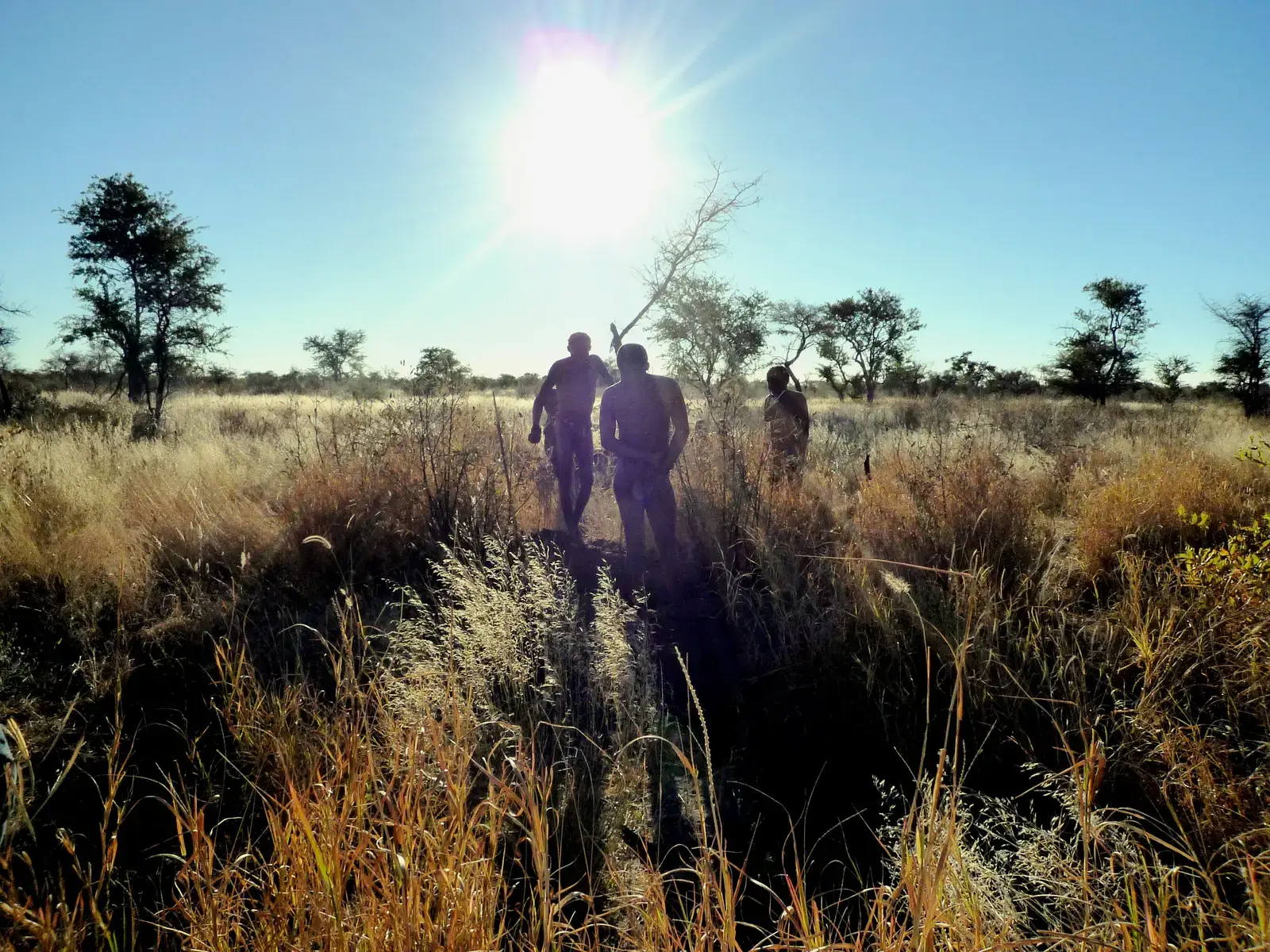
That different design did not appear overnight. Fossil evidence suggests that early members of our genus, like Homo erectus, started showing body changes consistent with long-distance travel roughly two million years ago. As climates shifted and forests gave way to more open savannas, our ancestors had to move farther to find scattered resources and may have started using a style of hunting sometimes called persistence hunting: tracking an animal and pushing it to exhaustion through repeated bursts of running and fast walking in the heat. If you can stay just cool enough while your prey steadily overheats, you eventually win not by speed, but by stubbornness.
Over countless generations, bodies that were slightly better at cooling, balancing, and running would have had an edge. Longer legs made each stride more efficient. Narrower hips lined up the joints for stable bipedal movement. A lighter, less bulky upper body reduced energy cost, while the ability to dump heat through the skin allowed activity in the midday sun when many predators rested. It is not that early humans were all marathoners, but that survival started to reward those whose anatomy could handle a lot of ground, a lot of heat, and a lot of time on two feet.
The Hidden Engineering: Tendons, Glutes, and the Nuchal Ligament
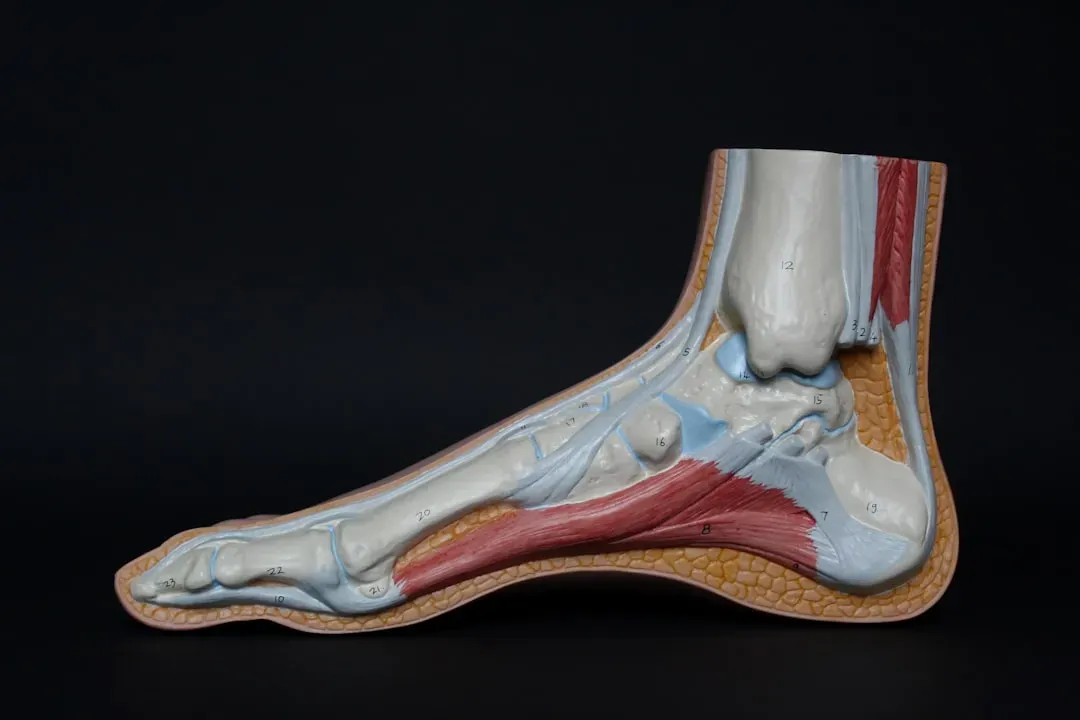
If you look at a human body through an engineer’s eyes, you see a series of upgrades that specifically help with running. Take the Achilles tendon, for example. It is long and thick compared to other primates, acting like a loaded spring during each step. When your foot strikes the ground and your calf muscles lengthen under tension, that tendon stores elastic energy and then releases it as you toe off, saving muscular effort. Multiply that energy recycling over thousands of steps and you suddenly have a system that makes steady running surprisingly efficient.
Then there is the gluteus maximus, the big muscle that gives humans a distinct butt. In walking, it is not doing much. In running, it lights up, stabilizing the trunk and keeping you from pitching forward with each stride. Add to that the nuchal ligament – a strong band running along the back of the neck that helps hold the head steady when we run – and you get a set of features that, taken together, are simply not present in other primates. Each piece by itself might not seem dramatic, but layered over evolutionary time, this network of springs, stabilizers, and supports turned our species into a competent endurance runner almost by default.
The Cooling Superpower: Why We Sweat While Others Pant

Long-distance running is not just about muscles and bones; it is fundamentally about heat. Muscles working for long periods generate a lot of warmth, and if you cannot get rid of it, you overheat and shut down. Many animals deal with this by panting or by running in short bursts and then stopping to cool off. Humans took another path: we more or less stripped off the fur coat, kept a relatively bare skin, and covered it with millions of sweat glands that can pour out fluid over the entire body surface.
That sweat, evaporating in moving air as you run, turns your skin into a cooling system. It is not glamorous – drenched shirts and salty skin are not exactly elegant – but it works extremely well, especially in hot, dry climates. This is one of the key reasons a modestly trained human can slowly, methodically outlast a faster four-legged animal in high heat. Of course, it comes with a trade-off: we have to drink and manage electrolytes, and in modern life, we do not always face the same environmental pressures. But the machinery is still there, humming along every time you drip on the treadmill.
From Survival Tool to Lifestyle: Why We Run Now
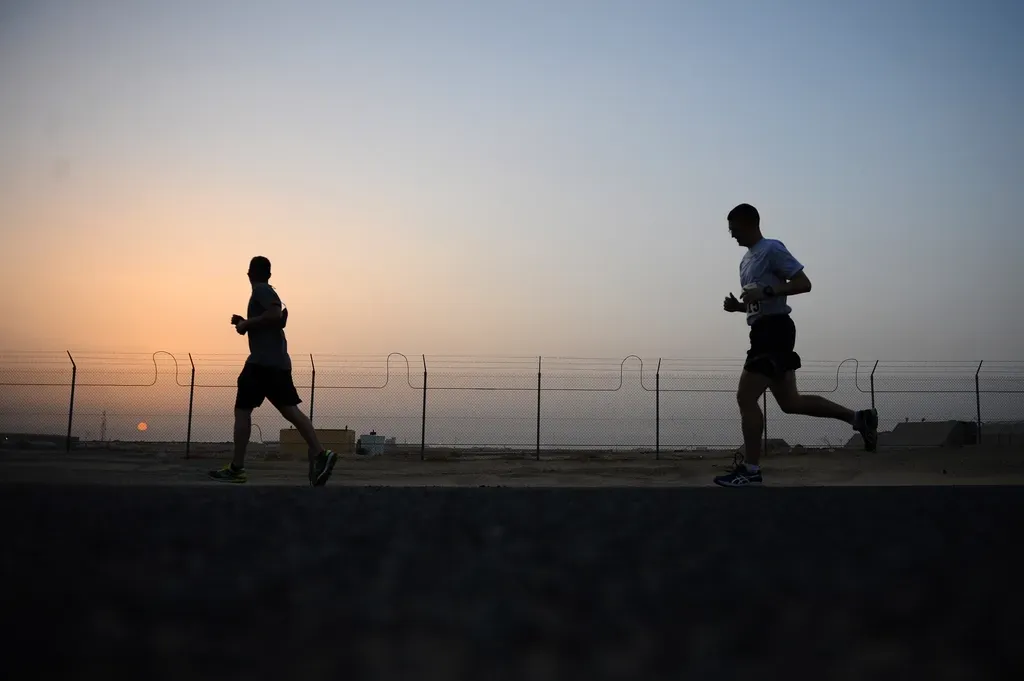
Today, that ancient survival toolkit has been repurposed into something completely different. Instead of chasing antelope, we chase personal records, stress relief, or a sense of identity. I still remember my first half marathon: no predators, plenty of water stations, and yet the last few miles felt like a negotiation with some very old part of my brain that kept asking why on earth we were still moving. When I crossed the finish line, the wave of satisfaction was out of proportion to the actual stakes. That overreaction is exactly the point – the system was tuned for life-or-death success, not for a Sunday fun run.
Culturally, we have wrapped this biology in stories and rituals: training plans, community runs, charity races, even social media bragging rights. Running becomes therapy, social glue, personal challenge. Underneath those modern layers, though, the same ancient circuits are firing: effort, persistence, heat, then a rush of neurochemicals that say, in effect, you did the hard thing, you kept going, this matters. Evolution may not have anticipated GPS watches or carbon-plated shoes, but the feeling of pushing your limits on a long run fits perfectly with a body and brain that once depended on endurance for survival.
Why It Matters: A Body Built to Move in a World Built to Sit

All of this might sound like an interesting trivia fact – humans are weird, we can run far – but it has a sharper edge in the world we actually live in. We now inhabit environments that make it incredibly easy to ignore what our bodies were built for. Chairs, cars, elevators, screens: almost everything pushes us toward being still. When you put an endurance-adapted animal into a low-movement lifestyle, the mismatch shows up in all the predictable ways: metabolic problems, aches and pains, restless minds. You do not need to run marathons to respect the design, but pretending we are not built for regular, sustained movement is a bit like owning a sports car and never leaving a parking lot.
The flip side is surprisingly hopeful. Because the anatomy that makes long-distance running possible is baked into nearly all of us, you do not have to be a natural-born athlete to tap into it. Slow jogging, brisk walking with occasional gentle runs, even playful, unstructured moving around in the heat – these all wake up systems that evolved over millions of years. You are not fragile by default; you are the descendant of people who could spend hours on their feet in tough conditions. In a culture obsessed with comfort, there is something quietly rebellious about honoring that lineage by going out for a run when you do not strictly have to.
Conclusion: The Only Ape That Runs for the Hell of It
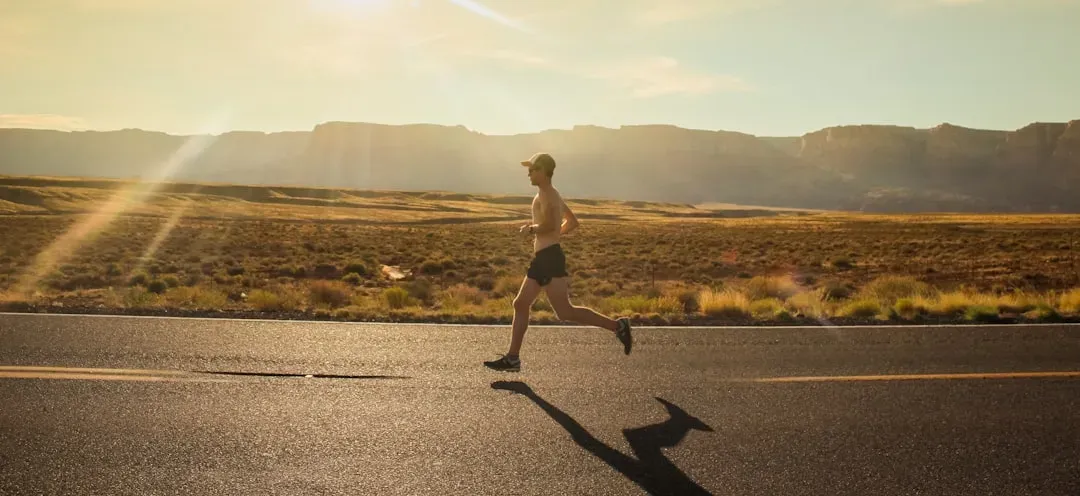
When you strip the story down, humans are the only primates – and among the very few animals at all – that will voluntarily run long distances for reasons that have nothing to do with immediate survival. We rebuilt our skeletons, ligaments, muscles, and cooling systems over roughly two million years to survive as endurance specialists, and then we turned that survival trait into a hobby, a sport, a coping strategy, and sometimes even a personality. That is both impressive and a little absurd. No chimpanzee signs up for a trail race; no gorilla heads out for a tempo run after work. Only we take this hard-earned hardware and use it to loop a city park before breakfast.
My own opinion is that we underestimate what this says about us. The fact that we willingly do something hard, uncomfortable, and time-consuming with no lion on our heels suggests that we are not just survival machines, but meaning-seeking ones. We run now not because we must, but because some deep part of us still recognizes the satisfaction of going far, staying upright, and proving that this strange, specialized body can do what it was shaped to do. The next time you pass a runner on an empty sidewalk, you are seeing an ancient survival strategy turned into a quiet, modern declaration: I am still that animal, even if the stakes have changed. Did you expect that?