For centuries, we thought we had evolution mostly figured out. Natural selection, random mutations, survival of the fittest – the textbook story felt complete, tidy, almost closed. Then science started pulling at the loose threads. And what unraveled was extraordinary.
The story of how life changes over time turns out to be far stranger, richer, and more surprising than any single theory could contain. New discoveries are piling up faster than classrooms can keep up, and some of the most foundational ideas in biology are being seriously challenged. Let’s dive in.
The Extended Evolutionary Synthesis: Rewriting the Rulebook
Here’s the thing most biology textbooks won’t tell you: Darwin’s original theory, even in its modernized form, may only be telling part of the story. The so-called Modern Synthesis, which dominated evolutionary thinking since the mid-20th century, asserts that adaptive evolution is exclusively due to gradual natural selection acting on heritable variability originating solely through accidental genetic changes. That sounds solid. But scientists are increasingly convinced it’s not enough.
The Extended Evolutionary Synthesis, or EES, assumes that developmental processes, operating through developmental bias and niche construction, as well as natural selection, contribute to the direction and rate of evolution. Think of it like upgrading from a black-and-white photo to full colour. Researchers have suggested that heredity extends beyond genes, identifying four dimensions of inheritance that influence evolution: genetic, epigenetic, behavioral, and symbolic, which includes transmission through language and other forms of communication.
Epigenetics: Your Environment Can Rewrite Your Children’s DNA
I know it sounds crazy, but your life experiences might be shaping the biology of your grandchildren. Epigenetics describes chemical tags, such as DNA methylation and histone modifications, that turn genes on or off without altering the underlying DNA sequence. Crucially, many of these tags survive the formation of gametes and are transmitted to offspring, allowing parental environments, including diet, stress, and toxins, to shape the phenotype of the next generation. That is not a small thing. That is a seismic shift in how we think about heredity.
Researchers found that offspring of women who experienced the Dutch famine had issues with glucose intolerance, increased obesity, and coronary heart disease. Specifically, when a woman was in early gestation and exposed to famine, the offspring had an increased risk of breast cancer. Similarly, when a woman was exposed to famine during mid-gestation, her offspring had increased cases of kidney damage and airway diseases. The echoes of hardship, it seems, can ripple across generations in ways we are only beginning to understand.
The Denisovan Legacy: Ancient DNA Still Living Inside Us
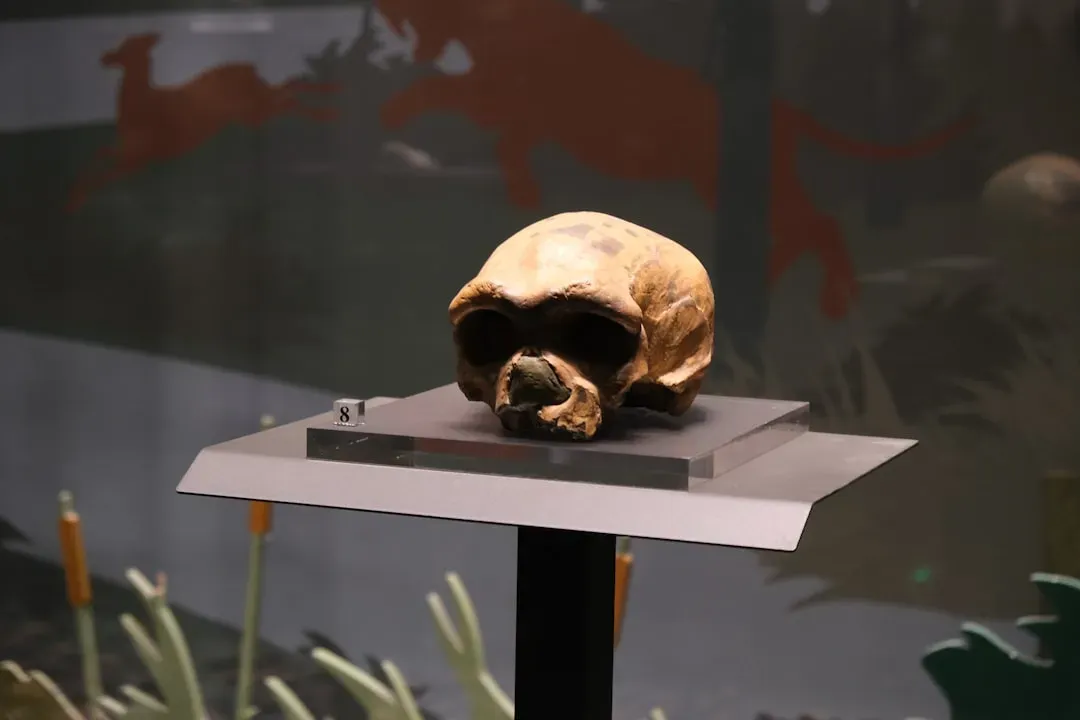
Human evolution’s biggest mystery, which emerged from a 60,000-year-old pinkie finger bone, finally started to unravel. Analysis of DNA extracted from the fossil revealed a previously unknown human population that had, in the distant past, encountered and interbred with our own species, Homo sapiens. These were the Denisovans. And they left a genetic legacy that is, frankly, astounding.
Denisovans left genetic fingerprints in modern humans across the globe. Multiple interbreeding events with distinct Denisovan populations helped shape traits like high-altitude survival in Tibetans, cold-weather adaptation in Inuits, and enhanced immunity. Their influence spanned from Siberia to South America, and scientists are now uncovering how these genetic gifts transformed human evolution. More recently, a gene variant from extinct Denisovans has been found at high frequencies in modern and ancient Indigenous American populations, suggesting it provided an evolutionary advantage during their migration and settlement. The gene, MUC19, is involved in the immune system.
Culture as an Evolutionary Force: The New Driver of Human Change

Evolution and culture have always been treated as separate conversations. One belongs in biology class, the other in anthropology. But researchers are now arguing that this division no longer holds up. Researchers at the University of Maine are theorizing that human beings may be in the midst of a major evolutionary shift, driven not by genes, but by culture. In a paper published in the Oxford journal BioScience, researchers argue that culture is overtaking genetics as the main force shaping human evolution.
Research suggests that culture solves problems much more rapidly than genetic evolution, suggesting our species may be in the middle of a great evolutionary transition. Cultural practices, from farming methods to legal codes, spread and adapt far faster than genes can, allowing human groups to adapt to new environments and solve novel problems. You can see this almost everywhere if you look. The speed at which humans adjusted to agriculture, to medicine, to literacy, vastly outpaces anything random mutation could produce alone.
Evolution Replayed: What Simulations Reveal About Life’s Direction
One of the most genuinely startling recent findings came not from a fossil dig or a genetics lab, but from a computer. Environmental change doesn’t affect evolution in a single, predictable way. In large-scale computer simulations, scientists discovered that some fluctuating conditions actually help populations evolve. Honest answer? Most scientists were surprised. Evolution has long been thought of as a slow, mostly directionless grind. The idea that certain chaotic environments might actively accelerate it is a reframing that has huge implications.
More recently, scientists are paying attention to the reverse relationship, specifically how rapid evolution can drive ecological dynamics. Current advances focus on better understanding the entire feedback loop: how ecological factors drive local microevolutionary processes, leading to the emergence of novel phenotypes that can modify ecosystem dynamics, which in turn reshapes the selective pressures acting on these species. It’s less like a one-way road and more like a constantly adjusting conversation between life and its environment. The traditional arrow of causation, it turns out, was pointing in only one direction when it should have been a loop.
Helpful Mutations Are More Common Than We Thought
For decades, evolutionary theory operated under a principle called the neutral theory, which basically argued that the vast majority of genetic mutations are either harmful or entirely irrelevant. Only an extremely small fraction were thought to be beneficial. A major evolutionary theory says most genetic changes don’t really matter, but new evidence suggests that’s not true. Researchers found that helpful mutations happen surprisingly often. That is a big deal. It means evolution may have more raw material to work with than we ever imagined.
Scientists are living in what some are calling a golden age of species discovery, now identifying more than 16,000 new species each year, revealing far more biodiversity than expected across animals, plants, fungi, and beyond. Still, the discovery about mutation rates strikes me as one of the most fundamental shifts of all. It doesn’t just add a footnote to existing theory. It potentially changes the pace, the scale, and the mechanism of evolution as a whole. It’s a little like learning that the engine has been running on twice as much fuel as your instruments showed.
Conclusion: Evolution Is Not a Closed Book
What makes all of this so thrilling, and if we’re being honest, a little unsettling, is just how much the story of life continues to surprise us. The more we look, the more we realize that evolution is not a settled science but a living, breathing investigation. Evolution is no longer a story of genes alone. Epigenetic memory, cultural learning, and developmental bias are reshaping how we model life’s diversity. Rather than a sudden revolution, the field is undergoing a measured, interdisciplinary expansion that promises richer predictions and more effective applications.
Every new discovery, whether it’s a Denisovan gene thriving in Indigenous American populations, a stress response passed down three generations, or a computer simulation revealing evolution’s unexpected accelerants, reminds us that life’s history is still being written. We are, in a very real sense, part of the ongoing story. The next forgotten chapter might already be buried in your DNA, waiting to be read.
What would you have guessed was the most powerful driver of human evolution? Tell us in the comments, because honestly, you might be more right than you think.