South Korea – Researchers uncovered a remarkable new species of chiton lurking in the phosphorite cave pools along the nation’s coasts. This ancient marine mollusk, named Acanthochitona feroxa, belongs to a lineage that has endured with little change for approximately 300 million years. The discovery highlights how modern genetic tools can reveal hidden biodiversity in familiar environments. Specimens collected from these unique habitats demonstrated distinct traits that set them apart from known relatives.
A Spiny Survivor Hiding in Plain Sight
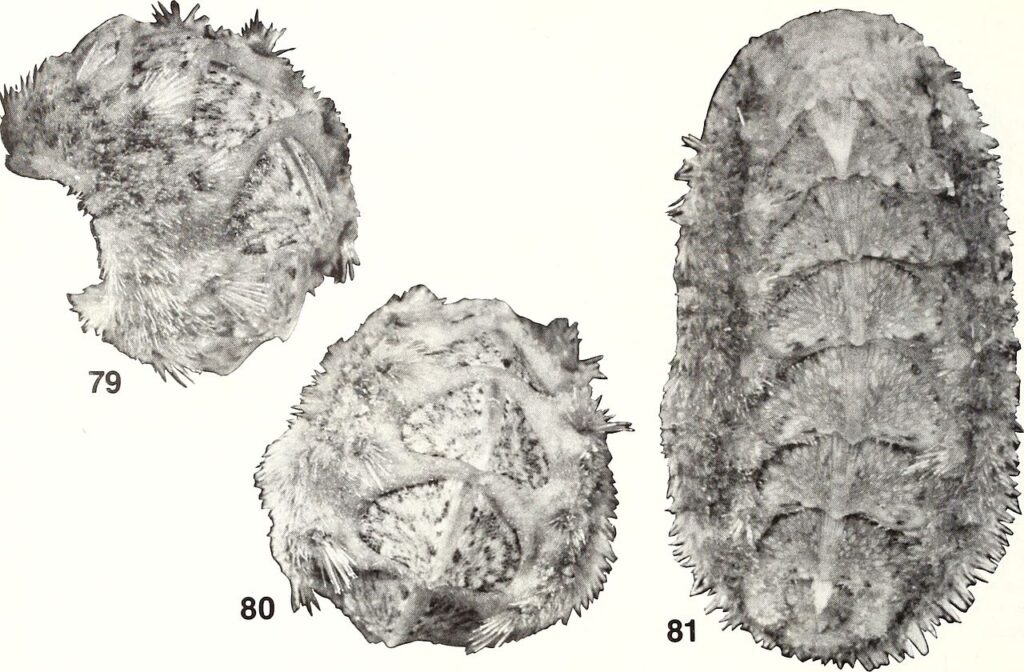
A Spiny Survivor Hiding in Plain Sight (Image Credits: Wikimedia)
Chitons like Acanthochitona feroxa possess a distinctive armored shell made of eight overlapping plates, allowing them to cling tightly to rocks and navigate rough surfaces. This new species stood out due to its bristling girdle covered in sharp, pointed needles and densely packed shell granules. Scientists chose the name “feroxa,” derived from the Latin word for “fierce,” to reflect this intimidating appearance.
The specimens came from phosphorite cave pools, where phosphate-rich deposits create specialized aquatic niches. These environments, often found along South Korea’s western and southern coasts, host diverse intertidal life under rocks and in tidal flats. Previous collections had mistaken A. feroxa for similar species, underscoring the challenges of identification based on looks alone.
Genetic Breakthrough Reveals the Truth
A team from Kyungpook National University, led by Ui Wook Hwang and I.H. Kim, turned to advanced sequencing of mitochondrial genomes and the COI gene for clarity. Analysis of 295 specimens across five South Korean Acanthochitona species confirmed A. feroxa as distinct. The genetic distance from its closest relative, A. defilippii, measured 36 stepwise mutations – farther than expected for look-alikes.
Morphological exams further supported the split. Key differences included the shape of the radula’s central tooth, girdle needle form, and shell granule density. “These findings contribute to the understanding of speciation and phylogenetic relationships within the Acanthochitonidae,” Hwang noted in the published study.
- Sharp girdle needles pointing outward
- Dense packing of shell granules
- Unique central radula tooth morphology
- Eight flexible shell plates for adhesion
- Magnetite-reinforced teeth for scraping algae
Evolutionary Stasis in an Ancient Lineage
Chitons trace their origins to around 300 million years ago, with some estimates placing the group even earlier at 500 million years. Their body plan has proven remarkably stable, earning them “living fossil” status. A. feroxa joins over 940 known chiton species, many of which thrive undetected amid morphological similarities.
The genus Acanthochitona dates to the Late Cretaceous, about 84 million years ago, when high sea levels spurred diversification. Genetic markers now provide tools to avoid past taxonomic errors. This discovery emphasizes the value of integrating DNA with traditional morphology in marine taxonomy.
Implications for Coastal Biodiversity
South Korea’s phosphorite cave pools and tidal flats represent understudied hotspots. Such habitats support resilient species adapted to fluctuating conditions. The identification of A. feroxa prompts revised field guides for regional chitons.
Researchers published their work in Marine Life Science & Technology, detailing a pictorial key for future surveys.View the study This approach could uncover more cryptic species in similar ecosystems worldwide.
Key Takeaways
- Acanthochitona feroxa was misidentified until genetic analysis in 2026.
- Its “fierce” spines and radula set it apart from five regional relatives.
- Chitons exemplify evolutionary conservation over 300 million years.
This find reminds us that Earth’s oceans still hold secrets in plain view. Routine surveys combined with genomics continue to rewrite biodiversity maps. What do you think about these enduring sea creatures? Tell us in the comments.