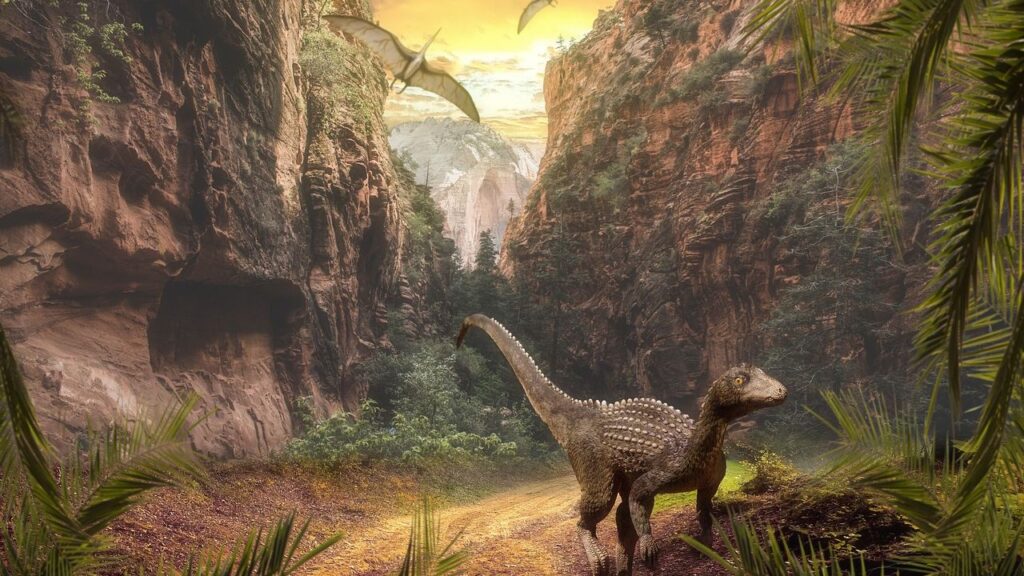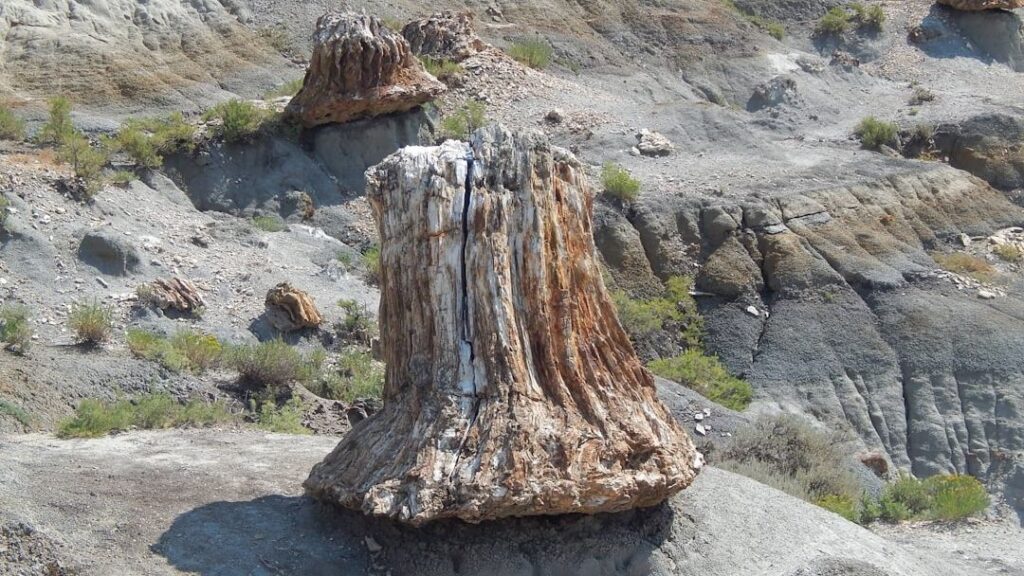
You probably picture fossils as lonely bones in dusty deserts, but some of the most jaw‑dropping fossils on Earth are not skeletons at all – they’re entire forests frozen in time. Imagine walking across a rocky riverbank and suddenly realizing the “boulders” under your feet are actually tree stumps that stood upright hundreds of millions of years ago. When you explore fossilized forests, you are not just looking at dead wood; you are stepping into an ancient ecosystem that once buzzed, crawled, and rustled with life.
These stone forests give you a direct line of sight into worlds that vanished long before humans appeared. They show you how trees first conquered the land, how climates shifted from swampy heat to icy cold, and how ecosystems collapsed and rebuilt themselves after mass extinctions. As you follow these traces, you start to see your own forests, parks, and backyards very differently: not as permanent scenery, but as a fleeting chapter in a much longer story written in rock.
How Forests Turn to Stone Without Vanishing Completely
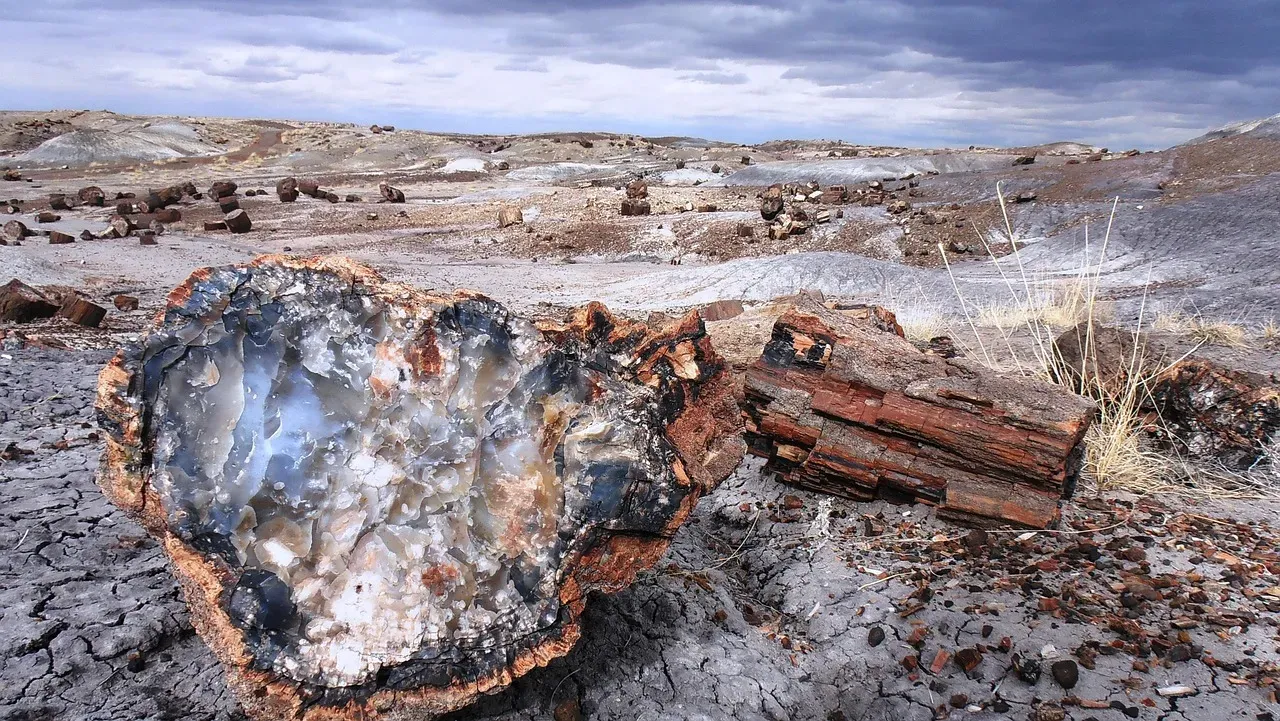
At first glance, the phrase “fossilized forest” sounds impossible: trees are supposed to rot, burn, or be chewed to shreds by insects, not sit around for hundreds of millions of years waiting to turn into stone. For a forest to fossilize, you need a near‑perfect chain of events where life, destruction, burial, and chemistry all line up just right. Typically, trees are rapidly buried by volcanic ash, floods, mudflows, or landslides, cutting them off from oxygen and slowing decay to a crawl.
Once those logs and stumps are sealed away, mineral‑rich water seeps through the buried wood, atom by atom replacing organic tissue with silica, calcite, or other minerals. You still see bark textures, growth rings, and even microscopic cell patterns, but now they are made of quartz or other rock. In some fossil forests, trunks are still standing upright where they grew, roots splayed into ancient soils, giving you a literal snapshot of the forest floor. You are not just looking at petrified wood; you are looking at a three‑dimensional pause button pressed on an entire ecosystem.
What Fossilized Forests Reveal About Ancient Climates
When you study a fossil forest, you are also reading an ancient weather report. Tree rings, leaf shapes, and species types all act like clues to temperature, rainfall, and seasonality. For example, in some high‑latitude fossil forests, you find trees that formed growth rings consistent with long dark winters and long bright summers, suggesting polar regions once supported dense, thriving woods rather than barren ice. That alone should make you rethink how dynamic Earth’s climate really is.
In other fossil forests, you see species adapted to steamy, swampy conditions, with roots tangled in coal‑forming peat and evidence for air thick with humidity. When you compare forests from different ages, you see entire climate regimes come and go: greenhouse worlds with no polar ice, followed by cooler intervals where glaciers advanced. By tracing these changes, you can better understand how today’s forests might respond to rapid warming, not because the past gives you a simple script, but because it shows you what is possible when climate swings hard.
The Carbon Story Written in Ancient Trees
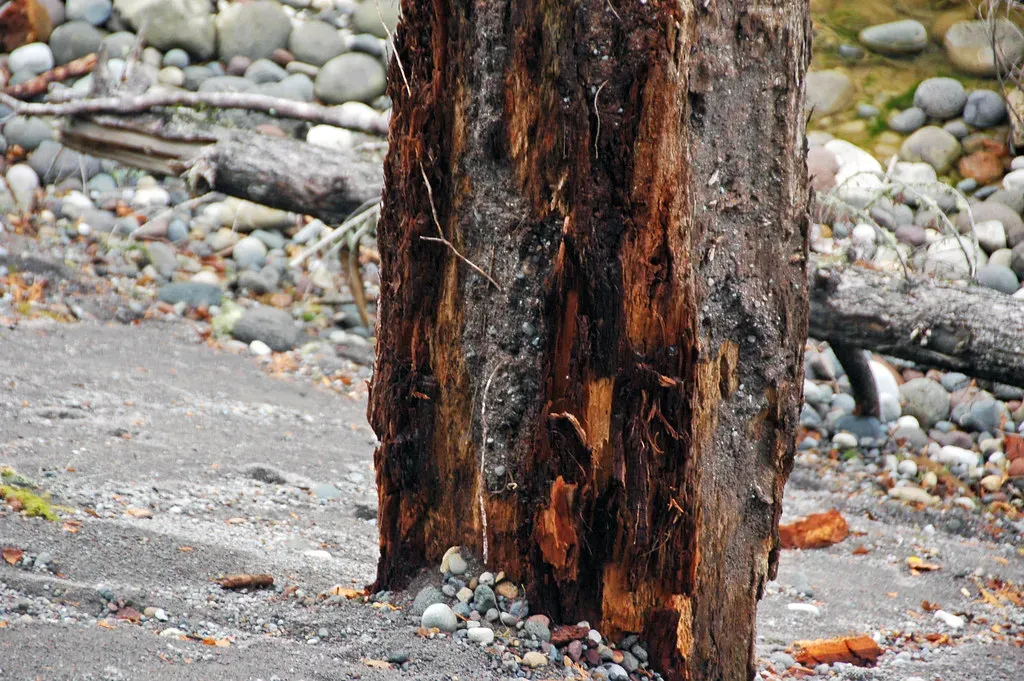
Every time you look at a fossil tree, you are staring at carbon that was once actively pulled out of the air. During certain periods in Earth’s history, especially in the late Paleozoic, vast swamp forests locked away enormous amounts of atmospheric carbon in wood and peat. Over millions of years, much of that buried plant matter became coal, effectively storing carbon underground and helping to drive down greenhouse gas levels. The result was a cooler global climate and even glaciations, all linked to forests doing what forests naturally do: photosynthesizing and dying in the right conditions.
When you view today’s climate crisis through the lens of fossil forests, the picture becomes more sobering and more hopeful at the same time. On one hand, when humans burn coal, oil, and gas, you are releasing carbon captured by ancient forests back into the atmosphere in a geological blink. On the other hand, fossil forests prove that vegetation has the power to reshape the planet’s carbon budget over long timescales. Modern reforestation and protection of remaining forests will not instantly recreate a coal‑age world, but they follow the same basic logic: let trees pull carbon from the sky and keep it stored as long as possible.
Life Between the Trunks: Reconstructing Prehistoric Ecosystems
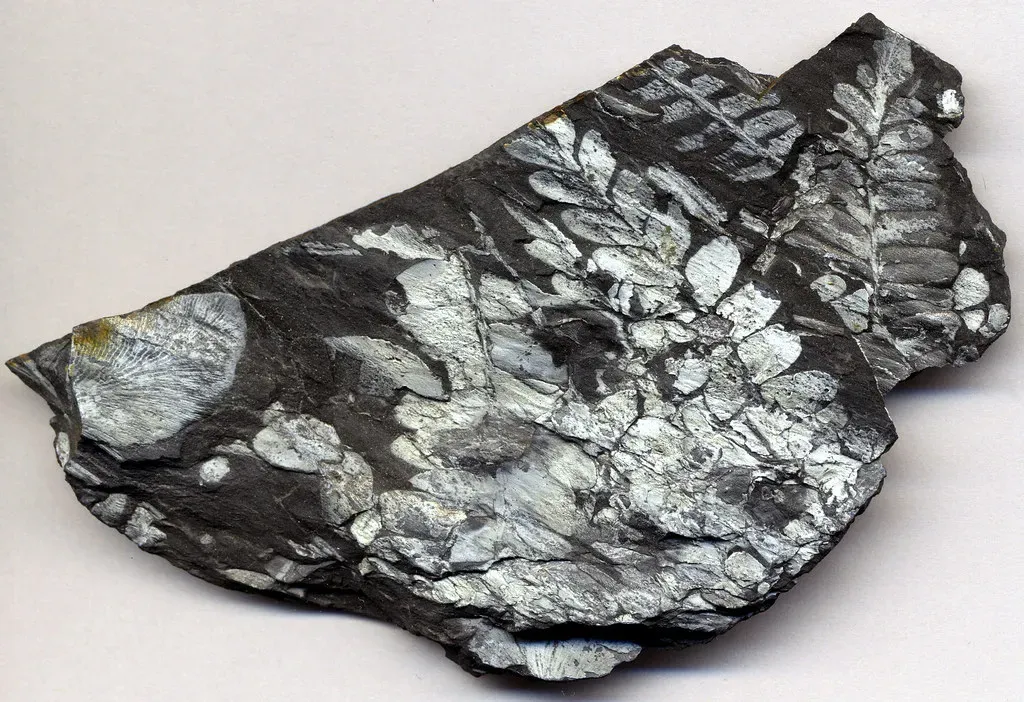
A fossil forest is not just a bunch of stone logs; it is a stage where you can try to rebuild the cast of characters that once lived there. When you combine fossil wood with leaves, spores, pollen, roots, insect traces, and sometimes animal remains, you start to piece together who lived where, who ate whom, and how energy flowed through the system. You might find roots intertwined with fungal structures, suggesting ancient versions of the same tree–fungus partnerships that help modern forests thrive. You can even spot fossilized burrows or trackways crisscrossing old forest floors, hinting at creatures scuttling through the undergrowth.
By comparing fossil forests from different ages, you can follow major evolutionary turning points. You see the rise of towering lycopsid and fern forests, then the spread of seed plants that could colonize drier ground, and later the arrival of flowering plants that reshaped food webs for insects and vertebrates alike. These changes are not abstract; they changed how shade fell, how leaf litter decomposed, and how entire landscapes looked and smelled. When you walk through a modern forest, you are moving through just one version of this long experiment in how to build a living, breathing ecosystem out of sunlight, rock, and time.
Where You Can See Fossilized Forests Today
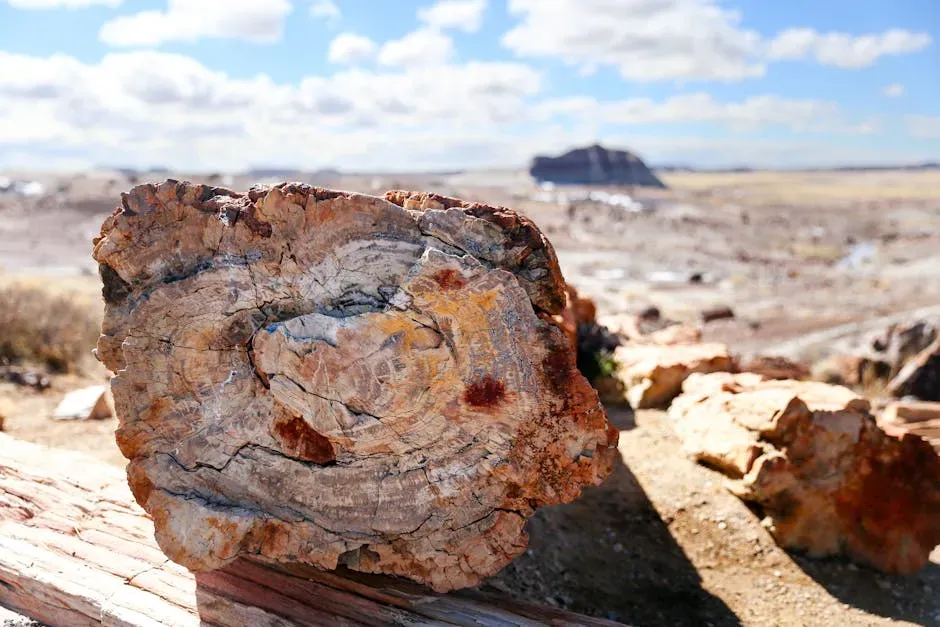
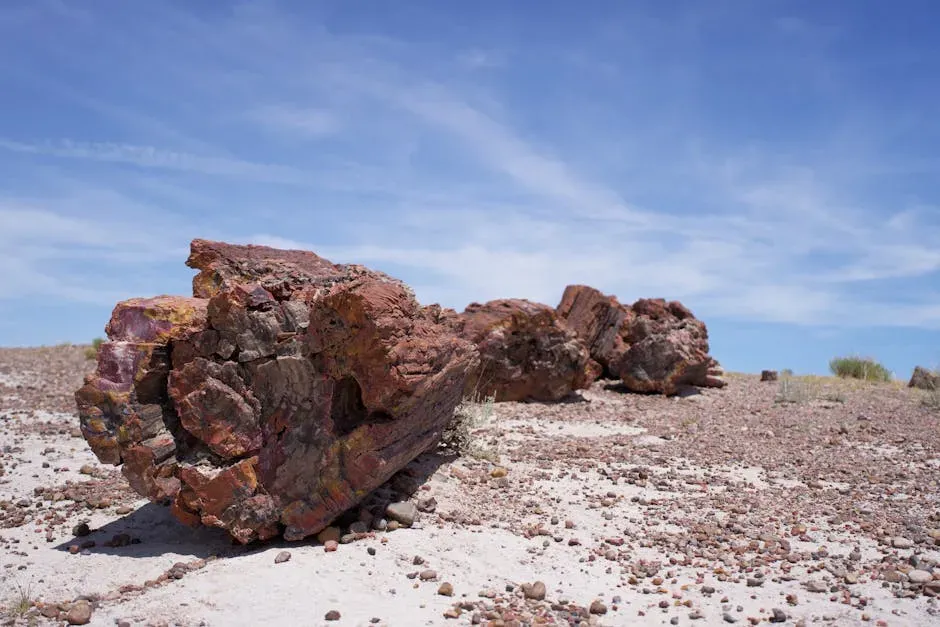
You do not have to be a scientist to stand inside a fossil forest; you just need to know where to go and what you are looking at. Around the world, there are parks and outcrops where ancient stumps still protrude from the ground, preserved in place. In some sites, you can literally stand inside the circle of roots of a tree that last grew before dinosaurs ever existed. Other locations showcase massive petrified logs lying where they fell, polished by erosion until growth rings and bark textures gleam in the sun like polished marble.
Museums and visitor centers often help you decode what you see by showing cross‑sections, microscope images, and reconstructions of what the forest might have looked like in life. When you visit these places, it helps to slow down and pay attention to small details: the direction a trunk lies, the shape of the root system, even the pattern of cracks in the stone. Once you train your eye, you realize you are not just looking at pretty rocks; you are walking through a ghost forest, reading a story that has been quietly waiting for someone curious enough to notice.
What Fossilized Forests Teach You About Change and Extinction
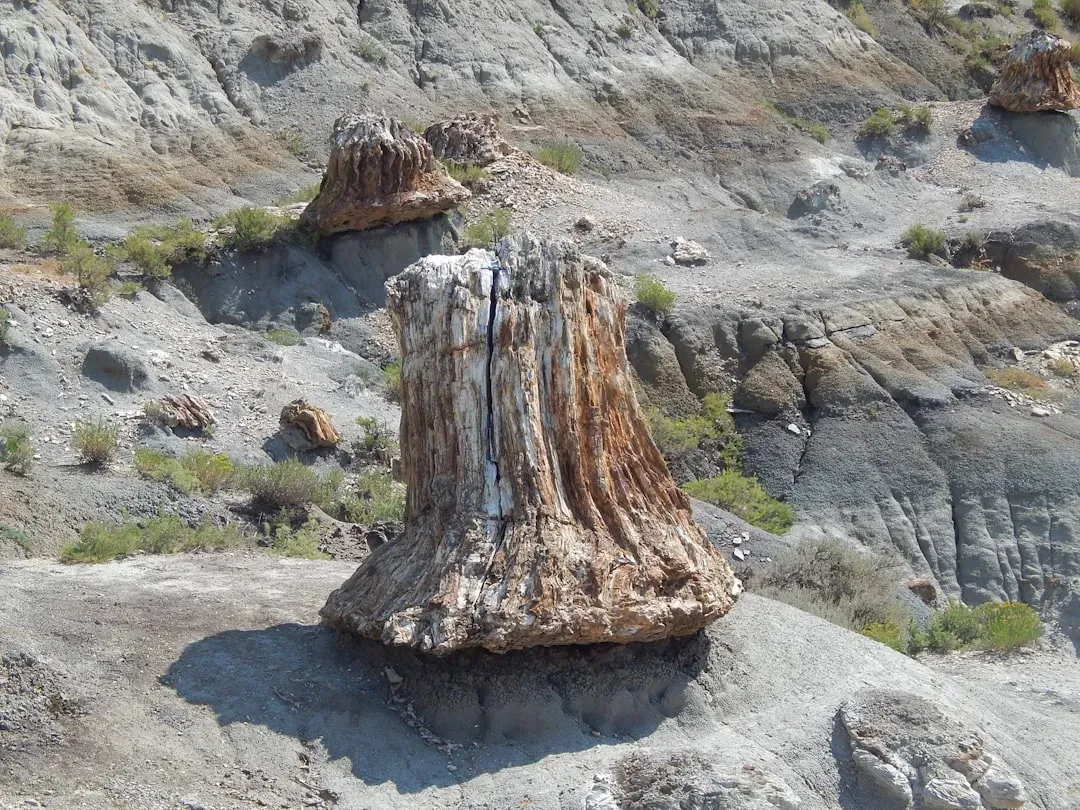
Every fossil forest carries a bittersweet message: no ecosystem, no matter how lush or widespread, is guaranteed to last. Many preserved forests are linked to volcanic eruptions, floods, or other catastrophes that abruptly buried them. Others mark transitions where old plant communities were eventually replaced by new types of vegetation better suited to changing climates. When you zoom out over hundreds of millions of years, you see a pattern of creation, collapse, and renewal that makes even the longest‑lived modern forest seem temporary.
Instead of making you feel hopeless, this deep‑time perspective can actually sharpen your sense of responsibility. You see that Earth will eventually recover from human impacts, but not necessarily in ways that favor your species or the ecosystems you love. Fossil forests show you that life is resilient but not gentle; extinctions open doors for new forms, but they also permanently erase unique worlds. When you realize you are living in one tiny, fragile chapter of this story, it becomes harder to shrug off deforestation or climate change as someone else’s problem.
Why These Stone Forests Matter for Your Future
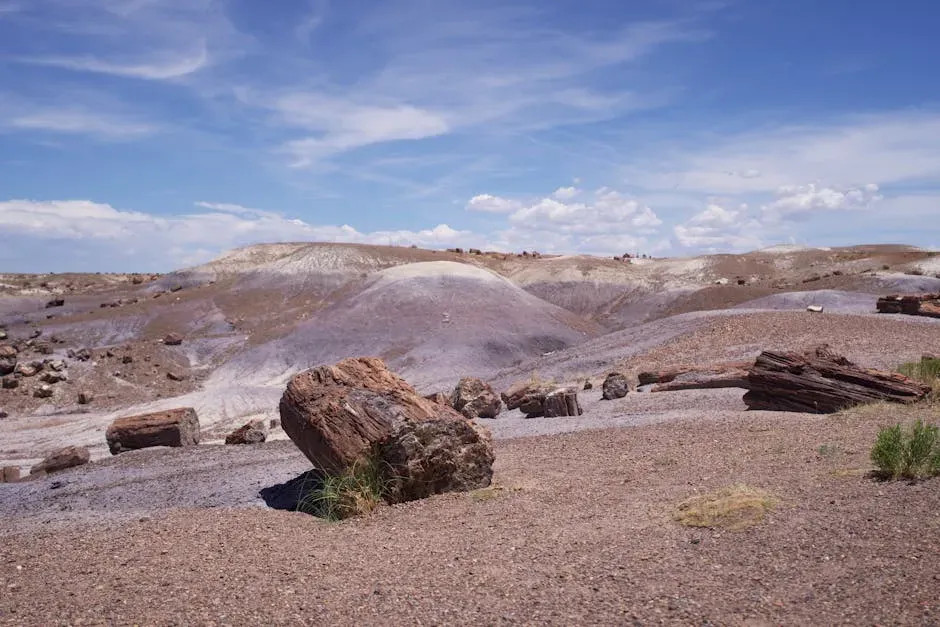
Standing in a fossil forest, you are caught between two extremes of time: trees that lived in a world you can barely imagine, and a future you are actively shaping with every choice you make. These ancient ecosystems remind you that forests are not just scenery; they are engines that move water, carbon, and energy around the planet. Losing them, whether in the deep past or today, always comes with consequences that ripple far beyond the treeline. When you look at a petrified trunk, you are seeing both a warning and a blueprint.
The warning is simple: ignore the health of forests, and you gamble with climate, biodiversity, and your own resilience. The blueprint is more hopeful: protect and restore forests, and you tap into a process that has stabilized Earth’s systems again and again. You do not need to recreate a prehistoric swamp or plant extinct species to follow that lead; you just need to value living forests as much as you admire their fossilized ancestors. The next time you see a tree, whether on a city street or a mountain trail, you might quietly ask yourself: if this were fossilized and discovered millions of years from now, what story would it tell about how you treated your world?
In the end, fossilized forests are not just relics; they are mirrors held up to your present and your future. They show you what is possible when life and climate dance in balance, and what is lost when that balance snaps. You are lucky enough to live at a time when you can still learn from both stone forests and living ones. The real question is what you choose to do with that knowledge, while your own forests are still full of rustling leaves instead of silent rock.