Northern New Mexico – A partial skull unearthed at the renowned Ghost Ranch has unveiled Ptychotherates bucculentus, a newly identified carnivorous dinosaur from the late Triassic period. Researchers described the species from fossils dating approximately 201 million years ago, offering a window into the final days of early dinosaur diversity before a massive extinction reshaped life on Earth. The discovery underscores the persistence of ancient predator lineages in what is now the American Southwest.
From Dusty Drawer to Scientific Spotlight
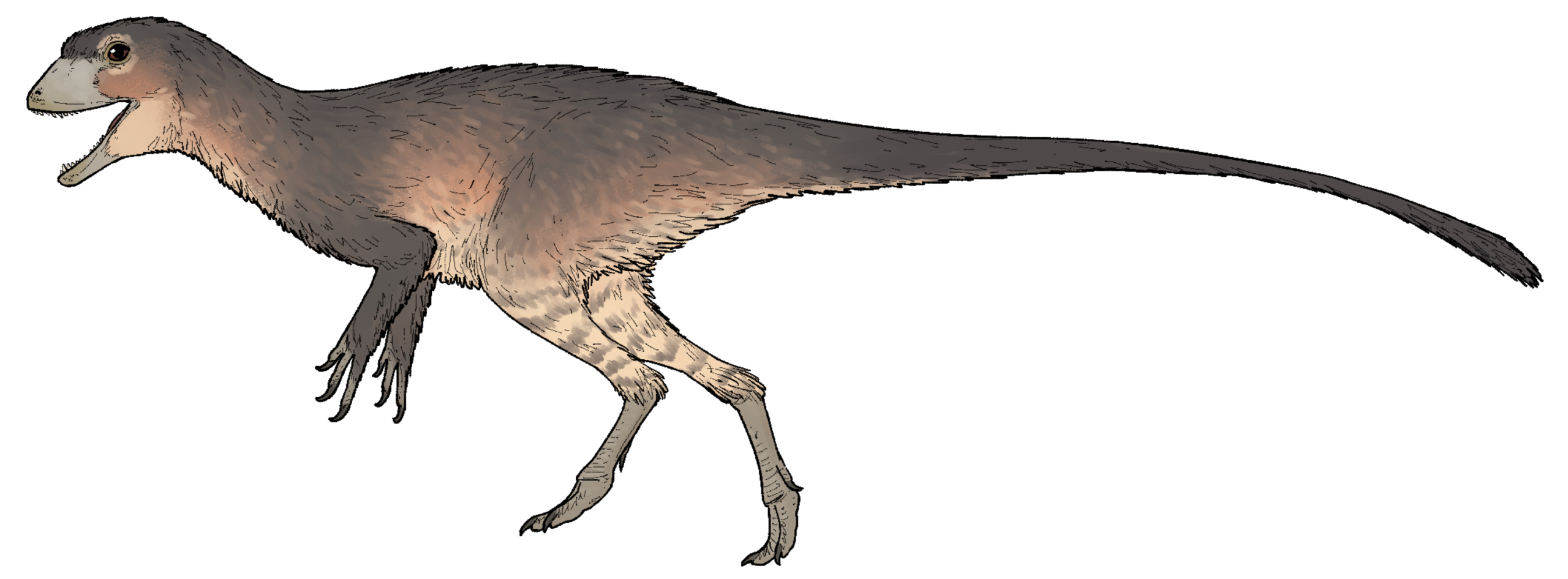
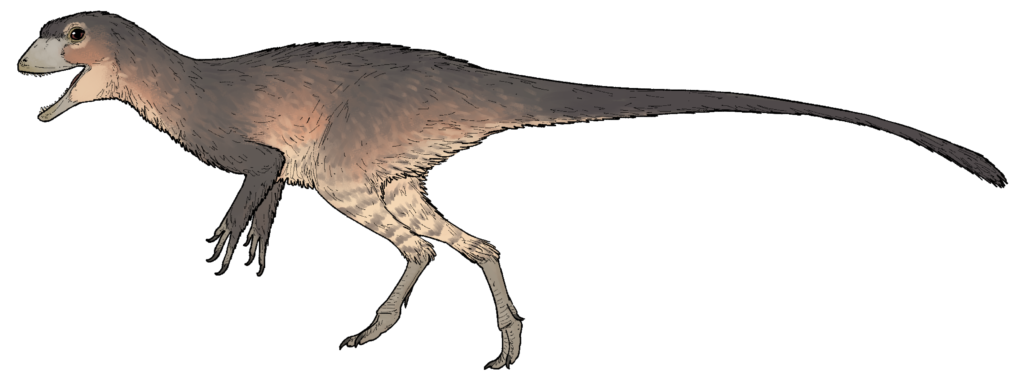
From Dusty Drawer to Scientific Spotlight (Image Credits: Upload.wikimedia.org)
A team from the Carnegie Museum of Natural History first recovered the skull in 1982 at the Coelophysis Quarry within the Chinle Formation. The specimen, cataloged as CM 31368, languished in storage for over three decades until geobiologist Sterling J. Nesbitt rediscovered it. He enlisted first-year geosciences student Simba Srivastava at Virginia Tech to tackle the challenging reconstruction. Srivastava spent two years digitally segmenting the crushed bones using computed tomography scans and producing a 3D-printed model.
The effort culminated in a 2026 paper in Papers in Palaeontology, where Srivastava and Nesbitt formally named the dinosaur. The site itself represents a mass bonebed dominated by Coelophysis bauri fossils, but this skull stood out as unique. Advanced imaging techniques proved essential, as the fossil arrived heavily distorted and disarticulated. This student-led analysis transformed a “uniquely sucky specimen,” as Srivastava called it, into a key evolutionary puzzle piece.
Anatomy of the ‘Full-Cheeked’ Hunter
The skull measured about 22 centimeters long, indicating a relatively tall and narrow head for its era. Paleontologists noted massive cheekbones formed by an exceptionally deep jugal bone – the tallest among all known Triassic dinosaurs. A wide braincase and evidence of a short, deep snout further distinguished the predator. Teeth featured fine serrations, with 4-5 denticles per millimeter on maxillary crowns and 5-6 on dentary ones, suited for slicing flesh.
Srivastava and Nesbitt chose the name Ptychotherates bucculentus – “folded hunter with full cheeks” – to reflect both the reconstruction challenges and the prominent facial structure. Other traits included a symmetrical prefrontal in lateral view, an upturned retroarticular process, and distinctive fossae on the quadrate and otoccipital. These features marked it as carnivorous and basal saurischian.
- Deepest jugal body of any Triassic dinosaur, over three times deeper than its posterior process.
- Serrated, recurved teeth with pointed apices for carnivory.
- Laterally flat jugal and overhanging postorbital elements framing the orbit.
- Flat dorsal surfaces on nasal and frontals.
Position Within Early Dinosaur Lineages
Phylogenetic studies placed Ptychotherates firmly within Herrerasauria, an early-evolving group of carnivorous dinosaurs. It joined the newly defined Morphoraptora clade, alongside Tawa hallae, Chindesaurus bryansmalli, and Daemonosaurus chauliodus. This grouping, dubbed “form robbers” for their theropod-like traits despite basal status, appeared exclusive to southwestern U.S. Upper Triassic deposits. Shared synapomorphies included specific fossae and a tall jugal.
Analyses using updated matrices from prior studies consistently supported these ties, with Ptychotherates closest to Tawa hallae in some trees. Unlike higher-latitude sites where neotheropods dominated by the Norian-Rhaetian, low-latitude assemblages like Ghost Ranch preserved this diversity.
| Dinosaur | Key Skull Feature | Relation to Ptychotherates |
|---|---|---|
| Tawa hallae | Tall, flat jugal | Closest relative in Morphoraptora |
| Chindesaurus bryansmalli | Similar dentition | Sister taxon |
| Daemonosaurus chauliodus | Fine-serrated teeth | Within Morphoraptora |
Challenging Views on Triassic Extinction
Ptychotherates lived during the Rhaetian or latest Norian, potentially right before the end-Triassic extinction around 201 million years ago. Scientists previously thought herrerasaurs had faded earlier, supplanted by advanced theropods. Yet this specimen proved such lineages lingered in equatorial Pangea regions. “This forces us to reconsider the impact of the end-Triassic extinction as something that wiped out not just the competitors to dinosaurs, but some long-standing dinosaur lineages themselves,” Srivastava stated.
The American Southwest may have served as a refugium, where these “museum” species endured longer than elsewhere. No later herrerasaurians appear in the record, linking their demise to the extinction that cleared paths for Jurassic giants. This find enriches understanding of low-latitude dinosaur dynamics during a pivotal transition.
- Ptychotherates bucculentus represents herrerasaurian persistence into the Triassic’s final moments.
- Its unique skull traits highlight untapped early dinosaur diversity.
- The end-Triassic event likely extinguished basal saurischians alongside rivals.
This breakthrough from a single, battered skull reminds us how fragile fossils can rewrite deep time. As techniques like CT scanning unlock hidden stories, more surprises await in sites like Ghost Ranch. What do you think about this Triassic survivor? Tell us in the comments.