Clear plastic cups and pitchers sat on a wooden table in Des Moines, Iowa, as researchers pretended to pour invisible juice for a bonobo named Kanzi. The ape consistently selected the cup that had been “filled,” demonstrating an ability long considered uniquely human. This moment from experiments conducted in 2024 captured headlines earlier this year and formed part of a broader wave of discoveries reshaping views on ape cognition. Recent studies reveal great apes engaging in pretend play, revising beliefs based on evidence, and exhibiting cultural variations, prompting scientists to question the boundaries between animal and human intelligence.
Kanzi the Bonobo Masters Pretend Play
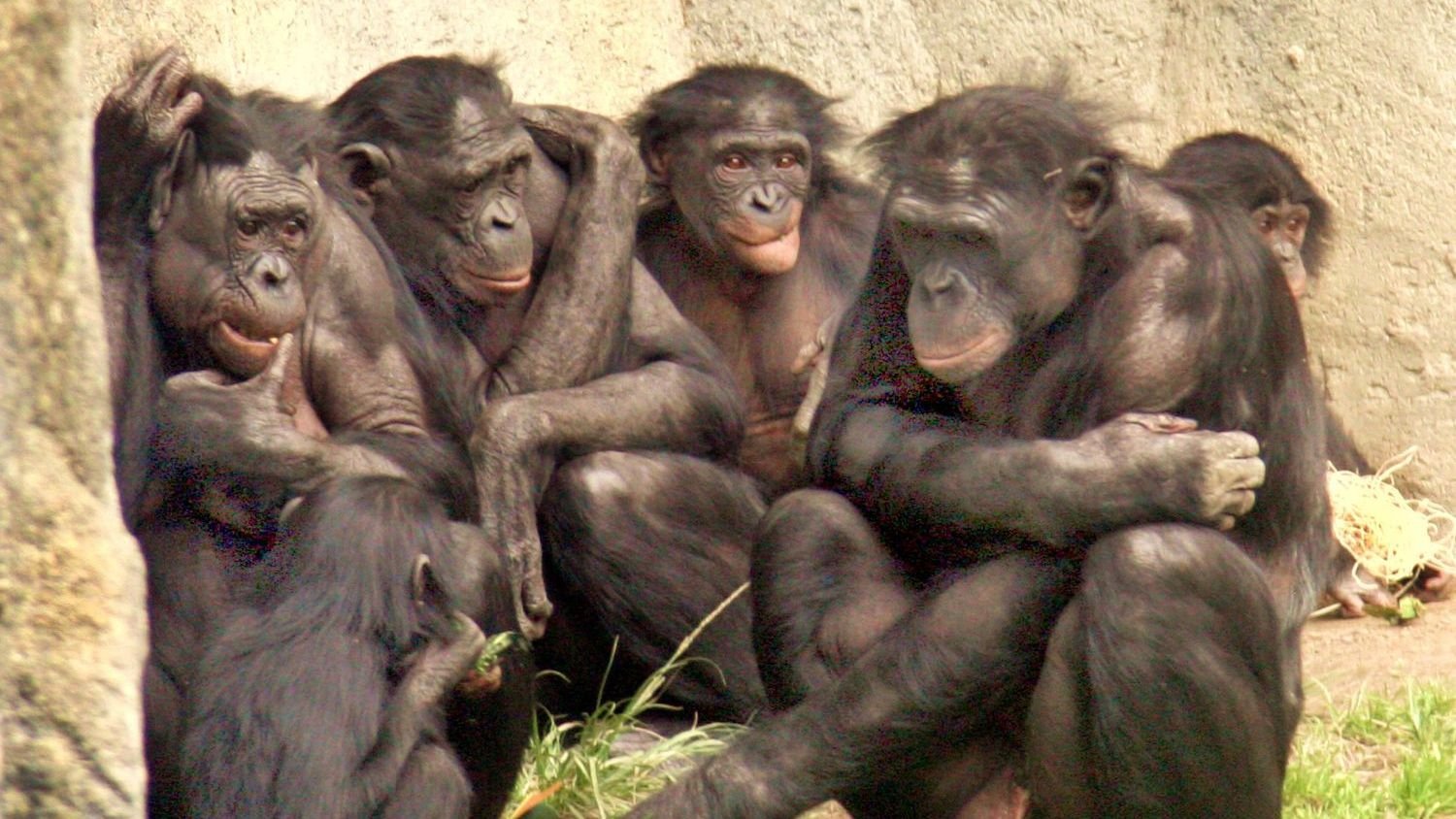
Kanzi the Bonobo Masters Pretend Play (Image Credits: Upload.wikimedia.org)
Researchers at the Ape Initiative facility tested Kanzi’s capacity for imagination through tea party scenarios modeled after children’s games. In one setup, an experimenter verbally prompted the 44-year-old bonobo: “Kanzi, let’s play a game. Let’s find the juice,” before simulating pouring pretend juice into cups and then emptying one. Kanzi pointed to the correct cup containing the imaginary juice in 34 out of 50 trials, even after locations changed. He distinguished pretend from real juice, opting for the actual version in 14 of 18 opportunities when both appeared.
These results, published in Science in February 2026, marked the first rigorous evidence of pretense in a great ape. Lead author Amalia Bastos, now at the University of St Andrews, observed that Kanzi generated mental representations of absent objects while recognizing their unreality. Co-author Christopher Krupenye of Johns Hopkins University called it “game-changing,” noting it expanded apes’ mental lives beyond the immediate present.
Chimpanzees Update Beliefs Like Logicians
At Ngamba Island chimpanzee sanctuary in Uganda, a 2025 study probed how apes handle conflicting evidence. Experimenters rattled one box to hint at food inside, prompting an initial choice, then revealed a treat in the other via a stronger cue like an apple. Rational thinkers would switch based on the new information, and the chimpanzees did so reliably. This behavior indicated they monitored reasons for their beliefs and adjusted accordingly.
Hanna Schleihauf of Utrecht University led the work, published in Science, and explained the process: “If you hold a certain belief for a certain reason, and then you learn that your reason is wrong, you should actually drop your belief.” The findings countered simpler explanations like impulsivity, affirming metacognitive demands in nonhuman primates.
Memory, Social Insight, and Cultural Nuances
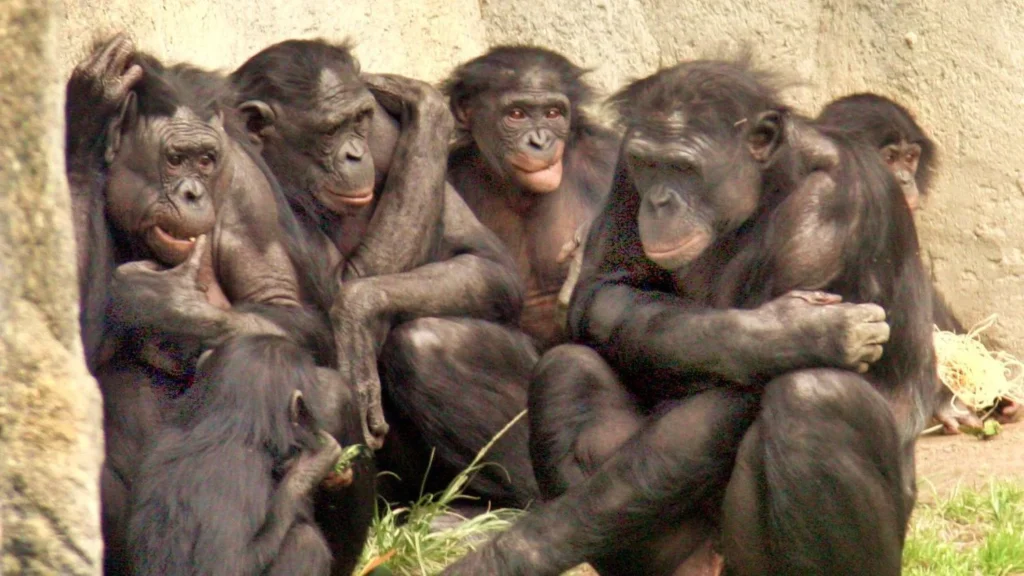
Apes also retain social memories for decades. Eye-tracking tests on zoo-housed chimpanzees and bonobos showed prolonged gazes at images of long-lost groupmates, up to 26 years absent. Krupenye highlighted one bonobo’s strong recognition bias, suggesting profound emotional continuity. Theory of mind – grasping that others hold different beliefs – emerged as another shared trait, shifting consensus over three decades from skepticism to acceptance.
Cultural differences further blurred lines. Chimpanzee communities interpreted leaf-biting signals variably as play or mating cues, while tool preferences ranged from wood to stone hammers. Kristin Andrews of City University of New York stressed adaptation needs for traveling chimps, akin to human immigrants.
Key Ape Abilities Paralleling Humans:
- Pretend play with imaginary objects
- Belief revision based on evidence strength
- Long-term recognition of absent individuals
- Understanding others’ mental states
- Group-specific cultural signals and tools
Healing Wounds and Playful Bonds
Practical ingenuity appeared in a Sumatran orangutan named Rakus, who in 2022 chewed liana vine into a paste and applied it to a facial wound in Indonesia’s Gunung Leuser national park. The injury healed without infection, the first documented active plant-based self-treatment in a nonhuman animal. Isabelle Laumer of the Max Planck Institute noted no prior reports of such behavior.
Playful teasing united species: orangutans, bonobos, chimpanzees, and gorillas tugged tails or withheld objects to provoke reactions. Gorillas kissed, and bonobos cooperated across groups. Even chimpanzees fixated on crystals, mirroring human curiosities.
Urgent Calls for Protection
All seven great ape species face endangerment, from habitat loss to poaching. Bornean orangutans lost 150,000 individuals in 16 years. Andrews advocated “cultural heritage sites” to safeguard behavioral diversity, as genetic preservation alone misses transmitted knowledge.
These revelations, rooted in our 6-to-9-million-year divergence, illuminate human origins while demanding ethical shifts. Krupenye reflected: “We’re working with these remarkable creatures with rich mental lives that have so much more going on under the surface.” As apes prove less distant, conservation efforts gain moral weight, urging protection of minds as intricate as our own.