
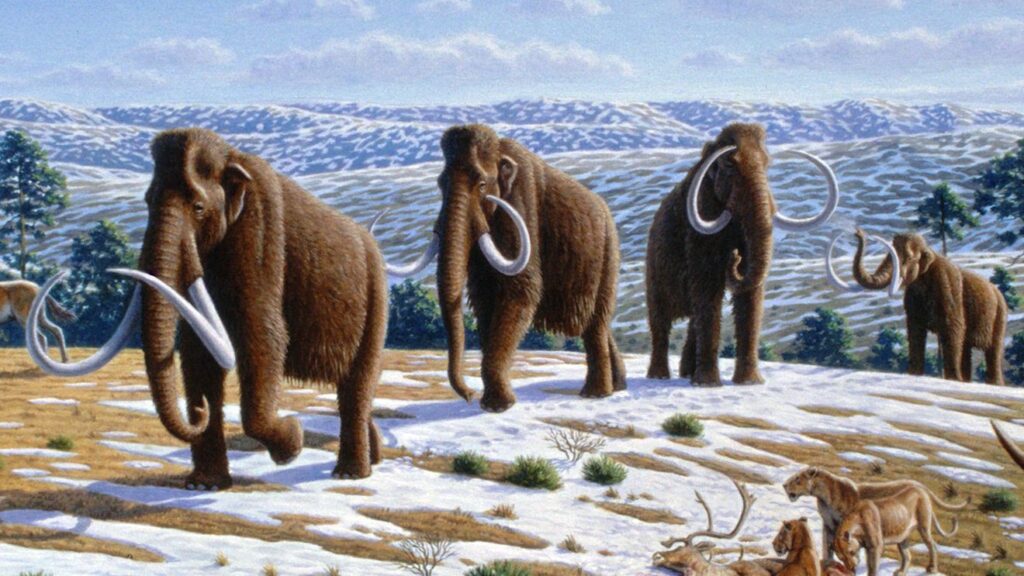
Imagine walking across a frozen plain and suddenly realizing the dark “hill” on the horizon is moving. As you squint into the wind, that hill turns into a towering shape with sweeping tusks, shaggy hair, and the slow, heavy confidence of an animal that fears almost nothing. For many thousands of years, this was not a fantasy scene. It was reality for our ancestors, who shared Ice Age landscapes with woolly mammoths in a relationship that was part opportunity, part danger, and part long, slow tragedy.
We tend to picture mammoths only as museum skeletons or cartoon characters, but for ancient people they were food, fuel, shelter, tools, and sometimes a spiritual presence woven into their stories and rituals. The truth is, we do not have a perfect, frame‑by‑frame record of any single encounter. Instead, we have footprints, butchered bones, cave art, stone tools, and a landscape written in ice and sediment. When you put that evidence together, a surprisingly vivid picture emerges of how humans likely met these giants, how they hunted and used them, and how, in the end, both species shaped each other’s fate.
Life on the Mammoth Steppe: The Shared World of Humans and Giants
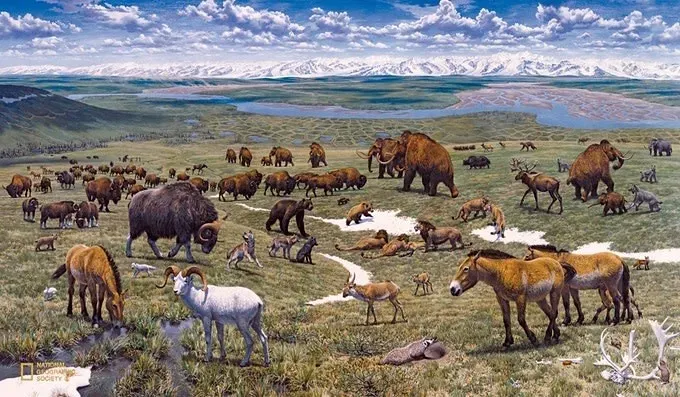
One of the most surprising facts about the Ice Age is that it was not just endless walls of ice. Between the glaciers stretched an enormous belt of dry, windswept grassland called the mammoth steppe, running from western Europe across Siberia and into North America. This was an open world of low shrubs, hardy grasses, and scattered patches of forest, with brutally cold winters, dusty summers, and huge herds of grazing animals moving across it like living rivers. Woolly mammoths, with their thick coats, humped shoulders, and long tusks, were among the most visible and impressive inhabitants of this ecosystem.
Our human ancestors were not just passing tourists in this landscape; they were permanent residents. Groups of hunter‑gatherers followed migration routes, camped along rivers, and returned to good hunting spots year after year, just as caribou herds or bison might circle familiar ranges today. The same watering holes that drew mammoths also drew people, and the same valleys that funneled herds became natural ambush points. Humans and mammoths were constantly overlapping in space and time, noticing each other, watching and learning each other’s patterns, the way neighbors in a small town quietly keep track of one another.
First Encounters: Curiosity, Caution, and the Shock of Scale
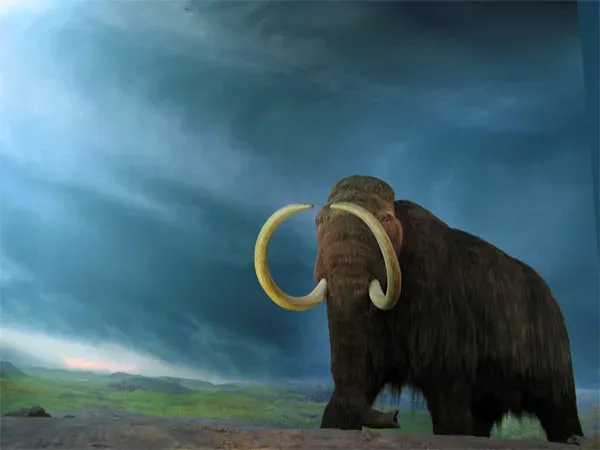
It is easy to forget how shocking a mammoth would have looked when you first saw one up close. For a child in an Ice Age band, the first glimpse might have been from the safety of a ridge: a shaggy brown mass taller than any animal they had ever seen, tusks curving out like the branches of a fallen tree, steam puffing from its trunk in the cold air. Adults, used to danger, would likely have been more cautious than awed. Predators were a constant concern, but this was not like a wolf or a big cat. A mammoth was closer to a moving landscape feature than to everyday game.
Early encounters probably mixed curiosity with a deep instinct for self‑preservation. Getting too close to a healthy adult mammoth would have been foolish; one charge could flatten a human the way a truck demolishes a bicycle. So people watched from a distance, learning how the herds moved, which trails they used, when they gathered at water, and how they reacted to noise or fire. Over generations, this curiosity evolved into practical knowledge: where to stand, when to approach, and when to simply back off and live to hunt another day. That slow, careful observation may have been the first step toward more deliberate and organized mammoth hunting.
How Do You Hunt Something That Big? Strategy Over Strength
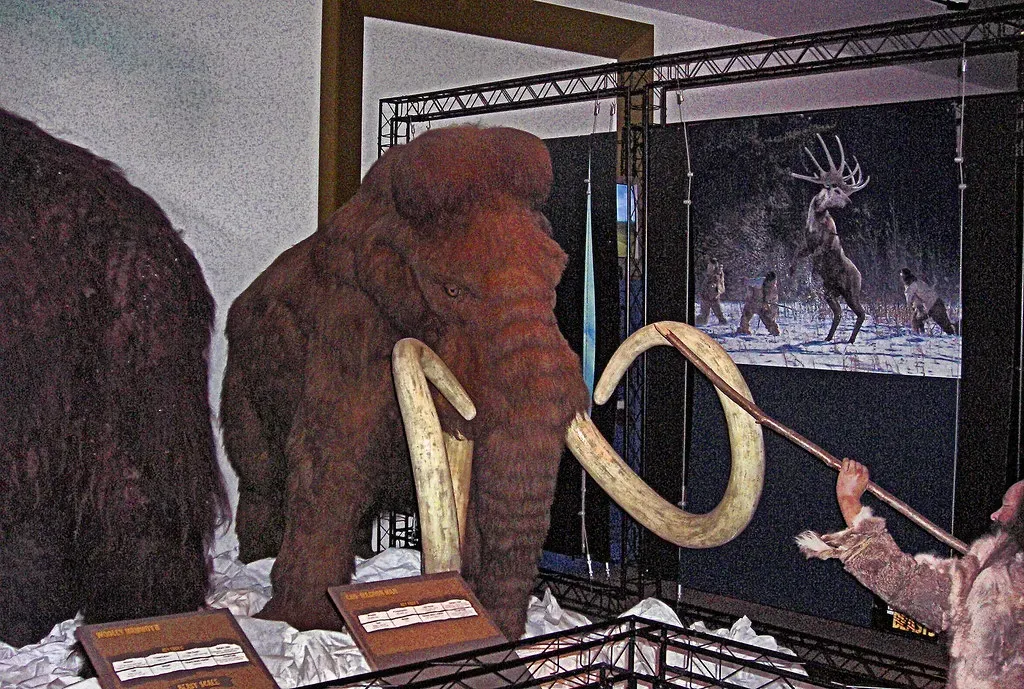
When you think about a handful of humans trying to bring down a multi‑ton mammoth, it almost sounds impossible. Yet archaeological sites with butchered mammoth bones and stone tools show that people not only killed them, but did so often enough that it left a mark in the fossil record. The key was not brute force; it was strategy. Hunters used the landscape itself as a weapon, driving animals toward swamps, ravines, or soft ground where a mammoth could stumble, become trapped, or be slowed down enough for spears and later projectiles to do real damage.
There is evidence of mass‑kill sites where several mammoths died in the same place, suggesting that whole herds were sometimes driven into dangerous areas or toward hidden hunters. People likely targeted the most vulnerable animals: young, old, sick, or isolated individuals that strayed from the group. Even then, a single mistake could be fatal, so cooperation was non‑negotiable. I like to think of these hunts a bit like modern team sports, except with much higher stakes: a group reading each other’s movements, adjusting on the fly, and trusting that everyone will do their part – only instead of cheering at the end, they got meat, fat, bones, and a better chance at making it through the winter.
The Mammoth That Became a Village: Meat, Tools, Shelter, and Fire
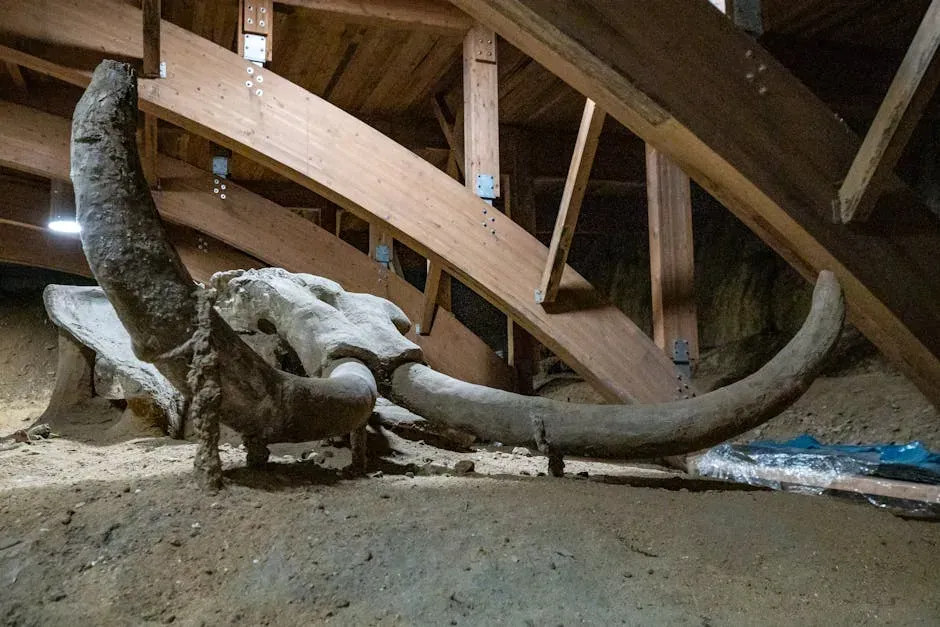
When a mammoth finally went down, it was not just a meal. It was closer to someone dropping off an entire hardware store, lumberyard, and pantry in the middle of camp. The meat alone could feed a group for weeks if carefully processed, dried, and stored. Fat, especially in cold climates, was as valuable as protein, serving as dense energy for bodies working overtime to stay warm. The hides and thick hair could be turned into clothing, blankets, and coverings for shelters, essential in sub‑freezing temperatures where a careless night could be deadly.
The bones and tusks opened up a different set of possibilities. Archaeologists have found shelters built from mammoth bones, arranged in circles or arcs and possibly covered with hides, like a cross between a tent and a bone igloo. Tusks were carved into tools, art objects, and perhaps symbolic items that carried meaning beyond their practical use. In some cases, even the dried dung of mammoths and other large herbivores likely served as fuel when wood was scarce, turning every part of the animal into something useful. One mammoth could quite literally power a tiny village, not just for days, but for months, reshaping daily life in a way that is hard to replicate with any single resource today.
Mammoths in the Mind: Art, Stories, and Spiritual Weight
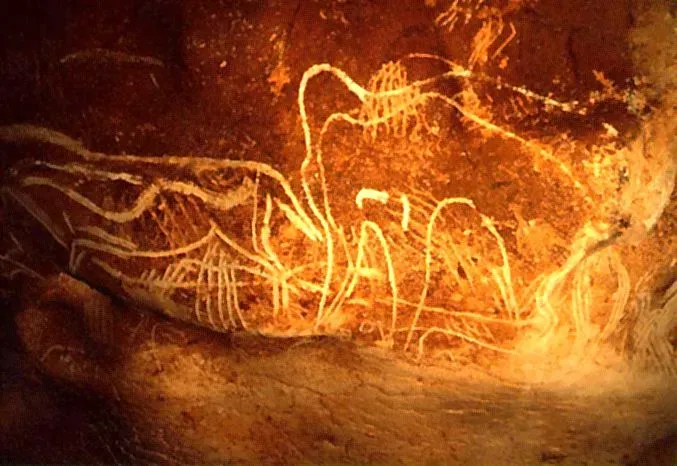
Evidence from Ice Age art and carvings suggests that mammoths did not just live in the landscape; they lived in people’s imaginations. Cave paintings and engraved bones show careful depictions of mammoths, sometimes detailed enough to capture the curve of the tusks or the shaggy outline of the body. You do not bother to paint something over and over unless it matters to you. For ancient artists, the mammoth seems to have been more than background scenery. It was a presence worth recording, maybe even revering, on the walls that sheltered their communities.
We do not know exactly what stories were told about these animals, but it is hard to believe they were only seen as walking meat. When a single creature can feed you, shelter you, and equip you, it naturally takes on a kind of mythic importance. Perhaps mammoths were woven into origin tales, or seen as gifts from powerful forces that controlled the weather and the hunt. In my view, it is very likely that people felt a deep double emotion toward them: gratitude for the life they provided and awe at their sheer scale and strength. In that emotional mix you can sense the beginnings of what we might now call a spiritual relationship with the non‑human world, long before written religions tried to put it into words.
Humans, Climate, and the Slow Disappearance of the Mammoths
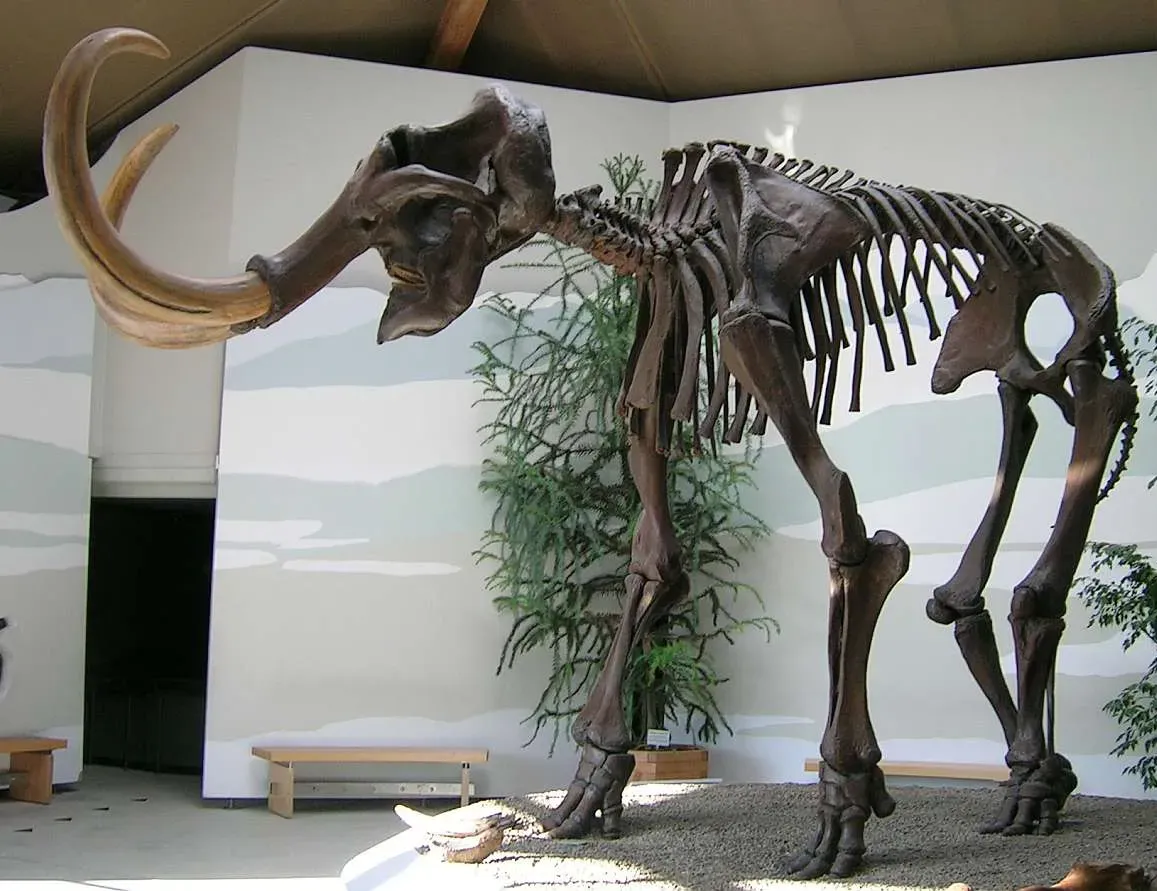
For a long time, the story of mammoth extinction was told as a simple either‑or: either climate change killed them as the Ice Age ended, or humans wiped them out with overhunting. The reality, as usual, appears more complicated and more uncomfortable. As the climate warmed and ice sheets retreated, the mammoth steppe shrank, replaced by forests and wetter environments that did not suit mammoths nearly as well. Their once vast ranges fractured into smaller, more isolated pockets, making survival harder even without human pressure.
At the same time, humans were becoming more numerous, more widespread, and more effective hunters. When you combine shrinking habitat with growing hunting skill, it is not surprising that mammoth populations began to crash. Some small groups clung on for thousands of years after the main populations had vanished, including on remote islands, a haunting reminder that extinction is rarely a sudden switch but more often a long, uneven fade. To me, the uncomfortable truth is that our species probably did play a meaningful role in that fade, even if climate was the main stage on which the drama unfolded. We were not innocent bystanders; we were active participants in the last chapters of the mammoth story.
What Their Encounters Say About Us: Power, Dependence, and Responsibility
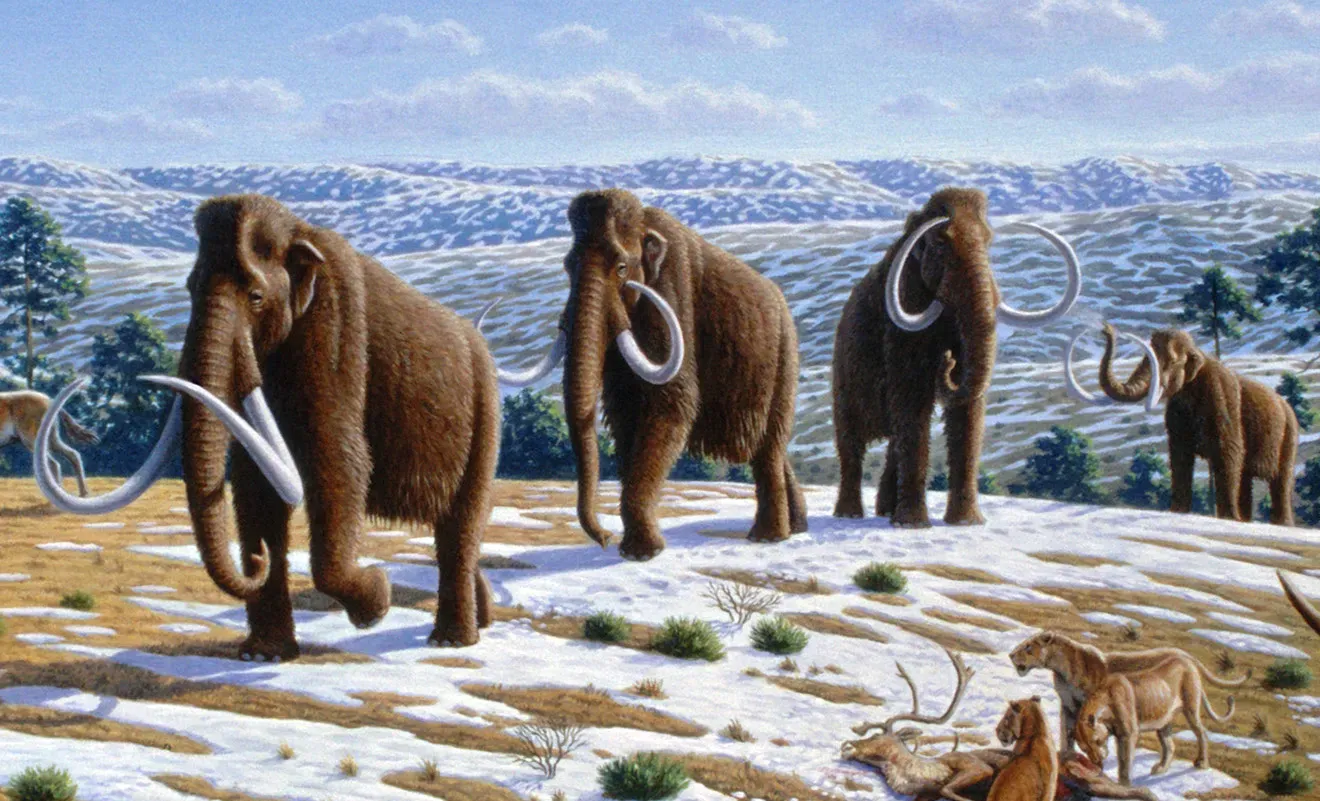
When you step back, the relationship between ancient humans and woolly mammoths feels uncomfortably familiar. On one hand, it is a story of ingenuity and survival. Our ancestors learned to read a harsh environment, cooperate at a high level, and transform a single massive animal into food, warmth, tools, and art. Without those skills, many groups would have simply vanished into the cold. There is something undeniably impressive – maybe even inspiring – about their ability to turn risk into resilience, and raw landscape into a home.
On the other hand, it is also a story about how easily human success can tip into overreach. As we became better hunters and engineers of our environment, the species we depended on most closely often paid the price. Today, we talk about biodiversity loss and climate change, but at a deeper level, this pattern of taking more than ecosystems can sustain has very old roots. In my opinion, the way our ancestors likely encountered and eventually helped push mammoths toward extinction should not just make us nostalgic; it should make us a little uneasy. If our relationship with mammoths ended in a mix of awe, gratitude, and unintended destruction, what does that imply about the way we are now meeting the species and climates of our own age? And if the people of the Ice Age could change the fate of giants without realizing it, what possible excuse do we have, knowing what we know today?