Eastern United States – A puzzling new disease has emerged in captive salamander collections, prompting wildlife researchers to accelerate their investigations amid fears for native populations. First detected in nonnative species from the pet trade, the unidentified pathogen has caused significant mortality and shown potential to affect iconic eastern amphibians through contaminated environments. Experts emphasize early detection to avert a broader ecological crisis, as laboratory evidence points to vulnerabilities in species vital to forest ecosystems.
Origins Traced to Private Collections
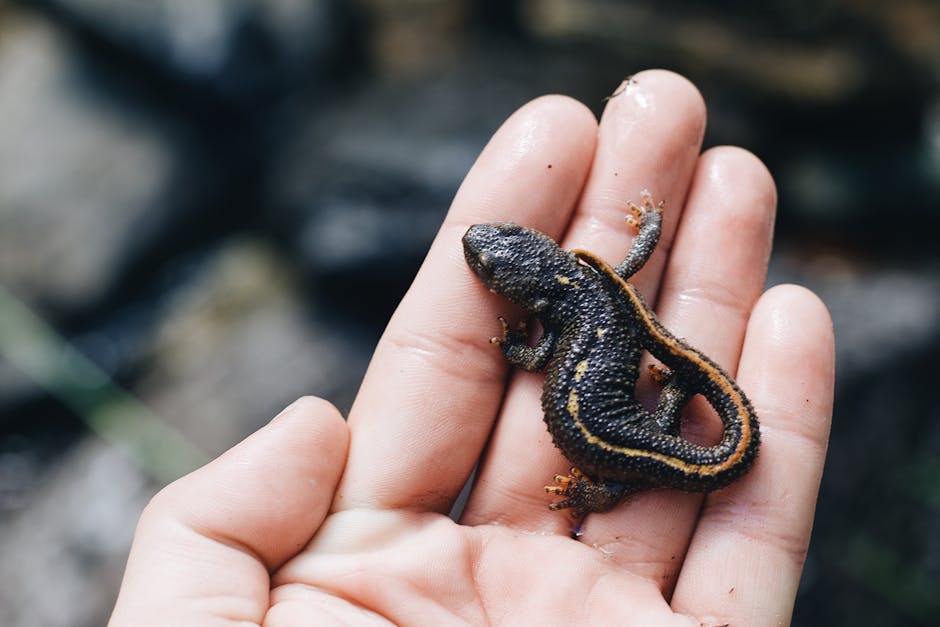
Origins Traced to Private Collections (Image Credits: Pexels)
Reports of sick and dying salamanders surfaced the week of November 17, 2025, in a private U.S. collection housing nonnative fire salamanders of the genus Salamandra. Owners noted unusual health declines, leading to submissions of samples for analysis. Pathogens such as Bsal, Bd, and ranavirus were quickly ruled out, confirming this as a novel threat possibly imported from another continent.
By December 11, 2025, authorities declared the initial outbreak contained within affected collections. However, the incident highlighted risks from the pet trade, where nonnative species like the fire salamander (Salamandra salamandra), Alpine salamander (Salamandra atra), and Near Eastern fire salamander (Salamandra infraimmaculata) carry unseen dangers. No evidence suggests risks to humans or non-amphibian pets, but the focus remains on preventing spillover.
Grim Symptoms and High Mortality
The disease manifests through striking visible signs that alert keepers to act swiftly. Abnormal skin shedding or sloughing tops the list, often accompanied by lesions, ulcerations, dark dry patches, and bleeding. Behavioral shifts include sluggishness and reduced appetite, signaling internal distress.
- Abnormal skin shedding/sloughing
- Skin lesions or ulcerations
- Dark dry skin patches
- Bleeding
- Sluggishness or reduced appetite
Death rates reached 35 to 55 percent in the impacted Salamandra groups, underscoring the pathogen’s lethality. Transmission occurs via direct contact or indirectly through tainted soil and water, complicating containment in shared habitats.
Native Species Show Susceptibility in Trials
Laboratory experiments exposed native amphibians to contaminated materials, revealing troubling outcomes. The spotted salamander (Ambystoma maculatum), widespread across the eastern United States and Canada, developed illness symptoms. Similarly, the eastern newt (Notophthalmus viridescens) reacted adversely, though no wild infections have surfaced to date.
These findings raise questions about subclinical carriers – animals that harbor the pathogen without overt signs – and potential cross-species spread. Salamanders play key roles in ecosystems as predators of insects and prey for larger wildlife, so losses could ripple through forest floors and wetlands.
Multi-Agency Push to Identify and Contain
A collaborative effort spans multiple labs, with samples analyzed at the University of Tennessee and the U.S. Geological Survey’s National Wildlife Health Center. The Healthy Trade Institute coordinates tracing within the pet sector, partnering with veterinarians and agencies. Researchers aim for breakthroughs by summer 2026, including diagnostic tests and treatments.
The USGS leads a rapid risk assessment to gauge threats to wild populations, informed by state and federal input. As one expert noted, “Preventing the importation of novel pathogens is always the best strategy to reduce risk to protect amphibians.” Biosecurity protocols now stress legal sourcing and vigilant monitoring.
Public Action Essential to Safeguard Wildlife
Pet owners and observers hold the front line in containment. Those spotting symptoms in captives should contact the Healthy Trade Institute at info@healthytrade.org or Matt Gray at mgray@healthytrade.org (865-385-0772 or 617-505-8165). Avoid moving, selling, or releasing affected animals without guidance.
For wild sightings, submit reports via Partners in Amphibian and Reptile Conservation’s Herpetofaunal Disease Alert System, USGS at nwhc-epi@usgs.gov (608-270-2480), or local wildlife authorities. Key steps include:
- Acquire from reputable vendors only.
- Maintain strict biosecurity in enclosures.
- Consult amphibian veterinarians promptly.
- Never release captives into the wild.
- Report suspicions immediately.
Key Takeaways
- The pathogen remains unidentified but transmissible via soil and water.
- Native spotted salamanders and eastern newts proved vulnerable in tests.
- Swift reporting could prevent pet trade spillover to wild populations.
This outbreak serves as a stark reminder of global trade’s unintended consequences for biodiversity. With coordinated vigilance, conservationists can thwart a full-scale invasion. What steps will you take to protect these elusive amphibians? Share your thoughts in the comments.