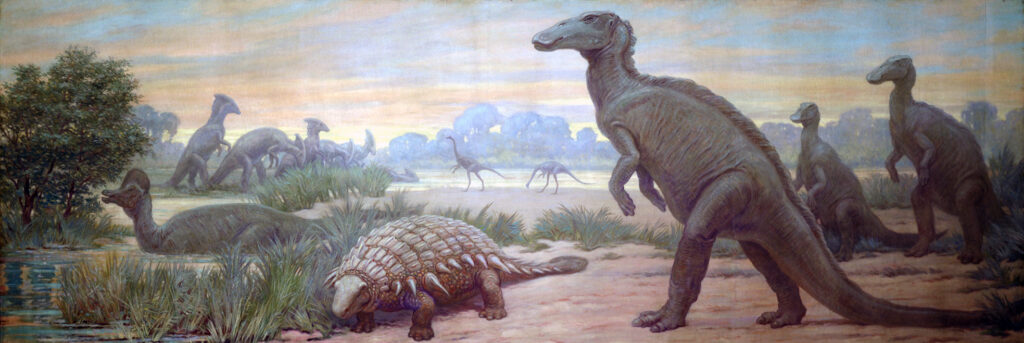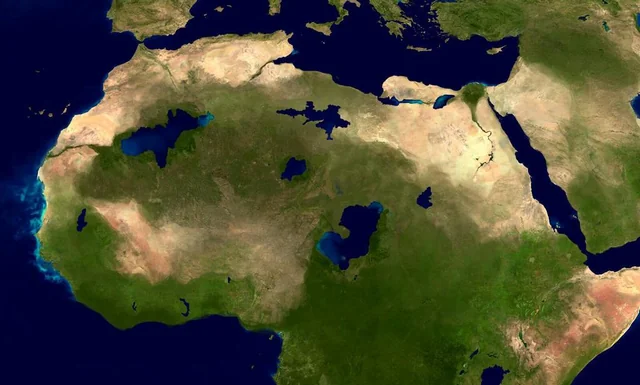
Imagine standing in the middle of the Sahara and, instead of endless dunes, you see lakes, rivers, grasslands, and herds of animals moving across the horizon. It sounds like a scene from science fiction, but evidence from geology, archaeology, and climate science says this has actually happened, not just once, but many times. The world’s largest hot desert has a surprisingly lush and dramatic past.
What makes this even more mind‑bending is that these green phases line up with key moments in human history and migration. The Sahara was not just a barrier; it was sometimes a bridge full of life, people, and culture. As new research sharpens the timeline and the mechanisms behind these shifts, one uncomfortable question hangs over all of it: if nature can flip a desert into a garden and back again, what happens when you add our modern climate influence into the mix?
The Shocking Truth: The Sahara Was Once Full of Lakes, Rivers, and Wildlife
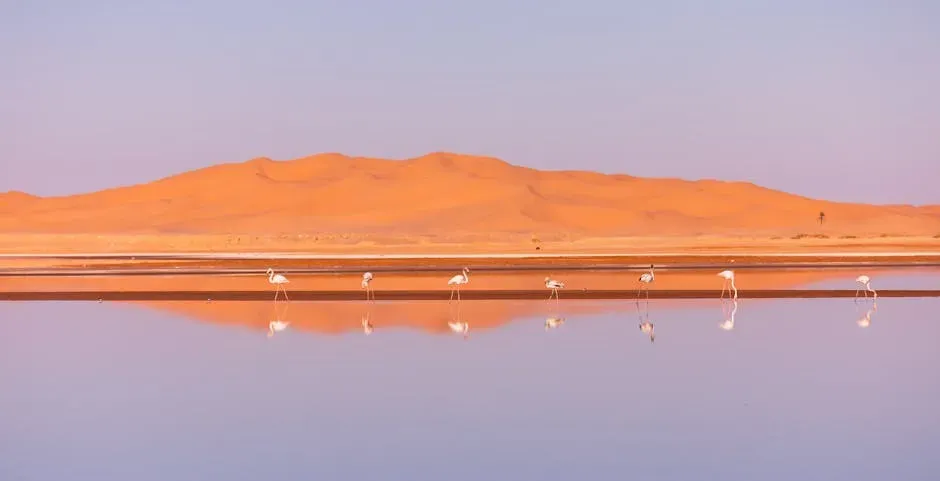
It is genuinely surprising to learn that places that are now bone‑dry and almost lifeless once held deep lakes, flowing rivers, and wetlands. Sediment cores drilled from ancient lake beds across the Sahara show layers of mud rich in organic material, rather than the dusty, wind‑blown sand you would expect in a permanent desert. Fossil remains of hippos, crocodiles, antelopes, and even fish reveal that large bodies of fresh water existed where today you can walk for days without seeing so much as a shrub.
Researchers have mapped former shorelines of so‑called “mega‑lakes” stretching across parts of what are now Chad, Libya, and Niger. Some of these lakes were larger than many modern countries, rivaling or even surpassing the size of today’s biggest African lakes. You also find pollen grains preserved in sediments, showing grasses, shrubs, and even scattered trees once flourished in regions that are currently defined by dust storms. When you look at the combined evidence, the modern Sahara starts to feel less like a permanent feature and more like a snapshot caught between very different chapters.
Orbital Rhythms: How Tiny Wobbles in Earth’s Path Turned Sand into Savanna
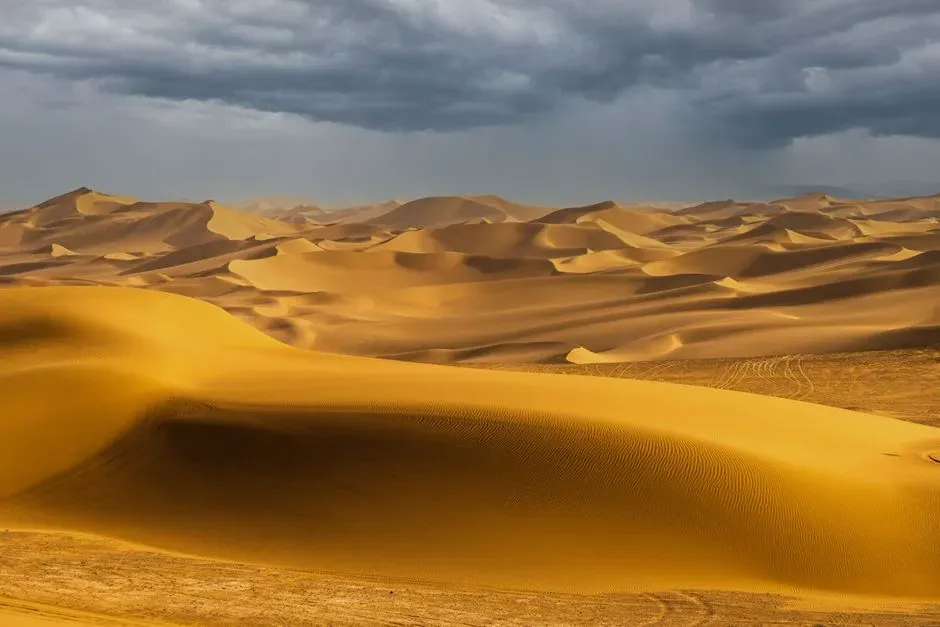
The driver behind these repeated green episodes is not magic; it is orbital mechanics. Earth’s orbit and tilt change slightly over cycles lasting tens of thousands of years, subtly reshaping where sunlight hits most intensely and how strong the monsoon systems become. During certain periods, the North African summer monsoon shifts north and strengthens, pulling moist air deep into what is now desert and triggering much heavier rainfall.
When rainfall increases over a wide area, the landscape responds surprisingly fast. Bare ground becomes colonized by grasses, then shrubs, and in some zones scattered trees, building up a vegetated savanna instead of endless dunes. Vegetation itself then amplifies the shift by darkening the surface and enhancing moisture recycling, which keeps rainfall going. This is why the Sahara seems to flip between two distinct states – green and dry – rather than just sliding slowly along a boring gradient. The rhythm is slow in human terms but remarkably fast in geological ones, and we are only just starting to appreciate how sensitive the system really is.
The African Humid Period: When the “Desert” Was a Human Highway
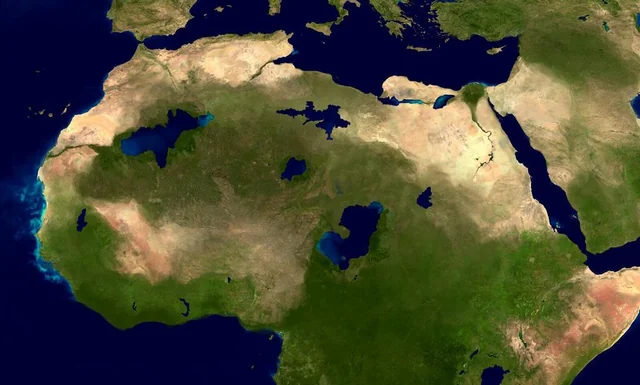
The most recent major green phase, often called the African Humid Period, started roughly about twelve thousand years ago and lasted until around five to six thousand years ago. During this time, vast swaths of what is now hyper‑arid desert were dotted with lakes, marshes, and seasonal rivers. It was not just a nicer version of the present; it was almost a different world, with patchy wetlands, open grasslands, and clusters of trees supporting rich ecosystems that would feel more like a wild savanna than a wasteland.
Archaeologists have found stone tools, pottery, burial sites, rock art, and traces of seasonal camps far inside the modern desert, places where survival would be nearly impossible today without trucks and technology. Rock art panels show cattle, giraffes, and other animals that need substantial grazing and water, hinting that people practiced early herding and hunting across this green Sahara. Instead of acting as an empty no‑man’s land, the region became a kind of human highway, connecting parts of North Africa, the Sahel, and even influencing later population patterns along the Nile.
Rapid Shifts: How the Green Sahara Collapsed Back into Desert
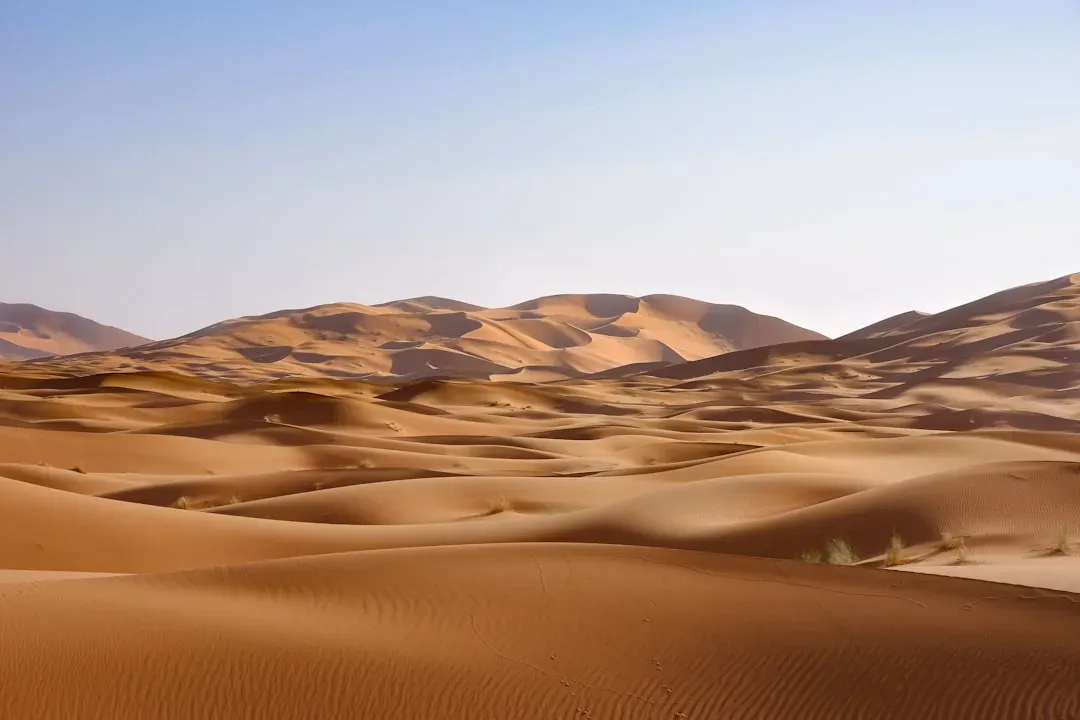
One of the most unsettling discoveries from recent climate reconstructions is that the return to desert conditions after the African Humid Period was not always slow. In some areas, the shift from green to arid appears to have happened over just a few centuries, maybe even faster in certain pockets. Lake levels dropped, rivers dried up, and vegetation retreated, leaving behind the sand seas and rocky plateaus we now associate with the Sahara’s identity.
Scientists debate whether the end of the Green Sahara was mostly driven by gradual orbital changes or whether internal climate feedbacks triggered a more abrupt tipping point. Once rainfall weakened past a certain threshold, vegetation died back, the surface brightened, and less solar energy was absorbed, which in turn weakened the monsoon even further. From a human perspective, the key takeaway is stark: communities that had adapted to a watery, fertile landscape found themselves forced to move, reorganize, or collapse as their environment transformed around them in what would have felt like just a handful of lifetimes.
People, Culture, and the Green Sahara: More Than Just a Climate Story
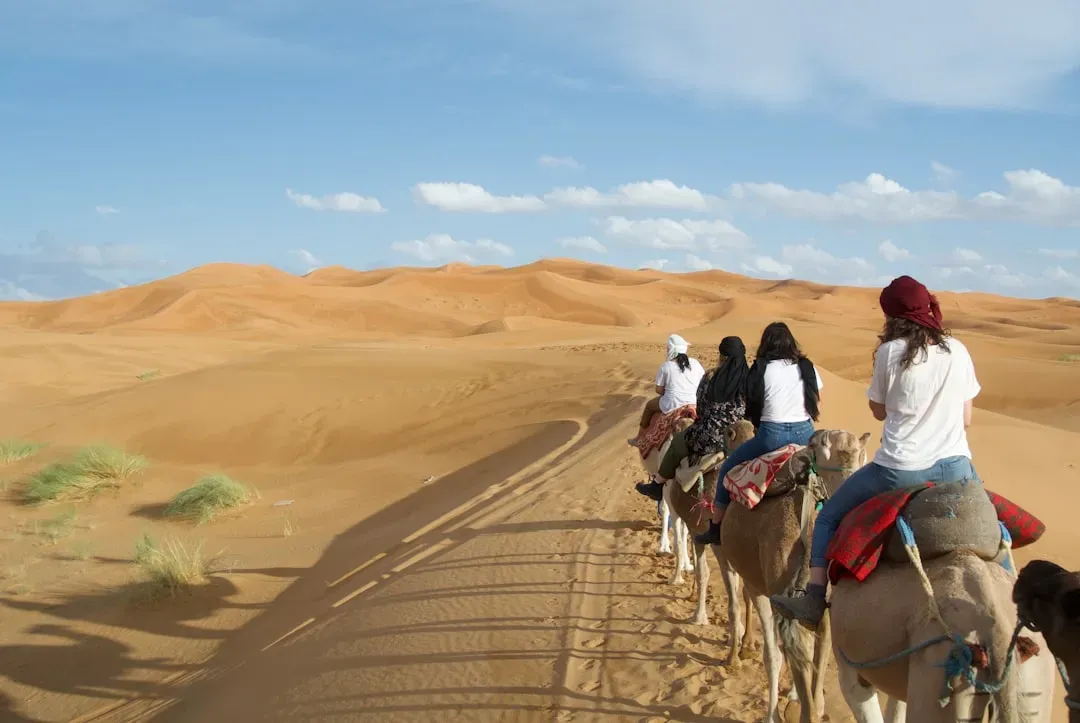
It is tempting to treat the Green Sahara purely as a climate curiosity, but it is deeply tied to human history. As lakes and grasslands expanded, people moved into areas that had previously been too dry to support sustained living. They fished, hunted, gathered wild plants, and eventually herded animals such as cattle, exploiting a mosaic of habitats that would have offered both security and opportunity. These shifting environments likely nudged societies toward new technologies, social structures, and migration routes.
When the climate flipped back toward aridity, many of those same groups were pushed outward toward more stable water sources, such as the Nile Valley, the Mediterranean coast, and the Sahelian belt to the south. Some researchers see echoes of these migrations in later cultural patterns and genetic lineages. To me, this is the most relatable part of the story: families forced to pack up, move on, and reinvent their lives again and again, not because of war or politics, but because the sky literally stopped raining over the land that had fed them for generations.
There is also a humbling lesson here about how people adapt creatively when the environment changes. Rock shelters filled with layered artifacts tell a story of trial and error – shifting diets, new tool types, changing settlement patterns – as groups responded to wetter and then drier conditions. Rather than being passive victims of climate, they were constantly experimenting at the edges of habitability. Still, there had to be limits, and the ultimate retreat of water and vegetation shows that even resilient societies cannot completely outrun a major climate swing.
What the Green Sahara Teaches Us About Our Climate Future
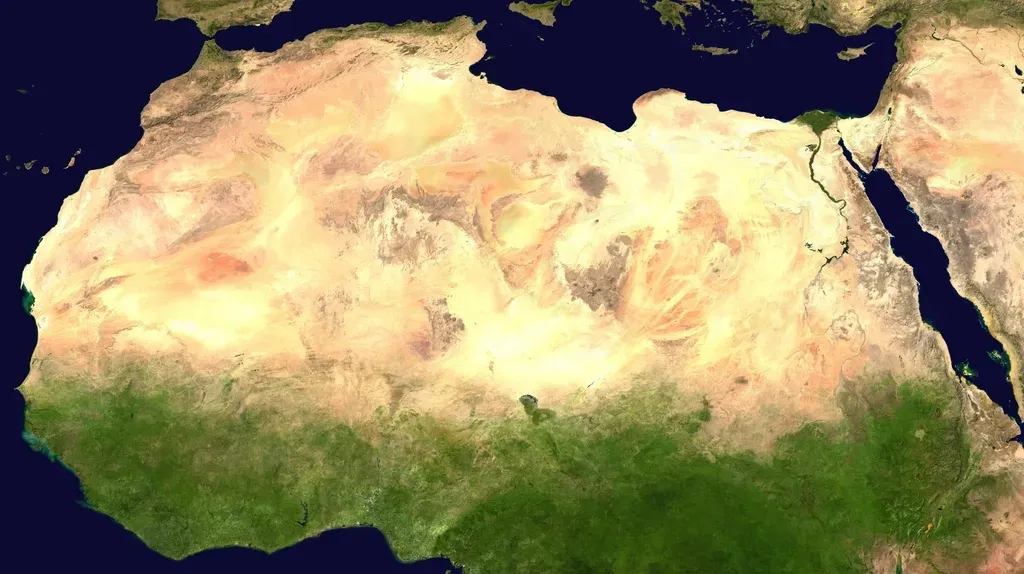
Modern climate models are now being tested against the evidence from these past Sahara transformations, because a model that cannot reproduce a green Sahara under the right orbital conditions probably cannot be trusted to predict our future very well. The fact that the Sahara has switched states multiple times tells us that Earth’s climate is capable of sharp regional changes when underlying drivers reach a certain combination. That does not mean a lush Sahara will suddenly appear tomorrow, but it does mean that big, unexpected shifts are not just theoretical.
Crucially, we are now layering human‑driven greenhouse gas emissions on top of the natural orbital cycles. Some simulations suggest that, even though orbital patterns might otherwise favor a slightly wetter North Africa in the very distant future, our current warming could delay or even prevent another true Green Sahara from forming. In my view, that is the most unsettling twist: we are powerful enough to interfere not just with today’s weather, but with grand natural rhythms that have been cycling for hundreds of thousands of years. If a region as iconic and seemingly permanent as the Sahara can flip back and forth given the right push, it is hard not to wonder what else may be closer to a tipping point than we like to admit.
Conclusion: A Desert with a Memory, and a Warning
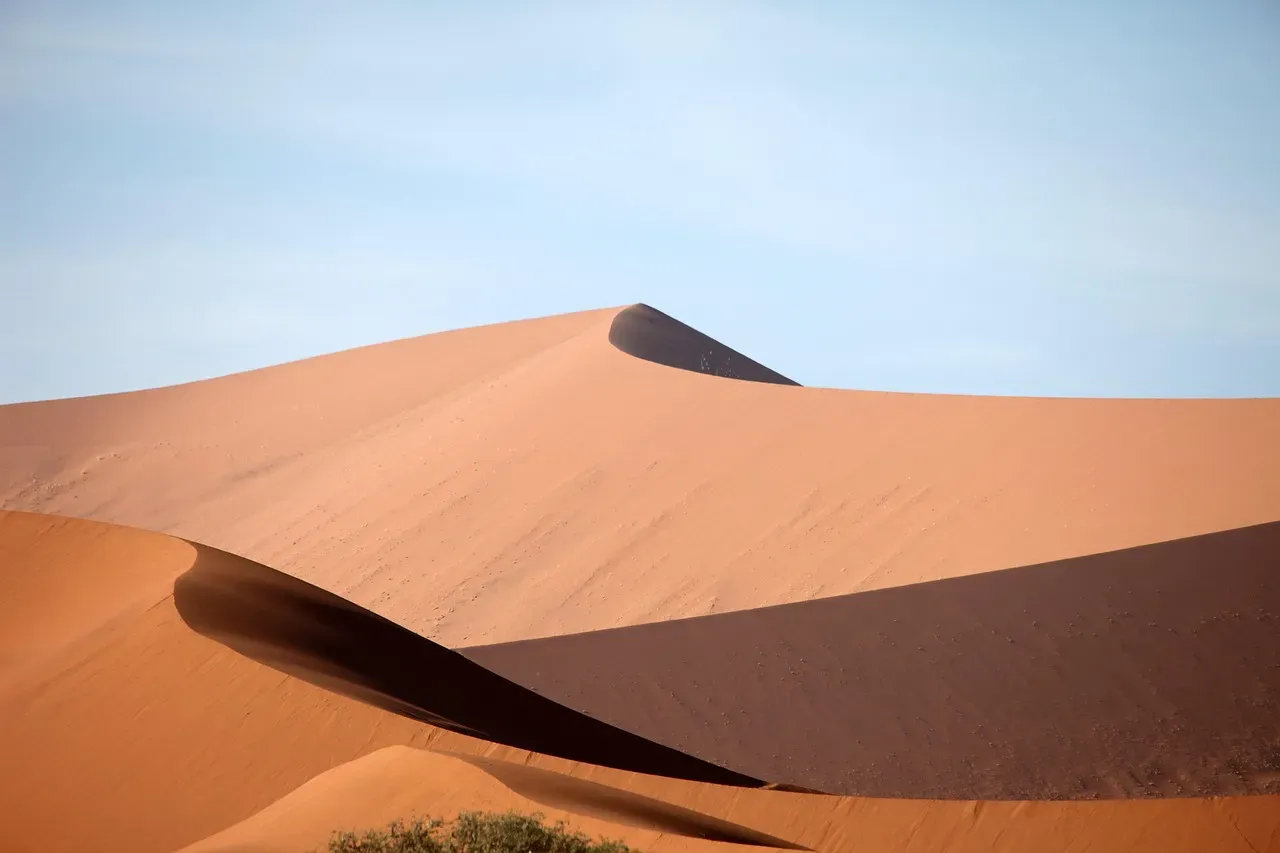
When you look at the Sahara as a place with a memory rather than a static backdrop, the whole story of northern Africa changes. Beneath the dunes lies evidence of drowned valleys, vanished shorelines, and forgotten communities that once thrived in a green, watery world. In my opinion, the most important message from this research is not that deserts can one day bloom again, but that they already have, repeatedly, and those transformations were anything but gentle for the people and ecosystems involved.
We tend to imagine climate as something that shifts slowly, almost politely, over ages, but the Green Sahara shows that Earth sometimes moves in sudden, decisive jumps. Today, we are no longer just passengers on that ride; we are pulling levers and pressing pedals without fully understanding the machinery. To me, that is both empowering and deeply alarming. The Sahara’s buried lakes and ghost rivers are more than curiosities – they are a warning label on our climate system. The real question is, now that we know deserts can turn green and green worlds can turn to dust, what will we choose to do with that knowledge?