You probably grew up picturing dinosaurs as dull green and mud-brown giants lumbering through a murky prehistoric world. It feels almost jarring to realize that some of them were more like living fireworks displays than drab reptiles. Over the past couple of decades, you’ve actually watched a quiet revolution unfold: paleontologists have gone from guessing dinosaur colors to reading them straight from the fossils. Instead of treating color as pure speculation, researchers now use chemistry, microscopes, and comparisons with living birds to work out actual patterns and shades on some species. When you lean in on the evidence, you step into a world of banded tails, rusty reds, glossy blacks, and even iridescent sheens. The old “all dinosaurs were gray” picture simply doesn’t hold up anymore – and your mental image of them is about to change for good.
The Fossil Clues Hidden in Microscopic Pigment Structures
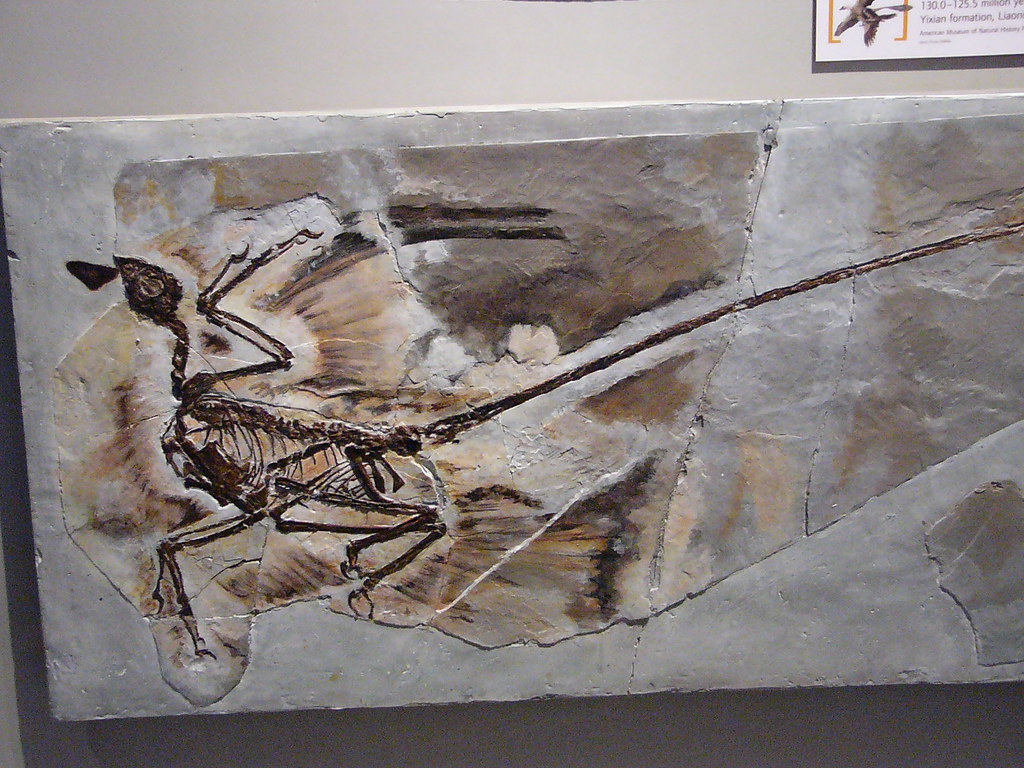
Imagine you pick up what looks like a plain, dark fossil feather under normal light. To your naked eye, it’s just a smudge of carbon. But if you zoom in with a powerful electron microscope, you start to see tiny shapes: little rods, spheres, and plate-like bodies packed along the fossilized feather. Those microscopic structures are melanosomes, the same pigment-carrying organelles that give color to your hair, your skin, and the feathers of modern birds. By comparing their size and shape to melanosomes in living animals, scientists can infer whether an ancient feather was black, gray, reddish-brown, or even iridescent.
You’re not just taking their word for it either. Researchers first tested this approach on modern bird feathers whose colors were already known, and they found that the relationship between melanosome shape and color is consistent and predictable. Once they showed that the method reliably works on living birds, they took the same tools to fossil feathers and feather-like filaments from small, birdlike dinosaurs. This is the turning point where color reconstruction stopped being wild speculation and became evidence-based detective work.
From Drab Monsters to Patterned Predators: What We Know for Sure
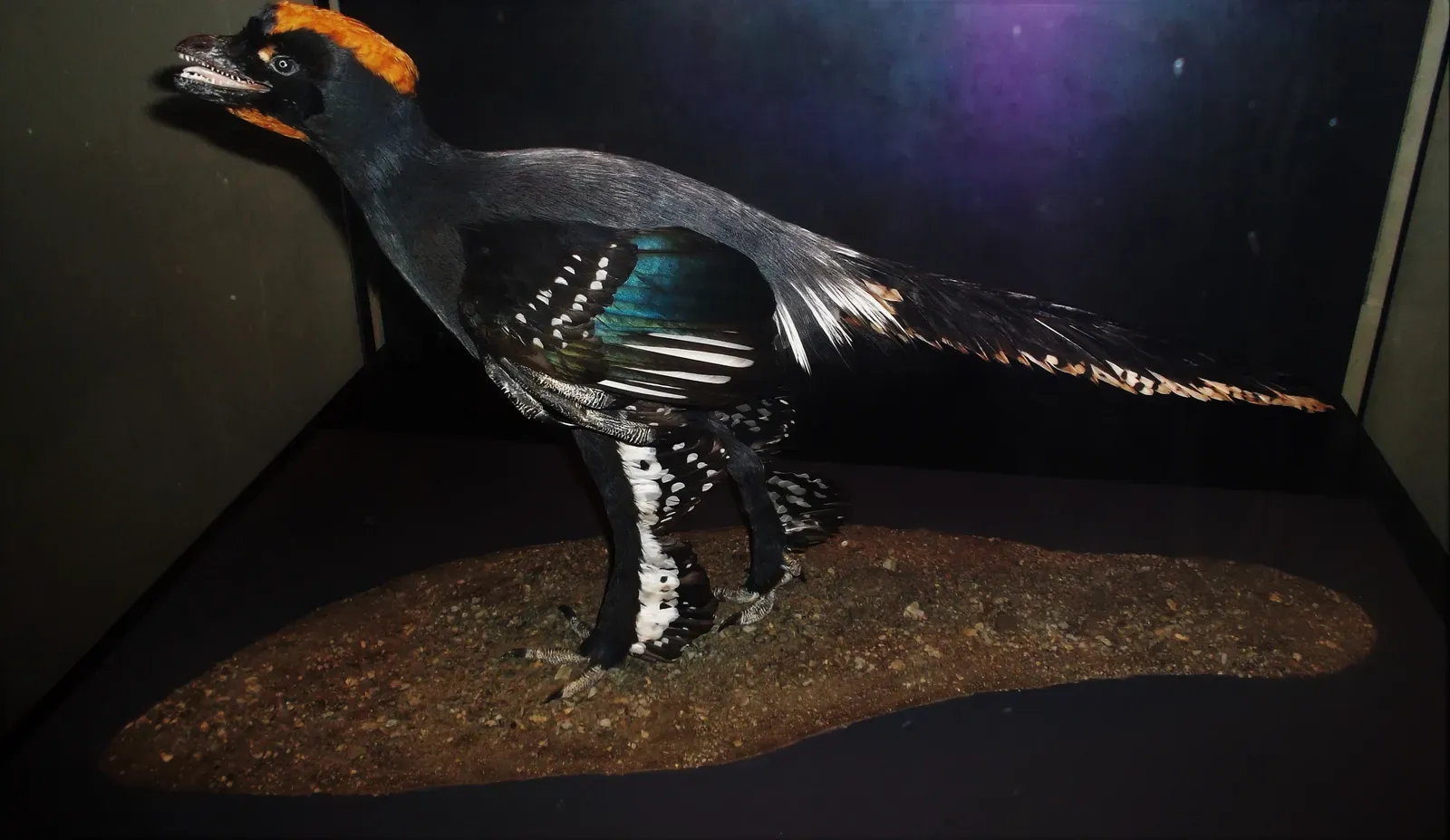
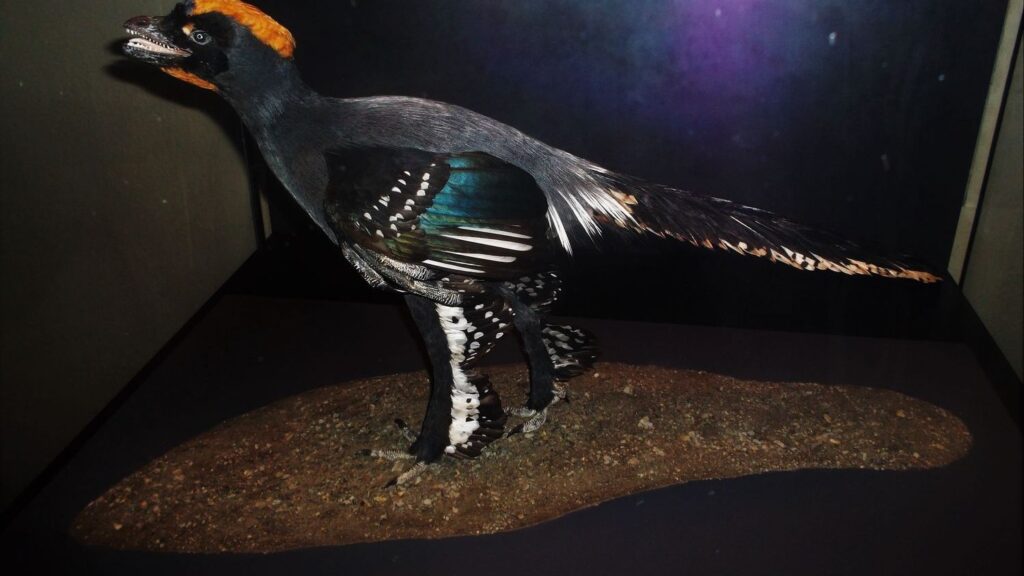
You might be surprised that there are a few dinosaurs whose colors you can actually describe with some confidence. Take Anchiornis, a small, feathered, four-winged dinosaur from China. Its preserved plumage is loaded with melanosomes that map out a complex pattern: dark wings with white patches, a mostly gray body, and a reddish crest on its head. This is not some artist’s fantasy; it’s a reconstruction built from thousands of microscopic measurements spread across dozens of feathers. When you look at a modern illustration of Anchiornis, you’re seeing a color layout that is anchored in real fossil data, not just imagination.
Another example you can point to is Sinosauropteryx, an early feathered dinosaur with a long, filament-covered tail. Researchers have found alternating bands of melanosomes along that tail that match a pattern of light and dark rings, with evidence for reddish-brown shades in the darker bands. That means you’re dealing with a small dinosaur sporting what amounts to a striped, rusty tail – something closer to a ring-tailed lemur or a banded mongoose than the flat-gray lizards of old-school dinosaur art. These are not vague hints; they’re clear, testable color patterns preserved in stone.
Evidence for Iridescence and Showy Sheens
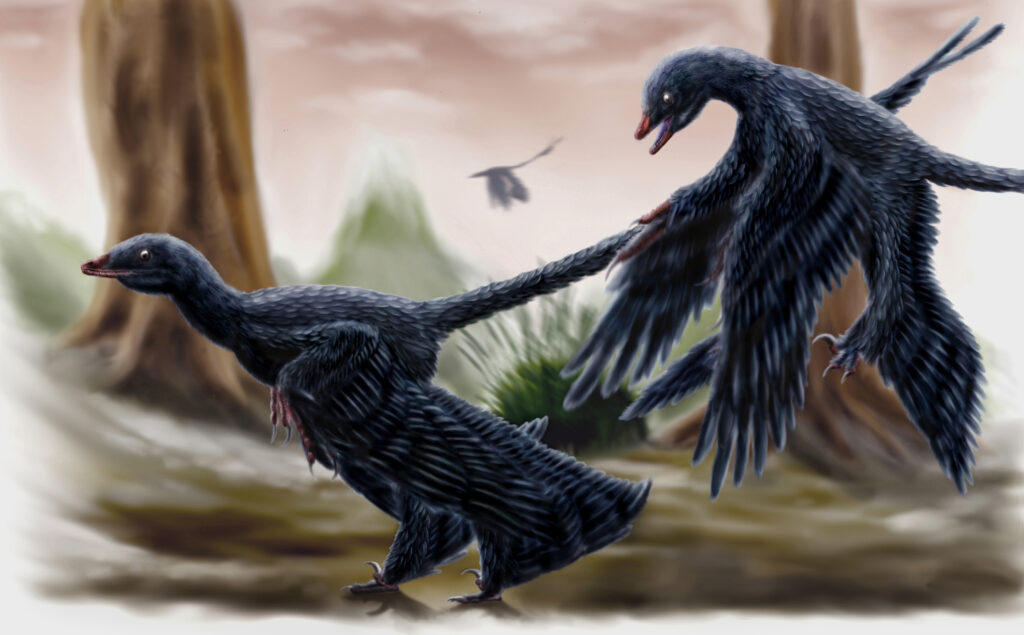
If you’ve ever watched a crow shimmer blue-black in the sun or a hummingbird flash emerald and violet, you already know that some of the most striking colors in feathers come not from pigment alone but from microscopic structures that bend and scatter light. Paleontologists have found similar structural clues in certain fossil feathers, including those attached to small, four-winged dinosaurs. In at least one case, the shapes and layering of the melanosomes strongly suggest an iridescent, glossy black plumage, very much like a modern crow’s or grackle’s sheen. Suddenly, you’re not just imagining brown fuzz; you’re imagining a sleek, shimmering animal gliding through Jurassic forests.
That discovery matters for how you picture dinosaur behavior too. Iridescence in living birds is usually associated with display – courtship, rivalry, signaling fitness – rather than pure camouflage. When you see those same structural patterns pop up in a dinosaur fossil, you’re allowed to reasonably suspect that some dinosaurs were not just trying to hide; they were also trying hard to be seen. You may not know the exact angle of the shine or every nuance of their palette, but you can confidently say that at least some species carried themselves like glossy, attention-grabbing showoffs rather than drab, colorless beasts.
Camouflage, Countershading, and Life in a Colorful World
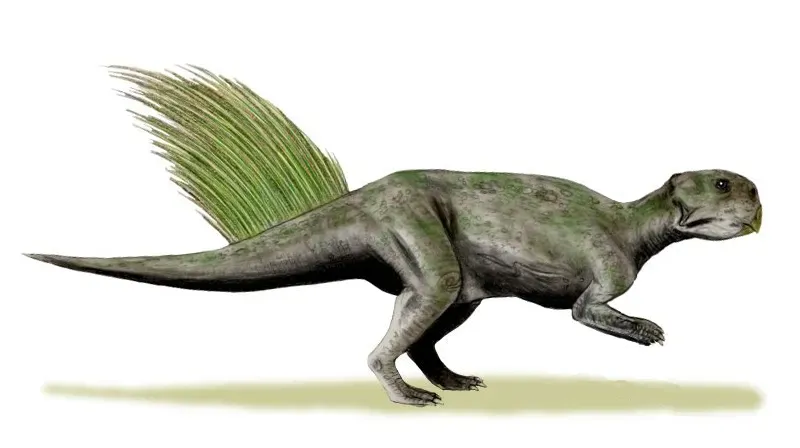
Vibrant color does not always mean being flashy. You probably see countershading every day without thinking about it – deer that are darker on top and lighter underneath, or a shark that is slate gray above and pale below. That pattern helps soften shadows and flatten the animal’s shape, making it less obvious to predators or prey. Paleontologists have identified a similar pattern in the fossil of Psittacosaurus, a small, beaked dinosaur whose preserved skin and soft tissues show darker coloration on its back and lighter tones on its belly. The distribution of these tones fits what you’d expect from an animal trying to blend into a forested environment with complex light and shade.
When you add this to other fossils that show striping and banding, you start to see a spectrum of strategies. Some dinosaurs seem to have used color as camouflage, fading into dappled light and foliage the way a modern antelope or fawn does. Others had highly visible patterns more in line with display or intimidation. You end up with a more nuanced picture: you are not choosing between dull dinosaurs and neon dinosaurs; you’re dealing with a continuum, from subtle earth-toned camouflage to striking contrasts designed to catch the eye of a rival, a mate, or a predator.
What You Can Infer from Modern Birds and Reptiles
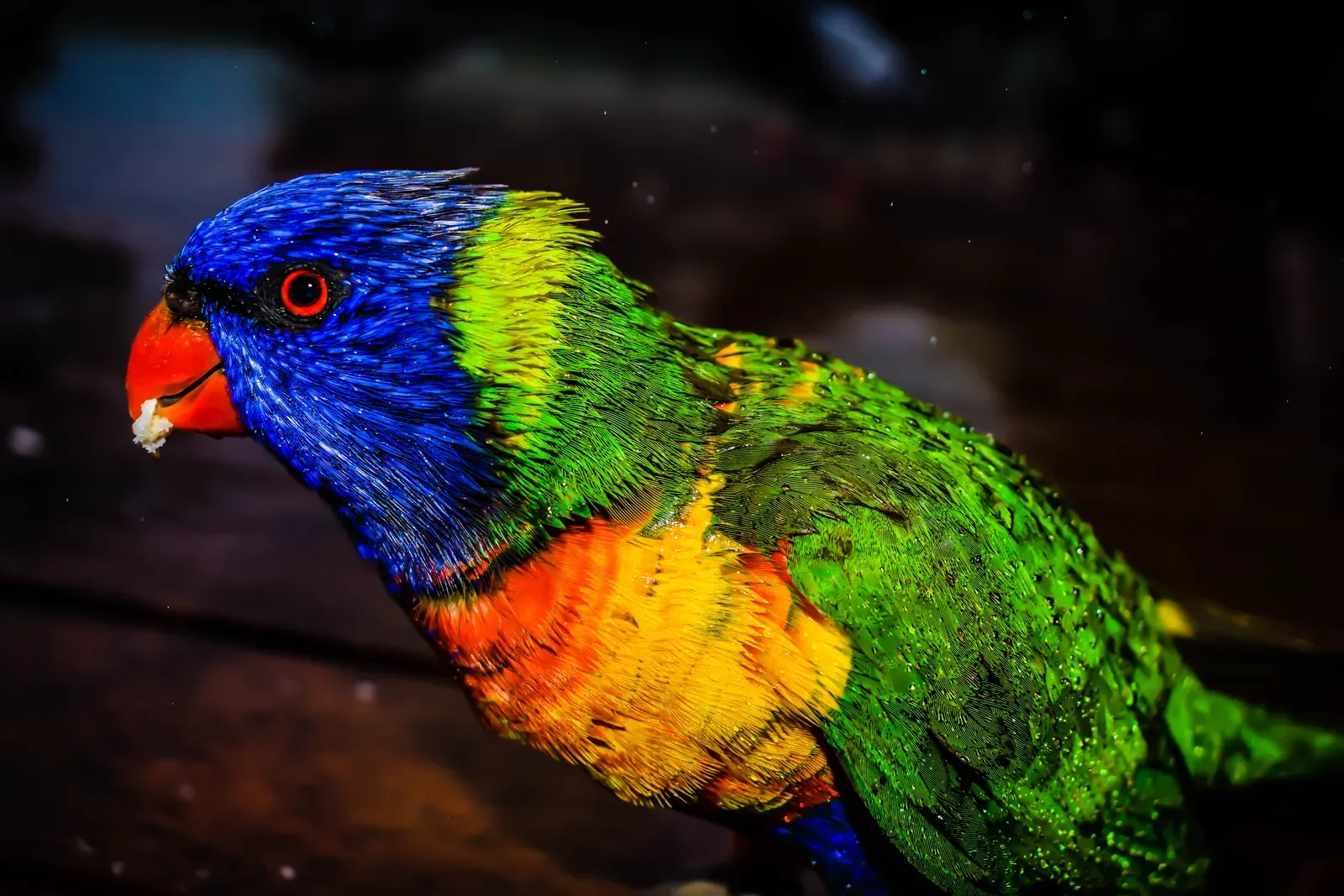
Even where you do not have direct pigment evidence, you’re not flying blind. Dinosaurs sit in the middle of a family tree that includes modern birds and crocodilians, and that context gives you some sensible boundaries for what dinosaur colors were likely. Birds today show an incredible range of hues, from muted browns and grays to intense reds, yellows, blues, and structural rainbows. Crocodilians, on the other hand, are mostly olive, gray, and brown, but they still show patterns like striping and mottling. Because non-avian dinosaurs were closer to birds than to mammals in many respects – especially in their vision and feather structures – it’s reasonable for you to expect that many of their colors fell somewhere within the broader bird–reptile palette.
You also know that many dinosaurs likely had excellent color vision, similar to or better than most mammals today. Modern birds can see into the ultraviolet range and use color cues heavily for signaling and mate choice. If you accept that at least some dinosaurs shared that level of visual sophistication, it becomes harder to imagine a world of purely drab, monotone animals. The environment itself – the flowers, insects, and changing light conditions – would have been full of cues that color-sensitive animals could exploit. You might not be able to nail down every shade, but you can safely say that color was important to them, not just a decorative afterthought.
Where the Evidence Stops: Limits, Unknowns, and Honest Uncertainty
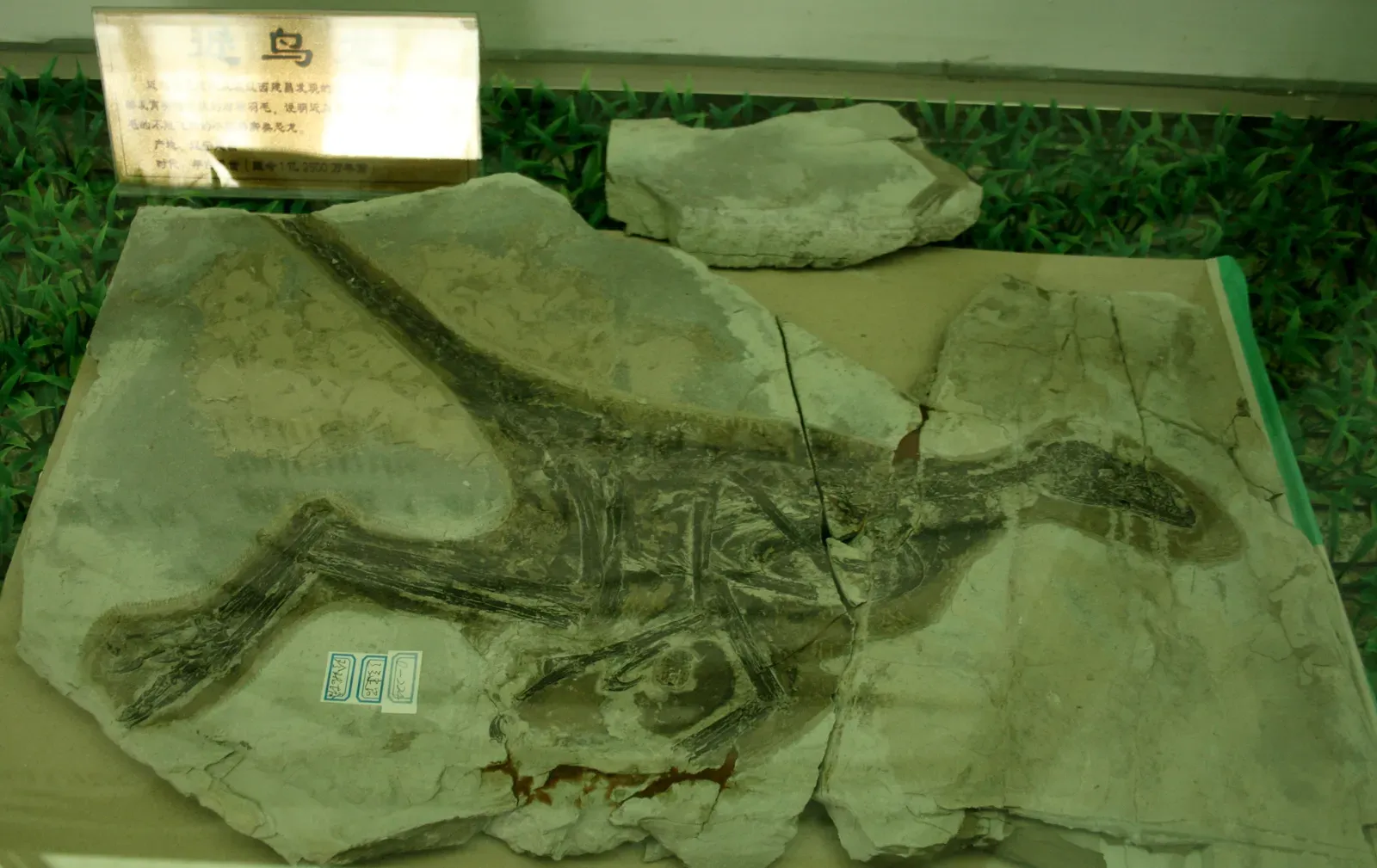
Uploaded by FunkMonk, CC BY-SA 2.0)
It’s tempting to run with the idea of colorful dinosaurs and start painting every species like a tropical parrot. You need to resist that urge. The reality is that you only have direct color evidence for a relatively small number of dinosaur species and mostly for those with feathers or exceptionally preserved skin. Melanosomes tell you a lot about blacks, grays, browns, reddish tones, and iridescence, but they do not currently give you clear answers for every color you see in modern birds, such as many greens, bright yellows, or some blues that depend heavily on complex structural effects or additional pigments. For many famous dinosaurs – especially large, non-feathered ones – color reconstructions remain educated guesses at best.
It’s also worth remembering that even when you know the general pattern for one individual fossil, you do not know how much variation existed within the species. Modern animals show regional differences, age-related changes, and sexual dimorphism, and it would be strange if dinosaurs did not. So when you see a beautifully painted museum mount or documentary animation, you should treat it as a plausible scenario, not a photograph. The responsible way to think about it is this: for a handful of species, you have good, fossil-backed reasons to think they were patterned and in some cases quite vivid; for the rest, your pictures are still works in progress, anchored more in analogy and ecological reasoning than in hard, microscopic data.
How This Changes the Way You Picture Prehistoric Ecosystems
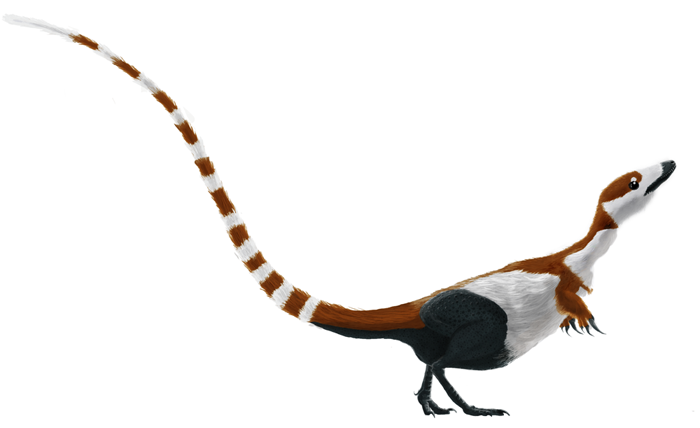
Once you let go of the old stereotype of dinosaurs as lumbering gray lizards, the entire Mesozoic world starts to feel different in your mind. You can begin to imagine forests filled with rust-colored, striped, and speckled creatures, some shimmering when they move in the sun, others melting into the shadows under ferns and conifers. Flashes of color on crests, tails, and wings start to suggest courtship displays, dominance rituals, and territorial threats that feel much more like what you see in modern birds. Instead of a muted, brownish backdrop, you picture a living landscape of color-coded signals humming between predator and prey, rival and mate.
This shift also changes how you emotionally connect to these animals. When a small dinosaur suddenly looks like a ground bird you might flush from the underbrush – spotted, striped, or glossy – you stop seeing it as an alien monster and start seeing it as part of a continuum of life that reaches right into your backyard. Personally, that’s what hooked me: the first time I saw a reconstruction of a little feathered dinosaur with a banded, orange tail and a dark facial mask, it felt less like looking at a monster movie and more like glimpsing a real animal that could have darted past your boots on a hike. Color has a way of making the past feel immediate, and once you let it in, it is very hard to go back to grayscale dinosaurs again.
In the end, you are living at a fascinating moment in dinosaur science. A few decades ago, almost everyone would have told you that we would never know what colors dinosaurs were. Now, thanks to melanosomes, high-powered microscopes, and clever comparisons with living animals, you can actually point to specific species and describe their markings with a straight face. The evidence still has gaps, the methods still have limits, and most dinosaurs are still mystery canvases – but the old dogma of uniform drabness is gone for good. Next time you see a reconstruction of a vividly patterned dinosaur, you can ask yourself a new question: is that really too wild, or are you finally just seeing what was always there?