If you think T. rex was the final boss of prehistoric life, the oceans have a brutal plot twist for you. Long before (and even during) the reign of the great land predators, the seas were ruled by monsters so oversized, over-armed and over-toothed that a tyrannosaur would have looked almost modest by comparison. We tend to picture dinosaurs whenever we think “prehistoric,” but the real nightmare fuel was patrolling the waves.
That mismatch between what we imagine and what actually lived is what makes the fossil record of ancient oceans so thrilling. As paleontologists keep digging, scanning and reinterpreting, we’re learning that the water column was essentially a multi‑layered arena of super‑predators: mosasaurs with double-jointed jaws, mega‑sharks the size of buses, reptilian submarines powered by flippers, and armored fish that could bite through bone like it was a breadstick. Once you see what was hunting out there, T. rex starts to feel like just one more neighborhood bully instead of the ultimate terror.
The Sea Was the Original Monster Factory
Here’s the wild part: T. rex ruled land only for a relatively short slice near the end of the Cretaceous, but terrifying marine predators had been thriving for hundreds of millions of years before that. Every time life on Earth was knocked down by a mass extinction, the oceans bounced back with a fresh wave of experimental nightmares. That constant evolutionary pressure in a three-dimensional hunting space created creatures that were faster, heavier, and in many cases more lethal in their design than anything walking on two feet.
The sea gives predators an unfair advantage: buoyancy helps support massive bodies, water carries sound and vibration efficiently for tracking prey, and there’s nowhere for victims to hide once they’re out in the open. Imagine a world where every direction – above, below, behind – might contain something with teeth. That’s what early marine ecosystems were like. In that context, the terror of a land-based tyrannosaur starts to look almost quaint compared to a silent approach from below in deep, dark water.
Dunkleosteus: The Armored Chainsaw of the Devonian
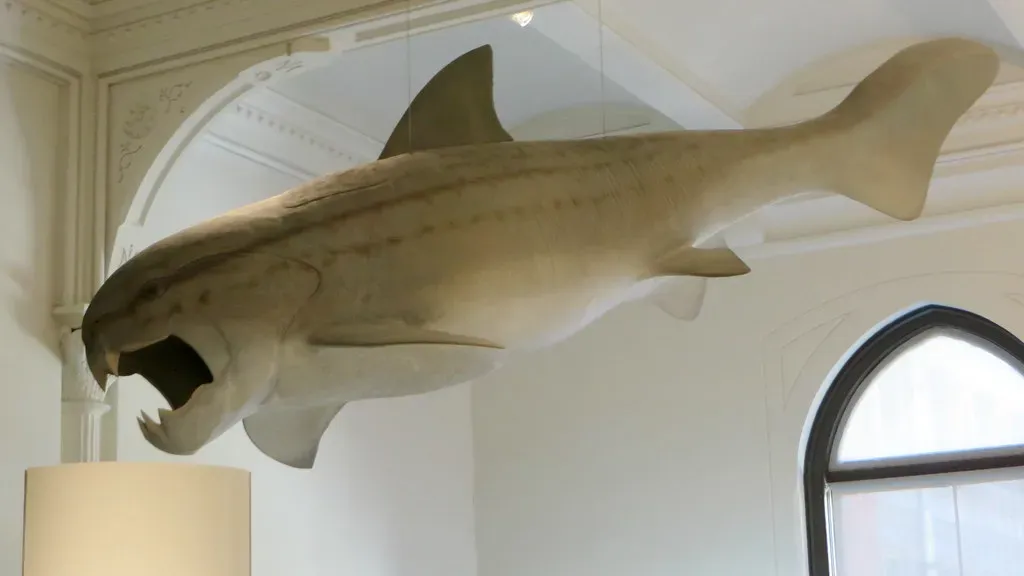
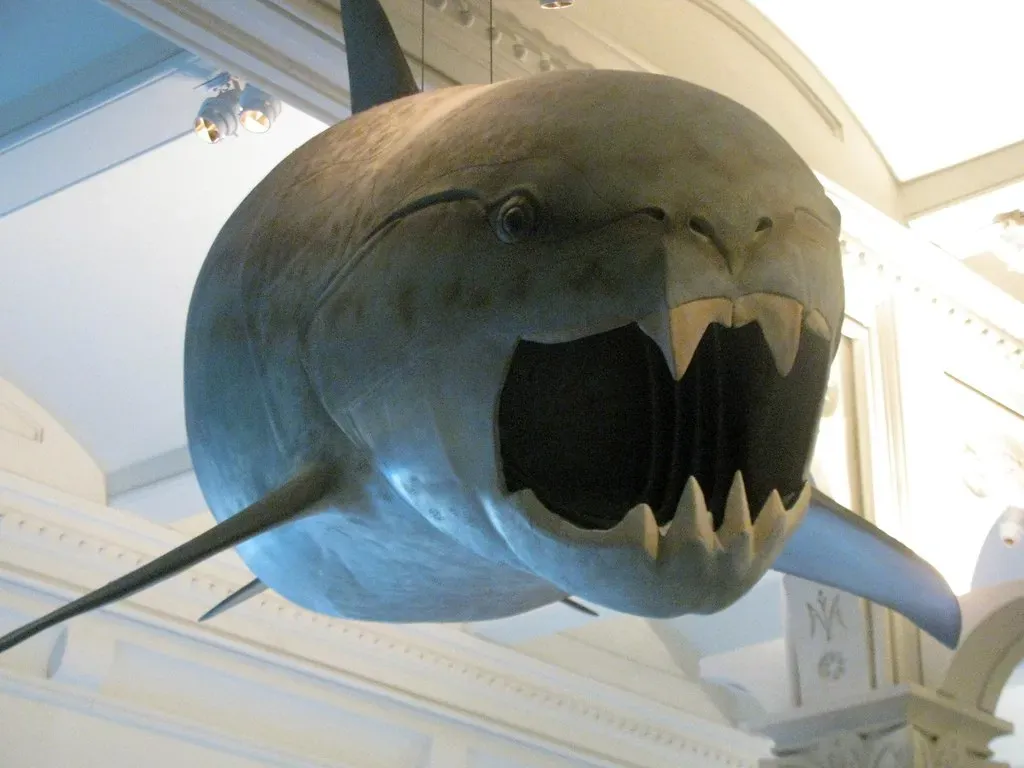
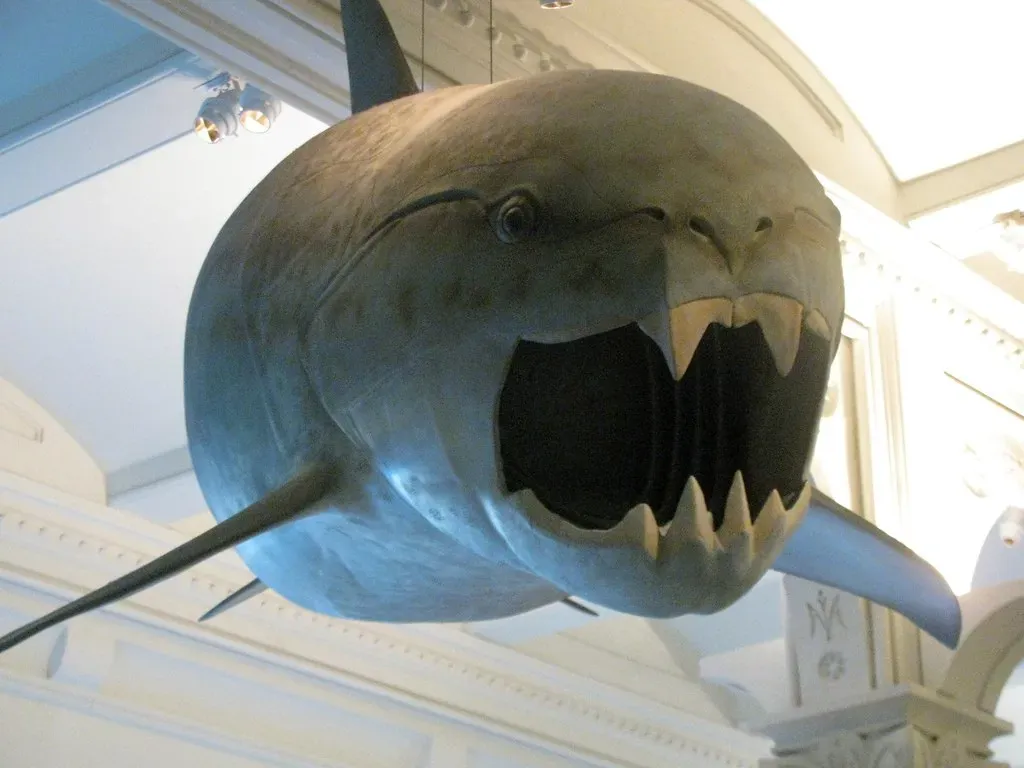
Long before dinosaurs, in the Devonian “Age of Fishes,” an animal called Dunkleosteus was already acting like the ocean’s mafia enforcer. It was a placoderm, an armored fish with bony plates forming a skull and chest shield, and the biggest species likely stretched roughly as long as a large SUV. Instead of true teeth, it had sharpened bony blades that acted like a built‑in guillotine, capable of slicing prey and crushing armor in a single snap. Biomechanical studies suggest its bite force ranked among the strongest of any vertebrate known, rivaling or surpassing what we estimate for T. rex.
Picture a living tank with a head like a medieval siege weapon, cruising through the water and simply biting through anything that got in its way. Unlike T. rex, which mostly had to worry about land animals, Dunkleosteus was surrounded by a buffet of soft‑bodied and armored fish, and it seems to have gone for both. Fossils show signs of cannibalism and broken plates that may be from fights with its own kind, hinting that even other Dunkleosteus were not safe. If you had to pick between a face‑off on land with a tyrannosaur or being in open water with this armored chainsaw bearing down on you, the land suddenly feels like the safer bet.
Mosasaurs: The Cretaceous Sea Dragons That Ate Other Predators
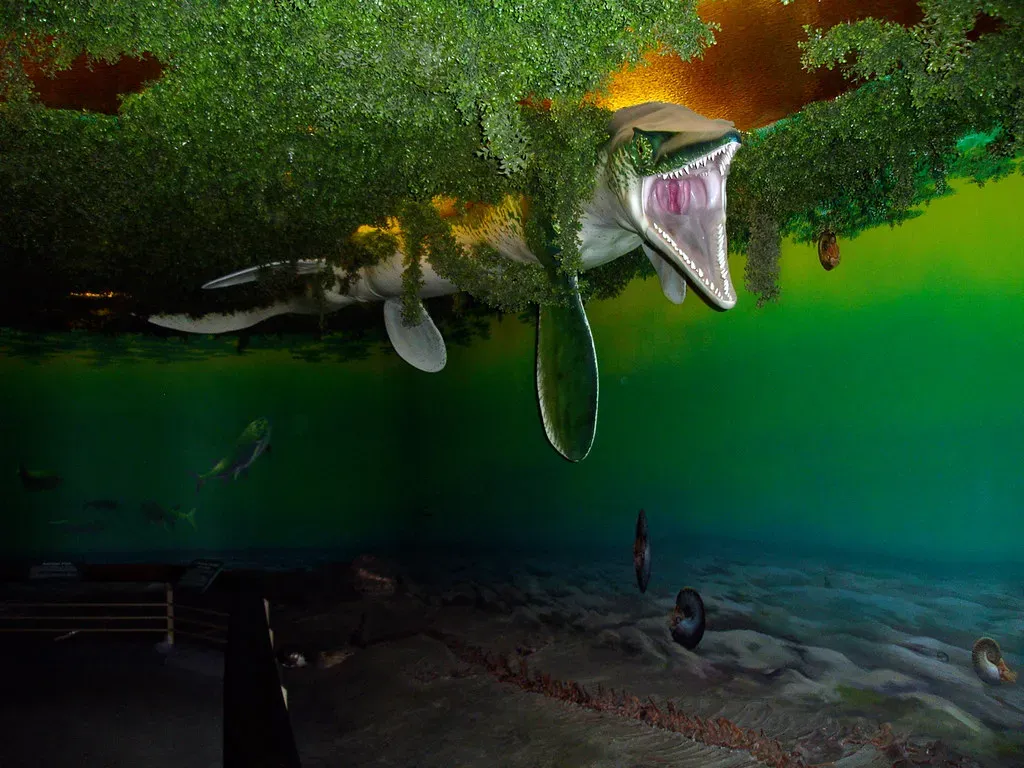
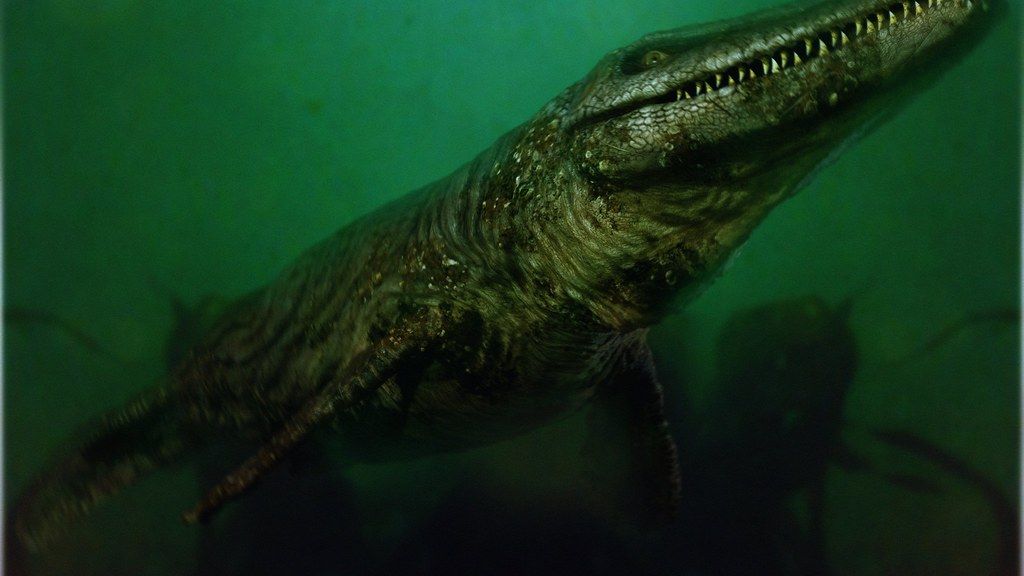
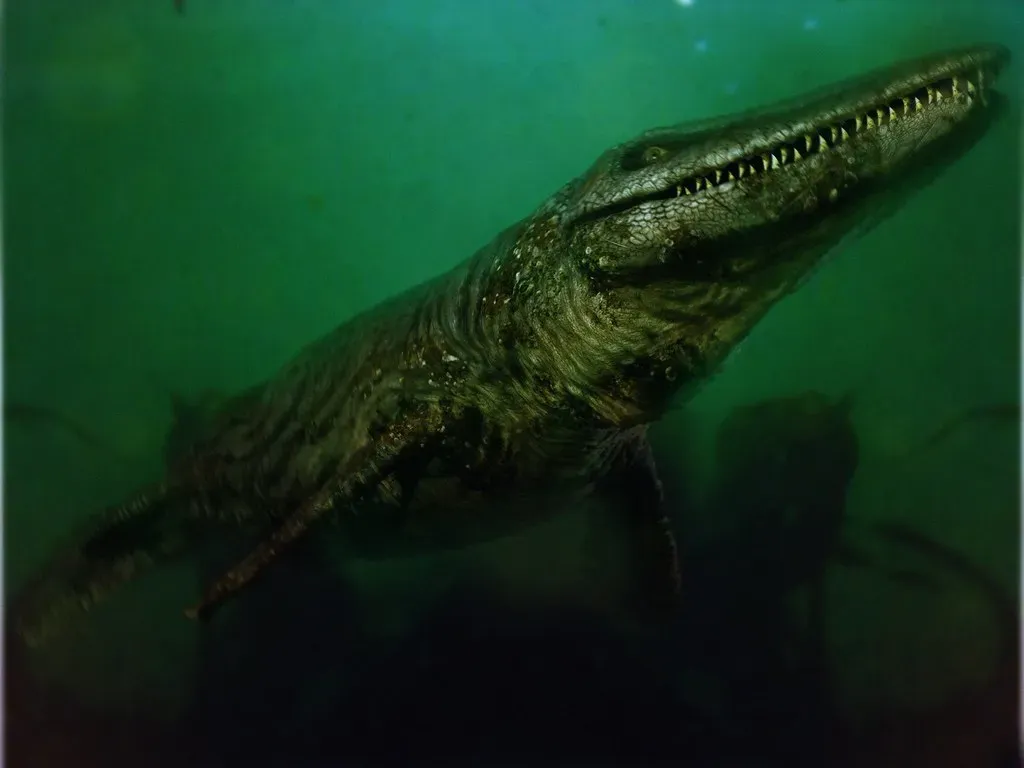
Fast‑forward to the Late Cretaceous, and mosasaurs had turned the oceans into their personal hunting grounds. These were not dinosaurs but marine lizards, distant relatives of modern monitor lizards and snakes, some stretching longer than a city bus. With long, muscular bodies, paddle‑like limbs and powerful tails, they moved like underwater missiles. Their skulls were built for business: massive jaws, conical teeth designed to seize and tear, and in some species, a second row of teeth on the palate to drag prey helplessly down the throat.
Mosasaur stomach contents and bite marks tell a ruthless story: they ate marine reptiles, giant fish, ammonites, even other mosasaurs. Some of the biggest species would have dwarfed a T. rex in mass and could attack from below or from the side, using the element of surprise in a way large land predators rarely could. I still remember the first time I saw a reconstructed mosasaur skeleton suspended over a museum hall; it felt like someone had taken a Komodo dragon, stretched it, armed it with extra teeth, and then given it free reign over an entire ocean. Compared to that, T. rex starts to look like it had a pretty limited hunting range.
Pliosaurs and Plesiosaurs: Submarine Reptiles with Torpedo Skulls
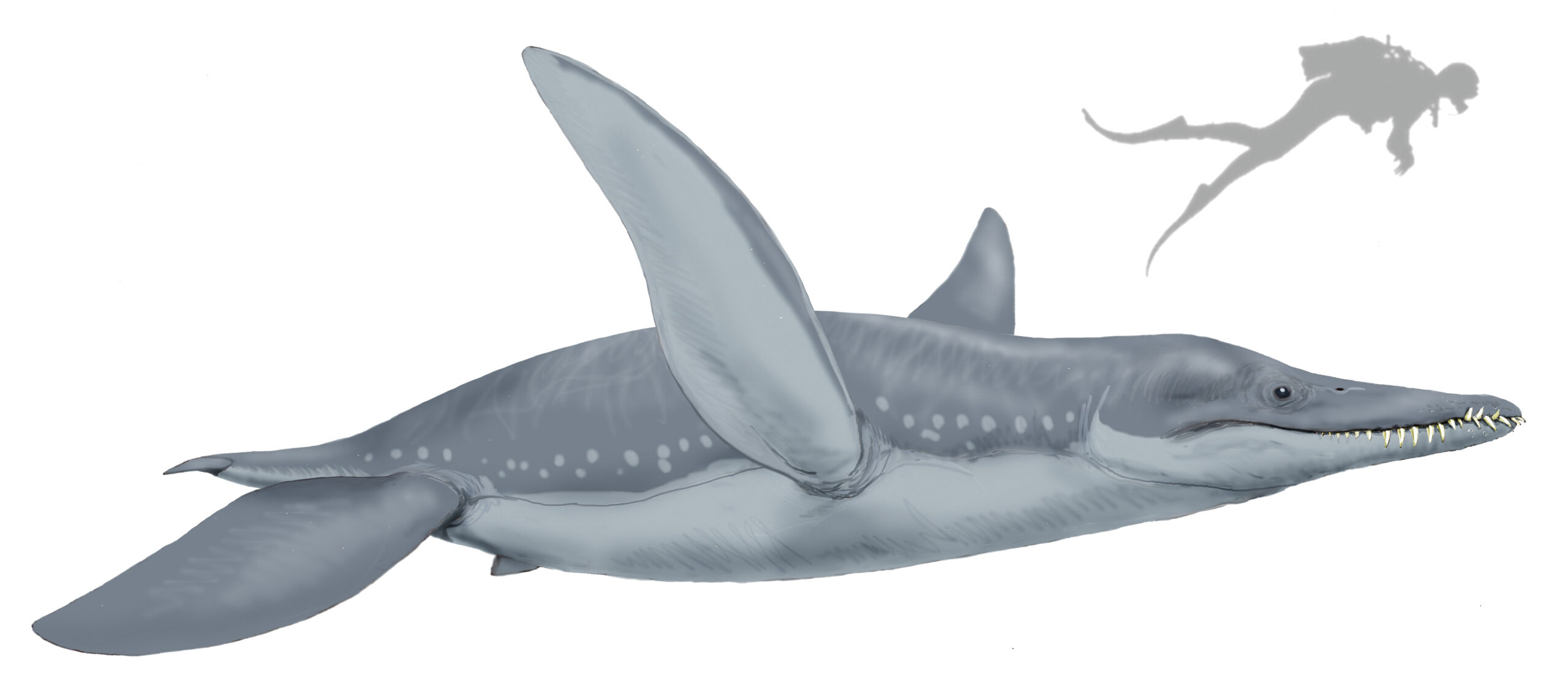
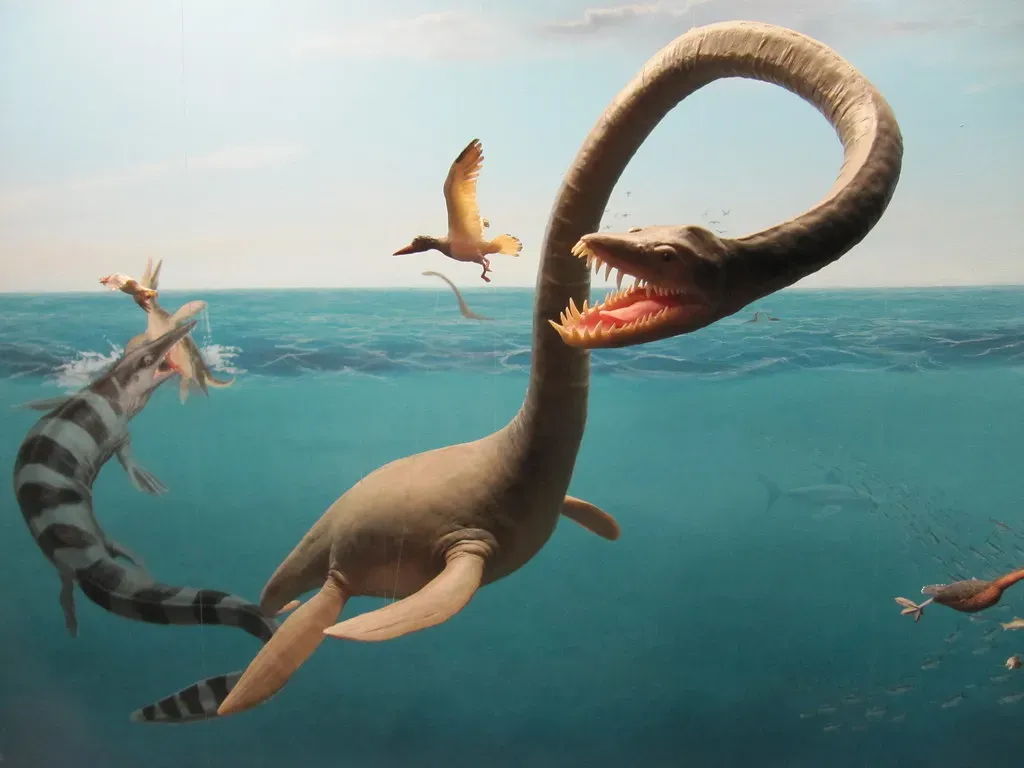
Marine reptiles known as plesiosaurs and pliosaurs pushed the “underwater reptile” idea in different but equally terrifying directions. Classic long‑necked plesiosaurs had tiny heads on snake‑like necks with four powerful flippers, probably sneaking up on shoals of fish or small cephalopods. The real terrors, though, were the pliosaurs: animals with enormous skulls, shortened necks and barrel‑shaped bodies, like reptilian torpedoes. Some species, based on fragmentary but impressive fossils, may have approached or exceeded the length and mass of a T. rex, with skulls alone several times the size of a human.
These pliosaurs had teeth shaped like giant stakes, ideal for gripping large, struggling prey. Imagine an ambush hunter lurking in murky water, exploding forward with four synchronized flippers for a burst of speed and clamping down on anything unfortunate enough to pass. Land predators are terrifying head‑on, but in the deep ocean, you might never see the attack coming until a set of conical teeth closed around you from below. In that kind of environment, raw intimidation belongs to the animals that own the water column, not the ones pacing along a shoreline.
Megalodon and the Age of Giant Sharks
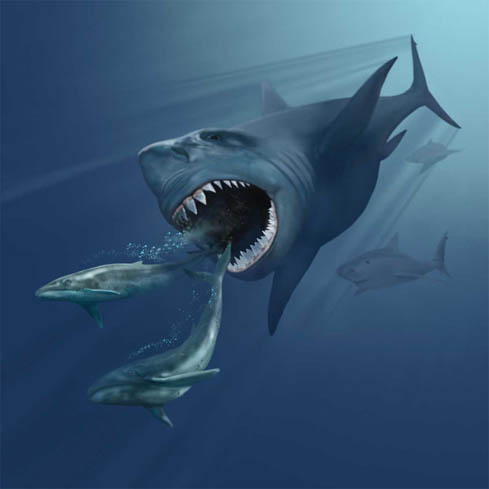
Even after dinosaurs vanished, the oceans stayed committed to the monster aesthetic. The prehistoric shark commonly known as Megalodon turned the seas of the Miocene and Pliocene into a buffet for giants like early whales. Based on tooth size and jaw reconstructions, this shark could grow longer than a city bus and weigh as much as several T. rexes combined. Its jaws were so wide that a person could have easily stood inside them, and its bite pressure has been estimated among the highest of any animal that ever lived.
Unlike T. rex, which may have been part-time scavenger and part-time predator, Megalodon lived in a world where its primary prey were powerful, fast-swimming mammals. To keep up, it likely used stealth, speed and raw mass in combination, slamming into its targets and removing huge chunks of flesh in a single bite. The idea of something that big and that fast moving through the water is uniquely disturbing. On land, you can at least imagine flimsy defenses like walls, trees or cliffs; at sea, when the top predator is a roaming set of jaws with fins, there is nowhere to hide once you leave shore.
Cephalopod Nightmares: From Giant Orthocones to Colossal Squid
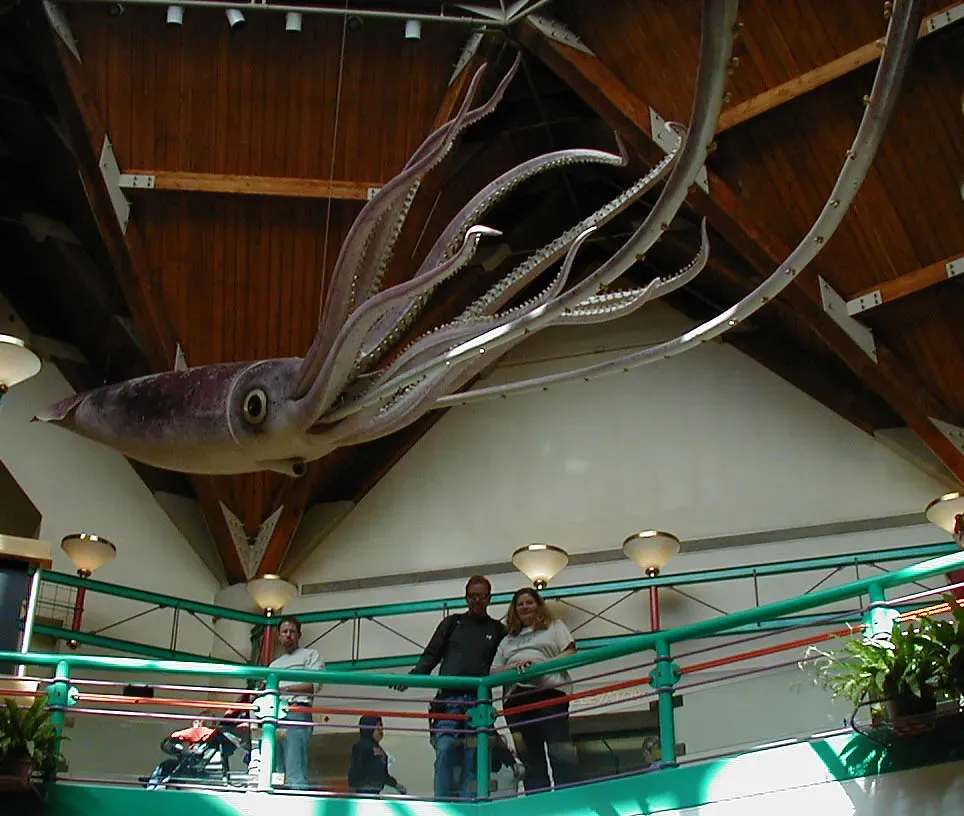
Not all ocean terrors needed bones to scare the life out of you. In early Paleozoic seas, straight‑shelled cephalopods, sometimes called orthocones, grew to impressive lengths and likely sat atop food chains as agile, jet‑propelled hunters. They combined buoyant shells with tentacles and a beak, maneuvering through the water column with surprising control. Later, their shelled relatives like ammonites diversified into countless shapes and sizes, and while most were probably prey, some larger forms may have been serious predators in their own right.
Even today, their soft‑bodied descendants hint at what ancient oceans might have felt like. Modern giant and colossal squid live in deep, dark waters, and we still struggle to observe them alive, despite advanced technology. Scale that sense of unseen menace back through hundreds of millions of years, and you get a picture of ancient oceans where strange, many‑armed hunters grabbed prey out of the gloom. A tyrannosaur is a known quantity: you can see it coming and understand roughly what it does. A massive cephalopod emerging from black water to wrap you in hooked arms is horror on a completely different wavelength.
Why Ocean Predators Often Out‑Terrify Land Dinosaurs
There’s a psychological side to all of this that makes marine monsters feel worse than land ones. Deep water already makes many people uneasy, and layering in predators that are bigger, faster and better adapted to that environment than we could ever be just amplifies that fear. On land, we at least share the medium with predators; we know what it feels like to run, to hide behind a tree, or to climb. In the ocean, we are clumsy visitors, out of breath in minutes, suspended in a medium where something built for that world can treat us like slow‑moving debris.
From a scientific perspective, the combination of three‑dimensional hunting, buoyancy-assisted size, and repeated evolutionary arms races produced sea creatures that push the upper limits of what a predator can be. T. rex was undeniably impressive, but it represents one branch, in one time and place, of a much bigger story. Ancient oceans show us that nature kept trying out even more extreme designs: thicker armor, bigger jaws, more fins, more teeth. Once you appreciate that, it becomes hard to cling to the idea that a single land dinosaur deserves the crown of “most terrifying” when entire oceans were essentially prototypes for something worse.
Conclusion: Maybe T. rex Was Never the Main Villain
It’s time to admit something that might annoy a few dinosaur purists: T. rex was iconic, but it probably was not the scariest thing this planet has produced. When you stack it up against Dunkleosteus crushing armor, mosasaurs swallowing other reptiles, pliosaurs ambushing from the depths, Megalodon dismantling whales, and cephalopods haunting the darkness, the title of apex nightmare starts to look more aquatic than terrestrial. Land predators like T. rex were terrifying bosses in their own local level; the oceans, though, were playing the whole game on hard mode.
Personally, if a time machine ever shows up, I’d risk a distant look at a T. rex from behind a sturdy cliff before I’d even consider dipping a toe in any ancient sea. The fossils are basically warning labels from prehistory, telling us that the worst things nature can imagine usually end up in the water. In the end, paleontology is less about dethroning T. rex and more about widening our sense of awe at how far evolution has pushed the predator concept. So next time you picture the “ultimate” ancient monster, will you still see a land dinosaur, or will you be looking nervously out at an endless, dark ocean instead?