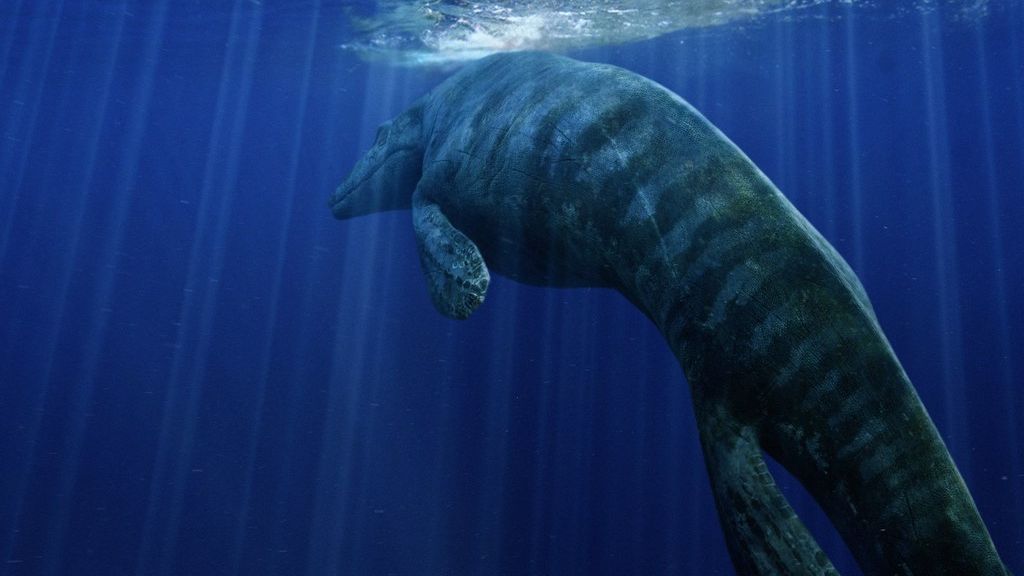
You probably grew up hearing about giant dinosaurs, but the biggest animals to ever walk on land were not all scaly or reptilian. Some of the true heavyweights were mammals, closer to you on the evolutionary tree than any Tyrannosaurus. When you start comparing their size to buses, houses, or elephants, your everyday sense of scale almost falls apart.
In this journey, you’re not just reading a list of giant beasts; you’re stepping into a world where forests shook under their footsteps and whole ecosystems had to adjust around their appetites. You’ll see how scientists can reconstruct a creature from a few battered bones, why you should be cautious with size claims that sound too good to be true, and how these giants connect to the elephants, rhinos, and even you today.
Stepping Into a World of Mammalian Giants
Imagine standing in a valley where the largest animal around makes today’s elephants look almost modest. That’s the kind of world some prehistoric mammals lived in, and when you picture it, you realize how small your own lifetime feels next to millions of years of evolutionary experiments. You’re not just looking at oversized animals; you’re seeing nature push body size to physical and ecological limits.
When you learn about these giants, you also learn how fragile those limits are. A shift in climate, a change in vegetation, or a new competitor could erase an entire lineage of huge mammals. As you move through these examples, try to hold two things in your mind at once: the awe of their size and the constant reminder that every one of them eventually vanished, leaving you to piece together their stories from scraps of bone and stone.
Paraceratherium: The Towering Rhino With No Horn
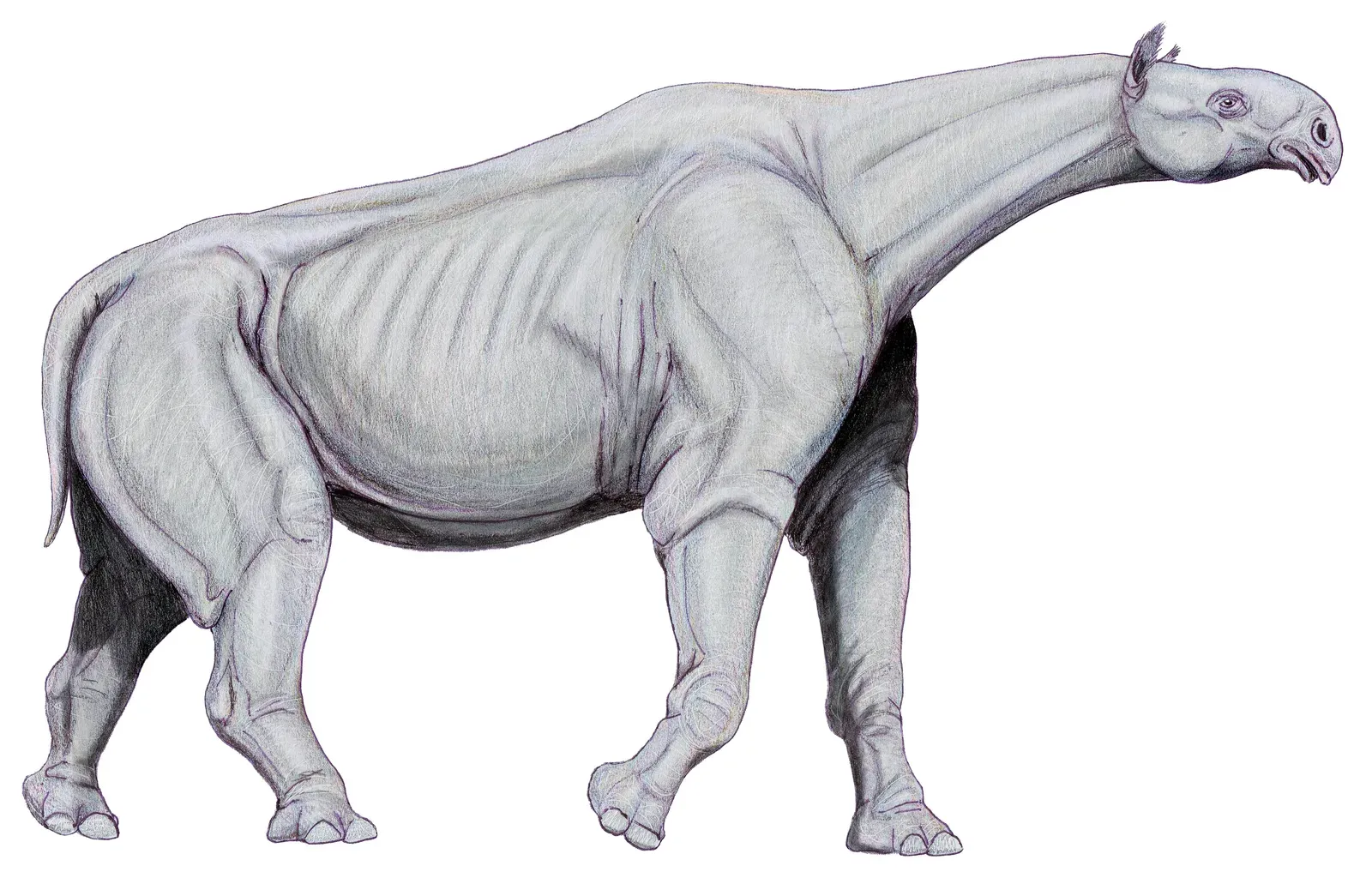
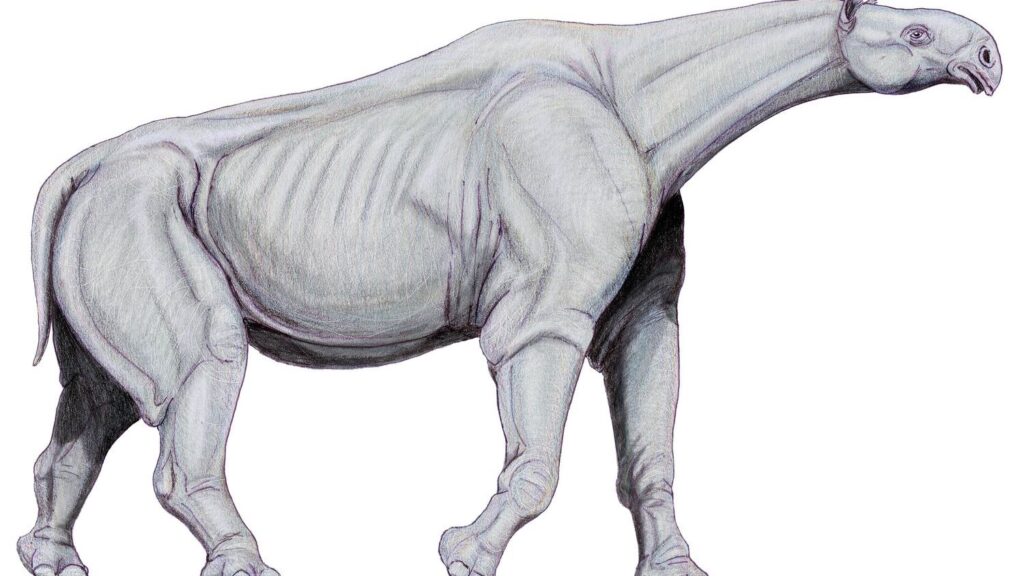
If you had to pick one serious contender for the title of biggest land mammal ever, you’d almost certainly land on Paraceratherium. You can picture it as a hornless, ultra-stretched rhino, with a long neck and massive pillar-like legs, standing perhaps as tall as a two‑story building at the shoulder in some estimates. When you imagine walking underneath its belly like you would under a bridge, you start to feel just how absurdly large this animal was.
You’d find its fossils across parts of what are now Asia, in rocks that tell you it lived roughly during the Oligocene epoch, long after the non‑avian dinosaurs disappeared. You’ll notice that scientists still argue over its exact weight and height because the skeletons are incomplete and different methods give different answers. Instead of chasing the biggest possible number, you’re better off appreciating the range of estimates and the simple fact that, however you slice it, you’re dealing with a creature far beyond anything alive on land today.
Palaeoloxodon namadicus: The Elephant That Redefined Huge
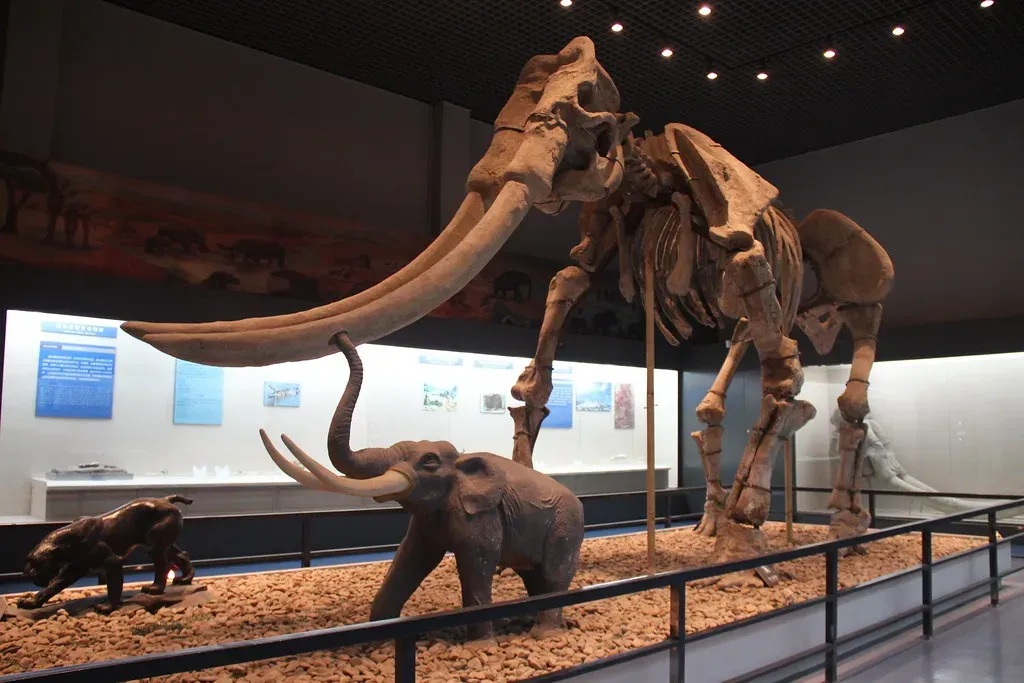
When you think “big elephant,” you probably picture an African savanna elephant and call it a day. But as you explore the fossil record, you run into Palaeoloxodon namadicus, sometimes called the Asian straight-tusked elephant, and your mental scale has to stretch again. Some reconstructions suggest it may have rivaled or even exceeded Paraceratherium in mass, with a body so deep and wide you could line people shoulder to shoulder and still not match its breadth.
You’d meet this giant in the landscapes of what is now the Indian subcontinent, roaming floodplains and forests during the Pleistocene. When you look at its bones, especially the leg bones and the shape of the skull, you see an animal built like a walking fortress, yet still moving enough to migrate, forage, and raise calves. As you read the debates around its maximum size, you learn to treat bold claims with a healthy skepticism, focusing instead on what the bones clearly tell you: you’re looking at one of the largest, most impressive land mammals your planet has ever produced.
Deinotherium: The Upside-Down Tusked Colossus
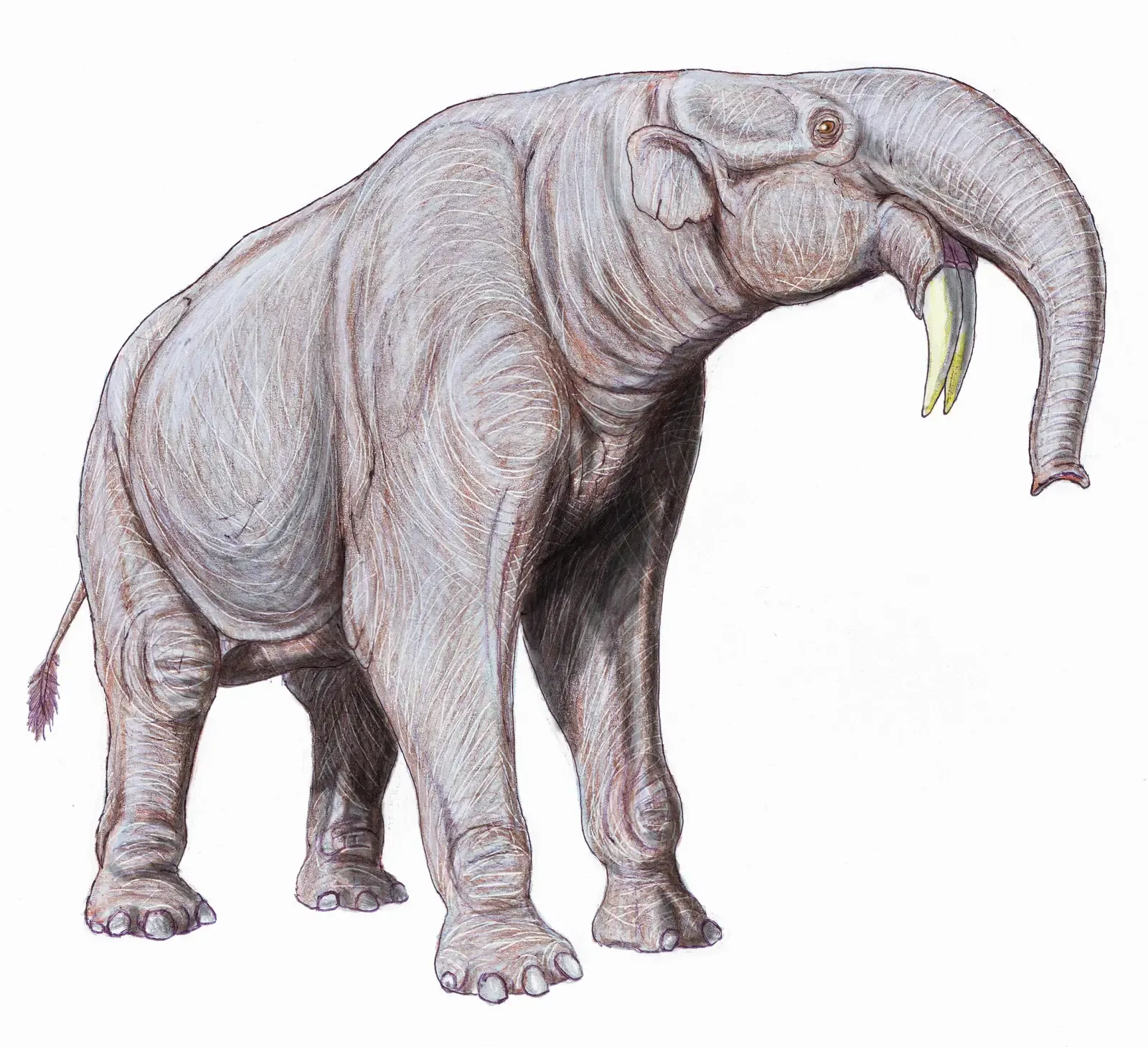
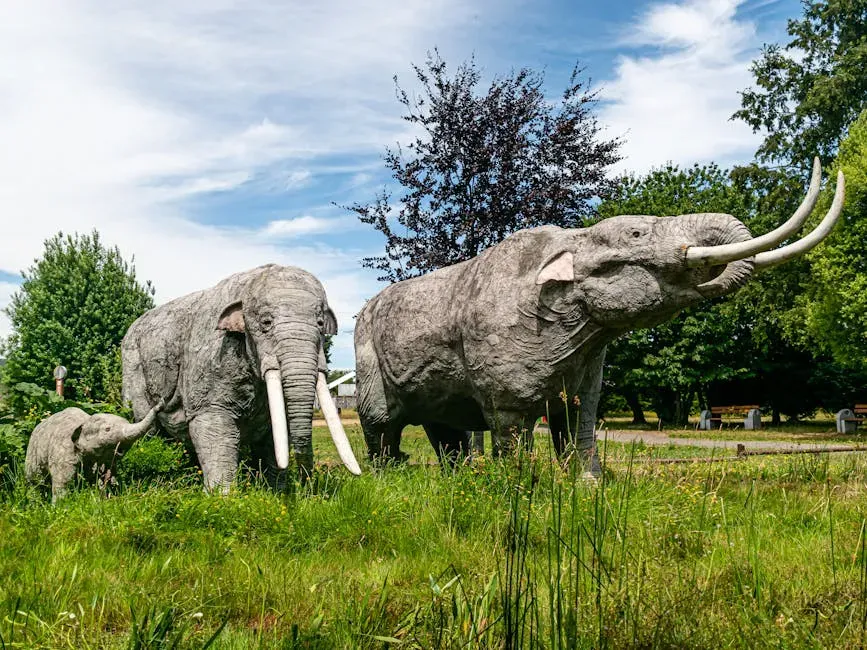
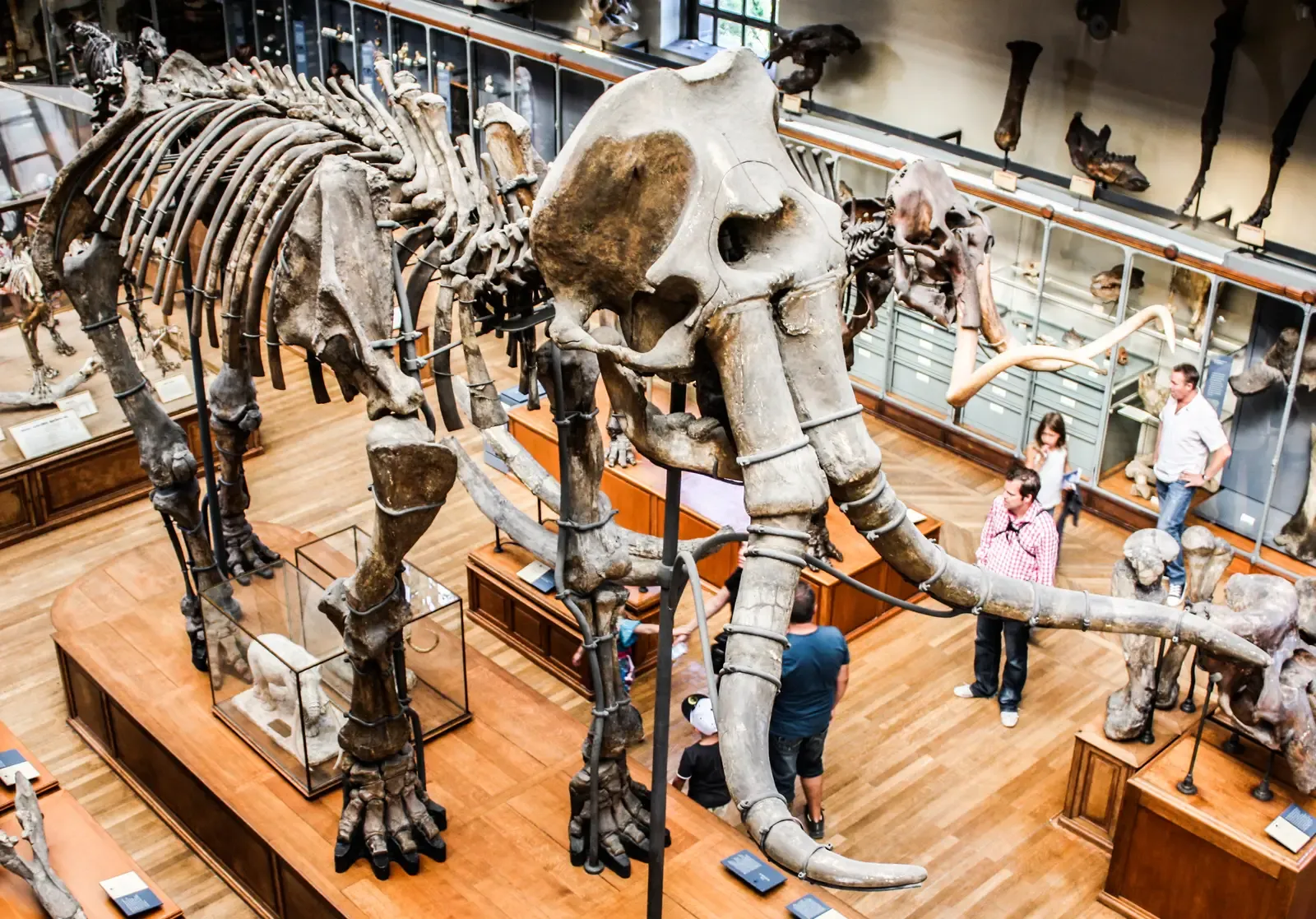
Deinotherium is the kind of animal that makes you do a double take because it feels familiar and alien at the same time. You see an elephant‑like body, but then you notice the tusks curving downward from the lower jaw, like giant hooks pointing toward the ground. As you imagine this creature standing several meters tall at the shoulder, with those tusks sweeping near the earth, you can almost see it pulling down branches or stripping bark in ways modern elephants never could.
When you follow its trail through time, you find Deinotherium in Africa and Eurasia, spanning many millions of years from the Miocene into the Pleistocene in some regions. You’re looking at a side branch of the elephant family tree, one that evolved its own style of gigantism and feeding behavior. By comparing its skull to that of modern elephants, you see how body plans can be pushed and reshaped, yet still anchored by the same basic mammalian blueprint you share in your own bones.
Indricotheres and the Challenge of Measuring Giants
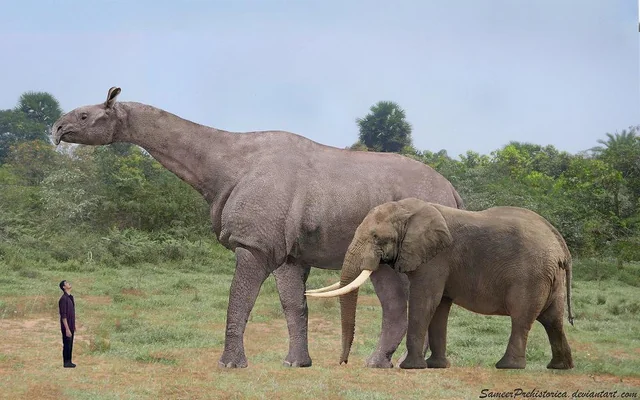
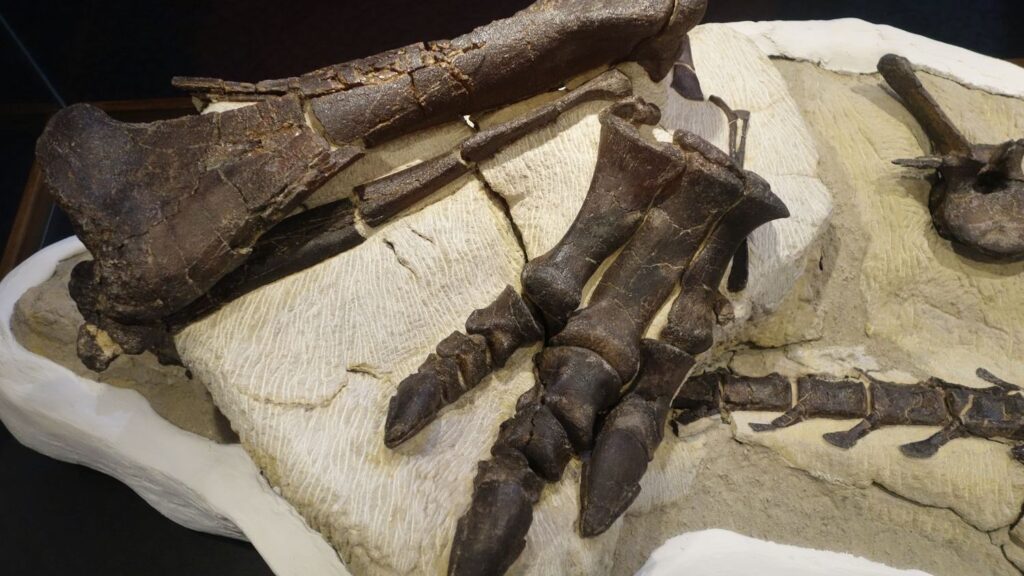
As you dive deeper into the “biggest ever” question, you quickly realize it’s not as straightforward as stacking animals by height or weight. Many of these giants, including the broader group known as indricotheres (of which Paraceratherium is a part), are known from incomplete skeletons. You often have a few limb bones, a skull fragment, maybe some vertebrae, and from those pieces you’re asked to imagine a whole animal, like finishing a huge jigsaw puzzle with most of the pieces missing.
When you see different reconstructions of the same species, you notice how much depends on assumptions about body proportions, muscle mass, and posture. You learn that scientists use comparisons with living animals, mathematical scaling, and computer models, all of which bring their own uncertainties. Instead of feeling frustrated by the lack of precise numbers, you can use this as a reminder that science is a living process, and your picture of these giants keeps sharpening as new fossils and better methods appear.
Giant Ground Sloths: Slow, Massive, and Surprisingly Powerful
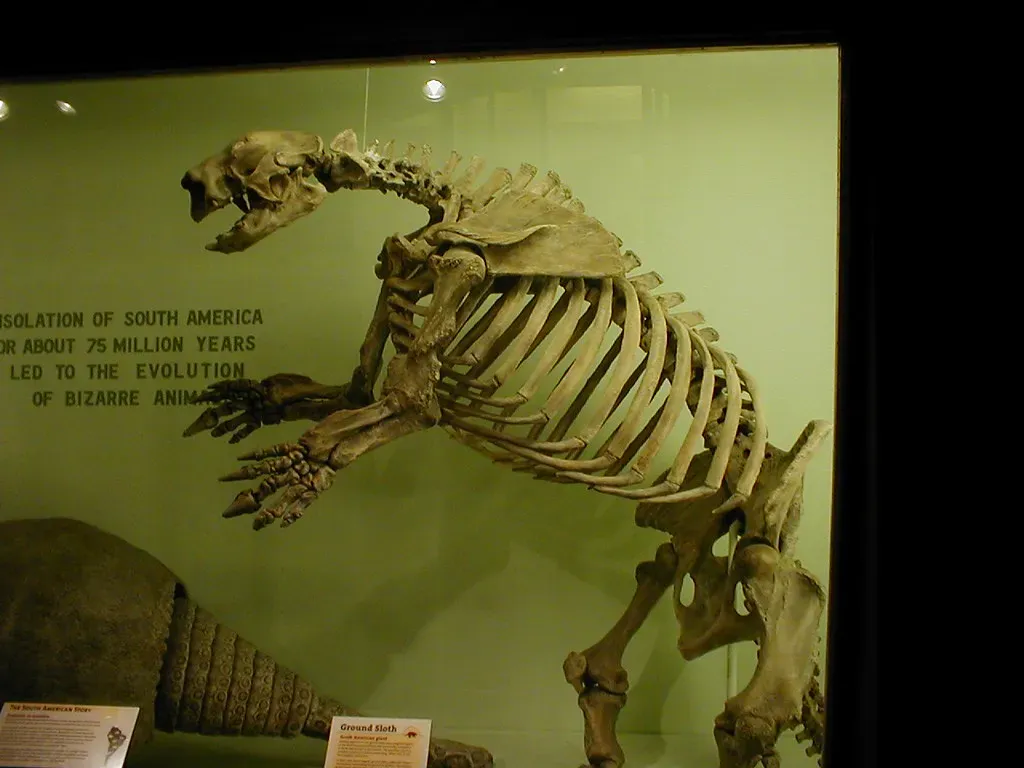
At first glance, the idea of a sloth being one of the largest land mammals in its ecosystem sounds almost comical. But when you meet the giant ground sloths, like Megatherium in South America, the joke disappears and a different feeling takes over: stunned respect. You’re looking at animals that could stand as tall as a small house when rearing up, using huge, curved claws and a powerful tail for support, more like a living excavator than the sleepy tree‑dwellers you know today.
As you picture one of these giants pulling down branches or digging for roots, you start to appreciate the quiet kind of power they carried. They were not fast sprinters, but in terms of sheer strength and bulk, they dominated their plant‑eating niche in many ancient landscapes. When you learn that some of them lived into the time of early humans in the Americas, you begin to see your own species not as separate from these giants, but as one more character sharing the stage with them, sometimes peacefully and sometimes not.
Gigantic Rhinos and Their Modern Echoes
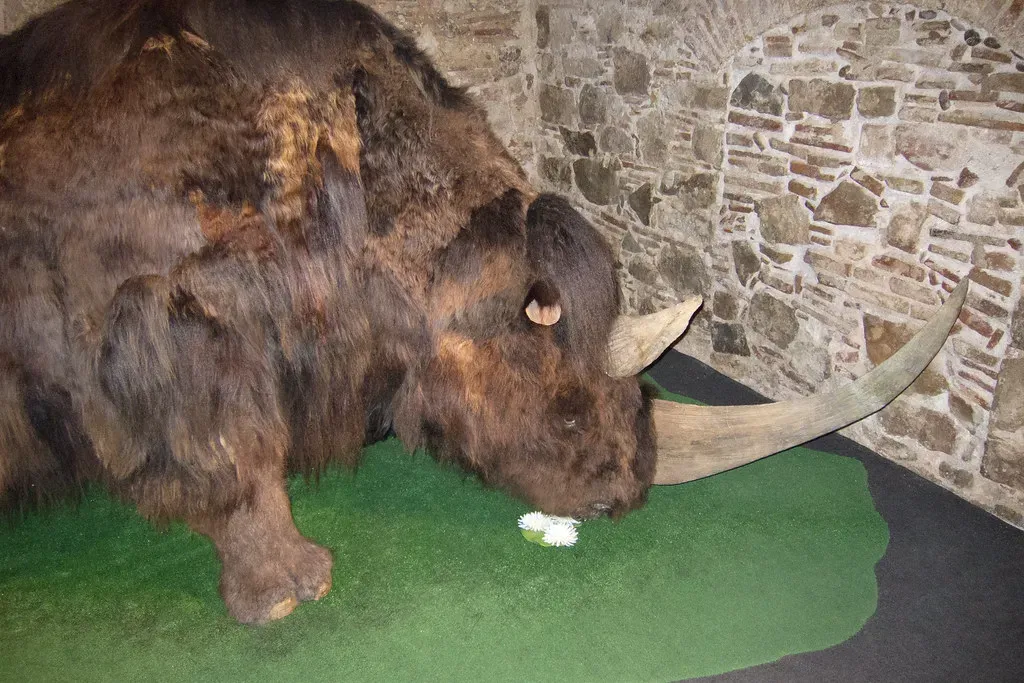
Beyond Paraceratherium, you discover that rhinos as a group have flirted with gigantism multiple times in their history. You come across other large prehistoric rhinos that, while not quite surpassing the record holders, still would have dwarfed most modern land animals. As you compare their skeletons, you see bodies built like mobile battering rams, with thick bones and massive shoulders designed to carry huge loads of muscle and weight.
When you turn back to the rhinos alive today, you start to notice the echoes of those ancient giants in their shape, behavior, and ecological role. Even though modern rhinos are smaller than their largest ancestors, they’re still among the biggest and most influential herbivores on land. By looking at them, you get a living, breathing hint of what it might have felt like to share your world with truly colossal rhinos, and you realize how close your present is to that deep past.
Why Land Mammals Have Size Limits
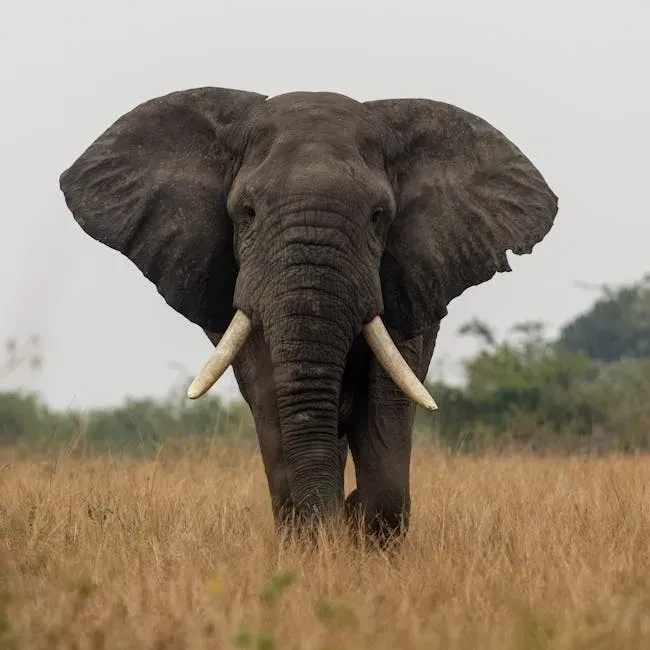
As you follow the trail of these giants, a logical question keeps circling back: why did land mammals not become as huge as the largest dinosaurs? When you dig into the biology, you see that being warm‑blooded, supporting your weight on land, and needing vast amounts of food all set limits on how big you can reasonably get. You start to understand that every extra ton of mass comes with a price in terms of heat, bones, joints, and the sheer logistics of feeding yourself.
Once you picture a gigantic mammal trying to find enough leaves, grasses, or bark every single day, you notice how fragile that lifestyle could be in times of drought, cold, or habitat loss. You also learn that very large bodies take longer to grow and reproduce, which makes those species more vulnerable to rapid changes. By the time you put all these pieces together, you see that maximum body size is not just a fun record to beat; it’s a tightrope that evolution walks, where one slip in climate or food supply can send a whole lineage crashing down.
What These Giants Teach You About Extinction and Survival
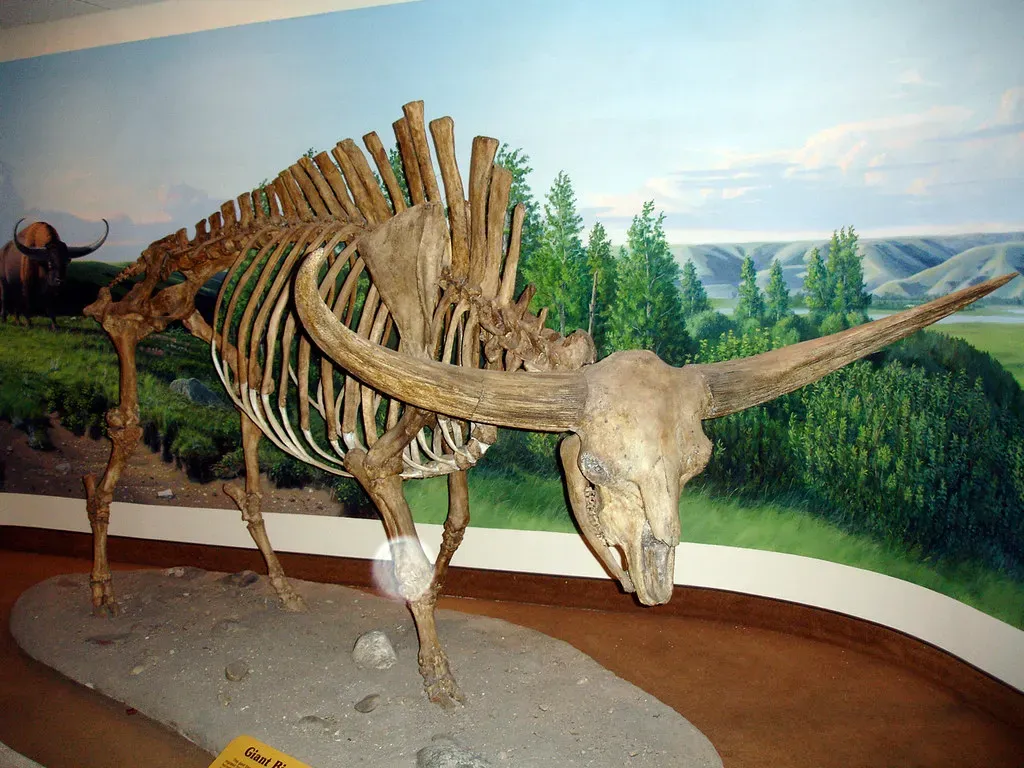
When you look across all these enormous mammals, a sobering pattern appears: every single one of them is gone. You find them in rocks and caves, not in savannas or forests, and that forces you to ask why. As you read about shifting climates, changing vegetation, and the spread of humans into new regions, you realize that extinction is usually the result of many pressures piling up rather than a single dramatic blow.
This perspective changes how you see the large mammals that are still with you today: elephants, rhinos, hippos, and others that already live near the edge of what ecosystems can support. You start to understand that by protecting their habitats and giving them space, you’re also honoring the long, fragile history of gigantism on Earth. In a way, every elephant that survives is a living memory of Paraceratherium, Palaeoloxodon, Deinotherium, and all the other giants you can no longer meet.
Conclusion: Standing in the Footprints of Giants
By the time you pull back from this tour of prehistoric giants, you’ve walked through a world where land mammals stretched the limits of what bones, muscles, and ecosystems could handle. You’ve met hornless rhinos as tall as houses, elephants that made modern herds look small, sloths that ruled the ground instead of the trees, and strange tusked colossi that rewrote your idea of what an elephant could be. Along the way, you’ve also seen how uncertain some size estimates are and how careful you need to be when someone claims an absolute “biggest ever.”
Most of all, you’ve learned that these giants are not just curiosities; they’re part of the same unfolding story that eventually produced you. When you look at an elephant today, or watch a rhino lumber across a plain, you’re catching faint reflections of a lost age of monsters that were mammals just like you. The ground you walk on once shook under their weight, and the air you breathe carried their calls. As you imagine standing in their footprints, you might quietly ask yourself: if such colossal creatures can vanish, what kind of legacy do you want your own species to leave behind?