Picture the ancient ocean. Not the calm blue that stretches beyond your nearest coastline today, but something wilder, denser, and far more dangerous. A world where creatures the size of city buses glided through warm, shallow seas, and the food chain extended to heights that nothing alive today can match. For a long time, science painted these animals as solitary, cold-blooded killing machines. Loners. Instinct-driven predators who needed no company.
Now, new fossil discoveries are quietly dismantling that image. Bone beds packed with multiple individuals, gravid females found near clusters of smaller specimens, and astonishing ecosystem reconstructions are pointing toward something far more complex. Something nobody quite expected. These ancient sea monsters may have had social lives. Let’s dive in.
A World Beneath the Waves That Rewrites Everything
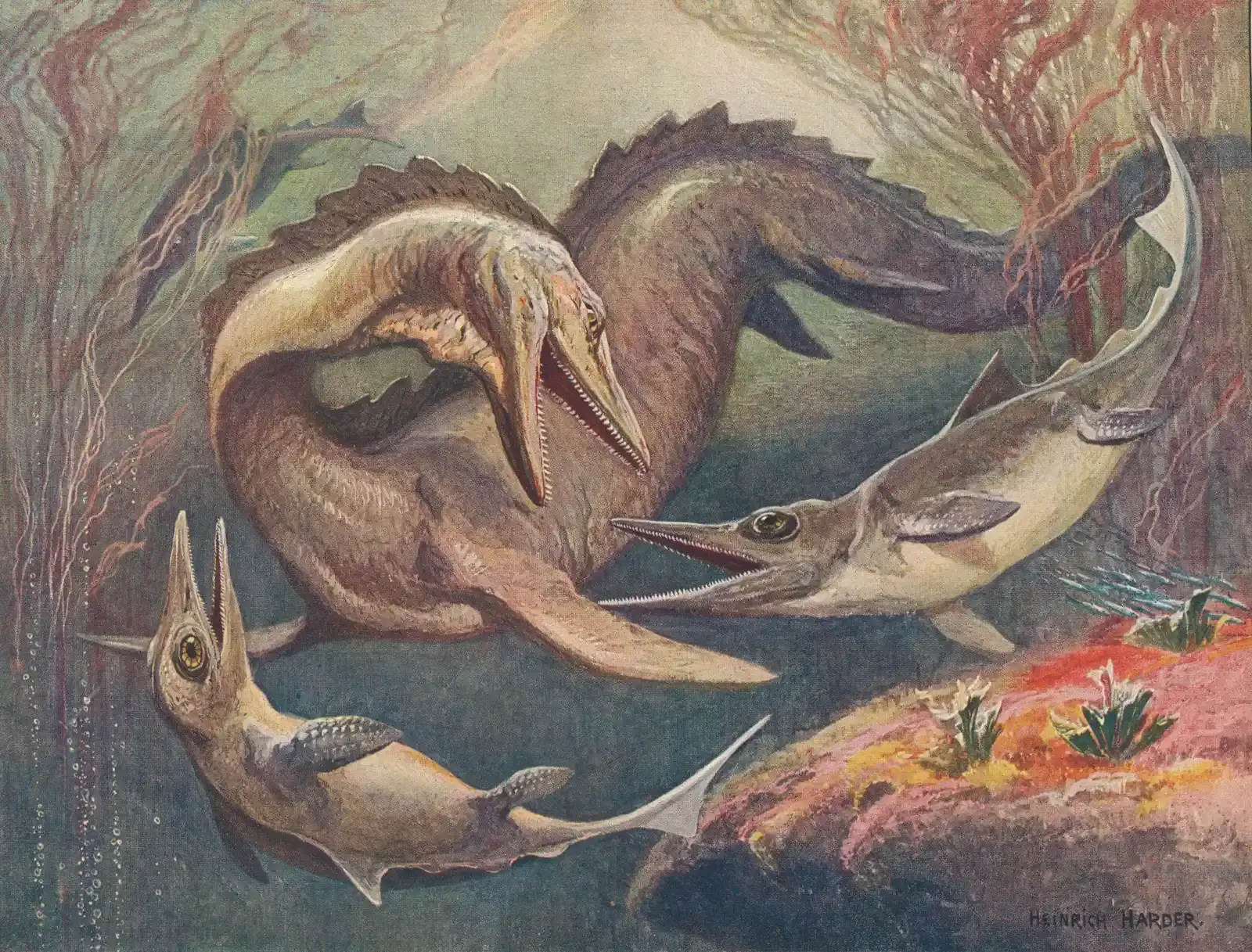
You might assume that scientists already have prehistoric marine reptiles figured out. After all, people have been digging up their bones since the early 1800s. Honestly, that assumption is a long way from the truth. More than 30,000 teeth, bones and other fossils from a 249 million-year-old community of extinct marine reptiles, amphibians, bony fish and sharks have been discovered on the remote Arctic island of Spitsbergen, recording the earliest radiation of land-living animals into oceanic ecosystems following cataclysmic extinction and extreme global warming at the dawn of the Age of Dinosaurs.
A computer-based global comparative analysis of the various animal groups further highlights the Spitsbergen fossil bonebed as one of the most species-rich marine vertebrate assemblages ever discovered from the dawn of the Age of Dinosaurs. Think of it like suddenly finding an entire city buried under sand, when before you only had a handful of stray bricks. What this site reveals is not just diversity, but the kind of proximity between species that hints at something bigger going on beneath the surface of ancient behavior.
The Ichthyosaur Question: Were They Loners or Travelers in Groups?
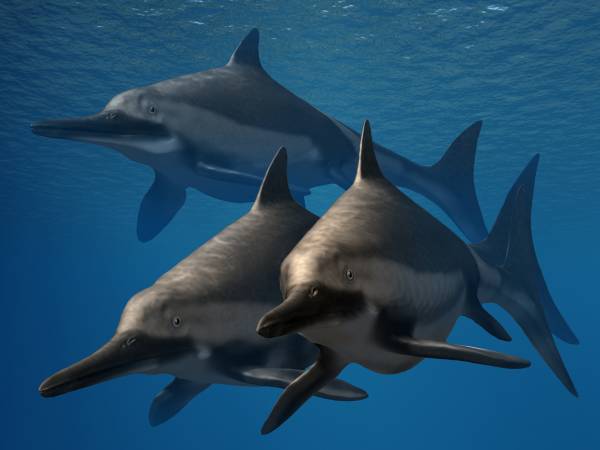
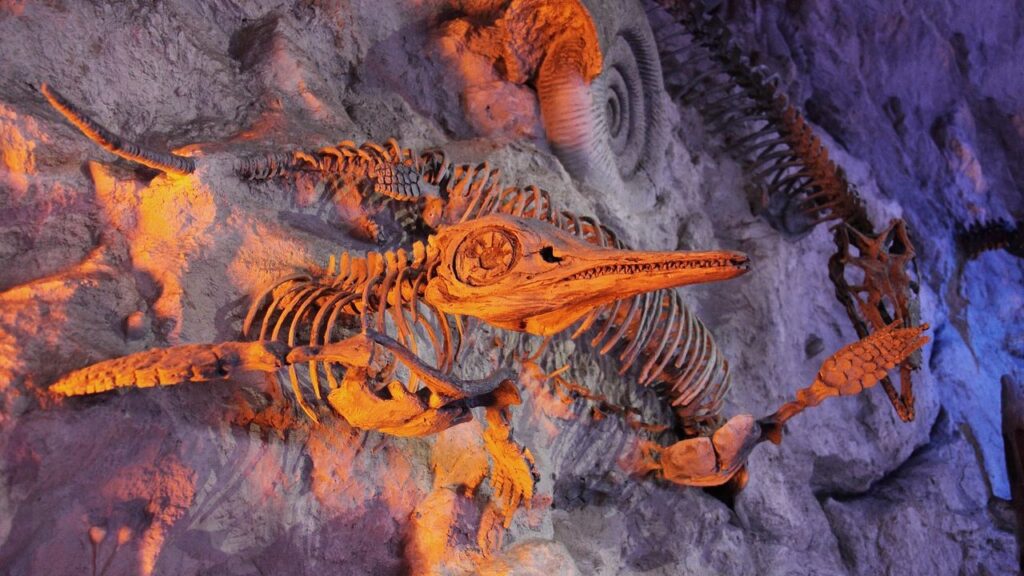
Here’s the thing about ichthyosaurs. They looked almost exactly like modern dolphins, right down to their streamlined bodies and large, intelligent-looking eyes. During the Early Triassic epoch, ichthyosaurs evolved from a group of unidentified land reptiles that returned to the sea, in a development similar to how the mammalian land-dwelling ancestors of modern-day dolphins and whales returned to the sea millions of years later, which they gradually came to resemble in a case of convergent evolution. If dolphins live in pods, it is not crazy to ask whether ichthyosaurs might have done the same.
Why ichthyosaurs died in the same spots still remains a mystery, but new research brings us closer to answering why so many congregated in the exact same spot across hundreds of thousands of years. It reveals a key part of ichthyosaur behavior: for many generations, the reptiles migrated from across the ocean to specific areas for a purpose, to birth and rear their young. That is not the behavior of a purely solitary creature. That sounds, remarkably, like purpose-driven social migration.
Mosasaurs: The Ocean’s Apex Predators With Hidden Complexity
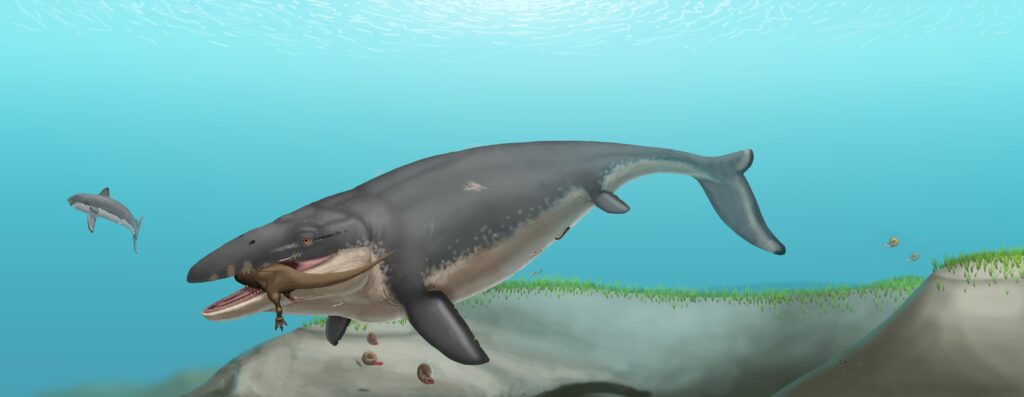
During the last 20 million years of the Cretaceous period, with the extinction of the ichthyosaurs and pliosaurs, mosasaurids became the dominant marine predators. They themselves became extinct as a result of the mass extinction event at the end of the Cretaceous period, about 66 million years ago. Mosasaurs breathed air, were powerful swimmers, and were well-adapted to living in the warm, shallow inland seas prevalent during the Late Cretaceous period. In other words, they ruled absolutely. Yet we are only beginning to understand how they interacted with one another.
Mosasaur growth is not well understood, as specimens of juveniles are rare. However, the discovery of several specimens of juvenile and neonate-sized mosasaurs unearthed more than a century ago indicate that mosasaurs gave birth to live young, and that they spent their early years of life out in the open ocean, not in sheltered nurseries or areas such as shallow water as previously believed. That last part is surprising. You might expect baby animals to cluster near shallow, safer waters, like modern marine turtles do. Instead, mosasaur newborns appear to have launched straight into the open ocean, which raises real questions about whether adults accompanied or guided them at all.
Plesiosaurs and the Startling Possibility of Family Bonds
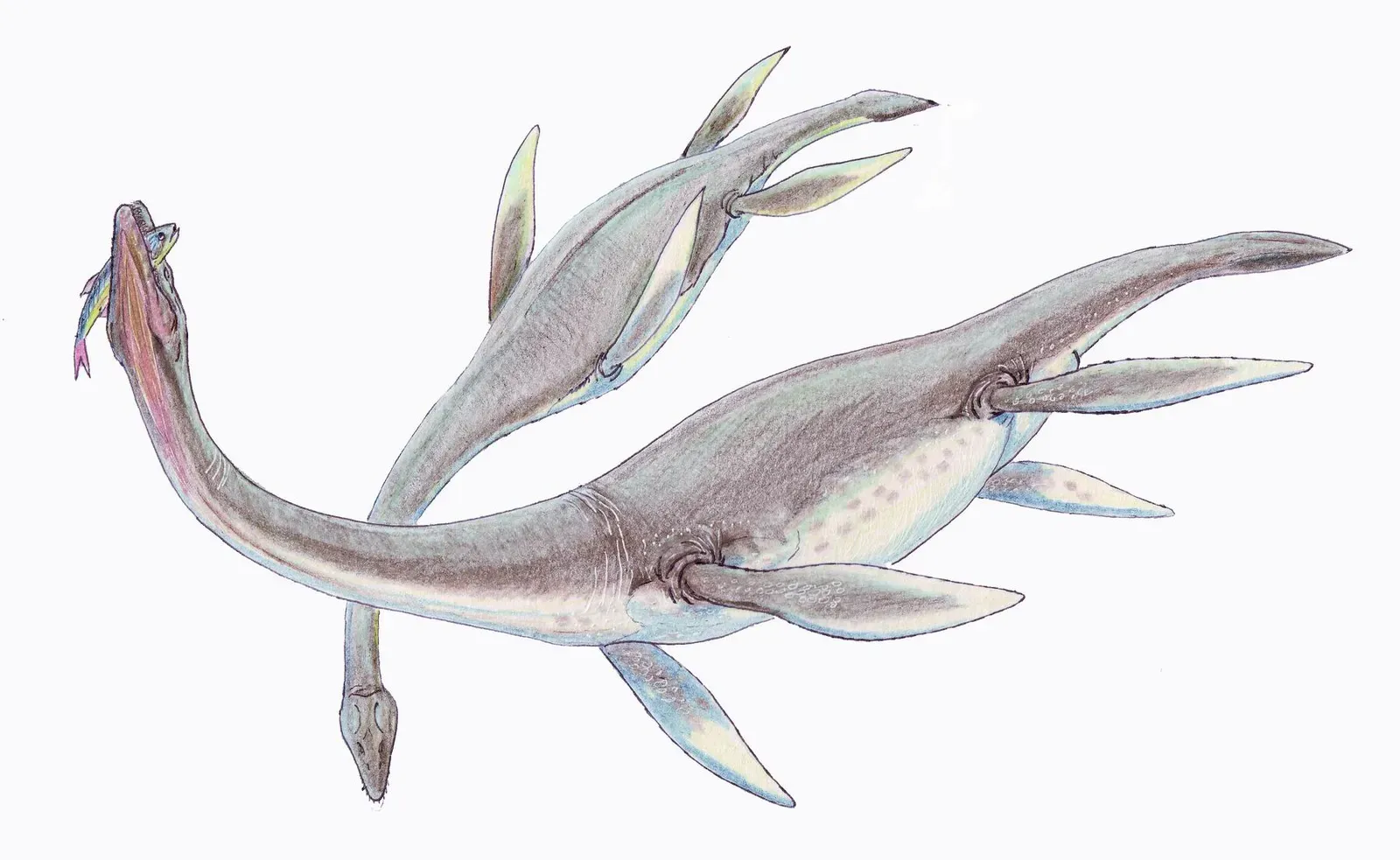
Plesiosaurs are among the most iconic prehistoric animals you can picture. Long-necked, paddle-limbed, and graceful in a deeply alien way. In general, plesiosaurians varied in adult length from between 1.5 meters to about 15 meters. The group thus contained some of the largest marine apex predators in the fossil record, roughly equalling the longest ichthyosaurs, mosasaurids, sharks, and toothed whales in size. These were not small creatures slipping through cracks in the ecosystem. They were dominant forces.
What makes plesiosaurs genuinely fascinating from a social behavior standpoint is their reproductive biology. The pregnant polycotylid described by O’Keefe and Chiappe shows that baby plesiosaurs were enormous relative to their mothers, at more than a third the mother’s length. To put that in human terms, that’s roughly like giving birth to a toddler-sized newborn. Animals with such large offspring typically invest heavily in parental care, and if these animals moved in groups, then cooperative hunting of a sort is plausible, since even animals that don’t live together will cooperate to herd or cluster prey. Social hunting of a sort seems plausible and perhaps likely, with benthic-foraging plesiosaurs possibly flushing prey toward others, or a group hemming prey in and bunching them up.
Hyper-Apex Predators and the Complexity of Ancient Food Webs
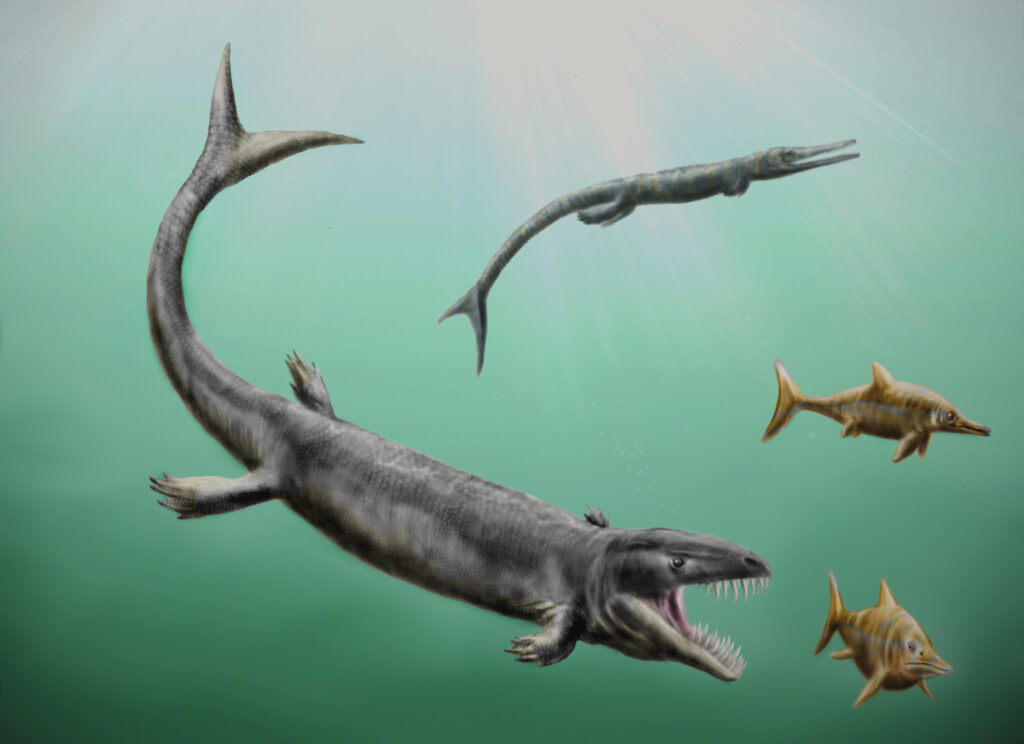
Let’s be real: one of the most jaw-dropping revelations in recent paleontology is the discovery that some prehistoric seas operated on a food-chain level that simply does not exist anywhere on Earth today. In today’s oceans, food chains typically reach six levels, with animals such as great white sharks and orcas as apex predators. However, researchers discovered that there was a previously unseen seventh level that was filled with enormous marine reptiles. Some, such as Sachicasaurus and Monquirasaurus, could grow up to and beyond 10 meters long and are known as hyper-apex predators.
A team from McGill University in Montreal, Canada, reconstructed a marine ecological network by analyzing all known animal fossils from an area in central Colombia known as the Paja Formation. The implications here go beyond just raw size. A seventh trophic level requires an ecosystem dense enough, and rich enough, to sustain it. That means prey populations had to be vast, and predator-to-prey interactions had to be far more structured and complex than simple solitary hunting could explain. The discovery of predators operating at a seventh trophic level highlights just how rich and complex the Paja ecosystem once was, offering rare insight into a deep evolutionary struggle, where predators and prey continuously adapted in response to one another.
Warm Blood, Sharp Minds, and the Social Animal Theory
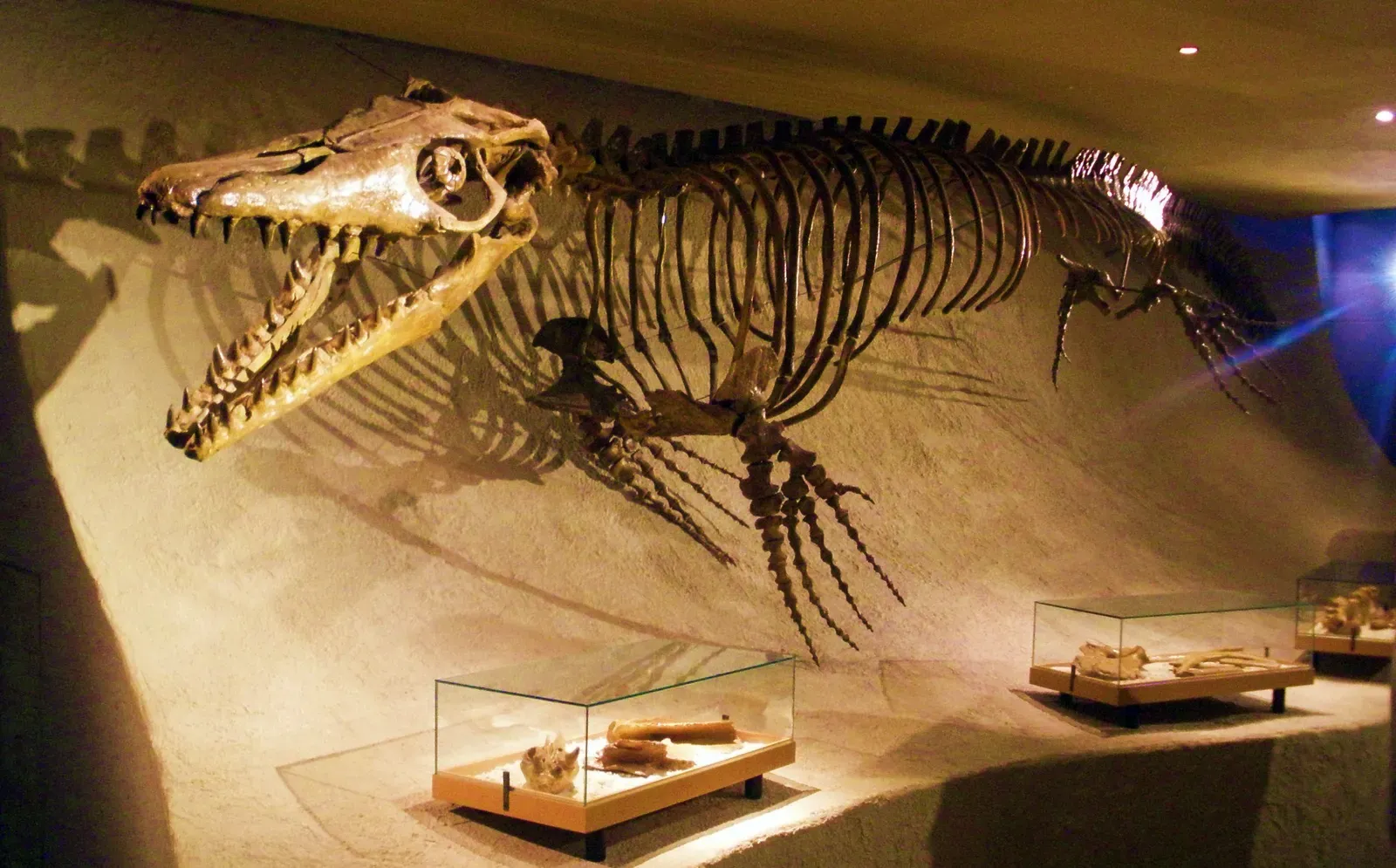
One thing that often gets overlooked in discussions about prehistoric marine reptiles is the question of metabolism. It matters enormously for social behavior. Cold-blooded animals tend to be solitary and reactive. Warm-blooded animals tend to be active, strategic, and often social. The tissue structure of Mosasaurus bones suggests it had a metabolic rate much higher than modern squamates, and its resting metabolic rate was between that of the leatherback sea turtle and that of ichthyosaurs and plesiosaurs. Mosasaurus was likely endothermic and maintained a constant body temperature independent of the external environment.
Evidence from the study of the phosphate oxygen isotope composition of plesiosaur, ichthyosaur, and metriorhynchid fossil material, interpreted as consistent with homeothermy and endothermy in ichthyosaurs, and endothermy in plesiosaurs, was presented by researchers in 2025. Here’s why this is significant. Endothermy requires calories. Calories require efficient hunting. Efficient hunting in ancient seas filled with competitors and capable prey almost certainly favored animals that coordinated. Think of wolves versus lizards. One hunts in packs. The other does not. Metabolism may be the hidden key to understanding everything about how these creatures interacted.
What the Latest Fossil Sites Tell You About Marine Reptile Society
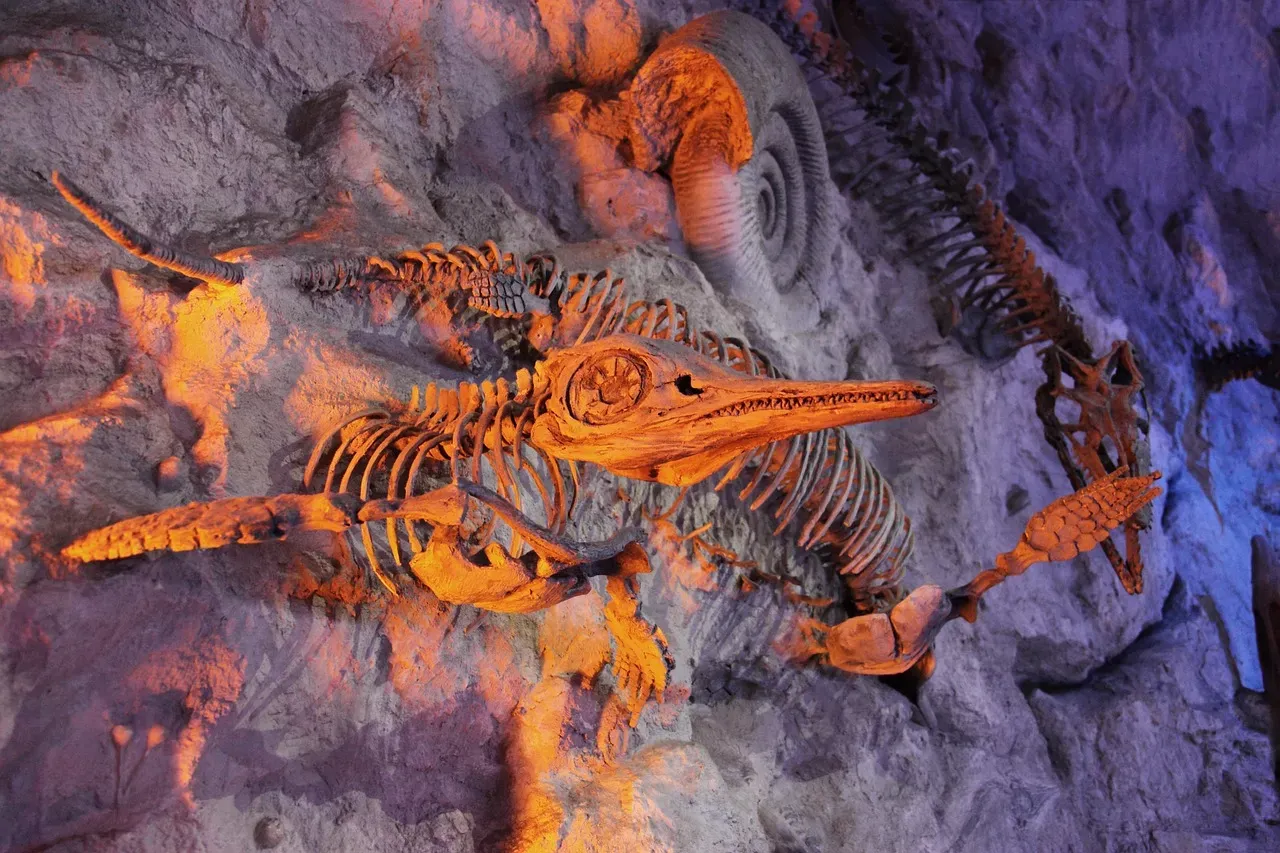
The fossil record has genuinely exploded in richness over recent years. Instead of a single marine amphibian species, researchers uncovered evidence of a surprisingly diverse community of early ocean predators. One of these creatures had relatives stretching from the Arctic to Madagascar, showing wide distribution. Fossils collected more than six decades ago and largely overlooked in museum collections are now reshaping scientists’ understanding of how land animals first returned to the sea and spread across the globe.
A study by Foffa, Young, and Brusatte examined the morphological and functional variation of lower jaws of marine reptiles from the Oxford Clay and Kimmeridge Clay formations, providing evidence of convergence of members of distantly related groups to similar feeding strategies, and likely evidence of niche partitioning among coexisting reptiles. Niche partitioning is fascinating. It is the ecological equivalent of roommates agreeing on who uses the kitchen when. Different species occupying the same ancient sea were not simply competing blindly. They were carving out distinct roles, which requires at minimum a kind of behavioral awareness of others. The evolution of Mesozoic marine reptiles was not static and about long stretches of conservatism, but dynamic and complex, with major overturns and innovations happening right to the end. That dynamism, it turns out, may have included social dynamics we are only just beginning to recognize.
Conclusion: The Ancient Oceans Were Far More Social Than You Ever Imagined
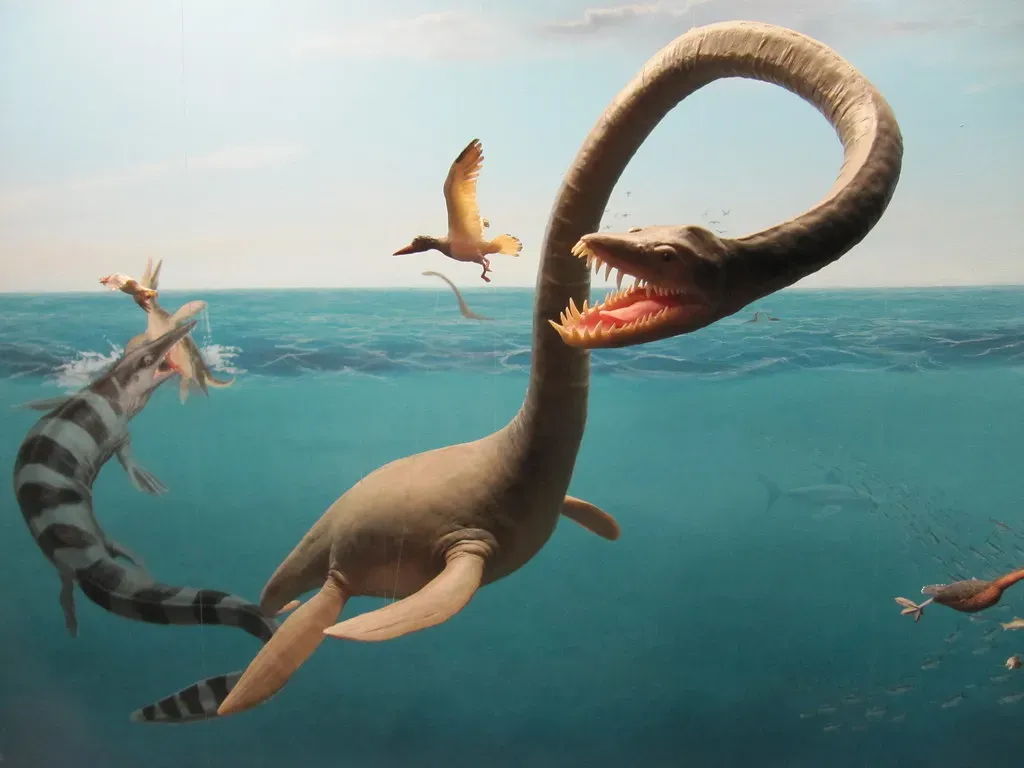
What you are watching unfold in paleontology right now is nothing short of a revolution. The image of prehistoric marine reptiles as mindless, solitary giants is giving way to something far more nuanced. Live birth, coordinated migration sites, shared feeding grounds, niche partitioning, endothermy, and bone beds crammed with multiple individuals of the same species. None of this screams “loner.” All of it suggests complexity.
It is hard to say for sure just how sophisticated these social structures were. The fossil record can only tell you so much. A skull, a tooth, a bone bed. Each clue is partial. Yet the accumulation of partial clues, from Colombia to the Arctic to the beaches of Somerset in England, is building into a picture that would have seemed radical just a generation ago. These were not simple animals wandering ancient seas in isolation. They were players in ecosystems so layered and intricate that even today’s oceans cannot match their depth.
The next time you stand at an ocean’s edge, consider what swam there once. Not just as monsters, but as creatures with lives, migrations, possibly even relationships. The sea has always kept its oldest secrets close. What do you think we’ll find next?