Humanity’s leap into the industrial age relied on immense coal reserves buried deep beneath the surface. These fossil fuels, remnants of ancient swamp forests, supplied the dense energy needed to power factories, railroads, and eventually global communication networks. Researchers now propose that such abundant, accessible coal may represent a rare planetary fluke, potentially resolving why no signals from advanced extraterrestrial civilizations have reached Earth.
Carboniferous Swamps: The Birthplace of Industrial Power
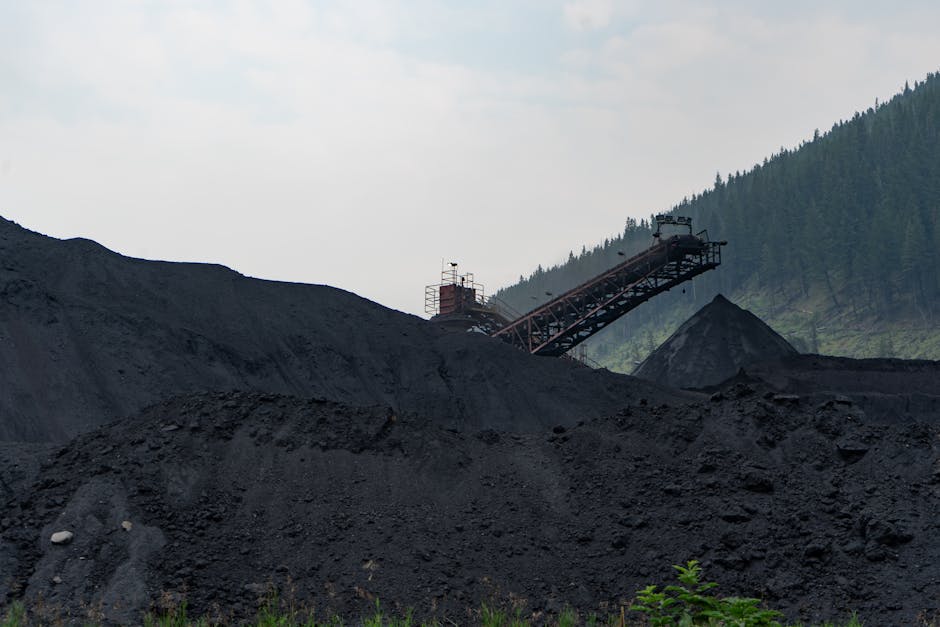
Carboniferous Swamps: The Birthplace of Industrial Power (Image Credits: Pexels)
Nearly 300 million years ago, vast tropical wetlands dominated the supercontinent Pangea. Towering lycopsid trees and ferns thrived in these stagnant, oxygen-poor mires, their fallen trunks accumulating faster than they decayed. Glacial-interglacial cycles repeatedly flooded and exposed these forests, layering peat that tectonic forces soon buried under sediment.
The Variscan orogeny, a massive mountain-building event spanning 480 to 250 million years ago, played a pivotal role. Collisions of ancient plates created subsiding basins perfect for rapid burial. Over tens of millions of years, heat and pressure transformed this organic matter into bituminous and anthracite coal, accounting for 70 to 90 percent of deposits used in modern industry.
From Peat to Progress: Coal Fueled the Industrial Revolution
Britain’s coal seams ignited the 18th-century Industrial Revolution. Steam engines, powered by this concentrated energy source, drove machinery at power densities far beyond wood or muscle – up to 10,000 watts per square meter compared to less than 1 watt for biomass. Factories proliferated without sprawling deforestation.
Coal proved even more crucial for unlocking deeper oil and gas reserves. Steel drills and pumps, forged with coal-fired metallurgy, pierced kilometers underground. Without these initial shallow deposits, 20th-century energy expansion would have stalled, historians argue. “Coal not only increased the scope and speed of the Industrial Revolution, but… it was indispensable,” scientists noted in a recent study.
Unlikely Ingredients: The Contingencies Behind Coal Bonanzas
Forming vast, mineable coal required an improbable alignment of factors. Oxygenic photosynthesis first built the oxygen-rich atmosphere and forests essential for scale. Yet this process demands a narrow “photosynthetic habitable zone” around stars, slimmer than the broader liquid-water zone.
Tectonics, climate, and biology converged uniquely during the Carboniferous. Key requirements included:
- Equatorial wetlands with anoxic conditions to preserve peat.
- Rapid subsidence from orogenic basins for burial.
- Millions of years of coalification to achieve high-energy grades.
- Absence of efficient wood-eating microbes until later eras.
- Synchronous evolution of intelligence post-maturation.
Interruptions like the Permian-Triassic extinction created “coal gaps,” underscoring fragility. Researchers describe this as a “staggeringly improbable series of events.”
Astrobiological Implications: Coal as a Cosmic Filter
The hypothesis challenges assumptions in the search for extraterrestrial intelligence. Proponents suggest amending the Drake Equation with a “coal factor” to estimate communicative civilizations. Large deposits may filter out most worlds, even those teeming with life.
Detectable technosignatures from coal combustion – elevated CO2, SO2, NOx, heavy metals, and soot – could linger in exoplanet atmospheres. However, this polluting phase likely proved brief on Earth due to climate feedbacks. Future telescopes might scan for these markers on promising worlds. “Coal is critical because… it is more accessible than the much deeper deposits of oil and gas,” lead author Lincoln Taiz explained.
Earth’s story reveals how geology shapes destiny. Abundant coal propelled one planet to the stars – or at least to radio broadcasts. If similar reserves prove rare galaxy-wide, cosmic silence makes sense.
Key Takeaways
- Carboniferous coal powered industrialization by providing accessible, high-density energy.
- Rare contingencies like Pangean swamps and orogenies make replication unlikely on exoplanets.
- Adding a “coal term” to the Drake Equation refines estimates of advanced civilizations.
What role do you think fossil fuels played in humanity’s rise? Share your thoughts in the comments.