Hordle Cliff, England – Fossils unearthed in 1981 from this coastal site sat unrecognized in a London museum drawer for over 40 years. Scientists recently identified them as belonging to a new species of ancient snake, dating back 37 million years to the late Eocene epoch. This diminutive reptile, now named Paradoxophidion richardoweni, offers fresh clues about the origins of modern snakes.
A Forgotten Fossil Comes Alive
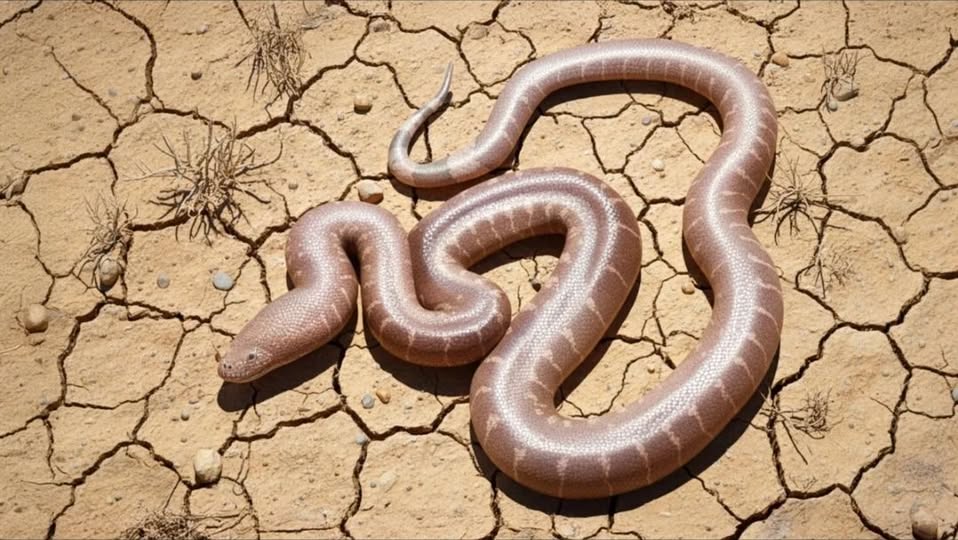
A Forgotten Fossil Comes Alive (Image Credits: Facebook)
Researchers stumbled upon the tiny vertebrae while sifting through collections at the Natural History Museum in London. The 31 bones, each just a few millimeters long, represented parts of the spine from a single individual. Lead author Dr. Georgios Georgalis called the moment a “dream come true,” noting his childhood fascination with the museum.
Discovered at Hordle Cliff near Christchurch, the fossils had languished since their initial collection. CT scans produced three-dimensional models, allowing detailed analysis and digital sharing for global study. Co-author Dr. Marc Jones highlighted how this technology preserved the specimens for future research. The identification marked a breakthrough, transforming overlooked remnants into a named species.
Unraveling the Paradoxical Anatomy
Paradoxophidion richardoweni earned its genus name, meaning “paradox snake” in Greek, due to its baffling blend of traits. The vertebrae taper gradually from head to tail, showing similarities to those of modern Acrochordus, or elephant trunk snakes, which dwell in aquatic habitats across Southeast Asia and northern Australia.
Yet the bones lack clear adaptations for burrowing or swimming, defying easy categorization. Estimated at less than a meter long, the snake displayed no specialized features for diet or habitat, as no skull was found. This mosaic of characteristics puzzled scientists, positioning it as an early member of caenophidians, the diverse group encompassing most living snakes today.
- Short, robust vertebrae akin to burrowing species, but without keeled undersides.
- Shape resembling aquatic Acrochordids, potentially the oldest record of this family.
- Overall form too unique to match known taxa precisely.
- No evidence of constriction, unlike contemporary Hordle Cliff snakes like Paleryx.
Eocene England: A Reptilian Hotbed
During the late Eocene, England basked in a warmer climate, with elevated carbon dioxide levels and a position nearer the equator. This environment supported a richer array of reptiles than today, including turtles, lizards, crocodiles, and abundant snakes. Hordle Cliff has yielded fossils since the early 1800s, when collector Barbara Rawdon-Hastings unearthed crocodile relatives.
Sir Richard Owen, namesake of the new species, first recognized snake fossils from the site in the mid-19th century. He described Paleryx, the earliest known constrictor in the fossil record. Smaller snakes like Paradoxophidion often escaped notice amid larger finds. The site’s layers preserve a snapshot of dramatic climatic shifts that reshaped life on the planet.
Illuminating Snake Evolution’s Dawn
The discovery sheds light on caenophidian origins, a lineage with sparse early fossil evidence. Paradoxophidion represents an early diverging branch, bridging gaps in how advanced snakes diversified. Georgalis noted its excitement: “It’s especially exciting to have described an early diverging caenophidian snake, as there’s not that much evidence about how they emerged.”
While similarities to Acrochordids hint at possible aquatic habits, confirmation awaits more fossils. Jones emphasized the era’s warmth: “Around 37 million years ago, England was much warmer than it is now.” The study, published in Comptes Rendus Palevol in November 2025, underscores museum collections’ untapped potential.
| Feature | Paradoxophidion richardoweni | Modern Acrochordus |
|---|---|---|
| Vertebrae Shape | Tapers head to tail; robust | Similar robust form |
| Habitat Inference | Unclear; possible aquatic | Aquatic, baggy skin |
| Size | <1 meter | Up to 2.5 meters |
- A 37-million-year-old snake species hid in plain sight for 40 years at the Natural History Museum.
- Its “paradoxical” traits challenge assumptions about early caenophidian evolution.
- Hordle Cliff remains a vital window into Eocene biodiversity.
Paradoxophidion richardoweni reminds us that history’s secrets often linger in plain view, awaiting fresh eyes and technology. As Georgalis plans to probe more Hordle Cliff specimens, including Owen’s giants like Palaeophis, further revelations seem likely. What do you think about this ancient enigma? Share your thoughts in the comments.