Stevns Klint, Denmark – Researchers uncovered a minuscule fragment of pterosaur wing bone in the chalk cliffs of this UNESCO World Heritage site, offering fresh evidence of small-bodied flying reptiles in the waning moments of the Cretaceous period. The discovery, detailed in a recent scientific paper, points to pterosaurs with wingspans under 50 centimeters thriving just 50,000 to 60,000 years before the mass extinction event 66 million years ago. This finding marks the first confirmed pterosaur remains from Danish soil, reshaping understandings of aerial life near the end of the dinosaur era.
A Chance Discovery in Fossil-Rich Cliffs
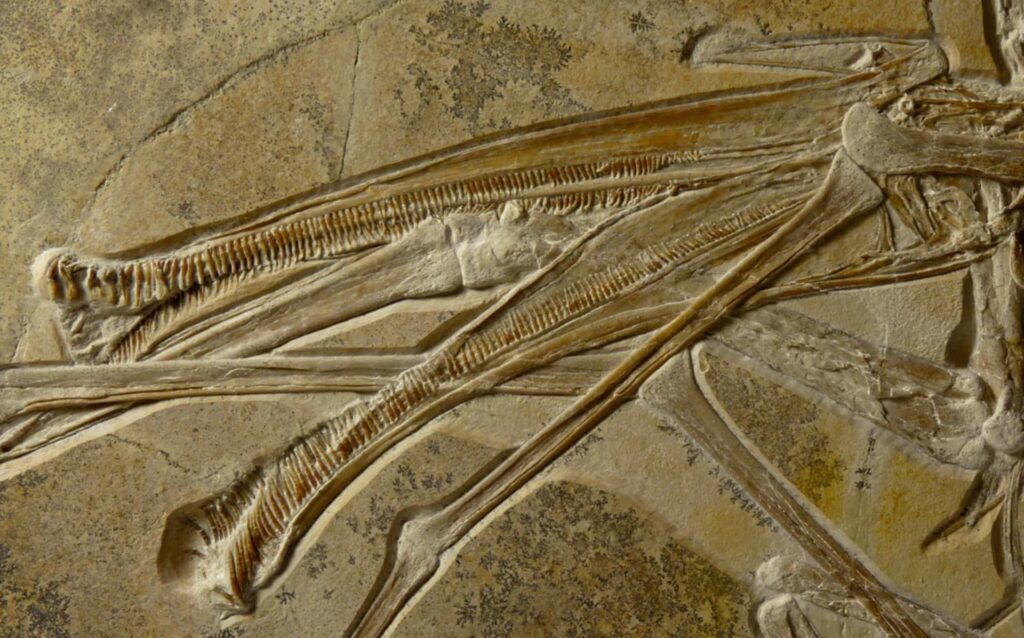
A Chance Discovery in Fossil-Rich Cliffs (Image Credits: Reddit)
Specimens turned up in the abandoned Holtug limestone quarry within Stevns Klint’s dramatic white cliffs, renowned for their exposure of end-Cretaceous layers. The main fossil, cataloged as OESM 13096, consists of a fragment from phalanx 1 of the fourth digit – the elongated wing finger characteristic of pterosaurs. Accompanying pieces, OESM 13323 and 13324, represent bits of phalanx 2 or 3 from the same structure. These tiny relics, some less than 5 millimeters long, ended up preserved in the Højerup Member of the Møns Klint Formation, an uppermost Maastrichtian deposit.
Paleontologists identified the bones through detailed microscopic analysis, noting their hollow structure and cross-sections typical of pterosaur wing elements. The site, formed from ancient seafloor chalk, captured rare terrestrial flyers that drifted offshore after death. This serendipitous preservation highlights Stevns Klint’s value as a window into the final pre-impact ecosystem.
Unraveling the Anatomy of a Mini Flyer
The primary fragment measures small enough to suggest an adult pterosaur no larger than a sparrow. Jesper Milàn and colleagues estimated a wingspan below half a meter based on comparisons to known small pterosaurs from earlier Cretaceous rocks. Such proportions align with diminutive species that relied on agile flight for insect hunting or scavenging.
- Phalanx 1 fragment (OESM 13096): Proximal and distal ends preserved, showing pneumatic internal spaces.
- Secondary fragments: Likely from adjacent wing phalanges, confirming multiple elements from one individual.
- Cross-sections: Thin cortical bone walls, diagnostic of pterosaur flight adaptations.
- Size scaling: Proportions indicate body mass under 100 grams.
Unlike the giant azhdarchids dominating late Cretaceous skies elsewhere, this specimen evokes earlier, more diverse pterosaur faunas. Its presence in marine chalk underscores how fragile bones could fossilize far from nesting grounds.
Challenging Assumptions on Late Cretaceous Skies
Prior views held that small pterosaurs faded mid-Cretaceous, displaced by expanding bird diversity in the small flyer niche. Birds, with superior maneuverability and brooding behaviors, supposedly outcompeted them for insects and seeds. Yet this Danish find proves otherwise: miniature pterosaurs endured into the Maastrichtian’s final phase.
The uppermost Maastrichtian layers at Stevns Klint predate the Chicxulub asteroid by mere millennia, capturing a snapshot of biodiversity on the brink. Researchers noted the rarity of such small vertebrate remains in chalk, attributing prior absences to taphonomic biases rather than true extinction. This bolsters evidence from other sites showing pterosaur holdouts amid avian radiation.
Broader Context and Future Prospects
Stevns Klint’s fossil record already documents fish, ammonites, and the extinction horizon’s iridium spike. Adding pterosaurs enriches this assemblage, suggesting coastal Europe hosted unexpected aerial holdouts. The Østsjællands Museum now houses these specimens, Denmark’s inaugural pterosaur fossils.
| Feature | Description |
|---|---|
| Location | Holtug Quarry, Stevns Klint |
| Age | ~66 Ma, last 50-60k years Cretaceous |
| Specimens | 3 bone fragments, wing phalanges |
| Significance | First Danish pterosaur; small size |
Further searches in similar quarries may yield more, as erosion exposes new chalk faces annually.
Key Takeaways
- Small pterosaurs (<50 cm wingspan) survived to Cretaceous end in Europe.
- First such fossils from Denmark’s Maastrichtian chalk.
- Undermines bird dominance theory for small aerial niches.
This breakthrough reminds us that the skies above the doomed Cretaceous world teemed with more than just giants and early birds. It prompts a reevaluation of extinction dynamics, where resilient miniatures clung on amid gathering doom. What other surprises lurk in these ancient cliffs? Share your thoughts in the comments.