You live on a planet that has already ended once. Not in a poetic sense, but in a brutally literal way: an ordinary-looking space rock slammed into Earth and reset almost everything that was alive on land and in shallow seas. The story of that day is not just about dinosaurs vanishing; it is about the razor-thin line between survival and extinction that still shapes your world right now.
When you look up at a starry sky, it is easy to feel safe, like space is distant and quiet. But if you rewind time roughly about sixty-six million years, those same skies hid a killer: a mountain-sized asteroid on a collision course with what is now Mexico’s Yucatán Peninsula. Once you follow what happened next, you start to realize that your own existence is tangled with firestorms, darkness, and a chain of unlikely survivors that somehow made it through the worst day in Earth’s history.
The Asteroid That Came Out of Nowhere
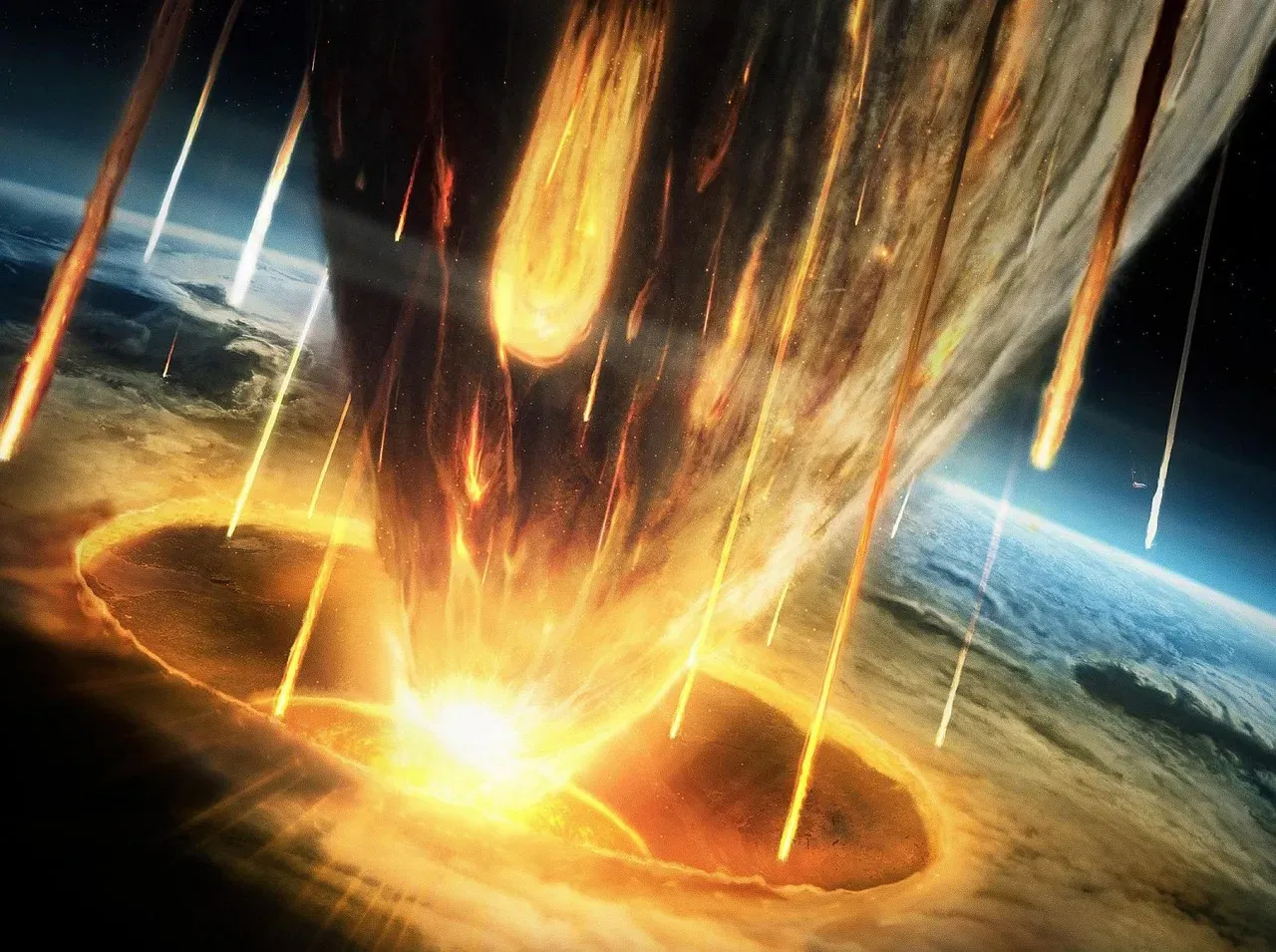
Imagine an object more than six miles wide, moving faster than a bullet, heading straight for your planet. You would not see it as a glowing fireball until it was almost too late; for most of its long journey through space, it would be just another icy, rocky relic from the early solar system. Scientists think it came from a distant region filled with debris left over from planet-building, nudged onto a deadly path by slow gravitational shoves and perhaps ancient collisions.
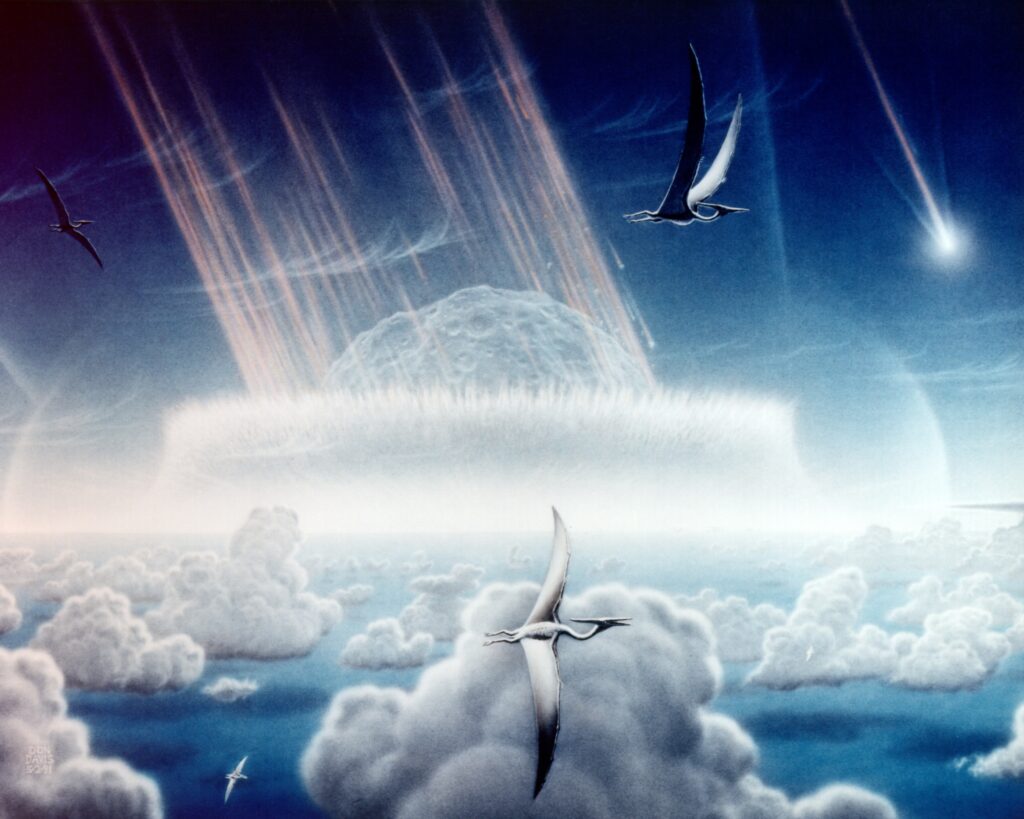
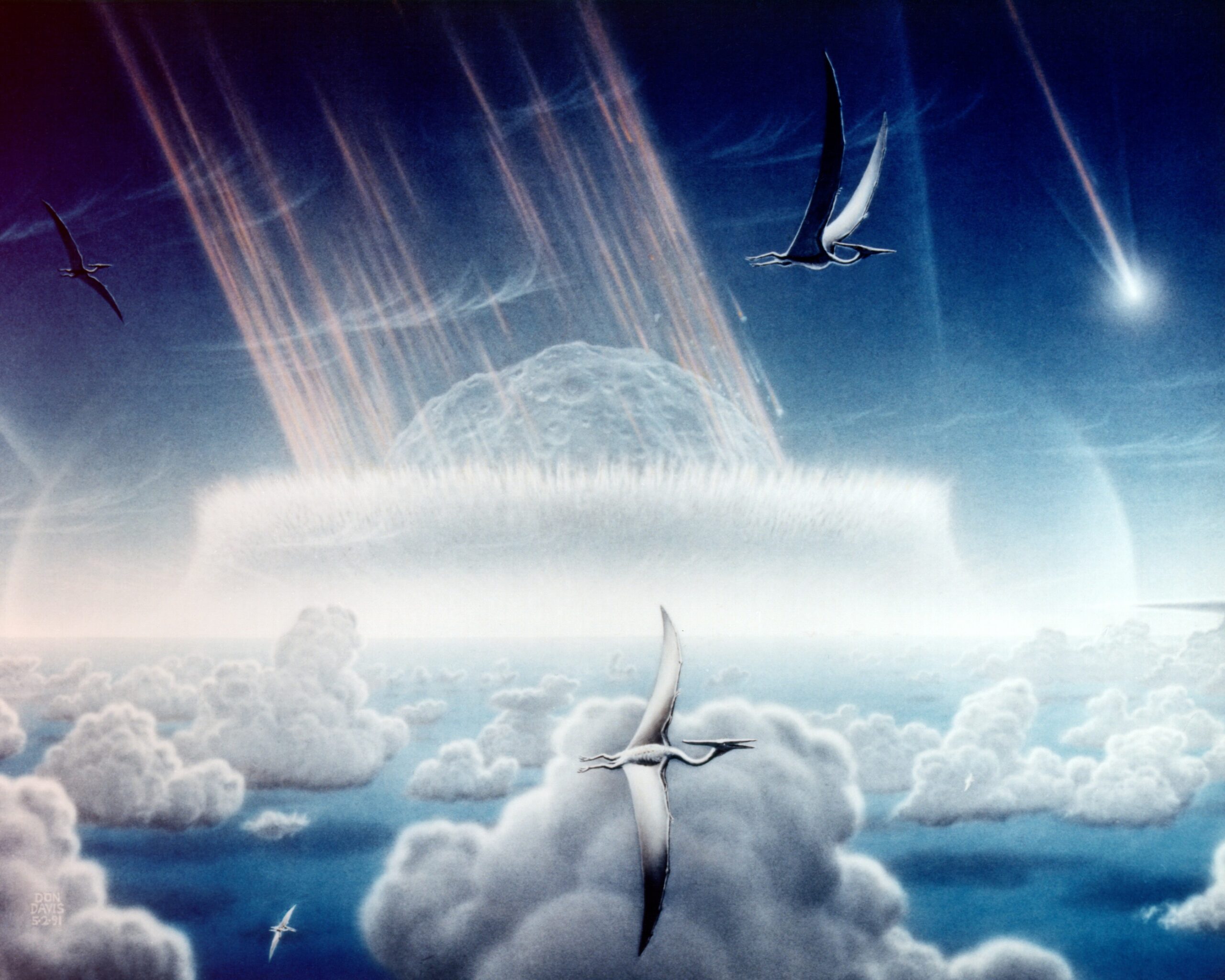
By the time this asteroid reached Earth’s neighborhood, the outcome was locked in. You can picture it as a mountain flying through the sky, carrying energy equal to billions of nuclear bombs combined. There was no advanced warning system, no defense, no chance of a near miss. On that day, the laws of physics were unforgiving: two bodies tried to occupy the same point in space, and the smaller one turned a thriving world into a disaster zone in a matter of minutes.
Ground Zero: The Chicxulub Impact Crater
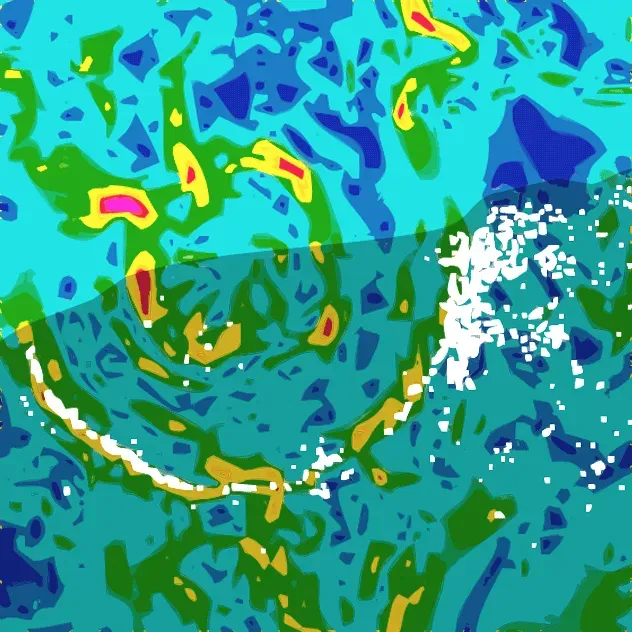
If you stand on the beaches of the Yucatán today, you see calm blue water and tourist resorts, not a planetary scar. But beneath the quiet seafloor lies the buried wound known as the Chicxulub crater, a structure more than one hundred miles across, created in the instant your world was struck. You would not see the crater edges with your eyes, yet seismic surveys and drilling projects have traced a ring of shattered rock deep underground, like an X-ray of a broken bone.
When the asteroid hit, it punched through the crust in less than a second, vaporizing itself and a vast volume of rock. In the immediate region, everything was blasted apart: forests, coastlines, entire ecosystems vanished in a shock wave that ripped outward at supersonic speed. If you somehow watched from a safe distance, you would see the atmosphere ignite with incandescent debris, a colossal plume shooting into space, and the surface of the planet itself briefly behaving like a liquid, sloshing and rebounding before freezing into a new, shattered shape.
A Firestormed Planet: The First Hours After Impact
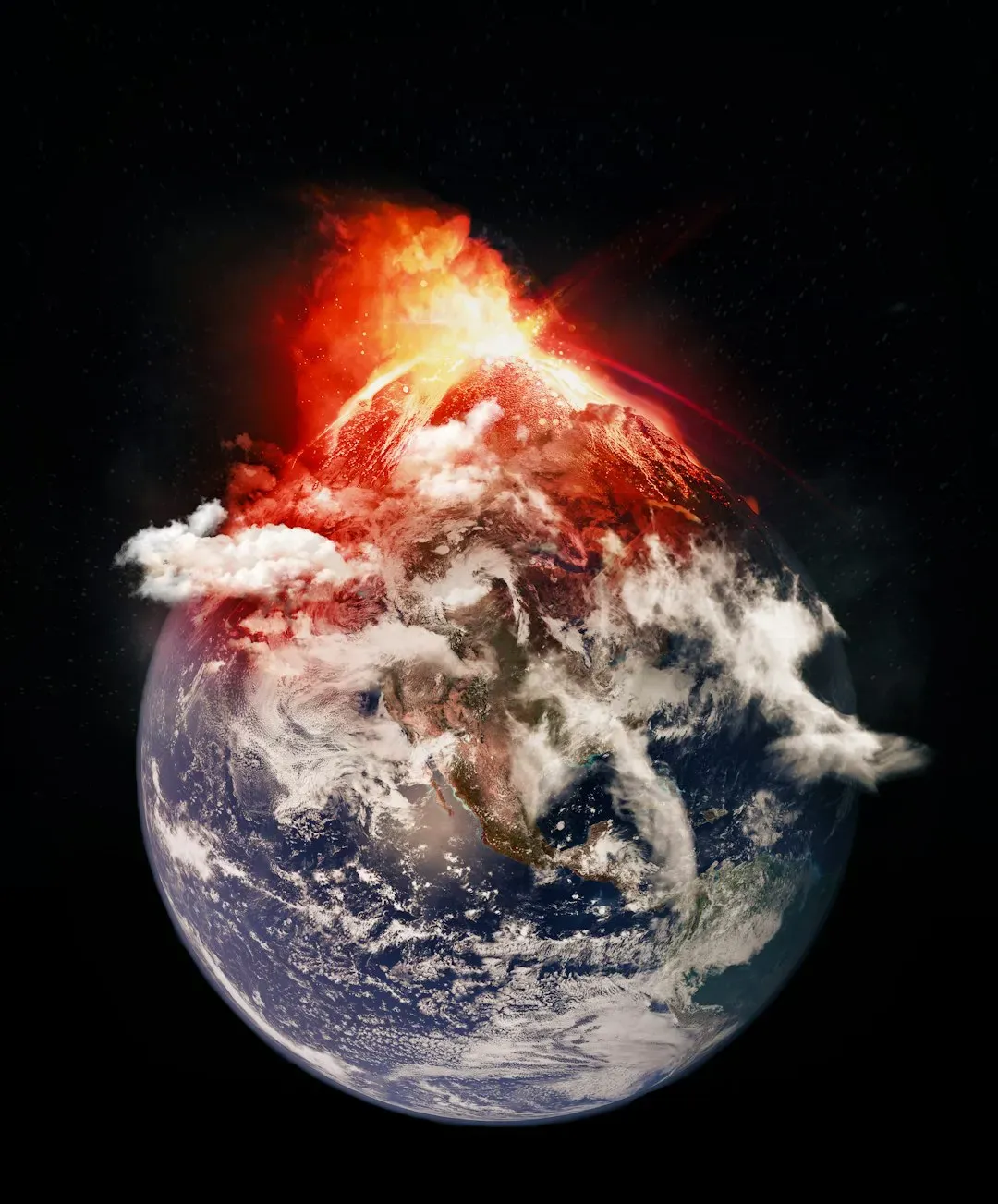
Within minutes, Earth became a world you would not recognize. Rock and molten droplets launched high into the sky rained back through the atmosphere, heating the air until vast regions likely flashed into fire. If you were anywhere on the same continent, you might have seen the sky turn into a furnace, with forests, plains, and everything exposed on the surface scorched or set ablaze. Even far from the impact, the shock wave and hurricane-force winds would have flattened anything not sheltered underground or deep in water.
Those first hours were a brutal filter for life. Large animals caught in the open had almost no chance; their size and energy needs became a lethal disadvantage under searing heat and chaos. But if you imagine yourself as a small burrowing creature or a freshwater animal, you suddenly have a better shot. Underground tunnels, lakes, and rivers offered pockets of relative safety, insulated from the worst of the firestorm, while the rest of the planet reeled from a blow it could not dodge.
The Long Night: When the World Went Dark and Cold
Surprisingly, it was not just the immediate explosion that nearly ended life as you know it; it was what happened afterward in the sky. The impact blasted enormous amounts of dust, ash, and sulfur-rich particles high into the atmosphere, where they spread around the globe. If you had stood under that sky in the following days and weeks, the sunlight would have dimmed, then faded further, until the world slipped into a prolonged twilight that plants could barely tolerate.
Without enough light, photosynthesis collapsed, and with it the base of most food chains you depend on. You can think of it like someone turning off the power to a skyscraper: all the systems above it start to fail, one floor at a time. Temperatures dropped as sunlight was blocked, and acid rain from the sulfur in the atmosphere may have poisoned soils and surface waters. In this drawn-out darkness and chill, the real extinction unfolded, wiping out many groups that had survived the initial blast but could not endure a planet that had suddenly stopped feeding them.
Why Dinosaurs Died While Some Creatures Lived
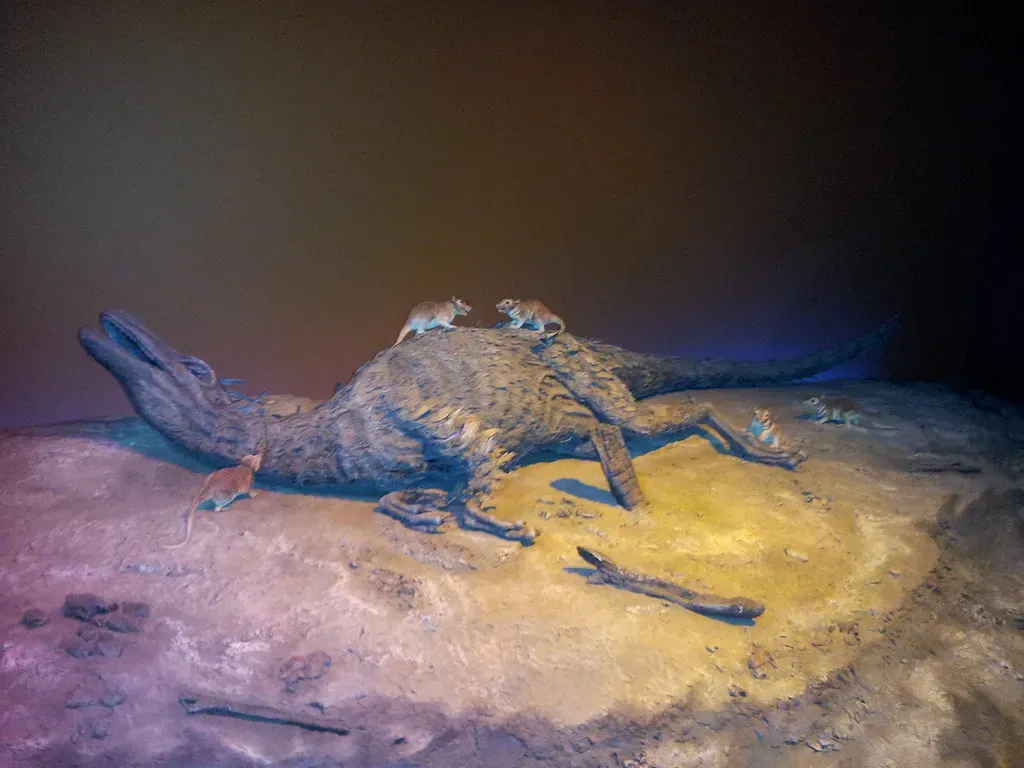
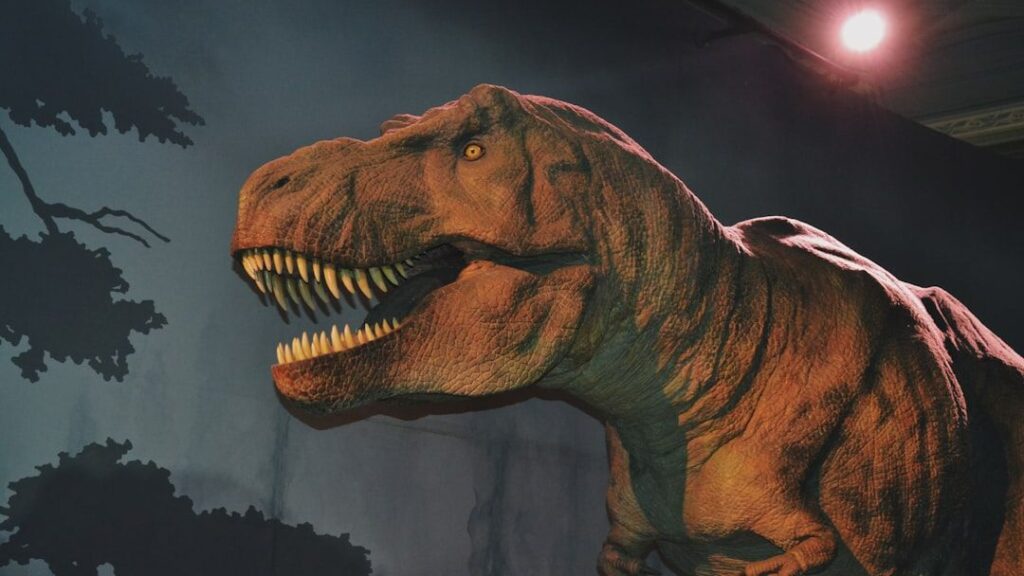
When you picture that lost world, dinosaurs usually dominate the scene, towering over everything else. Yet in the cold, dark months and years after the impact, their size and lifestyle worked against them. They needed a lot of food and stable environments, and those vanished almost overnight. You can imagine huge herbivores struggling to find enough plants in a dead or dying landscape, while their predators faced starvation as their prey dwindled.
Smaller, more flexible creatures had an unexpected advantage, and this is where your own story starts. Early mammals that could eat a wide variety of foods, hide underground, and reproduce quickly were more likely to hang on. Creatures that lived in water, fed on detritus, or could go dormant also found ways through the crisis. When you look at a mouse scurrying along a wall or a bird perched on a wire, you are seeing the descendants of those quiet, overlooked survivors that made it through a planetary disaster by staying small, adaptable, and, frankly, lucky.
From Extinction to Opportunity: How the Impact Shaped Your World
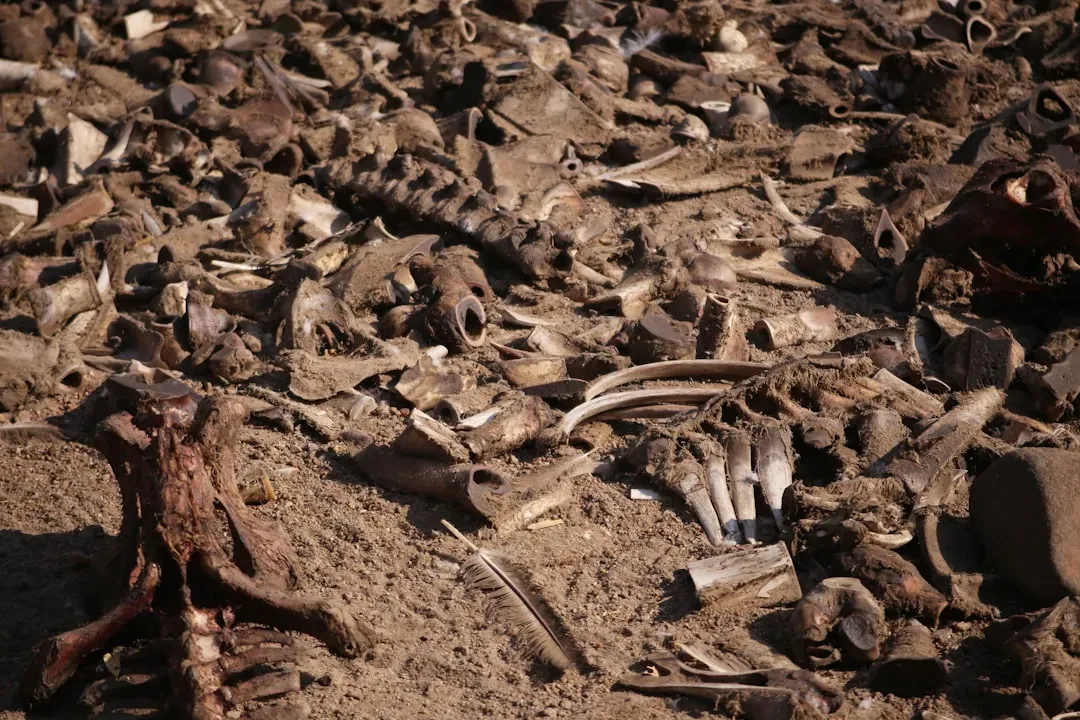
The phrase “mass extinction” sounds purely negative, and for the species that vanished, it absolutely was. But for the survivors, the emptied world became a strange kind of opportunity. If you could time travel and walk through the forests a few million years after the impact, you would see ecosystems rebuilding with new combinations of species, filling roles once held by dinosaurs. With the former rulers gone, mammals began to spread into niches they could never touch before, evolving into larger, more diverse forms over time.
Your own branch of the tree of life owes its rise to that opening. Primates eventually appeared, experimented with grasping hands and forward-facing eyes, and much later, one of those primates began shaping tools, stories, and cities. When you look around at modern Earth – its forests, oceans, and even your pets – you are witnessing a world redesigned by a single violent event in deep time. In a very real sense, the asteroid cleared the stage so that you, and everything you recognize as your world, could eventually step onto it.
Could It Happen Again – and What You Can Do About It
The unsettling truth is that Earth still moves through the same cosmic shooting gallery it did sixty-six million years ago. You now live in a time when telescopes and space missions are beginning to find and track hazardous asteroids, mapping out which ones might come close. If you follow this work, you can see that astronomers have already cataloged many larger objects, and so far none are known to be on a path like the dinosaur killer’s. That does not mean smaller, still dangerous rocks are not out there, waiting to be discovered.
The difference today is that you are not helpless the way dinosaurs were. Space agencies are actively testing ways to nudge asteroids off course long before they become a threat, proving that a small change in speed or direction, done early enough, can make a huge difference down the line. You might never personally design a deflection mission, but you can support science, education, and policies that treat planetary defense as a shared responsibility. In a way, learning this story puts you on the hook: now that you know an asteroid once nearly erased your future, you also know you have a chance not to let history repeat itself.
In the end, the day Earth nearly died is also the day your world, as you know it, began to take shape. A single impact tore apart an ancient order and set off a chain of events that eventually led to you reading these words, in a civilization capable of understanding what happened. When you look at the night sky now, you might see it not just as beautiful, but as a place that once tried to end you – and also gave you a reason to get smarter, more watchful, and more united. Knowing that, you have to ask yourself: if another rock were heading this way, what kind of ancestor would you choose to be?