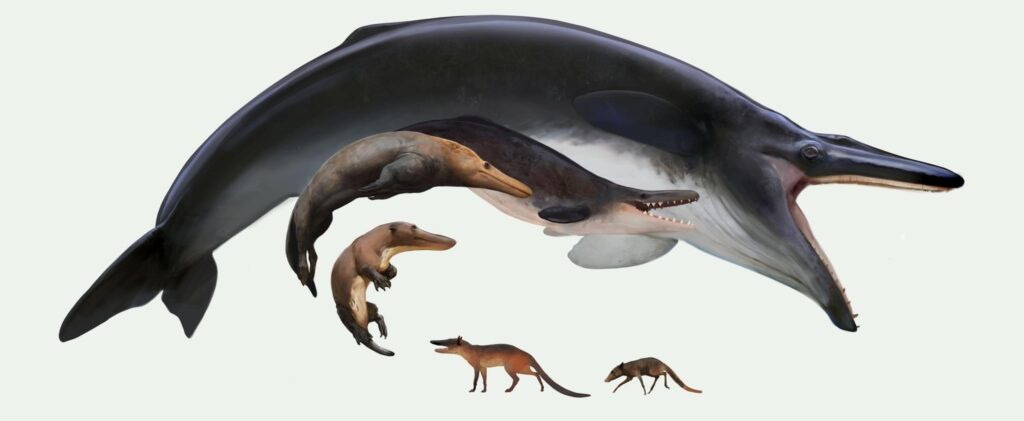
If you could rewind time roughly fifty million years, you would not see whales gliding through the oceans. Instead, you’d be looking at hoofed, dog-sized creatures trotting around coastal wetlands, sniffing the air, and occasionally wading into the shallows. The idea that those land mammals eventually became blue whales longer than a basketball court feels almost unreal, but that’s exactly what the fossil record shows you.
As you follow this story, you’re not just learning random facts about ancient animals. You’re watching evolution do something dramatic: reshape bodies, senses, and behavior step by tiny step, turning a land-walker into a champion of the open sea. Once you see how many clues scientists have pieced together – from skulls and ankles to ears and DNA – you’ll probably never look at a surfacing whale the same way again.
From Forest Floor to Shallow Shores: Your Land-Dwelling Ancestors of Whales
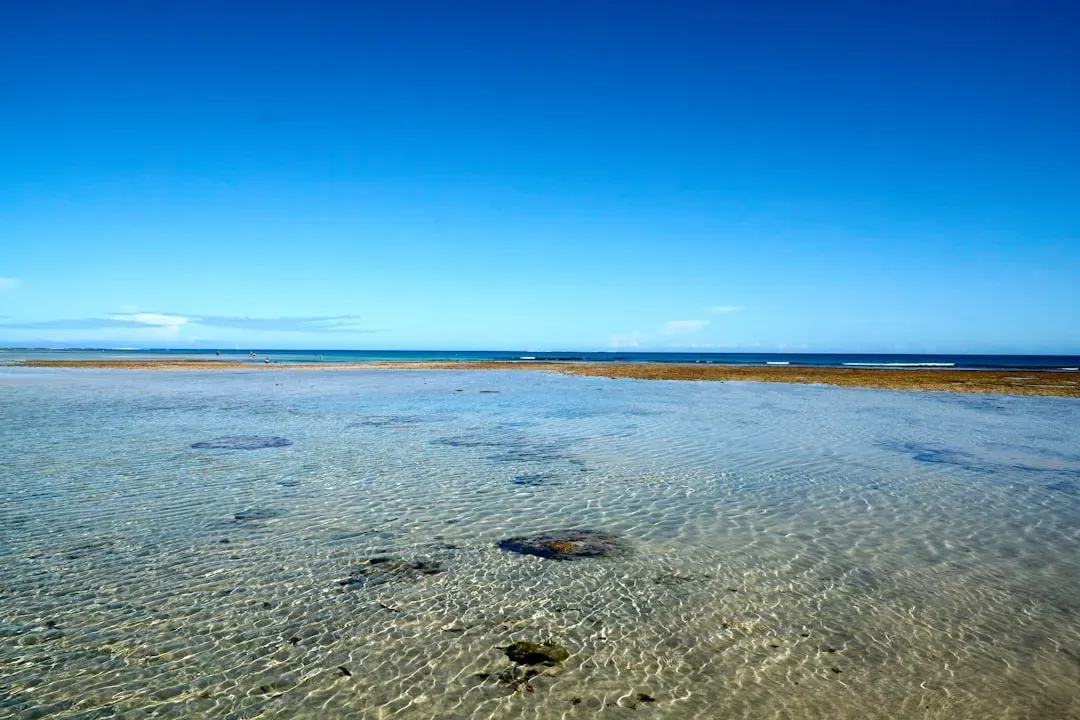
You might picture whales as the ultimate sea creatures, but their story starts on solid ground with small hoofed mammals that looked more like compact deer or stocky dogs. These animals belonged to a group of even-toed ungulates, the same broader family that includes modern cows, pigs, and hippos, and they probably browsed along rivers, lakes, and coastal swamps. If you could walk beside them, you’d see four sturdy legs, a long tail, and nothing that screams “future ocean giant.”
Yet you can already imagine how a taste for water-rich habitats nudged them toward a new lifestyle. Shallow streams and muddy shorelines offered safety from some predators and access to new kinds of food, like soft plants, invertebrates, or stranded fish. Over countless generations, individuals that were more comfortable wading, swimming, or holding their breath a little longer were slightly more likely to survive and pass on their genes. You’re watching the first quiet steps in a journey that will eventually leave land behind.
Pakicetus and Early Whales: When You Still Had Feet but Lived by Water
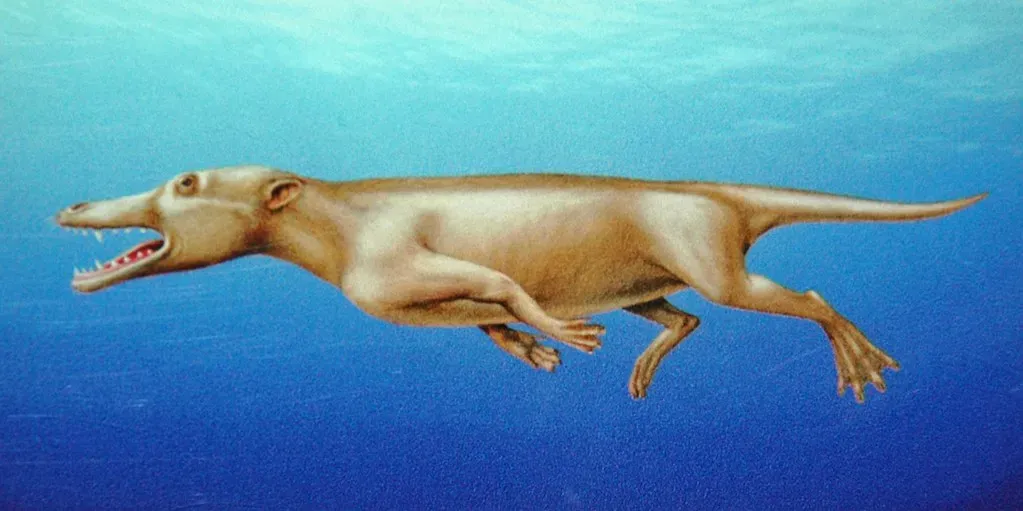
If you trace whale evolution into the Eocene epoch, you arrive at animals like Pakicetus, often called one of the earliest whales, even though it still looked mostly like a land mammal. You’d see a creature with long legs, a narrow body, and a head that hints at something new happening in the ears and skull. It probably hunted along riverbanks and shallow coastal waters, slipping into the water to catch prey but still relying heavily on walking and running.
The real giveaway that you’re looking at a whale ancestor shows up inside the head, where the bones of the ear are starting to adapt for underwater hearing. Unlike typical land mammals, these early “whales” had features that helped isolate the ear region, a key step toward hearing clearly through water. You can picture them as awkward amphibious predators, not yet streamlined, but already testing out a new way to live. You’re seeing evolution start to carve a new path, one delicate bone change at a time.
Ambulocetus and Walking Whales: Your Crocodile-Like Stage
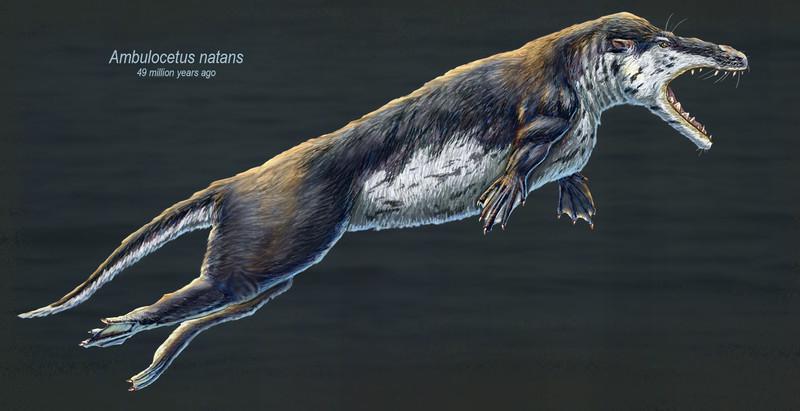
Move a little further along the timeline and you run into Ambulocetus, often nicknamed the “walking whale,” and for good reason. If you saw it from a distance, you might mistake it for a furry, crocodile-like creature that could both walk and swim, with powerful limbs and a long body designed for undulating through water. It probably lurked near shorelines, pushing off with its hind legs and using its spine like a spring to propel itself forward, much like an otter or crocodile.
On land, though, you’d notice it was no longer as graceful or speedy as its earlier relatives. Its limbs were becoming better for swimming than sprinting, and its body shape made long-distance walking more of an effort. This is a pivotal moment for you in whale form: you’re halfway committed, not fully at home on land, but not yet a sleek marine specialist. It’s the evolutionary equivalent of burning your bridges behind you and trusting that the sea will take you in.
Basilosaurus and Dorudon: When You Fully Commit to Life at Sea
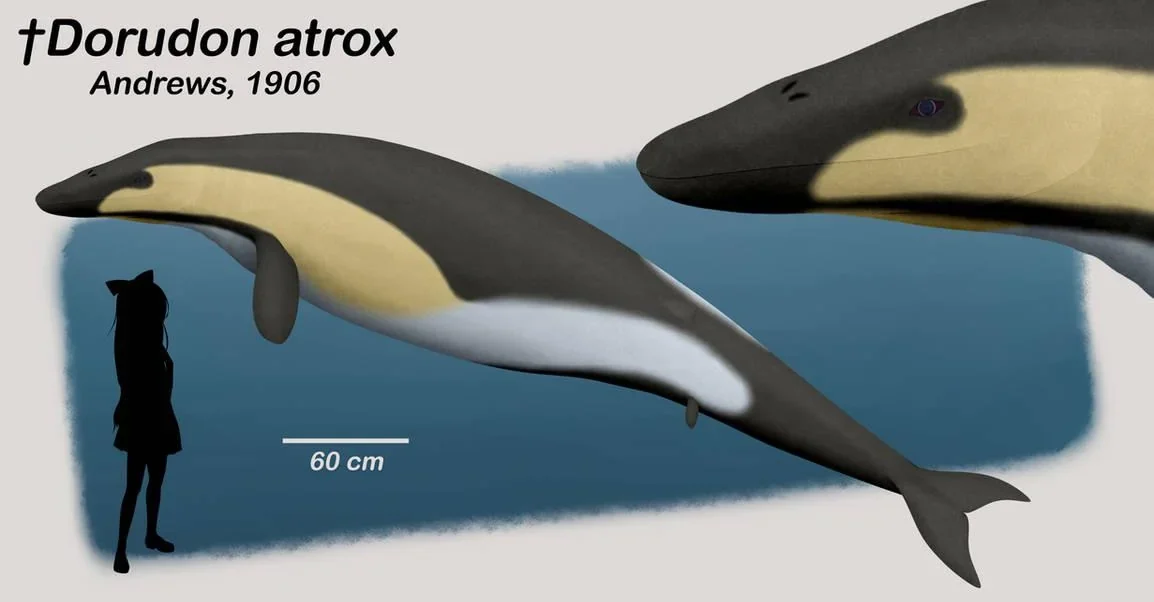
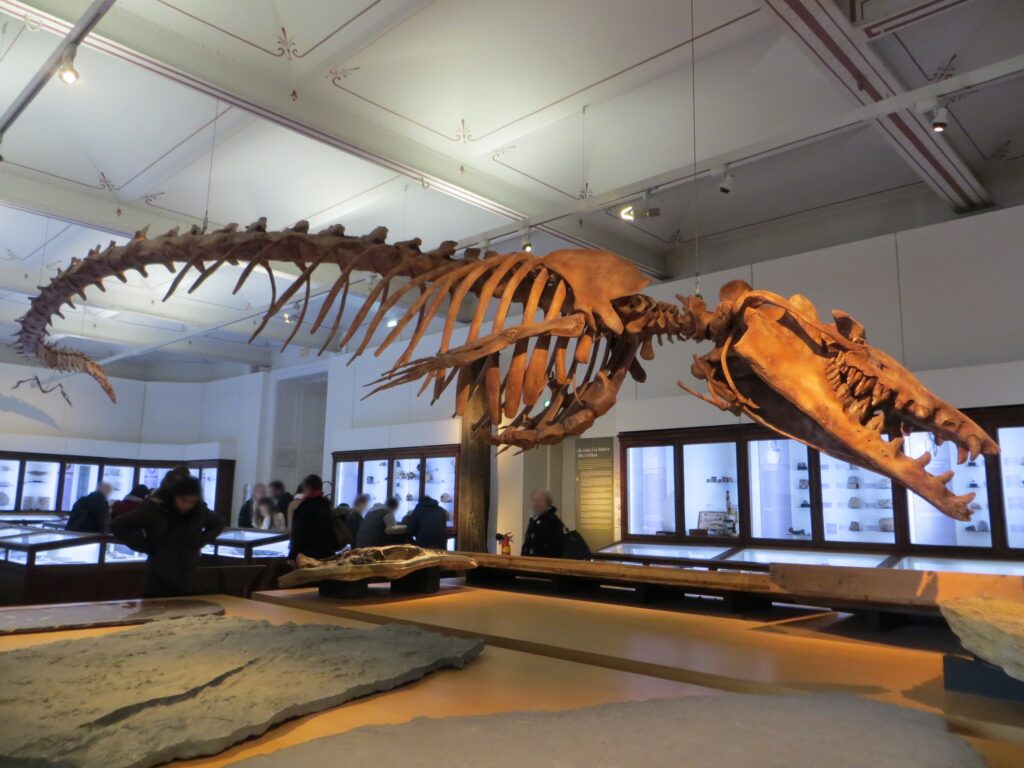
By the time you reach creatures like Basilosaurus and Dorudon, the transformation feels almost complete: you’re looking at animals that lived entirely in the ocean. Basilosaurus stretched into a long, eel-like body, while Dorudon was more compact and torpedo-shaped, but both had powerful tails and small, paddle-like forelimbs for steering. If you swam alongside them, they would look and move very much like modern whales, cruising through warm ancient seas.
The strange detail that really tells you where they came from hides near the tail: tiny hind limbs that no longer touched the ground. These miniature legs were useless for walking, but they show that you’re still carrying the legacy of your land-dwelling past. Their skulls and teeth reveal that they were active predators, biting into fish and other marine animals with strong jaws. At this point, you have fully traded life on land for mastery of the water, and there’s no going back.
Inside Your Body: The Hidden Land-Mammal Clues You Still Carry
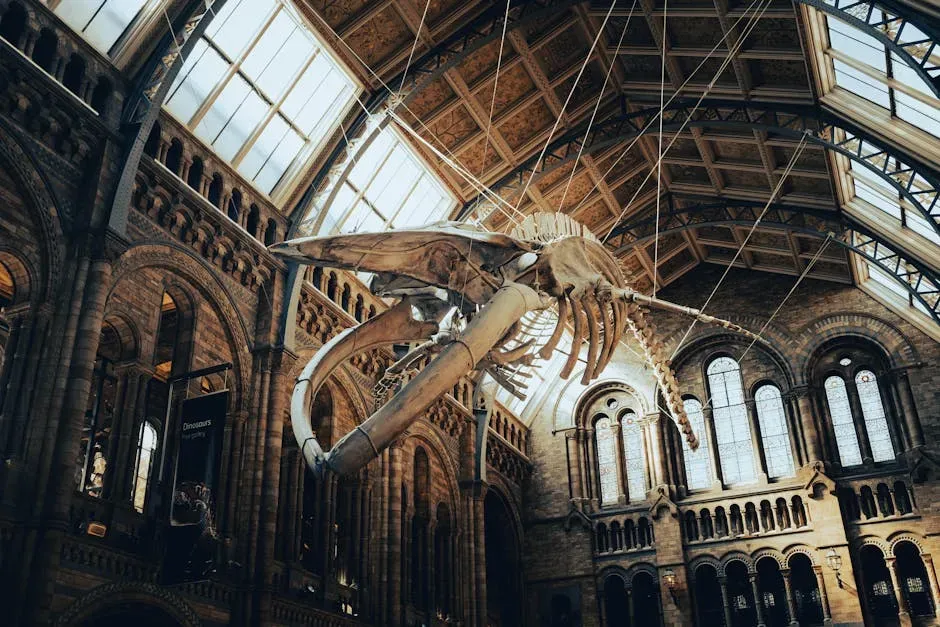
Even if you only look at modern whales, you can still spot echoes of your land-dwelling heritage hiding in their anatomy. Whales breathe air with lungs, not gills, and they must surface to inhale, just like any other mammal. Their flippers contain bones arranged in a pattern that looks strikingly like a hand, with finger-like segments packed inside a paddle-shaped limb, and their tail moves up and down instead of side to side, powered by a backbone that once helped a four-legged mammal run.
Some whales even have tiny remnants of hip bones buried deep in their flesh, no longer attached to legs but clearly related to a pelvis that once supported hind limbs. When you look at whale embryos, you sometimes see small limb buds appear and then shrink away as development continues, like a brief replay of the evolutionary story. Add in their warm blood, hair follicles, and nursing behavior, and it becomes impossible to deny that whales are just highly specialized mammals that took an extreme path. You’re essentially watching a land mammal wearing a fully customized ocean suit.
DNA, Relatives, and Your Surprising Connection to Hippos
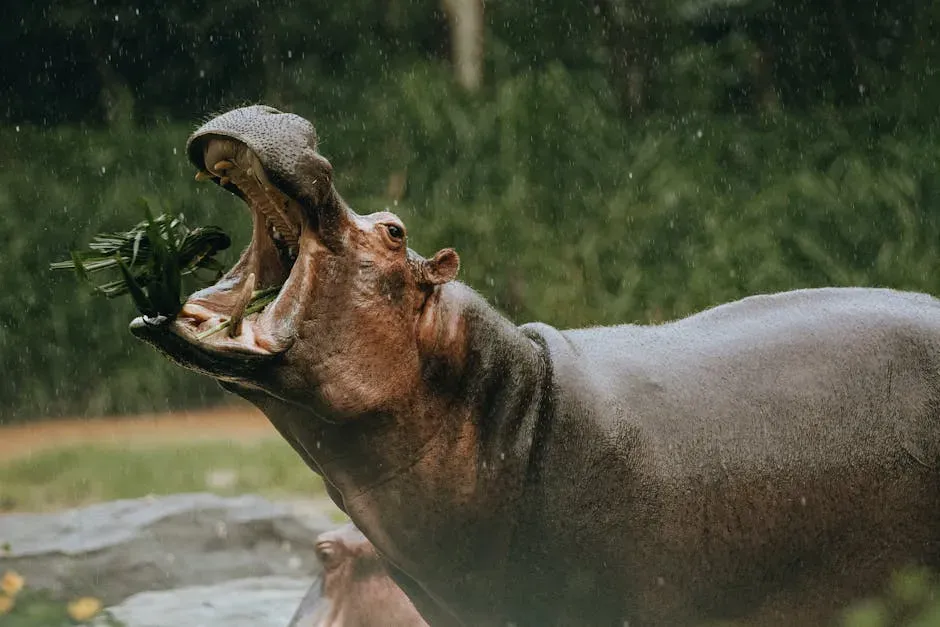
If you turn from fossils to DNA, you get another powerful line of evidence that ties your whale story together. Genetic comparisons show that whales are most closely related to hippos among living animals, even though hippos still stomp around in rivers and on muddy banks. That might sound odd at first, but when you think about both groups loving water and having certain shared traits in their skeletons and biochemistry, it starts to click.
DNA lets you cross-check what the bones already told you: whales did not appear out of nowhere as some separate kind of sea creature. They branched off from the same broader group as hippos and other hoofed mammals and gradually shifted deeper into an aquatic lifestyle. You can imagine an ancient ancestor that was neither a hippo nor a whale yet had pieces of both ways of living. As you follow that lineage forward, one branch stayed semi-aquatic and bulky on land, while the other went all in on the ocean, shrinking its legs away and stretching its body into a streamlined cruiser.
Breathing, Diving, and Sound: How You Mastered the Ocean on Mammal Terms
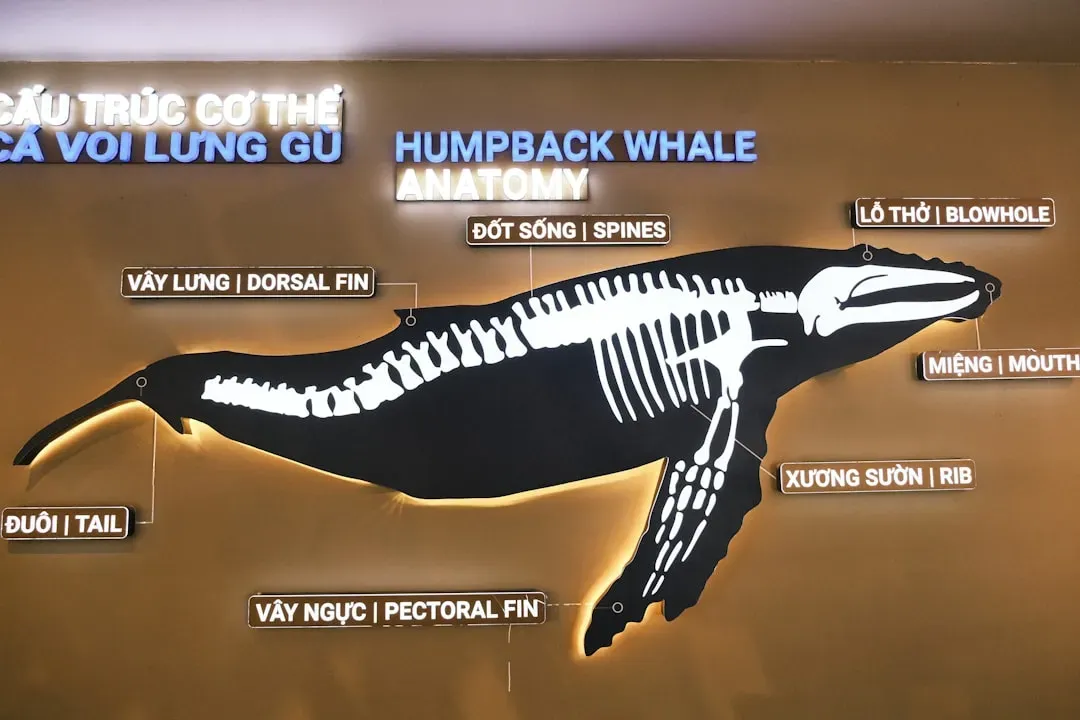
One of the most impressive parts of your whale journey is how you adapted to the demands of the ocean without ever stopping being a mammal. You still breathe air, so evolution moved your nostrils up the head to form blowholes, making it easier and faster to grab a breath at the surface. Your body learned to store oxygen efficiently in blood and muscles, so whales can dive for long periods, some for more than an hour, without needing to come up.
Then there’s the way you handle sound. Water carries sound differently than air, so whales evolved specialized ear structures and, in toothed whales, complex systems for echolocation. Instead of relying mainly on vision, many whales “see” with sound, sending out clicks and listening for echoes to find prey or navigate in dark or murky water. You’re watching a land mammal toolkit being redesigned for a new medium, like turning a car into a submarine but keeping the engine type the same.
Why Your Whale Journey Matters to How You See Evolution Today
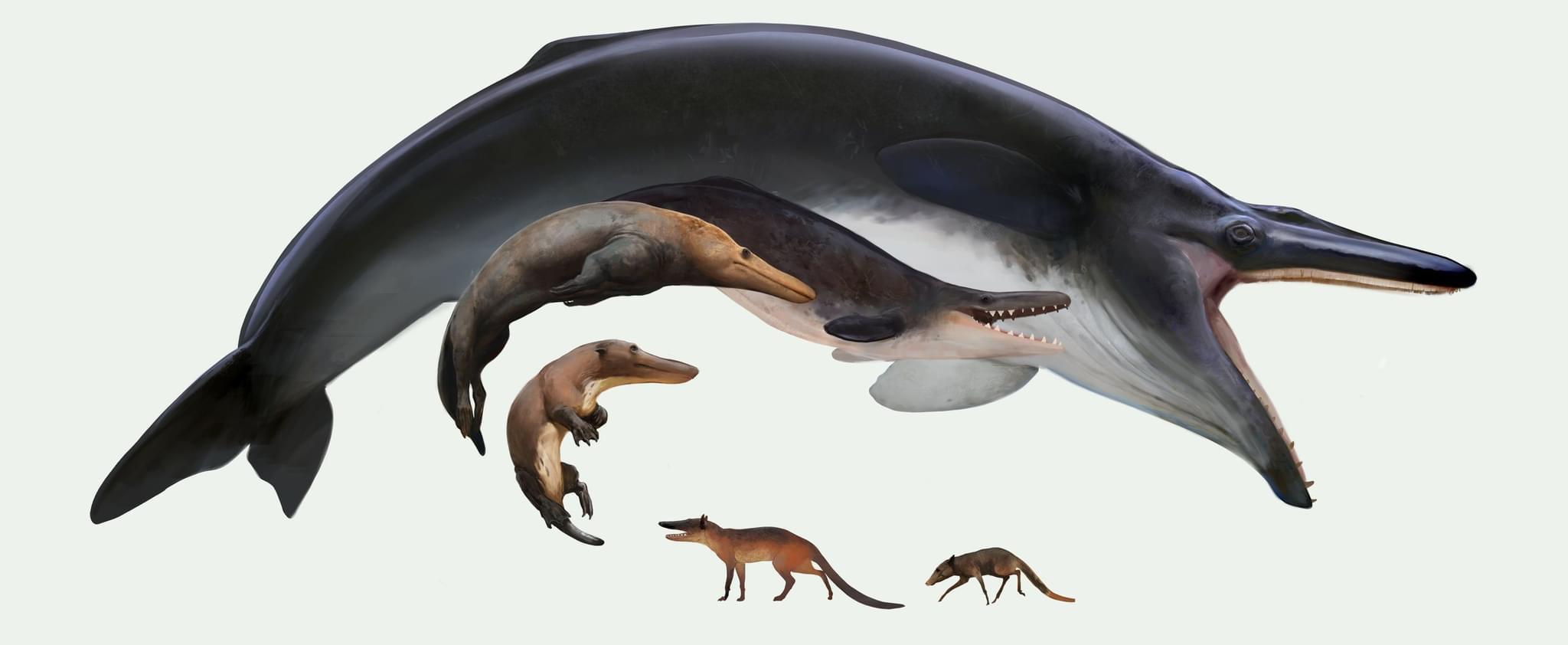
When you step back and look at the whole arc – from small hoofed mammals on land to enormous whales roaming the oceans – you’re holding one of the clearest case studies of evolution in action. Fossils show a series of forms with mixed features: ankles like land mammals but skulls like early whales, legs that still work on land but bodies that swim more efficiently than they walk. DNA lines up with the fossil story, connecting whales to their living relatives and confirming that they fit within the mammal family tree, not apart from it.
This journey matters for more than just satisfying curiosity about ancient creatures. It shows you how big changes can come from many small steps, each one giving a slight advantage in a particular environment. It also reminds you that life on Earth is more flexible and inventive than it might seem at first glance; even a land mammal can, over time, become a master of the open sea. Next time you see a whale surface and exhale, you’re looking at a distant cousin that took one wild evolutionary detour.
In the end, the evolutionary journey of whales is really a story about possibility and patience: countless generations reshaping a body to fit a new world, while still carrying the signature of where it began. When you picture that tiny land mammal at the water’s edge and then imagine a blue whale gliding through the deep, you can feel just how long and strange that road must have been. It leaves you with a simple, lingering question: what other surprising destinies might be hidden inside the creatures you see around you today?