
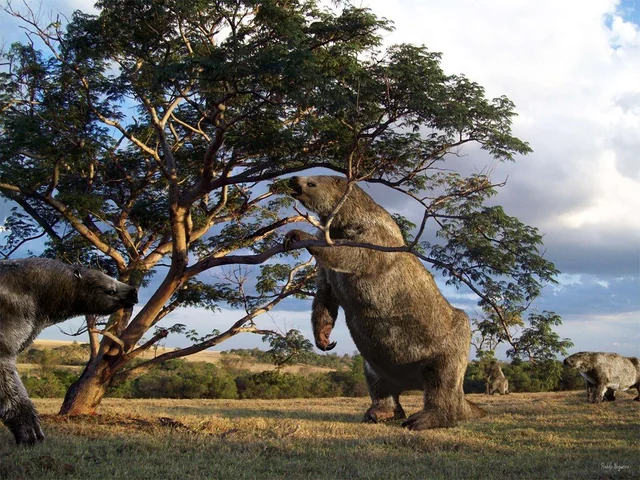
Imagine an animal as tall as a giraffe, as heavy as a small truck, with claws like scythes and the posture of a bear standing upright. Now imagine that this creature actually walked the Earth not in the age of dinosaurs, but alongside early humans. That sounds like something out of a sci‑fi movie, yet it is one of the most underrated realities in natural history: giant ground sloths were absolutely real, and they were enormous.
For some reason, though, they barely show up in school textbooks, nature documentaries, or even pop culture. We get endless dinosaur specials, oceans of shark content, and constant mammoth memes, but this skyscraper of a mammal is basically a footnote. Once you start digging into what these animals were really like, it becomes almost impossible not to feel a bit cheated, like we’ve been given the highlights reel of prehistory and somehow the best scene was left on the cutting room floor.
Taller Than a Giraffe: How Big Giant Ground Sloths Really Were
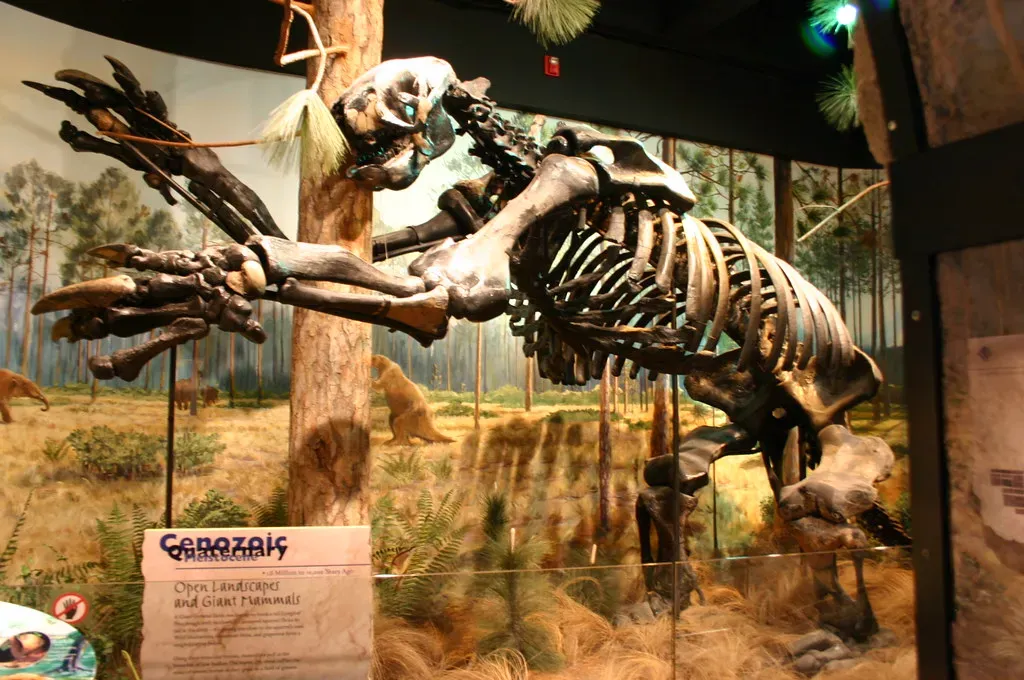
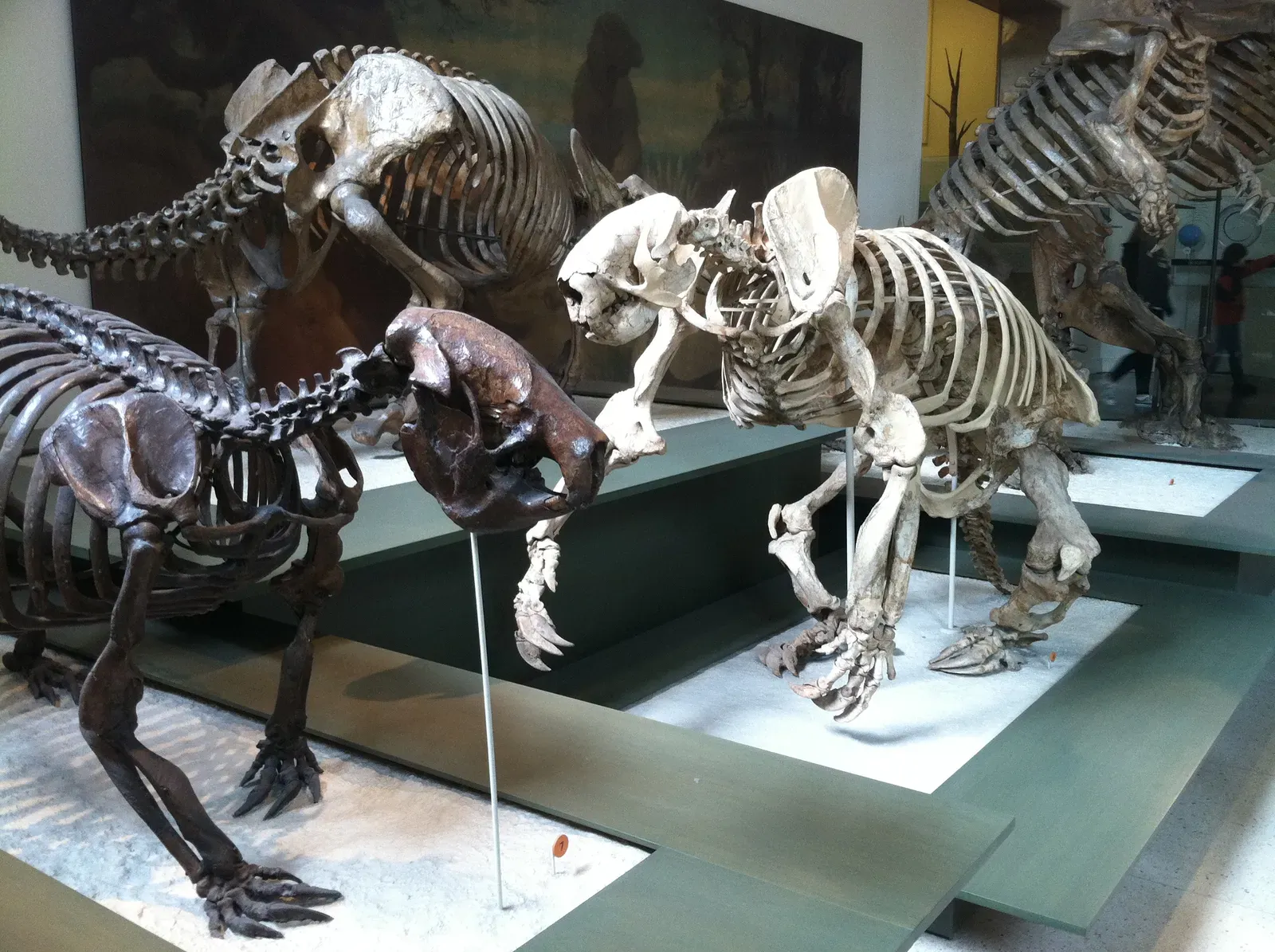
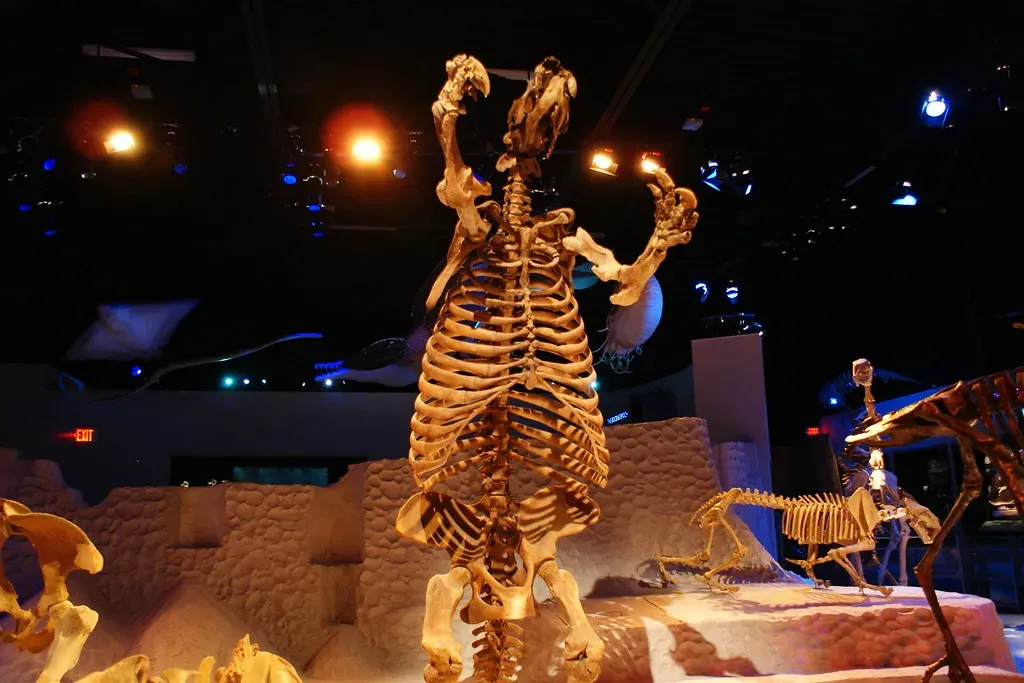
When people hear “sloth,” they picture a cute little tree dweller, moving so slowly that algae grows on its fur. Now scale that mental image up until its head is three or four meters off the ground when standing upright, and its body weighs several hundred kilograms to over a ton, depending on the species. Some of the largest, like Megatherium, could reach heights rivaling or exceeding a modern giraffe when they reared up on their hind legs to feed or defend themselves.
Their skeletons show massive, pillar‑like limb bones and a robust tail that likely acted as a third leg, turning them into living tripods when they stood. Picture a giant, shaggy, clawed statue suddenly coming to life in slow motion. It’s no exaggeration to say that if you were standing next to one, you’d feel genuinely tiny in a way modern land animals almost never make you feel – outside of elephants and giraffes, there is nothing walking around today that compares.
From Megatherium to Megalonyx: Meet the Lost Heavyweights
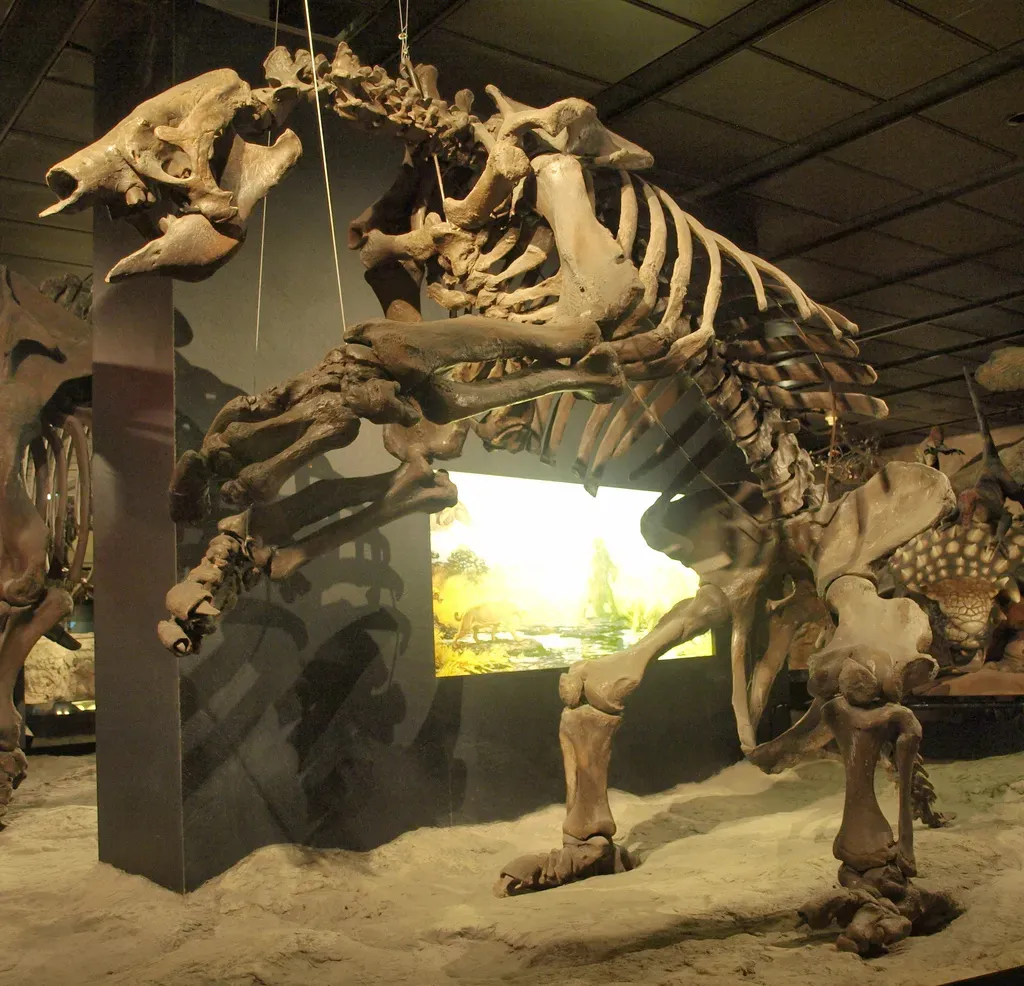
“Giant sloth” isn’t just one animal; it is a whole cast of characters spread across the Americas. Megatherium, often called the “great beast,” roamed South America and was among the largest land mammals ever, not just among sloths. Its skeleton has that intimidating mix of power and oddness you see in hippos and rhinos today, but even more exaggerated. Then there was Eremotherium, another giant that extended its range into parts of North America, reminding us that these were not rare oddities restricted to tiny corners of the world.
Smaller, but still huge by sloth standards, were genera like Megalonyx, which lived in North America and is famous partly because early American scientists used its fossils to argue that giant animals once inhabited the continent. These species varied in size, shape, and exact lifestyle, but they were all versions of the same surprising idea: sloths, not as sleepy tree huggers, but as serious megafauna, filling ecological roles that today might be split between large herbivores like bison, rhinos, or even bears.
Slow, Massive, and Not as Helpless as You Think
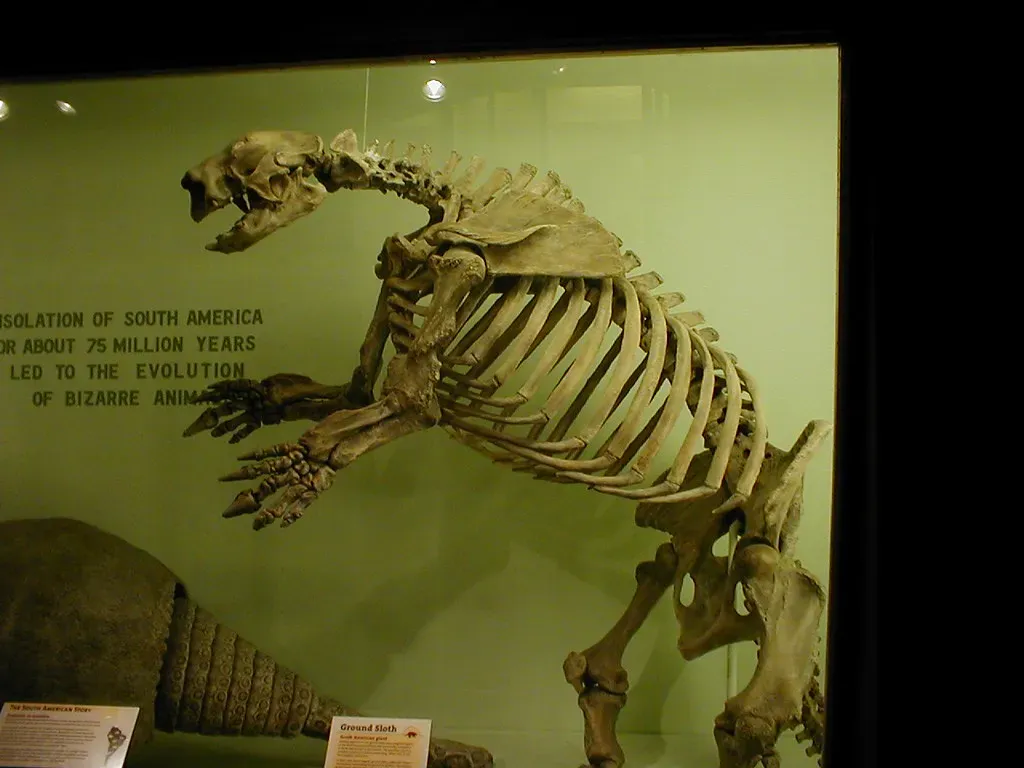
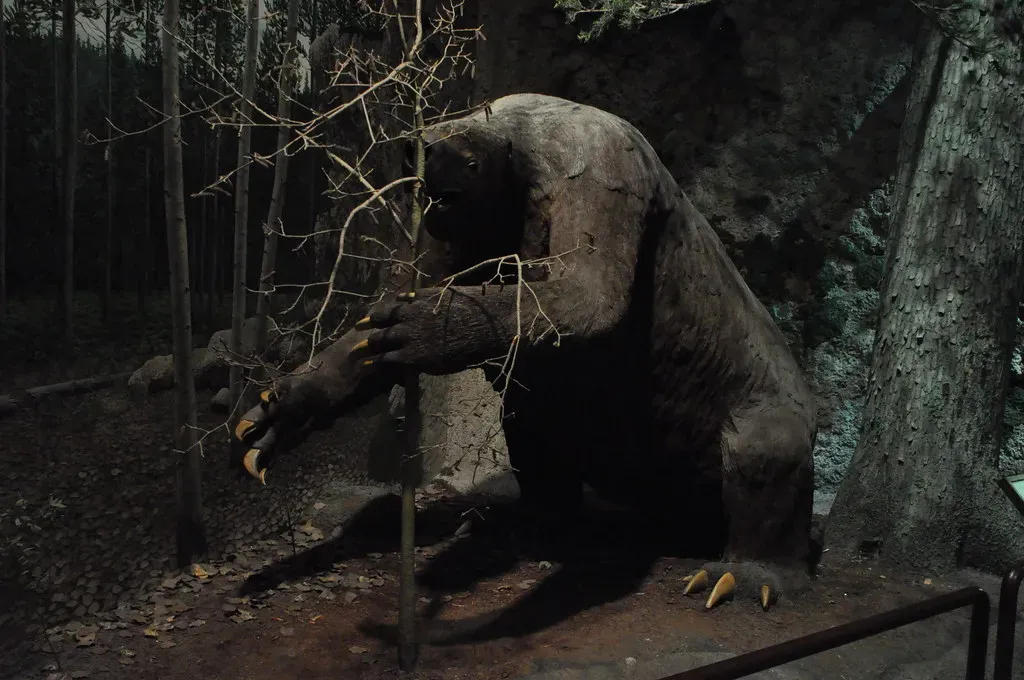
Slowness today is almost an insult; we associate it with weakness or helplessness. With giant ground sloths, that stereotype falls apart fast. Their huge claws, some as long as a human hand or more, were anchored to powerful forelimbs and shoulder girdles. Even if they moved at a deliberate pace, any predator that got too close risked being smashed, slashed, or pinned. The combination of great size and serious armament meant adult giant sloths were probably not easy targets.
Their jaws and teeth, built for grinding tough plant material, suggest a diet rich in leaves, branches, and maybe even roots or bark. Picture them bulldozing through vegetation, pulling down branches with those massive arms the way a person might drag down a fruit tree. That kind of feeding behavior would reshape plant communities over time, much like elephants do today. They were not passive background animals; they were movers, shapers, and probably occasional nightmares for anything foolish enough to challenge them.
They Lived with Humans: The Wild Overlap We Rarely Talk About
One of the most mind‑bending facts about giant ground sloths is that they did not vanish in some distant, dinosaur‑age past. They survived long enough to overlap with our own species in the Americas. In some regions, evidence suggests humans may have encountered, hunted, or at least coexisted with them for a time. That means that for early people walking into new continents, these towering sloths were part of the everyday risk‑reward equation of survival.
Think about how different our cultural imagination would be if stories of giant sloths had survived in oral traditions the way mammoths and other megafauna did in some parts of the world. Instead, we mostly grow up with tales of saber‑toothed cats and woolly mammoths, while the idea of a bipedal, clawed, giraffe‑tall sloth ambling across the landscape is barely mentioned. It is as if a whole genre of prehistoric encounters has been quietly erased from our collective mental movie of the past.
Why Do Dinosaurs Get All the Fame While Giant Sloths Get Ignored?
Part of the reason giant sloths get so little attention is timing and branding. Dinosaurs have had more than a century of cultural momentum, from early museum battles to blockbuster movies, and they come with built‑in drama: teeth, horns, and extinction by asteroid. Mammals like giant sloths feel uncomfortably close to us in time, so they land in a weird psychological space – too recent to feel mythic, too extinct to feel relevant. They are the awkward middle child in the family photo of life on Earth.
There is also the “cuteness problem.” We already know modern sloths as gentle, sleepy, almost plush‑toy animals. Asking people to mentally upgrade them into towering, bone‑crushing megafauna creates cognitive dissonance that many documentaries just skip. It is easier to give screen time to familiar stars like big cats, sharks, and dinosaurs. As a result, these incredible animals rarely get the modern spotlight they deserve, despite being every bit as strange and dramatic as anything with scales and fangs.
Rebuilding a Lost World: What Fossils Tell Us About Their Lives
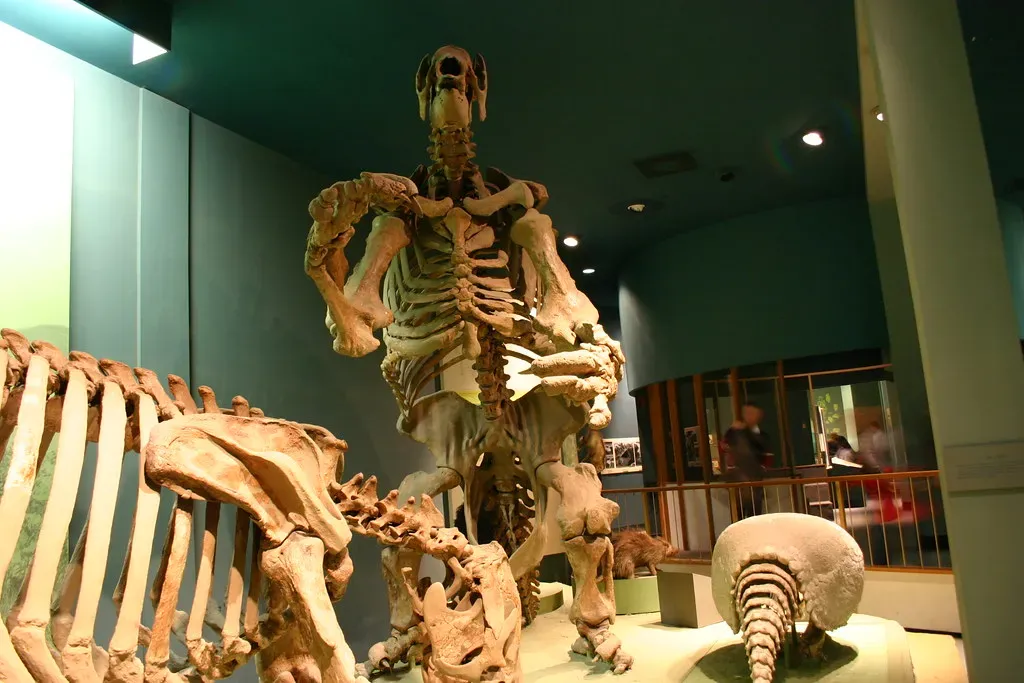
Everything we know about giant ground sloths comes from a patchwork of fossils, footprints, and preserved remains. Their skeletons show heavy joints, thick vertebrae, and the telltale structure of muscles that once supported immense weight. In some cases, trackways – fossilized footprints – capture the slow, deliberate pattern of their movement across ancient mud, turning cold bones into something like a paused video of a living animal. These clues let scientists reconstruct posture, gait, and even likely behaviors such as rearing up to feed.
In rare cases, more than just bone is preserved. Hints of fur, skin impressions, and even dung provide a window into diet and environment, letting researchers piece together what kinds of plants they ate and what ecosystems they shaped. When you stand in front of a mounted skeleton in a museum, it is easy to see it as just a pile of bones. But once you picture those bones covered in muscle, fur, and movement, carrying a living animal taller than a giraffe through a prehistoric forest, the whole scene suddenly becomes much harder to ignore.
Why It Matters That We Remember the Giant Sloth
Remembering giant ground sloths is not just about giving a cool animal its five minutes of fame. These creatures were part of a broader wave of large mammals that disappeared relatively recently, a wave closely tied to climate shifts and, in many cases, human expansion. Understanding how, when, and why such animals vanished helps us make sense of the pressures modern wildlife faces today, from habitat loss to overhunting. Ignoring them is like tearing out the middle chapters of a book about our own planet’s history.
There is a cultural cost, too. When we only tell the same old stories – dinosaurs, mammoths, saber‑tooth cats – we flatten the wild diversity of life that has existed on Earth. Giant ground sloths remind us that evolution does not just produce predators and prey, but also slow giants, odd specialists, and ecological engineers that do not fit our standard categories. In a world where many people already feel disconnected from nature, bringing back the story of these forgotten giants might be a surprisingly powerful way to spark curiosity and respect for the living world.
The Case for Giving Giant Sloths the Spotlight They Deserve
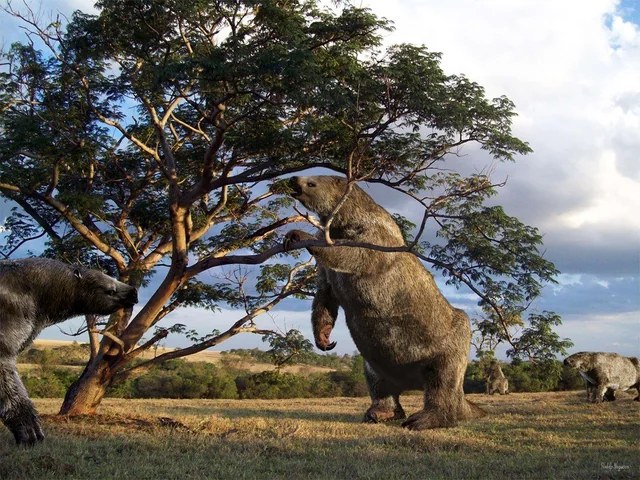
I think it is frankly a bit absurd that most of us can rattle off the names of half a dozen dinosaurs from childhood, but never even hear the name Megatherium until we stumble across it as adults. That says more about our storytelling priorities than about the importance of the animals themselves. If an upright, giraffe‑tall, clawed herbivore that overlapped with humans cannot make the cut for “creatures worth talking about,” what else are we quietly overlooking? To me, the giant ground sloth is the perfect symbol of how history can be both spectacular and strangely neglected.
Giving these animals more attention is not nostalgia for something we never saw; it is a vote for a richer, more honest version of Earth’s story. The world was once shared by beings that look like they walked out of a surreal painting, and that fact alone should reshape how we think about what is possible in nature. Maybe the real question is not why the giant sloth gets almost zero coverage, but why we have settled for such a narrow view of the past. Now that you know this towering sloth once wandered our world, can you really look at a quiet, leafy forest the same way again?