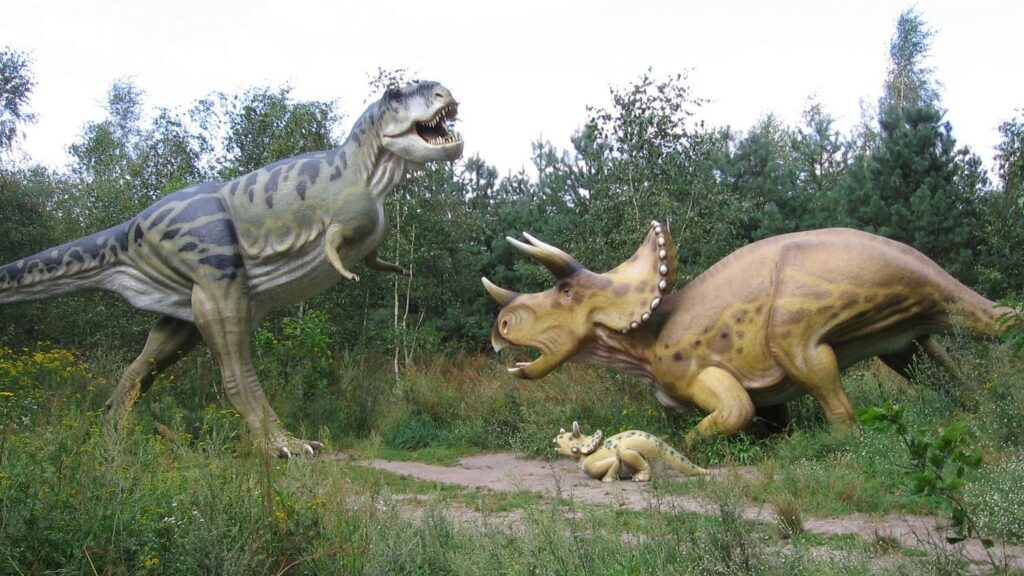
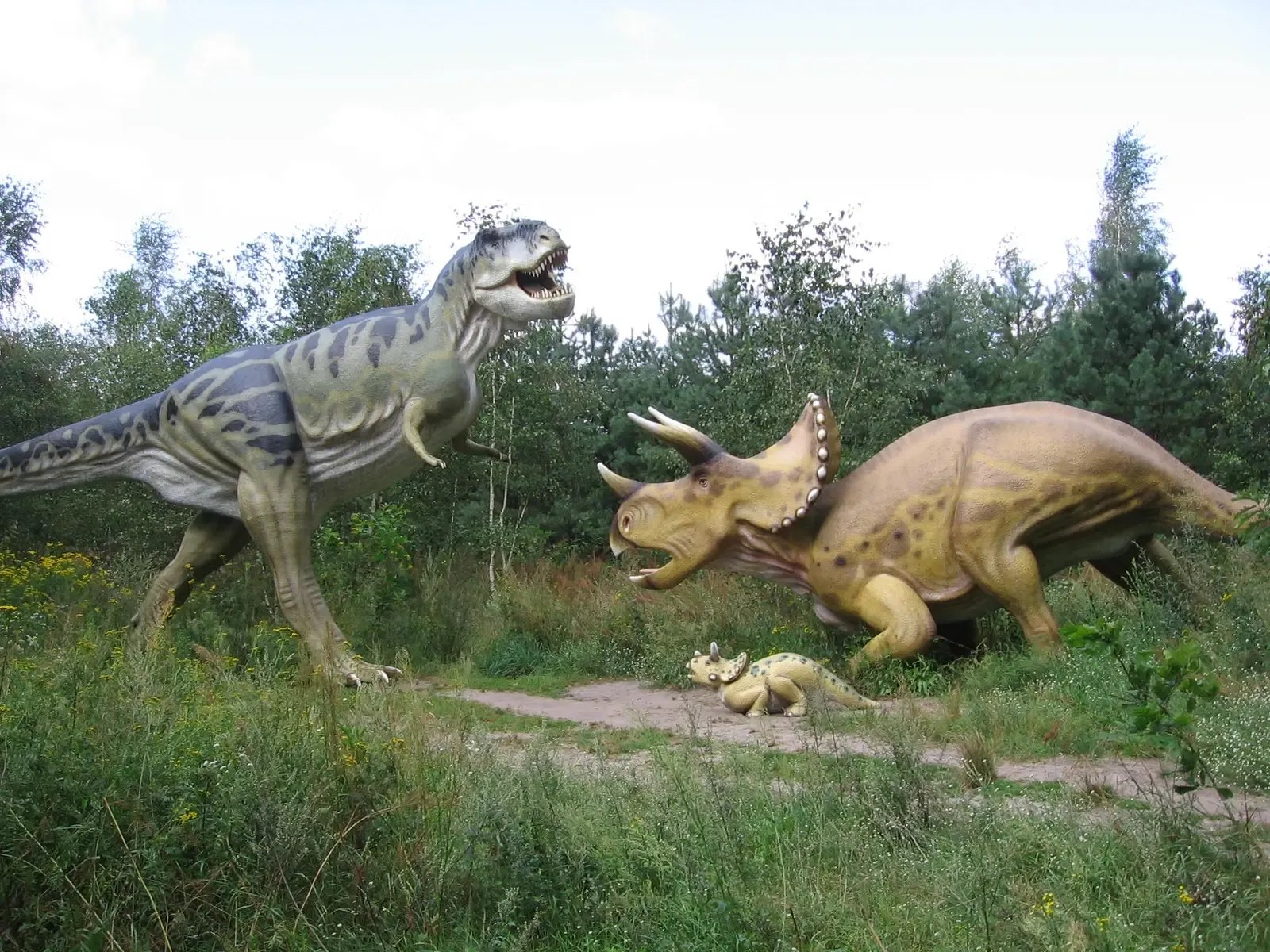
Picture this: a heavily armored, three-horned tank of an animal facing off against a giant, bone-crushing predator with teeth longer than your hand. Even if they never actually squared up like in the movies, the contrast between Triceratops and T. rex is so extreme that it almost feels designed for drama. These were not just two dinosaurs; they were two totally different answers to the question of how to survive in a dangerous prehistoric world.
When you dig into what we really know about them – how they moved, ate, fought, and even how their bodies were built – the differences get even more fascinating. One was a browsing, herd-dwelling plant-eater with a built‑in shield and spears, the other a top predator whose entire skeleton is basically optimized for hunting and tearing things apart. Let’s walk through the main ways Triceratops and T. rex diverged, and by the end, you might have a clear favorite in this ancient rivalry.
Body Size and Build: Tank vs Apex Predator
At first glance, both Triceratops and T. rex were huge by any standard, but they were built for completely different jobs. Triceratops was like a low-slung armored vehicle: around the length of a bus, massively heavy, with a deep, barrel-shaped body and short, sturdy legs. Its weight estimates usually land in the several-ton range, with some individuals pushing far beyond the mass of today’s largest land mammals. The overall look is wide, grounded, and incredibly stable, like something designed to resist being pushed around.
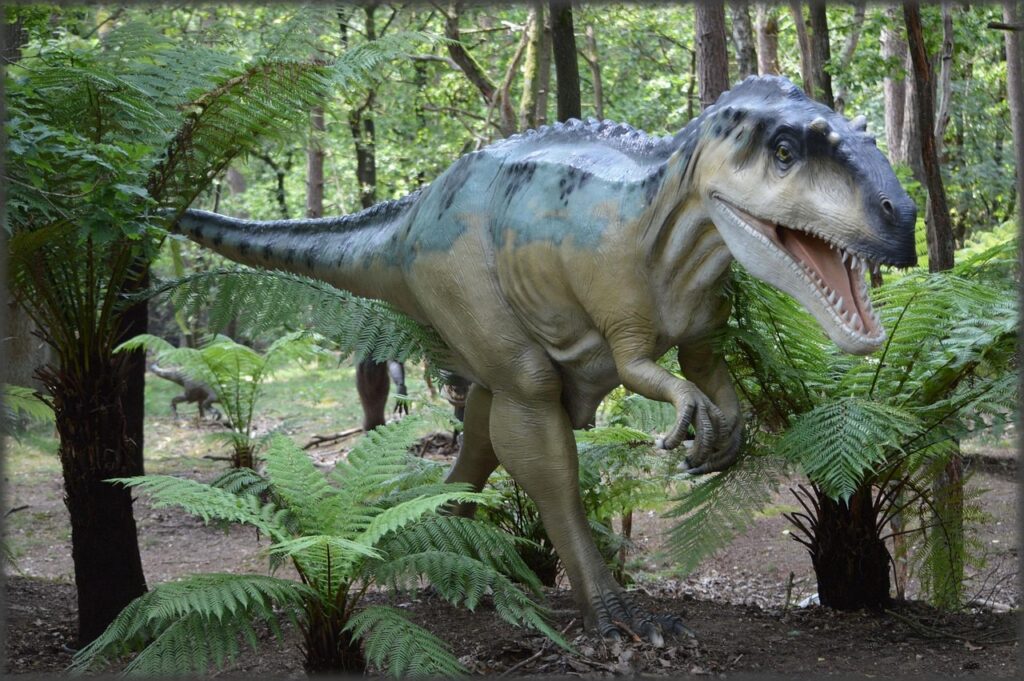
T. rex, by contrast, carried its bulk differently. It was also extremely massive and could reach similar or even greater weights, but it stacked that bulk on powerful hind legs and a long, balancing tail. Instead of looking like a living bulldozer, it looked like a muscular bipedal sprinter, with much of the mass concentrated in the hips, tail, and skull. Where Triceratops says “don’t move me,” T. rex says “you can try to run, but it will not help you for long.” Their physical builds already tell you who was built to stand their ground and who was built to chase things down.
Skull Design: Horned Fortress vs Bite Machine
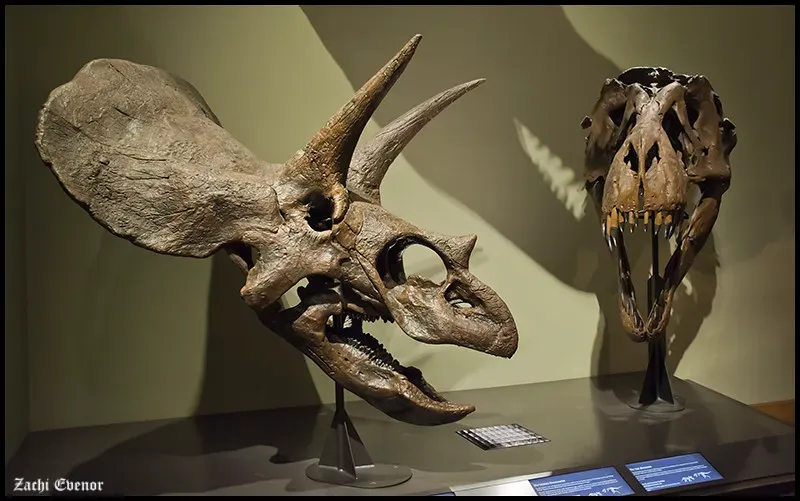
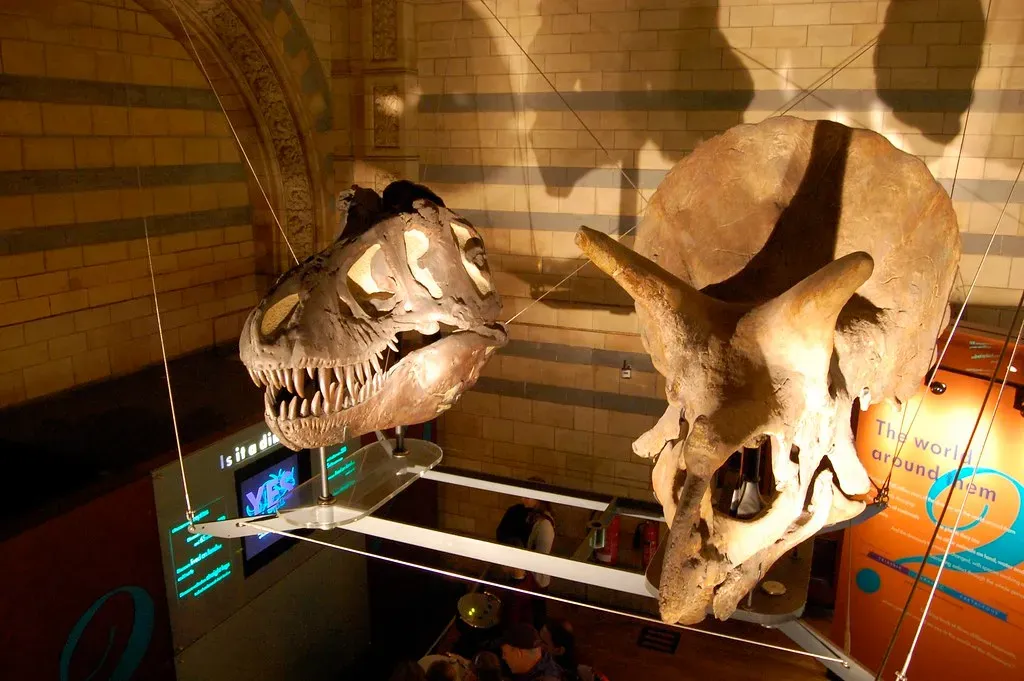
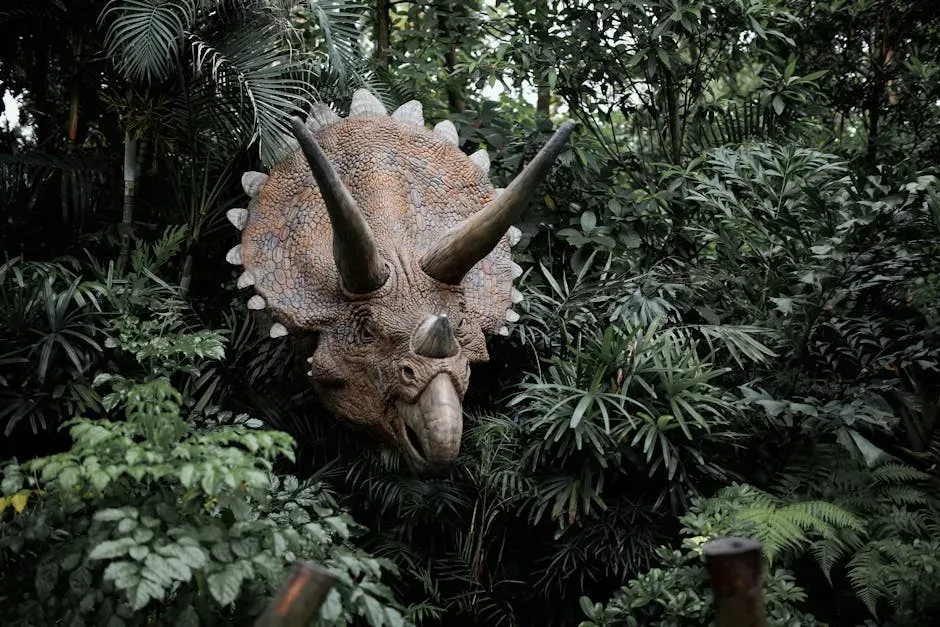
The skulls of these two dinosaurs might be the clearest visual summary of their different lifestyles. Triceratops had an enormous skull, among the largest of any land animal, complete with a broad bony frill and three impressive facial horns. The frill formed a solid, shield-like plate at the back of the head, while the horns projected forward like natural lances, especially the two long ones above the eyes. Seen from the front, it looks almost like a living battering ram wearing its own armor.
T. rex’s skull, on the other hand, is a masterclass in offensive weaponry. It was shorter and deeper, heavily reinforced with thick bones, ridges, and interlocking joints that made it incredibly strong. Massive openings in the skull allowed room for large jaw muscles, helping power a bite force that was among the highest of any known land predator. Instead of spreading its head into a shield like Triceratops, T. rex concentrated everything into a compact, devastating bite engine built to crush bone rather than deflect blows.
Teeth and Diet: Plant-Shredder vs Bone-Crusher
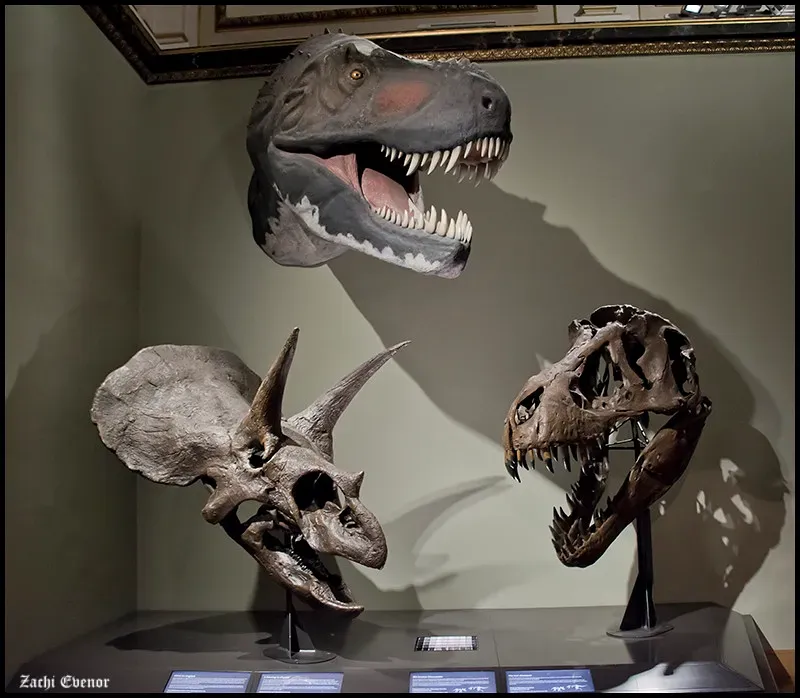
Open their mouths in your mind and the contrast gets even sharper. Triceratops had rows of tightly packed, leaf-shaped teeth arranged into what paleontologists often describe as dental batteries. These teeth were perfect for slicing and grinding tough, fibrous plants, likely including low-growing vegetation and hardy shrubs. As they wore down, new teeth in the stack moved up to replace them, keeping the chewing surfaces fresh for a lifetime of nonstop feeding.
T. rex took the opposite approach, with thick, conical teeth that were more like serrated railroad spikes than the slicing blades seen in some other carnivores. These robust teeth could withstand tremendous forces as they bit down on flesh and bone, leaving deep bite marks in prey and even in the bones of other T. rexes. The pattern is clear: Triceratops was a heavy-duty plant-processing machine, while T. rex was a bone-crunching carnivore that did not care if a meal came with a side of shattered skeleton.
Locomotion and Speed: Four-Legged Power vs Two-Legged Burst
How they moved through their environment highlights another fundamental split. Triceratops walked on all fours, with forelimbs that were slightly shorter than the hind limbs but still strong and sturdy. Its center of gravity was low, making it stable and hard to knock over, an advantage if you are a prey animal that might need to pivot and face an attacker. Its walking speed was probably moderate, more about endurance and steady movement than dramatic bursts of speed.
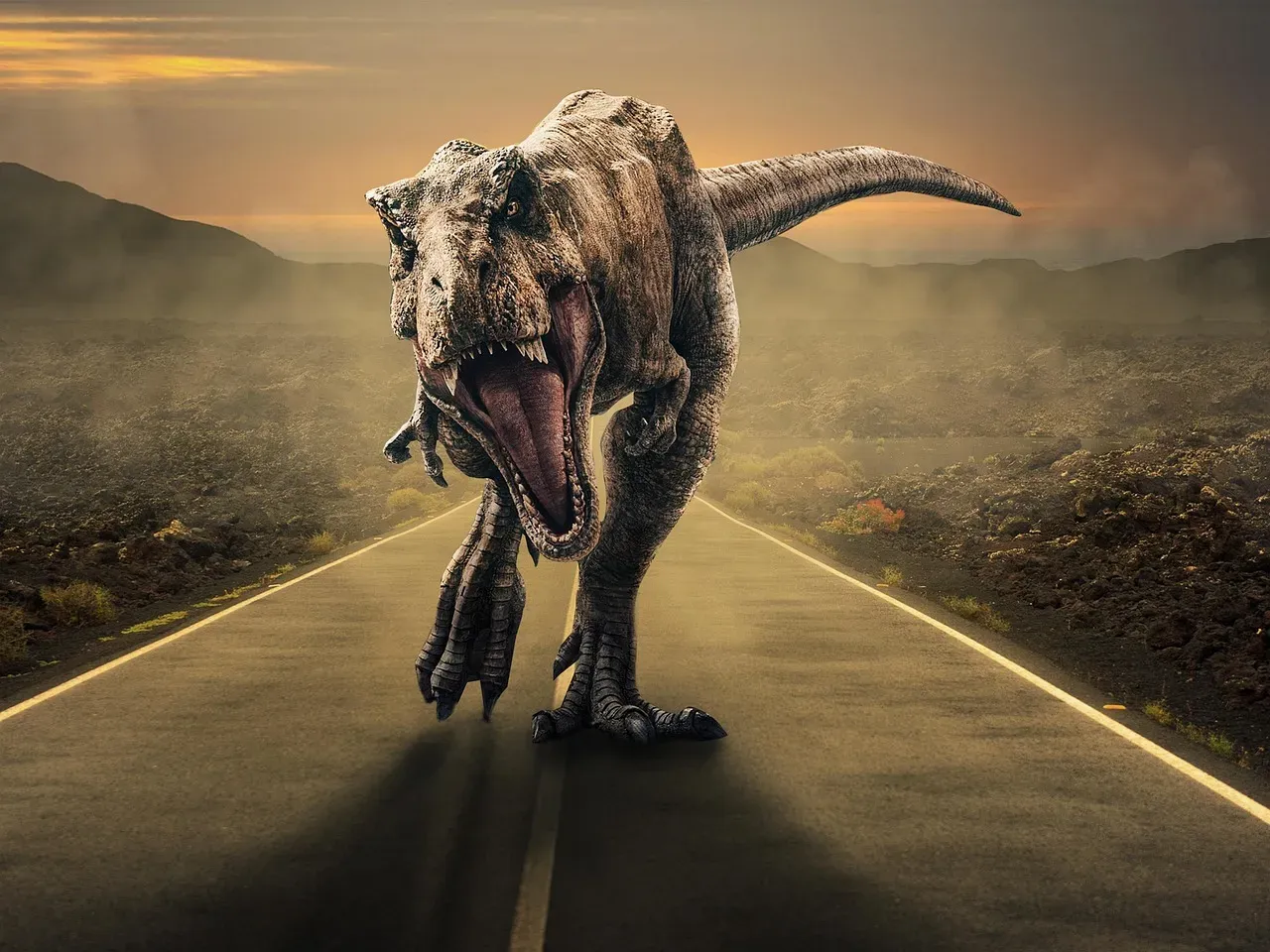
T. rex, in contrast, moved on two powerful legs, with each step propelled by massive thigh and tail muscles. There is still scientific debate over exactly how fast it could run, but most evidence points toward it being capable of relatively quick bursts of speed for its size, even if it was not sprinting like a cheetah. Its long strides and efficient gait would have helped it close distances effectively, especially against slower or already injured animals. Where Triceratops played the role of mobile fortress, T. rex played the role of heavyweight sprinter built to deliver sudden, overwhelming force.
Defense and Offense: Shield-and-Spear vs Hit-and-Bite
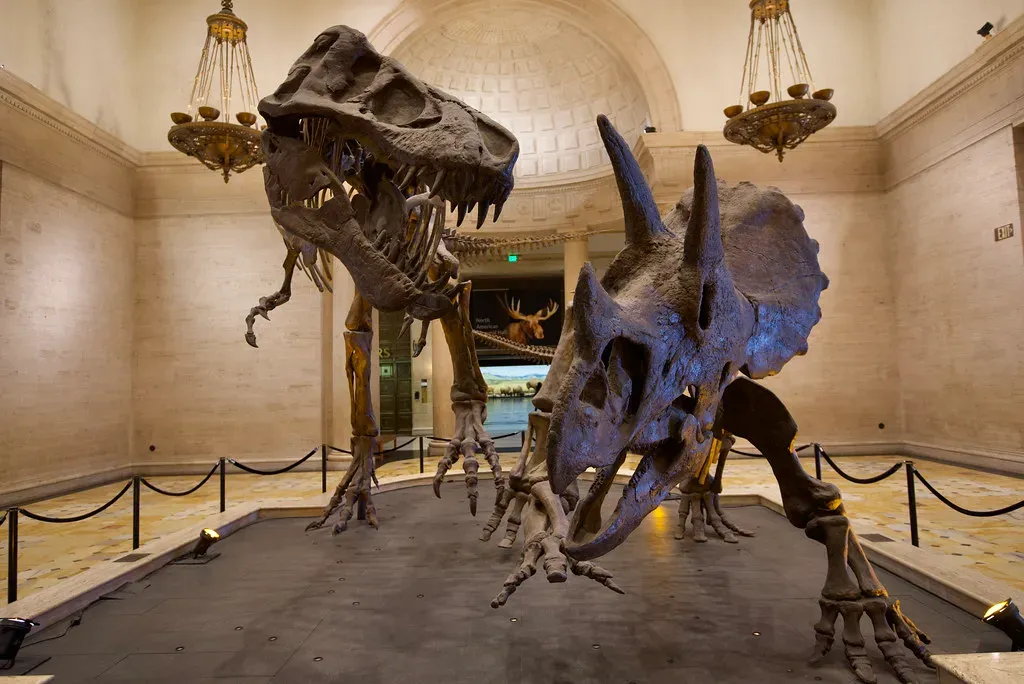
When you think of “who would win” scenarios, this is the category that gets people fired up, but the reality is more nuanced than a simple brawl. Triceratops relied on a mix of passive and active defenses: a massive frill shielding its neck, horns that could be used to threaten or impale attackers, and a low center of gravity that made it hard to flip or topple. Even its sheer size would have been a deterrent; for a predator, a wrong move against an angry adult Triceratops could mean a horn in the ribs and a fatal wound.
T. rex was all about offense, with the skull, teeth, and neck structured to dish out explosive, bone-crushing bites. Its strategy likely involved powerful, targeted attacks – biting into the neck, hips, or flanks of its prey to cause catastrophic damage quickly. Its arms were small but not useless; they were strong for their size and may have been used to grip struggling prey at close range, though they were not the star of the show. To me, the interesting part is that T. rex’s best move was to avoid the horns entirely; in a direct frontal clash with an alert adult Triceratops, the risk for the predator might have been uncomfortably high.
Social Behavior and Lifestyle: Herd Browser vs Solitary Hunter
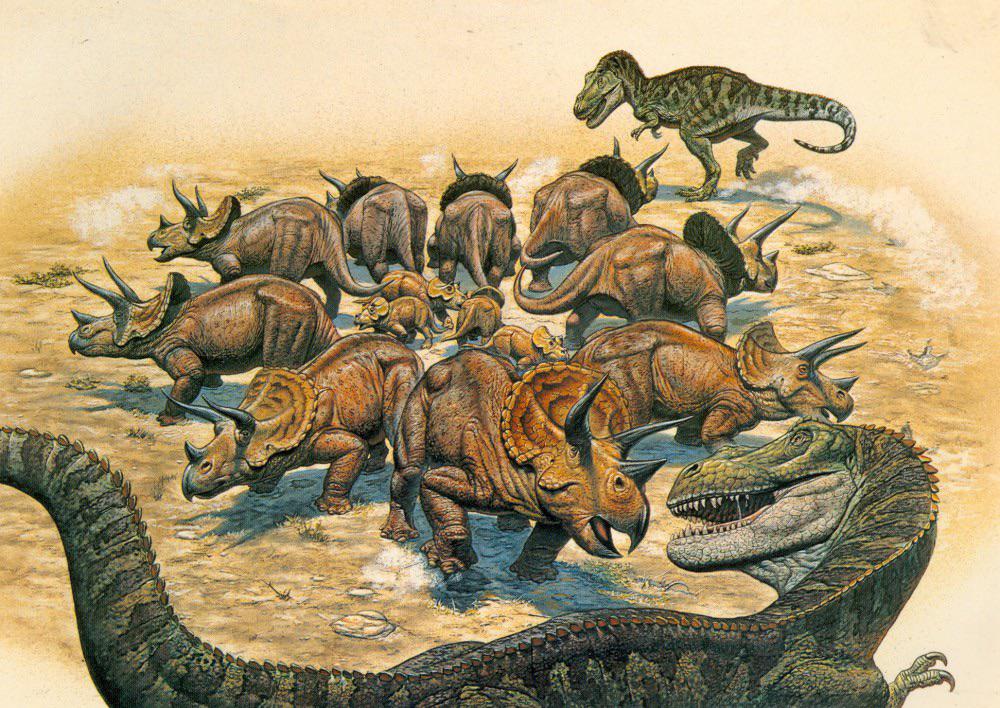
We cannot watch these animals in real time, but fossils offer some clues about how they might have lived. Evidence from bonebeds and trackways suggests that many horned dinosaurs could have had at least some degree of group behavior, and Triceratops may have formed loose herds or family groups, especially at certain life stages. Living in a group would have added another layer of defense – many eyes to spot danger, and multiple horned adults to discourage bold predators. Even juveniles could have benefited from the protection of larger individuals.
T. rex is often imagined as a solitary hunter, and it may well have spent a lot of its adult life alone, patrolling large territories in search of food. However, there is some evidence hinting that at least younger individuals could have interacted or even hunted together, though this is still an area of active debate rather than a settled fact. Either way, its lifestyle would have revolved around finding, killing, or scavenging large carcasses, and defending access to those resources. In modern terms, Triceratops feels more like a giant, wary bison, while T. rex comes across as a terrifying blend of lion, hyena, and vulture rolled into one oversized package.
Time, Environment, and Ecological Role
Another twist in their story is that Triceratops and T. rex were not just random dinosaurs that happened to be famous; they lived in roughly the same late Cretaceous ecosystems in what is now North America. They shared floodplains, forests, and river valleys, surrounded by other dinosaurs, early birds, mammals, and a whole supporting cast of reptiles and plants. This means they were parts of the same food web: Triceratops as one of the main large herbivores, T. rex as the top carnivore near the top of that pyramid.
Their coexistence shaped each species’ evolutionary pressures. A plant-eater living under the constant shadow of a predator like T. rex would benefit from heavy armor, horns, and bulk. A predator surrounded by large, well-defended herbivores would evolve enormous strength, smart targeting strategies, and maybe a willingness to scavenge when the opportunity arose. I like to think of them as two sides of a very ancient arms race: one improving its defensive tech, the other constantly refining its offensive tools in response.
Brains, Senses, and Perception of the World
Size and teeth are obvious, but their inner worlds would have been radically different too. T. rex had a relatively large brain for a dinosaur of its size, especially in regions related to smell and vision. Studies of its skull suggest that it had an excellent sense of smell, likely helpful for tracking prey or locating carcasses over long distances. Its forward‑facing eyes would have provided good depth perception, a huge advantage in accurately judging distance when attacking.
Triceratops had a somewhat smaller brain in proportion to its body, but that does not mean it was dull or clumsy. It still needed to coordinate a massive body, navigate its environment, interact with other members of its species, and quickly respond to danger. Its eyes were placed more to the sides, which likely gave it a wide field of view to watch for threats. In my view, this mental difference reflects their roles perfectly: T. rex as the sharp‑sensed strategist of attack and opportunity, Triceratops as the vigilant, ever‑watchful defender trying to stay one step ahead of disaster.
Who Really “Wins”? An Opinionated Conclusion
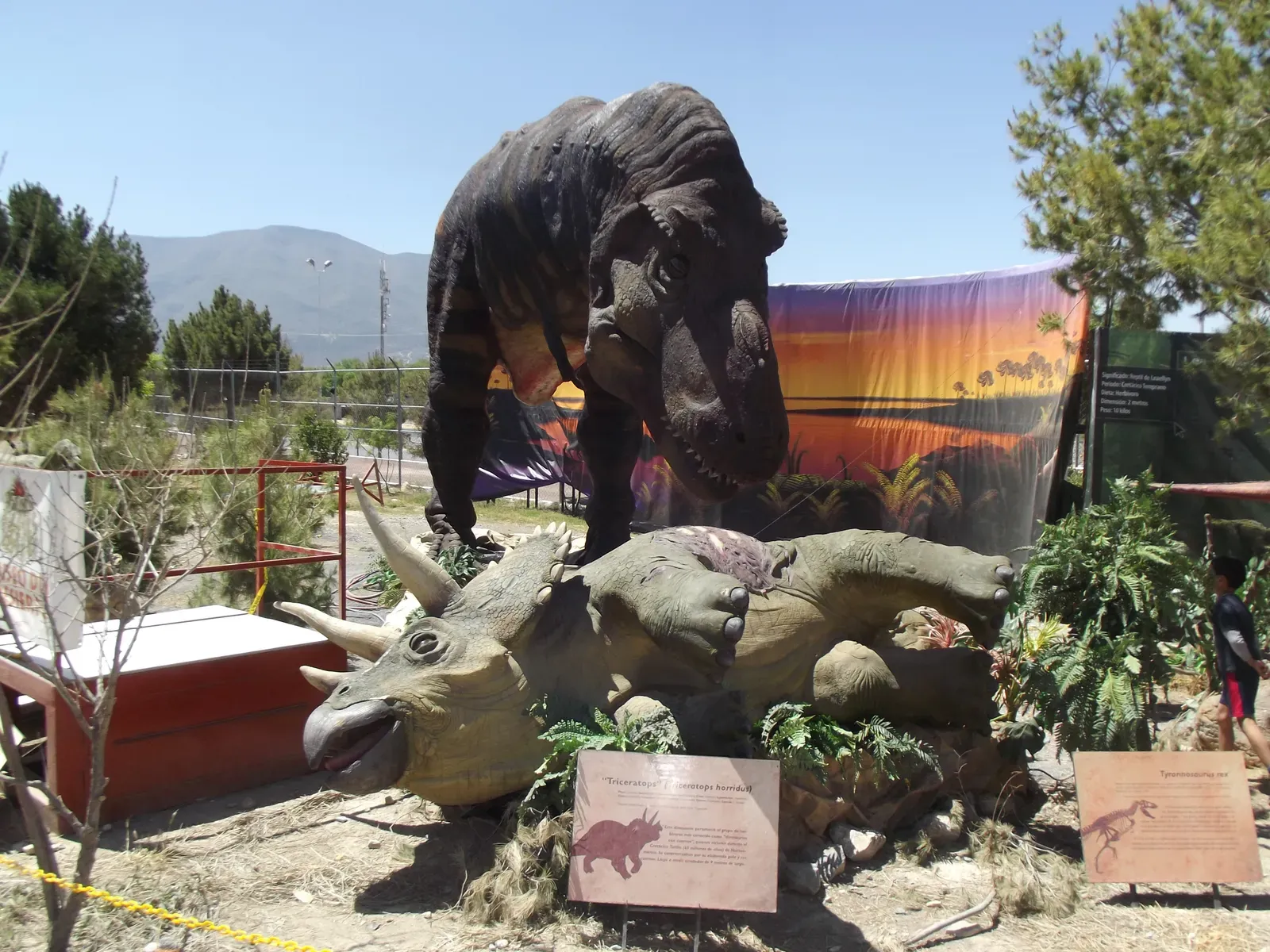
People love to treat Triceratops versus T. rex like a dinosaur boxing match, but that kind of thinking misses the deeper point. If you judge them only by who would win in a head‑to‑head fight, you are basically handing the trophy to T. rex by default in most fantasy scenarios: it was the apex predator, armed with a catastrophic bite and sharp senses, and it clearly did kill large herbivores. From a purely offensive standpoint, T. rex is hard to beat; it is the ultimate prehistoric showstopper, the one that dominates posters and movie screens for a reason.
But if you ask which one I quietly root for, it is Triceratops. There is something incredibly compelling about an animal that survives not by being faster or smarter at killing, but by turning its entire body into a fortress that says “not today” to one of the most fearsome predators ever to walk the Earth. Evolution did not crown a single winner; it produced two champions playing different games on the same field – one a hunter, one a survivor. In the end, the more interesting question is not which one would win in a fight, but which role you find more admirable: the relentless chaser, or the unshakable defender?