You probably grew up with a simple story about how civilization began: first people settled down, then they farmed, then they built temples and cities. Göbekli Tepe, a windswept hill in southeastern Turkey, blows that neat little timeline to pieces. Here, more than eleven thousand years ago, long before writing, pottery, or even farming took off, people were already raising massive stone circles and carving wild animals into towering pillars.
When you really sit with that, it is a bit unsettling. You are looking at a place that is older than Stonehenge by about six millennia and older than the Egyptian pyramids by roughly seven. Yet the people who built it were technically still hunter‑gatherers. As you follow what archaeologists have uncovered at Göbekli Tepe, you watch an uncomfortable idea take shape: maybe religion and shared ritual did not emerge from settled life and agriculture. Maybe, in a twist that rewrites prehistory, it pushed people toward them.
The Hill That Hid a Forgotten World
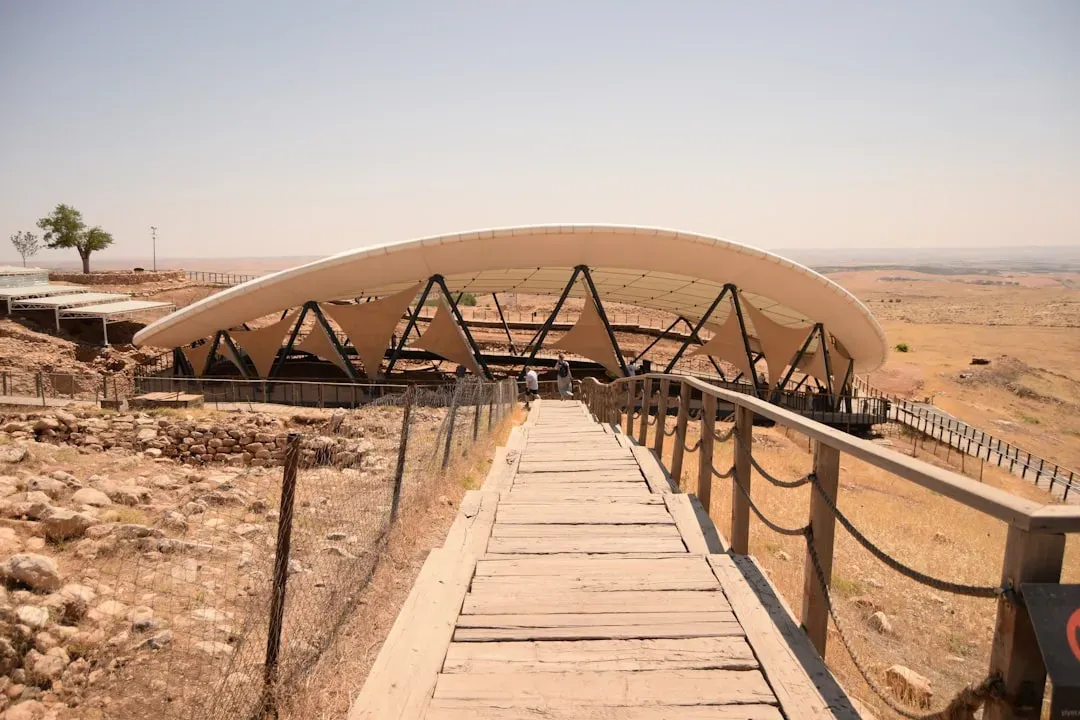
If you were driving past Göbekli Tepe a century ago, you would have seen nothing more than a dusty, rounded hill rising above the plains near the modern city of Şanlıurfa. Local farmers plowed its slopes, occasionally turning up chunks of limestone and ancient flints, but to most eyes it was just another bump in the landscape. In the 1960s, a brief survey noted some scattered stones and dismissed the place as the remains of a medieval cemetery, then moved on.
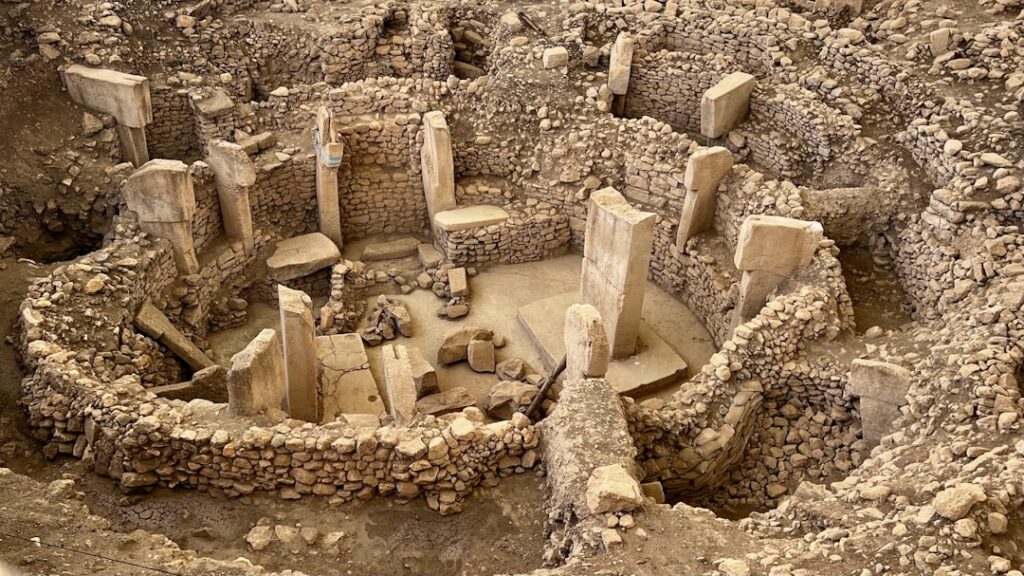
When you hear that, it makes the later revelation feel even more dramatic. In the mid‑1990s, when German archaeologist Klaus Schmidt re‑examined the site, you suddenly get a different story: buried under that “ordinary” hill lay rings of stone pillars up to about five meters high, some weighing as much as fifty tons. As excavators peeled back the soil, they realized the hill itself had been largely formed by the ruins of deliberately buried structures. You are not just looking at a random mound, you are looking at a man‑made time capsule spanning several thousand years of ritual activity in the early Neolithic.
Unimaginable Age: Older Than Every Story You Learned
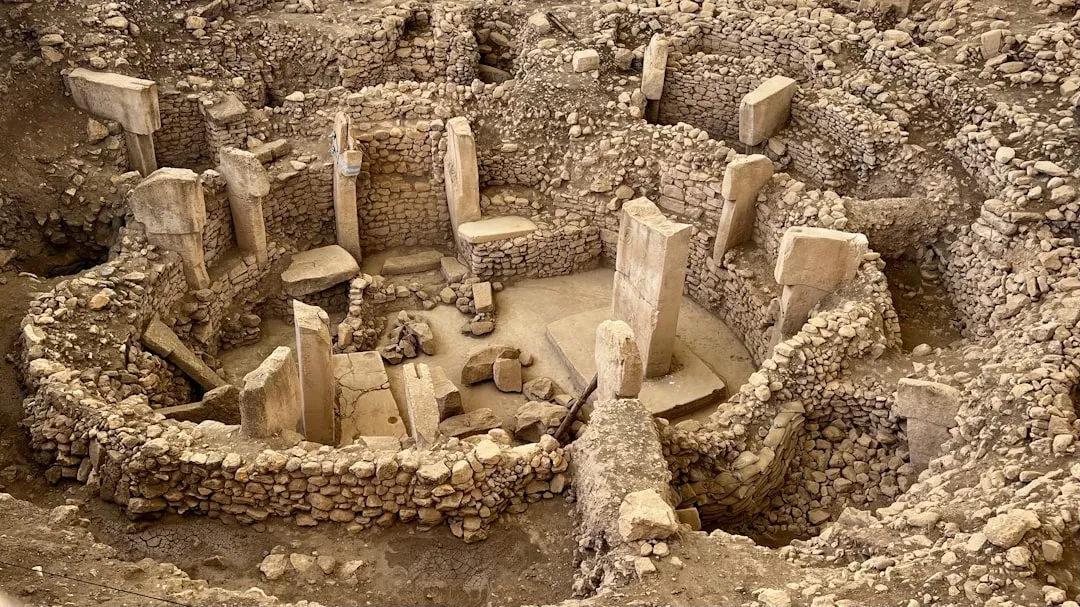
When you read that Göbekli Tepe dates to roughly between 9600 and 8200 BCE, your brain almost refuses to cooperate. That is deep into the Pre‑Pottery Neolithic, a time you are used to associating with small bands of nomadic foragers, not monumental architecture. Radiocarbon dating from nearby sites and material associated with the enclosures puts the earliest phases at around the end of the last Ice Age, when glaciers were still retreating and agriculture was only just emerging in the broader region.
Think of it this way: if you lined up the great stone monuments of the world on a timeline, Göbekli Tepe would be sitting at one end almost alone, with a yawning gap before anything like Stonehenge, Newgrange, or the pyramids appears. You are looking at architecture that is older than every written myth you know, older than the idea of cities, older than the wheel. The sheer age forces you to accept that complex symbolic thinking and large coordinated projects belong far earlier in human history than school textbooks usually suggest.
Circles of Stone: Architecture That Shouldn’t Exist Yet
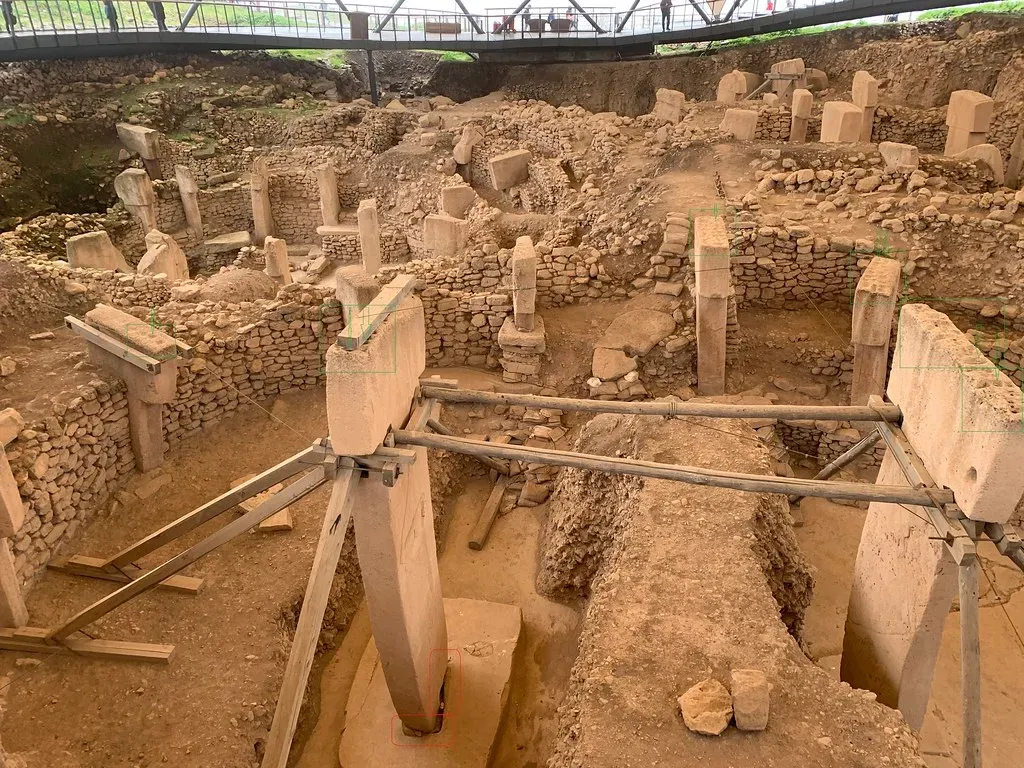
Imagine walking down into one of the main enclosures at Göbekli Tepe. Around you, a ring of massive T‑shaped pillars forms a circle or oval, some interconnected by low stone walls. At the center rise two even larger T‑pillars facing one another, like silent guardians or presences dominating the space. The whole design is clearly planned; it is not a pile of stones thrown together but a carefully laid‑out structure requiring skilled quarrying, transport, and engineering.
Researchers have shown that the layout of several main enclosures follows consistent geometric patterns, suggesting that whoever built them understood symmetry, alignment, and proportion in a surprisingly sophisticated way. You are dealing with people who did not have metal tools, wheels, or beasts of burden, yet they managed to organize labor, shape limestone with precision, and set stones weighing tens of tons upright in stable foundations. When you consider that this was done by communities that still relied heavily on hunting wild game, the architecture starts to feel almost like a challenge thrown at your assumptions about what “primitive” humans could achieve.
Animals in Stone: Decoding the Carved Pillars
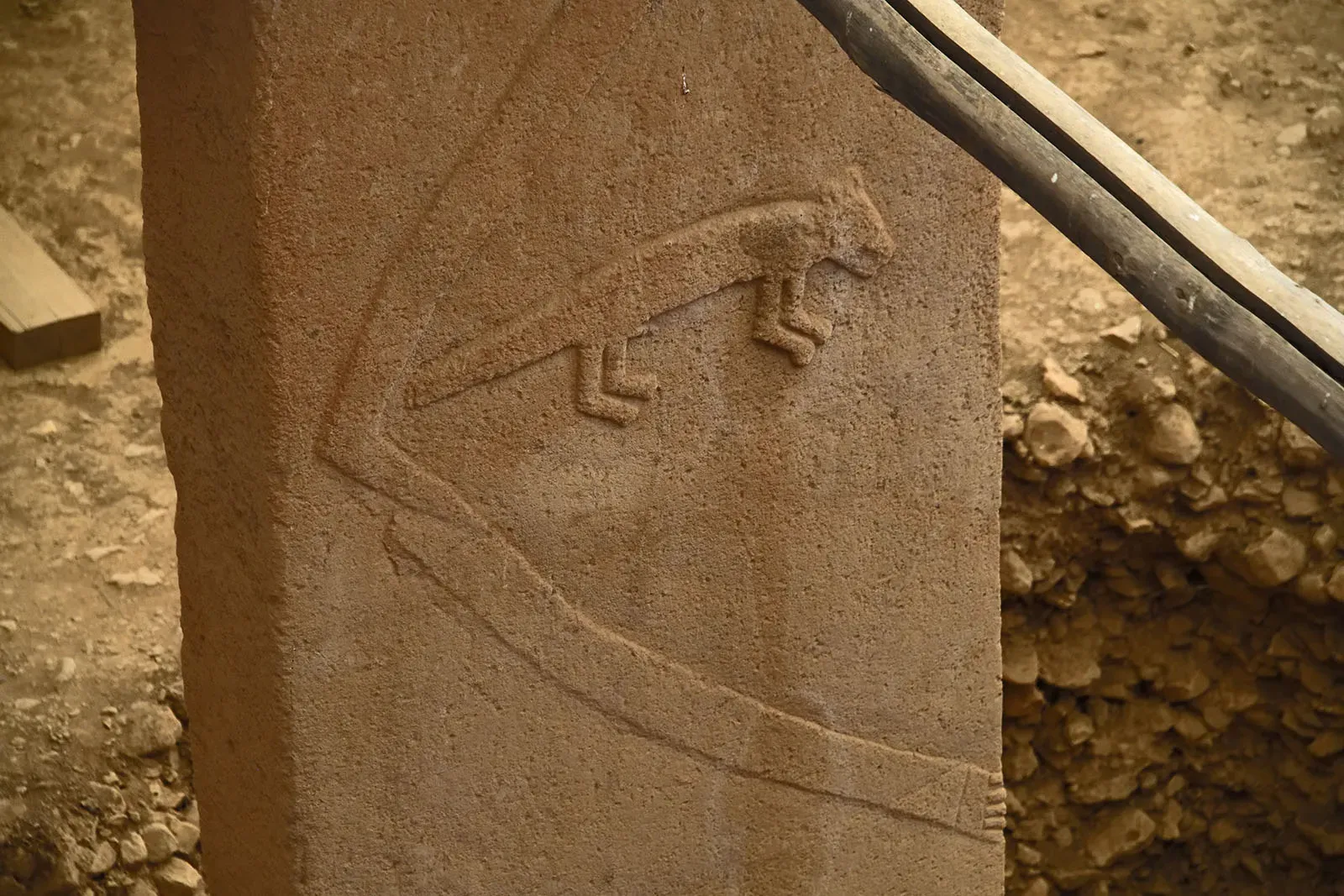
As you move closer to the pillars, you notice they are not blank. Many of them are covered with low‑relief carvings of animals: foxes, wild boar, gazelles, vultures, snakes, scorpions, big cats, and more. Some figures overlap, some are paired or repeated, and some seem to form little narrative scenes. You also see abstract symbols, such as H‑shapes, crescents, and other motifs whose meaning you can only guess at. It feels like stepping into a graphic novel drawn in stone, except you no longer have the key to read the language.
Archaeologists cautiously interpret these images as expressions of myth, ritual, or group identity, but they are honest about how uncertain the decoding still is. You might feel drawn to the idea that the animals mark clans, seasons, constellations, or spirits, and you would not be alone; several researchers have suggested symbolic or even astronomical readings. Yet, because you do not have accompanying texts, you have to accept that these carvings speak from a world of belief and story that is mostly lost. Still, just by existing, they prove that people at Göbekli Tepe already lived inside a rich symbolic universe deep in prehistory.
Hunters, Not Farmers: The Civilization Twist
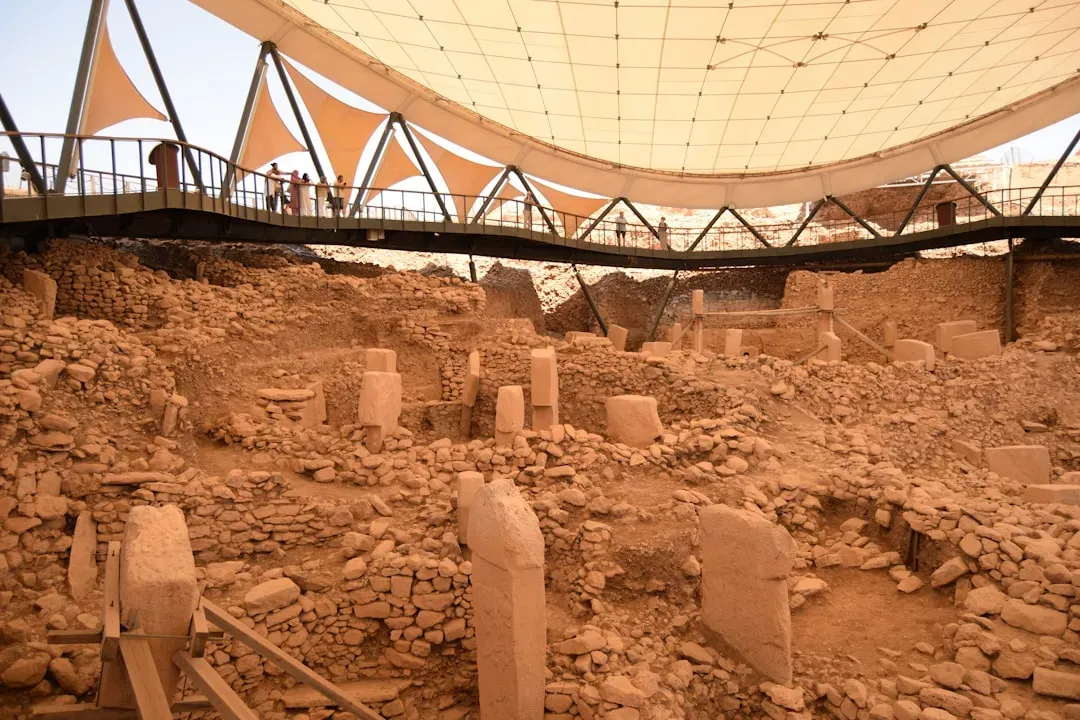
If you were told this was a temple complex built by a settled farming society, you might nod and move on. The twist that makes Göbekli Tepe so disruptive is that the evidence points strongly to mobile hunter‑gatherers as the builders. Excavations have turned up huge quantities of wild animal bones, especially gazelle, along with remains of wild plant foods. What you do not see are typical traces of permanent domestic life: no clear houses, no trash pits typical of village occupation, no domesticated crops or herd animals in the earliest layers.
This flips the standard story on its head. For a long time, you were taught that first came agriculture, then permanent settlements, then specialized labor and big ritual buildings. Göbekli Tepe suggests a different sequence: first come gatherings and shared ritual that require large numbers of people to get together repeatedly in one place. Those seasonal or periodic gatherings then create pressures for better food supplies and more reliable resources, nudging people toward cultivation and domestication. In that sense, you could argue that religion and communal ceremony helped give birth to farming, not the other way around.
Ritual Center, Observatory, or Something Else Entirely?
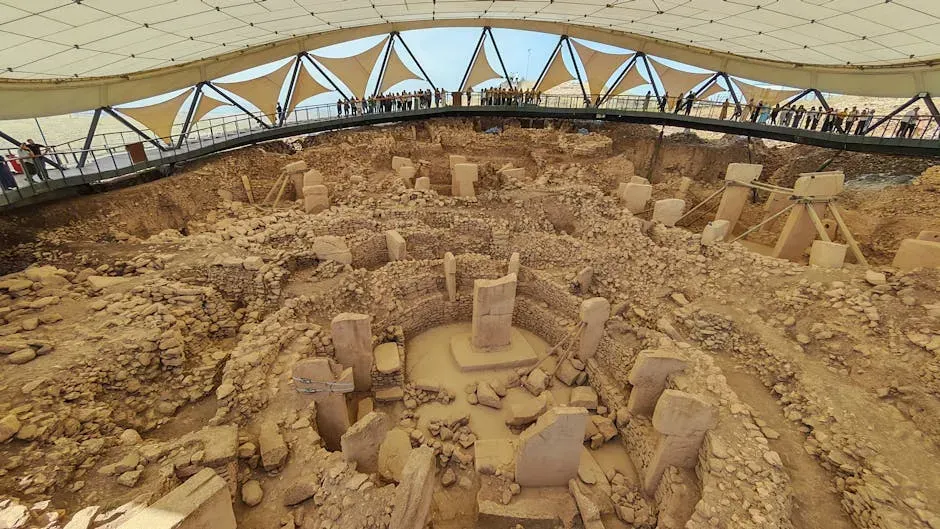
One of the most haunting parts of Göbekli Tepe is that you will probably never know exactly what it meant to the people who built it. The majority of archaeologists lean toward seeing it as a regional ritual center or sanctuary, a place where different groups met to perform ceremonies, forge alliances, and negotiate social ties. The lack of ordinary domestic debris strengthens that idea; it feels more like a special‑purpose site than a normal village.
At the same time, you will come across bolder interpretations that link the layout of the pillars and enclosures to the night sky, suggesting Göbekli Tepe might have served as an early astronomical observatory or a way of tracking celestial events. These ideas are fascinating, but the evidence is debated and far from conclusive. As you sort through them, you are forced to practice a kind of intellectual humility: you can see that the site mattered deeply to its builders, but you also have to live with a large gray zone between solid data and speculation. The “mystery” in the title is not a marketing trick; it is a real boundary of knowledge you are bumping against.
Why Was It Buried? The Enigma of Its End
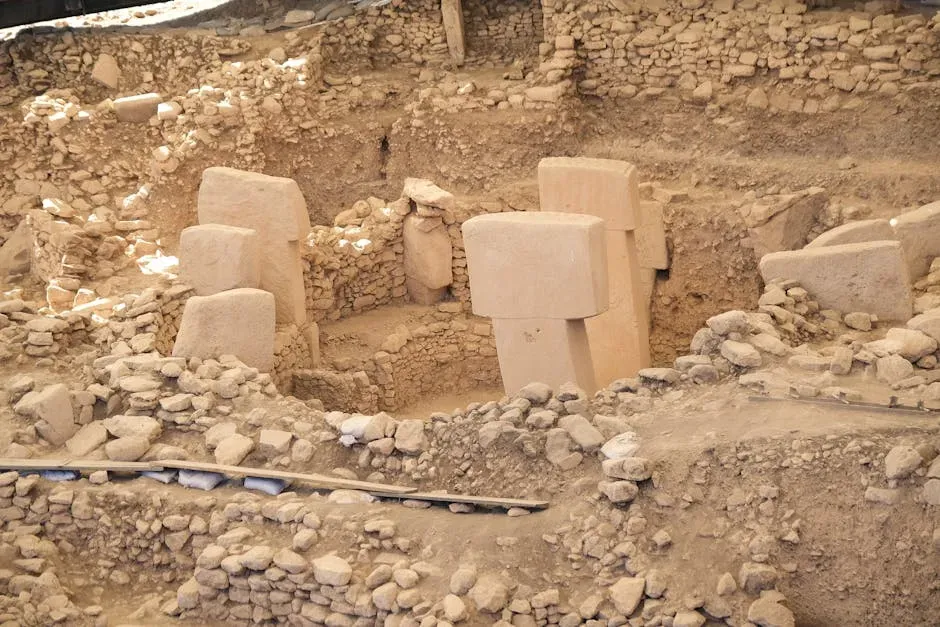
One of the strangest facts you encounter about Göbekli Tepe is that its major enclosures were not simply abandoned and left to decay. Over time, people intentionally filled them in with layers of rubble, stone fragments, animal bones, and soil, essentially entombing the stone circles they had spent so much effort constructing. The infilling itself seems to have been rapid compared to how long the site was in use, suggesting a deliberate closure rather than a slow, natural process.
Why would a community bury its own sacred architecture? You can browse through theories ranging from practical construction strategies for building new structures on top, to changes in belief systems, to social or environmental shifts that made the site less central. Some popular narratives have even claimed a kind of fearful hiding of forbidden knowledge, but the current archaeological evidence does not really support that dramatic storyline. In reality, you are probably looking at a cultural transition: as agriculture and permanent villages became more common in the region, new forms of ritual and social organization may have made the old circles obsolete, and burying them might have been a respectful way to retire their power.
Reshaping the Story of How Civilization Begins
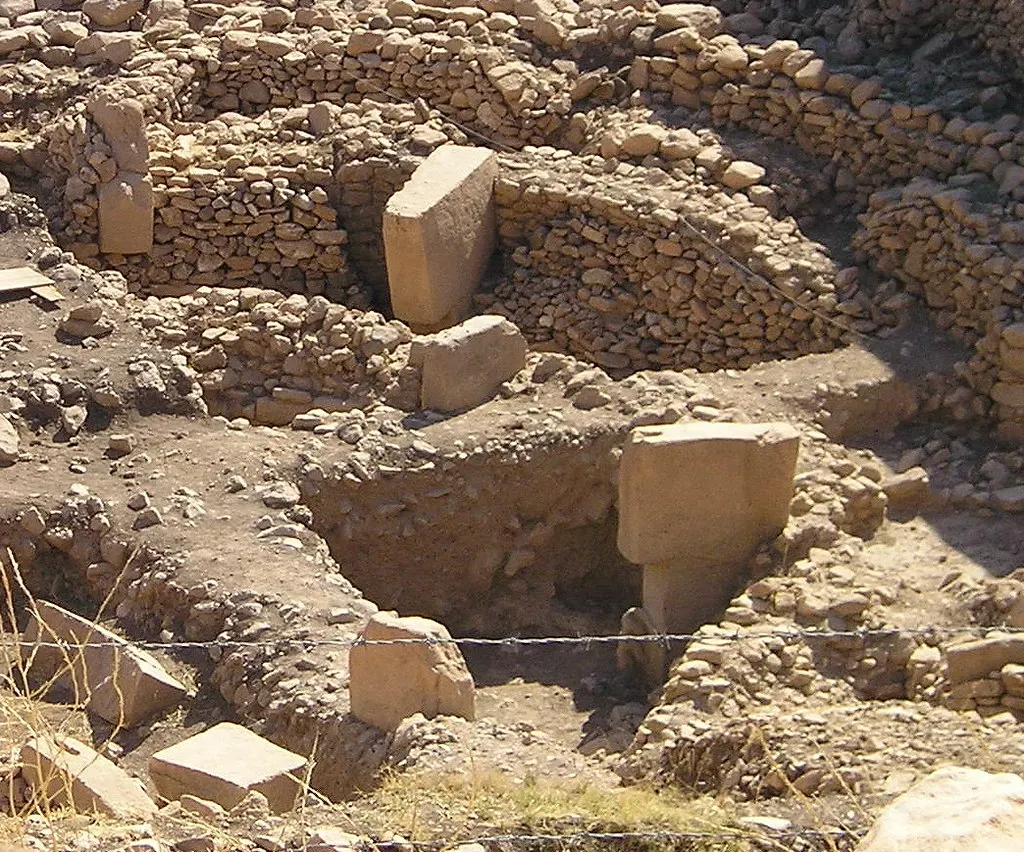
When you step back and look at the bigger picture, Göbekli Tepe forces you to rewrite the mental script of human history. Instead of a straight line from simple foragers to farmers to city builders, you start to see a messier, more interesting path where ideas, beliefs, and social experiments sometimes race ahead of technology. A site like this shows you that complex cooperation, large‑scale planning, and shared symbolic worlds can emerge even before people fully settle down with fields and barns.
This has powerful implications for how you understand religion, art, and community. It suggests that human beings may have been driven just as strongly by the need for shared meaning and collective identity as by the need for food security. In other words, you are not simply a creature that farms and then dreams; you are a creature that dreams so intensely that you change your landscape, your social rules, and eventually your economy to match those inner worlds. Göbekli Tepe becomes a kind of stone mirror showing you how deep that impulse runs.
Visiting Today: Between Tourist Site and Time Machine
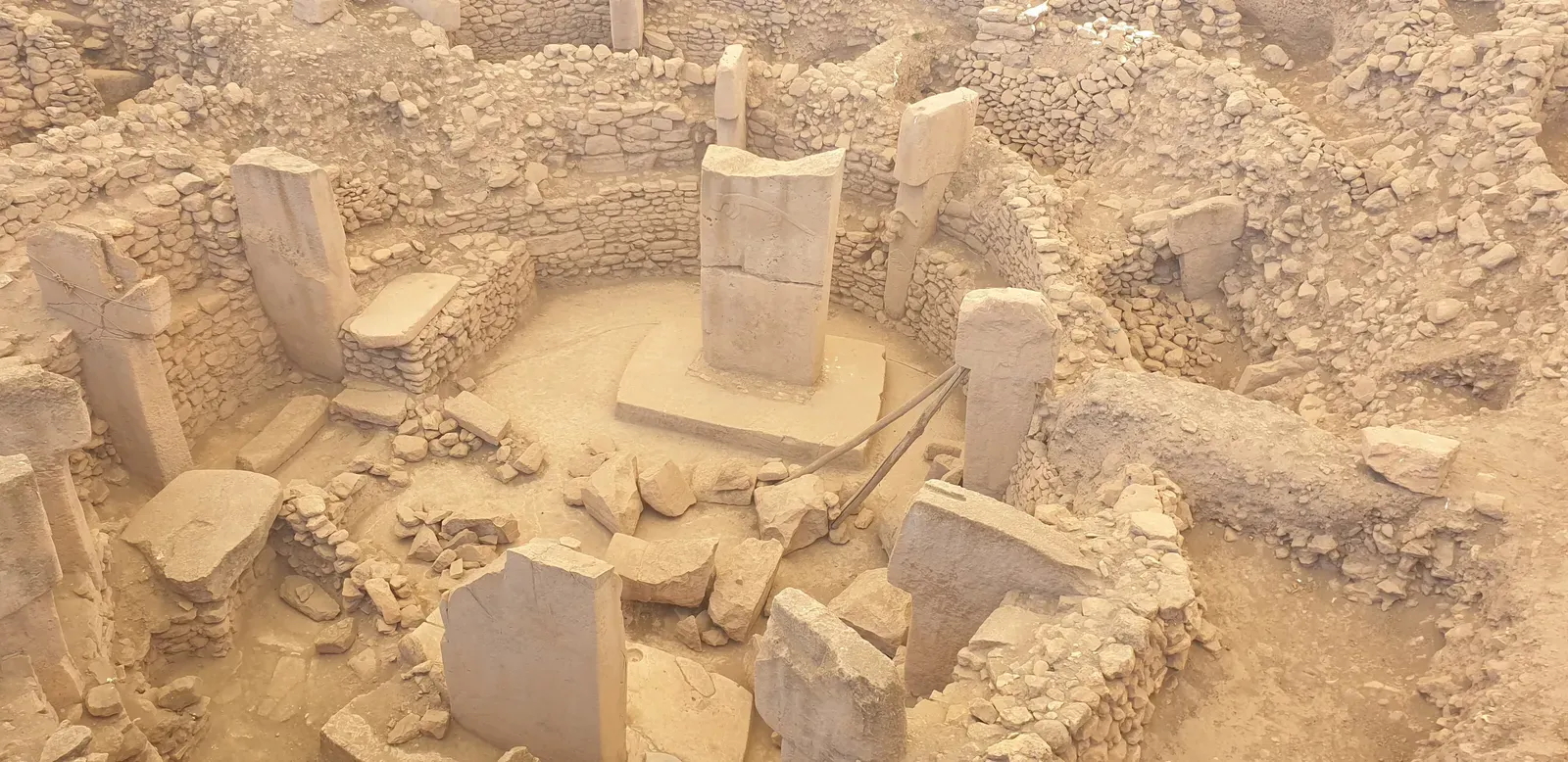
If you visit Göbekli Tepe today, you do not just wander among exposed ruins in silence. You walk along raised walkways under protective roofs that shield the enclosures from weather, while interpretive signs and a visitor center try to compress millennia of history into language you can absorb in an afternoon. The site is now a UNESCO World Heritage property, which means it is officially recognized as one of the earliest monumental expressions of human architecture on the planet and carefully managed to balance tourism with preservation.
Standing there, with buses in the parking lot and smartphones everywhere, you feel a strange double exposure. On one layer, you are in modern Turkey, in a carefully curated archaeological park. On another, you are trying to imagine hundreds of people arriving on foot, bringing wild game and stone tools, gathering around torchlit pillars carved with animals that still roamed the surrounding hills. The contrast reminds you that your own age will someday be just another layer in the archaeological record, and future eyes may struggle just as much to understand what you believed and why you built what you built.
Conclusion: What Göbekli Tepe Really Changes for You
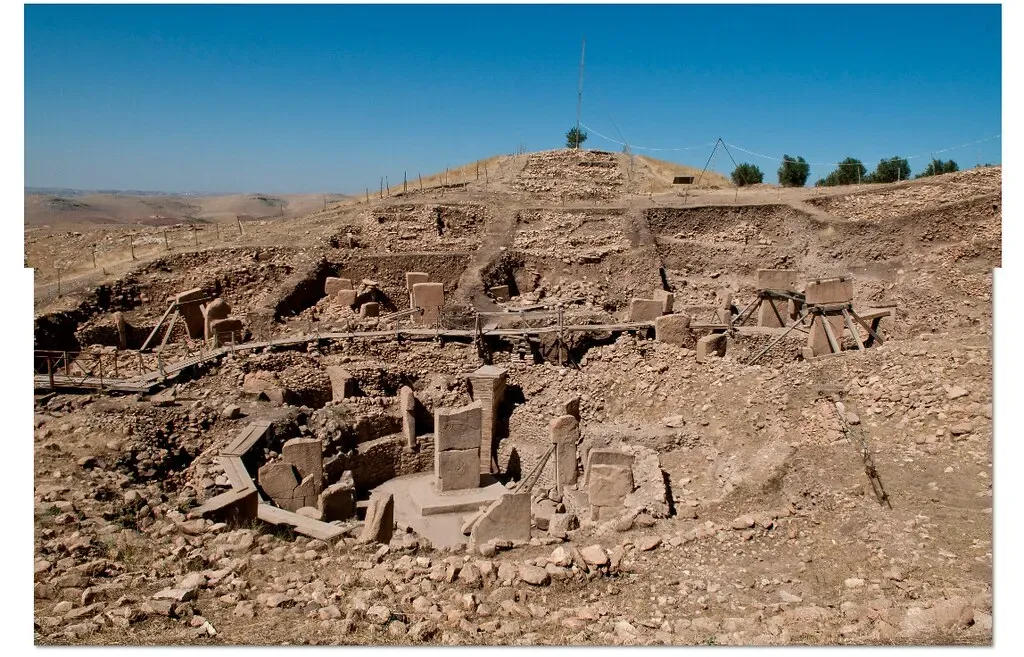
As you take in everything Göbekli Tepe represents, you realize the real shock is not a single dramatic revelation but a quiet, cumulative shift in how you picture your species. You are no longer allowed to imagine early humans as simple, unimaginative bands drifting passively through their environment until agriculture “happened” to them. Instead, you have to see them as planners, artists, believers, and risk‑takers, capable of coordinating huge building projects and woven into complex ritual worlds far earlier than you were told.
Maybe the most important lesson for you is this: human history is not a neat staircase of progress, it is a tangled forest of experiments, detours, and surprising leaps. A stone circle on a Turkish hill, older than any of your written stories, quietly proves that imagination and cooperation are not late luxuries but ancient survival tools. When you think about your own life and society, it is hard not to wonder what hidden assumptions future archaeologists will overturn about you – what part of your world will someday make them say, just as you do now about Göbekli Tepe, “How on earth did they pull that off so early?”