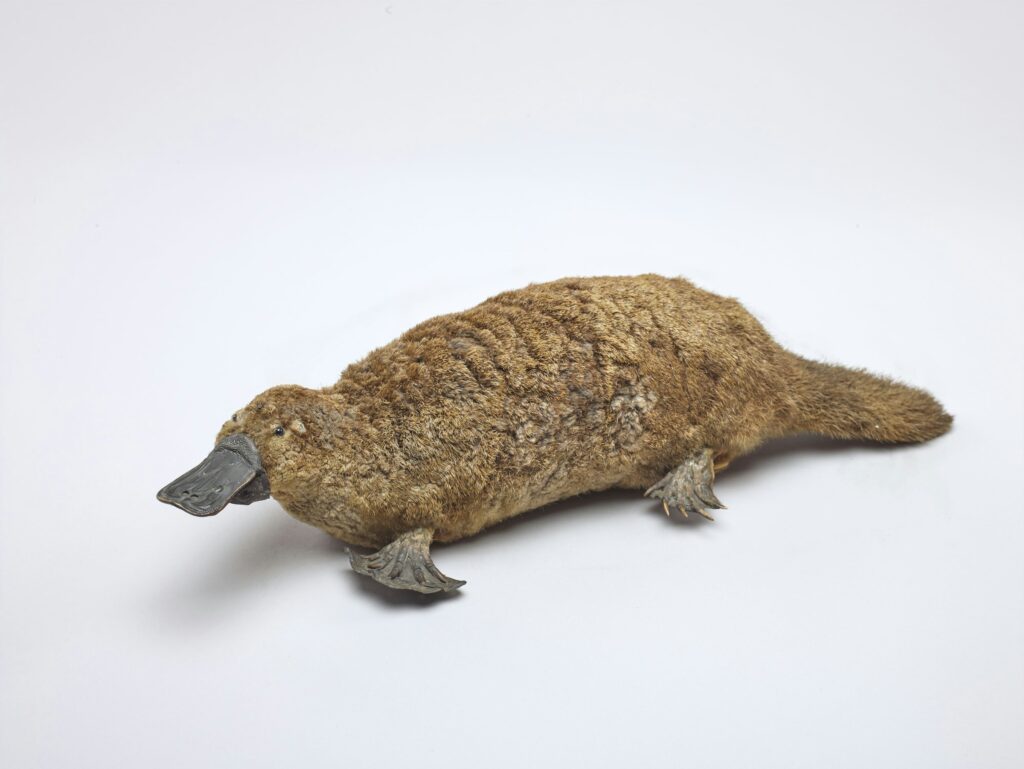
Picture this: a preserved animal skin arrives in London in the late seventeen hundreds, and the best scientific minds of the day decide it must be a prank. Duck bill, beaver tail, otter feet, fur, and, apparently, it lays eggs. The platypus looked so fake that respected researchers literally tried to peel it apart to find the stitching. That first reaction tells you everything about just how bizarre this animal really is.
More than two centuries later, the platypus has gone from Victorian punchline to genomic rock star. Its DNA reads like a time machine, reaching back toward the earliest mammals while still carrying clear traces of our reptile-like ancestors. At the same time, its body is loaded with weird upgrades: venom, electro-sensing, milk without nipples, and a sex-chromosome system that looks half mammal, half bird. If you wanted a creature to mess with every neat category in a biology textbook, you would end up designing the platypus.
A Mammal That Lays Eggs (And Why That Blows Up Our Categories)
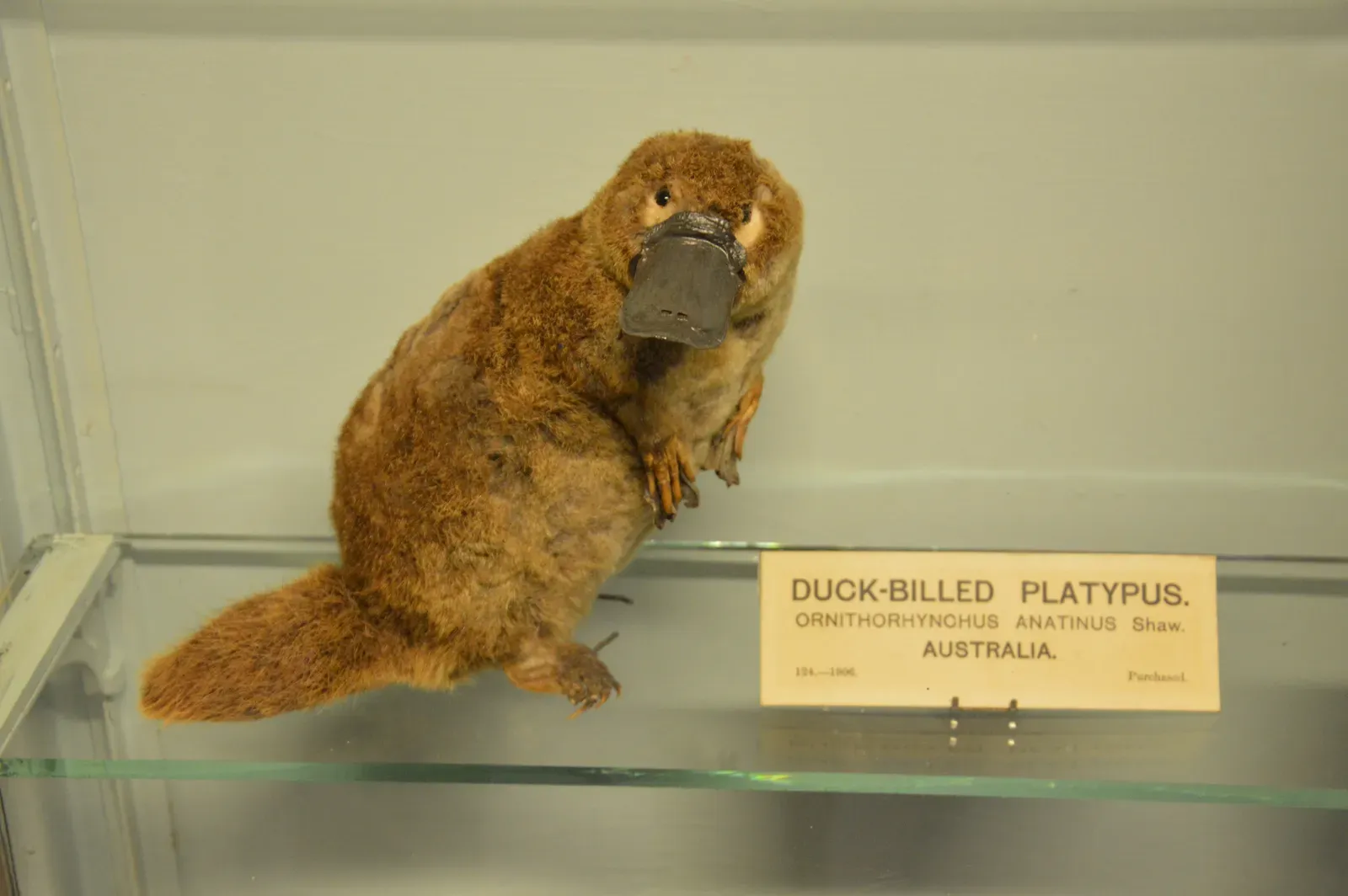
We grow up with a simple rule: mammals give birth to live young, reptiles and birds lay eggs. The platypus sets that rule on fire. It is one of only a tiny handful of living monotremes, the ancient branch of egg-laying mammals that split off long before the rest of the mammal clan evolved placentas and more typical pregnancies. A female platypus lays small, leathery eggs, curls around them for about ten days, and only then does the tiny, jelly-bean-sized baby emerge.
This matters because it shows that mammal evolution was never a straight line from “reptile-like” to “modern human-style.” Instead, the platypus preserves a transitional strategy: it produces eggs like a reptile, but also secretes milk and has fur like a mammal. In evolutionary terms, it sits on a fork in the family tree, giving biologists a living snapshot of how early mammals may have functioned. Every time someone confidently repeats that old schoolbook rule about mammals and live birth, the platypus is there, quietly disproving it.
A Chimera in Fur: Bill, Tail, Webbed Feet, and Hidden Spurs
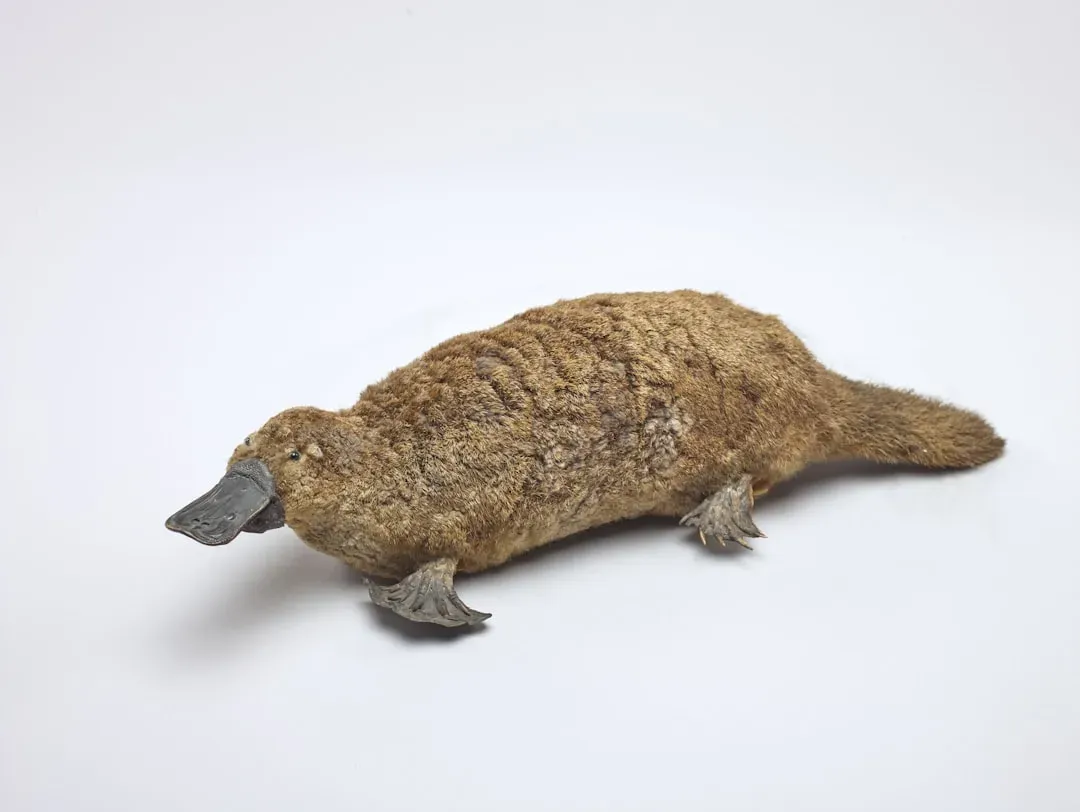
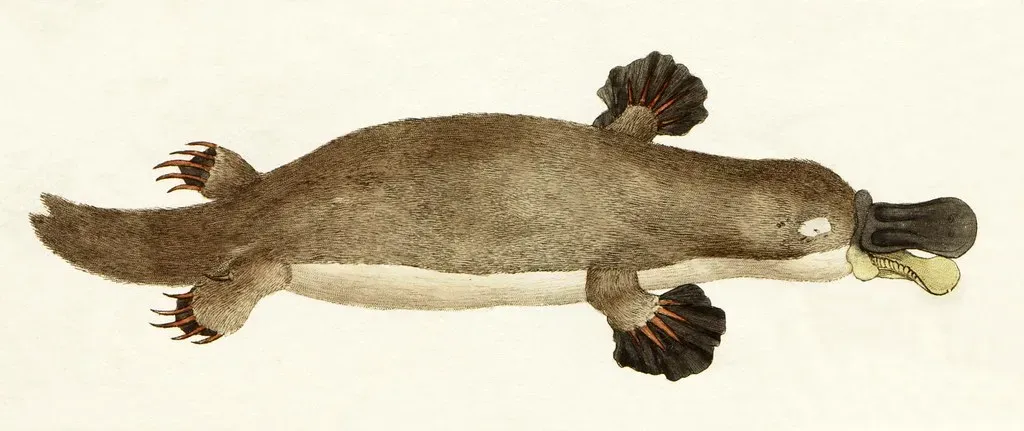
Even without the eggs, the platypus looks like a collage someone made in Photoshop. Its bill really does resemble a duck’s bill at first glance, but it is soft, flexible, and packed with sensors rather than hard and beaked. Its body is covered in dense, waterproof fur more like an otter’s, while the flattened tail doubles as a fat-storage organ, similar in spirit to a camel’s hump. Add the webbed front feet for powerful swimming and more clawed hind legs for digging, and the whole animal feels like a biology prank that somehow escaped into the wild.
Those strange parts are not random, though. The bill is less a beak and more a sensory console, the tail a storage battery, the fur a thermal wetsuit, and the feet clever multi-tools that work differently on land and in water. The mashup look that fooled early British scientists is actually a careful assembly of solutions to life in chilly, fast-flowing Australian streams. The platypus may look cobbled together, but underneath that weirdness is a very tight functional design.
Venomous Mammal: The Sting in the Spur
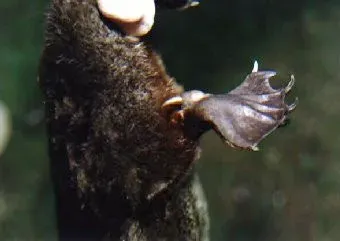
As if “egg-laying mammal” were not enough, male platypuses also have venomous spurs on their back legs. During the breeding season, these hollow spurs can inject a powerful cocktail of venom produced in special glands in the thigh. It is not usually lethal to humans, but it can cause intense, days-long pain that standard painkillers struggle to touch. For other animals, especially rivals and smaller threats, it is a serious deterrent.
This venom is not just a curiosity; it offers a glimpse into how venom can evolve independently in different groups. The molecules in platypus venom show both unique components and some similarities to venom components seen in reptiles and even some fish, despite those lineages being very distant relatives. That suggests evolution can repeatedly “discover” similar biochemical tools under similar pressures. The fact that one of the very few venomous mammals is also one of the most ancient living mammals adds another twist: the platypus is both throwing us back in time and showing off a surprisingly advanced weapon system.
Electric Hunter: Seeing the Underwater World Without Eyes
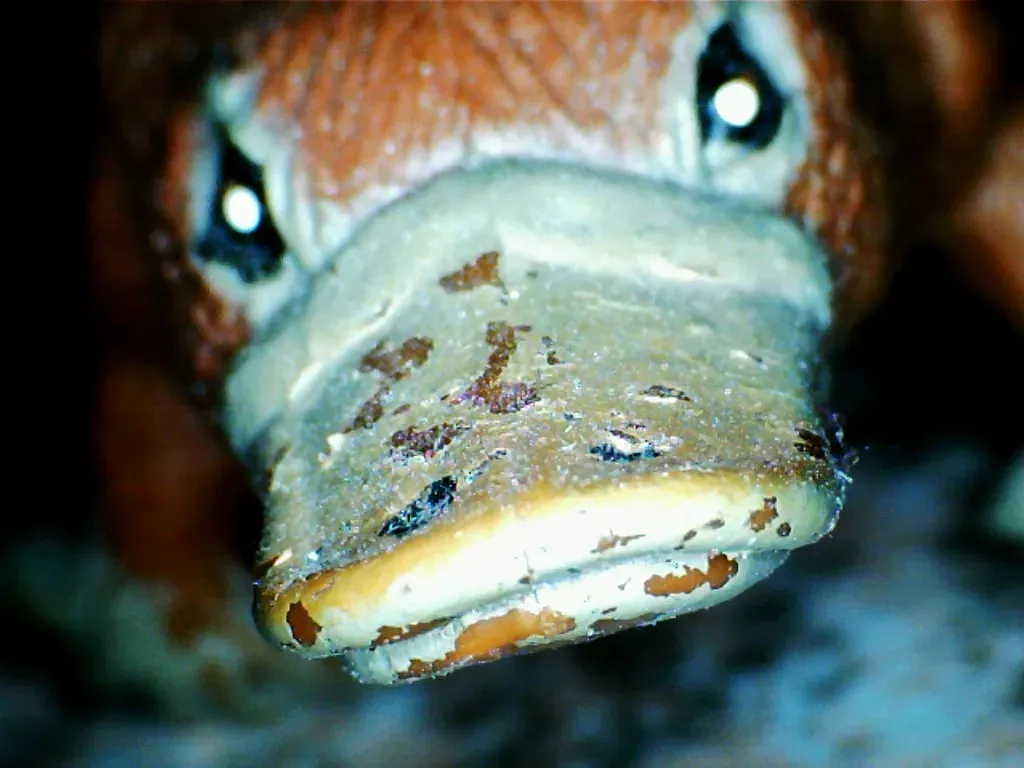
When a platypus dives, it closes its eyes, ears, and nostrils. At first that sounds like a terrible hunting strategy. But the bill is loaded with electroreceptors and mechanoreceptors that let it detect tiny electric fields and water movements produced by muscle contractions of worms, insect larvae, and crustaceans hidden in the mud. In simple terms, it “feels” the electricity of living things and builds a mental map of what is moving around it.
This ability, called electroreception, is shared with some fish and a few other odd groups, but among mammals it is exceptionally rare and highly developed in the platypus. That means it is not just a cool party trick; it is the animal’s primary way of finding food in murky, low-visibility streams. The platypus proves that mammals can evolve sensory systems that go far beyond the usual smell-vision-hearing setup. It is a real-world reminder that our own senses are just one version of what evolution can build.
Sex Chromosomes That Refuse to Pick a Side
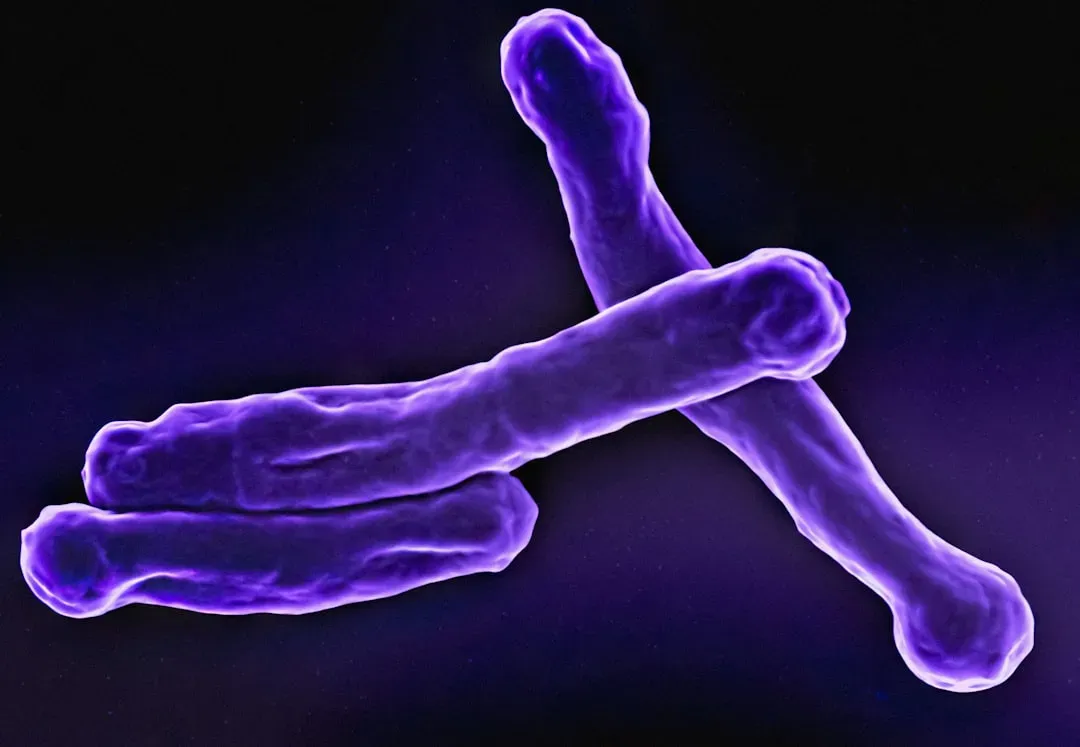
If you look at human sex chromosomes under a microscope, you see the familiar X and Y pair. The platypus looks at that simple setup and says, no thanks. Instead, males carry a chain of ten sex chromosomes, arranged in an alternating sequence during cell division. Some of these chromosomes carry regions that are similar to typical mammalian X chromosomes, while others resemble bird-like Z chromosomes. It is as if someone mashed two different genetic systems together and never fully finished the merger.
This tangled sex-chromosome system is more than a trivia fact; it tells us that sex determination has taken multiple evolutionary paths among vertebrates. The platypus effectively sits between the classic mammal pattern and the bird pattern, with pieces of both. That makes it a critical puzzle piece for understanding how sex chromosomes originate, fuse, split, and swap genes over millions of years. In a world that often wants biology to be neat and binary, the platypus genome stubbornly insists that reality is more complicated.
Genetic Time Capsule: Ancient Genes with Modern Twists
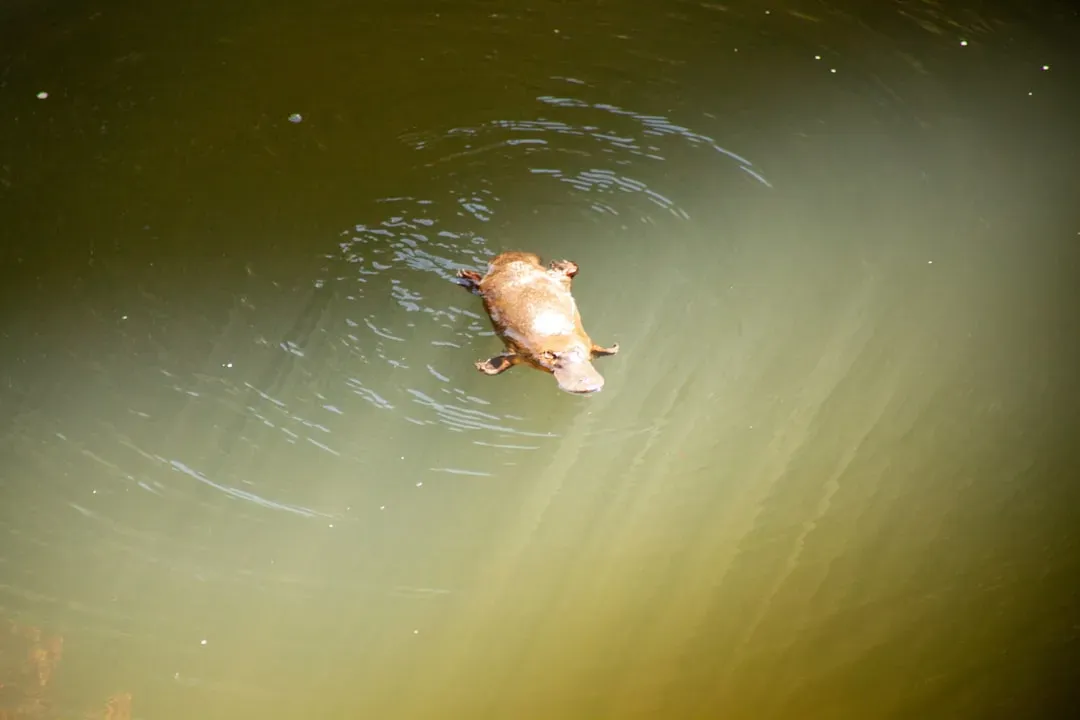
When scientists sequenced the platypus genome, they found something stunning: it is a patchwork of features shared with reptiles, birds, and other mammals, plus some elements that are uniquely its own. Genes related to egg production sit alongside genes for milk, and some regulatory regions echo very early vertebrate patterns. You can almost read the story of mammal evolution layered into its DNA like geological strata in a cliff face. It is not that the platypus is “primitive” in the sense of being unfinished, but that it has kept traits that other mammal lineages lost.
At the same time, the platypus is not frozen in time. Its genome also shows innovations that are specifically tailored to its lifestyle: gene families involved in its unusual sense abilities, changes in immune-related genes that fit its freshwater, burrow-dwelling existence, and specialized adaptations in skin and fur. That mix of old and new turns the platypus into a living reference library. Whenever scientists argue about when certain mammalian traits evolved, the platypus genome quietly sits there saying, check the record, the evidence is in here.
Milk Without Nipples and Other Quiet Oddities
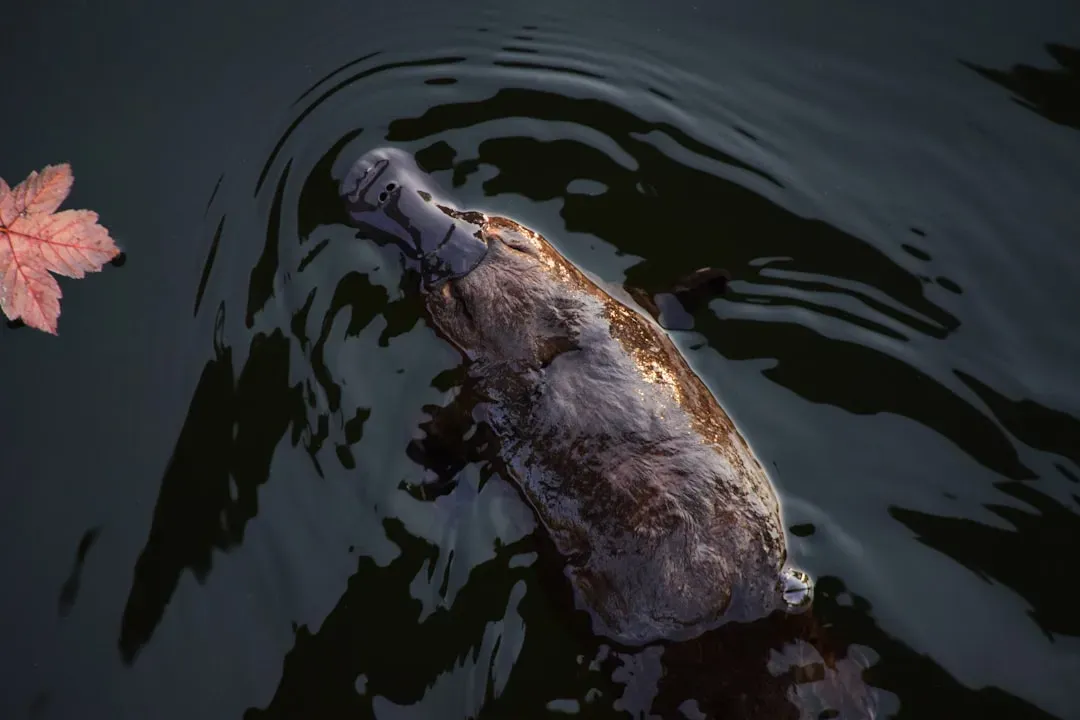
Platypus mothers do produce milk, but they do not have nipples. Instead, milk is secreted through patches of skin on the belly, and the young lap or suck it from the fur. That alone makes them stand out, but the milk itself may contain antimicrobial components that help protect extremely underdeveloped young in a damp burrow environment. It is a subtle reminder that our standard picture of mammal motherhood is just one flavor among many possible designs.
On top of that, the platypus has no true stomach in the way most mammals do; the usual acid-secreting section is reduced or missing, and food passes into the intestine far more directly. Its body temperature also runs a bit cooler than that of typical placental mammals, again reflecting its own evolutionary path. These details are less flashy than the bill or the venom, but they reinforce the same point: the platypus rewrites quiet background assumptions about mammal biology as thoroughly as it overturns the loud, obvious ones.
The Australian Edge Case: Evolution in Isolation
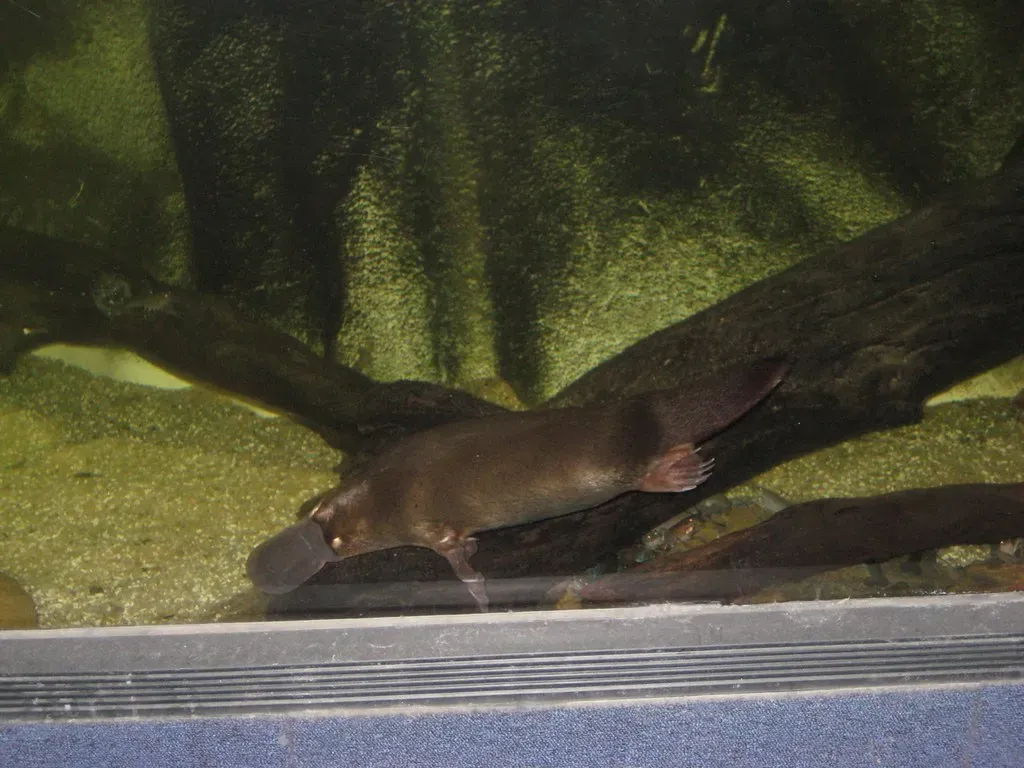
The platypus is a product of Australia’s long geographic isolation, and that context matters. For tens of millions of years, mammals in Australia evolved on a different track from their relatives on other continents, with marsupials and monotremes filling roles that placental mammals took elsewhere. The rivers and creeks of eastern Australia and Tasmania became a sort of natural laboratory in which an odd, semi-aquatic, burrowing insect-eater could try out radical solutions and actually survive.
To me, that isolation is the best argument against dismissing the platypus as just a freak. Instead, it is strong evidence that, given enough time and the right conditions, evolution will explore very strange corners of the possible. The platypus is not a mistake or a leftover; it is what you get when nature has the freedom to be weird without being immediately outcompeted by more conventional designs. It is the evolutionary equivalent of an indie band that never had to conform to mainstream taste and developed a sound all its own.
Conclusion: The Platypus Proves Our Labels Were Too Small
The more you learn about the platypus, the harder it becomes to keep a straight face about our old, tidy definitions of what a mammal is supposed to be. This animal lays eggs, nurses its young without nipples, senses electric fields, carries venom, and runs on a sex-chromosome system that refuses to line up neatly with either mammals or birds. Genetically, it drags our imagination back toward the earliest mammals while also showing off highly specialized upgrades. It is not just weird for fun; it is weird in ways that expose how limited our categories always were.
My own opinion is that the platypus should be required reading for anyone who still thinks evolution is about climbing some ladder from simple to advanced. It is not a halfway mammal or a leftover mistake; it is a fully modern animal that chose a different route and, frankly, makes our version look kind of boring. If one solitary species can blow up this many assumptions about anatomy, genetics, and evolution, what else are we misunderstanding simply because it does not fit our mental boxes yet? Maybe the real question is not why the platypus is so strange, but why we ever expected nature to be simple in the first place – what would you have guessed a mammal had to look like before you met this one?