
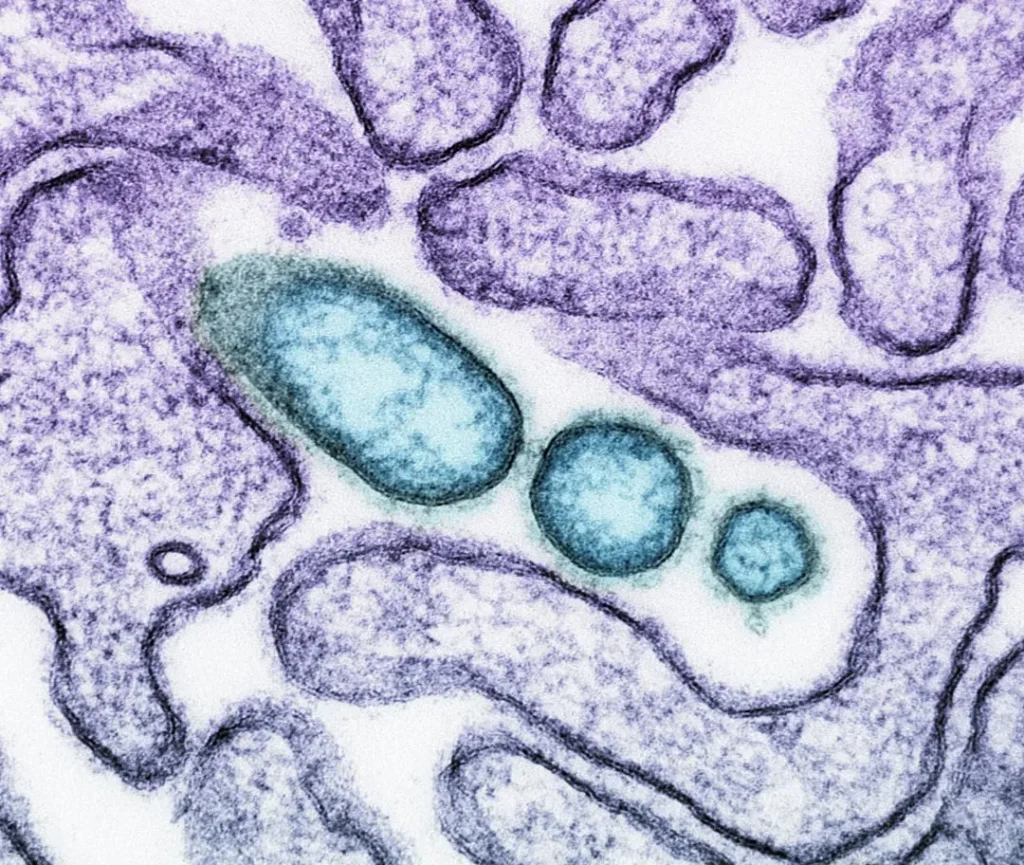
If you could rewind Earth’s history like an impossibly long movie, you’d be watching more than four billion years of plot twists, close calls, and wild experiments. Life did not appear fully formed, and it definitely did not start with giant dinosaurs stomping across lush forests. It began in ways that feel almost impossible to imagine: chemistry slowly turning into biology, simple molecules stumbling into patterns that could copy themselves and, one day, evolve into everything you’ve ever seen.
In this journey, you move from invisible single cells to creatures the size of buses and buildings, and the path between them is far from straightforward. You’ll see false starts, mass extinctions, and bizarre forms that look more like science fiction than something that ever walked your planet. As you walk through this story, try to picture not just the creatures themselves, but the world they lived in: the poisonous skies, the endless oceans, the alien landscapes that slowly turned into the Earth you know.
From a Hostile Young Earth to the First Living Cells
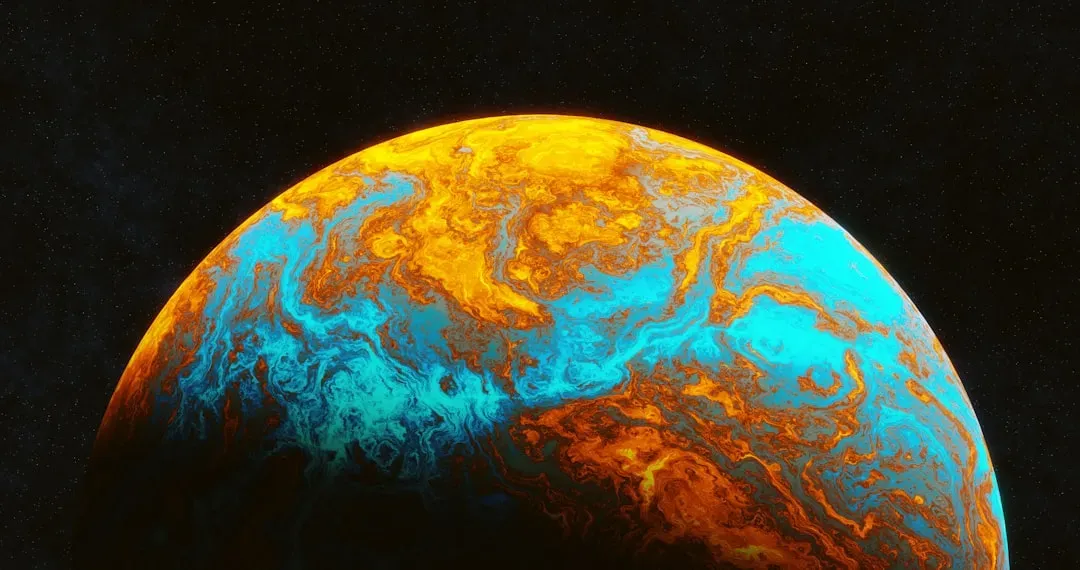
Imagine standing on Earth about four billion years ago: no grass, no trees, no animals, not even a hint of blue sky as you know it. Instead, you’d be staring at a brutal landscape of volcanoes, meteor strikes, and an atmosphere loaded with gases that would choke you in an instant. Yet in that chaos, the building blocks of life were steadily being cooked, dissolved, and rearranged in oceans, pools, and maybe even deep under the sea at hot, mineral-rich vents. You are looking at a world that seems dead, but the stage is being set for the first living chemistry.
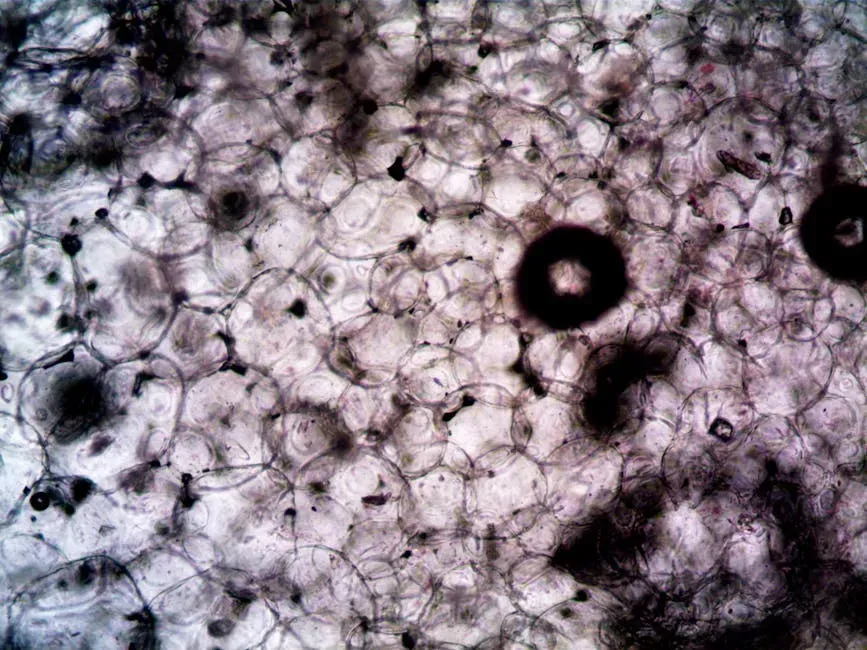
At some point in this long, slow drama, certain molecules began doing something extraordinary: they started copying themselves. You can picture this like an early version of trial and error, where random combinations of molecules sometimes joined into structures that could stick around a little longer or make more of themselves. Over millions of years, those lucky few patterns became more complex, forming simple cells with protective membranes and basic metabolisms. When you think of the “first life,” you are really thinking of microscopic pioneers, fragile but persistent, proving that once self-copying chemistry appears, evolution has a foothold it will never willingly give up.
The Long Age of Microbes: Invisible Rulers of the Planet
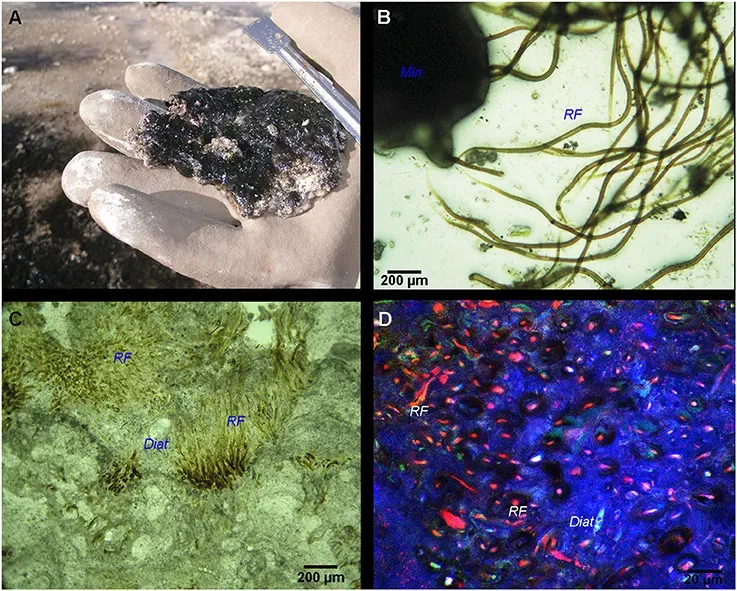
If you could time-travel to most of Earth’s history, you would not see forests, dinosaurs, or even insects. For billions of years, your world belonged almost entirely to microbes: bacteria, archaea, and other single-celled organisms that ruled every corner of the planet. They coated rocks, floated in the oceans, and survived in boiling hot springs and deep underground, turning raw chemistry into energy and slowly reshaping the environment. To you today, they seem small and forgettable, but for an immense stretch of time, they were the only game in town.
During this microbial age, some cells discovered one of the most world-changing tricks ever: using sunlight to split water and release oxygen. You now depend on that process, photosynthesis, for almost every breath you take, but back then, oxygen was more like a pollution event. As oxygen levels rose, many older forms of life probably died out, while others adapted to this strange new gas that could both fuel energy and cause damage. You can think of this as the first planetary makeover driven by life itself, with tiny cells as quiet engineers transforming an entire atmosphere and setting the stage for everything that would follow.
Cooperation at the Cellular Level: The Rise of Complex Cells
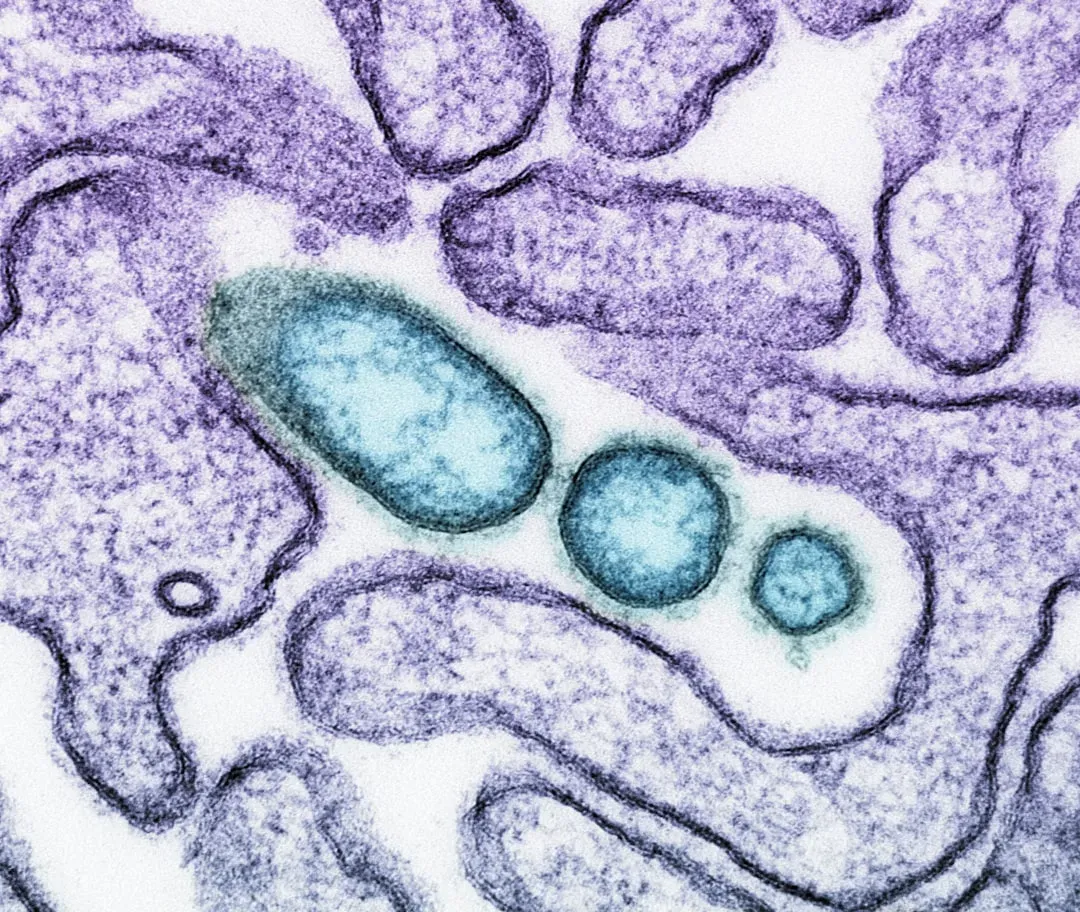
One of the most surprising twists in life’s story comes when some cells stop living completely on their own and start forming deeply intimate partnerships. At some point, a larger cell swallowed, but did not digest, a smaller, energy-producing cell. Instead of becoming lunch, that smaller cell stuck around, gradually becoming a permanent resident and eventually turning into what you now call a mitochondrion, the powerhouse found in almost all complex cells. In plants and algae, a similar partnership happened with photosynthetic bacteria, giving rise to chloroplasts that can harvest sunlight inside a cell.
When you look at your own body, every cell you have is part of this legacy of cooperation, a kind of ancient merger between once-independent organisms. This step created what are known as eukaryotic cells: cells with a nucleus, internal compartments, and far more complexity than typical bacteria. With this new cellular toolkit, life could build larger, more specialized bodies and more intricate life cycles. In a sense, you are walking proof that the greatest leaps in evolution sometimes come not from competition, but from unlikely alliances that change what is possible.
Multicellular Marvels: From Simple Clumps to Strange Seas
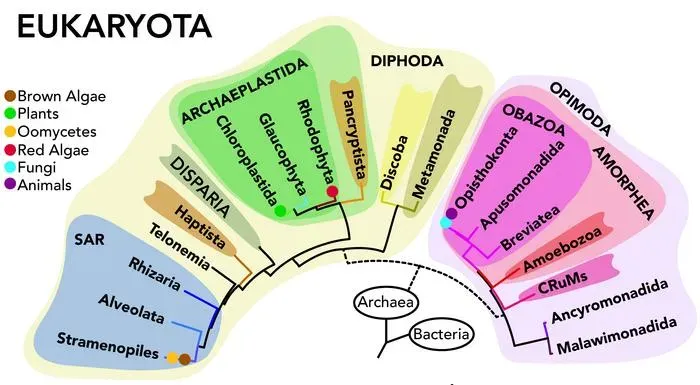
Once cells became more complex, a new question emerged: what if they stuck together and shared the workload instead of each one doing everything alone? At first, this probably looked like simple colonies, loose groups of cells where each one was still mostly independent. Over time, though, some lineages took that collaboration further, with cells starting to specialize: some focusing on movement, others on feeding, others on reproduction. You can imagine it like a small village realizing that not everyone needs to be a farmer; some can become builders or teachers instead.
By the time you reach several hundred million years ago, Earth’s oceans are filled with soft-bodied multicellular organisms that would look utterly alien to you. Some of them resembled fronds, others flattened disks, others strange quilted shapes pressed into ancient sea floors. Many left no modern descendants, but they mark a crucial step in the journey from simple clumps of cells to organized bodies. When you think of multicellularity, you might visualize trees or animals, but this early phase reminds you that evolution tried many strange body plans before arriving at anything familiar.
The Cambrian Explosion: When Animal Diversity Suddenly Surged
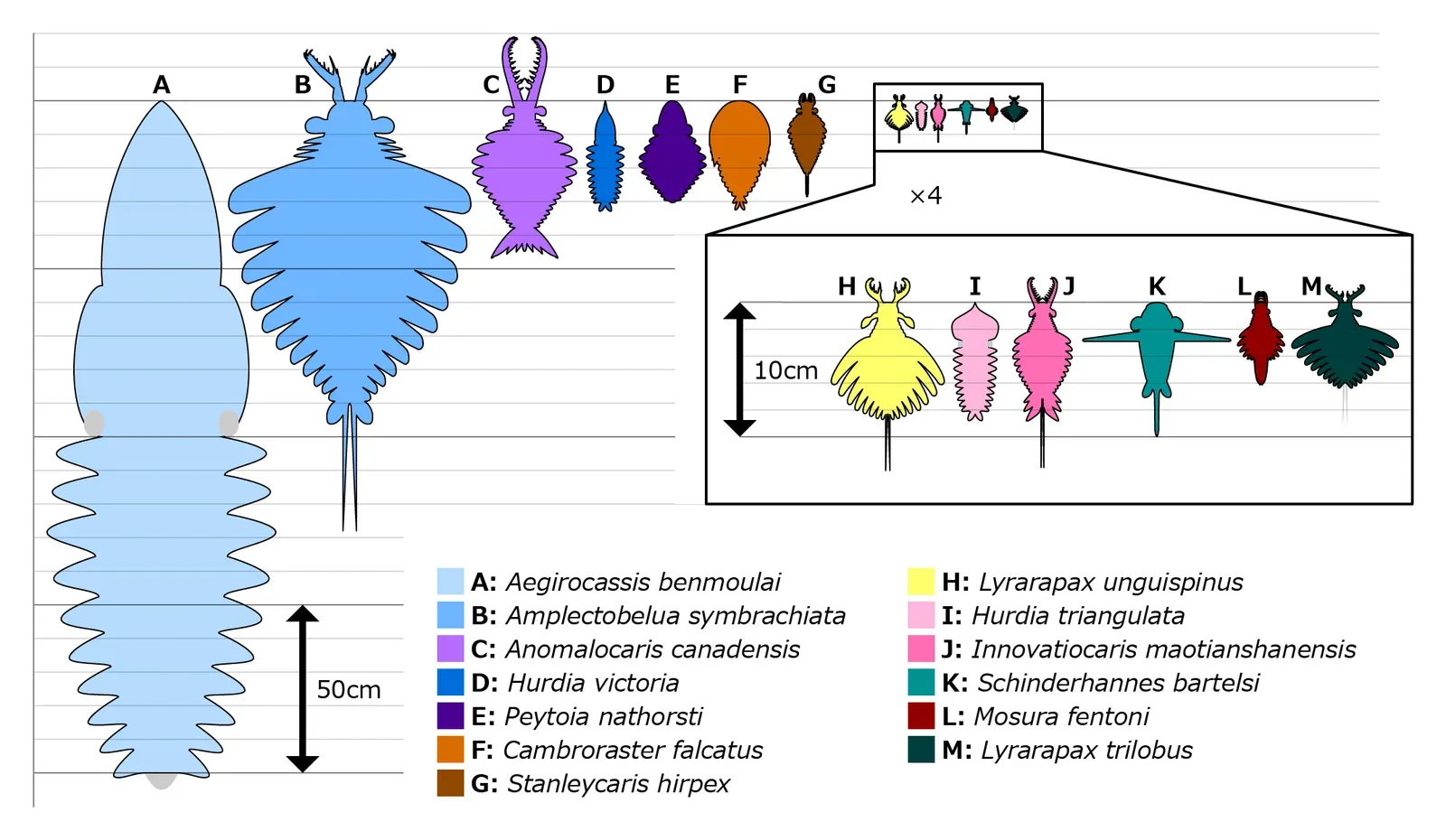
Roughly more than half a billion years ago, the fossil record suddenly becomes crowded with creatures that look far more like the animals you recognize today. This period, known as the Cambrian, is like a burst of experimental design, with shells, teeth, claws, eyes, and jointed legs appearing in a relatively short geological window. If you could dive into a Cambrian sea, you would see a chaotic swarm of predators and prey, burrowers in the mud, swimmers in mid-water, and strange armored forms crawling across the seafloor. It would feel like stepping into an alien reef where evolution is on fast-forward.
Many of the major animal groups you know today – arthropods, early vertebrates, mollusks, and more – trace their roots back to this extraordinary era. The reasons for this surge in diversity are still being studied, but they likely involve rising oxygen levels, new ecological interactions, and the evolutionary arms race between hunters and their targets. For you, the Cambrian explosion is a reminder that once life crosses a certain threshold of complexity, possibilities multiply rapidly. New body plans and survival strategies can spread and persist, building the basic blueprints for fish, reptiles, birds, mammals, and eventually, you.
From Fins to Limbs: Life Ventures Onto Land
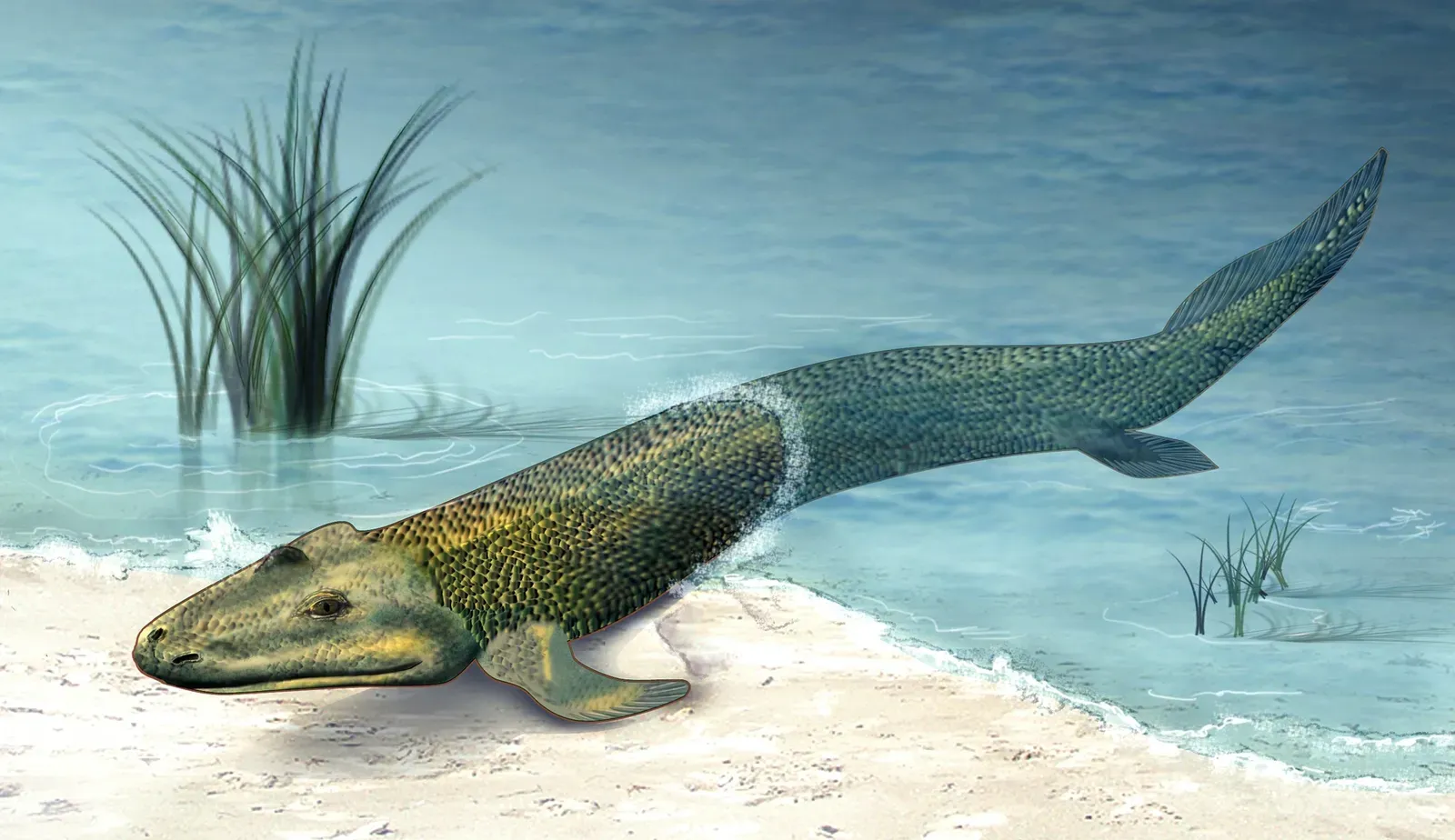
For a long time, oceans and seas dominated as the main stage for life, but eventually plants and fungi began to creep onto the land, turning bare rock into green, living landscapes. As vegetation spread, it created food and shelter, making land more inviting for animals as well. Some fish-like vertebrates began to evolve sturdier fins, lungs alongside gills, and skeletons that could support their weight in shallow water and muddy shorelines. You can picture them as cautious explorers, wobbling in the margins between pond and dry ground, testing out a new world.
Over millions of years, these experimental steps gave rise to true limbs with fingers and toes, and to animals that could walk rather than just flop. Early tetrapods and their descendants started to occupy swamps, forests, and riverbanks, taking advantage of fresh resources and fewer predators compared to the crowded seas. When you see a frog, salamander, bird, or even your own hand, you are looking at the echoes of that ancient transition from fins to limbs. This shift to land opened up evolutionary pathways that would eventually lead to towering forests full of reptiles and, much later, the mighty dinosaurs.
The Age of Reptiles: Setting the Stage for Dinosaurs
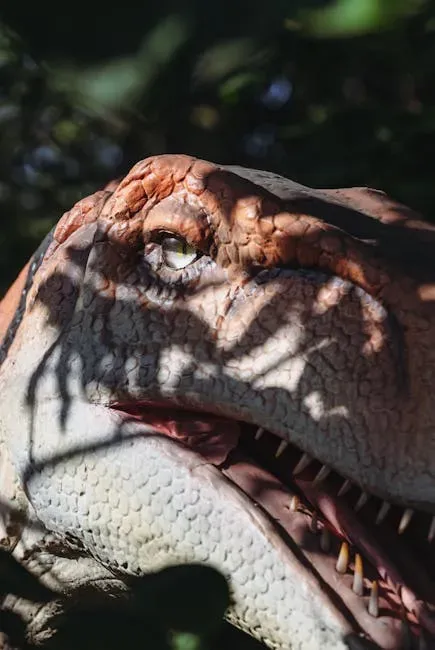
As land ecosystems grew richer and more complex, reptiles emerged as especially successful land dwellers. Unlike many amphibians, reptiles could lay eggs with protective shells and had skin that did not dry out as easily, giving them a huge advantage in drier environments. Over time, reptile groups diversified into a wide range of forms, from small, agile insect-eaters to large, heavy-bodied plant eaters. You can think of this phase as a rehearsal where different reptilian lineages tried out various lifestyles on land.
Among these lineages, some evolved more upright postures, stronger legs, and more efficient ways of breathing and moving, traits that would later be refined in dinosaurs. Competition for food and territory, changing climates, and shifting continents all helped shape which groups thrived and which faded away. By the time dinosaurs properly appear in the fossil record, they are stepping into a world already shaped by earlier reptilian pioneers. When you trace the story backward, you see that dinosaurs did not appear out of nowhere; they were part of a long, steady buildup of adaptations that made large, active land animals increasingly possible.
The Reign of the Dinosaurs: Giants of Land, Sea, and Sky
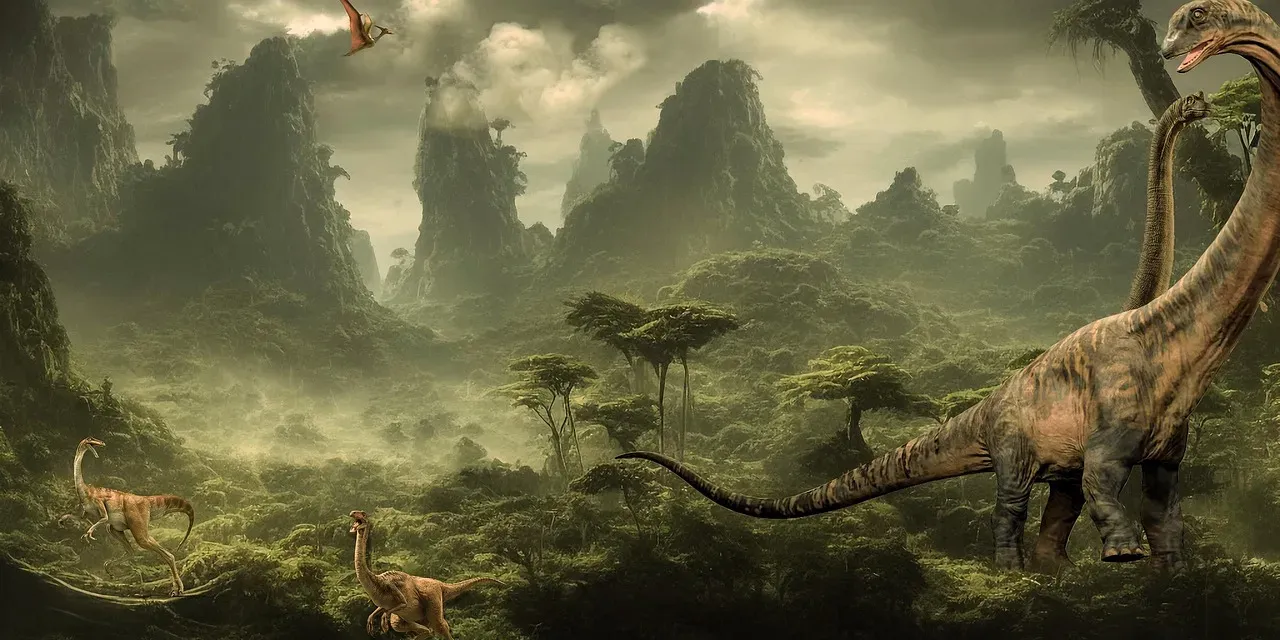
When you finally reach the age of dinosaurs, you are not just meeting a single type of creature, but an astonishingly varied group that dominated Earth for well over a hundred million years. Some were enormous, long-necked herbivores that could sweep treetops with a single movement of the head, while others were fleet-footed predators with sharp teeth and keen senses. There were also smaller, feathered forms that blurred the line between traditional dinosaurs and early birds. If you could walk through their world, you would hear forests alive with calls, footsteps, and the rustling of massive bodies moving through undergrowth.
Dinosaurs were not alone in this era: huge marine reptiles patrolled the oceans, and flying reptiles glided and flapped through the skies above. Together, they turned the planet into a dynamic, bustling stage of life on a scale that feels almost unreal today. Their success rested on a combination of efficient movement, strong skeletons, and the ability to adapt to a wide range of environments. Even though their reign eventually ended in a catastrophic mass extinction, their legacy lives on in birds and in the fossil record you study. When you hold a modern bird’s wing or listen to its call, you are, in a very real sense, hearing the distant echo of dinosaurs that once towered over the Earth.
Conclusion: Your Place in This Vast, Unfinished Story
When you step back and look at the journey , you start to realize how improbable and yet how deeply connected everything is. Your own cells carry the marks of ancient partnerships, your bones reflect the transition from fins to limbs, and the birds outside your window are living reminders of reptilian and dinosaur ancestors. Life on Earth did not follow a neat script; it lurched forward, doubled back, and survived close calls that could have ended everything long before you arrived.
Yet here you are, able to look back and piece together this enormous story from rocks, fossils, and the DNA inside your own body. When you grasp that your existence is tied to volcanic early Earth, to microbial pioneers, to strange Cambrian seas, and to forests where dinosaurs reigned, everyday life starts to feel a bit more extraordinary. The journey of life is still unfolding, and you are one tiny, conscious branch on a vast, ancient tree that began with simple cells in a hostile world. Knowing that, how will you choose to see your place in this remarkable, ongoing story?