When you picture ancient North America, your mind might jump straight to woolly mammoths or the iconic saber-toothed cat. And honestly, that’s fair – those creatures get all the spotlight. But here’s the thing: the continent was crawling with predators far stranger, far more terrifying, and far less famous than the ones that made it into museum posters.
Some of them were bigger than any land carnivore alive today. Others hunted in ways that would make a modern lion look like an amateur. You might walk through the same valleys where these animals once stalked their prey, and you’d never know it. So let’s change that. Prepare to meet six prehistoric predators that you almost certainly didn’t know once ruled this continent – and brace yourself, because a few of these will genuinely surprise you.
Epicyon Haydeni: The Dog That Was Bigger Than a Wolf
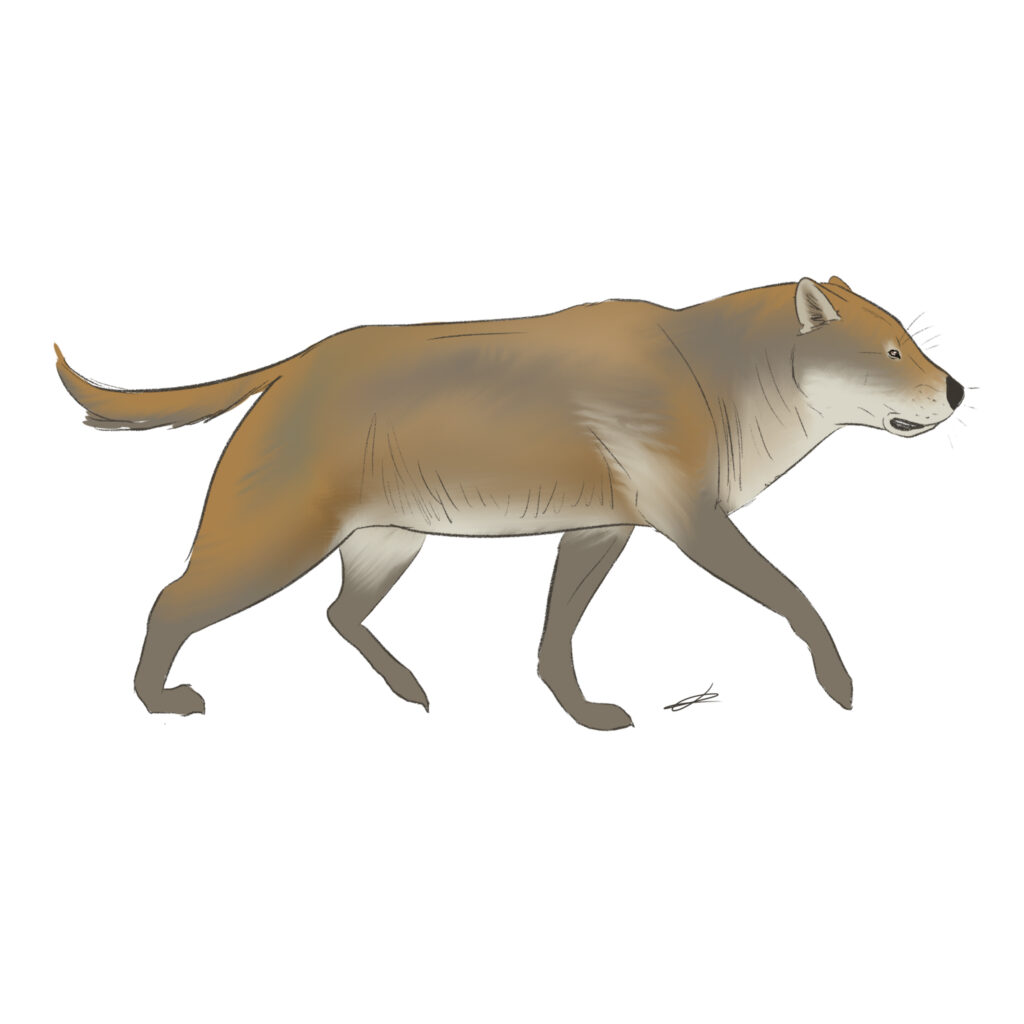
Let’s be real – when most people think of prehistoric dogs, they picture something vaguely wolf-shaped. Epicyon haydeni was nothing like that. In the sprawling plains of ancient North America, Epicyon ruled with unmatched size and strength, often described as “more than a dog.” This extinct canid was the largest of its kind, overshadowing today’s wolves, and living between 12 and 6 million years ago. It resembled a bear more than a modern dog, complete with bone-crushing jaws. Think of it like the prehistoric equivalent of a pickup truck that also happens to bite through bone for fun.
Once thought to be mainly a scavenger, Epicyon is now seen as a capable hunter with surprising agility. It didn’t chase prey over long distances like today’s wolves. Instead, it relied on quick bursts of speed to ambush unsuspecting herbivores. This lethal approach enabled it to bring down large prey including prehistoric camels, horses, and even rhinos. For millions of years, this creature was one of the most dominant forces on the continent – and yet you’ve probably never heard its name.
Arctodus Simus: The Short-Faced Bear That Could Outrun a Horse
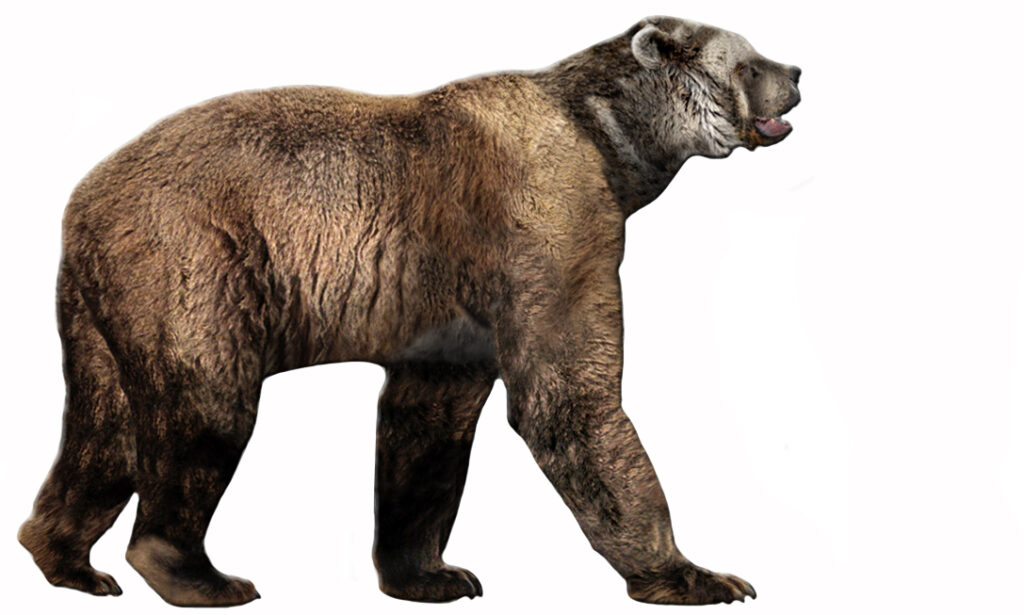
You might think bears are slow, lumbering creatures. That assumption would have gotten you killed in Pleistocene North America. Also called the bulldog bear, the giant short-faced bear was undoubtedly the fastest running bear that ever lived. Rangier and longer-legged than any bear today, it stood about five feet at the shoulders when walking and rose as tall as twelve feet on its hind legs. Unlike pigeon-toed modern bears, its toes pointed straight forward, enabling it to walk with a fast, purposeful gait – and it probably could run over 40 miles per hour despite weighing over 1,500 pounds. Let that sink in for a moment.
Its skull and shearing-type teeth indicate a highly carnivorous way of life. Its eye sockets are set wide apart and face forward, giving it excellent vision. Its short, broad snout had a huge nasal passage, which probably means it had a keen sense of smell and could inhale great volumes of oxygen while pursuing prey. The large width of the jaws in relation to their shortness gave this bear a vise-like killing bite and the ability to crush bones to obtain marrow. Analysis of radiocarbon dates confirms that these animals went extinct roughly 11,000 years ago and most likely co-existed with groups of humans from the Clovis culture. That’s not ancient history – that’s practically yesterday on a geological scale.
Homotherium: The Scimitar Cat That Hunted Mammoths at Night
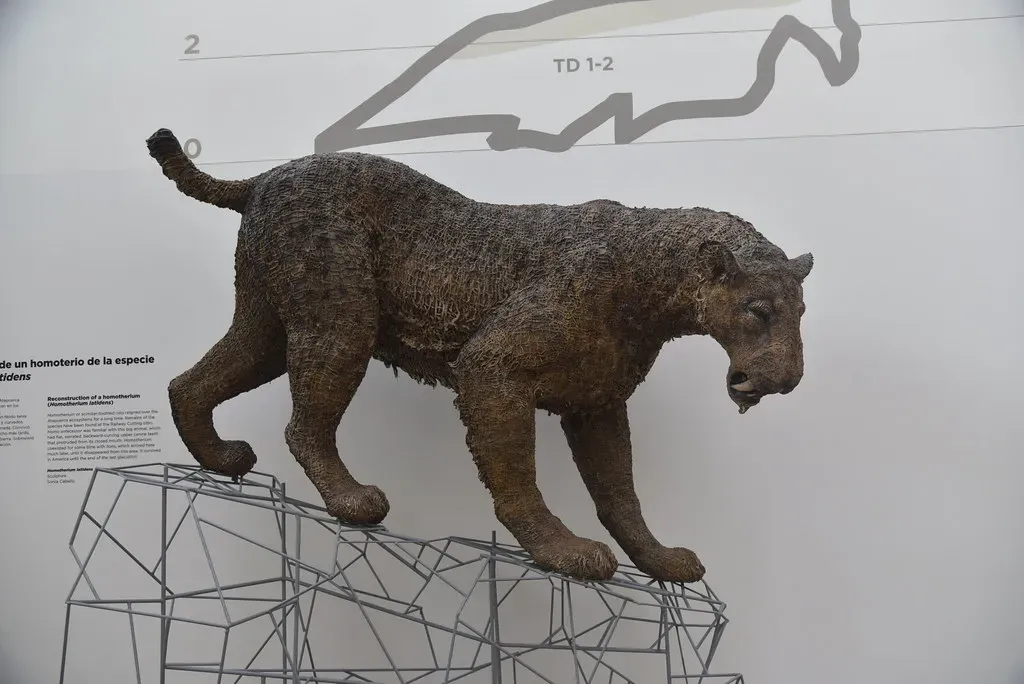
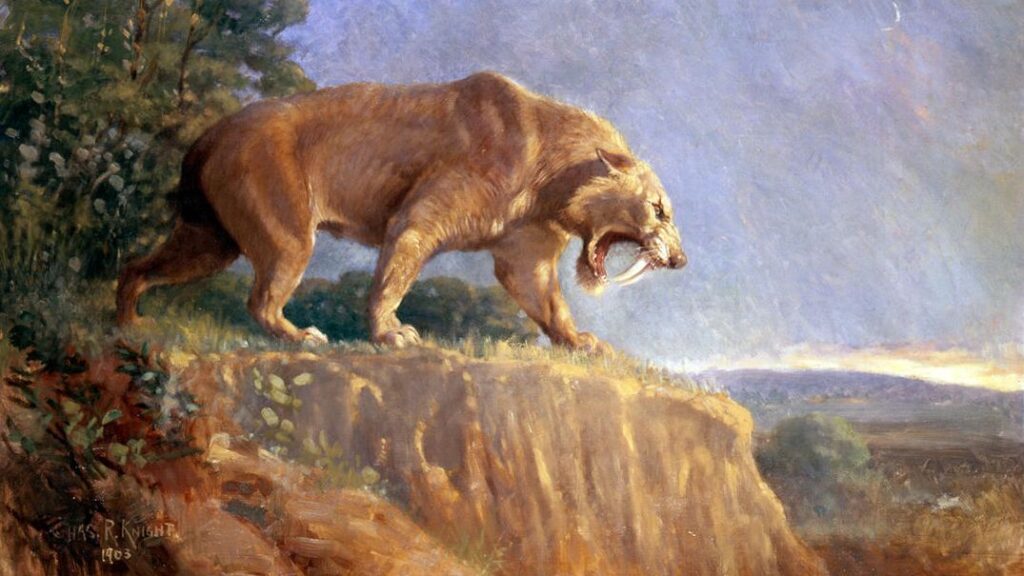
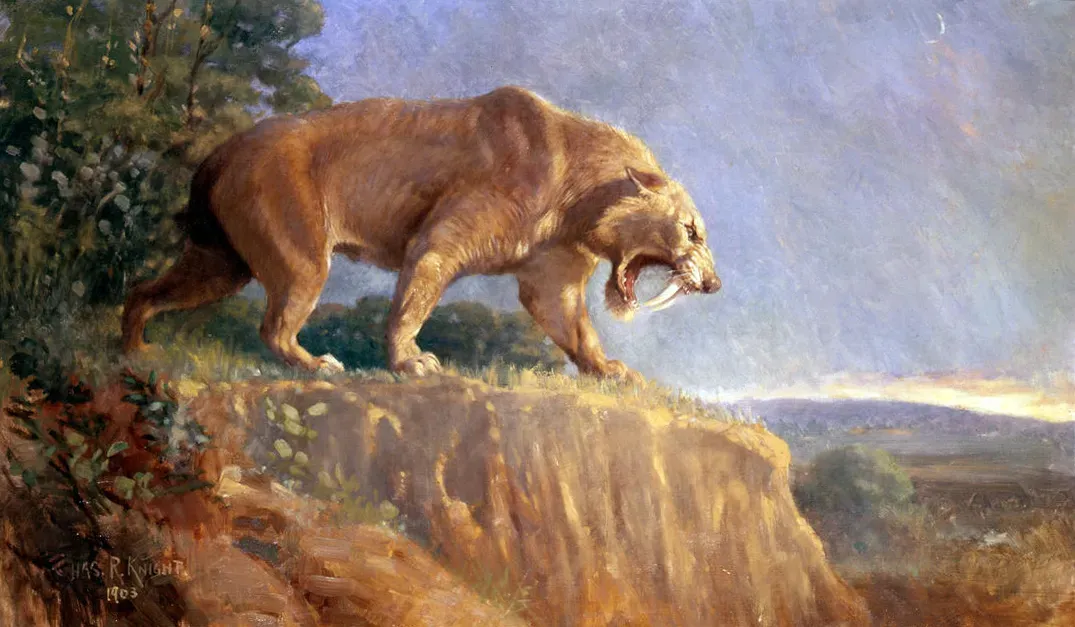
You’ve heard of the saber-toothed cat, right? Well, meet its lesser-known cousin – and in some ways, its more sophisticated rival. The scimitar cat, Homotherium serum, with its four-inch canines, roamed all of North America and was built more like a modern African lion, with long front legs for pulling down big prey. An adult scimitar cat could easily take down a young mammoth and drag it back to its cave. That’s not a metaphor. That actually happened.
In comparison to Smilodon, the canines of Homotherium were shorter, though still longer than those of living cats, and it is suggested to have had a different ecology as a moderate-speed endurance pursuit predator adapted to running down large prey such as antelope, equines, bovines, and juvenile mammoths in open habitats, with Homotherium also proposed to have likely engaged in cooperative hunting. Researchers also found evidence of positive selection in several genes involved in vision, cognitive function, and energy consumption, potentially consistent with the diurnal hunting and social behavior of this extinct lineage. Honestly, this cat may have been smarter and more socially complex than we give it credit for.
Titanis Walleri: The Terror Bird That Invaded From the South
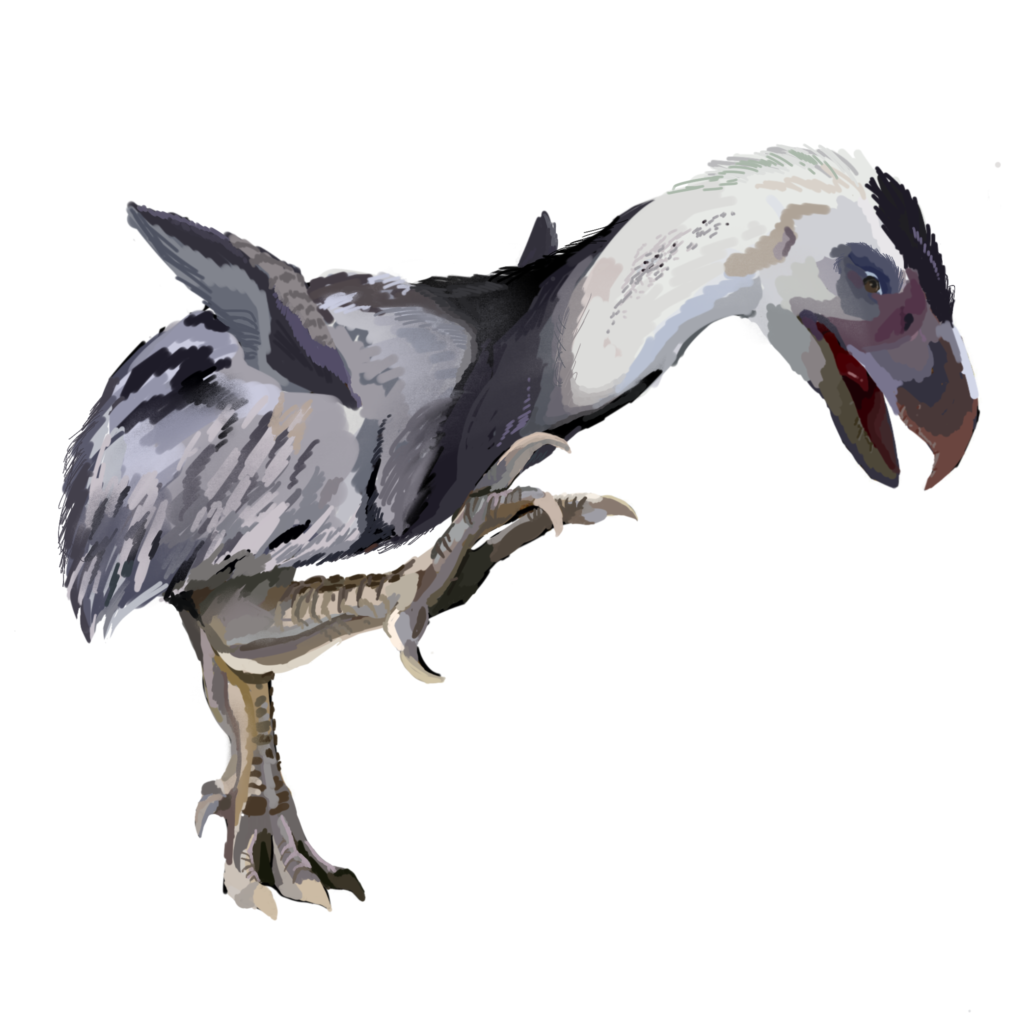
If someone told you a flightless bird the size of a man once stalked prey across Florida and Texas, you’d probably laugh. You’d be wrong to. Phorusrhacids, colloquially known as terror birds, are an extinct family of large carnivorous, mostly flightless birds that were among the largest apex predators in South America during the Cenozoic era. Their fossil records range from the Middle Eocene to the Late Pleistocene, around 43 to 0.025 million years ago, and they ranged in height from one to three meters tall. Picture an ostrich crossed with a hatchet and given a bad attitude.
Titanis walleri, one of the larger species, is known from Texas and Florida in North America, making phorusrhacids the only known large South American predator to migrate north in the Great American Interchange that followed the formation of the Isthmus of Panama land bridge. Terror birds are believed to have been extremely nimble and quick runners, able to reach speeds of around 48 kilometers per hour. Scientists believe that the terror bird was similar to seriemas, which are carnivores that hunt small mammals, reptiles, and insects. It’s hard to say for sure how they killed, but most evidence points to powerful downward strikes with that enormous beak – like a living axe.
Dire Wolf: The Real Beast Behind the Legend
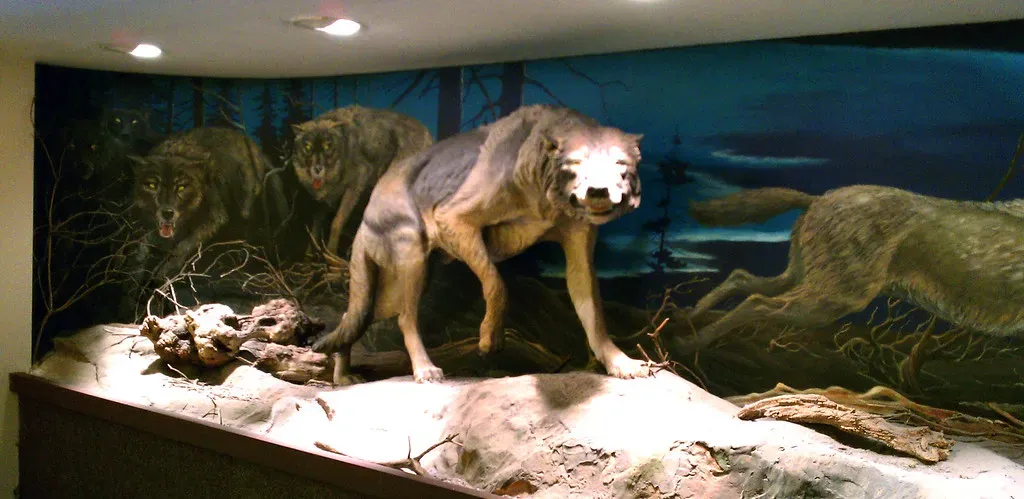
You’ve seen the fictional version on television. The real dire wolf, though, was something far more grounded and arguably more terrifying because it was absolutely, undeniably real. The dire wolf gets its sinister-sounding name from its Latin name, Canis dirus, meaning “terrible wolf.” Despite its wolf-like appearance – they were roughly the same height and length as modern wolves – DNA analysis suggests that the dire wolf wasn’t closely related genetically to the gray wolf at all, but was a distant relative of modern jackals. That’s the kind of revelation that reshapes everything you thought you knew.
Dire wolves were a canine species that hunted the plains and forests. They were similar to modern grey wolves, but heavier, with bigger heads, jaws, and teeth giving them a strong bite, ideal for killing large prey like camels, horses, and bison. It’s thought that dire wolves evolved in South America and ventured north, while today’s grey wolves migrated from Asia, so the two species are not closely related. Unfortunately, the shifting climate at the end of the ice age, combined with the competition with humans for food, led to the demise of the dire wolf and many other ancient predators about 10,000 to 20,000 years ago. So the next time someone brings up a fictional dire wolf, you can set the record straight – the real one was stranger and more fascinating than any screenwriter imagined.
Borophagus: The Bone-Crushing Dog That Topped the Ancient Food Chain
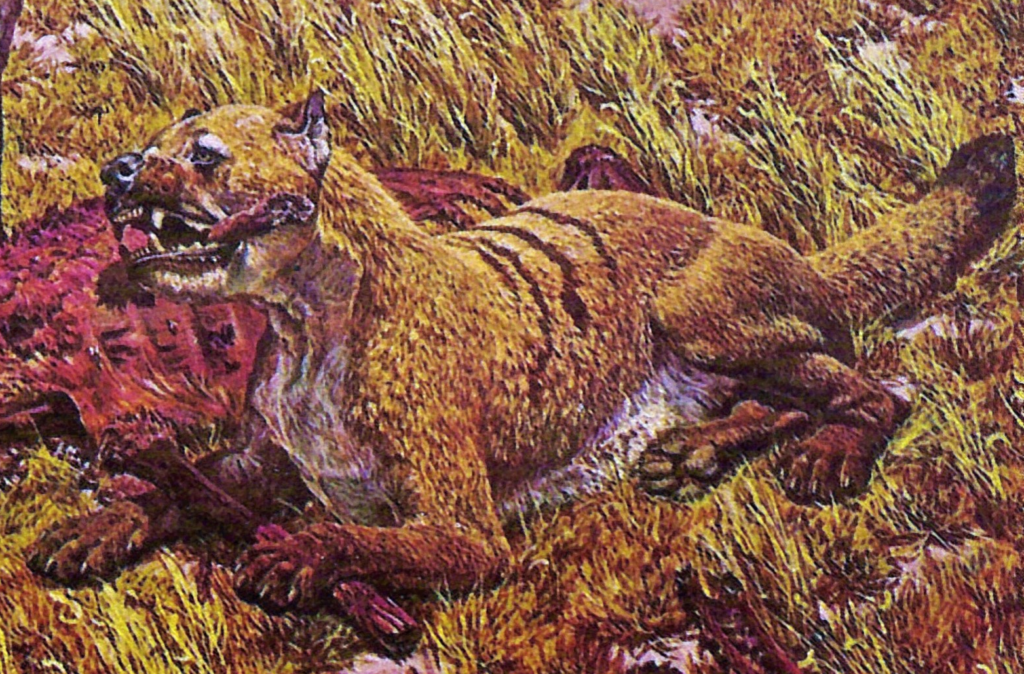
Here’s something that tends to surprise people: tens of millions of years before wolves roamed North America, a different kind of canid had already claimed dominance – and it did so by crushing bones that other predators left behind. With the recent discovery of bones belonging to an extinct genus called Borophagus, a giant bone-crushing dog, researchers have learned much more about this lost creature that once dominated the land of what is now North America. It belonged to a group paleontologists call the Borophaginae – an entirely separate evolutionary branch from anything alive today.
Borophagus remained at the top of the food chain alongside several other primitive predators, including sabertooth cats and alligators. The sabertooth cat it shared its habitat with remains only partially identified, as only a few fragments of its skeleton have been found. No modern dog descends directly from borophagines; instead, today’s canids evolved from more adaptable ancestors. Think of Borophagus as a sort of evolutionary dead end – a creature so specialized and so dominant for so long that when the world changed around it, there was simply no path forward. It’s a sobering reminder that even the most powerful predators are never truly permanent fixtures on this planet.
Conclusion
North America’s prehistoric past is far richer, stranger, and more dramatic than most people realize. You’ve just met six predators that prowled these very landscapes – running, stalking, ambushing, and dominating ecosystems that have since vanished without a trace.
What ties all of them together is how little space they occupy in our collective imagination. We keep returning to the same handful of famous creatures, while these equally remarkable hunters are left in the shadows of museum basements. New studies suggest that ancient lions and saber-toothed cats that once roamed North America did indeed attack massive beasts like mammoths, and may have significantly reduced their populations – meaning these carnivores may have had a much more dramatic impact on ancient ecosystems than previously believed. The same is likely true for every predator on this list.
The land beneath your feet has a story older and wilder than you might have imagined. So, which of these six silent hunters surprised you the most?