You probably grew up seeing Greek statues and European cathedrals in history books and were told that this is what “great art” looks like. But if you look closely at the ancient artifacts created by Indigenous nations across what’s now the United States, that whole story starts to wobble. These pieces are not just tools or decorations; they’re sophisticated design, philosophy, astronomy, and storytelling rolled into objects you could literally hold in your hands.
When you step into a museum gallery of ancient Native art, you’re not just looking at “crafts” from the past. You’re walking into a conversation about identity, power, humor, grief, and the cosmos that has been going on here for thousands of years. The ten types of artifacts you’re about to explore will change how you think about American art history, and honestly, they may even change how you see your own everyday objects at home.
1. Mimbres Painted Bowls: When a Bowl Becomes a Story
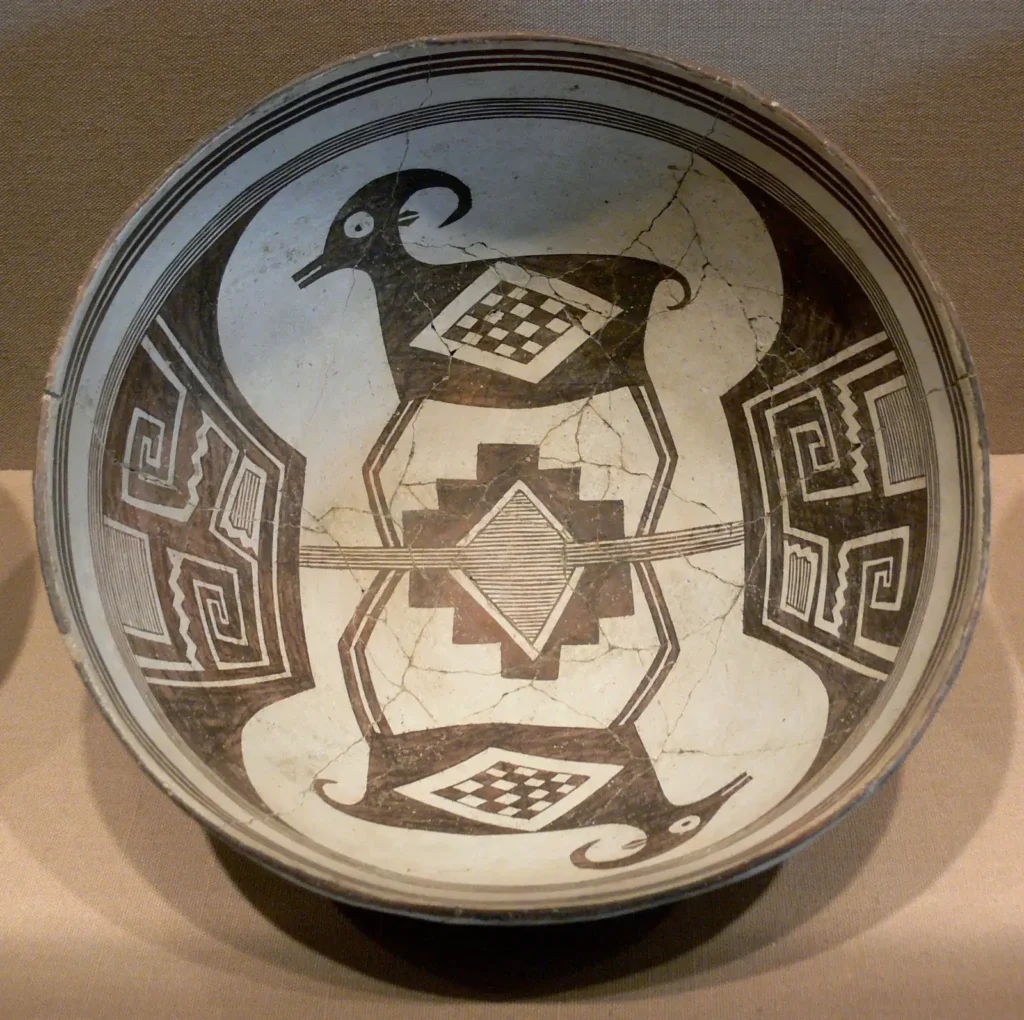
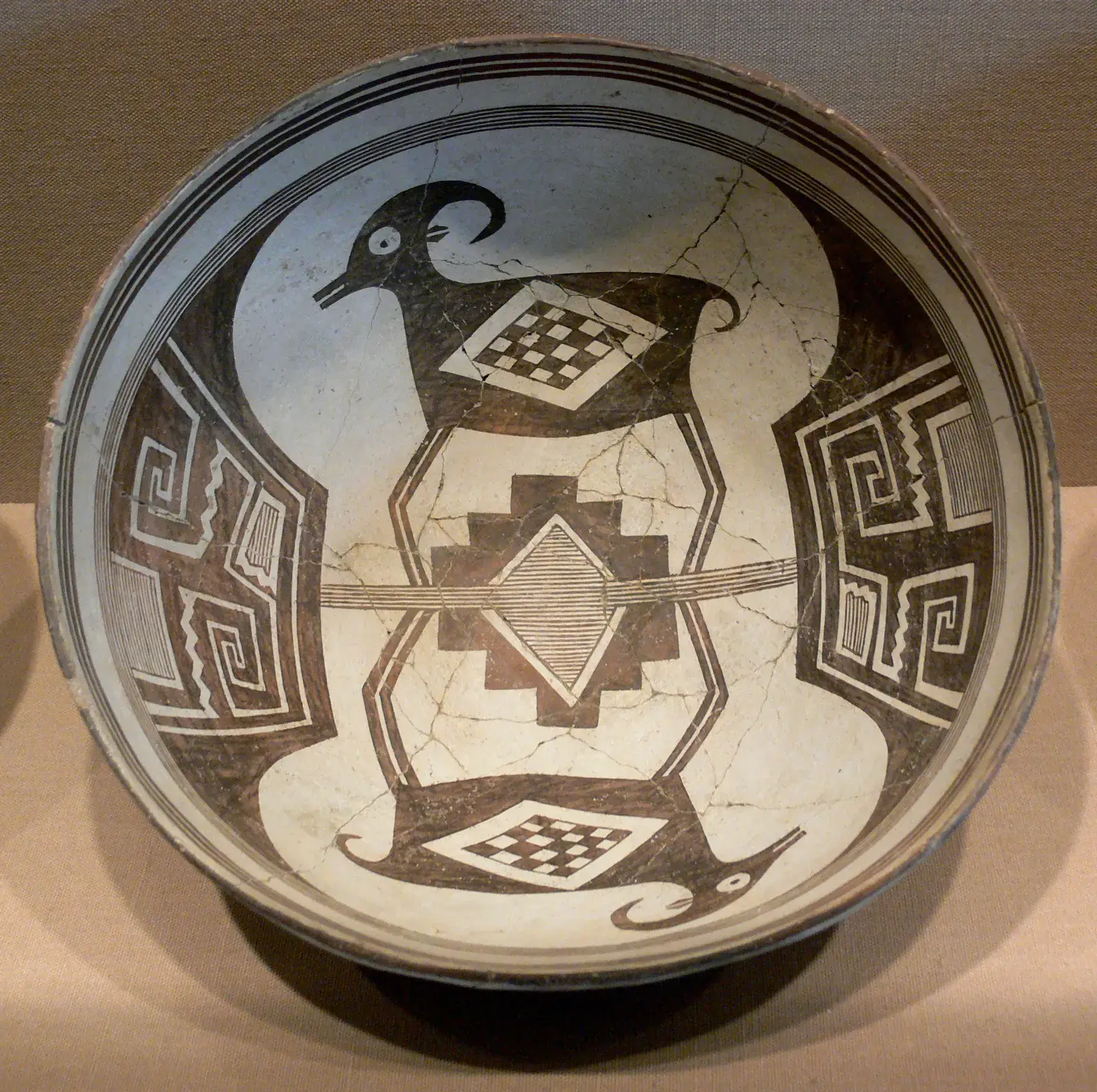
Gallery: http://collections.lacma.org/node/240208 archive copy at the Wayback Machine, Public domain)
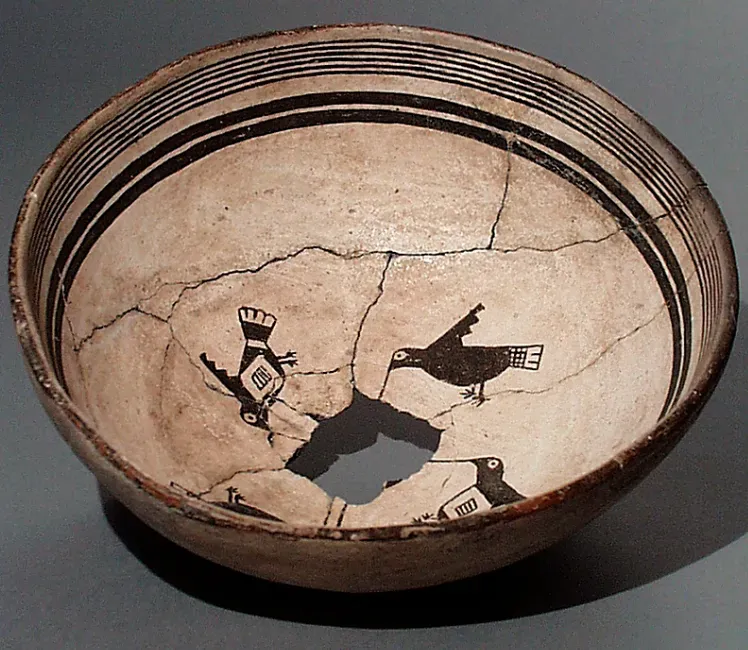
The first time you really look at a Mimbres bowl from the ancient Mogollon people of what’s now southwestern New Mexico, you realize you’re not just looking at pottery, you’re looking at a graphic novel in a circle. You see rabbits leaping, fish swirling, mountain sheep balancing on impossible slopes, even people playing games or interacting with animals. These scenes are painted in black on a white ground, with bold lines, carefully balanced negative space, and compositions that feel surprisingly modern in their abstraction and rhythm. Instead of putting decoration on the outside, the artists focused on the inside of the bowl, turning the interior into a miniature world that only reveals itself when you peer down into it.
If you follow archaeologists’ interpretations, you start to see these bowls as much more than tableware. You’re looking at objects used in everyday life that later took on a sacred role in burials, often placed over the head of the deceased with a small “kill hole” pierced through the center. That detail alone reshapes how you think about art and function: a vessel that moves from feeding the body to helping guide the spirit. Some researchers suggest the hole symbolized a passage between worlds, like piercing the sky dome so a soul could travel. When you stand in front of one of these bowls today, you’re not just “viewing” art, you’re participating in a visual language that blended domestic life, cosmology, and grief into a single, unforgettable object.
2. Ancestral Pueblo Pottery: Geometry as a Spiritual Technology
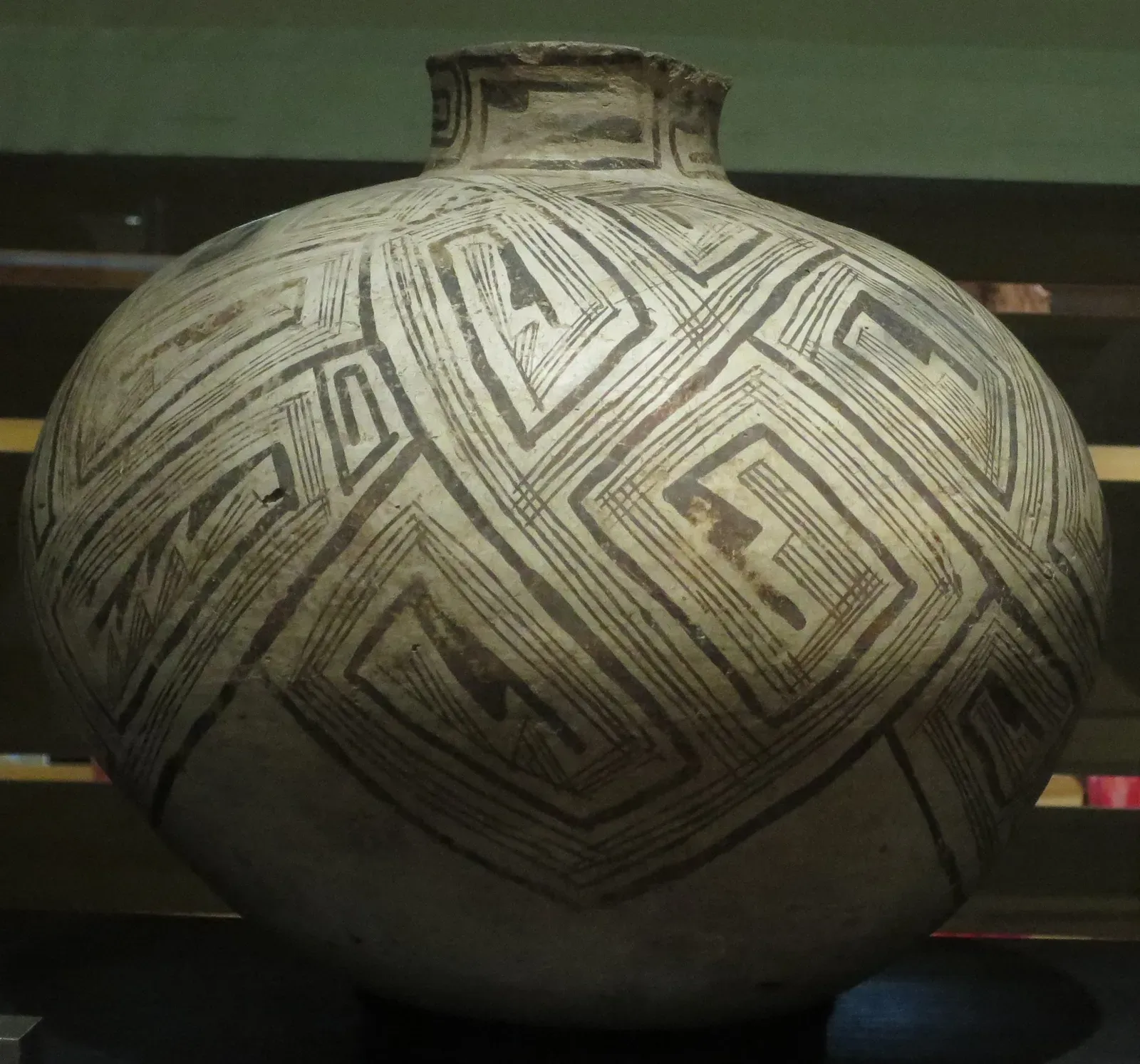
When you hear “pottery,” you might picture something rustic and rough, but Ancestral Pueblo ceramics from the Four Corners region are the opposite of clumsy. You see thin-walled jars and bowls made by coiling clay snakes into spirals and smoothing them into perfectly balanced forms. Then you notice the painting: interlocking triangles, zigzags, stepped motifs, and fine-line patterns that wrap around the surface with almost dizzying precision. These designs are not random decorations; they encode relationships to rain, landscape, directions, and sacred stories in a visual code you can trace with your eyes.
What makes these vessels so powerful is that they blur the line between practical object and spiritual instrument. You might have used a jar like this to store water or grain, but you’d also recognize its design as part of a larger network of symbols found in kivas, on rock walls, and later in the pottery of modern Pueblo communities. When you see how these patterns survive and transform over a thousand years, you realize you’re looking at one of the longest continuous art traditions on the continent. Instead of thinking of “ancient American art” as a broken timeline of vanished cultures, you start to see it as a living current that flows into the present.
3. Mississippian Shell Gorgets: Jewelry That Maps a Cosmos
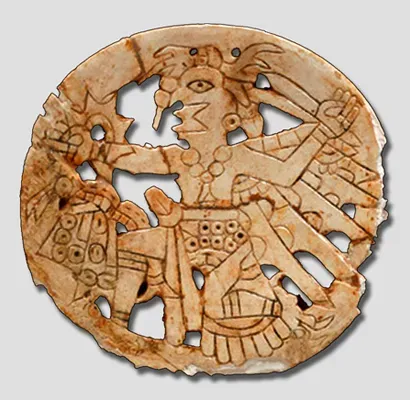
Imagine wearing a carved shell disk on your chest that not only announces your status but also places you inside a whole cosmic drama. That’s what Mississippian shell gorgets do. Crafted from marine shell brought hundreds of miles inland through vast trade networks, these pendants were carved and polished into circular forms, then incised with intricate designs: coiled serpents, dancing warriors, birds of prey, cross-in-circle motifs that may relate to directions, the sun, or the layered structure of the universe. When you study them closely, you can feel the artist’s hand tracing each line into a surface that once came from the sea.
These aren’t casual decorations; they’re concentrated symbols of power and relationship. Picture someone at a mound center in what’s now the Midwest or Southeast, wearing a gorget that visually links them to distant coastal waters and to celestial beings at the same time. You’re looking at art that collapses geography and mythology into something you could hold in a single palm. When you compare this to European medieval art of the same centuries, it’s hard not to notice how sophisticated the visual systems are here – this is design, theology, and social rank fused into a single luminous disk that still radiates presence centuries later.
4. Effigy Pipes of the Adena and Hopewell: Portraits You Can Breathe Through
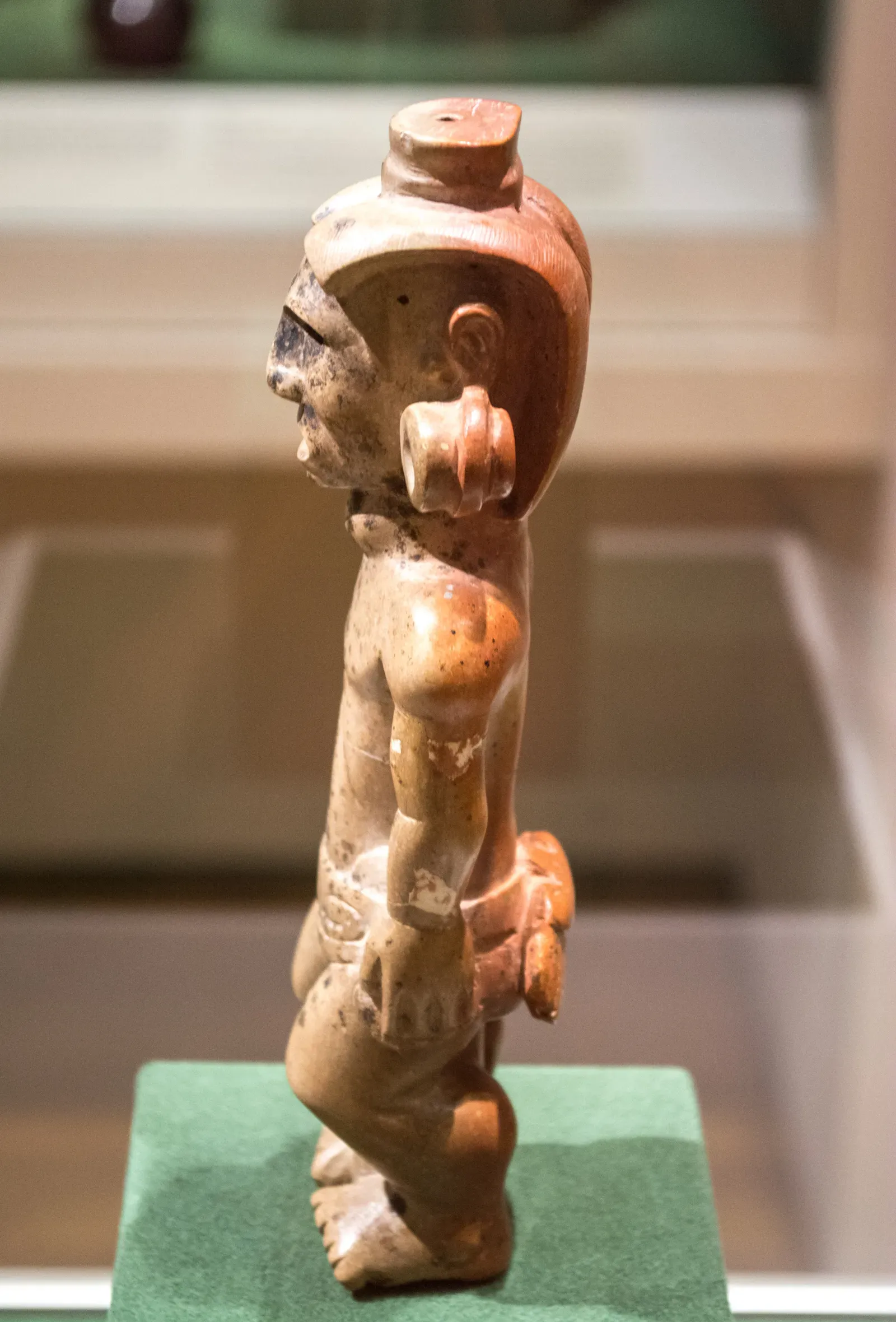
Now picture holding a stone pipe carved into the shape of a carefully modeled human figure or animal, and then realizing that this is not just a sculpture; it’s something that once carried breath, smoke, and prayer. In the Adena and Hopewell traditions of the Ohio Valley and surrounding regions, artists created effigy pipes depicting seated humans, birds, bears, and other beings with striking realism and calm dignity. The proportions, facial details, and posture feel intentional, almost like small portraits of people in trance or ceremony, captured at the exact moment before speech.
When you think about using such a pipe in a ritual setting, you start to experience it as performance art in three dimensions. Smoke emerging from a bird’s beak or a human mouth turns the figure into an active participant in the ceremony, not just a solid object. If you come from a background where “art” hangs on walls and “tools” sit in drawers, these pipes force you to reconsider that divide completely. They show you an aesthetic where beauty, function, and spirituality are inseparable, and where the most powerful images are the ones you literally inhale and exhale through your own body.
5. Bird Stones: Minimalist Sculptures from the Archaic Past
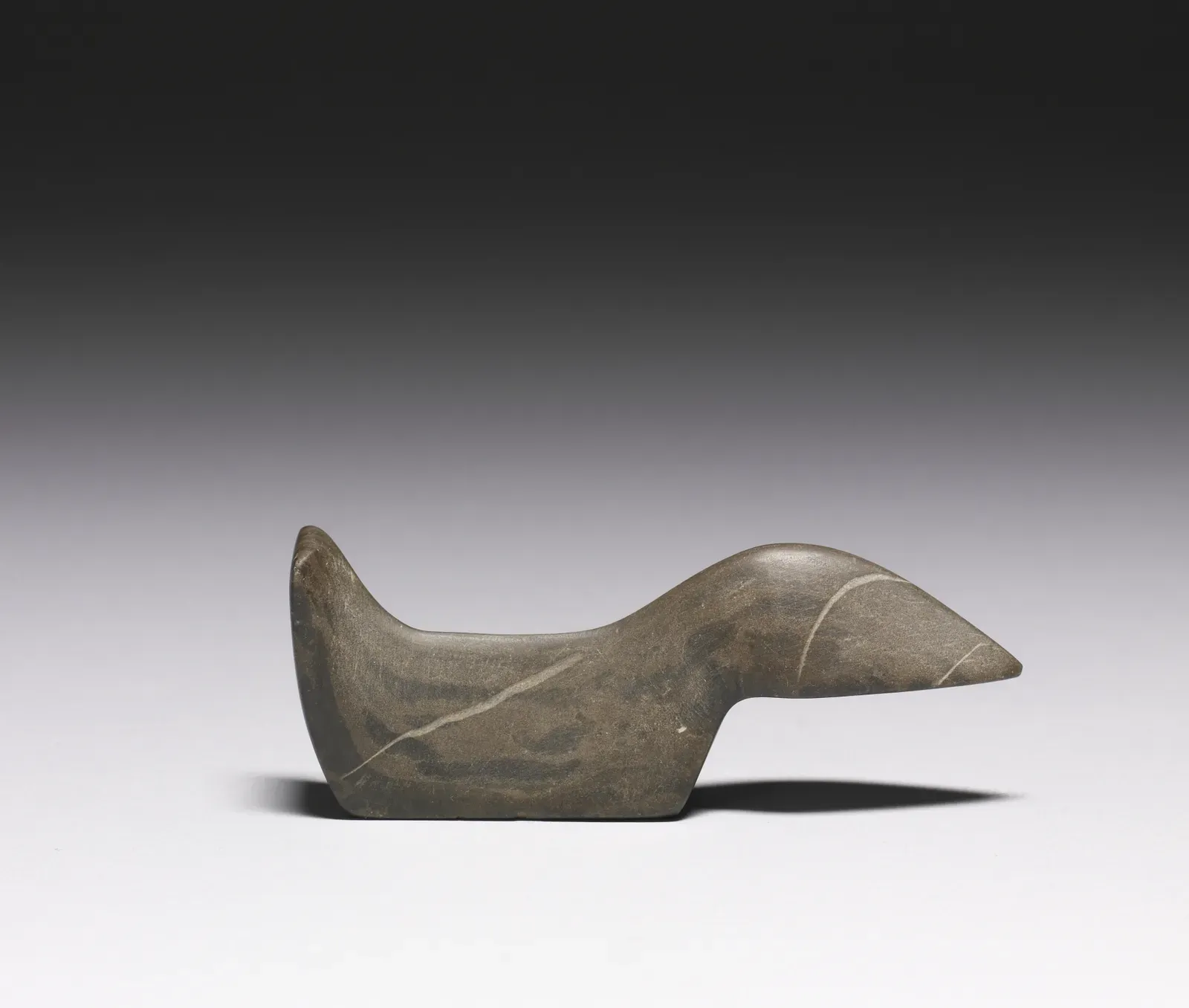
If you’re into clean, minimal design, you’d probably fall in love with bird stones without even realizing they’re thousands of years old. These small, abstract carvings from the Archaic and early Woodland periods are shaped from finely polished stone into stylized bird forms – long necks, smooth curves, subtle beaks, and gently flaring tails. The surfaces are so carefully finished that they look like modern sculpture, the kind you’d expect to see in a sleek gallery rather than an archaeological site near a wetland.
Archaeologists still debate their exact purpose – some have suggested they were weights for atlatls (spear-throwers), others have linked them to weaving or ritual – but you don’t need a final answer to see how they redefine your sense of early American art. You’re looking at an aesthetic of restraint and abstraction that predates many Old World minimalist traditions by millennia. Instead of trying to copy the natural bird’s every feather, these artists reduced the form to its essence, capturing motion and presence in a few decisive curves. If you hold a bird stone in your hand, you feel how ancient North American art was already exploring the power of reduction long before “minimalism” had a name.
6. Clovis and Paleo-Indian Projectile Points: Engineering Beauty at the Edge of Survival
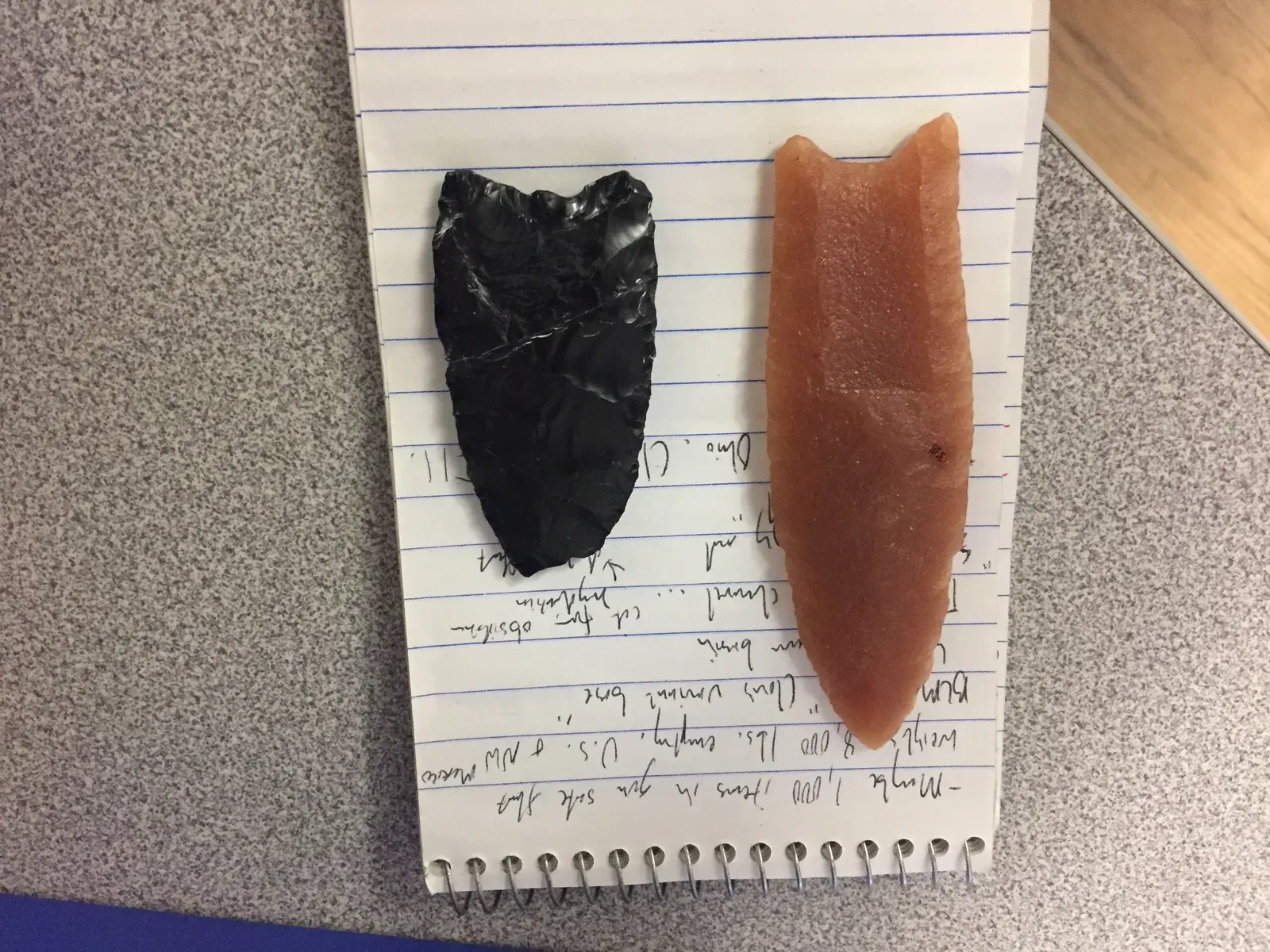
You might not think of a spear point as “art,” but once you really look at a Clovis or other Paleo-Indian point, your brain starts to adjust. These stone tools, some more than ten thousand years old, are shaped with astonishing skill: fluted channels running up from the base, symmetrical edges, and a balance that comes from hours of controlled flake removal. These are objects made under high stakes – if you messed this up, you might go hungry – yet they carry a quiet elegance that rivals any carefully cut gemstone.
When you imagine someone standing at an ancient campsite, turning a piece of stone into a deadly, precise form through repeated, practiced strikes, you realize you’re watching design thinking in its purest form. The point is aerodynamic, durable, and repairable, but it also follows a kind of visual standard of beauty that you can recognize across regions. Even without ornament, these tools coordinate technology and aesthetics so tightly that it becomes impossible to say where one ends and the other begins. In a world where you’re used to separating “art” from “engineering,” these artifacts remind you that, for a very long time, survival and style were often carved into the same stone.
7. Northwest Coast Carved Objects: Formline Design Before Modern Graphic Art
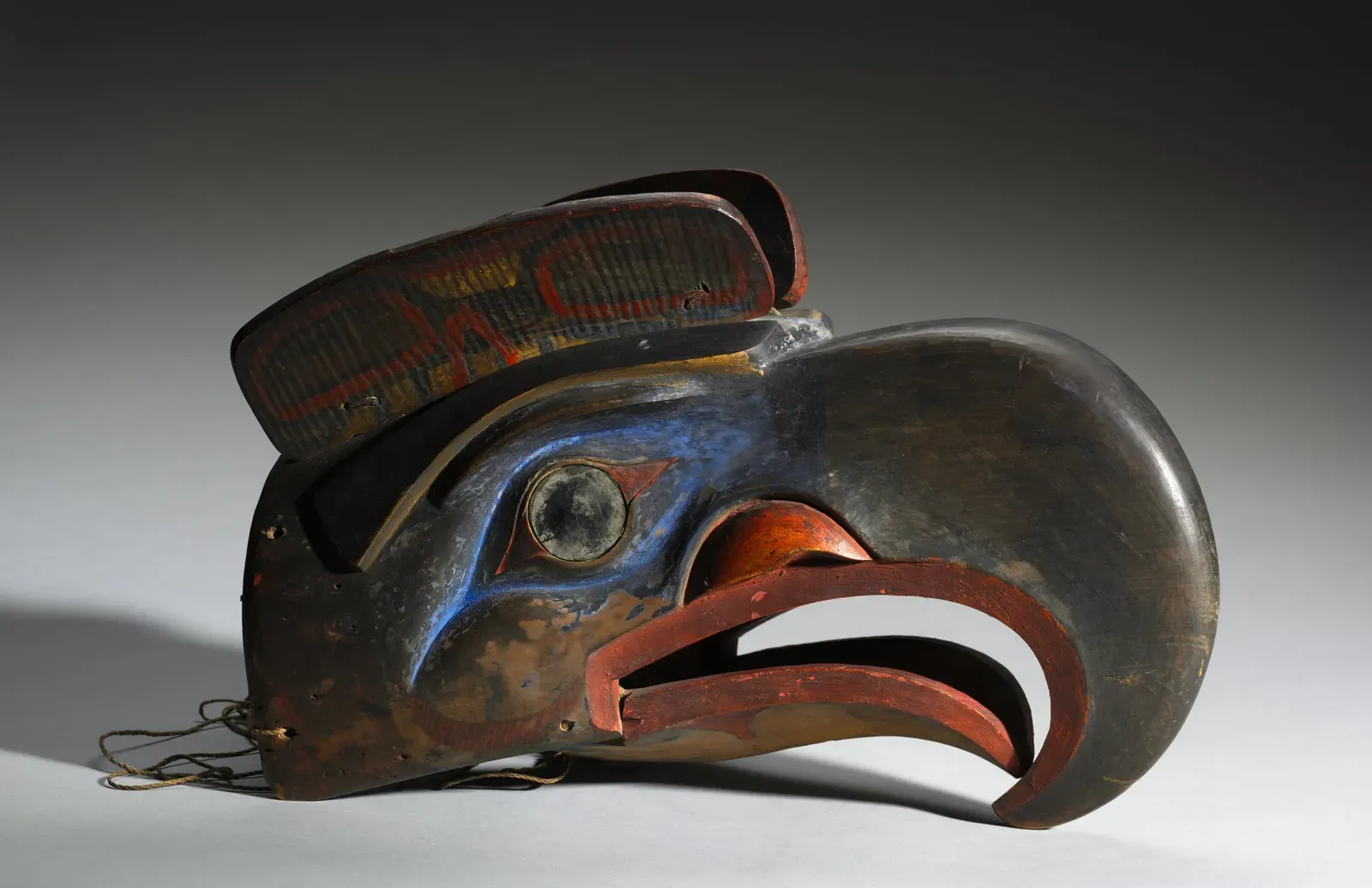
When you encounter carved objects from Northwest Coast peoples – like the Tlingit, Haida, or Tsimshian – you’re stepping into an art system so sophisticated it can feel like a fully developed design language. Even on smaller ancient objects, you see the flowing, interlocking “formline” structures: thick and thin lines that bend, split, and reconnect to create eyes, fins, wings, and faces. A single rattle, box, or mask might contain multiple beings folded into one design, every curve contributing both to the image and to the rhythm of the whole surface.
What’s striking for you, especially if you’re used to thinking of early American art as “primitive,” is how intentionally structured these compositions are. You can trace repeated modules, mirrored shapes, and careful balancing of positive and negative space that any graphic designer today would recognize as advanced. These objects also functioned in ceremony – handled, danced, used in potlatches – meaning the art had to work from multiple angles and in motion. When you see this, it becomes almost impossible to maintain the old stereotype that “fine art” came from Europe and everything else was secondary. The design sophistication here stands shoulder to shoulder with any global tradition.
8. Rock Art Panels of the Southwest: Petroglyphs as Open-Air Storyboards
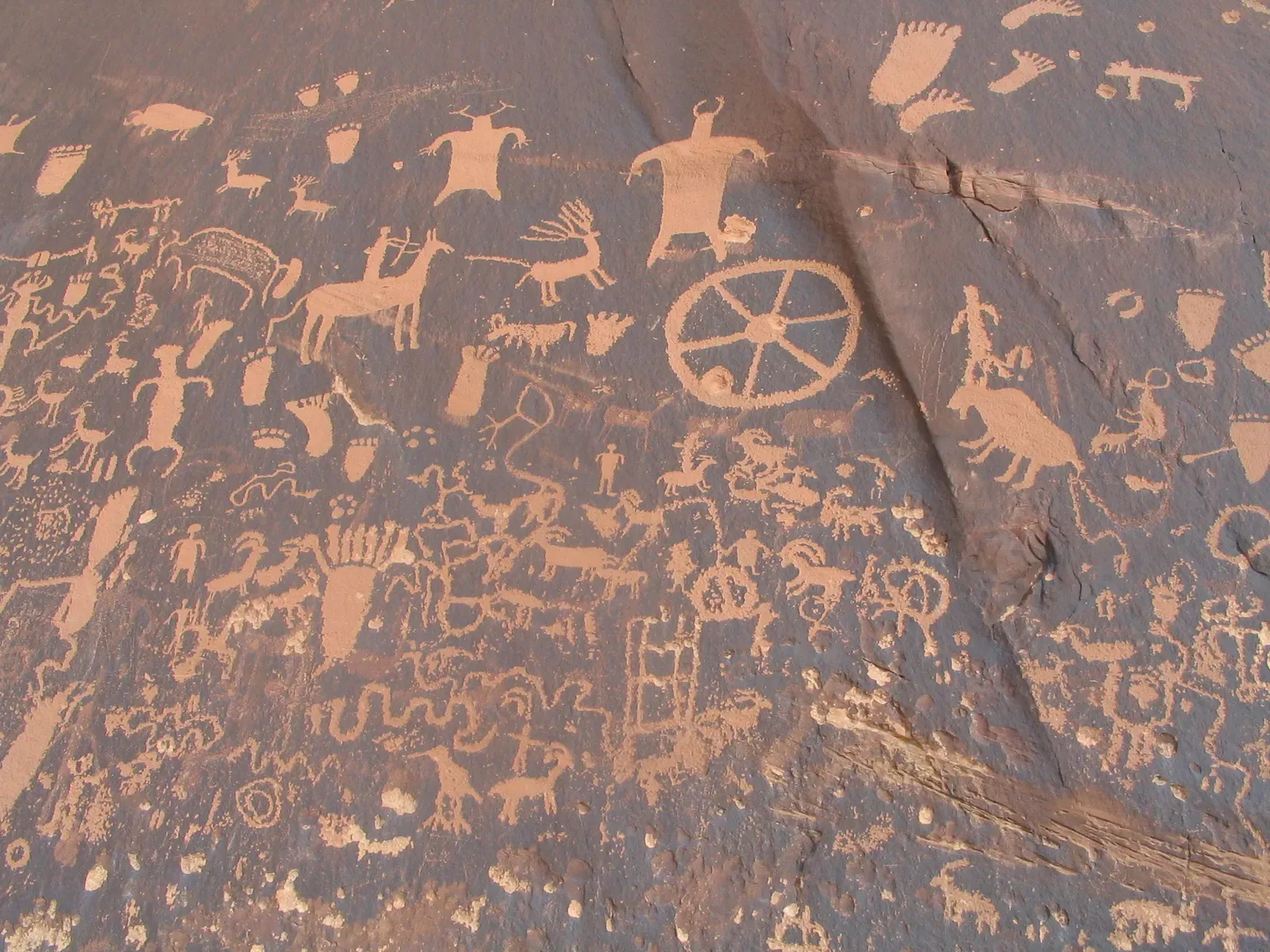
Now imagine a canyon wall as a massive, shared canvas, layered with generations of imagery. In places across the Southwest and into what’s now Colorado, New Mexico, Arizona, and Utah, you find petroglyph panels created by Ancestral Pueblo and other Indigenous artists. You see spirals, animals, human figures, hunting scenes, geometric motifs, and sometimes arrangements that seem to track solar events. These images weren’t painted for a quiet gallery; they were placed where light, shadow, sound, and movement turn the rock face into a changing performance over the course of the day and year.
When you start to think of these panels as storyboards or memory devices rather than random doodles, the impact on your idea of “art” is enormous. You are dealing with large-scale installations that integrate landscape, seasonal cycles, and community knowledge. Some panels appear to line up with solstice or equinox light and shadow, hinting at sophisticated observations of the sky woven right into the stone. The next time you see a minimalist mural in a city, you might catch yourself comparing it to these ancient open-air compositions and realizing that the urge to turn walls into meaning is much older here than most people are ever told.
9. Long-Nosed God Maskettes and Copper Elites: Power Cast in Metal and Shell
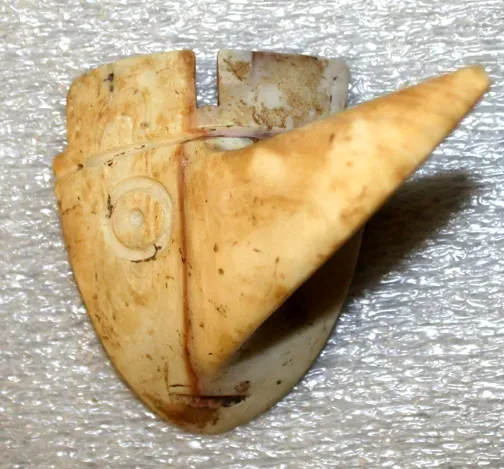
When you look at small, mask-like ornaments known as long-nosed god maskettes from Mississippian contexts, you might at first see them as simple charms. But step closer, and you notice the carefully shaped profiles, the elongated noses, the pierced holes for suspension, and the way these pieces show up in elite burials and ceremonial sets. Often made from copper or shell, they connect to broader themes in Mississippian art: transformation, celestial beings, fertility, and the authority of certain ritual specialists or chiefs.
Pair these maskettes with other copper artifacts from mound centers – breastplates, plates embossed with dancing figures or birds, elaborate headdresses – and you start to see an entire visual language of leadership. The glowing surfaces of copper would have caught firelight or sunlight, turning the wearer into a kind of living sculpture during ceremonies. For you as a modern viewer, it becomes clear that “high art” in ancient North America didn’t require marble or gold. Here, riverine copper and marine shell were enough to craft objects that radiated prestige and cosmological meaning, challenging the narrow European-based standards you may have been taught.
10. Ancient Ivory and Bone Tools from the Far North: Subtle Art at the Edge of Ice
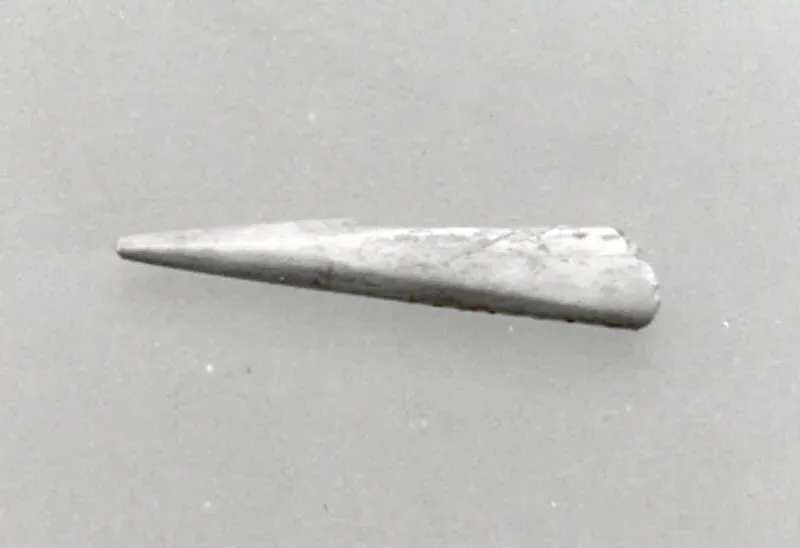
Finally, travel in your mind to the subarctic and Arctic, where early hunters shaped bone, ivory, and antler into tools that are as refined as they are practical. You might see spear points, needles, awls, and carved rods, some with incised lines or subtle shaping that fits perfectly into a human hand. Recent finds in Alaska, for example, show mammoth ivory worked into pieces used in toolmaking and possibly ceremonial activities, linking some of the earliest known North American communities to both survival and symbolic life in harsh environments.
When you examine these artifacts as more than mere “equipment,” you start recognizing an aesthetic of efficiency and intimacy. Every curve of a handle, every groove for binding, every polished surface tells you that someone paid attention not just to function but to feel and form. In a landscape where mistakes could literally mean death, people still found the bandwidth to make their tools beautiful, or at least elegantly resolved. That choice undercuts any idea that art is a luxury of comfortable societies. Instead, it suggests that the human urge to shape beauty into daily objects is as fundamental as the need for warmth and food.
Conclusion: Rethinking Where Art History Really Begins
By the time you’ve walked through these ten types of artifacts – from Mimbres bowls and shell gorgets to bird stones and Clovis points – you can feel your old mental map of art history shifting. Instead of imagining early America as a blank space waiting for European painters and architects, you start to see a continent already dense with visual languages, each one tuned to specific landscapes, cosmologies, and community needs. These objects prove that ancient Indigenous artists were not just making “curiosities”; they were solving design problems, telling stories, and negotiating power with as much visual intelligence as any celebrated Old World master.
If you let these pieces stay with you, they change how you look at your own surroundings. A coffee mug, a logo on your shirt, a mural on a city wall – they all start to feel like faint echoes of older practices of embedding meaning into everyday things. You might even find yourself wanting to learn from the living descendants of these traditions, whose art continues to evolve today. So the real question becomes: now that you’ve seen how deeply ancient Native artifacts redefine early American art, how will you let that reshape the way you read the objects in your own life?