Colombia – Paleontologists unearthed extraordinary fossils from coal mines in the Cerrejón Formation, revealing serpents that slithered through steamy swamps around 60 million years ago. These ancient creatures emerged in the aftermath of the dinosaur extinction, claiming dominance in the world’s earliest tropical rainforests. Larger than any snake alive today, they redefined the boundaries of reptilian scale during a time of profound environmental recovery.
A Breakthrough in the Coal Pits
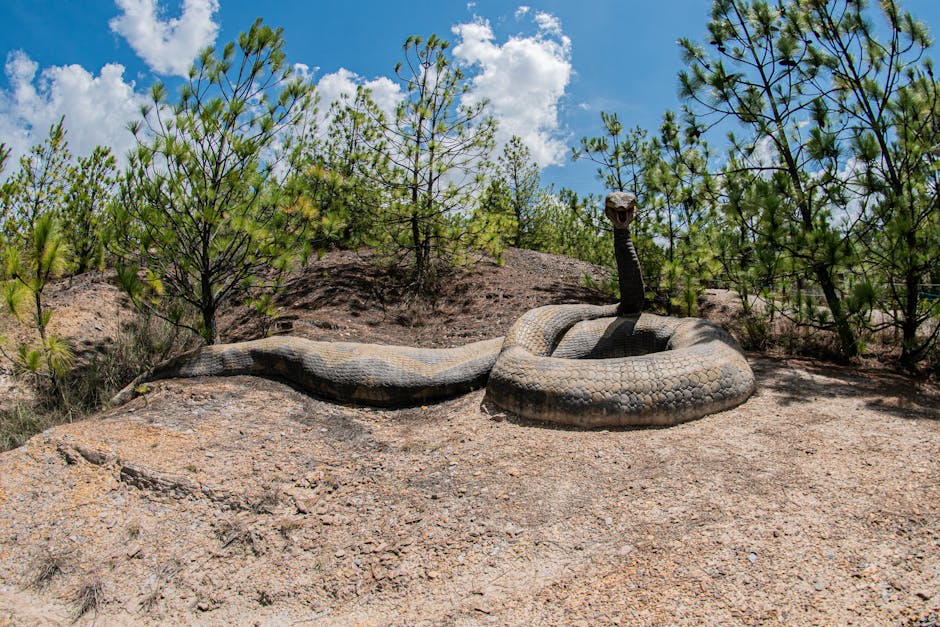
A Breakthrough in the Coal Pits (Image Credits: Pexels)
Exploration began in the early 2000s when teams from the Smithsonian Tropical Research Institute and the University of Florida visited the Cerrejón open-pit mine in northeastern Colombia. What started as a search for plant fossils quickly uncovered massive vertebrae and ribs belonging to over 28 individuals. Researchers identified the remains as snake bones in 2007, leading to the formal description of Titanoboa cerrejonensis in 2009.
The discovery included nearly complete skulls by 2011, providing crucial insights into the snake’s anatomy. This trove of fossils, preserved in swampy sediments, offered a rare glimpse into a complete Paleocene ecosystem. Scientists noted the vertebrae exceeded those of modern 17-foot anacondas in size, hinting at unprecedented proportions.
Scale Beyond Imagination
Titanoboa reached lengths of 42 to 47 feet, with some estimates suggesting up to 50 feet, and weighed between 1,600 and 2,500 pounds – over a ton for adults. Its body diameter approached 3 feet, supported by more than 250 robust vertebrae. Paleontologists scaled these measurements using mathematical models based on modern constrictors like green anacondas and southern rock pythons.
These dimensions surpassed previous record holders, such as the Eocene Gigantophis from Egypt. Recent finds like Vasuki indicus from India, dated to 47 million years ago, rival the length but feature smaller vertebrae, indicating Titanoboa held the title for mass.
| Species | Length (feet) | Weight (pounds) |
|---|---|---|
| Titanoboa cerrejonensis | 42-47 | 1,600-2,500 |
| Green Anaconda | 17-30 (max) | 200-550 |
| Reticulated Python | 20-33 (max) | 150-350 |
A Hothouse Habitat Fueled Growth
The Paleocene climate featured average temperatures of 86 to 93 degrees Fahrenheit, far warmer than today’s tropics. This greenhouse world, with high CO2 levels, allowed cold-blooded reptiles like Titanoboa to achieve gigantism. Snakes require ambient heat for metabolism and growth; cooler conditions limit size in modern species.
Titanoboa inhabited coastal plains with vast river systems, mangroves, ferns, and early rainforest plants. Waterlogged swamps preserved its fossils alongside lungfish, giant turtles, and dyrosaurs – crocodile relatives up to 22 feet long. Semi-aquatic habits mirrored those of anacondas, aiding movement despite its bulk.
Apex Hunter of the Swamps
As the top predator between dinosaur extinction and the rise of Megalodon, Titanoboa ambushed prey in shallow waters. Its diet centered on fish, evidenced by skull features like high tooth counts and palate structure suited for gripping slippery quarry. Yet it tackled larger fare, including turtles with manhole-sized shells and dyrosaur crocs.
Constriction overwhelmed victims, while a gape over two feet wide accommodated massive meals. The snake’s robust build and ambush tactics dominated this recovering ecosystem, where competition remained scarce post-extinction.
- Primary prey: Large fish like lungfish and osteoglossomorphs.
- Opportunistic targets: Giant turtles (e.g., Cerrejonemys) and dyrosaurs (e.g., Acherontisuchus).
- Hunting style: Ambush from vegetation in rivers and swamps.
- Skull adaptations: Weakly ankylosed teeth for piscivory, wide mouth for big prey.
- Ecological role: Filled niche left by extinct dinosaurs.
Enduring Legacy of Ancient Giants
Titanoboa’s fossils challenge views on post-dinosaur recovery and climate’s role in evolution. Its size underscores how warmer worlds fostered larger ectotherms, offering clues to prehistoric biodiversity. Though vanished with cooling climates, these serpents remind us of nature’s capacity for extremes.
Key takeaways persist in ongoing research, linking ancient heat to modern concerns.
- Titanoboa thrived in 90°F+ tropics, growing 1.5 times longer than today’s record snakes.
- Semi-aquatic lifestyle enabled predation on crocs and fish in swampy rainforests.
- Discovery in Colombia’s Cerrejón mine revealed the era’s first tropical ecosystems.
These prehistoric titans reshaped our understanding of life’s rebound after catastrophe. What do you think about these colossal snakes ruling the ancient world? Tell us in the comments.